Sean Murray is the President and Chief Editor of deBanked and the founder of the Broker Fair Conference. Connect with me on LinkedIn or follow me on twitter. You can view all future deBanked events here.
Articles by Sean Murray

Splits Glitz or Fritz? – Transact 16 highlighted strange chapter in merchant cash advance history
April 21, 2016
It’s Opposite Day in the alternative business funding industry. Lenders are splitting card payments and merchant cash advance companies are doing ACH debits.
Jacqueline Reses was not an odd choice for Transact 16’s Wednesday morning keynote. Square, the company she works for, has continued to be a hot topic in the payments world for years. But what was striking is that Reses heads the lending division, the group that allows merchants to pay back loans through their future card sales. If that sounds very merchant-cash-advance-like, it’s because that’s exactly the product they used to offer before changing the legal structure behind them.
Split-payments, not ACH payments, have literally propelled Square and PayPal to the top of the charts of the alternative business funding industry. One individual on the exhibit hall floor posited that Square’s ability to originate loans through their payments ecosystem was the company’s real value; Payments itself was secondary. It’s a testament to the opportunities that split-payments affords to (as I argued 3 years ago on the ETA’s blog) a company well positioned to benefit from it.
Meanwhile, the companies at Transact that one would have historically described as merchant cash advance companies have mostly transitioned away from split-payments to ACH. Essentially, Square and PayPal embraced splits as an incredible strength while yesterday’s merchant cash advance companies viewed splits as a handcuff that limited scalability. The payment companies became merchant cash advance companies and the merchant cash advance companies became something else entirely, a diverse breed of loan and future receivable originators operating under a label people are now calling “marketplace lenders.” But even Square and PayPal, arguably the two companies at Transact doing the most split-payment transactions, claim to make loans, not advances.
Merchant Cash Advance as anyone knew it previously is dead
Ten years. That’s the average age of the small business funding companies that exhibited at Transact this week. They are but the last remaining players that probably considered the debit card interchange cap imposed by the Durbin Amendment of Dodd-Frank as being among the most significant legislation that affected their businesses.
A senior representative for one credit card processor told me at the conference that their biggest gripe with new merchant cash advance ISOs today is that they know almost absolutely nothing about merchant accounts. It’s not that they know less, they know nothing, he said.
One company was notably absent from the floor this year, OnDeck. They’ve since embraced the marketplace lending community as their home, just as many others have.
Nine years ago, I overheard a very influential person say that the first company to be able to split payments across the Global, First Data and Paymentech platforms would be crowned the “winner” of the merchant cash advance industry and by extension the wider nonbank small business financing space.
If one were to define the winner as the first company from that era to go public, well then those 3 platforms played no role. OnDeck was the first and they relied on ACH payments the entire way. They also refer to themselves these days as a nonbank commercial lender. If that doesn’t sound very payments-like, it’s because it’s not.
What cause is being Advanced?
At least four coalitions are currently advocating on the marketplace lending industry’s behalf, the Coalition for Responsible Business Finance, the Marketplace Lending Association, the Small Business Finance Association, and the Commercial Finance Coalition. The Transact conference is put on by the Electronic Transactions Association whose tagline is “Advancing Payments Technology.” In an age where new merchant cash advance ISOs know nothing about payments, it’s no wonder there’s a growing disconnect.
Could Transact now be one of the best kept secrets?
A few people from companies exhibiting say that they believed they stood a better chance to land referral relationships from payment companies by being there and that there was still a lot of value in landing those deals. Partnerships like these may be why the average exhibitor has been in business for 10 years while today’s new companies relying solely on pay-per-click, cold calling, or handshakes are falling on hard times.
Some payment processors acknowledged that merchant cash advance companies were still a good source to acquire merchant accounts, though the process by which that happens is not the same as it used to be. A lot of it is referral based now, according to one senior respresentative for a card processor. The funding company funds a deal via ACH and then refers them to the payment guy to try and convert that as an add-on. The residual earnings may not be as good as they used to be but that’s because they don’t have to do any work in this circumstance. In a sense, funders are still leading with cash but instead of the boarding process being mandatory, it’s an entirely separate sale that sometimes works and sometimes doesn’t. In that way, small business funding companies can be a good lead source for payments companies.
When I asked the senior representative if they really had success closing merchant accounts just off of a referral from a funding company, he looked at me incredulously, and said, “you used to do this, of course we do. that’s how this whole industry started.”
“What industry?” I asked.
What industry indeed…
Jersey City Continues to Woo Alternative Lending Industry
April 19, 2016 Another alternative business financing company is moving to Jersey City, courtesy of the Grow New Jersey Assistance Program. NYC-based World Business Lenders is planning to relocate from their Times Square office to 101 Hudson Street in Jersey City this July in return for nearly $17 million in tax credits over 10 years.
World Business Lenders would bring 125 employees with them and its projected that they would create an additional 100 jobs by the end of the year.
In March, Yellowstone Capital relocated from their offices in NYC’s financial district to Jersey City as part of a deal that allows them to acquire up to $3.3 million in tax credits over the next 10 years. Their arrival did not go unnoticed. Jersey City Mayor Steven Fulop stopped by personally to welcome them to the neighborhood.
It’s Too Late to Start Building an Online Lending Platform, OnDeck’s CEO Suggests
April 16, 2016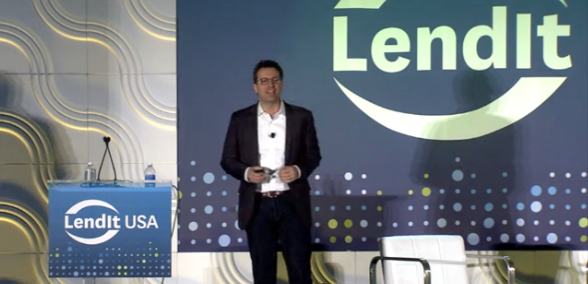 If you’re looking to enter the online lending market, you really only have three choices, said OnDeck CEO Noah Breslow, build, buy or partner.
At Lendit, Breslow admitted that OnDeck’s original concept back in 2007 was to create a small business lending platform for banks. Unfortunately they weren’t ready for online lending at that time, he told the crowd. He referred to the 2007-2010 era as the “low awareness” phase of online lending which was followed by the “skepticism” phase. Today, the industry is in stampede mode, he said.
Because of that, it’s probably too late to build a platform he suggested.
“What’s really unique about online lending is okay, let’s say you’ve built something and then you want to bring it live, you still have to lend and learn. You can’t deploy a billion dollars on day one. So once the technology is live you have to create vintages of loans that perform, refine your credit models, and so when are you going to be at scale in that business? It might actually take you several years to execute the build and then to scale up your actual loan volume.”
And while the merits of buying an existing platform might seem obvious, it’s not always so easy.
“On the buy side, clearly it’s expensive as well. There’s integration risk and maybe there’s pros in that you get more control over these platforms, but we haven’t seen any of that really happen at this point, and I think the expense of it is a major reason why. Which leaves you with partnering.”
Breslow added in regards to partnering, “that’s what we think to be the dominant form of collaboration”
Watch his full Lendit speech below:
Direct Mail Still Very Effective, Says National Funding President Torrie Inouye
April 16, 2016 When I met with San Diego-based National Funding President Torrie Inouye at Lendit, I was surprised to learn that the company had quietly funded $293 million to small businesses in 2015, enough to earn them a spot on deBanked’s top 10 alternative business funder list. The company isn’t new. They were founded in 1999, which puts them in the same category as CAN Capital, a 90s era relic that has not only survived but has continued to evolve and quite literally be a leader of the pack.
Inouye graduated from Stanford University in 2001 with a BA in Economics and started at National in 2004 where she worked as a Corporate Strategy Analyst. After 3 and a half years, she went on to play key roles at Union Bank and Intuit before returning back to National in the Fall of 2014. With a strong background in data analytics, Inouye took over as the company’s president just last week. Dave Gilbert, the company’s founder, has been the CEO since the beginning.
“Dave has always understood that data is valuable,” Inouye said, adding that she had been tasked with harvesting it.
“One of the trends that we’re seeing in our data is our direct mail response rates being much higher than what other people might expect,” she said. “We’re still surprising really good at direct mail.”
Others within the alternative lending space have made similar assertions, which ironically kind of undermines the concept of online lending itself. For Inouye, she says the online part is “the product.”
“You can control the message and you can control who you’re talking to with direct mail,” she explained. Though in a way the offline tactic is driving people to engage online. “A lot of our direct mail response comes through our website,” she said.
An expanded version of our interview will appear in deBanked’s May/June 2016 edition scheduled to come out in early June. Subscribe FREE here.
WebBank Alleged to be “Sham Pass Through Bank” in New Lending Club Usury Class Action
April 15, 2016
A new class action lawsuit filed on April 6th alleges that Lending Club and WebBank among others, violated state usury laws, consumer protection laws and the Racketeer Influenced Corrupt Organizations Act (“RICO”).
Plaintiff Ronald Bethune, a New York resident, is arguing that his 29.97% APR loan through Lending Club violated the state’s 16% interest cap.
While the Second Circuit’s ruling in Madden v. Midland Funding, LLC is cited, the complaint focuses more on WebBank’s role in carrying out a collaborative fraud scheme.
Defendants associated together for the common purpose of limiting costs, eliminating oversight, and maximizing each members’ profits by engaging in the fraudulent conduct described herein. Specifically, the members of the Enterprise enticed tens of thousands of consumers to sign up for loans through LCC [LendingClub Corporation], hoping that enough consumers would select LCC for their loans without the fact that WebBank was a “pass through” sham party to the transaction being brought to light making the loans illegal and usurious. The purpose was to allow Defendants to charge, and profit from, usurious interest rates to Plaintiff and members of the Class, and to do so without regulatory oversight.
The plaintiff acknowledges that Lending Club recently adjusted its relationship with WebBank and the class seeks to recover damages for all loans made prior.
WebBank’s parent company, Steel Partners Holdings LP, who is also named as a co-defendant, has barely registered any movement in its stock price.
Lending Club by contrast, is down almost 10% since the complaint was filed.
YOU CAN DOWNLOAD THE FULL CLASS ACTION COMPLAINT HERE
This case is unrelated to another pending class action against Lending Club.
Square Capital’s Jackie Reses Reveals Why They Really Gave Up Merchant Cash Advances
April 14, 2016 At Lendit, Bloomberg Reporter Emily Chang asked Square Capital head Jacqueline Reses to explain the real reason behind Square’s shift from merchant cash advances to loans.
Reses said that it was not a customer issue, but an investor one. “This industry and this conference more than anyone understands the nuance between MCAs and loans,” she said. “From an investor side, that’s really where the savings are between the form of an MCA and the form of a loan, in that there’s an actual repayment date.”
Reading between the lines, she seemed to be saying that investors like certainty and exact terms whereas the traditional merchant cash advance product was harder to sell off or securitize because they lack a defined element of time.
Fast loan approvals shouldn’t be criminalized
Referring to the criticism that online lenders have been getting recently for their fast approvals, Chang specifically asked if companies like OnDeck were approving loans too quickly.
Reses responded, “I don’t think the ability to execute something quickly, smoothly, transparently, should be criminalized as something that requires oversight, and so I think being good at something should be well regarded.” She later added, “I think the notion that credit decisions being swift is a problem is just misguided.”
Transparency
Reses used the word “transparency” several times but in explaining such did not reference the disclosure of Annual Percentage Rates even once. Instead she mentioned the importance of spelling out the total dollar cost to the merchants, subtly reconfirming the findings that are coming from many other alternative lenders.
Was the move from MCA just about investors though?
Read our initial assessment and expanded theory.
Watch the full “fireside chat” video below:
Funding Circle Still Focused on “Marketplace” and Small Business
April 13, 2016
At Lendit, deBanked asked Funding Circle co-founder and US market head Sam Hodges if the company’s domestic loan volume would eventually outpace originations in the UK. Hodges expressed optimism that it would and explained that the company’s UK origins had simply given that operation a 12-24 month head start.
The company has originated more than $2 billion in loans since inception. A page on their UK site specifies that 1,212,223,380 pounds have gone to british businesses, the equivalent of about $1.7 billion.
Asked if the company would branch out into other types of lending such as consumer, Hodges responded that the company remains dedicated to two principles, “marketplace and small business.” On that note however, he said their UK branch already engages in commercial property loans and didn’t rule out that such a product could eventually be made available in the US.
Small Business Finance Association Releases Best Practices Just in Time
April 13, 2016
The Small Business Finance Association (SBFA) has finally released their long awaited best practices guide. The four overarching principles are transparency, responsibility, fairness and security.
Unlike other organizations that have called for APR disclosures, the SBFA believes that the total dollar cost of the transaction is the most important way to achieve that goal. It’s also because the organization’s core members are engaged in a form of factoring most often referred to as merchant cash advances. Those transactions don’t have interest or interest rates and thus no way to ascribe an APR.
As part of the announcement, SBFA VP and RapidAdvance Chairman Jeremy Brown said, “Small business owners are a powerful constituency and we want to give them the utmost confidence in the alternative finance industry. These best practices are our way to prove to small businesses that our industry will consistently offer transparent, fair, and responsible choices to meet their needs.”
The timing could not be better. Earlier this morning, Stephen Denis, the executive director of the SBFA, testified in an Illinois State Senate hearing to protest a controversial bill that would effectively outlaw nonbank business lending under $250,000.
Among the bill’s strangest rules, is the restriction on monthly loan payments to being no more than 50% of a business’s net income, which would cause all businesses breaking even or reporting a loss to be prohibited from obtaining a loan from a nonbank or nonprofit source by law.