
Business Lending
How One Broker Moved from One-Man Home Office to 23 Person Shop
January 7, 2019Zach Ramirez started the brokerage company ZR Consulting from his home in Orange County, CA in June 2018. He was generating leads and making phone calls, often in a hushed voice because he was also looking after his six month old daughter.
“That was difficult, having a baby and with my life savings in the business,” Ramirez said.
But he had three brokers working remotely for him and things were working pretty smoothly. That number was growing by the time deBanked profiled him in August.
His fledgling business was manageable until he got to six brokers. At this point, the 29 year-old Ramirez said his home office was starting to feel like a call center.
“All day, I was answering calls to help them,” Ramirez said. “‘Zach, I have a question about this merchant, Zach, can you help me close this deal?’ It gave me a ton of anxiety.”
Ramirez realized that it would be much easier to manage employees from a brick and mortar space. So he found the company an office.
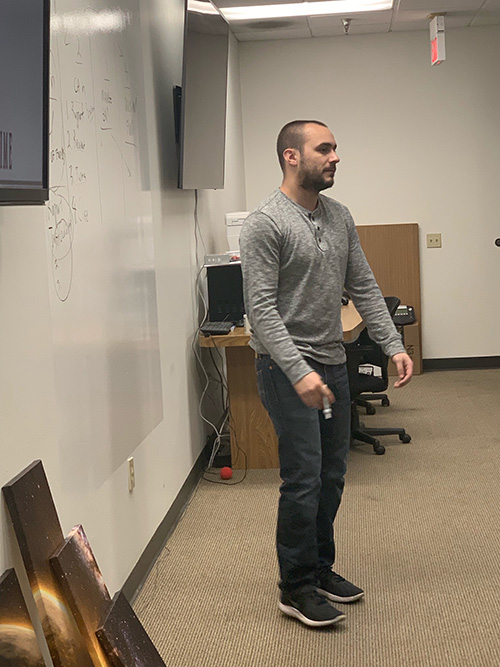 “Technically, we could have stayed at home,” Ramirez said.
And he acknowledges that some brokers can make a nice living working from home.
“But I want to have the biggest ISO,” Ramirez said.
With this as his goal, he said it makes the most sense to have everyone under one roof. If he’s having a large meeting, he wants to know that everyone is paying attention and not driving or playing a video game as they could on a conference call.
“It was difficult to manage salespeople and to track everything, like how many leads we generated in one day? How many leads does it take for me to fund one deal? How much money does the average deal bring me?”
Having his brokers work remotely made keeping track of these numbers even harder. Ramirez still has a couple of people who work for him remotely, but he said that 95% of his employees, or 23 people, now work at their office in Anaheim, CA. Ramirez said that the office was much too big for them with just six people at the beginning.
“We could hear echoes bouncing off the walls,” he recalled.
But now with 23 people, mostly brokers and some support staff, Ramirez is actually planning to expand into an office next door.
“[As we grew in the office,] we just re-invested every penny we earned back into the company,” Ramirez said. “We upgraded our computers and furniture and we put people on W-2s. We gave our employees a 401k right away. I think it’s important to really treat your people right.”
Ramirez acknowledged that he can’t make changes to the business as quickly as he used to. With more than 20 people, he said that costs go up dramatically and therefore decisions have to be much more calculated.
“It takes time to move the ship,” Ramirez said, “and if you’re not careful, everyday can be consumed by the small stuff.”
That’s why he stresses the importance of delegating roles to others.
“It’s the only way to free up your time so you can focus on the bigger picture,” he said.
Now, he said that he very rarely speaks to funders anymore. He has two processors on staff whose job is to organize the paperwork from the brokers and send it to the funders. They organize the company pipeline, he said.

Ramirez said that it can be quite difficult to find the right mix of funders.
“Some funders who you think will be great turn out not to be and other funders who you’ve never heard of turn out to be real diamonds in the rough,” Ramirez said.
And like many brokers feel, Ramirez agrees that when it comes to funders, less is more.
“Having a very precise and small list of funders is incredibly important…because it simplifies your process [and] having a simple process is one of the keys to scaling your business,” Ramirez said.
Ramirez said that a common mistake brokers make is to test out a bunch of brokers all at once. He said that brokers need to try working with new funders intelligently, which means one at a time.
“When you bring on a new lender, you carefully watch every submission to them,” Ramirez said. “You want to make sure they’re not backdooring you. So usually you want to put your phone number and your email address in the contact info so you can catch them if they’re trying to be sneaky. [If they are,] they’ll call asking for the client and you know you only sent that deal to one lender.”
He’ll sometimes then pretend he’s interested and record the call. On about three occasions, he said that he has sent recordings like this to the backdooring lender and he’ll write “this is why I don’t send deals to you.”
Ramirez’s small group of trusted funders are OnDeck, National Funding, BFS, and Orange Advance.
As Ramirez expands, he says he only hires brokers by referral. He said that 90% of his business is short term business loans and MCAs, and 10% is SBA loans and real estate transactions.
Ramirez said that so far, ZR Consulting has originated $15 million in deals since inception and has earned $1.5 million in revenue.
For Some Brokers, Funding Never Sleeps
January 4, 2019 While holidays, including New Year’s Eve, are usually slow days for funding, for some brokers this year, New Year’s Eve was a strong day.
“New Year’s Eve was not a slow day here,” said Elana Kemp, a broker at Fundomate, in Los Angeles, who was in the office that day. “It was amusing to see so many people looking for money on the last day of the year. I’m also a procrastinator, so I can relate,” she said.
Zach Ramirez, Founder and Managing Director of ZR Consulting, LLC in Orange County, CA, said that New Year’s Eve was the second biggest funding day for his company in December, despite the fact he told his brokers that it was an optional work day, he said.
At the same time, for many other brokers, business was on the slow side, as expected. John Celifarco of Horizon Financial Group in Brooklyn, said it was a good day to organize and prepare for the new year. Meanwhile, Joe Cohen, of Business Finance Advance in Brooklyn, said he generally doesn’t go to work on major holidays.
“The holidays are to enjoy, regenerate and spend time with the family,” Cohen said. “That’s why you’re working anyway.”
What We Learned About RapidAdvance From RapidAdvance’s Planned Securitization
January 1, 2019
RapidAdvance is raising money through their first-ever securitization. This is what we’ve learned about the company as a result so far, thanks to the bond ratings process:
2017 origination volume: $260 million | See how this ranks against their peers
Lifetime funding volume: > $1.5 billion
Total shareholder equity: $54 million
Majority owned by: Rockbridge Growth Equity LLC
# of employees: 168
Notable strategic partnerships: Office Depot and Worldpay
Provides: Mainly Business loans (≈80%) but also merchant cash advances (≈20%)
Founded: 2009
Generates deals via: 62% ISO & Funding Partner Channel / 38% Direct
Other funders that recently did their first securitizations include Credibly and Strategic Funding Source.
How a Computer Game Master Applied His Talents to Online Lending
December 28, 2018Eden Amirav is co-founder and CEO of Lending Express. The 29 year old spends his days trying to grow his company, an online lending platform for small businesses. But about 15 years ago, as a teenager in Israel, he spent his evenings and school breaks fighting orcs, defending construct units and mostly defeating enemies in a fictional world called Azeroth. He was a master player of the computer game, Warcraft III, released in 2002. But calling Amirav “a master player” is even an understatement since Amirav was the master player in his country. He was Israel’s #1 champion in Warcraft III for four consecutive years from 2003 to 2006.
Amirav started when he was about 12 and by the time he was 14, he became his country’s best competitive player. “I was very nervous,” Amirav said about the final game of his first national tournament. He was 14 and his opponent was 18.

“I saw him as a real adult,” Amirav said.
His family and friends were among more than one thousand people watching the final game in an auditorium – rooting him on as they observed the virtual duel projected on a big screen above the stage.
“I was an underdog and my winning was a big surprise,” Amirav said. “It was a shock when I won the tournament because I was very young.”
Amirav played the game as the humans (as a opposed to the race called the “orcs”) and his chosen hero was Archmage, known for its ability to “regenerate sorceresses,” among other things. If this makes absolutely no sense, you’re not alone.
 What is clear, though, is that Amirav said that his mastery of Warcraft III helped him years later when he started creating companies.
“I think the most direct connection between gaming and becoming an entrepreneur is speed,” Amirav said. “To play [the game] on a professional level you have to be very quick with computers. Having those skills led me to programming…and when you’re working on a startup and developing code, if you do this stuff very quickly, you can accomplish a lot in a shorter time than your competition, [which] really gives you an advantage.”
Amirav said that in his heyday as a computer gamer, he performed more than 200 actions per minute. (That means either clicks on the mouse or taps on the keyboard.) Amirav has used his ability to move fast to expand Lending Express rather quickly in the U.S. The platform, which connects small business owners to funders, launched first in Australia in October 2016. In June of this year, the company announced its official entrance into the U.S. market, and Amirav said that Lending Express has assisted in funding almost as much volume in the U.S. in a little over six months as it has in Australia in over two years.

He said he expects the U.S. to surpass Australia in funding volume in 2019 and he plans to grow its U.S. office, which is now a one-person operation in San Matteo, CA.
Also, Amirav said that they should be announcing shortly $100 million in funding facilitated by Lending Express. He said their total volume is about $98 million right now.
Even though Amirav competed one-on-one, he did not practice alone. In fact, he said he was always part of what he called a “clan,” where gamers would practice together. Now, instead of practicing with a clan, Amirav works with and leads a team of more than 30 employees at the Lending Express headquarters in Tel Aviv.
“You get to know these people and it’s like a band,” Amirav said of the his gaming clan. “You need everyone to be playing at the right tempo.”
Editor’s note: A profile on Amirav in Forbes incorrectly attributed his gaming background to World of Warcraft. That is another game with an entirely different style of play and objectives. Amirav was a champion of Warcraft 3, a Player vs. Player (PvP) game format. World of Warcraft is a Massive Multiplayer Online Role Playing Game (MMORPG).
Newtek Hosted Uncommon Investor Call Yesterday
December 27, 2018Newtek Business Services Corp. (NASDAQ: NEWT) CEO Barry Sloane held a conference call at 8:30 a.m. EST yesterday morning to address investors.
“This is somewhat of an unorthodox call, the day after Christmas,” Sloane said. “But given a lot of the events in the market with tremendous market nervousness, I wanted to speak to as many investors as I could.”
The call largely served to mollify concern about the continued drop in the Newtek stock price over the last month and into the holiday weekend. On November 28, the Newtek stock was $21.72 and on December 24 it was $16.04. This drop was largely in line with the rest of the stock market which experienced historic lows on Christmas Eve.
Sloane explained to deBanked that Newtek had, up until recently, been part of the KBW High Dividend Yield Financial ETF index. But on December 14, the index announced they would rebalance and sell holdings of Newtek. Sloane said that this announcement created selling pressure which drove the price of Newtek down to $15.68 at the close of the day on December 21. But the stock has subsequently rallied to a high of $17.81 today, despite the fact that the rest of the market has not, Sloane noted.
“We had a fantastic year,” Sloane said of Newtek on yesterday’s call, based on the first nine months of 2018. “We primarily invest in small to middle market type companies that are very stable…we feel very good about our business model [and] we’re the same company we were 45 days ago.”
Sloane also said yesterday that he believes Newtek will report stable credit from the third quarter going into the fourth quarter.
deBanked’s Most Popular Stories of 2018
December 22, 2018
Five of the top 10 most read stories of 2018 were related to the saga of 1st Global Capital; The bankruptcy, SEC charges, the revelation that they had made a $40 million merchant cash advance, and finally the devastating news of that deal falling apart. We decided to lump all of them together in our #1 slot, but first, the following story was the most independently read of 2018:
The Saga of 1st Global Capital
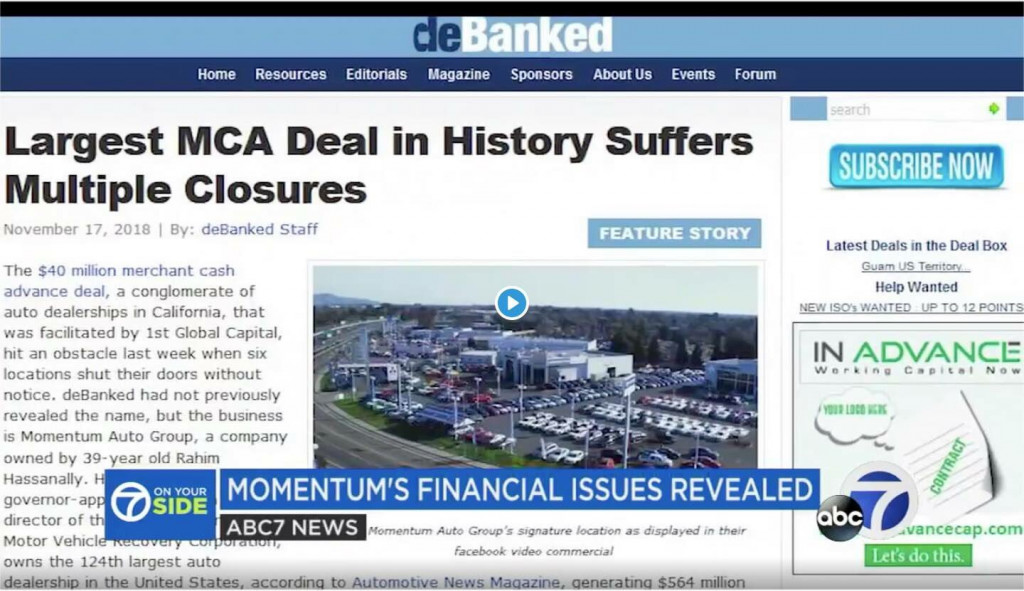
1. Largest MCA Deal in History Suffers Multiple Closures was picked up by ABC News in California, placing deBanked’s website on TV for the first time.
These were the other most read stories related to 1st Global Capital
- 1 Global Capital Files Chapter 11
- Syndication at Heart of SEC and Criminal Investigation into 1st Global Capital
- 1st Global Capital Charged With Fraud by SEC
- The Largest Merchant Cash Advance in History
Bloomberg Businessweek began publishing a series in November about the allegedly scandalous merchant cash advance industry. An initial review by deBanked uncovered questionable holes in their reporting, but when the series’ senior editor thanked a state senator for proposing legislation in response, suspicious ties were uncovered, followed by one Bloomberg reporter wiping his twitter account clean. Bloomberg’s exaggerated series dubbed #signhereloseeverything has spawned a highly popular counterseries that has challenged Bloomberg’s reporting. We call it #tweetherewipeeverything. The following stories were all in the year’s top 12 most read, but we’ve lumped them together here at #2.
The Bloomberg Blitz
2. Multimillionaire CEO Claims Predatory Lenders are Causing Him to Sell His Furniture for Food

The other two were:
Arrested for Data Theft
3. CAUGHT: Backdoored Deals Leads to Handcuffs was the year’s third most read story.
MCAs are Not Usurious
4. It’s Settled: Merchant Cash Advances Not Usurious came in at #4 this year, ending the debate that has persisted in hundreds of cases at the trial court level in New York State.
In October 2016, the plaintiffs sued defendant Pearl in the New York Supreme Court alleging that the Confession of Judgment filed against them should be vacated because the underlying agreement was criminally usurious. As support, plaintiffs argued that the interest rate of the transaction was 43%, far above New York State’s legal limit of 25%. The defendant denied it and moved to dismiss, wherein the judge concurred that the documentary evidence utterly refuted plaintiffs’ allegations. Plaintiffs appealed and lost, wherein The Appellate Division of The First Department published their unanimous decision that the underlying Purchase And Sale of Future Receivables agreement between the parties was not usurious.
Debt Settlement Company Sued
5. ISOs Alleged to Be Partners in Debt Settlement “Scam” in Explosive Lawsuit was #5 in 2018. The lawsuit ultimately settled and resulted in a big payout to the MCA companies.
A Broker’s Bio
6. The Broker: How Zach Ramirez Makes Deals Happen was #6. deBanked interviewed Zachary Ramirez to find out what makes a successful broker like him tick, how he does it, and what kinds of things he’s encountered along the way.

Ban COJs?
7. Senate Bill Introduced to Ban Confession of Judgments Nationwide was #7. Although this is related to the Bloomberg Blitz, the introduction of this bill fits more neatly into a category of its own.
Who’s Funding How Much?
8. A Preliminary Small Business Financing Leaderboard was #8. Despite this being published early in the year and offering detailed origination volumes for several companies all in one place, it wasn’t as well-read as all the drama that unfolded later in the year. Unsurprisingly, a chart of The Top 2018 Small Business Funders by Revenue ranked right behind this one, but we’ve lumped it in with #8 since it’s related.
Thoughts by Ron
9. Ron Suber: ‘This Industry Will Look Very Different One Year From Now’ was #9. Known as the Magic Johnson of fintech, the 1-year prediction by former Prosper Marketplace president Ron Suber, originally captured in the LendAcademy Podcast, resonated all throughout the fintech world. Will he be proven correct?
A Rags to Riches Tale
10. How A New Hampshire Teen Launched A Lending Company And Climbed Into The Inc. 500 was #10.

Josh Feinberg was not a complete newbie when he started in the lending business in 2009, but he also had a long way to go to find success. His dad had been in the business for 15 years and shortly after graduating high school, Josh started to work in equipment financing and leasing at Direct Capital in New Hampshire, his home state. He then had a brief stint working remotely for Balboa Capital, but he wasn’t sure that finance was for him.
He was 19, with a three year old daughter, and he took a low paying job working at a New Hampshire pawn shop owned by his brother and a guy named Will Murphy.
“I was making $267 a week at the pawn shop and I was having to ask friends to help me pay my rent for a room,” Feinberg said. “So at that point, I realized that something needed to change.”
Less Than Perfect — New State Regulations
December 21, 2018
You could call California’s new disclosure law the “Son-in-Law Act.” It’s not what you’d hoped for—but it’ll have to do.
That’s pretty much the reaction of many in the alternative lending community to the recently enacted legislation, known as SB-1235, which Governor Jerry Brown signed into law in October. Aimed squarely at nonbank, commercial-finance companies, the law—which passed the California Legislature, 28-6 in the Senate and 72-3 in the Assembly, with bipartisan support—made the Golden State the first in the nation to adopt a consumer style, truth-in-lending act for commercial loans.
The law, which takes effect on Jan. 1, 2019, requires the providers of financial products to disclose fully the terms of small-business loans as well as other types of funding products, including equipment leasing, factoring, and merchant cash advances, or MCAs.
 The financial disclosure law exempts depository institutions—such as banks and credit unions—as well as loans above $500,000. It also names the Department of Business Oversight (DBO) as the rulemaking and enforcement authority. Before a commercial financing can be concluded, the new law requires the following disclosures:
(1) An amount financed.
(2) The total dollar cost.
(3) The term or estimated term.
(4) The method, frequency, and amount of payments.
(5) A description of prepayment policies.
(6) The total cost of the financing expressed as an annualized rate.
The law is being hailed as a breakthrough by a broad range of interested parties in California—including nonprofits, consumer groups, and small-business organizations such as the National Federation of Independent Business. “SB-1235 takes our membership in the direction towards fairness, transparency, and predictability when making financial decisions,” says John Kabateck, state director for NFIB, which represents some 20,000 privately held California businesses.
“What our members want,” Kabateck adds, “is to create jobs, support their communities, and pursue entrepreneurial dreams without getting mired in a loan or financial structure they know nothing about.”
Backers of the law, reports Bloomberg Law, also included such financial technology companies as consumer lenders Funding Circle, LendingClub, Prosper, and SoFi.
But a significant segment of the nonbank commercial lending community has reservations about the California law, particularly the requirement that financings be expressed by an annualized interest rate (which is different from an annual percentage rate, or APR). “Taking consumer disclosure and annualized metrics and plopping them on top of commercial lending products is bad public policy,” argues P.J. Hoffman, director of regulatory affairs at the Electronic Transactions Association.
 The ETA is a Washington, D.C.-based trade group representing nearly 500 payments technology companies worldwide, including such recognizable names as American Express, Visa and MasterCard, PayPal and Capital One. “If you took out the annualized rate,” says ETA’s Hoffman, “we think the bill could have been a real victory for transparency.”
California’s legislation is taking place against a backdrop of a balkanized and fragmented regulatory system governing alternative commercial lenders and the fintech industry. This was recognized recently by the U.S. Treasury Department in a recently issued report entitled, “A Financial System That Creates Economic Opportunities: Nonbank Financials, Fintech, and Innovation.” In a key recommendation, the Treasury report called on the states to harmonize their regulatory systems.
As laudable as California’s effort to ensure greater transparency in commercial lending might be, it’s adding to the patchwork quilt of regulation at the state level, says Cornelius Hurley, a Boston University law professor and executive director of the Online Lending Policy Institute. “Now it’s every regulator for himself or herself,” he says.
Hurley is collaborating with Jason Oxman, executive director of ETA, Oklahoma University law professor Christopher Odinet, and others from the online-lending industry, the legal profession, and academia to form a task force to monitor the progress of regulatory harmonization.
For now, though, all eyes are on California to see what finally emerges as that state’s new disclosure law undergoes a rulemaking process at the DBO. Hoffman and others from industry contend that short-term, commercial financings are a completely different animal from consumer loans and are hoping the DBO won’t squeeze both into the same box.
Steve Denis, executive director of the Small Business Finance Association, which represents such alternative financial firms as Rapid Advance, Strategic Funding and Fora Financial, is not a big fan of SB-1235 but gives kudos to California solons—especially state Sen. Steve Glazer, a Democrat representing the Bay Area who sponsored the disclosure bill—for listening to all sides in the controversy. “Now, the DBO will have a comment period and our industry will be able to weigh in,” he notes.
While an annualized rate is a good measuring tool for longer-term, fixed-rate borrowings such as mortgages, credit cards and auto loans, many in the small-business financing community say, it’s not a great fit for commercial products. Rather than being used for purchasing consumer goods, travel and entertainment, the major function of business loans are to generate revenue.
A September, 2017, study of 750 small-business owners by Edelman Intelligence, which was commissioned by several trade groups including ETA and SBFA, found that the top three reasons businesses sought out loans were “location expansion” (50%), “managing cash flow” (45%) and “equipment purchases” (43%).
The proper metric to be employed for such expenditures, Hoffman says, should be the “total cost of capital.” In a broadsheet, Hoffman’s trade group makes this comparison between the total cost of capital of two loans, both for $10,000.
Loan A for $10,000 is modeled on a typical consumer borrowing. It’s a five-year note carrying an annual percentage rate of 19%—about the same interest rate as many credit cards—with a fixed monthly payment of $259.41. At the end of five years, the debtor will have repaid the $10,000 loan plus $5,564 in borrowing costs. The latter figure is the total cost of capital.
Compare that with Loan B. Also for $10,000, it’s a six month loan paid down in monthly payments of $1,915.67. The APR is 59%, slightly more than three times the APR of Loan A. Yet the total cost of capital is $1,500, a total cost of capital which is $4,064.33 less than that of Loan A.
Meanwhile, Hoffman notes, the business opting for Loan B is putting the money to work. He proposes the example of an Irish pub in San Francisco where the owner is expecting outsized demand over the upcoming St. Patrick’s Day. In the run-up to the bibulous, March 17 holiday, the pub’s owner contracts for a $10,000 merchant cash advance, agreeing to a $1,000 fee.
Once secured, the money is spent stocking up on Guinness, Harp and Jameson’s Irish whiskey, among other potent potables. To handle the anticipated crush, the proprietor might also hire temporary bartenders.
When St. Patrick’s Day finally rolls around—thanks to the bulked-up inventory and extra help—the barkeep rakes in $100,000 and, soon afterwards, forwards the funding provider a grand total of $11,000 in receivables. The example of the pub-owner’s ability to parlay a short-term financing into a big payday illustrates that “commercial products—where the borrower is looking for a return on investment—are significantly different from consumer loans,” Hoffman says.
 SBFA’s Denis observes that financial products like merchant cash advances are structured so that the provider of capital receives a percentage of the business’s daily or weekly receivables. Not only does that not lend itself easily to an annualized rate but, if the food truck, beautician, or apothecary has a bad day at the office, so does the funding provider. “It’s almost like the funding provider is taking a ride” with the customer, says Denis.
Consider a cash advance made to a restaurant, for instance, that needs to remodel in order to retain customers. “An MCA is the purchase of future receivables,” Denis remarks, “and if the restaurant goes out of business— and there are no receivables—you’re out of luck.”
Still, the alternative commercial-lending industry is not speaking with one voice. The Innovative Lending Platform Association—which counts commercial lenders OnDeck, Kabbage and Lendio, among other leading fintech lenders, as members—initially opposed the bill, but then turned “neutral,” reports Scott Stewart, chief executive of ILPA. “We felt there were some problems with the language but are in favor of disclosure,” Stewart says.
The organization would like to see DBO’s final rules resemble the company’s model disclosure initiative, a “capital comparison tool” known as “SMART Box.” SMART is an acronym for Straightforward Metrics Around Rate and Total Cost—which is explained in detail on the organization’s website, onlinelending.org.
But Kabbage, a member of ILPA, appears to have gone its own way. Sam Taussig, head of global policy at Atlanta-based financial technology company Kabbage told deBanked that the company “is happy with the result (of the California law) and is working with DBO on defining the specific terms.”
Others like National Funding, a San Diego-based alternative lender and the sixth-largest alternative-funding provider to small businesses in the U.S., sat out the legislative battle in Sacramento. David Gilbert, founder and president of the company, which boasted $94.5 million in revenues in 2017, says he had no real objection to the legislation. Like everyone else, he is waiting to see what DBO’s rules look like.
“It’s always good to give more rather than less information,” he told deBanked in a telephone interview. “We still don’t know all the details or the format that (DBO officials) want. All we can do is wait. But it doesn’t change this business. After the car business was required to disclose the full cost of motor vehicles,” Gilbert adds, “people still bought cars. There’s nothing here that will hinder us.”
With its panoply of disclosure requirements on business lenders and other providers of financial services, California has broken new legal ground, notes Odinet, the OU law professor, who’s an expert on alternative lending and financial technology. “Not many states or the federal government have gotten involved in the area of small business credit,” he says. “In the past, truth-in-lending laws addressing predatory activities were aimed primarily at consumers.”
The financial-disclosure legislation grew out of a confluence of events: Allegations in the press and from consumer activists of predatory lending, increasing contraction both in the ranks of independent and community banks as well as their growing reluctance to make small-business loans of less than $250,000, and the rise of alternative lenders doing business on the Internet.
In addition, there emerged a consensus that many small businesses have more in common with consumers than with Corporate America. Rather than being managed by savvy and sophisticated entrepreneurs in Silicon Valley with a Stanford pedigree, many small businesses consist of “a man or a woman working out of their van, at a Starbucks, or behind a little desk in their kitchen,” law professor Odinet says. “They may know their business really well, but they’re not really in a position to understand complicated financial terms.”
The average small-business owner belonging to NFIB in California, reports Kabateck, has $350,000 in annual sales and manages from five to nine employees. For this cohort—many of whom are subject to myriad marketing efforts by Internet-based lenders offering products with wildly different terms—the added transparency should prove beneficial. “Unlike big businesses, many of them don’t have the resources to fully understand their financial standing,” Kabateck says. “The last thing they want is to get steeped in more red ink or—even worse—have the wool pulled over their eyes.”
 California’s disclosure law is also shaping up as a harbinger—and perhaps even a template—for more states to adopt truth-in-lending laws for small-business borrowers. “California is the 800-lb. gorilla and it could be a model for the rest of the country,” says law professor Hurley. “Just as it has taken the lead on the control of auto emissions and combating climate change, California is taking the lead for the better on financial regulation. Other states may or may not follow.”
Reflecting the Golden State’s influence, a truth-in-lending bill with similarities to California’s, known as SB-2262, recently cleared the state senate in the New Jersey Legislature and is on its way to the lower chamber. SBFA’s Denis says that the states of New York and Illinois are also considering versions of a commercial truth-in-lending act.
But the fact that these disclosure laws are emanating out of Democratic states like California, New Jersey, Illinois and New York has more to do with their size and the structure of the states’ Legislatures than whether they are politically liberal or conservative. “The bigger states have fulltime legislators,” Denis notes, “and they also have bigger staffs. That’s what makes them the breeding ground for these things.”
Buried in Appendix B of Treasury’s report on nonbank financials, fintechs and innovation is the recommendation that, to build a 21st century economy, the 50 states should harmonize and modernize their regulatory systems within three years. If the states fail to act, Treasury’s report calls on Congress to take action.
The triumvirate of Hurley, Oxman and Odinet report, meanwhile, that they are forming a task force and, with the tentative blessing of Treasury officials, are volunteering to monitor the states’ progress. “I think we have an opportunity as independent representatives to help state regulators and legislators understand what they can do to promote innovation in financial services,” ETA’s Oxman asserts.
 The ETA is a lobbying organization, Oxman acknowledges, but he sees his role—and the task force’s role—as one of reporting and education. He expects to be meeting soon with representatives of the Conference of State Bank Supervisors (CSBS), the Washington, D.C.-based organization representing regulators of state chartered banks. It is also the No. 1 regulator of nonbanks and fintechs. “They are the voice of state financial regulators,” Oxman says, “and they would be an important partner in anything we do.”
Margaret Liu, general counsel at CSBS, had high praise for Treasury’s hard work and seriousness of purpose in compiling its 200-plus page report and lauded the quality of its research and analysis. But Liu noted that the conference was already deeply engaged in a program of its own, which predates Treasury’s report.
Known as “Vision 2020,” the program’s goals, as articulated by Texas Banking Commissioner Charles Cooper, are for state banking regulators to “transform the licensing process, harmonize supervision, engage fintech companies, assist state banking departments, make it easier for banks to provide services to non-banks, and make supervision more efficient for third parties.”
While CSBS has signaled its willingness to cooperate with Treasury, the conference nonetheless remains hostile to the agency’s recommendation, also found in the fintech report, that the Office of the Comptroller of the Currency issue a “special purpose national bank charter” for fintechs. So vehemently opposed are state bank regulators to the idea that in late October the conference joined the New York State Banking Department in re-filing a suit in federal court to enjoin the OCC, which is a division of Treasury, from issuing such a charter.
Among other things, CSBS’s lawsuit charges that “Congress has not granted the OCC authority to award bank charters to nonbanks.”
Previously, a similar lawsuit was tossed out of court because, a judge ruled, the case was not yet “ripe.” Since no special purpose charters had actually been issued, the judge ruled, the legal action was deemed premature. That the conference would again file suit when no fintech has yet applied for a special purpose national bank charter— much less had one approved—is baffling to many in the legal community.
“I suspect the lawsuit won’t go anywhere” because ripeness remains a sticking point, reckons law professor Odinet. “And there’s no charter pending,” he adds, in large part because of the lawsuit. “A lot of people are signing up to go second,” he adds, “but nobody wants to go first.”
Treasury’s recommendation that states harmonize their regulatory systems overseeing fintechs in three years or face Congressional action also seems less than jolting, says Ross K. Baker, a distinguished professor of political science at Rutgers University and an expert on Congress. He told deBanked that the language in Treasury’s document sounded aspirational but lacked any real force.
“Usually,” he says, such as a statement “would be accompanied by incentives to do something. This is a kind of a hopeful urging. But I don’t see any club behind the back,” he went on. “It seems to be a gentle nudging, which of course they (the states) are perfectly able to ignore. It’s desirable and probably good public policy that states should have a nationwide system, but it doesn’t say Congress should provide funds for states to harmonize their laws.
“When the Feds issue a mandate to the states,” Baker added, “they usually accompany it with some kind of sweetener or sanction. For example, in the first energy crisis back in 1973, Congress tied highway funds to the requirement (for states) to lower the speed limit to 55 miles per hour. But in this case, they don’t do either.”
THE ABCs OF SBDCs
December 16, 2018 An often-overlooked national network of nearly a thousand Small Business Development Centers has the potential to help alternative funders cement relationships with existing clients and locate new ones. The centers, known as SBDCs, offer free or low-cost training and consultation to established and aspiring merchants and manufacturers.
The earliest SBDCs have been around for four decades. The centers operate in conjunction with the Small Business Administration as public-private partnerships and serve about 1.5 million clients annually.
Centers help small-business owners evaluate ideas, organize companies, find legal assistance and obtain operating capital.
But not everyone knows all that. “The network is underutilized,” says Donna Ettenson, vice president of operations for Washington-based America’s SBDCs, which functions much like a trade association for the centers scattered across the nation. “We’re one of the best-kept secrets in the United States federal government.”
That means alternative funders can assist customers by simply informing them that the centers exist and can offer potentially beneficial services. Providing basic information on the SBDCs could become part of a consultative approach to selling that brings repeat business, especially with merchants who lack business skills or experience, observers suggest.
What’s more, alt funders who want to increase their chances of benefitting from SBDCs can go beyond merely providing clients with a rundown on the centers. The funders can become actively involved with the work of carried out at the centers.
One way of taking part is to contact nearby centers and offer to make presentations at seminars or workshops, Ettenson says. Funders could provide information to fledgling business owners on the instruments available through the alternative-funding industry, such as cash advances, loans and factoring, she suggests.
 To get started, alternative funders can visit the America’s SBDC website, where they’ll find a search tool that provides contact information for their nearest centers, Ettenson says. From there, they could discuss possible connections with officials at the local centers, she advises.
That involvement would not only provide exposure to merchants in need of capital but also to center officials who point merchants toward capital sources. If enough members of the alt funding industry took part, their work could eventually give rise to something akin to the lists of attorneys that some centers maintain, Ettenson says.
Centers often tap attorneys—perhaps quarterly—to lecture on a rotating basis on what type of business to form. That could mean organizing as a corporation, limited-liability partnership or some other form. In much the same way, funders could share their knowledge of instruments for obtaining capital.
Funders could emulate the lawyers who use the centers as a forum for soft marketing, Ettenson says. The speaker becomes a familiar face and can leave business cards that students could use to contact them as questions arise. However, speakers must provide general information and are prohibited from using speaking opportunities as blatantly self-promotional unpaid advertisements, she cautions.
What’s more, the centers have to exercise caution to avoid recommending specific attorneys, accountants or sources of capital because they could incur liability if events go sour and a service provider absconds to Bogata, Columbia, Ettenson points out. That keeps the centers “ecumenical,” in that they provide a list of professionals for clients to interview and rather than pointing to a single source.
Alternative funders can explore other ways to become involved with SBDCs, too. The national organization presents an annual trade show and professional development conference for service-center directors and service-center staff members who teach or consult with clients. Alternative funders who have taken booth space on the exhibition floor or made presentations in the accompanying conference include RapidAdvance, Breakout Capital, Kabbage and Newtek Business Services.
When America’s SBDCs issues a call for presentations at the annual conference, it receives approximately 300 applications for about 140 speaking slots. Some of the speakers come from the rosters of presenters at past shows, while companies newer to the trade show can purchase an entry-level sponsorship that includes booth space and the right to conduct a workshop.
The attendees at those annual conferences can tell their clients about the funders they encounter there. Attendees can also find out more about the alternative- funding industry and then pass that information along to merchants.
Some regional centers in states with large populations—such as California—can also hold conventions for their officials, says Patrick Nye, executive director for small business and entrepreneurship at the Los Angeles Regional SBDC Network, which is based at Long Beach City College. His state was planning its second statewide gathering this year and intends to do it again every other year. Alternative funders could participate, he says.
With so much going on at the centers, someone has to front the cash to keep the lights on. Local organizations are funded partly through federal appropriations administered by the SBA. “In order for the federal money to be pulled down, a matching non-federal dollar must be provided as well,” Ettenson says. The federal funds are apportioned based on the amount of matching funds the centers provide.
The matching funds usually flow from colleges, universities and state legislatures. “It’s a mix,” Ettenson says of the sources. Institutions of higher learning often meet part of their matching-fund goals by providing “in kind” resources—such as classrooms, services and instructors—instead of cash.
In the six states that administer the centers through their economic development departments, the state legislatures generally appropriate matching funds. In Texas, the representatives of the state’s four regional programs combine forces to lobby the legislature for matching funds, and that teamwork reduces the cost of their efforts in Austin.
The federal funds and matching funds support local and regional centers that belong to a network based on 62 host institutions. Of the 62, six operate through the economic development departments of state governments. They’re in Indiana, Illinois, Ohio, West Virginia, Minnesota and Colorado. The rest of the host institutions are mostly universities or community colleges. Some are based in economic development agencies.
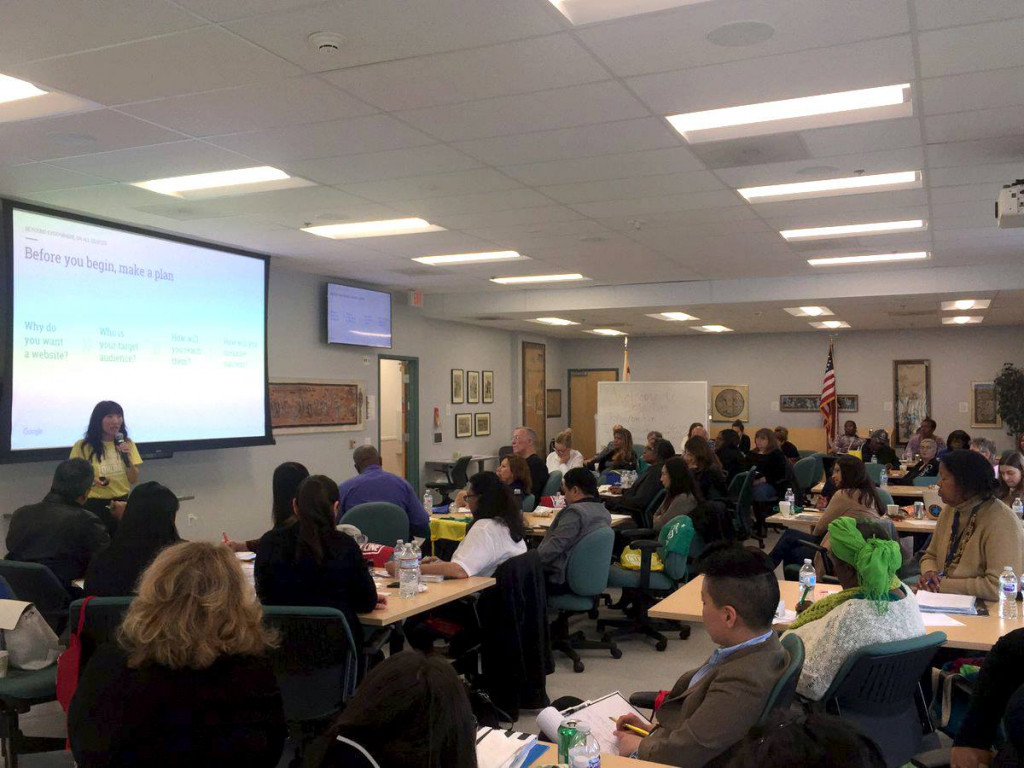
One can think of the regional centers as something akin to corporate headquarters and the local centers as retailers, says Nye, who administers the Southern California regional center. The local centers under his regional’s jurisdiction are located in only three counties but pull in the sixth-largest share of funding because of Southern California’s huge population, he notes.
The local service centers provide training and consulting for entrepreneurs starting or expanding their enterprises. About 60 percent of the clients are already in business. Of the 40 percent who don’t own a business, about half launch one after receiving assistance from an SBDC, Ettenson says.
The centers don’t charge for consulting services, and the fees for training are just large enough to cover expenses. The training fees usually remain in the centers that provide the instruction where they’re used to cover expenses like buying computers.
In Southern California centers, the business advisors are usually under contract and have knowledge to share from their experience in business, marketing, banking, social media, consulting or other realms, says Nye. Not many college instructors work in the centers, he notes, adding that the centers are monitored to avoid conflicts of interest among advisors.
To track how well advisors are performing, the national organization produces economic impact statements by interviewing thousands of clients. Interviews generally take place two years after consulting sessions. That should provide enough time to get results, Ettenson says
Thus, America’s SBDCs this year surveyed clients who received services in 2016. Those long-term clients received $4.6 billion in financing, while last year the clients surveyed who got underway in 2015 had received $5.6 billion in financing. She could not break down that financing by categories like banks and non-banks.
Discussing those surveys, Ettenson offers some details. “If you talk to us for two minutes, we don’t consider you a client,” she emphasizes. The SBDC definition of what constitutes a client calls for at least one hour of one-to-one consulting or at least one two- hour training session, she says. The organization defines “touches” as people with less exposure, such as those who call on the phone with a question.
When an SBDC client needs funding, officials at the centers have no qualms about including alternative funders in their recommendations to clients who are seeking funds, says Ettenson. “We don’t exclude anybody in any way, shape or form unless there’s some reason to think they’re fraudulent,” she notes.
But malfeasance isn’t the worry it once was, Ettenson asserts, noting that alternative funders have gained credibility in the last five or so years as they began policing their own industry. “They’ve learned to keep track of who’s in their space and how they’re operating,” she says.
Alternative financing has established a niche that benefits small-business people who know how to use it, Ettenson maintains. “They understand that they’re borrowing money for a short period of time and it’s going to cost you a fair amount,” she says. “It’s a short-term bridge to get to whatever your goal is.” Merchants seeking funders should learn the differences among alternative funders—whom she says all operate a little differently from each other—to choose their best option.
And opportunity for alternative funders may abound at the centers in the near future. Nye cites the two biggest goals for his centers as new business starts and capital infusion. Center advisors help develop business plans that aid clients in obtaining financing, he says. Last year, his region received a little over $4 million from the SBA and used it to help start 365 new businesses and raise $148 million in capital infusions. Those efforts created 1,700 jobs, he says.