

Sean Murray is the President and Chief Editor of deBanked and the founder of the Broker Fair Conference. Connect with me on LinkedIn or follow me on twitter. You can view all future deBanked events here.
Articles by Sean Murray

SBA Dumps Detailed Data on Every Single PPP Borrower
December 2, 2020 The SBA has dumped all of it.
A court order recently forced the SBA to reveal precise details of every single PPP and EIDL borrower regardless of loan size and regardless of privacy concerns.
The SBA dumped all the data late on Tuesday night through a series of downloadable .csv files.
However, small-business-forum.net has made a web-friendly search tool for the PPP loans (not the EIDL), which contains 5 million records. The loan amounts are precise. This latest cache of data is different from the previous reveal in that the loan amounts are exact. There is no approximating here.
The mass disclosure was viewed as controversial because PPP loan amounts were directly correlated with monthly payroll figures so one could potentially deduce the salary of a self-employed business owner with no employees by knowing just their PPP loan amount.
In any case, all of the data has been made public. The easiest way to search the database is at https://www.small-business-forum.net/pppchecker.php
State of Fintech Lending in Canada Report Reveals Key Information for Lenders
November 23, 2020 Smarter Loans, Canada’s loan comparison giant, has published its 3rd annual State of Fintech Lending report.
“As Canadians stayed home longer, adoption of fintech products has accelerated dramatically,” the report says, accelerating trends that had already been developing for years. The data is based on survey results submitted by nearly 2,600 fintech lending customers.
While there are dozens of important takeaways, respondents indirectly signaled how valuable it is to be among the brands that are found first by borrowers.
That’s because loan applicants said that they researched fewer lenders than ever before (35% only researched 1 or 2 lenders before applying) and they spent less time researching lenders than ever before (31% said they spent less than 1 hour researching). Furthermore, 51% of respondents said that they only applied with a single provider.
This approach worked. Of those that got approved, 89% of respondents said that they were satisfied or very satisfied with their loan provider.
The trend should signal to lenders that borrowers may simply come to expect a satisfactory experience regardless of where they apply and that there is tremendous value in simply being the first 1-2 lenders that a prospective borrower considers.
And hint hint, it pays to be easily discoverable online. Fifty eight percent of respondents said they discovered their loan provider through online search.
Click here to view the full survey results in Smarter Loans’ official State of Fintech Lending.
deBanked Meme Time – Happy Thanksgiving
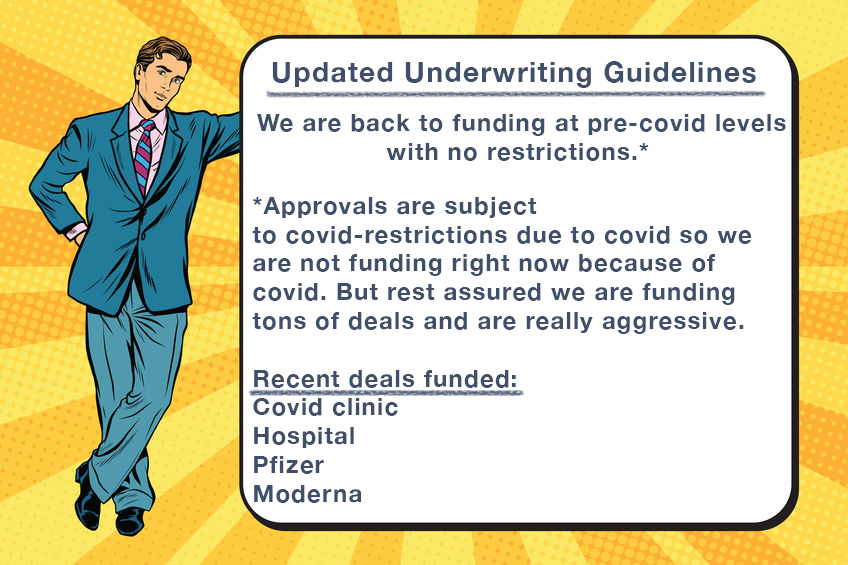
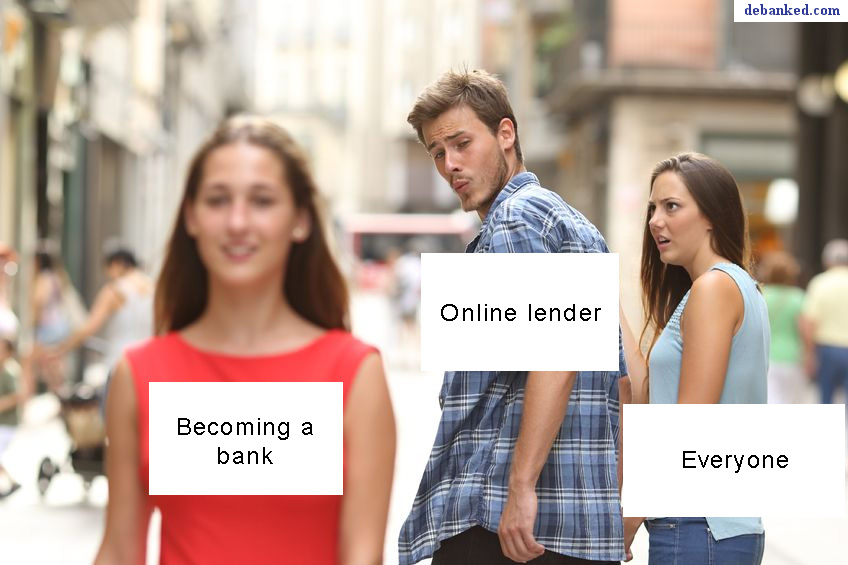
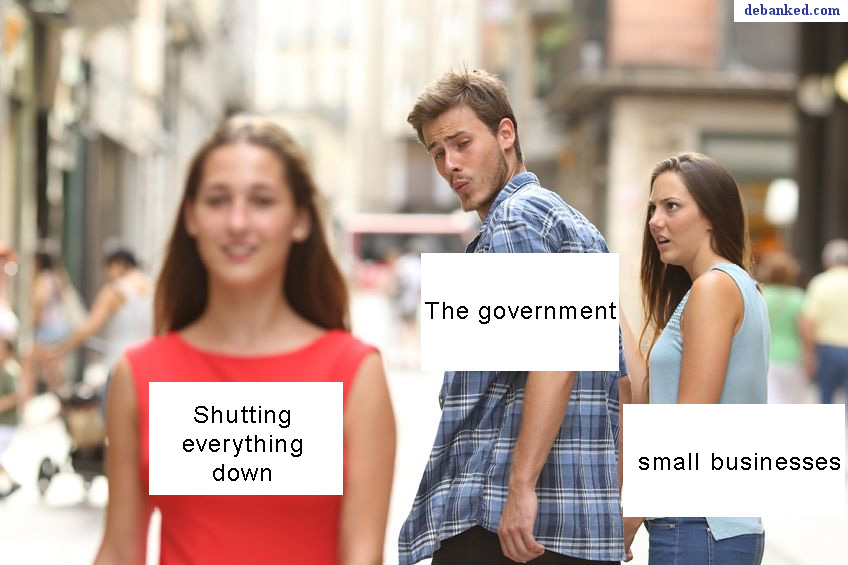
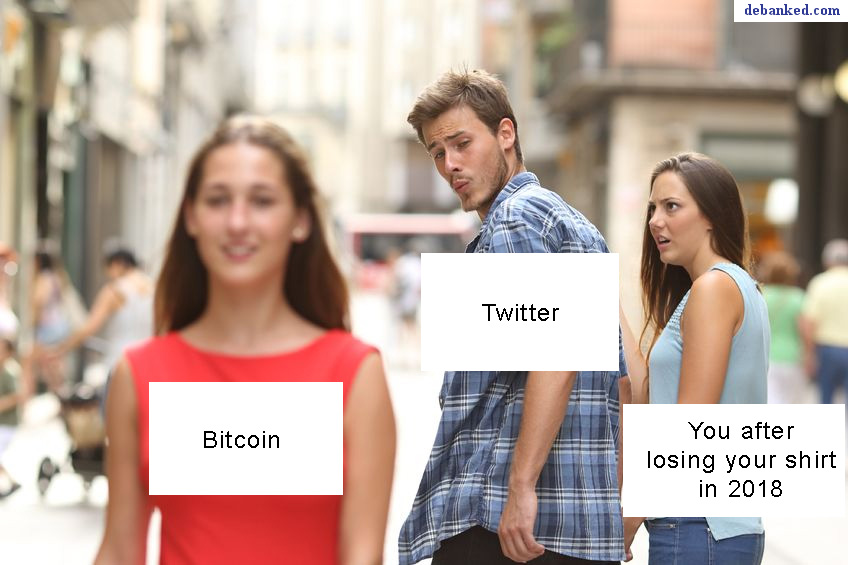
November 21, 2020It’s Thankgiving time, which means…. more deBanked memes! This tradition started 8 years ago. Enjoy the holidays and be safe!




New York Commercial Finance Disclosure Bill Update
November 10, 2020 The controversial commercial finance disclosure bill that passed in New York in July, has still not been signed by Governor Cuomo.
Technically, the governor only had 10 days to sign it while the legislature was in session and only 30 days to sign it when the legislature closed out its session for the year, which it did in July. Both deadlines have passed. But as deBanked learned in the case of the COJ bill, the clock does not actually begin to tick until the legislature has formally “delivered” the bill to the governor.
That puts the disclosure bill and other bills not yet signed in a state of suspended animation that can carry them through until December 31st. Doing this “is done to ensure that legislation is thoroughly vetted, with extra checks to guarantee that bills are not unconstitutional and that they’ll lead to no previously unforeseen consequences.”
It’s that latter part of that, that has created concern. Even dueling small business lending trade associations disagree on what the consequences will be. The Innovative Lending Platform Association (ILPA), for example, say the bill is almost exactly what they wanted, while the Small Business Finance Association (SBFA) suggests that advocates do not even understand the bill, much less the implications.
ILPA’s CEO, Scott Stewart, told deBanked in July that “the implications are that small businesses, certainly in New York to begin with, but we think throughout the country, will have the opportunity to really see, understand, and compare various different sources and products for financing their small businesses in terms of their expansion and success.”
SBFA’s Executive Director, Steve Denis, meanwhile, responded very soon after by saying that they don’t realize that it will subject them to massive liability and hefty fines.
“We’re for disclosure, we think there should be standard disclosure,” Denis said. “Our message to the Governor’s office is ‘Let’s take a step back.’ The Department of Financial Services needs to look at our industry, they need to get to know our industry. They are the experts that understand the space, they understand disclosure, and they understand what they need to do to bring responsible lending to New Yorkers. And we would like to work with the NYDFS and a broader industry to put forward a bill that’s led by the Governor and the Governor’s office that brings meaningful disclosure and meaningful safeguards to this industry.”
The SBFA later published the results of a study that supports their arguments.
In qualitative testing of 24 small business owners and executives who have experience taking commercial loans, the study concluded participants did not understand what APR was.
APR disclosure, of course, is the centerpiece of the entire bill.
It is still possible the bill’s language could be amended before the governor signs it. It’s happened before.
In 2017, for example, the state legislature passed a bill that would establish a 7-person task force to analyze online lending activity in the state. The bill, dubbed the Online Lending Task Force bill, called for industry participants to serve on it. The final version signed by the governor, however, was completely rewritten to the point that the online lending task force bill had completely eliminated the task force portion of it and no one was allowed to participate in any analysis except for NYDFS.
Upstart Files for $100M IPO – Reveals Financials
November 6, 2020
Upstart, the online personal lender that uses non-traditional data like a college education, job history, and residency to evaluate borrowers, is moving forward with an IPO.
The company revealed its financial statements in an S-1 filed on Thursday. In 2019, Upstart generated $164.2M in revenue and had a net loss of $5M. For 2020 through Sept 30th, revenue was at $146.7M with a net income of $4.5M.
The company said that in 2020, 98% of its revenue was generated from platform, referral and servicing fees that it receives from its bank partners. Their bank partners “include Cross River Bank, Customers Bank, FinWise Bank, First Federal Bank of Kansas City, First National Bank of Omaha, KEMBA Financial Credit Union, TCF Bank, Apple Bank for Savings and Ridgewood Savings Bank.”
Upstart borrowers tend to have limited or no credit history, which is where its AI-driven models with 1,600 variables come into play.
“Our bank partners have generally increasingly retained loans for their own customer base and balance sheet,” the company wrote in its S-1. “In the third quarter of 2020, approximately 22% of Upstart-powered loans were retained by the originating bank, while about 76% of Upstart-powered loans were purchased by institutional investors through our loan funding programs.”
Upstart was valued at $750M during its 2019 Series D.
In 2017, deBanked referred to Upstart as the Tesla of alternative lending.
“You hear so much about how Tesla cars will drive themselves, how Google or Amazon home assistants talk to you to as if you’re human,” said Dave Girouard, Upstart co-founder, in an interview back then. “In lending we are the first company to apply these types of technologies to lending.”
Girouard’s co-founder Paul Gu, who serves as SVP of Product and Data Science, was only 21 when Upstart launched in 2012. He’s now 29.
Anna M. Counselman, the third co-founder, is SVP of People and Operations.
Upstart is planning to raise $100M from its IPO.
Pearl Capital is BACK
November 5, 2020 Pearl Capital was among the many small business finance companies that hit the pause button in 2020.
Now it’s BACK.
The company announced today that it was resuming funding MCAs after a long stretch of facilitating PPP loans, of which it processed more than $1.75B through a partnership it had with Cross River Bank.
“Pearl did not default on its senior credit line due to its superior underwriting and has added $250 Million in committed financing to expand its activities,” said company CEO Sol Lax. “If you are a small business and you have survived COVID, you shouldn’t have to shut your doors because you have limited access to capital. We are going to be there for small business both in further iterations of PPP as well as MCA.”
Pearl expects to resume at full speed rather than with limited capacity and highly restricted guidelines. According to the announcement, “Pearl’s ISO Partners can expect lighter stipulation requirements with fewer requested documentation than before and updated pricing. Virtually all business types are eligible for funding from Pearl including high risk industries like auto sales, real estate, home-based businesses, and insurance.
[…]
“We’re thrilled to have the ability again to continue to provide financing for companies during an especially difficult time for businesses across the country and give much needed financial support to businesses,” Lax said.
Let The Games Begin
November 2, 2020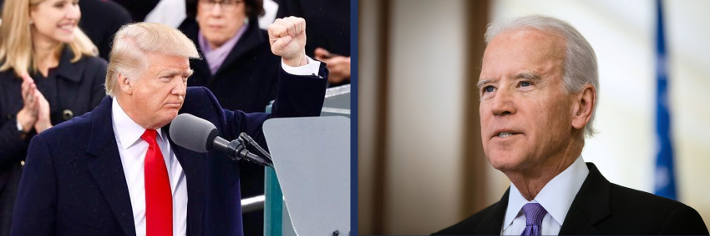 In the run-up to the 2016 election, a Capify survey recorded that small business owners felt Trump had their best interests at heart over Clinton by a 2 to 1 margin.
The alternative finance industry, meanwhile, was largely preparing for a Clinton administration. Then Trump won.
And a lot has changed since then.
deBanked has refrained from conducting any formal survey on the matter and takes no position on a candidate, but anecdotal conversations I’ve personally had with industry participants and a review of industry chats across social networks all lean in favor of Trump.
Those positions are drawn in part from resistance to future business shutdowns, which devastated the small business finance industry, views on taxes, and views on regulatory enforcement. All in all, it’s a business decision.
Talk about Biden has been virtually non-existent. The election is a referendum on Trump.
Once a candidate is elected, we will explore what the next 4 years could be like.
StreetShares Stops Lending Directly to Small Businesses, Records $10.7M Annual Loss
November 1, 2020 StreetShares, the online lender known for its focus on veteran-owned businesses, is no longer lending directly to small businesses, the company disclosed last week. This became effective as of October 26.
“We still offer lending products to small business customers via our LaaS clients,” the company said however.
“As of June 30, 2020, 47 banks, credit unions, and alternative lenders have contracted to use our Lending-as-a-Service (LaaS) small business financing technology.”
It defined LaaS as:
“Since the launch of LaaS, the Company has offered several LaaS packages, which include various products and services depending on the package, such as: online product presence for small business lending, web design collaboration, client-branded landing page, intelligent online loan application for small business borrowers (client-branded or StreetShares-branded), decisioning platform, loan analytics platform, and small business loan marketing services. Depending on the LaaS package, either the Company or the LaaS client will originate, underwrite, and service the small business loans. Our LaaS products and services are available in all 50 states and the District of Columbia.”
Financially, StreetShares’ June 30 fiscal year-end report revealed a massive $10.7M loss on only $4.5M in revenue. Despite the impact of covid, these figures are actually in line with (and perhaps even better than) historical performance. The company had a $12.3M loss on only $4.4M in revenue for the fiscal year prior, for example.
“Beginning in March 2020, we experienced an increase in late payments and requests from our borrowers for payment deferments. As a result, there has been an increase in predicted losses on our loan portfolio and we expect to observe an increase in our charge-off ratio in the near-term; however, we are unable to predict a long-term trend in our charge-off ratio. Beginning in March 2020, we instituted a deferment program that permitted our small business borrowers to defer loan payments as necessary due to the COVID-19 pandemic. We worked closely with our borrowers and have exited all of them from the deferment program as of this filing. We also provided, and continue to provide, certain borrowers with payment plans with reduced payments as necessary. The payment deferments or modifications made as a result of the COVID-19 pandemic consisted of short-term payment deferrals or reduced weekly payments.”
Earlier in the month of October, StreetShares announced they had secured a $10 million round of funding from Motley Fool Ventures, Ally Ventures (the strategic investment arm of Ally Financial), and individual fintech angel investors.