Sean Murray is the President and Chief Editor of deBanked and the founder of the Broker Fair Conference. Connect with me on LinkedIn or follow me on twitter. You can view all future deBanked events here.
Articles by Sean Murray

Par Funding, Receiver Continue to Spar Over Its MCA Business
December 18, 2020 “From inception through 2019, [Par Funding] incurred a cash loss from operations of $136.2 million.”
That’s the conclusion reached by Bradley D. Sharp, CEO of Development Specialists Inc (DSI), the financial advisor to the Receiver appointed in the Par SEC case.
Par has scoffed at the Receiver’s analysis of its business. “We do not necessarily begrudge attorneys, whose skill sets are often in other areas, a potential inability to understand the math that often makes for a strong and profitable financial model,” Par’s lawyers wrote in an October court filing. “There is a reason that smart, mathematically inclined people are typically hired by banks, hedge funds and financial services firms. But the Receiver and his counsel’s inability to understand Par’s business has led to all manner of baseless accusations that are easily answered in the very documents they possess but do not understand…”
Par says it was profitable and walks the Court throught its mathematical process. Sharp says Par’s assessment “is misleading and does not reflect actual operations at the company.”
Sharp alludes to Ponzi-like characteristics but refrains from using that term. “From inception through 2019, [Par] paid $231 million to investors, consisting of principal repayments totaling $135.6 million and interest payments totaling $95.4 million. [Par] could not have made these principal and interest payments to the investors without additional funds from the investors.”
Par explained that the key to its business is in the compounding:
“The merchant funding model is profitable because merchant funding returns are reinvested, either in a new or different merchant, or in an existing merchant with adequate receivables as a consolidation, or as a refinance of a merchant which may already have MCA funding from another provider. And the reinvestment begins on the merchant funding returns which commence immediately and occur daily. In very simple form, the math works as follows. Assuming $10,000 is funded to a merchant pursuant to a funding agreement providing for a funding return of $13,000 over the course of 100 daily ACH withdrawals, the agreement would provide for repayment to begin immediately with daily payments of $130. As those monies are returned, portions are used to pay operating expenses, but most of the monies are re-invested to fund other merchants. Mathematically, this means that the original $10,000 is being used to fund more than one merchant. Over the life of a single $10,000 funding, that same $10,000 can be used to fund multiple merchants, all of whom are paying funding fees in excess of the principal amount received. Thus, the original $10,000, at a 1.30 factor rate, generates $13,000 on the first merchant cash advance (MCA). Those funds are reinvested and generate $16,900 on the second MCA, and $21,970 by the third MCA – an increase of $11,970 over and above the initial $10,000. And that can happen within a year. This is the powerful compounding effect of the financial model.
That is the simplest version of the model. In practice, the model is far more sophisticated than that because the leveraging to new merchants of the MCA returns begins as soon as the MCA payments come in.”
Par additionally said:
“At the conference on October 8, 2020, the Receiver’s counsel told this Court, and many investors, that out of $1.5 million received per day from merchants prior to July 28, 2020, $1.2 million was used for new MCA funding. Thus, according to the Receiver’s counsel, only $300,000 constituted net collections, about 20%. The Receiver’s counsel appears to be suggesting that the company is not holding on to receivables but, instead, is refunding the same merchants 80% of receipts. This proposition is wrong and its assertion shows that the Receiver and his counsel do not understand the MCA business.”
One could assess that a large element of this case consists of the Receiver being like, ha! well look at this! and Par responding, well, yes, that is actually how our business works.
In fact, that is precisely the angle Par took in defending its use of funding new deals with money collected from deals previously funded.
“First, the numbers show that collections are used to fund new MCA deals,” Par’s attorneys wrote. “This may come as a total surprise to the Receiver and his counsel, but funding merchants is the business of Par. That is like criticizing Ford Motor Corp. for using its car sales income to build and sell more cars.”
Both sides agree that Par advanced over $1 billion to small businesses but Sharp says that “reloads” distorted the numbers.
“Use of reloads escalates the obligations of the merchant as each reload adds an additional ‘factor’ along with any new funds advanced,” Sharp wrote. “In [one example the reloaded funds are] subject to the factor twice; once when the funds were originally sent and again when they are included in the reload advance. The use of reloads also significantly distorts the calculation of loss rates as the advances are simply refinanced without becoming a loss.”
Sharp concludes that the true end result for Par is a much higher default rate than it lets on to.
And then there’s this
Sharp has repeatedly brought attention to a list of merchants with unusual payment and funding activity. Par countered by saying there are good explanations for each.
Amongst all of this is that company insiders are alleged to have received tens of millions in payments from Par and the Receiver is confident, in part due to DSI’s report, that Par was majorly unprofitable.
“Based on our review to date, it is apparent that [Par] would not have been able to continue to provide payments to investors, or to continue to operate, without additional funds from investors,” Sharp wrote in a December 13th report.
This case is not the first rodeo for Sharp and DSI in the merchant cash advance business. They were also assigned to manage the 1 Global Capital case.
The case is ongoing. The Court recently approved a motion to expand the Receivership estate.
CFPB Initially Proposed to Exclude MCAs, Factoring, and Equipment Leasing From Section 1071
December 17, 2020 After ten years of debate over when and how to roll out the CFPB’s mandate to collect data from small business lenders, the Bureau has initially proposed to exclude merchant cash advance providers, factors, and equipment leasing companies from the requirement, according to a recently published report.
The decision is not final. A panel of Small Entity Representatives (SERS) that consulted with the CFPB on the proposed rollout recommended that the “Bureau continue to explore the extent to which covering MCAs or other products, such as factoring, would further the statutory purposes of Section 1071, along with the benefits and costs of covering such products.”
The SERS included individuals from:
- AP Equipment Financing
- Artisans’ Bank
- Bippus State Bank
- CDC Small Business Finance
- City First Bank
- Floorplan Xpress LLC
- Fundation Group LLC
- Funding Circle
- Greenbox Capital
- Hope Credit Union
- InRoads Credit Union
- Kore Capital Corporation
- Lakota Funds
- MariSol Federal Credit Union
- Opportunity Fund
- Reading Co-Operative bank
- River City Federal Credit Union
- Security First Bank of North Dakota
- UT Federal Credit Union
- Virginia Community Capital
The panel discussed many issues including how elements of Section 1071 could inadvertently embarrass or deter borrowers from applying for business loans. That would run counter to the spirit of the law which aims to measure if there are disparities in the small business loan market for both women-owned and minority-owned businesses.
One potential snag that could complicate this endeavor is that the concept of gender has evolved since Dodd-Frank was passed in 2010. “One SER stated that the Bureau should consider revisiting the use of male and female as categories for sex because gender is not binary,” the CFPB report says.
But in any case, there was broad support for the applicants to self-report their own sex, race, and ethnicity, rather than to force loan underwriters to try and make those determinations on their own. The ironic twist, however, according to one SER, is that when applicants are asked to self-report this information on a business loan application, a high percentage refuse to answer the questions at all.
The CFPB will eventually roll the law out in some final fashion regardless. The full report can be viewed here.
State That Wooed Yellowstone Capital to Its Shores Has Changed Its Mind
December 8, 2020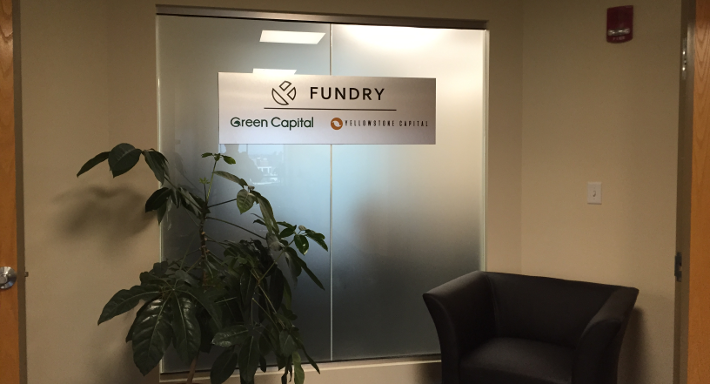 The Attorney General of the State of New Jersey filed a lawsuit against Yellowstone Capital, LLC and several affiliated parties on Tuesday.
The 55-page complaint trots out a long list of allegations but appears to hone in on the company’s actions or alleged lack of action on the reconciliation provision of its merchant cash advance agreements. The AG alleges that the manner in which the defendants conducted themselves should subject the agreements to the state’s lending laws.
Notably, the State says these unlawful acts began in July 2015, months before the State lured Yellowstone to relocate its headquarters there from New York.
In September 2015, for example, the New Jersey Economic Development Authority approved Yellowstone for up to $3.3 million in Grow New Jersey tax credits. When Yellowstone officially moved to Jersey City in 2016, the city’s mayor even made a personal appearance at the office to welcome them.
Now that Covid-19 is ravaging the state’s economy, the political opinion has seemingly changed.
“We are taking action today to protect our State’s small businesses and small business owners from predatory practices in the market for merchant cash advances,” said Attorney General Gurbir Grewal. “Local businesses are struggling due to the COVID-19 pandemic, especially since many were unable to take advantage of the limited relief made available by the federal government through the Paycheck Protection Program. We will not tolerate – now or ever – efforts to take advantage of them through predatory lending and collection practices.”
In 2015, however, New Jersey officials assessed that Yellowstone would have a “net benefit to the State of $23.3 million over [a] 20 year period” and that it was economically important to attract their business operation. Yellowstone was at that time considering a move to White Plains, NY from the company’s original Manhattan offices, State officials argued, so they really had to offer the tax credits for them to come to New Jersey instead.
“Yellowstone is comprised of a team with years of industry experience,” says a 2015 project summary prepared by NJ Economic Development Authority officers Diane Ubinger and Mark Chierici. “As both a direct source of funding and as part of the country’s largest Independent Sales Organization network (‘ISO’) it has numerous in-house funders who concentrate on specific industries/businesses, while also having numerous funding partners within the MCA industry who fund its ‘outside-the-box’ transactions.”
But later in 2019, the deal changed when Yellowstone’s capital investment requirement was not met, the Authority’s communications director told deBanked. As a result the company ended up not receiving the tax credits.
“The NJEDA is committed to ensuring that businesses approved for tax incentives are compliant with all program requirements and to making sure that companies that do not meet their commitments to the taxpayers of New Jersey do not benefit from NJEDA-administered programs.”
Additional allegations in today’s complaint were made regarding Yellowstone’s historical use of confessions of judgment, a recovery tool that was largely eradicated by the passing of a law in New York in 2019.
The AG’s case was filed in Hudson County in the Superior Court.
Yellowstone Capital offered no comment to this story.
Update: 12/9/20 This story has been updated to reflect the current status of the tax credits as provided by NJ EDA.
EIDL Loans Searchable
December 3, 2020The Small Business Forum has added additional functionality to its PPP loan querying tool. The tool now enables users to query every single EIDL borrower as well.
SBA Dumps Detailed Data on Every Single PPP Borrower
December 2, 2020 The SBA has dumped all of it.
A court order recently forced the SBA to reveal precise details of every single PPP and EIDL borrower regardless of loan size and regardless of privacy concerns.
The SBA dumped all the data late on Tuesday night through a series of downloadable .csv files.
However, small-business-forum.net has made a web-friendly search tool for the PPP loans (not the EIDL), which contains 5 million records. The loan amounts are precise. This latest cache of data is different from the previous reveal in that the loan amounts are exact. There is no approximating here.
The mass disclosure was viewed as controversial because PPP loan amounts were directly correlated with monthly payroll figures so one could potentially deduce the salary of a self-employed business owner with no employees by knowing just their PPP loan amount.
In any case, all of the data has been made public. The easiest way to search the database is at https://www.small-business-forum.net/pppchecker.php
State of Fintech Lending in Canada Report Reveals Key Information for Lenders
November 23, 2020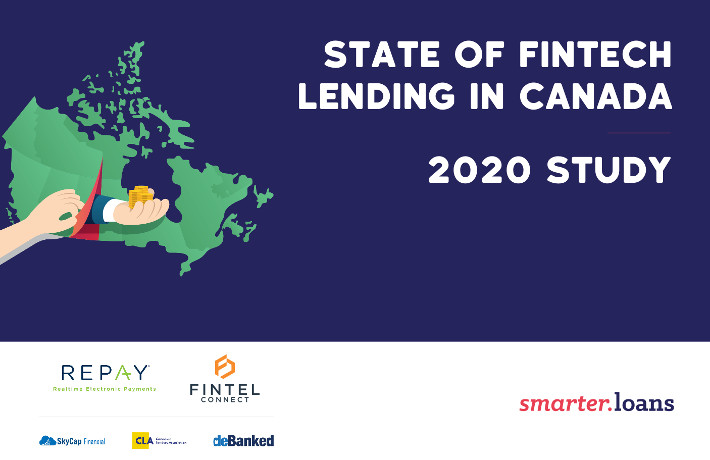 Smarter Loans, Canada’s loan comparison giant, has published its 3rd annual State of Fintech Lending report.
“As Canadians stayed home longer, adoption of fintech products has accelerated dramatically,” the report says, accelerating trends that had already been developing for years. The data is based on survey results submitted by nearly 2,600 fintech lending customers.
While there are dozens of important takeaways, respondents indirectly signaled how valuable it is to be among the brands that are found first by borrowers.
That’s because loan applicants said that they researched fewer lenders than ever before (35% only researched 1 or 2 lenders before applying) and they spent less time researching lenders than ever before (31% said they spent less than 1 hour researching). Furthermore, 51% of respondents said that they only applied with a single provider.
This approach worked. Of those that got approved, 89% of respondents said that they were satisfied or very satisfied with their loan provider.
The trend should signal to lenders that borrowers may simply come to expect a satisfactory experience regardless of where they apply and that there is tremendous value in simply being the first 1-2 lenders that a prospective borrower considers.
And hint hint, it pays to be easily discoverable online. Fifty eight percent of respondents said they discovered their loan provider through online search.
Click here to view the full survey results in Smarter Loans’ official State of Fintech Lending.
deBanked Meme Time – Happy Thanksgiving
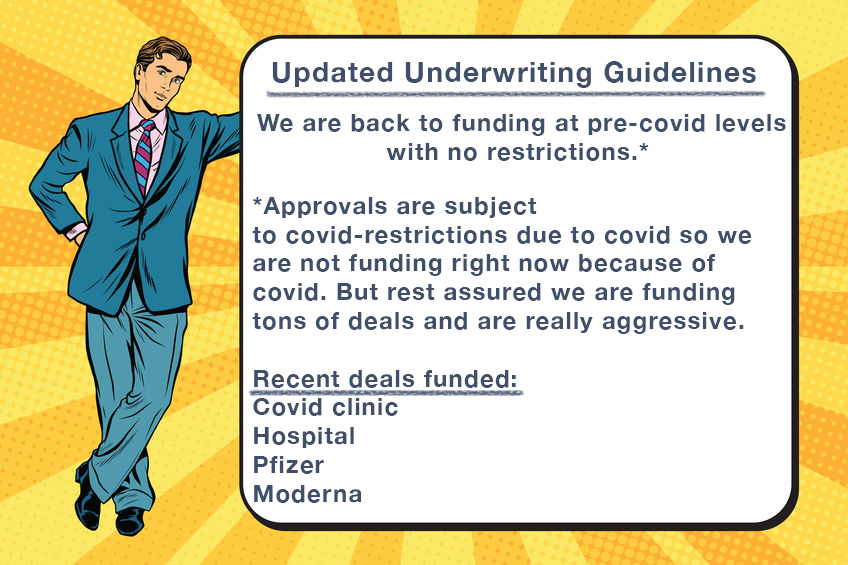
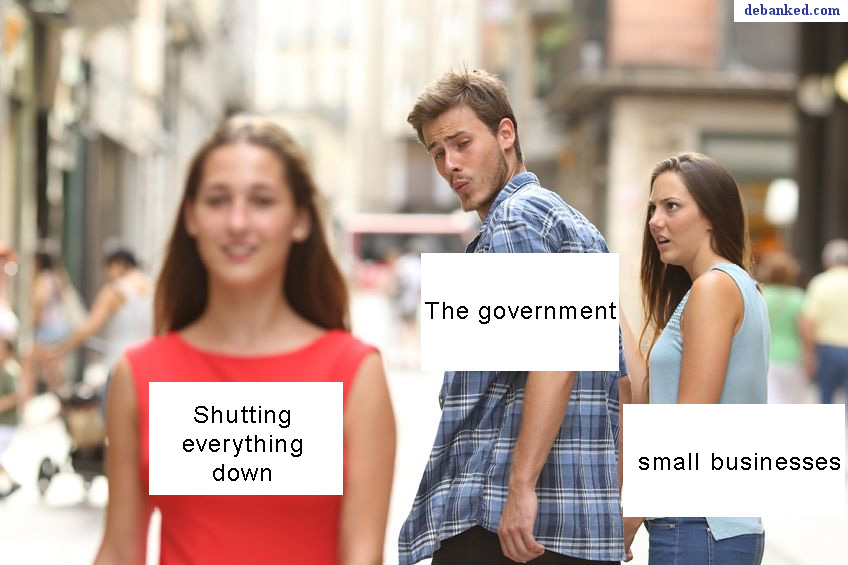
November 21, 2020It’s Thankgiving time, which means…. more deBanked memes! This tradition started 8 years ago. Enjoy the holidays and be safe!






New York Commercial Finance Disclosure Bill Update
November 10, 2020 The controversial commercial finance disclosure bill that passed in New York in July, has still not been signed by Governor Cuomo.
Technically, the governor only had 10 days to sign it while the legislature was in session and only 30 days to sign it when the legislature closed out its session for the year, which it did in July. Both deadlines have passed. But as deBanked learned in the case of the COJ bill, the clock does not actually begin to tick until the legislature has formally “delivered” the bill to the governor.
That puts the disclosure bill and other bills not yet signed in a state of suspended animation that can carry them through until December 31st. Doing this “is done to ensure that legislation is thoroughly vetted, with extra checks to guarantee that bills are not unconstitutional and that they’ll lead to no previously unforeseen consequences.”
It’s that latter part of that, that has created concern. Even dueling small business lending trade associations disagree on what the consequences will be. The Innovative Lending Platform Association (ILPA), for example, say the bill is almost exactly what they wanted, while the Small Business Finance Association (SBFA) suggests that advocates do not even understand the bill, much less the implications.
ILPA’s CEO, Scott Stewart, told deBanked in July that “the implications are that small businesses, certainly in New York to begin with, but we think throughout the country, will have the opportunity to really see, understand, and compare various different sources and products for financing their small businesses in terms of their expansion and success.”
SBFA’s Executive Director, Steve Denis, meanwhile, responded very soon after by saying that they don’t realize that it will subject them to massive liability and hefty fines.
“We’re for disclosure, we think there should be standard disclosure,” Denis said. “Our message to the Governor’s office is ‘Let’s take a step back.’ The Department of Financial Services needs to look at our industry, they need to get to know our industry. They are the experts that understand the space, they understand disclosure, and they understand what they need to do to bring responsible lending to New Yorkers. And we would like to work with the NYDFS and a broader industry to put forward a bill that’s led by the Governor and the Governor’s office that brings meaningful disclosure and meaningful safeguards to this industry.”
The SBFA later published the results of a study that supports their arguments.
In qualitative testing of 24 small business owners and executives who have experience taking commercial loans, the study concluded participants did not understand what APR was.
APR disclosure, of course, is the centerpiece of the entire bill.
It is still possible the bill’s language could be amended before the governor signs it. It’s happened before.
In 2017, for example, the state legislature passed a bill that would establish a 7-person task force to analyze online lending activity in the state. The bill, dubbed the Online Lending Task Force bill, called for industry participants to serve on it. The final version signed by the governor, however, was completely rewritten to the point that the online lending task force bill had completely eliminated the task force portion of it and no one was allowed to participate in any analysis except for NYDFS.