Banking
The Seven-Minute Loan Shakes Up Washington And The 50 States
August 19, 2018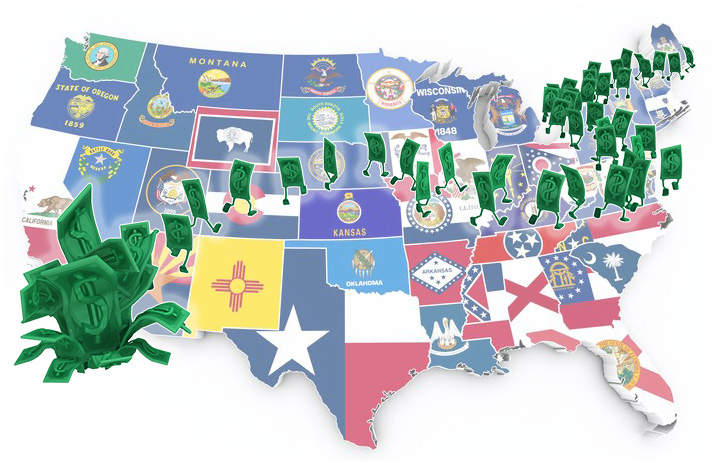 It takes seven minutes for Kabbage to approve a small-business loan. “The reason there’s so little lag time,” says Sam Taussig, head of global policy at the Atlanta-based financial technology firm, “is that it’s all automated. Our marginal cost for loans is very low,” he explains, “because everything involving the intake of information – your name and address, know-your-customer, anti-money-laundering and anti-terrorism checks, analyzing three years of income statements, cash-flow analysis – is one-hundred-percent automated. There are no people involved unless red flags go off.”
One salient testament to Kabbage’s automation: Fully $1 billion of the $5 billion in loans that it has made to 145,000 discrete borrowers since it opened its portals in 2011 were made between 6 p.m. and 6 a.m.
Now compare that hair-trigger response time and 24-hour service for a small business loan of $1,000-$250,000 with what occurs at a typical bank. “Corporate credit underwriting requires 28 separate tasks to arrive at a decision,” William Phelan, president, and co‐founder of PayNet—a top provider of small-business credit data and analysis – testified recently to a Congressional subcommittee. “These 28 tasks involve (among other things): collecting information for the credit application, reviewing the financial information, data entry and calculations, industry analysis, evaluation of borrower capability, capacity (to repay), and valuation of collateral.”
A “time-series analysis,” the Skokie (Ill.)-based executive went on, found that it takes two-to-three weeks – and often as many as eight weeks—to complete the loan approval process. For this “single credit decision,” Phelan added, the services of three bank departments – relationship manager, credit analyst, and credit committee – are required.
The cost of such a labor-intensive operation? PayNet analysts reckoned that banks incur $4,000-$6,000 in underwriting expenses for each credit application. Phelan said, moreover, that credit underwriting typically includes a subsequent loan review, which consumes two days of effort and costs the bank an additional $1,000. “With these costs,” Phelan told lawmakers, “banks are unable to turn a profit unless the loan size exceeds $500,000.”
According to the National Bureau of Economic Research, the country’s very biggest banks — Bank of America, Citigroup, J.P. Morgan Chase, and Wells Fargo—have been the financial institutions most likely to shut down lending to small businesses. “While small business lending declined at all banks beginning in 2008,” NBER’s September, 2017 report announces, “the four largest banks” which the report dubs the ‘Top Four’—“cut back significantly relative to the rest of the banking sector.”
NBER reports further that by 2010—the “trough” of the financial crisis—the annual flow of loan originations from the Top Four stood at just 41% of its 2006 level, which compared with 66% of the pre-crisis level for all other banks. Moreover, small-business lending at the “Top Four” banks remained suppressed for several years afterward, “hovering” at roughly 50% of its pre crisis level through 2014. By contrast, such lending at the rest of the country’s banks eventually bounced back to nearly 80% of the pre-crisis level by 2014.

That pullback—by all banks—continues, says Kenneth Singleton, an economics professor at Stanford University’s Graduate School of Business. Echoing Phelan’s testimony, Singleton told deBanked in an interview: “Given the high underwriting costs, banks just chose not to make loans under $250,000,” which are the bread-and-butter of small-business loans. In so doing, he adds, banks “have created a vacuum for fintechs.”
All of which helps explain why Kabbage and other fintechs making small business loans are maintaining a strong growth trajectory. As a Federal Reserve report issued in June notes, the five most prominent fintech lenders to small businesses—OnDeck, Kabbage, Credibly, Square Capital, and PayPal—are on track to grow by an estimated 21.5 percent annually through 2021.
Their outsized growth is just one piece—albeit a major one—of fintech’s larger tapestry. Depending on how you define “financial technology,” there are anywhere from 1,400 to 2,000 fintechs operating in the U.S., experts say. Fintech companies are now engaged in online payments, consumer lending, savings and investment vehicles, insurance, and myriad other forms of financial services.
Fintechs’ advocates—a loose confederacy that includes not only industry practitioners but also investors, analysts, academics, and sympathetic government officials—assert that the U.S. fintech industry is nonetheless being blunted from realizing its full potential. If fintechs were allowed to “do their thing,” (as they said in the sixties) this cohort argues, a supercharged industry would bring “financial inclusion” to “unbanked” and “underbanked” populations in the U.S. By “democratizing access to capital,” as Kabbage’s Taussig puts it, harnessing technology would also re-energize the country’s small businesses, which creates the majority of net new jobs in the U.S., according to the U.S. Small Business Administration.
But standing in the way of both innovation and more robust economic growth, this cohort asserts, is a breathtakingly complex—and restrictive—regulatory system that dates back to the Civil War. “I do think we’re victims of our own success in that we’ve got a pretty good financial system and a pretty good regulatory structure where most people can make payments and the vast majority of people can get credit.” says Jo Ann Barefoot, chief executive at Barefoot Innovation Group in Washington, D.C. and a former senior fellow at Harvard’s Kennedy School. But because of that “there’s been more inertia and slower adoption of new technology,” she adds. “People in the U.S. are still going to bank branches more than people in the rest of the world.”
Barefoot adds: “There are five agencies directly overseeing financial services at the Federal level and another two dozen federal agencies” providing some measure of additional, if not duplicative oversight, over financial services. “But there’s no fintech licensing at the national level,” she says. And because each state also has a bank regulator, she notes, “if you’re a fintech innovator, you have to go state by state and spend millions of dollars and take years” to comply with a spool of red tape pertaining to nonbanks.
At the federal level, the current system— which includes the Federal Reserve, Office of the Comptroller of the Currency (OCC), and the Federal Deposit Insurance Corporation (FDIC)—developed over time in a piecemeal fashion, largely through legislative responses to economic panics, shocks and emergencies. “For historical reasons,” Barefoot remarks, “we have a lot of agencies” regulating financial services.
For exhibit A, look no further than the Consumer Financial Protection Bureau created amidst the shambles of the 2008-2009 financial crisis by the 2010 Dodd-Frank Act. Built ostensibly to preserve safety and soundness, the agencies have constructed a moat around the banking system.
Karen Shaw Petrou, managing partner at Federal Financial Analytics, a Washington, D.C. consultancy, is a banking policy expert who frequently provides testimony to Congress and regulatory agencies. She wrote recently that the country’s banking sector has been protected from the kind of technological disruption that has upended a whole bevy of industries.
“The only reason Amazon and its ilk may not do to banking, brokers and insurers what they did to retailers—and are about to do to grocers and pharmacies,” she observed recently in a blog—“is the regulatory structure of each of these businesses. If and how it changes are the most critical strategic factors now facing finance.”

Cornelius Hurley, a Boston University law professor and executive director of the Online Lending Policy Institute, is especially critical of the 50-state, dual banking system. State bank regulators oversee 75 percent of the country’s banks and are the primary regulators of nonbank financial technology companies. “The U.S. is falling behind other countries that are much less balkanized,” Hurley says. “Our federal system of government has served us well in many areas in our becoming a leading civil society. It’s given us NOW (Negotiable Order of Withdrawal) accounts, money-market accounts, automatic teller machines, and interstate banking. But now it’s outlived its usefulness and has become an impediment.”
Take Kabbage, which actually avoids a lot of regulatory rigmarole by virtue of its partnership with Celtic Bank, a Utah-chartered industrial bank. The association with a regulated state bank essentially provides Kabbage with a passport to conduct business across state lines. Nonetheless, Kabbage has multiple, incessant, and confusing dealings with its bank overseers in the 50 states.
“Where the states get involved,” says Taussig, “is on brokering, solicitation, disclosure and privacy. We run into varying degrees of state legislative issues that make it hard to do business. Right now we’re plagued by what’s been happening with national technology actors on cybersecurity breaches and breach disclosures. We are required to notify customers. But some states require that we do it in as few as 36 hours, and in others it’s a couple of months. We’ve lobbied for a national breach law of four days,” he adds, which would “make it easier for everyone operating across the country.”
Then there’s the meaning of “What is a broker?’” says Taussig, who as a regulatory compliance expert at Kabbage sees his role as something of an emissary and educator to regulators and politicians, the news media, and the public. “The definitions haven’t been updated since the 1950s and now we have wildly different interpretations of brokering and solicitation,” he says. “The landscape has changed with e-commerce and each state has a different perspective of what’s kosher on the Internet.”

Washington State is a good example. It’s one of a handful of jurisdictions in which regulators confine nonbank fintechs to making consumer loans. In a kabuki dance, fintech companies apply for a consumer-lending license and then ask for a special dispensation to do small-business lending.
And let’s not forget New Mexico, Nevada and Vermont where a physical “brick-and-mortar” presence is required for a lender to do business. Digital companies, Taussig says, would have to seek a waiver from regulators in those states. “Many companies spend a lot of money on billable hours for local lawyers to comply with policies and procedures,” Taussig reports, “and it doesn’t serve to protect customers. It’s really just revenue extraction.”
All such restraints put fintechs at a disadvantage to traditional financial institutions, which by virtue of a bank charter, enjoy laws guaranteeing parity between state-chartered and federally chartered national banks. The banks are therefore able to traverse state lines seamlessly to take deposits, make loans, and engage in other lines of business. In addition, fintechs’ cost of funds is far higher than banks, which pay depositors a meager interest rate. And banks have access to the Fed discount window, while their depositors’ savings and checking accounts are insured up to $200,000.
The result is a higher cost of funds for fintechs, which principally depend on venture capital, private equity, securitization and debt financing as well as retained earnings. And that translates into steeper charges for small business borrowers. A fintech customer can easily pay an interest rate on a loan or line of credit that’s three to four times higher than, say, a bank loan backed by the U.S. Small Business Administration.
Kabbage, for example, reports that its average loan of roughly $10,000 typically carries an interest rate of 35%-36%. It’s credits are, of course, riskier than the banks’. The company does not report figures on loans denied, Taussig told deBanked, but Stanford’s Singleton says that the fintech industry’s denial rate is roughly 50 percent for small business loans. “Fintechs have higher costs of capital and they’re also facing moderate default rates,” notes Singleton. “They’re not enormous, but fintechs are dealing with a different segment. Small businesses have much more variability in cash flows, so lending could be riskier than larger, established companies.”
 Even so, venture capitalists continue to pour money into fintech start-ups. “I’ve gone to several conferences,” Singleton says, “and everywhere I turn I’m meeting people from a new fintech company. One of the striking things about this space,” he adds, “is that there are lot of aspiring start-ups attacking very specific, very narrow issues. Not all will survive, but someone will probably acquire them.”
Contrast that to the world of banking. Many banks are wholeheartedly embracing technology by collaborating with fintechs, acquiring start-ups with promising technology, or developing in-house solutions. Among the most impressive are super-regionals Fifth Third Bank ($142.2 billion), Regions Financial Corp. ($123.5 billion), and BBVA Compass ($69.6 billion), notes Miami-based bank consultant Charles Wendel. But many banks are content to cater to familiar customers and remain complacent. One result is that there’s been a steady diminution in the number of U.S. banks.
Over the past ten years, fully one-third of the country’s banks were swallowed whole in an acquisition, disappeared in a merger, failed, or otherwise closed their doors. There were 5,670 federally insured banks at the end of 2017, according to the Federal Deposit Insurance Corp., a 2,863-bank, 33.5% decrease from the 8,533 commercial banks operating in the U.S. in 2007.
It does appear that, to paraphrase an old expression, many banks “are going out of style.” In recent years there have been more banking industry deaths than births. Sixty-three banks have failed since 2013 through June while only 14 de novo banks have been launched. In Texas, which is known for having the most banks of any state in the country, only one newly minted bank debuted since 2009. (The Bank of Austin is the new kid on the Texas block, opening in a city known as a hotbed of technology with its “Silicon Hills.”)
One reason there’s so little enthusiasm among venture capitalists and other financial backers for investing in de novo banks is that regulators are known to be austere. “If you’re a company in the U.S.,” says Matt Burton, a founder of data analytics firm Orchard Platform Markets (which was recently acquired by Kabbage), “and you tell regulators that you want to grow by 100 percent a year – which is the scale you must grow at to get venture-capital funding – regulators will freak out. Bank regulators are very, very strict. That’s why you never hear about new banks achieving any sort of scale.”
But while bank regulators “are moving sluggishly compared to the rest of the world” in adapting to the fintech revolution, says Singleton, there are numerous signs that the status quo may be in for a surprising jolt. The Treasury Department is about to issue (possibly by the time this story is published) a major report recommending an across-the-board overhaul in the regulatory stance toward all nonbank financials, including fintechs. According to a report in The American Banker, Craig Phillips, counselor to Treasury Secretary Steven Mnuchin, told a trade group that the report would address regulatory shortcomings and especially “regulatory asymmetries” between fintech firms and regulated financial institutions.

Christopher Cole, senior regulatory counsel at the Independent Community Bankers Association—a Washington, D.C. trade association representing the country’s Main Street bankers—told deBanked that, among other things, the Treasury report would likely recommend “regulatory sandboxes.” (A regulatory sandbox allows businesses to experiment with innovative products, services, and business models in the marketplace, usually for a specified period of time.)
That’s an idea that fintech proponents have been drumming enthusiastically since it was pioneered in the U.K. a few years ago, and it’s something that the independent bankers’ lobby, whose member banks are among the most threatened by fintech small-business lenders, says it too can support. Treasury’s Phillips “has said in the past that he’d like to see a level playing field,” the ICBA’s Cole says. “So if (regulators) are going to allow a sandbox, any company could be involved, including a community bank. We agree with him, of course, because we’d like to take advantage of that.”
In March, 2018, Arizona became the first state to establish a regulatory sandbox when the governor signed a law directing that state’s attorney general (and not the state’s banking regulator) to oversee the program. The agency will begin taking applications in August with approval in 90 days, says Paul Watkins, civil litigation chief in the AG’s office. Watkins told deBanked that he’s been most surprised so far by “the degree of enthusiasm” from overseas companies. With the advent of the sandbox, he adds, “Landlocked Arizona has become a port state.”
 The OCC, which is part of the Treasury Department, may also revive its plan to issue a national bank charter to fintechs, sources say (EDITOR’S NOTE: This had not yet been implemented before this story went to print. The OCC is now accepting such applications) – a hugely controversial proposal that was put on ice last year (and some thought left for dead) when former Commissioner Thomas J. Curry’s tenure ended last spring. At his departure, the fintech bank charter faced a lawsuit filed by both the New York State Banking Department and the Conference of State Bank Supervisors. (Since then, the lawsuit was tossed out by the courts on the ground that the case was not “ripe” – that is, it was too soon for plaintiffs to show injury).
Taussig, the regulatory expert at Kabbage, reports that the Comptroller of the Currency, Robert J. Otting, has promised “a thumbs-up or thumbs-down” decision by the end of July or early August on issuing fintechs a national bank charter. He counts himself as “hopeful” that OCC’s decision will see both of the regulator’s thumbs pointing north.

The Conference of State Bank Supervisors, meanwhile, has extended an olive branch to the fintech community in the form of “Vision 2020.” CSBS touts the program as “an initiative to modernize state regulation of non-bank financial companies.” As part of Vision 2020, CSBS formed a 21-member “Fintech Industry Advisory Panel” with a recognizable roster of industry stalwarts: small business lenders Kabbage and OnDeck Capital are on board, as are consumer lenders like Funding Circle, LendUp and SoFi Lending Corp. The panel also boasts such heavyweights in payments as Amazon and Microsoft.
Working closely with the fintech industry is a “key component” of Vision 2020, Margaret Liu, deputy general counsel at CSBS, told deBanked in a recent telephone interview. CSBS and the fintech industry are “having a dialogue,” she says, “and we’re asking industry to work together (with us) and bring us a handful of top recommendations on what states can do to improve regulation of nonbanks in licensing, regulations, and examinations.
“We want to know,” she added, ‘What the main friction points are so that we can find a path forward. We want to hear their concerns and talk about pain points. We want them to know the states are not deaf and blind to their concerns.”
Survey Indicates That Senior Loan Officers Have Eased Standards
August 10, 2018
Domestic banks eased standards or terms on commercial and industrial (C&I) loans over the past three months, according to a July 2018 Federal Reserve survey that gathered information from senior loan officers at banks. The survey received responses from 72 U.S. banks.
In the survey, banks cited increased competition from other lenders as a reason for easing standards. In addition, a significant number of responses mentioned a more favorable economic outlook, increased tolerance for risk, and increased liquidity in the secondary market for these loans as important reasons for the easing.
According to the survey, banks reported stronger demand for C&I loans by small firms and weaker demand for Commercial Real Estate (CRE) loans. When asked to consider a range of leniency from 2005 to the present, bank respondents said that, on average, their lending standards on C&I loans are currently “at the easier end of the range.”
What does “easing standards” actually mean?
According to the report, it means, in part, that “moderate net fractions of banks narrowed loan rate spreads and increased the maximum maturity on loans to small firms.” It also means that a significant number of banks increased the maximum size of credit lines and narrowed loan rate spreads on loans to large and middle-market firms.
Unlike C&I loan standards, banks kept residential lending standards mostly unchanged, according to the survey. As part of this survey, loan officers at 22 U.S. branches or agencies of foreign banks were also interviewed. Interestingly, a significant portion of foreign banks reported that their level of standards on lending to small firms is actually at the tighter end of the range since 2005.
Signature Bank Expands West
August 6, 2018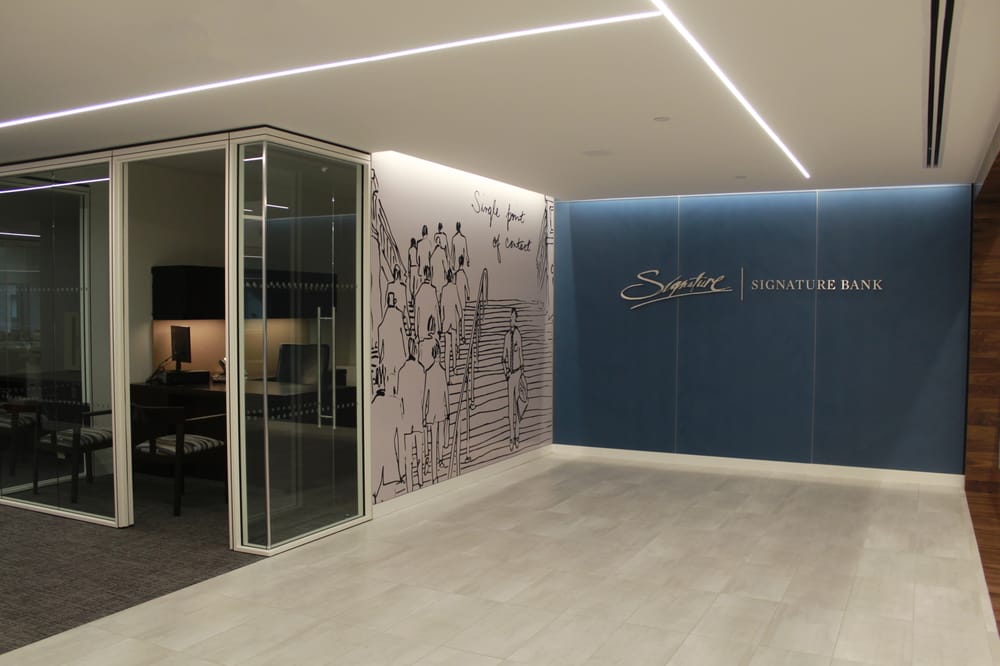 Signature bank announced last week that it received approval from both the New York State Department of Financial Services and the Federal Deposit Insurance Corp. (FDIC) to begin operating in California. The Bank already opened an accommodation office at the beginning of the year as it began preparations to introduce its single-point-of-contact banking model on the west coast. The single-point-of-contact model means that a client deals with only a small teams for all of its needs.
“There is significant talent on the west coast, and our established single-point-of-contact approach has already been very well received since the bank launched its presence in San Francisco,” said Signature Bank President and CEO Joseph J. DePaolo. “We look forward to expanding our footprint in California and bringing privately owned businesses the same level of client commitment, care and service for which this bank has become known.”
Signature Bank focuses on privately owned business clients, providing them with business loans, equipment finance and leasing, as well as SBA loans. Although a Signature Bank spokesperson said that SBA loans make up a very small percentage of the bank’s loans. Since opening May 2001, the bank has made $33.25 billion in loans. According to the bank’s second quarter earnings report, the bank’s provision for loan losses for the second quarter of 2018 was $8.0 million, compared with $187.6 million for the second quarter of last year. The previously elevated provisions were due to the bank’s New York City taxi medallion loan portfolio. (The value of New York City taxi medallions has dropped dramatically with competition from driving services like Uber.)
According to the bank’s website, it serves the “financial needs of privately owned businesses, their owners and senior managers – a group of clients who often find themselves underserved by the [New York] area’s larger financial institutions.”
Signature Bank is a full-service commercial bank with offices in the five boroughs of New York City, as well as Nassau, Suffolk and Westchester counties in New York and Fairfield County in Connecticut.
Trade Group Urges FDIC to Reject NelNet Bank Application
August 3, 2018 On Wednesday, the Independent Community Bankers of America (ICBA) asked the Federal Deposit Insurance Corp. (FDIC) to deny Nelnet’s application to become an Industrial Loan Corporation (ILC) bank. ILC banks are special purpose banks that are not required to adhere to the same regulations as other banks, yet they can bear the same risk of failing.
“The ILC loophole allows commercial interests to own full-service banks while avoiding the legal restrictions and regulatory supervision that apply to other bank holding companies—threatening the financial system and creating an uneven regulatory playing field,” said ICBA President and CEO Rebeca Romero Rainey in a statement.
Furthermore, in a letter to the FDIC, the community bank trade group proposed a two year moratorium on future ILC bank applications. ILC bank charters are attractive to fintech companies because they offer reduced regulations (compared to traditional bank charters) and access to all 50 states.
“To support a safe and sound financial system and to maintain the separation of banking and commerce, the FDIC should impose a two-year application moratorium and Congress should close the ILC loophole for good,” Rainey said. “Our deposit-insurance system was created to protect depositors—not commercial firms.”
ICBA’s letter references the fairly recent ILC bank applications of two other fintech companies, SoFi and Square. Square withdrew its application last month, but said it had plans to refile. SoFi withdrew its application last October following sexual harassment allegations against its then CEO Mike Cagney. The company has not stated that it has plans to refile the application.
The ICBA’s request for a moratorium on applications for ILC bank charters comes right after the U.S. Office of the Comptroller of the Currency (OCC) opened its doors this week to fintechs interested in obtaining special purpose bank charters. So now fintechs have a few options if they aspire to become a bank.
The ICBA’s mission is to advocate for the community banking industry. It represents nearly 5,700 community banks in the U.S.
Can Fintech Startups Become Banks? OCC Opens The Gates
August 1, 2018 Yesterday, the U.S. Treasury Department released a report that prompted the Office of the Comptroller of the Currency (OCC) to say that it would start accepting applications from fintech for special purpose national bank charters.
This is boon for fintech companies that, until now, have mostly been prevented from applying for national bank charters because of protest from banks and others that they will not be subject to adequate regulations. But now the OCC, a significant regulator, is opening the door for non-depository fintech companies – like OnDeck and Kabbage – to become banks.
“Over the past 150 years banks and the federal banking system have been the source of tremendous innovation that has improved banking services and made them more accessible to millions,” said head of the OCC, Comptroller of the Currency, Joseph M. Otting, in a statement. “The federal banking system must continue to evolve and embrace innovation to meet the changing customer needs and serve as a source of strength for the nation’s economy…Companies that provide banking services in innovative ways deserve the opportunity to pursue that business on a national scale as a federally chartered, regulated bank.”
The main advantage for fintech companies of having the opportunity to get their own bank charter is that they would now be able to operate nationwide under a single licensing and regulatory system, instead of a myriad of state licenses. Currently, fintech companies must adhere to the regulations in each state where they do business, which can be expensive. And some states have regulations that are stricter than others. That is why this news is bad news for states that feel that this development will allow fintech companies to bypass and undermine their regulation designed to protect consumers.
The OCC’s decision is the latest development in a years long, sustained effort by fintechs to become banks. In fact, for the last several years, Fintech companies have tried attaining bank status by getting the Utah Department of Financial Institutions to allow them to become Industrial Loan Company (ILC) banks. So far, Square, SoFi and NelNet have tried, in some capacity, to become an ILC bank.
The New York Department of Financial Service and the Conference of State Bank Supervisors (CSBS) was angered by the OCC’s decision.
“An OCC fintech charter is a regulatory train wreck in the making,” said CSBS President John W. Ryan in a statement. “Such a move exceeds the current authority granted by Congress to the OCC. Fintech charter decisions would place the federal government in the business of picking winners and losers in the marketplace. And taxpayers would be exposed to a new risk: failed fintechs.”
He said that his organization is keeping all options open to stop what he says is regulatory overreach.
The OCC indicated in its announcement that fintech companies that become special purpose national banks will be subject to heightened supervision initially, similar to other banks. But these special purpose banks would not have to abide by the stricter regulations of deposit-taking banks and they would not have to be insured by the Federal Deposit Insurance Corporation (FDIC) either.
“It is hard to conceive that insured national banks will allow the OCC to allow a fintech entity a national bank charter without insisting that all national bank obligations apply—which is what fintech companies want to avoid,” said Joseph Lynyak, partner and regulatory reform specialist at the law firm Dorsey & Whitney.
nCino Partners With Santander
July 24, 2018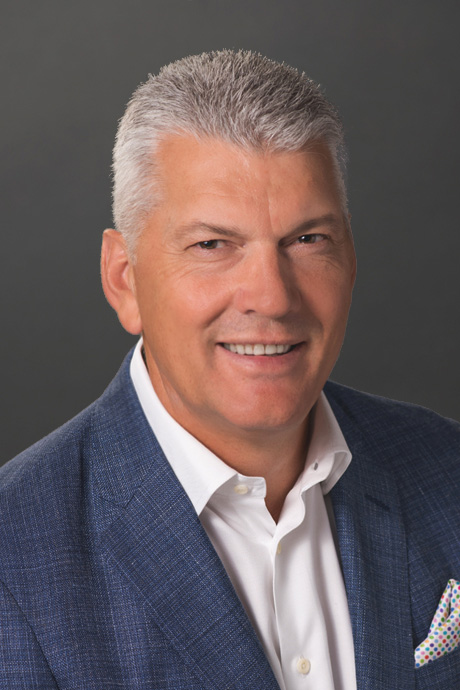
nCino partnered with Santander Bank last week, its latest in a string of partnerships with major banks.
“Innovative institutions such as Santander Bank understand the importance of ensuring the customer experience is as fast, easy and intuitive as possible,” said Pierre Naudé, CEO of nCino. “[Santander] also recognizes that a shiny front end means nothing if the middle and back office doesn’t embrace at least the same degree of automation and intelligence.”
nCino is a cloud-based lending platform that grew out of Wilmington, North Carolina-based Live Oak Bank in 2012. Its founder, James Mahan III, then CEO of Live Oak Bank, along with his team, recognized a need to make the commercial lending process less time-consuming. So they created the nCino Bank Operating System internally for Live Oak Bank. But it soon attracted the interest of other financial institutions, in the US and beyond.
Last year, nCino told deBanked in that in addition to working with Live Oak Bank, it was working with more than 150 other financial institutions in multiple countries, including nine of the top 30 US banks. Now, according to the nCino website, over 200 banks and credit unions of varying sizes use the company’s Bank Operating System. TD Bank and SunTrust are among their largest bank partners.
An nCino spokesperson told deBanked that its Bank Operating System is sold on a subscription-basis that is driven by individual annual user licenses. This allows employees, executives and other stakeholders of a financial institution to access the benefits and functionality of nCino’s solution. nCino spun off from Live Oak Bank and became its own entity in 2014. Separately, Live Oak Bank (NASDAQ: LOB) went public in 2015.
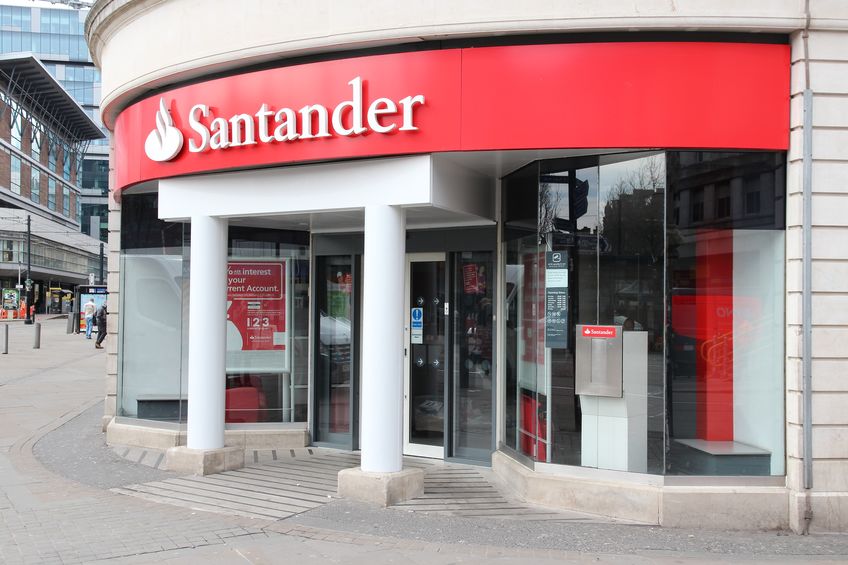 Santander will be using nCino’s platform for its business banking clients. Santander says that nCino’s cloud-based platform is accessible to customers from any device and will reduce the time it takes Santander to deliver loan decisions from start to finish by approximately 40 percent. In conjunction with a partnership with Accenture, Santander will be using nCino’s platform to help with customer relationship management, loan origination, account opening, workflow, enterprise content management, and instant reporting capabilities.
“Respecting our customers means giving them more insight into the loan process and getting them their money faster without any impediments so they can focus on running their businesses,” said Amir Madjlessi, Executive Vice President and Managing Director of Business Banking at Santander. “nCino’s platform automates the lending process from start to finish in a way that ensures a seamless, transparent experience for our customers that reduces delays and inefficiencies and securely connects our clients to our bankers whenever they need them with the touch of a button.”
nCino employs 500 people and is headquartered in Wilmington, North Carolina. The company recently opened an office in London and has plans to open additional offices in Australia and Canada later this year, according to a company spokesperson.
Texas Man Defrauds Banks with Cattle
July 18, 2018 A Texas man was arrested last week on allegations of using 8,000 heads of cattle he did not own as collateral for outstanding loans of more than $5.8 million, according to Dallas News.
The arrest was the culmination of a 16-month investigation carried out by the Texas and Southwestern Cattle Raisers Association. They were contacted by bank officials at the First United Bank in Sanger, Texas, who said that Howard Lee Hinkle had not made payments on loans with balances totaling more than $5.8 million. The bank obtained a court order to collect the 8,000 cows that Hinkle put up as collateral, but they were unable to find any of the cattle at the locations he had given the bank. Hinkle allegedly presented fake documentation.
Fintech lenders have also been victims of fraud whereby a merchant provides false documents, sometimes claiming to own property they do not own
Charged with first degree felony charges of theft, the 67-year-old Hinkle could serve a life sentence in jail. He was arrested last Thursday and brought to the Wichita County Jail, where he was released on bond pending trial.
FCI Implements Factoring Solution That Is Islamic Law-Compliant
July 17, 2018The FCI, an international trade group focused on factoring, implemented changes to its General Rules of International Factoring so that they are now compliant with Islamic (Shari’a) law. The Amsterdam-based factoring group, which just celebrated its 50th anniversary, worked with Dubai-based Noor Bank and other constituents, to create amendments to its rules that would make it Shari’a law compliant, according to a recent FCI announcement.
While the details of the changes to FCI’s rules were not immediately available, deBanked spoke to Abed Awad, founding partner at New Jersey-based Awad & Khoury, who is an expert in Islamic law.
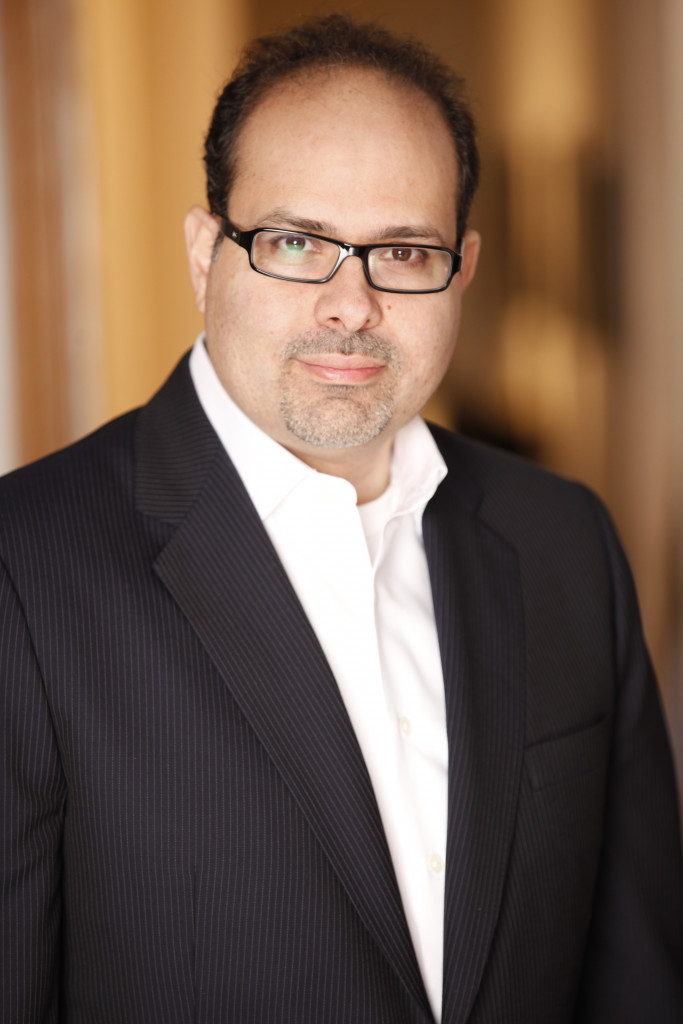
Awad said that Shari’a law’s fundamental problem with factoring is that it involves collecting interest, which is prohibited. While factoring might not seem to involve interest, Awad said that offering less cash upfront for a receivable that is worth more in the future, is essentially a reverse form of interest.
But Awad said that in recent years, people have developed a somewhat controversial concept, called Tawarruq (or monetization) that abides by the prohibition of interest rule while yielding the same result. This is how it works:
A merchant in need of cash goes to a bank. Rather than offering cash to the merchant, the bank instead arranges for a merchant to buy a commodity (like oil or sugar), on credit. The merchant doesn’t have to pay for the commodity until a future date. Meanwhile, the merchant quickly sells the commodity for cash to a third party. The merchant now has cash and will not be paying interest of any kind. The bank still makes money. It gets paid for structuring the arrangement between the merchant and the seller of the commodity, and for evaluating the creditworthiness of the merchant.
The end result is the same for the merchant. The merchant gets cash quickly, albeit a little less quickly because there are multiple parties involved. Noor Bank currently offers an Islamic law compliant factoring product. Tawreeq Holdings, which has offices in Luxembourg, United Arab Emirates and Morocco, specializes in the Tawarruq alternative to factoring.
“Islamic Factoring is an increasingly important element in the finance of international trade and our ability to support Shari’a compliant business is particularly important for our global member base, said Peter Mulroy, Secretary General of FCI. “This development is another real enhancement of the support we can provide for our members.”