
Banking
Branson Adds Charm, Not Expertise, to Money 20/20
October 23, 2018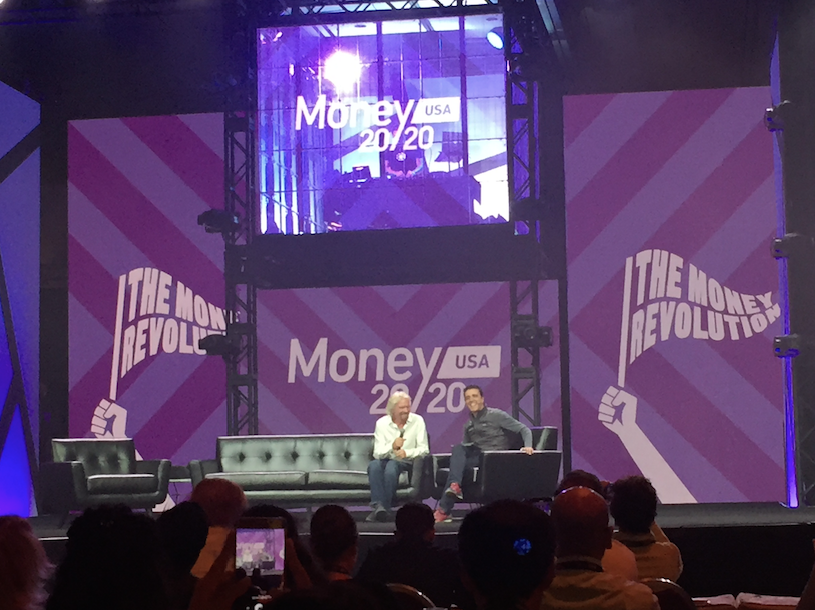 Money 20/20’s keynote speaker, serial entrepreneur and philanthropist Sir Richard Branson, delivered inspiration and laughs to a packed audience yesterday. He was interviewed by Nuno Sebastiao, CEO of Feedzai, which fights financial crime.
While over 20 years ago Branson founded Virgin Money, a sizable UK-based bank, he demonstrated clear discomfort and disinterest in talking about banking. When asked about finance, he said, “I brought notes,” and produced what looked like a thick chunk of papers from his pocket. When Sebastiao said, “moving out of the financial space,” Branson said “thank you!” which elicited a wave of laughter.
“I’ve seen situations in life that have frustrated me,” Branson said, and explained that Virgin Money is the result of a contract he was about to sign with a money management firm. He said that when he asked the investment firm what “bid offered 5%” meant, they got quiet. He then learned that it meant that they would take five percent of the amount he gave them before investing anything. Upset by that, he thought he could do better in financial services and he hired a banker to help launch the company.
Similarly, he said Virgin Airlines was born when he couldn’t get a flight from Puerto Rico to the Virgin Islands because the airline said there weren’t enough passengers that day. He thought he could do better.
Since he first saw a man walk on the moon, he said he always imagined that he and his family would go to the moon someday. But when he realized about 14 years ago that it didn’t look like that was going to happen, he created Virgin Galactic Airways, which is the first commercial rocket program to the moon.
“I registered Virgin Galactic Airways and Virgin Intergalactic Airways, because I’m quite an optimist,” Branson said, producing another wave of laughter.
After years of testing, in which one test pilot was killed, Branson said that he plans to go to the moon next year.
“We can’t leave it up to government to solve the world’s problems,” Branson said, conveying that businesses, small and large, must play a role in improving the world, whether it be on a local or international level.
At the close of the interview, to bring the topic back to finance, Branson said, “Hopefully I’ll learn a little more about banking for next time.”
OnDeck (ODX) Adds PNC Bank as Second Bank Client
October 22, 2018 PNC Bank announced today that in 2019 it plans to offer fully digital business lines of credit by using OnDeck’s Platform-as-a-Service solution, ODX, a new subsidiary of the online lender.
Last week, OnDeck announced the creation of ODX, which is an OnDeck subsidiary that will focus soleIy on helping banks become faster, more efficient online lenders to small businesses. A successful partnership with Chase bank in 2016 prompted OnDeck leadership to created a separate entity and PNC Bank is ODX’s first major client.
“We decided strategically this year to really make a big bet… [and be a] company that’s going to support many banks,” OnDeck CEO Noah Breslow told deBanked.
Square Expands into Consumer Lending, Keeps Banking Hopes Alive
October 16, 2018 Square is no stranger to payments and is looking more and more like a bank every day. Square Capital already facilitates loans to small businesses, and now they’re expanding into consumer loans. Meanwhile, it’s been several months since Jack Dorsey’s fintech startup withdrew its application to become an Industrial Loan Company (ILC), but Square’s banking pursuits appear far from over.
“With regard to charters, Square Capital is uniquely positioned to build a bridge between the financial system and the underserved, and we continue to work closely with the FDIC and Utah DFI on our ILC applications,” a Square spokesperson told deBanked.
In the interim, Square is making a push into consumer lending, giving small businesses the opportunity to capture big-ticket sales that might otherwise slip away. After testing the feature for about a year, Square Installments has now been rolled out across 22 states with plans for a nationwide expansion.
“Historically, offering financing options for customers has only been available to larger businesses. For many Square sellers, providing a payment option like this to customers has either not been possible, or has been too complicated or time/labor intensive to set up. We are focused on expanding access to financial services for both businesses and individuals, and Square Installments sits at the intersection of both,” the spokesperson said.
Square Installments will further diversify the company’s revenue stream and build on the momentum that they have been experiencing with business loans. The new product offers customers more flexibility for purchases between $250 and $10,000, giving them the option to pay over three, six or 12-month installments at an APR of up to 24%.
“We noticed there were a lot of very high-ticket purchases on Square and sellers were saying that they might lose a sale because a national chain might offer financing,” according to the spokesperson. Over the past year, Square facilitated tens of millions of transactions for purchases of more than $250.
And it isn’t just merchant demand. Small business customers similarly are hunting greater flexibility and more financing options for budgeting purposes, according to a survey of American consumers done by Square over the summer.
Square Installments works at both the point-of-sale for brick-and-mortar businesses as well as with Square Invoices for e-commerce companies. Other fintechs that offer similar consumer lending solutions include Affirm, GreenSky and Klarna, as Reuters pointed out.
For sellers, Square Installments can be integrated into their existing Square offerings. The seller is not engaged in the credit decision process and is paid for the sale up front.
By giving customers the ability to pay in installments, small businesses can increase their sales, bolstering growth in the process. Square gives the example of Fly1 Motorsports, whose sales increased between 20%-30% while order values increased by more than 50% as a result of Square Installments.
Square has a history with the sellers on its platform, which delivers greater transparency to the credit decision process. The loans, however, will be added to Square’s balance sheet, a risk that was reflected in declines in Square’s stock price on the heels of the announcement. Square (SQ) shares are down 22% so far in October. The declines also coincided with the departure of Square’s CFO, Sarah Friar.
“From a risk perspective, we look at two types of risk — fraud and credit. At Square, we start with an advantage since we know the sellers we are bringing on to the Square Installments program given they are already processing with Square. We have visibility into what they sell, their average ticket size, and any chargebacks,” the Square spokesperson explained.
On the consumer credit risk side, Square uses machine learning and other tools to provide what it describes as a “holistic view of our borrowers.”
OnDeck Launches New Subsidiary
October 16, 2018 OnDeck announced today that it has created a new subsidiary, called ODX, which will help banks become more efficient online lenders. OnDeck’s CEO Noah Breslow told deBanked that ODX is an expansion of OnDeck’s successful partnership with JPMorgan, which started in 2016.
“We created what at the time was I think a pretty groundbreaking partnership with the largest bank in the country,” Breslow said. “Now today, we’re funding loans very efficiently using our platform and [Chase’s] marketing and their balance sheet. And it really is sort of the promise of a fintech working with a bank. So we decided strategically this year to really make a big bet in this area…[and create] a company that’s going to support many banks.”
OnDeck has chosen Brian Geary to serve as president of ODX. Breslow said this is because Geary launched and oversaw the collaboration with Chase, whereby OnDeck built a digital bank originations platform for the bank.
“Geary has really been the focal point of that entire effort,” Breslow said, “so he was a very natural choice to head this up.”
OnDeck has drawn talent from among its existing employees to create this company, but it also hired Raj Kolluri to serve as Head of Product and Technology for ODX. And Geary said they are actively hiring to build the team. Kolluri comes from SS&C Primatics, a software company, where he served as Vice President of Product and Engineering, helping to build the company’s software as a service analytics platform for banks.
When asked if helping banks to become faster online lenders is a way of aiding OnDeck’s own competitors, Geary said he didn’t see it that way.
“We don’t view it as competitive,” Geary said. “The banks and OnDeck are playing in different segments of the market. [Banks] have a tighter risk tolerance and certain customers they can serve. So we’re enabling them to serve those customers more efficiently.”
Breslow said that ODX, which he described as “a company within a company,” will soon be announcing its next bank partnership.
ODX will operate within the offices of OnDeck, including its offices in New York, Arlington, VA and Denver, CO.
Nelnet Withdraws Application in Latest Controversy Over ILC Banks
October 2, 2018Nelnet announced that it has withdrawn its application with the Federal Deposit Insurance Corporation (FDIC) and the Utah Department of Financial Institutions (UDFI) to establish Nelnet Bank, a Utah-chartered industrial bank, or an ILC (Industrial Loan Company) bank. This could have been made possible through an existing, yet controversial, policy established over 100 years ago which gives FDIC protection to non-deposit taking financial institutions.
The ILC concept was initially intended to create bank-like institutions to serve poor industrial workers who had trouble finding a commercial bank they could work with, according to Chris Cole, Senior Regulatory Counsel at the Independent Community Bankers of America (ICBA).
“We appreciate the constructive dialogue we have had with the FDIC and UDFI regarding our application,” said Nelnet President Tim Tewes. “Withdrawing our application is a temporary step back in what we knew could be a long process. The need for more financially secure, borrower-focused, and FDIC-insured lenders in the private student loan marketplace is increasing [and] we believe Nelnet is an ideal candidate to be such an institution with our financial strength, customer focus, and experience.”
Opponents of ILC banks, like the ICBA, celebrated the news that Nelnet had withdrawn its application to become an ILC bank.
“ICBA opposed Nelnet’s deposit-insurance application to establish an industrial loan corporation and supports an end to the ILC loophole,” ICBA President Rebeca Romero said in a statement. “The ILC loophole allows commercial interests to own full-service banks while avoiding Bank Holding Company Act regulations and consolidated supervision by the Federal Reserve.”
Nelnet filed its industrial bank charter application on June 28, 2018. It is not the first fintech company to withdraw an application of this kind. SoFi Bank and Square also sought industrial bank charters, but SoFi withdrew its application in October of 2017 and Square with its application in July of this year.
Will a Bank Fund Me in 24 Hours? (U.S. Bank Announces High-speed Digital-only Loan Process)
September 25, 2018 Yesterday, U.S. Bank announced that it has created a fully digital application process that allows a small business to borrow up to $250,000 in one day or less.
“We created this new digital experience to deliver on our commitment to continuously improve the way we serve our customers,” said Tim Welsh, U.S. Bank vice chairman of Consumer Banking Sales & Support. “This is the first of several exciting digital initiatives we’re pursuing that we believe will better serve the needs of small businesses and consumers.”
The new streamlined process allows single-owner business customers to access loan products that the bank already offers. The application can be completed on any device – mobile, tablet or computer – and if approved, it will allow the borrower to review their loan details and electronically sign their closing documents.
The Minneapolis-based bank operates in 25 states and, together with its parent company, U.S. Bancorp (NYSE: USB), has $461 billion in assets as of June 30, 2018.
Varo Money Chief Eyes Next Year for Bank Launch
September 10, 2018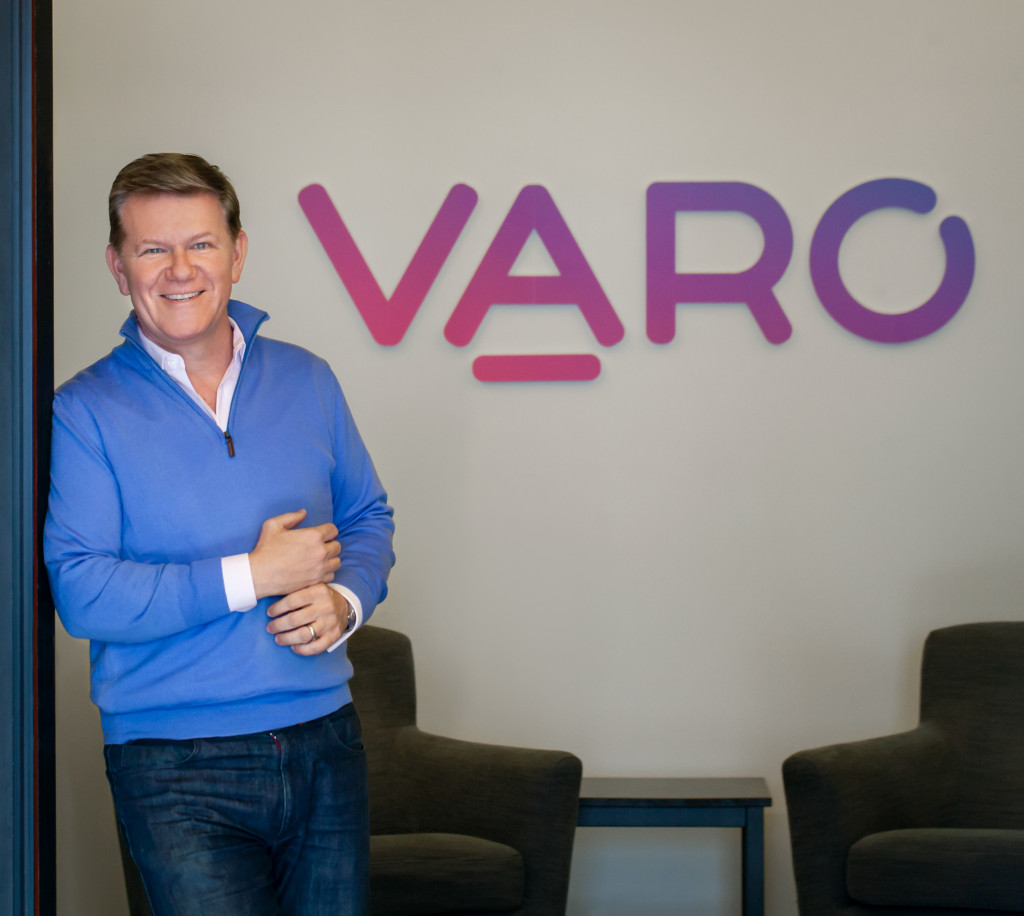 San Francisco-based Varo Money just cleared a major hurdle in its pursuit to become a bank. Varo Bank N.A. received the preliminary green light from the Office of the Comptroller of the Currency (OCC) to form a de novo national bank. It brings Varo one step closer to becoming the maiden all-mobile national bank in the United States. It’s an exciting development for a fintech play, one that Varo CEO Colin Walsh calls a “game changer.”
“That the OCC is willing to move ahead with the application is very different from what they’ve done before. It marks the beginning of a whole new era in consumer banking,” Walsh told deBanked.
Indeed, the OCC has only issued two national bank approvals in nearly the past decade, the last one of which was a traditional branch-based bank. Varo, meanwhile, is anything but traditional, boasting a mobile, cloud and API-based offering.
“What stands out about the Varo team is we are very experienced and seasoned in banking and consumer technologies. We’ve spent most of our professional lives in the industry. It’s not like we’re trying to figure it out and learning on the job,” Walsh explained. As a result, when regulators peppered Varo with questions and scenarios, the team already knew how banking works.
Now that Varo has the regulatory wind at its back, there’s no time like the present, and Walsh is the first to admit he’s got an “aggressive timeline.”
“Our plan is to open the bank within the next year … The pieces are falling into place now,” he said, pointing to lots of dialogue unfolding with the FDIC for deposit insurance and other components required to build a core banking system. One of the items at the top of the agenda is for Varo to separate from its sponsor bank, The Bancorp Bank, to become its own independent bank, something the fintech has been transaparent about since day one when it was founded in 2015.
Competitive Landscape
Walsh described a competitive landscape of the massive $1.4 trillion banking market of which there are $750 billion of consumer deposits. It’s divided evenly, he explained, between nine major banks and 5,600 smaller banks. The nine banks continue to invest billions into new products and chasing customers. The long tail of smaller banks, meanwhile, “try to do the right thing, but many are sub-scale. They don’t have the technological advantages that some of the new players have,” Walsh said. Varo competes with all of them.
“We compete with the big guys, we compete with the long tail, we compete with fintechs. But with such a big market that has so many issues, it’s ripe for disruption,” said Walsh.
Varo Money Likely to Become First All-Mobile US Bank
September 7, 2018 Varo Money announced on Tuesday that it was granted preliminary approval by the Office of the Comptroller of the Currency (OCC) for its application to form a de novo (new) national bank, paving the way for the company to become the first all-mobile bank in the U.S. Varo Money has no physical branches. All of its banking functions, including opening checking and savings accounts, and obtaining loans, are conducted on mobile devices.
“This is an historic moment and marks the start of a new era in banking,” said Colin Walsh, co-founder and CEO of Varo Money. “We founded Varo because we saw that banks weren’t serving the majority of their customers very well, and we wanted to fix that. So we decided to build a bank from the ground up with the goal of improving consumers’ financial health through better technology and a more efficient business model.”
In July 2017, Varo Money applied to the OCC for a national bank charter and to the Federal Deposit Insurance Corporation (FDIC) for federal deposit insurance to form Varo Bank, N.A. Tuesday’s preliminary approval is the outcome of that application and is unrelated to the fact that the OCC recently started accepting applications from fintechs to become special purpose banks. That development was coincidental, Varo Money Director of Communications Emily Brauer Gill said.
Additionally, Varo Money did not apply to become an Industrial Loan Company (ILC) bank, like SoFi and Square (even though they subsequently withdrew their applications.) Companies that apply to become ILC banks are companies whose primary function is not banking. On the other hand, Gill said that Varo Money’s primary and singular function is banking.
“Colin [Walsh’s] goal was to be a bank and it looks like we’re on that path,” Gill said.
While Varo Money has no physical branches, clients have easy access to cash because of a partnership with Allpoint ATMs. There are more than 55,000 Allpoint ATMs worldwide, located inside retail stores like Target, Costco, Walgreens, and CVS, and Varo Money customers pay no ATM fees at these machines.
Walsh, who describes himself as a “reformed banker,” held executive roles at American Express and Lloyds Banking Group before co-founding San Francisco-based Varo Money in 2015 with company CTO Koyla Klymenko. In a company statement from last year, Walsh said they wanted to create a more affordable way for people to manage their money and reach their financial goals “with just a few taps on their mobile phone.”