
Articles by deBanked Staff

BFS Capital Surpasses $2 Billion in Financing
January 22, 2019 BFS Capital announced this morning that it has exceeded $2 billion in financing to over 22,000 small businesses across the United States, Canada and the UK.
“This is a major originations milestone,” said Mark Ruddock, CEO of BFS Capital. “We’re incredibly proud to see these investments take root, as BFS Capital continues to solidify its position as a central source for financing small businesses and their everyday capital needs.”
BFS Capital provides business loans and MCA deals from $5,000 to $500,000 to a wide variety of merchants. In 2018, fourth quarter originations were the highest ever in the company’s 17-year history. And third quarter originations also represented the best third quarter in the company’s history.
“In 2018 we enhanced our sales and marketing programs and made significant advances in our underwriting models so that we could better serve small businesses,” Ruddock said.
Ruddock also said that they are constantly thinking of ways to be better partners to the ISOs. He said that they plan to speed up the process from lead to loan by 30% this year, so that, with continued improvements in technology, approvals can take a matter of minutes and eventually happen instantaneously. Currently, they make decisions within a matter of hours.
“We’re also trying to communicate more clearly with [our ISO partners] about what sorts of merchants we are more likely to fund than not, so that they can be more efficient themselves,” Ruddock said.
Apart from accelerating speed in approval time for certain financing, Ruddock said that BFS also excels in serving customers that he calls “diamonds in the rough,” or businesses that sometimes even other alternative lenders will reject because they don’t understand them.
“BFS will very often be in a position to look at a company that perhaps might look complicated to others, and be able to say ‘Yes, this is a deal that we will do,’” Ruddock said.
This process is a little less automated as it requires more creative thinking on the part of their underwriting team, Ruddock said. Founded in 2002 and headquartered in Coral Springs, FL, BFS also has offices in New York, California and the UK.
Confessions of Judgment in MCA Make the Evening News
January 21, 2019Erie County Clerk Michael Kearns is no longer processing Confessions of Judgment (COJs) in Erie County for merchant cash advance companies, according to a statement his office published this week. Prior to being elected Clerk, Kearns was an assemblyman in the New York State legislature.
On Monday night, Kearns appeared on Channel 4’s evening news in Buffalo to discuss why his office had made the decision. Both Kearns and the local newscaster cite a highly controversial story series published by Bloomberg.
A review by deBanked of the series, revealed that two Bloomberg reporters had performed little or no fact checking of their sources. In one instance, for example, Bloomberg featured a business that had allegedly been “wiped out” by a $40,000 predatory loan gone wrong. Public records confirmed however, that the business owners continued to pay themselves more than a $100,000 salary from that business and that they still had nearly a million dollars flowing through their bank accounts. Facebook painted a similar picture, as one of the owners openly bragged about owning a new Camaro Super Sport with racing stripes.
Neither reporter has offered any explanation for the inaccuracies in their reporting.
Despite this, lawmakers and the Governor alike have called for an end to COJs in business credit transactions. You can watch the evening news segment below:
Coming Soon: The End of Confession of Judgments (COJs) in New York State
January 16, 2019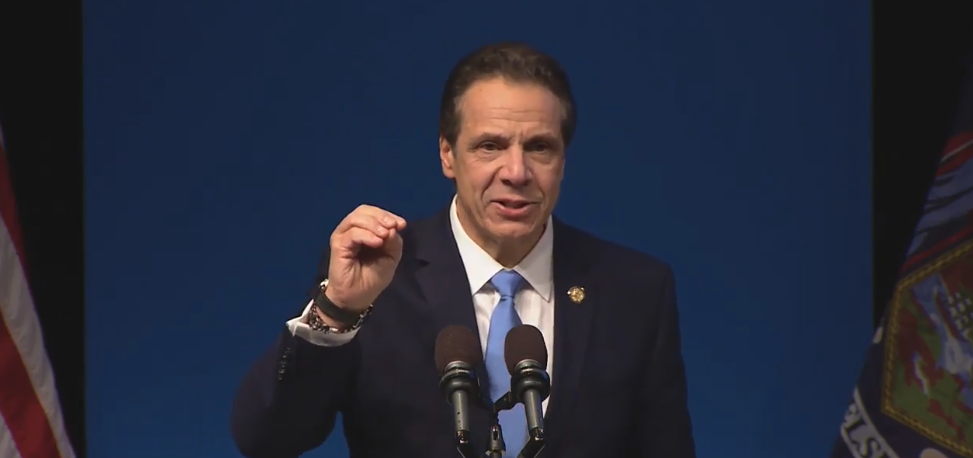 New York State plans to outlaw the use of Confession of Judgments (COJs) in small business loan contracts this year, according to details revealed in Governor Andrew Cuomo’s newly published Justice Agenda.
The proposal, dubbed “Stopping Predatory Merchant Cash-Advance Loans,” is a 3-part plan to:
- Codify an FTC rule that prohibits COJs in consumer loans
- Prohibit the use of COJs in small business loans under $250,000
- Stop lenders from exploiting New York courts for nationwide collections by requiring that any permissible confession of judgment enforced in New York courts have a nexus to business activity in New York
Cuomo’s proposal echoes calls from the State legislature in response to a series published in Bloomberg Businessweek late last year that speculated COJs were vulnerable to abuse.
Both the Assembly and Senate maintain a Democrat majority, the same party as Cuomo, increasing the likelihood that such a bill could become law.
 The proposal is separate from a bill that was recently introduced at the federal level. The Small Business Lending Fairness Act, a bipartisan bill co-sponsored by Senators Marco Rubio and Sherrod Brown, call for a nationwide ban on COJs. That bill has not progressed, perhaps due in part to the government shutdown. Like New York, that initiative was a response to the series published in Bloomberg.
A review of Bloomberg’s facts by deBanked revealed highly questionable reporting. In one example, it’s claimed that a business owner had been so victimized by predatory lending that he’d been forced to sell his furniture just to feed himself. deBanked later determined that the “victim” was actually a multimillionaire TV station owner whose account of any such engagement with merchant cash advance companies was incredibly unlikely. The reporters have not responded to deBanked’s findings.
Zeke Faux, who co-authored the series with Zachary Mider, deleted his entire tweet history around the same time that deBanked uncovered strange ties between his editor and the New York Attorney General’s office. The AG is reported to have sent subpoenas to several companies in response to the stories.

On Monday, Faux and Mider reported that clerks in three New York counties, whose job, among other roles, is to enter legally compliant COJs into the public record, were revolting by refusing to process COJs submitted by merchant cash advance companies. Though a clerk’s duties is largely an administrative one, two that spoke on the record with Bloomberg were former state legislators. Erie County Clerk Michael Kearns, for example, who told Bloomberg News that he felt that the use of COJs was criminal, had actually drafted a bill in 2017 when he was an assemblyman that sought to regulate cash advances of a different sort in the litigation financing industry. Although Kearns is a Democrat, he has historically enjoyed support from the Republican Party.
Orange County Clerk Annie Rabbitt and Richmond County Clerk Stephen Fiala, who are rebelling along with Kearns by refusing to enter COJs, are registered as Republicans, demonstrating that the movement is crossing party lines.
According to deBanked, less than half of 1% of all MCA transactions have resulted in the filing of a COJ, despite Bloomberg’s insinuation that the outcome is common or typical.
Among the most prolific filers of merchant cash advance COJs, deBanked found, is Itria Ventures, LLC, a company affiliated with Biz2Credit. Itria filed more than 50 in the last two months. Biz2Credit’s CEO, Rohit Arora, is a writer for both CNBC and Forbes.
Kabbage Finances US Small Business Customers of Alibaba
January 14, 2019 Kabbage announced today that it has partnered with Chinese e-commerce giant, Alibaba, to provide financing to small businesses that purchase materials on the platform. The financing program, offered by Alibaba and powered by Kabbage, is called Pay Later.
“Financing at the point of sale requires a fully automated solution that can handle the immense volume of daily transactions that occur on Alibaba.com,” said Kabbage CEO Rob Frohwein. “We are incredibly impressed with the service and value that Alibaba.com delivers to American businesses and want to do all we can to support their important mission.”
According to the Kabbage announcement, Kabbage had a beta launch of Pay Later in June 2018 and it has so far delivered millions of dollars in financing to American small business. The business to business (B2B) financing product provides lines of credit up to $150,000, and according to Kabbage, each purchase financed via Pay Later creates a six-month term loan for the merchant with rates as low as 1.25% per month. Kabbage also said that there are no fees to maintain the line of credit, no order transaction fees and no early repayment fees.
This partnership is not the first of its kind. In February 2015, Lending Club announced a similar arrangement with Alibaba that offered funding to U.S. small business owners for point-of-sale transactions on the platform. Lending Club offered loans up to $300,000 and had an exclusive relationship with Alibaba for point-of-sale business financing. Kabbage told deBanked that their arrangement with Alibaba is not exclusive. Lending Club did not respond in time to explain their current relationship with Alibaba.
Former Merchant Cash Advance CFO Charged With Fraud by New York Attorney General
January 4, 2019 A former merchant cash advance CFO and executive for a fund that provides capital to merchant cash advance companies, has been charged with fraud by the New York Attorney General. The allegations against Stephen Brown stem from his role as CFO of Cardis Enterprises International, a company that claimed to possess patented and proprietary technology to make low-value credit card transactions less expensive for merchants. Brown is the former CFO for Capital Stack, LLC/eProdigy Financial in New York. In reality, Cardis was a massive fraud and a ponzi scheme, the Attorney General alleges. The company raised tens of millions of dollars from duped investors.
Brown is one of twelve defendants, but is described as the most senior financial executive of the firm whose principal role was to draft and send investor update letters, which contained a host of false statements and omissions.
Among the allegations against Brown is that he lied to investors about being close to finalizing deals with Sony, Warner, and Universal. “At the time of Defendant Brown’s representation, only one introductory meeting between Cardis and each music company had taken place, and the parties had not even executed non-disclosure agreements,” the complaint says. Several other business deals Brown announced were either imaginary, had never made it past a simple introduction, or had already been outright rejected by the prospective partner.
Despite being the CFO, Brown did not even maintain a basic income statement, a formal share registry, or comprehensive records of its debts and obligations. When the scheme was suspected by investors, Brown doubled down on the lies, the complaint says.
On September 24, 2015, a Cardis investor emailed Defendant Brown asking for the “latest on Cardis” and whether it was “a complete loss,” while mentioning a recent investor lawsuit. Defendant Brown, copying Defendant Rosenblatt, responded that the lawsuit claiming fraud was “frivolous,” while claiming that Cardis’ relationship with Roc Nation was “developing” and ongoing. In fact, the lawsuit had merit, and Cardis’ relationship with Roc Nation was long over.
On February 28, 2018, a Cardis investor recorded a telephone conversation with Defendant Brown. The investor asked “what happened to the cash” investors put into Cardis. Defendant Brown responded by detailing the Company’s large budget and staff, while failing to disclose the substantial misuse of investor funds. The investor also questioned Defendant Brown about various investor lawsuits against Cardis and its principals. The investor asked: “After reading those lawsuits, why should we think that the company has any future?” In response, Defendant Brown told the investor “the lawsuits were not the most credible lawsuits,” attributing them to “angry investors.” Defendant Brown later told the investor “none of those lawsuits have any merit to them.” In fact, there was substantial merit to the investor lawsuits.
These misrepresentations and omissions were material to investors because they bore directly on Cardis’ viability.
The New York Post ran a story that labeled Cardis a Bernie Madoff-style scheme that falsely claimed ties to Jay-Z’s entertainment company.
The defendants stand accused of Material Misrepresentations, Repeated and Persistent Fraud and Illegality, Actual Fraud, Equitable Fraud, and Constructive Fraud. The Attorney General is pursuing restitution for victims, a ban from the securities industry in the State of New York, and to liquidate the company.
The docket # is 452353/2018 in the New York Supreme Court. The allegations have not yet been proven. According to LinkedIn, Brown currently lists himself as the President of GMA USA, LLC, President of CoreFund Capital LLC, and the CFO of Nanovibronix. He also lists being the CFO of eProdigy Financial for almost 3 years until early 2017.
Kornfelds Settle With SEC Over Woodbridge Ponzi Scheme
January 3, 2019Barry M. Kornfeld and Ferne Kornfeld, both fundraising agents for 1st Global Capital, have settled with the SEC for their role in Woodbridge Group of Companies LLC, a $1.2 billion ponzi scheme. Woodbridge was another Florida-based company that is unrelated to 1st Global Capital. As part of the settlement, the Kornfelds agreed to disgorge $3.69 million plus $690,497 in prejudgment interest on top of $650,000 in combined penalties. They also agreed to be permanently barred from selling securities.
Barry Kornfeld was already barred by the SEC for previous securities violations.
No wrongdoing has been alleged against the Kornfelds in the 1st Global Capital case thus far, but court records revealed that Barry Kornfeld raised $8 million from investors for the company. 1st Global Capital is currently in bankruptcy and was charged with securities fraud by the SEC.
What We Learned About RapidAdvance From RapidAdvance’s Planned Securitization
January 1, 2019
RapidAdvance is raising money through their first-ever securitization. This is what we’ve learned about the company as a result so far, thanks to the bond ratings process:
2017 origination volume: $260 million | See how this ranks against their peers
Lifetime funding volume: > $1.5 billion
Total shareholder equity: $54 million
Majority owned by: Rockbridge Growth Equity LLC
# of employees: 168
Notable strategic partnerships: Office Depot and Worldpay
Provides: Mainly Business loans (≈80%) but also merchant cash advances (≈20%)
Founded: 2009
Generates deals via: 62% ISO & Funding Partner Channel / 38% Direct
Other funders that recently did their first securitizations include Credibly and Strategic Funding Source.
How Most Americans Handle a $1000 Emergency Expense
December 26, 2018 A recent survey conducted by LendingTree found that more than half of Americans cannot cover a $1,000 emergency with cash or savings. Forty-eight percent of Americans say they could handle a $1,000 emergency expense by using cash or savings in their bank accounts.
Of the those Americans who could not handle a $1,000 emergency, whether it be a health issue or an urgent home repair, 16 percent said they would borrow from friends or family. Nine percent said they would sell something, another nine percent said they would use a credit card, seven percent said they would work more, and six percent said they would get a loan or paycheck advance.
Additionally, according to the report, six out of 10 Americans have had an emergency in the past year that cost them $1,000 or more and one-third of Americans are currently in debt from an emergency expense they could not afford cover. Of Americans who had to go into debt to cover a past emergency, one-third still owe $5,000 or more for this expense and about 18 percent have emergency debt balances of $10,000 or more.
LendingTree also announced at the end of last week that it has reached an agreement to acquire ValuePenguin for a total consideration of $105 million. ValuePenguin presents consumers and business owners with loan alternatives. In October, LendingTree acquired QuoteWizard.com, an insurance comparison marketplace, rounding out LendingTree as a more full financial advisory company.
“We are thrilled to add ValuePenguin’s talented team and expertise to our portfolio,” said Doug Lebda, Founder and CEO of LendingTree. “Our recent QuoteWizard acquisition was our first step toward leadership in insurance customer acquisition. Adding ValuePenguin’s high-quality content and SEO capability to QuoteWizard’s proprietary technology and carrier network will set us apart and enable us to provide immense value to carriers and agents. Both businesses will benefit from LendingTree’s strong brand and extensive marketing capabilities. We are in a great position to achieve further scale in the insurance space as well as the broader financial services industry.”