
Archive for 2018
Strategic Funding Announces Securitization
May 12, 2018
Strategic Funding received preliminary ratings from Kroll Bond Rating Agency on four classes of Series 2018-notes that can be sold to investors. The notes are composed of Strategic Funding’s receivables, packaged together based on quality.
“It’s certainly exciting to be able to meet the requirements of a securitization,” said Strategic Funding CEO Andrew Reiser. “Kroll is a very responsible agency and they put you through a lot of rigor to be able to meet [their] requirements and have a rated bond.”

Reiser told deBanked that although their securitization starts at $100 million, it gives the company the ability to ramp up to $500 million.
“A securitization allows you to continue to grow without having to constantly find who’s the next source of capital,” Reiser said.
He spoke of a securitization in contrast to a warehouse line of credit, which is a short-term revolving credit facility.
“A warehouse line requires banks to bring on more banks [which] is more tedious. With a securitization, it’s a very seamless process. It makes growth easier.”
Only Kabbage and OnDeck have a securitization in the alternative lending space, Reiser said.
The notes will be secured by a pool of the company’s receivables consisting of business loans and merchant cash advances. This securitization is particularly unique as it is uncommon to securitize merchant cash advances since the timing of a cash advance receivable is uncertain. (The securitizations for Kabbage and OnDeck are not backed by merchant cash advances as those companies don’t provide this product.)
The four classes of notes, valued at $100 million, received the following ratings by Kroll:
A- notes ($65,394,000), BBB- notes ($19,131,000) BB notes ($5,777,000) and B notes ($9,698,000).
Founded in 2006, Strategic Funding is headquartered in New York, with other offices in Boca Raton, FL, Arlington, VA, and Rockwell, TX, outside of Dallas.
SBFA Launches Broker Council
May 11, 2018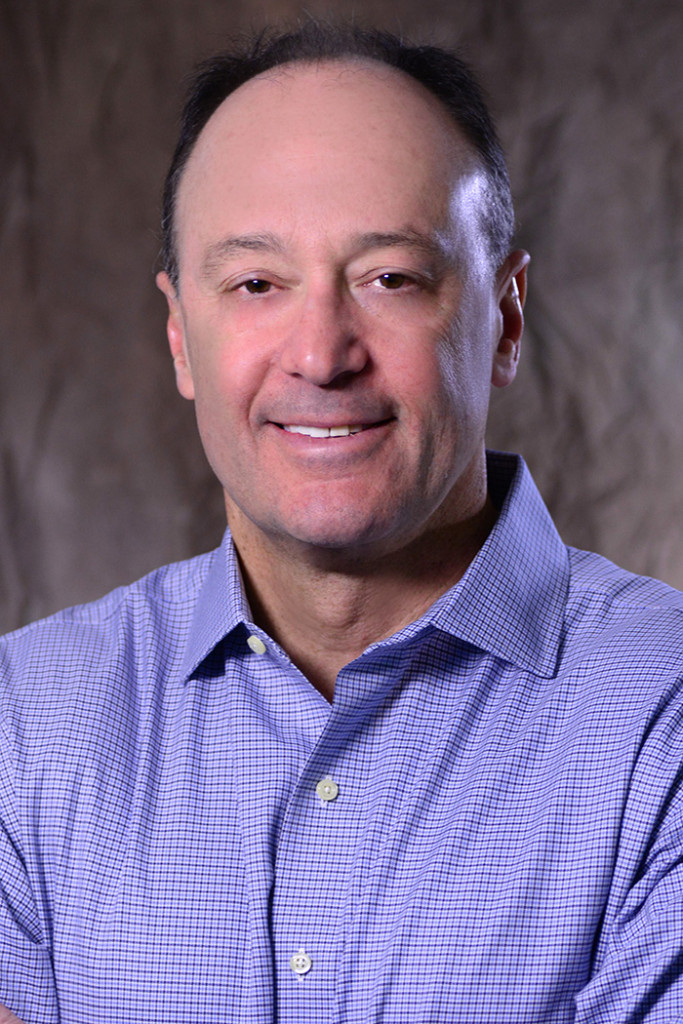
The Small Business Finance Association (SBFA) announced today the launch of a new initiative called the SBFA Broker Council designed to create and implement a set of best practices for brokers of alternative funding products.
“I think this would create two playing fields,” said SBFA member and CEO of United Capital Source Jared Weitz. “A playing field where a group belongs to this association and we understand that that group is acting in best practice, and another group that is acting on their own behalf, and we hope that they’re acting in best practice, but we can’t verify it. Folks in our group we can verify.”
Weitz and James Webster, CEO and co-founder of National Business Capital, are spearheading the SBFA Broker Council. They are the co-chairs and are in the process of selecting a board of other brokers.
What would membership in the SBFA Broker Council mean? It would mean abiding by a set of best practices. Weitz told deBanked that he and Webster would like to implement background checks on owners of brokerages and would like to make sure that brokers are storing data in their offices properly so that merchants aren’t vulnerable to having their private information stolen and abused.
They also want to make sure that brokers have the appropriate licenses in states that require them, that fees are being explained to merchants transparently and that merchants are not being triple or quadruple funded at once, “hurting the cash companies and the merchants,” Weitz said.

Membership in the SBFA Broker Council would require SBFA membership. Current members include funders, ISOs/brokerage companies and vendors that are active in the alternative funding space.
“To participate, we want members,” said Jeremy Brown, Chairman of the SBFA. “We want to give [broker members] sort of our seal of approval, and we want to know that they’re going to represent the ideals we stand for.”
Brown said that brokers have a reduced membership fee: $475/month for smaller brokerages and $950/month for larger ones.
Brown, who is also Chairman of RapidAdvance, a funding company, said that having membership in or an organization that has a set of standards would give him comfort as a funder.

“[This] would give me a lot of confidence that you’re a good actor,” Brown said, “because one of the problems in the industry is that you do have people in an unregulated business that do unethical things. So knowing who to deal with is really important and valuable.”
The SBFA is a non-profit advocacy organization with a mission to educate policymakers and regulators about the alternative funding business. According to today’s announcement, a goal of the SBFA Broker Council is to promote brokers who act fairly. But how could a third party association advance a broker’s career?
Weitz said:
“We would be able to have a badge on our email and on our website that says we are SBFA broker approved, meaning that anyone who’s a part of this council…would be on the [SBFA] website so we can build credibility when we’re on the phone with a merchant. We can say, ‘Hey, you probably spoke to three or four different brokerage shops today. It’s prudent to do that…however, let’s make sure that the ones you’re talking to belong to this association because those are the ones that are going to act on your behalf, the right way.”
Announcing the Launch of the SBFA Broker Council
May 11, 2018Washington, D.C.—The Small Business Finance Association (SFBA) today announced the launched a new initiative called the SFBA Broker Council dedicated to bringing together responsible brokers that serve small businesses to focus on creating best practices. The Council is co-chaired by Jared Weitz, founder & CEO of United Capital Source and James Webster, CEO & co-founder of National Business Capital. The mission of the Council will be to create standards and a certification for brokers who agree to best practices focused on four basic principles—transparency, responsibility, fairness, and security.
“We want to give small business owners confidence that the brokers they work with are trustworthy, vetted, and committed to being responsible,” said Jared Weitz. “We need to take steps to promote brokers who are acting in the best interest of small business owners and send a clear message about the valuable role we play in the small business finance ecosystem.”
“We need brokers who believe in best practices to enter the national conversation about small business alternative finance and show policymakers how we serve small business customers,” said James Webster. “We all know there are bad actors out there, but the goal of this Council is to help show the how responsible brokers are working to capitalize underserved small businesses.
“We appreciate Jared’s and James’ leadership in creating this new initiative within SBFA,” said Jeremy Brown, chairman of RapidAdvance and chairman of SBFA. “It is important we send a message to the millions of small businesses we serve that we support brokers who understand that transparency, responsibility, fairness, and security are critical to our industry’s future.”
SBFA is a non-profit advocacy organization dedicated to ensuring Main Street small businesses have access to the capital they need to grow and strengthen the economy. SBFA’s mission is to educate policymakers and regulators about the technology-driven platforms emerging in the small business lending market and how our member companies bridge the small business capital gap using innovative financing solutions. The SBFA is supported by companies committed to promoting small business owners’ access to fair and responsible capital.
“Small business owners are a powerful constituency and we want to give them the utmost confidence in the alternative finance industry,” said Steve Denis, Executive Director of the SBFA. “This includes promoting brokers who are providing transparent capital solutions that they can trust.”
The Small Business Finance Association (SBFA) is a not-for-profit 501(c)6 trade association representing organizations that provide alternative financing solutions to small businesses.
FinMkt Launches ISO Business
May 10, 2018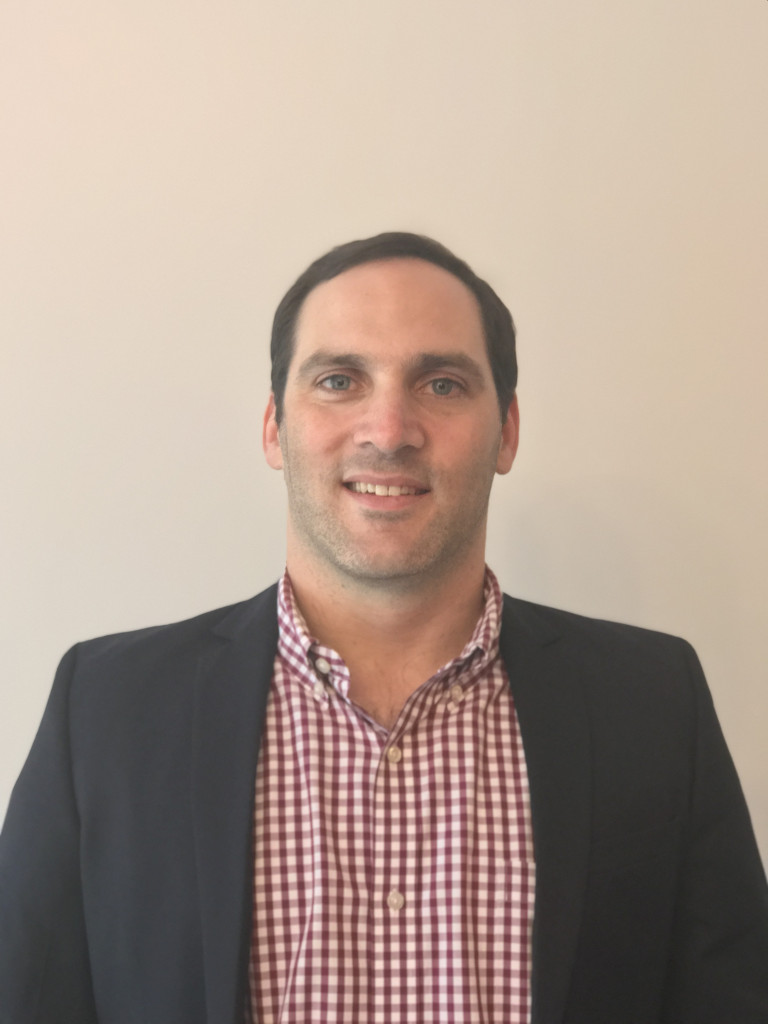
FinMkt has launched a broad ISO, working with referral partners from brokers to accountants to small business advisors. With two years of experience facilitating consumer lending, the company has just entered the small business lending market.
“We took the same engine that we used on the consumer side and we rolled it over to the small business side,” said FinMkt’s VP of Business Development who is overseeing this new division, called Bizloans.
The Bizloans brand within FinMkt started at the end of last year, but has been in stealth mode for the last three to six months, Sklar told deBanked. So far, Bizloans has facilitated $15 million in loan application requests over the last 60 days. Of this, roughly $5 million has been funded.
The new division can present small businesses with a variety of financing, from merchant cash advance to factoring and lines of credit. In the few months that FinMkt’s Bizloans has been in operation, Sklar said that real estate asset-backed loans, equipment leasing and merchant cash advance has made up the bulk of the funding products facilitated.
For MCA products, $35,000 has been the average request and $150,000 has been the average for equipment leasing. According to Sklar, some of the funding companies that Bizloans has already worked with include OnDeck, Gibraltar, SOS Capital, 6th Avenue Capital and the San Diego-based bank holding company, BofI.
For successfully funded deals, Sklar said that they will get paid a commission and then pay the broker, depending on how involved they were in the deal.
“The commission splits vary depending on the amount of legwork and the amount of sophistication [the broker has] in the industry,” Sklar said.
For deals where the broker did most all of the work and simply used Bizloans as a platform, those brokers will generally get 80% of the commission, Sklar said. If the broker only supplied the lead, then they may only get 40%. Bizloans offers training to brokers less familiar with the industry.
Founded in 2011 by CEO Luan Cox and CTO Sri Goteti, FinMkt initially operated in the crowdfunded securities space. The company of 15 people is headquartered in New York City and has an office in Hyderabad, India.
SmartBiz Adds Seacoast Bank as a Partner
May 9, 2018 SmartBiz announced yesterday that it has added Seacoast Bank as one of its partner banks, bringing the total number of its bank partners to eight. Seacoast Bank is one of Florida’s largest regional banks with approximately $5.8 billion in assets and $4.6 billion in deposits as of December 31, 2017.
“I think they’ve got a real innovation mindset as a way to deliver on customer needs,” SmartBiz CEO Evan Singer said of Seacoast.
Singer told deBanked that SmartBiz seeks to partner with banks that embrace technology and like working with fintech companies, which is why he said Seacoast is so appealing.
“We are very focused on meeting small business needs from a capital perspective,” Singer said, “[which means saying] yes to the amount that I need in a way that I can repay it at the lowest rate I can get, [and] in a fast and easy way. If a bank has a similar philosophy on meeting customer needs, putting customers first and wanting to embrace technology…then it could be a good fit.”
SmartBiz is an online marketplace for SBA loans that helps small businesses apply for loans and helps banks underwrite them. The company makes money by licensing software to both parties to ultimately connect the right small business with the most appropriate bank, given the customer’s needs and the bank’s credit parameters.
Seacoast Bank has offices in cities throughout Florida, including Fort Lauderdale, Boca Raton, West Palm Beach and Orlando.
“We see SmartBiz Loans and its unique technology platform as a great fit and the means to supply more qualified small business owners with the capital infusion they need to grow,” said Julie Kleffel, executive vice president and community banking executive at Seacoast Bank.
In February, SmartBiz announced that it had surpassed JP Morgan as the number one facilitator of SBA 7(a) loans under $350,000 for the calendar year 2017. When asked if SmartBiz is on par to maintain its record for 2018, Singer said that he thinks so, but would have to check the data. He said SmartBiz is growing and is currently looking to hire.
Founded in 2009, SmartBiz employs a little over 100 people. The company is headquartered in San Francisco and has an office in Austin. The employee ratio between San Francisco and Austin is roughly 80 and 20 percent, respectively.
World Global Financing, Inc. Declares Bankruptcy
May 9, 2018World Global Financing, Inc., a Florida-based merchant cash advance provider, filed for bankruptcy yesterday, according to Chapter 11 documents obtained from the Southern District of Florida.
Company CEO Cyril Eskenazi reported that its assets and liabilities were both between $10 and $50 million. Among the company’s creditors are ACH Capital, LLC, Capital One, Eaglewood funds, MB Financial Bank, the IRS and other tax authorities, WG Financing Inc, WG Funding Trust, Wilmington Savings Fund Society, FSB, several law firms, a mortgage company and more.
Lending Club Funded $2.3B in Q1, Brushing Off FTC Suit
May 8, 2018Lending Club (NYSE: LC) originated $2.31 billion worth of loans in Q1 this year, according to the company’s earnings report released this afternoon. This is an 18% increase in originations over last year’s Q1, yet it is a decrease of 5% compared to the fourth quarter of 2017.
Lending Club has been embroiled in legal problems lately. The company was sued by the Federal Trade Commission at the end of April for misleading marketing tactics. Additionally, according to the earnings report, Lending Club settled a class action lawsuit for $77.25 million during the first quarter of 2018.
The Q&A session following Lending Club’s Q1 2018 conference call today was replete with questions from analysts regarding the FTC lawsuit and how it might be affecting Lending Club’s business. CEO Scott Sanborn and other executives on the conference call maintained that the company’s marketing and disclosure practices are in compliance and that the FTC’s lawsuit has not had a negative impact.
“We’re not seeing a change in demand or an increase in complaints,” one of the executives said.
“We’re always making changes, but nothing specifically in response to [the FTC lawsuit,]” another said.
The San Francisco-based peer-to-peer lender was founded in 2007 and went public in December 2014.
California Commercial Financing Disclosures Bill Still a Work in Progress
May 8, 2018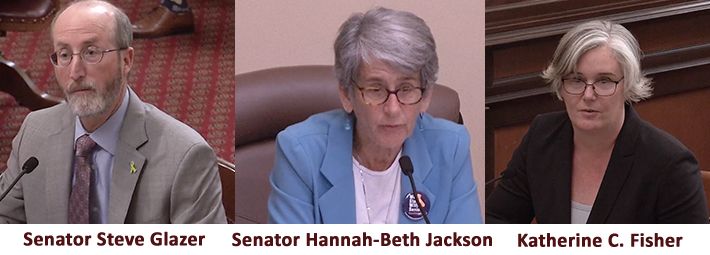 SB-1235, a bill that would require APR disclosures on all types of commercial financing products transacted in California (including some types of factoring, leasing, and merchant cash advance), survived the Judiciary Committee hearing on Tuesday. The bill was previously debated by the Senate Committee on Banking and Financial Institutions, where key provisions like a uniform APR disclosure came under fire.
Since then, Senator Steve Glazer, the bill’s author, is now proposing an alternative Annualized Cost of Capital metric rather than an Annual Percentage Rate in an attempt to compromise with the opposition that says the metric will not work for non-lending products.
On Tuesday, two trade association representatives continued to press their case for a collaborative solution that would work best for all parties, especially small businesses.
Scott Riehl, VP, State Government Relations at the Equipment Leasing and Finance Association (ELFA) said that his association, whose members include Caterpillar and Hewlett Packard, was not on board with the bill as currently drafted. No one in the financial community has ever even heard of the term Annualized Cost of Capital, Riehl said.
Katherine Fisher, Partner at Hudson Cook, LLP, who was there on behalf of the Commercial Finance Coalition, testified that it would not be possible to calculate an annualized rate when the timeframe of products like factoring and merchant cash advances were indeterminate.
Judiciary Committee Chairwoman Hanna-Beth Jackson wrapped up the lively debate by saying that ultimately California “wants a robust small business community” after several of her committee members voiced concerns that the bill in its current form could potentially deter commercial finance companies from providing capital in their state.
The hearing concluded with only 3 aye votes, putting the bill “on call,” wherein no decision was formally reached.
Update: Before the close of the day, the committee secured a 4th aye vote, pushing the bill forward.