
Small Business
How One Company is Helping MCA Brokers and Clients Through Credit Repair
March 5, 2018
Venture Credit Solutions, a New Jersey-based credit repair business, was created in 2016 by founder and CEO Joe Clapman. Because of extensive licensing and other legal conditions required to run a credit repair shop, the company didn’t start operating until the beginning of this year, with a soft launch at deBanked’s Miami event in January.
Formerly an MCA broker, Clapman saw firsthand that really bad personal credit could hinder one’s ability to get cash advances for their businesses, along with home mortgages and even jobs. So he started a consumer credit repair business. He is very clear about what he can and cannot do.
“We get erroneous items that do not belong on your credit report, off,” he said.
He cannot recoup people’s money or eliminate credit card debt. He does not guarantee that he will improve your credit score, but he maintains that when negative erroneous data is removed, generally FICO scores go up and people become eligible for more credit or better credit.
This can benefit MCA brokers by allowing them to take unfundable or less fundable MCA clients and turn them into additional clients for credit repair. Clapman said that brokers for credit repair can get a commission similar to a $15,000 to $20,000 MCA deal.
“We don’t have some secret handshake with Equifax and Experian,” Clapman said. “We can’t do anything you can’t do on your own.”
Instead, Clapman told deBanked that Venture Credit Solutions is a service-based company of researchers, who he calls “information givers,” that are trained in determining the accuracy of data on personal credit reports.
“Any data on your credit report has to be accurate to the letter,” he said.
Clapman and his team make money only when they are able to successfully prove inaccurate data and remove it from a customer’s credit report. Every line of a customer’s report is itemized and the customer is told beforehand how much they will pay Venture Credit Solutions if the company is able to prove that the data is inaccurate.
And data is either accurate or it isn’t.
“If someone tells me that something is accurately described on their credit report, it’s actually illegal for me to try and get it removed,” Clapman said.
While Venture Credit Solutions provides services to individual consumers, they do not advertise to the general public. Instead, they get business from brokers, who Clapman calls “referral agents.” These are MCA and real estate brokers, among others, who are trying to improve their client’s credit – if it has been inaccurately reported.
Clapman gave the example of an MCA merchant who signed a document allowing his broker to submit an application to only one funder. But the broker sent the application out to like 93 funders, severely damaging his credit because of all the credit inquiries.
“We can help him to get all these inquiries off,” Clapman said.
One of the core mantras at Venture Credit Solutions is “The client is your client.” This is important to Clapman because he wants to communicate to his referral agents that the company is not trying to steal their clients – by, for instance, finding the client a lower mortgage. Doing something like this would adversely affect the customer’s credit, which is exactly what Venture Credit Solutions is trying to improve.
“We’re trying to create a win-win process,” Clapman said. “The broker is winning because he’s not losing a client, he’s helping a client [and getting a commision.] And the client is winning because his credit is getting better.”
Clapman said that he is in talks with the New York and New Jersey police and fire departments to potentially help their members who might have erroneous data on their credit reports.
Venture Credit Solutions also has a program for startup companies, designed to improve and build the credit of entrepreneurs. The company now has 15 people working at its office in New Jersey and it plans to be onboarding at least an additional 30 within the next two weeks. Some will work remotely, but all will be in the US, Clapman said.
AmEx to Launch Small Business Loans on Lendio
April 20, 2016American Express is getting knee deep in small business lending and has chosen to go online.
The bank is partnering with small business loan marketplace Lendio to bring its merchant financing products to small businesses. This marks a step forward for American Express as it wants to look beyond its customer base and turn new merchants into borrowers.
Lendio CEO Brock Blake called the product a hybrid between a merchant cash advance and a bank loan ranging from $5,000 up to $2 million for two years. Merchants with a minimum revenue of $50,000 and two years of operating history can apply for this loan based on cash flow and credit card sales.
“This was a relationship that has been a long time coming,” said Blake. “We are fortunate to have won this deal and this opens the door for many similar relationships.”
In February this year, American Express ended a 16 year relationship with retail giant Costco. That partnership constituted 20 percent of the company’s outstanding loans which it hopes to recover by growing the small business loan revenue. The bank also featured its charge cards on online marketplace, Fundera for merchants to compare its business charge cards with traditional loans. To provide some context, Amex cards for small businesses funded $190 billion in purchases, up from $122 billion in 2010.
And as for Lendio — the company has been bullish about striking big ticket deals. The Salt Lake City-based loan marketplace funded $128 million in financing over 5000 small businesses, clocking in 1175 percent annual growth from the previous year.
Square Goes Back To The Drawing Board, Ahead of First Earnings
February 19, 2016 Square is bracing for its first milestone as a public company – its first earnings report.
On March 9th, the payments company will present a scorecard of how it’s doing and what that means for its investors. Visa picking up a 10 percent stake in the company came as a respite for the stock which has generated close to 27 percent losses since its IPO.
But that might not be enough to prove that the seven year old company is in a sustainable business. Square has to prove that it is all a small business needs. From capital, payroll to point-of-sale, Square wants to be the one stop shop for small merchants, not relying entirely on its payments business which makes up 95 percent of its revenue.
When the company started in 2009, its strategy was to go after micro merchants that were too fragmented and small for bigger payments companies. Square started by giving these merchants a dongle to accept card payments for a flat fee. While the idea was to serve an untapped market, the company could not be shielded from the risks that these merchants bring to a business with their heterogeneity, fragmentation and smaller deals.
But ahead of its first earnings call, the company is ramping up its efforts towards bringing more businesses into its fold. Forbes reported that Square expanded its payroll product to merchants in Tennessee, New Hampshire, Nevada, South Dakota, and Alaska in addition to the existing markets of California, Texas and Florida allowing them to serve 30 percent of independent businesses in the U.S.
American Express wants to lend more to small businesses
February 10, 2016American Express hopes to tide over the bitter credit-card deal with Costco by lending to small businesses.
The two companies ended their 16-year partnership when Costco joined hands with Citi in March 2015. This June, customers will receive their Costco-brand Visa credit cards.
AmEx wants to turn its focus on what it is already familiar with — small business loans. In 2014, AmeEx cards for small businesses funded $190 billion in purchases, up from $122 billion in 2010, with enough reason to believe that there is room to grow the business.
AmEx hopes for the small-business loans to make up for the lost revenue from the Costco deal which accounts 20 percent of the company’s outstanding loans, according to a Reuters report.
The Funding Calls That Won’t Stop
November 23, 2014“Your business has been approved for a loan…”
Last week, Chicago Public Radio (WBEZ 95.1 FM) investigated a trend in the small business community, the use of merchant cash advance financing. The station called me in advance to answer some questions about merchant cash advances and I gave my best explanation of the industry and its products.
Of the discussion that lasted more than 30 minutes, only about five of my sentences made it on the air. While I clarify some of my positions below, it was sobering to learn the context of how they were used, as a defense to real life merchant complaints.
The satisfaction rate with merchant cash advances are pretty high and I say that mainly because it’s so rare to hear complaints from anyone other than journalists that can’t believe anyone would accept rates above 6% APR. And while there are indeed bad actors in the industry (as there are in any industry), the gripe one merchant had about phone solicitations that just won’t stop is a recurring theme.
It’s happening to me too.
As an account representative in 2010 calling real time leads sold to five parties at once, I did what anyone would do, I pretended to be a small business myself and inquired through the website that we bought leads from and entered my cell phone as the point of contact
Ring. Ring. Ring…
Within a half hour, representatives from four companies called me, and I learned exactly who my competition was, how they explained the product, and what they would say to win me over. Two of the four were really good and one even referenced my name personally, saying something to the effect of, “If you get a call from Sean Murray, his rates are worse than mine.” Obviously he had already done what I was doing now, which was pretend to be a small business so he could prove to the prospect he was well informed about the alternatives. He had heard my pitch already and was now throwing me under the bus by planting the seed that I was going to offer something more expensive even if it wasn’t the truth.
In the end none of them won because it was all a farce. One never called me again after the first call. Another kept at it for a week and the remaining two followed up for a month.
And then it got quiet…
I had been marked as a dead lead and forgotten about until three months later when one company sent a follow up email. “Smart,” I thought. But then a call came six months later, and then more emails, some from companies I didn’t originally engage with.
And they continued at regular intervals, every couple of months an email or call. Was it interesting? Yes. Annoying? No.
Until this year.
 The volume of emails have slowed but I’ve somehow ended up on robo calling lists. “Press 1 to talk to a funding specialist or press 9 to be added to the Do Not Call list”
The press 9 option doesn’t work for me. Sure, I might be removed from that marketer’s list, but it in no way removes you from anyone else’s list. I knew that already of course because I’ve been on the other end before.
The first time I got one of these calls, I was excited to tell the sales representative who I really was, level with him, and explain that it was a really good idea to take me off the list. But much like other business loan robo call complaints, the representative wouldn’t tell me anything about himself or his company.
I got yelled at.
Every time I tried to ask a question, he’d get louder, insisting I tell him my monthly gross sales volume for the “cash advance I wanted.”
A rogue actor maybe, but I’ve since gotten additional business loan robo calls and have made no progress in getting myself removed. I just hang up now.
Call it sweet irony perhaps. Or maybe a wake up call (pun intended). I applied on a website once four years ago and the rest is history.
My experience with repeat solicitations is marginal compared to somebody that has actually used a merchant cash advance. With the filing of a public UCC-1, anyone in the industry can easily access that data and convert it into a marketing list. And they do.
Brokers that scorn UCC marketing acknowledge that these businesses could be getting called 5-10 times a day. My own clients had reported repetitive calls back when I was an account representative. And while UCC marketing is very cost effective, in today’s market where more than a thousand companies are offering similar financial products, it’s probably safe to say it’s overly saturated.
And if 5-10 calls per day were even remotely accurate, I’d surmise that level of volume is marring the industry’s reputation as a whole.
I could argue though that when customers have a great many options to choose from, they win. With more than a thousand companies offering merchant cash advances and business loans, it’s truly a buyer’s market. Play all the companies against each other and you should end up with the best possible terms. It’s a great time to seek capital.
Except we’ve got to do something about those phone calls, or at least the robo calls.
Every angry robo dial recipient becomes one less person likely to speak positively about the the nonbank financing industry. Aged leads, UCCs and phone calls might be inexpensive, but the cost to undo negative preconceived notions is immeasurable.
Do you want to be known as the company that helped small businesses or the annoying people that won’t stop calling? If merchants are taking to the air waves to complain, it will only be a matter of time before the FTC and FCC become interested.
—
Regarding my comments on the radio about APRs and daily amortization, they were pulled from a conversation that compared daily payment loans to purchases of future sales. I DO believe bad actors exist and every business owner should have an accountant, lawyer, or savvy third party review any contracts they enter into, financial or otherwise.
Are We in a $300 Billion Market?
August 7, 2014 Earlier today on a large group conference call with Tom Green and Mozelle Romero of LendingClub, I learned a few more details about their business loan program. In the Q&A segment, one attendee came right out and asked if they believed their competition was merchant cash advance companies and online business lenders.
According to Green, it’s not so much other companies that they feel they are up against but more of the broad challenge of market awareness. Their struggle is about getting people to know that there are non-bank options available and to make people aware of their existence.
It’s the same challenge merchant cash advance (MCA) companies have been dealing with for more than a decade. Notably though, there are many in the MCA industry that feel the market is saturated and thus a lot of the industry’s growth has been fostered through a turf war for the same merchants. Stacking (the practice of funding merchants multiple advances or loans simultaneously) is partially spurred by a belief that there are no more untapped businesses left to fund. The acquisition costs of a brand new untouched business that is both interested and qualified is so high, that it is not a pursuit some funders and brokers can afford to take on.
 Market Size
At present, daily funders, which are a combination of both MCA companies and lenders that require daily payments, are funding somewhere between $3-$5 billion a year. On the call Green said he believed the potential market was far larger than that, though he discredited the $200 billion figure that some independent research had predicted. That was only because LendingClub believes the potential market is substantially higher, more like $300 billion.
$300 billion?! That’s about 100x larger than the current daily funder market combined and starkly contradicts any belief that there’s no merchants out there who haven’t already gotten funded.
LendingClub’s minimum gross sales requirement is $6,250 a month and they have an upper monthly gross threshold on applicants at $830,000 a month, though they’ve had businesses apply who do even more than that. Their sweet spot as Green put it, is the segment doing $16,000 to $416,000 gross per month.
I can’t help but notice that’s the same sweet spot that daily funders have. And we mustn’t forget, LendingClub’s target business owner has at least 660 FICO. If it’s a $300 billion market for good credit applicants, then it’s got to be even bigger for the ultra FICO-lenient companies in MCA.
What’s a business?
LendingClub only needs someone with at least 20% ownership to both apply for and guarantee the loan, an unheard of stipulation in the rest of alternative business lending. One cardinal rule in MCA has been that there needs to be at least 51% or 80% ownership signing the contract. That’s had a lot to do with the fact that most MCA agreements are not personally guaranteed and the signatory is required to have absolute authority to sell the business’s future proceeds.
Summer of Fraud
 In 2013 the MCA industry experienced what many insiders dubbed the summer of fraud. Spurred by advances in technology, small businesses were applying for financing en masse while armed with pristinely produced fraudulent bank statements. Fake documents overwhelmed the industry so hard that today it is commonplace for underwriters to verify their legitimacy with the banks. This is done manually or with the help of tools such as Decision Logic or Yodlee.
Knowing this firsthand, I asked LendingClub if they also take the care to verify bank statements. In the majority of cases they do not. They rely greatly on an algorithm that detects fraudulent answers on the application but the statements themselves are not scrutinized except in very high risk situations. Considering they’re wildly less expensive than MCAs, I find it odd that they are exposed to this type of risk. Fraudulent documents are the norm and in these underwriting conditions, I would expect them to charge as much or more than MCA companies, not less.
At the same time it’s important to mention that at present, business loans on their platform are only funded by institutional investors. Retail investors can only invest in consumer loans. LendingClub has been very transparent about excluding retail investors here for the very purpose of shielding them from unevaluated and unforeseen risk. My guess is that as time goes on, they will do more to validate the bank statements which is the bread and butter of assessing the risk and health of a business.
$300 billion
In a FICO flexible environment, it’s possible the potential for daily funders is at least $300 billion. If true, that would mean that for the 16 years that MCA players have been around, they barely reached even 1% of their target audience. I’ve been saying it since I’ve started this blog 4 years ago, every business owner I’ve spoken to has never heard of a merchant cash advance… which means saturation is a myth.
Tom Green was right, the real competition is public awareness. 99% of the potential market is untapped. If you’re fighting with 5 other companies over the same merchant, you gotta:
You gotta keep on looking now
Keep on looking now
You’re looking for love
In all the wrong places
Making Cents of Short Term Business Lending
June 22, 2014Where do you see yourself in 5 years? Perhaps you’ve seriously planned what you’ll be doing in mid-2019 or maybe you at least have an idea of how things will play out. It’s only a half a decade after all so how hard could it be to foresee the future?
Surely all of us saw the DOW surging 5 years ago and got rich right?

Did New Yorkers factor Hurricane Sandy into their 5 year plan back in 2009?

It’s only 5 years, what could possibly happen to a small business in that time?


As I recently logged onto LendingClub to invest in consumers loans, I began to wonder just how safe the 60 month terms were. Not that I have a lot of options since LendingClub only offers 3 or 5 year terms, but the latter is unquestionably risky. The borrower might look good now, but where in the heck will they be in 5 years? I can’t even begin to guess.
Mortgages, student loans, and car leases aside, I can think of very few reasons to use a 5 year loan from a personal perspective, mainly because that’s an extremely long commitment. For a small business, such a term far exceeds the rationale behind “working capital”, the reason oft-cited by businesses seeking less than $200,000.
The Small Business Administration’s website speaks of this:
Businesses that are seasonal or cyclical often require more working capital to stay afloat during the off season. Although your company may make more than enough to pay all its obligations yearly, you must ensure you have enough working capital at any one time to meet your short term obligations. For example, a company may do significantly more business over the holidays, resulting in large payoffs at the end of the year. However, the company must have enough working capital to buy inventory and cover payroll during the off season as well, when revenues are lower.
Working capital may come in handy for something like inventory for which the business probably expects to sell it all off in less than a year. Can you imagine still making monthly payments in 2019 for inventory you bought with a loan in 2014?
I bet this guy can’t:
And if the financial picture looks great and they have a long term need, why not go out 5 years?


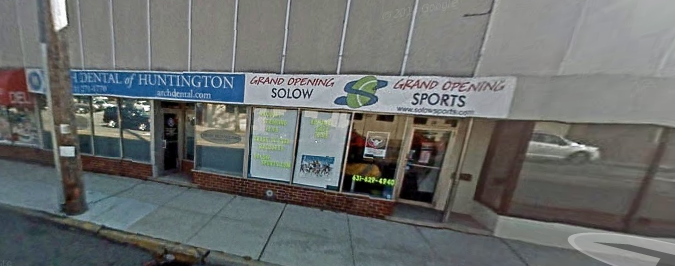
Verizon replaced Washington Mutual. But a Verizon store, that will last forever…
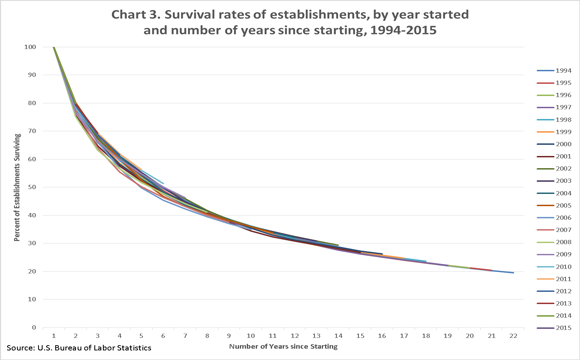
Only 41.1% of retail businesses live to experience their 5th birthday.
And even then when business types are aggregated, making it past year 5 doesn’t ensure lifelong success. Don’t confuse established with safe:
In fact, even borrowers are opting for shorter term loans with higher interest rates than long term loans with lower interest rates. Part of that is due to the lower net dollar cost paid for the loan said OnDeck Capital CEO Noah Breslow in an interview with Peter Renton:


5 years ago I used to spend way too much time on Instagram. Oh wait, no I didn’t… there was no such thing as Instagram.

What do you think is the best bet for this CD store? A 3-6 month working capital loan or a 5 year term loan?
Giving a borrower a lengthy repayment term ensures they will be able to pay you back right?

Above is the result of my $25 contribution towards a 5-year LendingClub loan issued on May 16th. They missed the very first payment. I’m really looking forward to the next 59 months…
In 2019, everything will be business as usual, won’t it Madam President…

As short term business lending critics herald the emergence of 3-5 year term business loans, I think it’s important to remember that they are catering to a market that likely has different goals. Long terms are often not appropriate for borrowers with working capital needs. The CEO of RapidAdvance, Jeremy Brown discussed this in an article he wrote for DailyFunder more than a year ago.
Our industry is based on providing working capital to merchants. By its very definition, working capital is less than 12 months. Longer term deals are permanent capital, even when they are repaid over 15-24 months.
As a borrower, the very idea of committing yourself to monthly payments 5 years from now should be considered very seriously. The average length of a marriage prior to a divorce is 8 years. For past or future divorcees, a 5 year loan is more than half as long as a marriage!
Alternative lenders should be asking themselves if they really have the data and underwriting skills necessary to make accurate predictions that far out in the future. Working capital underwriting models are not applicable as long term assessments.
If you’re going to make 5 year business loans, make sure to take advantage of Google maps. Take a look back at the business location and the ones surrounding it over the last few years. You may not feel so safe about your investment…