Small Business
The Deal
May 25, 2014When times are tough, small businesses take chances. Last year, a family run business in Cohasset, MA made a snap decision and agreed to a $75,000 loan with infinity percent interest, literally. The principal was completely repaid in just 74 days but as per the contract, they still had to make fixed interest payments for as long as the business was open.
It wasn’t necessarily a good deal. Heck, some might think it was a really bad deal, but they got the cash when they needed it. The perpetual fixed payments kicked in after the principal was repaid because the lender structured them as royalty fees. A normal merchant cash advance will take a percentage of a merchant’s sales up until a predetermined amount has been satisfied, but this deal required a percentage forever. Is Wall Street running amok yet again? Shouldn’t people be monitoring stuff like this?
As it would turn out, about 6.5 million people were witness to this transaction. More than half of those people, most of whom are hard-working American families, cheered the business owner on. That’s because this deal had nothing to do with Wall Street and did not involve a commercial loan broker.
The business is named Wicked Good Cupcakes and it’s a deal they made on Shark Tank, a hit TV show on ABC. Kevin O’Leary loaned them $75,000 and took a percentage of every sale until he was repaid just 2.5 months later. Since then he is taking a permanent royalty of 45 cents per cupcake sold.
As quoted in the Boston Business Journal
“The royalty deal has worked great for us,” said Tracey Noonan, the CEO of the company.
Many people told her immediately following the deal that she was stupid. But today, Wicked Good Cupcakes is doing better than ever.
O’Leary, whom the business owners called an “angel in disguise” has referred to the deal as one of the most phenomenal ever made on the show. Wicked Good Cupcakes is actually on pace to do $3 million in revenue in 2014.
While it’s true that part of their success is due to the appearance on the show, nowhere does it say that entrepreneurs have to agree to take a deal if offered one. That means the owners could have walked away from O’Leary’s offer and still experienced the same post-show hysteria of celebrity. But they needed the money… and there was an offer on the table. It wasn’t the best deal, but it was A deal.
And that’s the nature of business. Everything is about circumstances. You could be flush with cash or in a pinch, growing fast or playing defense. All the while opportunities and obstacles approach from every turn.
 Unlike consumers who are afforded protections from making decisions that might not be in their best interest, small businesses are free to pursue whatever strategy they want. The best part about capitalism is that you’re the master of your own destiny.
The terms O’Leary offered to Wicked Good Cupcakes were not unique. Just recently in the 12th episode of Season 5, he offered a $100,000 loan to Tipsy Elves that once repaid, would still require payments in perpetuity in the form of a royalty fee for every sale. That’s an equivalent APR of infinity. In the end, they turned it down and went with Robert Herjavec’s equity offer instead.
Many viewers have taken to twitter to share their doubts about the viability of the Tipsy Elves business model, which is selling ugly Christmas sweaters. That healthy dose of skepticism is something alternative lenders are no strangers to, and as such they tend to price their deals accordingly.
Even deal making that is done on TV in front of millions of witnesses can go sour. Just ask Marcus Lemonis, the star of the TV show The Profit, who recently made a deal with a business in my own backyard, A. Stein Meat Products in Brooklyn, NY. After learning the business was on the brink of insolvency, Lemonis offered them a cash lifeline in exchange for buying their Brooklyn Burger brand at a bargain price of $190,000. In any other circumstances, that deal might not have happened.
Lemonis expeditiously wired them the cash, but never got what he paid for in return. Mora and Buxbaum, the owners, claim the funds were a loan but they have never made a payment. Defaults like these happen every day, especially in alternative business lending.
Hated to do it but here's the update on stein meats and Brooklyn burger. I tried not to but was ignored for 90 days. http://t.co/4oyYOiXK68
— Marcus Lemonis (@marcuslemonis) May 16, 2014
The entrepreneur applies for a business loan, the loan gets made, and the borrower quickly defaults. The result is that the price goes up for the next guy. That’s the risk part that lenders always talk about, the odds that they’re not going to get paid back. If every business repaid their loans, the average cost of financing in alternative business lending would probably be about 6% a year, around what an A rated personal loan costs on LendingClub, instead of the high double digit or triple digit rates that exist now.
Even Kevin O’Leary isn’t taking any chances, hence he protects himself by charging infinity percent interest, and America thanks him every Friday night for blessing entrepreneurs with an opportunity. It’s not the best deal, but it’s A deal.
Small business owners are sophisticated enough to make tough decisions all on their own. That’s the reason we can put them in the public eye, in front of more than 6 million people who either cheer for their success or literally cry out for their demise. These entrepreneurs don’t go on Rainbow & Unicorn Tank, they go on Shark Tank. Sometimes the entrepreneurs walk away with a partner, sometimes they get a loan with infinity percent interest. In the end, it’s their choice, a choice that 36,000 small businesses hoped they would have in 2012. That’s how many applied to be on the show that year.
Business is business and a deal’s a deal. The ball’s always in your court…
Quotes from Kevin O’Leary
Business is war. I go out there, I want to kill the competitors. I want to make their lives miserable. I want to steal their market share. I want them to fear me and I want everyone on my team thinking we’re going to win.
Here’s how I think of my money – as soldiers – I send them out to war everyday. I want them to take prisoners and come home, so there’s more of them.
You may lose your wife, you may lose your dog, your mother may hate you. None of those things matter. What matters is that you achieve success and become free. Then you can do whatever you like.
I’m not a tough guy. I’m just delivering the truth and only the truth and if you can’t deal with it, too bad.
Nobody forces you to work at Wal-Mart. Start your own business! Sell something to Wal-Mart!
Don’t cry about money, it never cries for you.
The only reason to do business is to make money; that’s the only reason for doing business.
Money has no grey areas. You either make it or you lose it.
Working 24 hours a day isn’t enough anymore. You have to be willing to sacrifice everything to be successful, including your personal life, your family life, maybe more. If people think it’s any less, they’re wrong, and they will fail.
I have met many entrepreneurs who have the passion and even the work ethic to succeed – but who are so obsessed with an idea that they don’t see its obvious flaws. Think about that. If you can’t even acknowledge your failures, how can you cut the rope and move on?
I don’t mind rude people. I want people that I can make money with, so if their executional abilities are good, and they’re arrogant and rude, I don’t care.
Can you handle it?
The Real Impact on Small Business
May 22, 2014 It’s not easy being in the lending business. Just talking about money can make people uncomfortable. Bringing up how much money you have, don’t have, or wish you had is like bringing up politics at Thanksgiving dinner. It’s taboo in this society. It’s even rude to ask somebody how much they make a year. That’s one of two reasons why being a lender or loan broker is so difficult, you’re forced to dive head first into emotionally charged waters.
The second reason is telling an applicant ‘no’. It feels personal even if it’s not. “It’s just business,” the bearer of bad news will say, but it never feels that way. I know that firsthand through my experience as both a broker and an underwriter. Rejection is a painful experience for an applicant no matter how professional they are.
But sometimes you get to tell an applicant ‘yes’ and that can be an emotionally moving experience as well. Looking back, the only applicants I ever heard cry were the ones that got approved. Some of those approvals were expensive but they were given an opportunity in a world where up until that point, no one was willing to give them any opportunity at all. They were the forgotten businesses of America.
PayPal’s VP of SMB Lending recently said that he feels “blessed to be serving this higher need.” Blessed was an interesting word choice. Being able to support small businesses doesn’t just make him feel happy or hopeful or satisfied, it makes him feel blessed.
What is the real impact that alternative financing companies have on small businesses? Thanks to the funding companies who took the time to find out. Today, we can see for ourselves:
Above is just a small handful of the testimonials you can find on the websites of CAN Capital, Kabbage, RapidAdvance, Fora Financial, and Merchant Cash and Capital. Real businesses, real stories, real impact.
And there you have it…
Would You Fund This Business?
April 12, 2014 Is the site inspection dead?
One of the strangest byproducts of the automation age is that underwriting tools once deemed absolutely essential are being replaced with APIs, digital verifications, and algorithmic scoring. Speed is everything, but why?
Faster speed through automation allows for scaleability. The promise of speed to a potential customer also encourages them to apply. Working capital can be an impulse decision now. You don’t even need to leave your chair to get $80,000 for your small business. But who’s making sure these businesses are sound… or more importantly, that they even exist?
I learned through conversations at Transact 14 that there is a growing dependency on Google Earth for site verification, more specifically Street View. Really??? Street View?!
While tech heavy funding companies laud real-time data through hundreds of APIs, it’s amusing to think that something like Street View, which might not be updated for months or years at a time, suffices as a site verification. Indeed, Street View still shows Christmas decorations in my home town.
Google Earth can pinpoint the obvious things like showing you something is located in the middle of nowhere:

But can it show you this sign located inside?
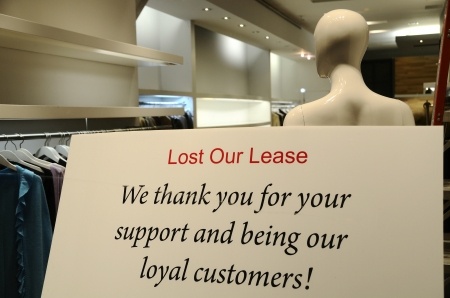
And how would you know if the writing was literally on the wall if it just went up yesterday?
Or that everything is completely on the up and up except that the business will be:

If you had the chance to speak with Jason Fullen or Joe Volk at NVMS during Transact 14, you’d know that site inspections performed by real live humans can be done in the same day they’re ordered. Or if you were getting wild at the Quiktrak party, you’d know that many of the older merchant cash advance companies still rely on site inspections, particularly on large deals.
How dumb would you feel if the $150,000 deal you funded looked like this on the inside?

Investigate a little
Who better to know the scoop on the business than the locals? I am reminded of the time a $100,000 deal I worked on where the site inspector commented that a restaurant was actually a front for a brothel that was likely going to get shut down.
I also recall almost funding a $100,000+ supermarket until the site inspection revealed that all of the shelves in the store were empty. I guess that merchant wasn’t lying when they said they needed the money to buy inventory!
And there was my own personal trip to a Brazilian Steakhouse for the final approval on an MCA deal based on credit card transactions. The server politely informed me at the end of my meal that the establishment no longer accepted credit cards as of a few days ago. How convenient…
Can social media be our eyes?
In the social media era, it’s almost as if a million site inspections are being conducted every minute. Can reviewer data be our eyes?



If there are too few reviews or they’re aged, can you rely on all your other data points? Can you trust that the available reviews are from real customers?
Speed is king these days, but ignorance is never in style. One has to consider if they can trust external data versus what they see with their own two eyes. We’ve all seen deals that looked great on paper, but turned out to be complete

After further review of the deal:

Should we fund businesses we never see? It’s your call.
Merchant Cash Advance Syndication: Crowdfunding?
March 28, 2014 You might not have known this, but one of the most lucrative opportunities in merchant cash advance is the ability to participate in deals. It’s a phenomenon Paul A. Rianda, Esq addressed in DailyFunder’s March/April issue with his piece, So You Want to Participate?
Syndication is industry jargon of course. You probably know the concept by its sexier pop culture name, crowdfunding. For all the shadowy rumors and misinformation that circulates out there about merchant cash advance companies, they’re similar to the trendy financial tech companies that have become darlings of the mainstream media.
Did you know that many merchant cash advances are crowdfunded? To date, no online marketplace has been able to gain traction in the public domain aside from perhaps FundersCloud, so crowdfunding in this industry happens almost entirely behind the scenes. There is so much crowdfunding taking place that it’s becoming something of a novelty for one party to bear 100% of the risk in a merchant cash advance transaction. Big broker shops chip in their own funds as do underwriters, account reps, specialty finance firms, hedge funds, lenders, and even friends and family members of the aforementioned.
Merchant cash advance companies find themselves playing the role of servicer quite often, which is coincidentally the model that Lending Club is built on. A $25,000 advance to an auto repair shop could be collectively funded by 10 parties, but serviced by only 1. Each participant is referred to as a syndicate. This is not quite the same system as peer-to-peer lending because syndicates are not random strangers. Syndication is typically only open to businesses, and most often ones that are familiar with the transaction such as the company brokering the deal itself.
In the immediate aftermath of the ’08-’09 financial crisis, some merchant cash advance companies became very mistrusting of brokers and deal pipelines were going nowhere. Underwriters had a list of solid rebuttals for deals they weren’t comfortable with. “If you want us to approve this deal so bad, why don’t you fund it yourself!,” underwriters would say. Such language was intended to put a broker’s objections over a declined deal to bed. But with all the money being spent to originate these deals, it wasn’t long until brokers stumbled upon a solution to put anxious merchant cash advance companies at ease. “Fund it myself? I’d love to, but I just can’t put up ALL of the cash.”
And so some brokers started off by reinvesting their commissions into the deals they made happen. That earned them a nice return, which in turn got reinvested into additional deals. Fast forward a few years later and deals are being parceled out by the truckload to brokers, underwriters, investors, lenders, and friends. There’s a lot of money to be made in commissions but anybody who’s anybody in this business has a syndication portfolio. The appetite for it is heavy. Wealthy individuals and investors spend their days cold calling merchant cash advance companies, brokers, and even me, trying to get their money into these deals. They know the ROI is high and they want in.
 That’s the interesting twist about crowdfunding in the merchant cash advance industry. You can’t get in on it unless you know somebody. There are no online exchanges for anonymous investors to sign up and pay in. It requires back door meetings, contracts, and typically advice from sound legal counsel. A certain level of business acumen and financial prowess are needed to be considered. These transactions are fraught with risk.
In Lending Club’s peer-to-peer model, investors can participate in a “note” with an investment as small as $25. This is a world apart from merchant cash advance where it is commonplace to contribute a minimum of $500 per deal but can range up to well over $100,000.
Lending Club defines diversification as the possession of more than 100 notes. At $25 a pop, an investor would only need to spend $2,500. With merchant cash advance, 100 deals could be $50,000 or $10,000,000. By that measure, syndication is crowdfunding at the grownup’s table, a table that doesn’t care about sexy labels to appease silicon valley, only yield.
Strange merchant cash advance jargon keeps the industry shrouded in mystery. Did you know that split-funding and split-processing are terms often used interchangeably? Or that they have a different meaning than splitting? Or that the split refers to something else entirely?
Do you know what a holdback is or a withhold? How about a stack, a 2nd, a grasshopper, an ISO, an ACH deal, a junk, a reup, a batch, a residual, a purchase price, a factor rate, or a UCC lead?
Paul Rianda did a great job detailing the risks of syndication, but there is one thing he left unsaid, and that’s if you’re going to participate in merchant cash advances, you better be able to keep up with the conversation.
At face value, syndication is nothing more than crowdfunding. But if your reup blows up because some random UCC hunting ISO stacked an ACH on top of your split while junking him hard and upping the factor with a shorter turn, you just might curse the hopper that ignored your holdback and did a 2nd. And on that note, perhaps it’s better that the industry refrain from adopting mainstream terminology. We wouldn’t want everybody to think this business is easy. Because it’s not.
One factor to consider is the actual product being crowdfunded. In equity crowfunding, participants pool funds together to buy shares of a business. In crowdlending, participants pool funds together to make a loan. But in merchant cash advance syndication, participants pool capital to purchase future revenues of a business. An assessment is made to predict the pace of future income and a discounted price is paid to the business owner upfront. That purchase price is commonly known as the advance amount.
Syndication has more in common with equity crowdfunding than crowdlending. If you buy future revenues and the business fails, then your purchase becomes worthless. There is typically no recourse against the business owner personally unless they purposely interfere with the revenue stream and breach the agreement. Sound a bit complicated? It is, but crowdfunding in this space is prevalent nonetheless. To get in on it, you need to know someone, and to do it intelligently, you better know what the risks are.
If you want to sit at the grownup’s table and syndicate, consult with an attorney first. There’s a reason this industry hasn’t adopted sexy labels. It isn’t like anything else.
Federal Reserve Examined Alternative Business Lending
March 20, 2014 Back in January, 3 staff members of the Federal Reserve board investigated peer-to-peer (p2p) business lending, particularly by comparing it against p2p consumer lending. It offers this introductory background, “As distrust and dissatisfaction with commercial banks grew during the recent financial crisis,there was large growth in nonstandard types of borrowing arrangements.” That’s usually where we’d segue off into a discussion about merchant cash advance but it was the p2p model that had them so intrigued.
As it is a 28 page study, I have pasted the excerpts I felt were most relevant with my comments on top. The link to the full report is at the bottom:
Something I’ve noticed a lot myself:
Small business owners often intermingle their personal and business finances
Something Lending Club might want to think about a day after they announced business loans with an interest rate of 5.9%:
Our results indicate that loans for small business purposes were more than two-and-a-half times more likely to perform poorly.
Do merchant cash advance companies face a similar risk?
Between 2006 and 2008 peer-to-peer lending grew steadily. It hit a snag in 2008 when the SEC determined that their loans should be classified as securities and, thus, regulated. This led both Prosper and Lending Club to put any new loans on hold until they properly registered with the SEC.
Yup.
Lending to small businesses is generally considered to be riskier and more costly because small firms have higher failure rates and are more vulnerable to downturns in the economy. Lending to small businesses is further complicated by their informational opacity. Most do not have the detailed financial statements
Lending Club had higher decline rates in high risk states.
while Florida was home to more than 4,000 applications for small business loans, fewer than 300 of them were funded
We’ve all seen deals where the merchant requests much more than we’d ever feel comfortable with:
requesting greater amounts of money decreased the likelihood of a loan being funded; each additional $1,000 requested decreased the likelihood of funding by about 4 percent.
Rest assured, the government will be watching and measuring the impacts all the while. Do higher cost, low paperwork loans impact small business longevity? I’m reminded of the raging stacking debate taking place in the industry right now…:
As small business owners are increasingly turning to this alternative source of money to fund their businesses, policy makers may wish to keep a close eye on both levels and terms of such lending. Because such loans require less paperwork than traditional loans, they may be considered relatively attractive. However, given the relatively higher rate paid on such loans, it may be in the best interest of the business owner to pursue more formal options. More research is required to understand the long-term impact of such loans on the longevity of the firm and more education to potential borrowers is likely in order.
Is There Cause for Alarm?
March 8, 2014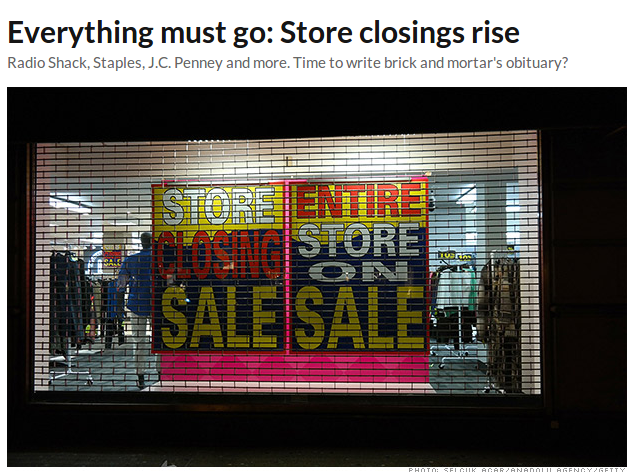
Brick and mortar chain stores died this week, after a long illness. Born along Main Street, raised in shopping malls across post-World War II America, the traditional store enjoyed decades of good health, wealth and steady growth. But in recent years its fortunes have declined. Survived by Amazon.com and online outfits too numerous to list.
– CNN 3/7/14
Just a day after Jeremy Brown’s new CEO Corner post appeared on DailyFunder with an overt bubble warning, CNN’s Chris Isidore alluded that the era of brick & mortar retail may be drawing to a close. In Isidore’s brief sensational article, he fingers an overabundance of retail space, a weak economy, and the Internet as the culprits behind Main Street‘s decline.
In the broad alternative business lending industry, the sentiment is quite the opposite. Small business demand for working capital is surging and no one is predicting anything less than stellar growth for the foreseeable future. But is the growth real?
Jeremy Brown is the CEO of Bethesda, MD-based RapidAdvance and he explains the growth may not be what it appears to be on the surface. Some cash providers are overpaying commissions, stretching out terms longer than what their risk tolerance supports, and are growing by funding businesses that have already been funded by someone else (a practice known as stacking).
If the industry collectively booked 50,000 deals in 2013 and increased that to 100,000 deals in 2014, you’d have 100% growth, or at least it would appear that way on the surface. What if the additional 50,000 deals funded this year were not new clients but rather additional advances and loans made to existing clients? It’s a lot easier to give all of your clients money twice instead of acquiring new ones.
This all begs the question, is demand for non-bank financing really growing by leaps and bounds? Or does it just appear that way because those that have already utilized it are demanding more of it?
Brown left his readers with this conclusion, “There will be a rebalancing at some point. And it will not be pretty.”
Chime in with your thoughts about this on DailyFunder.
—–
When Will the Bubble Burst? by Jeremy Brown will also appear in the next print issue of DailyFunder. If you haven’t subscribed to the magazine already, you can do so HERE.
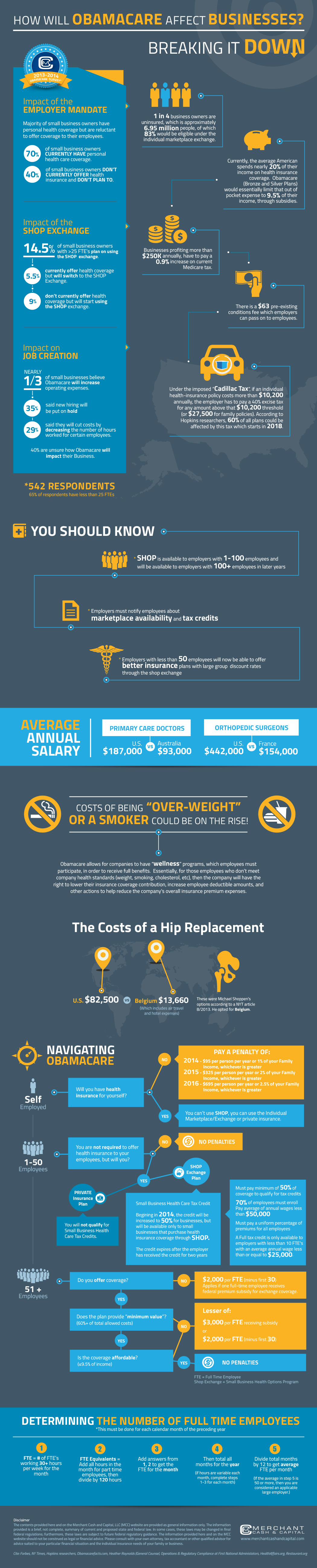
How Will Obamacare Affect Small Businesses?
December 12, 2013It’s one thing to assume how small businesses feel about Obamacare and another to hear it straight from the horse’s mouth. New York-based funding provider Merchant Cash and Capital surveyed their clients and this is what they learned:
- Nearly one third of respondents believe the Act will increase operational expenses.
- 40 percent aren’t sure how it will impact their business.
- One in four respondents said they will halt any growth initiatives in the near future as a result of the Act.
Infographic from MCC