Industry News
The Other 93%
July 13, 2012The SEO war rages on for Merchant Cash Advance providers, ISOs, micro lenders, and other financing firms, but just how much real estate is everyone really fighting over? According to data recently provided in The Green Sheet by First Annapolis Consulting, only 7% of all merchant account leads are generated via the Internet. So if your business plan’s success hinges on getting to page 1 of Google search, you might be shutting yourself out from nearly the entire marketplace. Don’t get us wrong, there’s a lot of money to be made and business to be acquired via the Internet, but even the big firms get roughed up from time to time by competition, new algorithms, and SEO companies that promise the world but deliver few results.
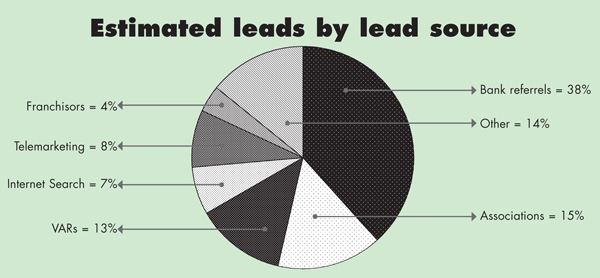
So if not the Internet, then what else is there besides cold calling? That’s a question that tons of small ISOs ask themselves when they realize that competing online isn’t easy. It just so happens that the “what else” comprises of 85% of all generated leads in the payments industry. More than 50% are derived from bank referrals and associations alone.
Has anyone ever wondered why companies like AdvanceMe (Capital Access Network) are still number one in the Merchant Cash Advance arena? They’ve managed to defy Darwin’s theory of evolution. In every industry, there is a pioneer that leads the way, gets too comfortable, stops innovating, and is systematically made irrelevant by fresh thinking competition. There was MySpace until there was Facebook. There was Yahoo until there was Google. There was AOL until…there was just everything else.
So one would expect that in 2012, the mere mention of AdvanceMe would be part of a requiem for the founding fathers of the Merchant Cash Advance industry. That isn’t the case and is quite the opposite considering they are on pace to fund at least $700 million this year. So they must be #1 on Google, right? Nope. For all of the main keywords that people are fighting over, they rarely if ever, even show up on the first page of the results.
 Chances are a lot of their clients never even bothered to search online for financing, or if they did, it was just to get a second opinion. Once they saw that full page advertisement in the merchant account statement their processor mails them every month, they probably just called the phone number listed on there, went through the steps, and got funded. AdvanceMe and other players have some pretty badass referral connections.
All the sales pitches in the world about lower rates and free POS systems aren’t going to compete with a merchant who has just been given a referral by a company they already have a relationship with. Hell, even you have probably enlisted an insurance company, wedding vendor, or mortgage broker because someone you trusted said they were great.
This isn’t another lecture about how referrals are crazy good and that cold calling is wicked bad, especially since we don’t even necessarily feel that way. The point is really to highlight just how much more potential there is out there for small funders and ISOs. You can actually be successful with a sucky website and no SEO if you can just solidify some key relationships.
If you want to be around 14 years later, you can’t ignore the other 93% of the market. The volume of Internet leads will probably increase in the future as more computer savvy people become small business owners. But it’s way too easy to set up a website, hire an SEO guy, and throw money at Pay-Per-Click. Anyone can do it and everyone is doing it. That means most companies are losing the battle and tons of you are saying “what else is there?” Fortunately, the lead generation pie chart offers unlimited hope. You just need to think bigger and try harder.
If the other categories seem too ambitious, well then you’ll never make it in this biz kid…
How The Facebook IPO Affects the Merchant Cash Advance Industry
May 18, 2012 Facebook went live on the Nasdaq earlier today, causing many people to become instant millionaires or billionaires. Yea…soo… how is this in any way relevant to Merchant Cash Advance (MCA)? you might ask. Well, because MCA is the next BIG thing. One of the major winners of the Facebook IPO is Accel Partners, a venture capital (VC) firm that invested $12.7 million in Mark Zuckerberg’s college networking website in 2005. Today, they’re cashing in on billions from that bet. Since then, Accel has repeatedly struck gold by backing wildly successful businesses such as Groupon and Etsy. Many hungry and jealous VCs are looking to jump into any industry Accel likes, to either compete for marketshare or to piggyback on the success.
And that’s how Facebook and MCA are related…
On February 7, 2012 Accel Partners invested $30 million into Capital Access Network (CAN), the holding company of AdvanceMe and NewLogic Business loans. There was some buzz about it in February, but it faded fast. It seems like every day there is a new press release from some MCA firm bragging about how they secured a mult-million dollar credit line. So it’s no surprise that industry insiders didn’t immediately poo themselves in hysterical awe of this announcement.
CAN is also on pace to fund $600 million this year, an astounding figure that makes $30 million sound like a mere drop in the bucket. It’s as if Accel gave them a Starter Advance. 😉
On a more serious note, the rest of the VC and Growth Capital world waited about 3 seconds before pouncing on all things MCA. The frequency in which we’re receiving random calls and e-mails from “investors” about putting money into MCA providers has increased dramatically. A few other funders and large ISOs have shared that they are experiencing the same thing. Right now there is a great chance that there are back room negotiations going on all over the industry between funders that already have millions and investors that have billions.
Raising capital has never been a real problem in the industry, as the Wall Street establishment has been funneling millions into the New York, California, and Florida MCA powerhouse providers for years. Do we really need Silicon Valley to jump into bed with us? Maybe. Although MCA has been around since the late 1990s, there’s been this lingering acknowledgment that most of the small business market that could benefit from financing still doesn’t know that MCA exists. Way too many business owners respond to an explanation of the MCA program with shock, “Wow, I never knew you could do something like that.” That’s a problem and it’s real.
Sean Murray, the founder of Merchant Processing Resource, recently did a presentation through the Manhattan Chamber of Commerce last month to 30 small business owners about MCA financing. The first question asked by one of the attendees after it was over was, “did you come up with this whole concept yourself?” He certainly did not, and it epitomizes that there is still room for exponential growth in a billion dollar industry that is more than a decade old.
Naysayers predicted that the MCA concept would fail years ago, and yet it has grown, mutated, and evolved. Some folks got into this business in their early twenties right out of college, and have literally made a career out of it. It’s quite a picture to see that they’ve grown up, gotten married, and had a few kids only to learn that Silicon Valley is picturing this entire industry as something still in startup phase. But hey, it took Pinterest years before anyone really noticed it.
In 2012, you can apparently still get in early on MCA. If you have stock in an ISO or funding provider, don’t be quick to sell it. It could be worth millions or billions in the future.
At some point in 2014, the Winklevoss twins will probably claim they invented Merchant Cash Advance, a challenge they will lose badly. Not even CAN, the company that did invent it, was able to prove in court that they did. But they did manage to continue their dominance of the industry and they are the ones that caught Accel Partners’ fancy. But the rest of the MCA players aren’t exactly going to wither away and die like MySpace. So the battle is on and there is money to be made.
Target valuation: $100 Billion. Who’s going to get there first?
– deBanked
https://debanked.com
Read how Merchant Cash Advance could be molded to be more like Silicon Valley: Just Call it a Coupon!
Job Losses Possible Threat to MCA Industry / Google Penguin Kills Survivors / No Debit Card Savings
May 6, 2012How sure is this recovery?
A few months ago, all signs pointed to a roaring recovery. As the data comes in each month, it’s looking less and less like a definitive thing. Sure the unemployment rate is going down, but mainly because hundreds of thousands of people are giving up on searching for jobs. The Wall Street Journal recently analyzed a less popular statistic, the civilian labor participation rate. At present, the percentage of Americans working is at its lowest point since 1981.

At the same time, the nation’s largest banks are cutting back on loans to businesses yet again. It makes one wonder if the explosive growth being experienced in the Merchant Cash Advance industry will start to fizzle out in the 2nd half of this year.
Google Penguin wipes out the survivors
 If you used blog networks like BuildMyRank to game Google into ranking your site higher, you probably noticed your website got whacked in late March. After years of spending precious money on marketing, 2012 brought upon the realization that leads generated from organic searches are not only possible, but free. This is of course before you factor in the thousands and tens of thousands that MCA funders and ISOs are spending a month on SEO. But since many SEO tactics are doomed to fail and because Google’s algorithm can change at any time, investing in organic rankings is incredibly risky.
For example, one mid-sized MCA provider secretly shared that they had spent two years and nearly a hundred thousand dollars to get the rankings for the keywords they wanted on Google. Leads were just finally starting to come in on a daily basis when out of nowhere, they got thrown back to page 25. Blog networks were a big part of their strategy and when Google cracked down on them, the MCA provider’s presence on the Internet went down with the ship.
Some MCA companies survived the blog network armageddon only to become extinct on April 24th when Google made a key algorithm change to help defeat web spam. This major update has become notoriously known as Penguin. If you were a victim, you may need an SEO crisis management plan.
In any case, the changes at Google immediately affected unemployment in India, the country that most U.S. companies turn to for SEO services. As their clients sites disappeared from search results, so too did their contracts. At least that is the gag story surrounding a photoshopped image that has been going viral around the Internet.

Read our previous coverage on Merchant Cash Advance and SEO:
The SEO War for Merchant Cash Advance
The SEO War Continues
Debit card savings not being passed along
Remember when all those small business owners got their swipe rates reduced? Oh wait, that didn’t happen. The Durbin Amendment limited the interchange rates, which are the fees that acquiring banks pay to card issuing banks. The rates and fees charged to the small business are still left to the discretion of Merchant Service providers. Sure they can lower the cost if they so choose, but there’s no law that dictates they have to. It seems the Durbin Amendment victory was all one big misunderstanding for America’s retailers. We’ve been following this law since December, 2010. ISO&Agent Magazine just published an article titled, Unintended Results Plague Durbin Amendment. Are they seriously just figuring this out now?
Published by: Merchant Processing Resource
https://debanked.com
The ETA Continued… Part 3
April 20, 2012
Ooo La La! We’re talking about the orange circle in the back that says ‘Pricing as low as 14.9%’. Swift Capital was in attendance at the ETA expo this year and they have been aggressively marketing on the basis of transparency.
Also on the scene was Ilya Fridman, the CEO of Entrust Cash Advance. According to Entrust, “The main focus of his meeting was to come up with ideas for serve merchants in order to better protect their investments. Fridman sat in on a meeting whose goal was to understand the specific needs of merchants in order to tailor a program that will make the cash advance process easier for them and more compatible with their business. Fridman also helped generate ideas about how to protect advance lenders from fraud, which in turn will make cash advances less costly for the merchant, and therefore better for both parties in the long run.”
It’s like we said previously, you get out of major trade shows like this what you put into it. Some people scored serious business, others were in town to party.
BTW, we’re playing some serious phone tag with the founders of FundersCloud, the company that unveiled an awesome syndication platform at the show, but stay tuned because it warrants its own individual write up.
Below are some more photos of the ETA Expo in Las Vegas, which have been provided to us by Swift Capital:




See Our Previous 2 Posts Covering the ETA Expo in Las Vegas
More Photos From the ETA Expo
April 19, 2012The ETA Expo has been quite an experience. ISOs came in droves, with one privately sharing with us that the past two days have generated a tremendous amount of business. Others have used the time less productively and at least one business development manager who sat this year out said he purposely did not go because there was “too much partying last year.”
You get out of it what you put in to it. Tony Syracuse, the Sr. VP of Sales for GBR Funding, is on the scene and says the expo is “a lot better than last year. The venue is a lot better. San Diego’s show was way too spread out.” He added, “It’s a good show overall. [There are] lots of ISO’s in attendance, both from the payments industry and merchant cash advance.”
Tony was nice enough to send us some additional photos of the show:






Subprime Lending and The ETA Expo in Vegas!
April 12, 2012Are we really still saying “banks aren’t lending”? We are, and apparently everybody else is too, because it’s still true. Time Magazine just published a piece that promotes the idea that bank lending is so dead that people wouldn’t even lend money to themselves. Could this be more evidence that banks are no longer necessary to a recovery or economic growth?
We recently scolded the Huffington Post over an article casually claiming that businesses had no financing options other than to pawn off their jewelry. That led us to create a mini-petition in which many players within the Merchant Cash Advance industry could politely inform them of their omission. We are happy to report that individuals from more than 40 MCA companies have participated in the petition so far. “40?! Only 40?!!” If you think 40 is small, you should keep in mind that there are only so many MCA companies in the country. We encourage anyone who has not participated to do so HERE.
Huffington Post hasn’t responded yet but we expect they will be forced to as the emails keeping rolling in!
————————
Woo-hoo! Vegas!! YEAHH!!! (April 17th – April 19th)
As the Merchant Cash Advance industry has evolved, we find it kind of interesting that the we have adopted the Electronic Transactions Association Expo has our own official trade show. Split-processing or ACH collection are both electronic payments, but we believe piggybacking on other industries could potentially be keeping MCA in the shadows. Whenever there’s a trade show, whether it be payment processing, restaurant associations, or other, the Merchant Cash Advance guys seem to show up but they’re never hosting the event.
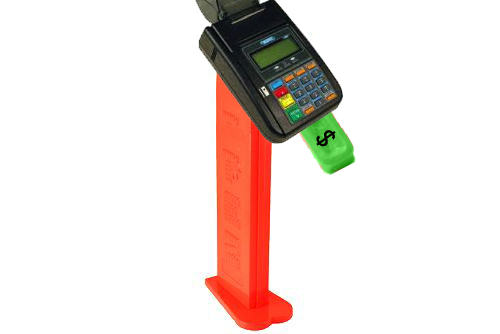 Now that the volume of MCA transactions per year is in the billions of dollars, it may be time to starting pulling ourselves out of the booths and onto the big stage. Don’t get us wrong. The ETA Expo is the most valuable place for the MCA space to meet, greet, close deals, learn, partner up, promote yourself, and party, and it’s important that we maintain a big presence there. We can’t help but imagine what could be if wholesalers, equipment vendors, distributors, and retail business owners were coming to the Annual Merchant Cash Advance Industry Expo. Attendees would get pez dispensers shaped like credit card terminals and the candy would be green and shaped like money. As long as we had pez, we wouldn’t need a big fancy dance show:
Thoughts on this anyone? Are you going to be at the ETA Expo? Comment below.
The SEO War Continues
April 4, 2012In the last few weeks, Google dropped a nuclear bomb on the SEO battlefield. Some of you may have noticed but no one really wants to talk about it. Who would want to publicize the fact that their website has plummeted from page 1 to page 25 after investing tens or hundreds of thousands of dollars a year to rank on page 1 for a hot keyword? To be the one holding the bag when the bubble bursts has obvious economical consequences but can also be emotionally damaging. So what happened?
In March, Google de-indexed and banned some of the major subscription-based blog networks and effectively wiped out thousands of backlinks for companies throughout the world. Many in the MCA space have secretly been using these networks to compliment their SEO strategy or worse, be the focal point of it. Blog networks such as BuildMyRank (which has been completely shut down) allowed their subscribers to submit up to ten articles per day. These articles are usually a minimum of 150 words and contain at least 1 link pointing to the subscriber’s website. At the rate of 10 articles per day, a company could build at least 300 highly contextual backlinks per month and easily jump in search results over the competition.
We could write 5 articles today with no problem but task us with 300 and we’ll run out of content after 20 and be mentally exhausted after 50. The quality of the content would likely suffer and there would eventually be a point where it was even too cumbersome to produce gibberish. Some of you may think the article you’re reading now is gibberish. 😉
And so the subscription fees were compounded by the cost of hiring writers internally or outsourcing the work. But when everyone in the industry was doing the same thing, the stakes were upped and MCA companies were forced to use new methods. One blog network subscription turned into four and paying for links and issuing PRWeb press releases became the cost of staying competitive, rather than being the recipe to rank the highest. The subscriptions, the labor, the link purchases, online releases, and other costs to stay visible on the Internet have become increasingly material line items on P&Ls in effort to get to Page 1.
But being listed on page 1 doesn’t guarantee clicks or conversions. In fact, if you’re not in the top 3 for a particular keyword there’s a good chance you won’t experience any clicks at all. According to a study performed by Slingshot SEO, humans just don’t like clicking anything but what’s on top.

While some of the MCA companies that relied heavily on the defunct blog networks have practically disappeared from the search results altogether, those that used them in moderation have fallen out of the top 3. Going from position 1 on page 1 to position 5 on page 1 can be practically the same as going out of business.
 Internet marketing became exponentially popular in the MCA space just in the last twelve months mainly due to the seemingly low cost and reported success by online lead generation companies. For small to mid-sized ISOs, spending $100 on a website with Godaddy and trying to get the site ranked organically just seems so much easier and cost effective than surrendering to the expenses of hiring telemarketers, renting office space, running mailer campaigns, billboards, radio/tv ads, hiring multiple salespeople, and buying leads.
But diversifying your marketing strategy is key. Buy quality leads, mix it up with mailers or calls, or go door to door. Just don’t put all your eggs in one basket. As many companies learned in the last few weeks and more will learn in the ones upcoming as all the SEO penalties finally set in, Google runs the show. They can change their algorithm at any time and there’s nothing anyone can do about it. If you’re going to spend a million dollars for a Times Square billboard, make sure there’s no clause that allows them to move it to the middle of the Pacific Ocean. If you hadn’t figured out why your website is generating less leads lately, we’re sorry to be the bearer of bad news. Your billboard was lost at sea.
Read related article: The SEO War for Merchant Cash Advance
– deBanked
https://debanked.com
Merchant Cash Advance On Huffington Post / Just Call it a Coupon!
March 16, 2012An article was published by the Huffington Post today that explained the need for Merchant Cash Advance providers. Though some of it was described in an unflattering light, it conveyed some important messages.
- Real business owners explain that banks both big and small are not interested in lending to them
- One woman is quoted as saying: “If I ever write a book on how to open a restaurant, the first chapter is going to be ‘Banks Are Not Your Friends.'”
- A direct funding provider revealed that demand for merchant cash advances increased by 15 percent to 20 percent in 2011 and that 70% of businesses use more than 1 advance.
 Our favorite line and perhaps the most important thing you can take away from this article is the quote by the CEO of AmeriMerchant. “[Merchant Cash Advance] is less expensive than [offering] a Groupon for 50 percent off or putting inventory on sale for 30 percent off.” Isn’t it ironic that the Groupon/e-coupon/social coupon concept is today’s business as usual and is at the same time significantly more costly than what the media considers to be expensive financing?
LivingSocial has 60 million members worldwide and they operate much in the same way that Groupon does. Let’s discuss this. According to wikipedia, Groupon’s business model works as follows:
For example, an $80 massage could be purchased by the consumer for $40 through Groupon, and then Groupon and the retailer would split the $40. That is, the retailer gives a massage valued at $80 and gets approximately $20 from Groupon for it (under a 50%/50% split).
So the 50% discount to the consumer is actually a 75% loss of revenue for the business owner. This practice is publicly accepted as fair, practical, and a way to increase your sales. If that’s the case, should’t financing that costs $2,800 to receive $10,000 be considered a bargain? We think so. Expensive is in the eye of the beholder. The media has a funny way of convincing people that a 75% discount is a great deal but financing costs of 28% are astronomical. Not to say that 28% is cheap, but there is only one reason that low rate bank loans even existed in the first place. The SBA is willing to cover up to 90% of the defaults and charge it to the taxpayers. That’s an advantage the rest of the private sector doesn’t get.
We can’t help but think what would be if the Merchant Cash Advance concept was rebranded as a powerful social marketing tool to drive sales. What if a Merchant Cash Advance provider purchased $12,800 of a store’s future sales in exchange for $10,000 today and then mass marketed that business to local consumers through mailing lists, iphone apps, and website ads to drive customers to the store. That would allow the Merchant Cash Advance provider to recoup their purchase as fast as possible and at the same time create viral growth for the business. The technology already exists and businesses are already willing to accept 75% losses. Isn’t it time they all started getting a lot more bang for their buck?
It’s not expensive when it’s spun that way is it? Sayonara Groupon and LivingSocial! Merchant Cash Advance is the sleeping giant at your doorstep.
– deBanked
https://debanked.com