Business Lending
Breslow: The Advantage Goes to Scale Players
August 8, 2017
OnDeck’s recent quarter answered a host of questions that surrounded the online lender, touching on everything from market share gains, to year-end profitability, to double-digit loan origination growth on the horizon. Another major growth driver that took the spotlight was the partnership between OnDeck and JPMorgan Chase, which has been cemented with expanded terms.
Noah Breslow, OnDeck’s CEO, told deBanked the partnership, which is bigger than any other relationship the online lender has formed, is firing on all cylinders.
“Ever since the product was introduced in April 2016 we’ve seen nice growth, incredible customer satisfaction and sound credit performance,” said Breslow.
In fact, the Chase partnership has been not only a flagship deal for OnDeck but very possibly the online lending community as a whole.
“We think it’s a harbinger of what’s to come in the space. Chase took a very forward thinking move a year and a half, two years ago when it decided to work with us to build a product,” said Breslow, adding that OnDeck remains in discussions with a number of large financial institutions about providing similar services and capabilities for online business lending.
The partnership, which started off as a pilot program between OnDeck and Chase, is a testament to JPMorgan’s commitment not only to OnDeck but also small business lending, which has taken it on the chin since the financial crisis. Under the new terms the relationship will continue for another four years.
“A whole segment of small businesses doesn’t want to borrow $5 million or $500,000. They want $50,000. The traditional bank lending process is not set up to make loans very efficiently,” said Breslow, pointing to the costs and time involved that cause banks to shy away from doing this.
OnDeck uses a score, dubbed the OnDeck score, that Breslow likens to a FICO score for small businesses. “The OnDeck score is built for our population. It looks at cash flow, personal and business credit, the industry and geography of the business, other debt, taking a holistic view of performance of the business than only FICO and cash flow,” he said.
JPMorgan Chase sets how much risk they want to take or not take with the loans they issue on the OnDeck platform, leveraging both their own data as well as data OnDeck has collected over the past decade of lending. Chase’s small business lending program remains invite-only.
“Small business owners will receive an email or phone call or some other form of solicitation, and then they can come to the website and get approved. We think over the next couple of years Chase will expand the scope of the program, but we’re not talking about how and when they are going to do that,” Breslow said.
OnDeck has taken a series of steps to strengthen the company’s balance sheet in recent months, not the least of which has been to tighten lending standards, which admittedly led to lower loan originations in Q2. Nonetheless the company expects to rebound with double-digit growth in loan originations in 2018, albeit off a low base.
OnDeck has largely completed a cost reduction plan that was started in 1H2017 and essentially removed $45 million in annual expenses from its P&L. “That was a lot of work to take on in a short period of time. We went heads down and got through it. In conjunction with that we rationalized our credit policy and our credit standards to be more conservative to reduce loss rates. The combination of those two moves set the business up to be profitable at the end of the year,” said Breslow.
These steps are resonating with institutional investors, including Mario Cibelli, managing partner at Marathon Partners Equity Management, which has an investment in OnDeck. He characterized the Chase extension as “good stuff.” “I think they had a solid quarter. They’re following through on some of their promises and I’m continuing to monitor our investment,” Cibelli said.
While OnDeck appears to be out of the woods, Breslow shared his perception of the industry.
“The advantages of online lending go to market leaders and scale players. Some folks with lower levels of scale can’t get credit performance right and don’t have enough capital to build out their business,” said Breslow.
With the expanded JPMorgan Chase relationship, gaining scale is on the horizon while some of the hard times appear to be in the rear-view mirror.
“The nice thing is we’re focused on growth again. The message we wanted to communicate yesterday is that we have all the capital we need to lend after the progress we made in the past year. We refinanced $850 million in credit facilities or added new credit facilities. So we have a great balance sheet that’s healthier than it’s ever been from a capital perspective. Now it’s about growing responsibly and profitably as we head into 2018,” said Breslow.
Funding Circle’s Hodges Talks $250 Billion Opportunity
August 3, 2017 Funding Circle, a marketplace that matches small businesses with lenders, broke a new barrier in the first half of 2017 with an 80 percent spike in global lending by about GBP 800 million. The U.S. marketplace lending arm, which was merged with UK-based Funding Circle in 2013, has experienced rising momentum over the same period.
Sam Hodges, Funding Circle co-founder and U.S. managing director, told deBanked that small business lending remains an underserved and untapped market, attaching a USD 250 billion value on the annual lending opportunity.
“I co-founded Funding Circle in the U.S. after experiencing firsthand how hard it is for established, successful businesses to access financing from the traditional banking system. The traditional banking system is broken and restricted by legacy issues, and most banks don’t view smaller-ticket commercial lending as their bread and butter.”
Since 2010, when Funding Circle was launched, investors including 60,000-plus individuals, financial institutions and the UK government have poured more than USD 4 billion into 32,000 businesses globally.
Currently the Funding Circle U.S. platform is only open to accredited and institutional investors. “Over time, we would love to offer this investment product to anyone in the U.S.,” said Hodges.
He further explained that Funding Circle marketplace enables investors to diversify their fixed-income portfolios with secured business term loans. All of the loans on the Funding Circle platform are pre-screened with a risk-rating and coupon rate attached, ranging from 4.99 percent to 27.79 percent, by seasoned credit professionals using proprietary data analytics.
“While there will always be some risk attached to any type of investing, Funding Circle concentrates on providing loans to established businesses that have operating history, cash flow and a strategic plan for growth,” said Hodges.
Main Street USA
Funding Circle borrowers have typically been in business for around a decade and generate annual revenue of $2 million with a staff of about 10 people. One key differentiator from the likes of industry giant Amazon Lending is that borrowers on the Funding Circle platform could be brick and mortar shops.
“Amazon is an impressive organization, but what we’re doing is different in a variety of ways. Where they are focused on helping merchants that sell on their marketplace, our borrowers include restaurateurs, gas stations, medical clinics, construction firms, IT consultants and more,” said Hodges.
He went on to describe Funding Circle borrowers: “Walk down Main Street in any American town, and you’ll see examples of our borrowers. These are established businesses who have been underserved by the traditional financial sector — they have assets and cash flow to secure loans, and a legitimate plan for growth. We actually have many borrowers who choose our loans over a traditional bank loan, because they are faster and easier.”
Full Circle
Funding Circle started off the year with a bang, having raised USD 100 million in equity capital to help accelerate growth not only in the U.S. but also the UK and continental Europe. Meanwhile the startup continues to invest heavily in technology and talent.
“We are focused on building a world-class technology platform that can handle millions of transactions daily and deliver a best-in-class customer experience for borrowers and investors,” Hodges told deBanked.
Along those lines, Funding Circle recently bolstered its executive team both stateside and globally, including the recent addition of Sean Glithero as CFO, who is to be based in London when he begins in his new role this fall.
“Sean shares our enthusiasm for building a better financial world by revolutionizing the financial system and securing a better deal for everyone. Sean’s record at Auto Trader, helping drive strong profit growth and shaping a digital marketplace into a dominant position, makes him ideally suited for this role,” Hodges said.
Meanwhile the U.S. executive team is also expanding, evidenced by the recent additions of Joanna Karger as U.S. Head of Capital Markets and Richard Stephenson, who joined as U.S. Chief Compliance Officer.
He is taking the reins of a balance sheet whose UK business achieved profitability in the first half of 2017. “Here in the U.S. we are doing quite well and continue to invest in growth” concluded Hodges.
Marcus Lemonis Rebuked Kabbage on Twitter
August 3, 2017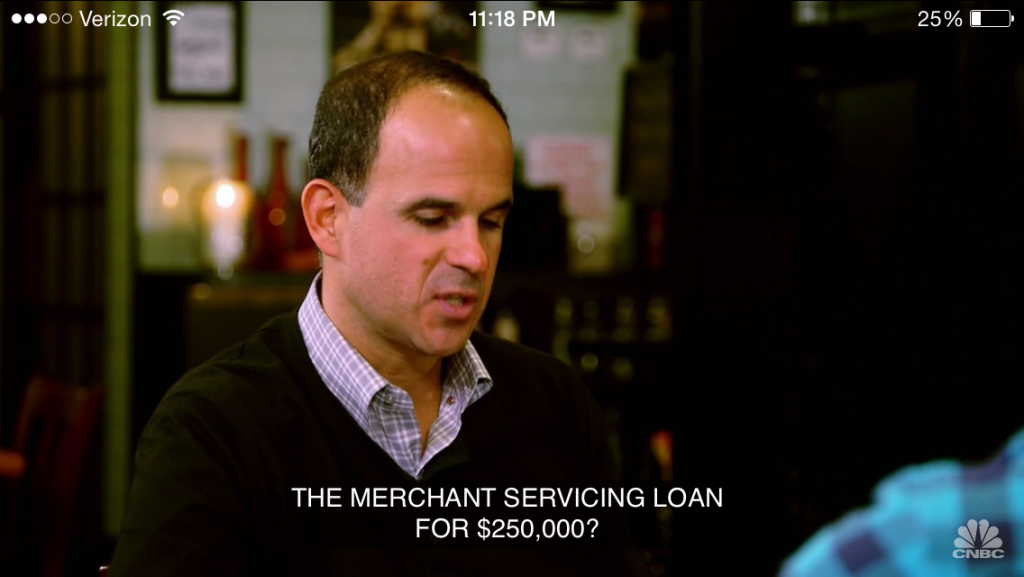
While the fintech community heralded Kabbage’s $250 million Series F round this morning, small business fixer and CNBC TV star Marcus Lemonis was not impressed.
On twitter, Lemonis wrote to Squawk Box host Carl Quintanilla, who was airing a segment about Kabbage, to say that Kabbage charged ridiculous rates. The short rant, which totaled 4 tweets, zinged Kabbage by calling them a lender of last resort and “not a friend of small business.”
Wouldn't call @KabbageInc #kabbage a lender. Ridiculous rates @carlquintanilla @SquawkAlley
— Marcus Lemonis (@marcuslemonis) August 3, 2017
Not a friend of small business. Lender of last resort with fees and rates
— Marcus Lemonis (@marcuslemonis) August 3, 2017
@SoftBank likes the high rate account sweep tactics
— Marcus Lemonis (@marcuslemonis) August 3, 2017
He should be glad I'm not there
— Marcus Lemonis (@marcuslemonis) August 3, 2017
Though Lemonis did not respond to my tweet that asked him if there were any online lenders he thought positively of, he likely is no stranger to the phenomenon. Last year, I pointed out that several small businesses that have appeared on his show, The Profit, have used nonbank alternatives.
In Season 3, Da Lobsta, a Chicago Sandwich shop, reported owing $140,000 to an internet lender and $40,000 to Square.
Square Capital, which has since traded merchant cash advances for actual loans, reported making 49,000 loans to small businesses last quarter alone for a total of $318 million. Kabbage, meanwhile, has lent $3.5 billion to more than 115,000 small businesses in their lifetime.
Square Capital Funded $318M in Q2
August 3, 2017Square’s small business lending arm, Square Capital, issued 49,000 business loans for a total of $318 million in Q2, according to their earnings report. That’s a quarter-over-quarter increase of 26.7% and slightly more than half the loan volume that their rival OnDeck originated in Q1. That statistic is significant because Square is a payment processor first and a lender second while OnDeck is only a lender.
Square had a net loss of $16 million in the second quarter on $552 million in revenue. The stock price has nearly doubled year-to-date, according to the deBanked Tracker.
32% of Square Capital users say they are using the funds to purchase equipment or open a new store. 31% say they are using it to purchase inventory while 23% say it’s to fund day-to-day general & administrative expenses and marketing expenses.
In December 2016, deBanked received a $35,000 loan from Square, the experience of which was detailed in the Jan/Feb Magazine issue.
Tips From the Source: Small Businesses Told deBanked How They Wanted Loans to be Marketed to Them
July 31, 2017
Small business owner Jim Moseley is inundated with calls from online funders—and he hates it. They frequently use unscrupulous tactics to try and get his attention. More than one has claimed to be a close friend so his assistant transfers their call. Then they try to reel him in with stories they’ve concocted about past personal connections. The unprofessional-sounding calls also irk him—where a salesman insists he’s local, but his voice sounds muffled and distant. In these instances, Moseley usually hangs up within a few seconds.
“The layer of sleaze is as thick as lard in the calls that I get,” he says.
Like many small business owners, Moseley, the chief executive of TransGuardian Inc., a shipping solutions company based in Petersham, Massachusetts, finds these types of calls extremely off-putting. In fact, it’s what made him hesitant to do online funding to begin with—until it became absolutely necessary since he couldn’t get a bank loan.
He’s not alone. As online financing proliferates, several small business owners say they are increasingly being bombarded with stacks of snail mail, multiple cold calls a day and numerous unsolicited emails offers—many of which they don’t understand and therefore won’t accept. Rather, small business owners say they prefer to work with companies that are forthcoming, provide sound advice and have taken steps to prove their credibility. They offer several tips on how funders can win more of their business.
Tip No. 1: Can the cold-calls
Several small business owners say they don’t mind when lenders follow up with them after a legitimate interaction. But they could do without the boiler-room tactics.
“It feels like a loan shark situation,” says Sean Riley, co-founder of DUDE Wipes, a Chicago-based company that makes flushable wipes for men. Riley, who has several good experience obtaining loans through Kabbage, finds the constant phone calls from firms he doesn’t know particularly vexing. He suggests lenders drop the high-pressure routines and find more effective ways to promote their services to small businesses. “These companies could be very credible. I don’t know. But I don’t perceive them as credible—and perception is reality,” he says.
Tip No. 2: Step up legitimate marketing efforts
Donna Cravotta chief executive and founder of Social Pivot PR, a Bedford, New York social media and marketing communications firm, says online funders should seek out simple, cost-effective ways to get their name in front of small businesses. For relatively little money they can sponsor local small business events. She also suggests that online lenders volunteer to speak at small business events and teach small businesses how to leverage online lending opportunities. They could also appear as guests on financial podcasts or broadcast Webinars to the small business community, says Cravotta, who has taken a few loans to fund her business, two of which were with Lending Club.
R.T. Custer, co-founder and chief executive of Vortic Watch Company in Fort Collins, Colorado, offers some additional advice: Customers don’t believe when you self-publish your testimonials. When he sees a review on a website, he wants to know how much a company has paid for that review. Instead, he relies on third party confirmations of a company’s worth. “When it’s clearly something that is not paid for, that is the best kind of advertising,” says Custer, an OnDeck customer whose business turns antique pocket watchers into wrist watches.
Tip No. 3: Deliver personal attention
As much as they hate aggressive salespeople, small businesses love personal attention from their lenders. Dana Donofree, founder and chief executive of AnaOno Intimates, a Philadelphia-based company that designs and sells apparel for breast cancer survivors, appreciates the stellar customer service she gets with OnDeck. The sales rep follows up appropriately to make sure everything is going well, but doesn’t bombard her constantly. She gets an occasional email asking if she needs more funds—but the communications aren’t overly aggressive. “Some institutions can really be sales pushy and call you several times a day. I’ve blocked more numbers than I would like to admit,” she says.
Tip No. 4: Be a resource for small business owners
Online lenders can also gain traction by helping customers better understand the financing process; many small business owners often don’t know much about financing and would appreciate getting sound advice from lenders, according to Sandy Lieberman, who co-owns Artemis Defense Institute in Lake Forest, California.
She and her husband started the business a few years ago to offer reality-based training to law enforcement, military personnel and civilians. When the business needed cash, Lieberman began searching online for a bank loan, but wound up taking a merchant cash advance instead. After a few rounds, she started getting bombarded with solicitations. “I think the stacks of mailings from companies must have been four-inches thick,” she recalls.
After additional research, she reached out to Lendio to broker an $85,000 term loan; she later took another loan for $204,000 through Lendio. While these funds have brought her business to a better place—and she has learned a lot in the process—she feels online lenders are missing out on a prime teaching opportunity.
“Some lenders think business owners know more than they already do. Some really don’t know a lot and could use more hand-holding,” she says.
In hindsight, Lieberman—who nearly destroyed her personal credit while trying to run her business—wishes a funding company had offered her a short class on financing; she would have attended, even for a small cost. Access to a finance coach—someone at the lending company who could help business owners plan proactively without ruining their personal credit—would also be a boon, she says.
“Small business owners are wearing many hats—customer service, payroll, financing, strategic planning. In the midst of all that they don’t know necessarily know how to make wise funding decisions,” she says.
Tip No. 5: Advertise
There are plenty of small businesses that need funds, but many simply don’t know where to turn. Consider a TD Bank survey of 553 small business owners in late March that found 21 percent have or will seek a loan or line of credit in the next 12 months. While the majority of these businesses plan to try their bank first, a sizeable number—11 percent—don’t know how to seek credit when they are ready. While many small businesses have found lending partners by Googling for information, others simply feel stymied by the process.
Take the case of Scott Deuty, who is having trouble obtains funds for Coolbular Inc. in Cheyenne, Wyoming, which serves as an umbrella for his kiddie ride business and his writing and publishing services. He wants to raise funds but has bad credit and doesn’t meet the revenue requirements for certain lenders. There are so many lenders; he doesn’t know how to find the right one—or one that might be willing to take a chance on him. “It’s very difficult,” he says.
Deuty’s case is an example of the paralysis that can happen when small businesses don’t know where to turn. It’s an opportunity for alternative funders to gain a leg up by marketing more appropriately to small businesses that may not know they exist—or how to find them.
Custer, of Vortic Watch, reached out to OnDeck for a bridge loan after seeing a television ad that ran during an episode of Shark Tank. He also suggests funders use online advertising to gain broader exposure. “If a business owner is trying to find a loan, they are going to Google, ‘I need a loan,’” he says.
 Tip No. 6: Ramp up business referrals
Another way small businesses hear about lending opportunities is through business referrals. Azhar Mirza, founder of SomaStream Interactive, an e-learning solutions provider in Berkeley, California, says funders should actively seek out more referral partnerships. In 2015, his company couldn’t afford its online marketing costs. Then a lifeline came its way. Mirza received an offer from Google telling him his company was eligible for a loan to help finance the online advertising it was doing through the Google AdWords program. The offer was part of a new pilot program between Google and Lending Club to extend credit to smaller companies that use Google’s business services. SomaStream got access to the funds it needed, but in lieu of cash, the company received advertising credits with Google.
The pilot program between Google and Lending Club ended in the first quarter of 2016, but Mirza believes similar partnerships would be a great tool for online lenders. Certainly for Mirza, the timing was precipitous, he says.
Push notifications from trusted business partners can also be an effective marketing tool, when used in moderation. When Yvonne Denman-Johnson, co-founder of HootBooth Photo Booth, a Lago Vista, Texas, manufacturer of photo booth kiosks, needed money, she happened to receive a notice from Shopify, the company’s e-commerce software and hosting provider, talking about its merchant cash advance services. She has one outstanding advance through Shopify, which she is working to pay off.
Tip No. 7: Be transparent
Denman-Johnson got the funds she needed, but she feels MCA providers need to be more transparent about the effective interest rate—at the advertising stage, not at the approval stage—so small businesses can make more informed decisions without having to do all the calculations themselves. Otherwise, some small businesses might decide not to pursue this form of funding because of the unknowns. Her company almost walked away, but decided to go through the full application process. At this point, Shopify provided the effective interest rate, which was in the 12 percent range. Other funders she researched were in the 30 percent range—which she describes as “outrageously” expensive.
 Indeed, small business owners want to work with funders that outline the terms clearly and offer comparisons. Lisa Ayotte, founder of Soul’y Raw, a specialty pet food provider in San Marcos, California, has had good experiences with Kabbage, On Deck and Fundbox.
She wishes, however, that all online lenders offer more detailed information about the loan programs they offer on their website—so small businesses can weigh their options before they go through the actual application process. Small businesses want to know, for instance, whether a lender offers debt consolidation. They also want funds to spell out clearly on their websites the various types of loans offered and the underwriting criteria. Ayotte also suggests lenders provide links to online loan calculators so small businesses can understand what the terms mean to them.
Small business owners want to be told like it is. That’s one major appeal of online lending—if you’re going to be turned down, you typically know right away says Ricardo Picon, the co-owner of The Sandwich Shop, a restaurant and catering business in Williamsburg, New York.
He took an $88,000 loan in February issued by Excelsior Growth Fund, a U.S. Treasury-certified Community Development Financial Institution, but in the future, he says he would consider using a different type of online lender. It would depend on the rates, the economic times, monthly payments and closing fees, among other things. “I want transparency. I want to know if they are going to give me the money or not so I can move on. This way there are no false hopes,” he says.
Tip No. 8: Make the process as easy as possible
Small business owners also prefer to work with online lenders that make the process seamless. AJ Saleem, founder of Suprex Learning, a Houston-based private tutoring and test prep company, was proactive about searching for online lending options. He chose a loan with Lending Club in part because the process was so easy. Some applications he started, but never finished because the process was too onerous. With Lending Club, the process was quick, there were fewer questions asked and the funder asked for less documentation than some competitors, Saleem says.
To be sure, rates are really important to small businesses, but they also want to work with funders they feel are on the up-and-up. “We want a square deal,” says Moseley, the chief executive of TransGuardian. “Tell us what the deal is in an honest and professional way and if we like it we’ll do business.”
As Some Alternative Lenders Stumble, Lendio Surpasses New Milestone
July 27, 2017 Salt Lake City-based Fintech startup Lendio has surpassed the $500 million threshold for loans originated to U.S. small businesses through its online marketplace. Lendio has been on a tear, evidenced by the fact that much of that amount, or $453 million, was done in the past two years.
The loans were distributed to 21,000-small businesses, including a combination of new customers and repeat business, and are a reflection of a few different catalysts.
Lendio CEO and founder Brock Blake told deBanked the drivers of Lendio’s growth are three-pronged, pointing to a strong economy, greater awareness of the Lendio brand and good partnerships.
“There’s never been a better time for small businesses to access capital. There are plenty of options out there. The economy is strong and healthy. Economic indicators suggest business owners are optimistic. They’re looking to get capital for growth,” he said.
Meanwhile awareness of the Lendio brand is on the rise.
“We see that on all of our metrics. People are finding us organically online, searching the name Lendio. We have a huge amount of customer referrals from existing customers. And a lot of repeat business. Our customers are coming back to us every three quarters, on average,” said Blake.
Lendio has become more ubiquitous thanks in part to some major partnership deals, the third leg of the growth stool. For instance, the small business lending startup has inked partnerships with the likes of Comcast, GoDaddy and Staples. This helps the company to compete with the likes of Amazon.
‘All of those partners have a base of small business owners that they then refer to Lendio. They say, ‘if you need financing, here you go. Here’s Staples powered by Lendio. Or Comcast powered by Lendio,’” explained Blake
And that pipeline is filling quickly.
‘We definitely have some really exciting partner deals in the works. I can’t mention names but there are at least three more big names that we’re working on, that we’re excited about,” said Blake.
Tech Platform
Lendio puts the tech in fintech by developing the technology infrastructure that facilitates the loan process, both for the small business owner and the lender. The lending process is similar to LendingTree for personal loans with some notable differences to the customer experience.
Instead of selling off a borrower’s information to lenders, Lendio assigns a funding manager to work with both the borrowers and the lenders. Once the small business owner fills out the application, Lendio then goes to work. The Lendio marketplace is comprised of around 75 different lenders.
“We pull credit. We connect with the credit bureaus. We pull bank statements. We connect with Google Local. We build the technology that has hooks into all borrower data and the lender underwriting engines. We’re trying to marry those two and make it a good experience for both sides,” explained Blake.
Lendio submits the information to three-to-five lenders that will provide the best loan options for that business owner. The lenders then decide whether they choose to underwrite the loan or decline.
“We go to the customer and say we have compiled three offers. Here’s the rate, etc. We present it in a way that they have a choice and they are in the driver’s seat. They work with one group and that’s Lendio. We do all the work,” said Blake.
The process is free to small business owners. Lendio generates revenue at the time the loan closes. “Lenders pay us an origination fee,” Blake explained, adding that the average loan size on the Lendio platform is $26,000. “We do loans as small as a couple thousand dollars and as high as $3 million. But most business owners don’t need a few million,” he said.
The Utah Connection
Utah has been coming up in the headlines a lot lately, mostly due to the fact that a couple of fintech lenders have applied for bank charters in the state. For Lendio, The Beehive State happens to be where Blake calls home.
“Utah isn’t necessarily the place to go and attract huge amounts of small business owners from a population standpoint. But from an economic and business perspective, it is a great state to do business in, very entrepreneurial. That’s the reason why bank charters set up shop here in Utah. It’s very business friendly. And the economy is extremely healthy,” said Blake, adding that the mountains and the skiing are great selling points for attracting top fintech talent everywhere from Silicon Valley to Chicago.
Future Growth
Lendio is a private company, and while Blake would not cross an IPO off of his list he wouldn’t say it’s something the fintech startup is pursuing right now.
“We’ve got an aggressive growth plan and we’ve got a strategy for how to execute and make it happen. We’re heads down to build a great business and see what the future holds for us as far as going public. But it’s not on our radar now,” said Blake.
Amazon vs. Banks
June 23, 2017Amazon made headlines most recently for its blockbuster acquisition of Whole Foods, but the online behemoth already disrupted another sector – fintech — including banks and online lenders when in 2011 it started lending to small businesses. So far Amazon Lending has extended $3 billion-plus in capital to the small business community, a cool billion of which was lent in the past year alone.
Amazon has dealt a one-two punch to the lending market, filling a gap that was left by banks following the financial crisis and leveraging the massive data that the online retailer has access to through its Amazon Marketplace platform.

Matt O’Malley, co-founder and president of Looking Glass Investments, a fixed-income alternative investment firm focused on marketplace lending, said small business lending was a very natural evolution of Amazon’s business.
“Large levels of data give you the ability to increase your predictive power. Amazon has a great deal of information on how a company is doing and an ability to assess credit risk that is very likely unmatched as it relates to businesses selling on their platform,” O’Malley said.
This is not to suggest that Amazon’s future market share in the small business lending segment is a lock.
“In the long run, this entire fintech revolution is about the movement of capital and having to do it faster. So even Amazon is going to have competition. And the reason is there are fewer barriers to entry than before. From Milwaukee to Wisconsin, there is competition for building bank products. I’d put our math up against anybody in New York City thanks to technology,” said O’Malley of Looking Glass Investments’ own lending platform.
Nonetheless a lack of transparency surrounding interest rates for Amazon loans could interfere with repeat business. “Amazon should be careful about being respectful to business owners. Assuming the business does succeed, imagine that the borrower is either going to have a positive reaction or a negative reaction to the initial loan with Amazon. It won’t be good for long-term business if they have a negative reaction. If I were Amazon, I would be cautious on rates,” O’Malley said.

Something else that could throw a wrench into Amazon’s plans as a small business lender is banks, if and when they open the spigots to loan to this segment. While small businesses businesses have already proven a willingness and even a preference for turning to alternative lenders, the tables could turn at some point.
“That’s an unsettled question we think about every day. When do banks make the decision to get in the game? And we would like that to happen sooner rather than later because it would be good for our company LendSight, Inc. But at the same time, we don’t see that tipping point in the near term,” said O’Malley.
deBanked spoke with a pair of business owners that sell on the Amazon Marketplace platform, both of which Amazon has lent to.
LonoLife Living the Life
San Diego-based food and beverage maker LonoLife, the Hawaiian translation for which is peace and prosperity, was offered a line of credit with Amazon without having to ask for it. Jesse Koltes, one of LonoLife’s co-founders, spent some time with deBanked to talk about the offer, which came over the phone.
“It was super quick, super easy, as opposed to what you get with a banking relationship even if you get a better rate,” said Koltes. “Bank loans take more time and paper work, and with Amazon there was none of that.”
LonoLife never approached a bank for a loan. And given an exclusive agreement with Amazon for its top selling bone broth, they didn’t have to. “I 100 percent agree that access to capital for businesses without a lot of revenue is problematic. We’re not a capital intensive business so there are not a lot of assets to put behind as collateral for a loan with a bank,” Koltes said.
And while he declined to disclose the size of the credit line, Koltes characterized the amount as “meaningful” adding that Amazon adjusts it higher and lower, mostly to the upside.
“They have 100 percent transparency to one of the biggest parts of our business. That is something other lenders don’t have,” he said, referring to the sale of the bone broth product. “One reason they are able to move first and with more confidence is they have confidence you can pay something off. They are literally seeing how much money you make every month.”
LonoLife’s Koltes compared the rate at which Amazon lent to them as comparable to other non-bank lenders but probably not best in class and not equivalent to an asset-backed small business loan. “But it’s not as high as you get from venture debt,” he quipped.
LonoLife has been selling on Amazon since 2016 and was offered the line of credit about a year later. “It’s a virtuous cycle. We’re growing on Amazon and they’re funding the growth,” Koltes said.
Mini Bezos
Stephan Aarstol, founder of direct-to-consumer brand Tower, is best known for pitching his Stand Up Paddle Boards, in response to which he received a $150,000 backing from billionaire investor Mark Cuban. Little did Aarstol know that this would be the excuse banks would use not to lend.
“After Shark Tank banks no longer looked at us as a startup. They told us we don’t technically qualify for an SBA loan because they’re not in the business of giving billionaire loans,” said Aarstol referring to the company’s silent partner Cuban. Before the show banks pointed to the company’s lack of a two-year financial history. Meanwhile Tower’s revenue has climbed higher every single year since the company was founded, reaching $7.5 million last year.
Amazon, which offered its first loan to Aarstol in the amount of about $35,000 at about the same time PayPal offered him a $25,000 loan for working capital. He took them both. “We needed the capital for inventory,” he said of the Paddle Boards, which can take up to three months to produce. A couple of months later in 2013 Amazon followed up with another offer for a $145,000 loan. Tower accepted that loan too.
The first time Tower got a loan of any kind from a traditional bank was September 2014, more than four years from inception for a company that was profitable from day one. That fall the banks started lining up after Tower was named the fastest growing company in San Diego by the San Diego Business Journal.
Since then Aarstol has been straddling the fence of alternative lenders and traditional banks, having borrowed more than $1 million from Amazon alone. He feels loyalty to Amazon because they were one of the first lenders to offer him a loan. That plus the ease and speed at which he can access capital.
Meanwhile Aarstol has since widened the beach lifestyle brand, almost like a mini-Bezos would, to include sunglasses, surf boards, snorkeling, bikes, skateboards and even a magazine through which Tower can do its own advertising.
“We’ve expanded the brand and every new product class we open up requires additional inventory and additional capital,” he noted.

The Future Amazon
Perhaps the greatest sign for just how massive Amazon can become as a small business lender is in their ability to capture repeat business. If it’s any indication, both Koltes and Aarstol would return.
“We’ve been really pleasantly surprised with access to capital Amazon has given us,” said Koltes. “It has helped us grow our business. We’re growing at a fast rate. Without Amazon we would have had to pick and choose what we did.”
For Aarstol, it’s a combination of both allegiance and fear that fuels his relationship with Amazon as a borrower.
“What if banks all of a sudden are no longer willing to lend to small businesses again? What’s my fallback? This is a hedge for me to keep establishing credit. I’ll keep borrowing from and paying back Amazon loans,” he said, despite the interest rates of 11 percent to 13 percent.
Alternative Lenders Spread Their Wings Internationally
June 20, 2017 As alternative lending gains global traction, a growing number of U.S-based alternative lenders are exploring international growth, with large companies like OnDeck, Kabbage and SoFi leading the way.
Some alternative lenders have begun their expedition closer to home by extending their reach into Canada. Others are traveling farther beyond to parts of Europe and Australia, for example, while others are eying eventual growth in Asia.
Propelling the opportunity is the fact that a number of international banks are still unprepared to offer online lending on their own and thus are more amenable to partnerships with U.S.-based alternative lenders, according to Rashmi Singh, senior manager in the wealth management practice at EY.
It also helps that the options for local partners are somewhat limited. “There are not a lot of digital lenders [outside the U.S.] at the same level as some of the folks here,” Singh says.
To be sure, international expansion requires extensive time, money and regulatory know-how, and some U.S. alternative lenders may never reach the critical scale to be able to compete effectively. Nonetheless, as globalization proliferates, industry observers expect that additional forward-thinking companies will push beyond the limits of their current geographical borders.
“The question is not if, but when (and where) U.S. fintech companies will expand internationally,” contends Ryan Metcalf, chief of staff and director of international markets at Affirm, a San Francisco-based fintech that has partnered with Cross River Bank of Fort Lee, New Jersey, to allow shoppers pay for purchases over time with simple-interest loans.
Affirm—which works with more than 900 retailers and recently announced that it had processed its 1 millionth consumer installment loan—has focused on domestic growth so far, but the company is now considering a number of options for international expansion, Metcalf says.
SIZING UP THE MARKET
Certainly, there are numerous opportunities for homegrown lenders to expand internationally given the healthy growth alternative lending is experiencing in other parts of the world. Each market, of course, has its nuances and individual growth patterns.
Europe, for instance, has seen substantial growth over the past few years, with the U.K. leading the way in alternative finance. It has four times higher volumes in aggregate than the rest of Continental Europe, according to a 2016 report from KPMG and TWINO, one of the largest marketplace lending platforms in Europe. (P2P consumer lending is the largest component of alternative online lending in Europe, capturing 72 percent of the total in the first through third quarters of 2016, according to the report.)
After the U.K., France, Germany and the Netherlands are the top three countries for online alternative finance by market volume in Europe, according to a September 2016 report by the Cambridge Centre for Alternative Finance.
Asian markets, meanwhile, show significant promise for alternative finance players to make their mark due to the sizeable population of digitally savvy consumers who are still largely underbanked. China is by far the largest market for alternative lending in Asia. It’s also the world’s largest online alternative finance market by transaction volume, registering $101.7 billion in 2015, according to the March 2016 Cambridge Centre for Alternative Finance report. This constitutes almost 99 percent of the total volume in the Asia-Pacific region, the research shows. To date, most of the growth in China specifically has been from local firms, but that could change as the market there continues to develop.
 Although there are many possible international markets to explore, U.S. lenders have to tread carefully before planting roots elsewhere, observers say. Some smaller U.S. lenders may find domestic expansion easier and more cost-effective because of the time, regulatory and financial commitment that goes along with exploring international markets. It’s a lot easier, for instance, to expand from New York to California, than it is to build out internationally.
“Why take on all the added costs and regulatory pressures, when you haven’t fully explored your home market, unless the business that you’re in deems it necessary,” says Mark Abrams, partner with Trade Finance Global, a London-based international corporate finance house, specializing in crossborder trade.
“It doesn’t make sense to start as a U.S. lender, do a few loans and then jump over to the U.K,” he contends.
What’s more, foreign banks looking for alternative lending partners typically prefer to work with larger, more established players. Even though new players’ technology may be ahead of the curve, the banks still want a longer track record. “It’s reputational for these banks,” says Singh of EY.
MANY CHALLENGES TO INTERNATIONAL EXPANSION
Several alternative lenders say they see significant growth opportunities by expanding internationally. At the same time, however, they are mindful of the substantial headwinds they face.
Regulation is among the biggest, if not the biggest, challenge. A lot of firms in the U.S. have invested a lot of time and money to get up to speed on U.S. regulations. When they look to Europe or to Canada or Mexico or elsewhere, there are different regulations. “If you’re speaking to folks in three continents, now you are looking at regulations times three,” says Singh of EY.
Certainly there’s a time commitment involved; it can take six to eight months for a U.S. lender to get their U.S.–based platforms compliant with regulations in another country, she says.
What’s more, regulatory barriers can vary greatly country to country, notes Metcalf of Affirm. Take Canada for example where very low barriers to entry exist with some provincial exceptions. In the U.K., on the other hand, it can take eight months or more to receive a lending license, he says.
That’s why it’s so important for online lenders to make strategic decisions about where they want to invest their time and resources—even if they have sound technology that’s easily adaptable outside the U.S. “The minute you throw in cross-border regulations, it gets very complicated,” Singh says.
Understanding the local culture of the market you’re trying to tap is also crucial, according to Rob Young, senior vice president of international at OnDeck, where he oversees all aspects of the company’s non-U.S. expansion efforts.

Within the past several years, OnDeck has begun offering small business loans to customers in Canada and Australia. Frequently Canada is a first step for U.S. companies that want to expand internationally because of the shared language and similarities between the economies, Young explains.
After the Canadian operation was successfully underway, the opportunity arose for the online lender to expand to Australia—which shares several similarities with the Canadian market. OnDeck doesn’t break out how much of its overall loan portfolio comes from these two markets, but it has announced publicly that it’s delivered more than CAD$50 million in financing to Canadian small businesses since 2014.
“So far we’re very satisfied with the performance,” Young says, referring to its expansion into both Canada and Australia.
Young notes that while a U.S.-based alternative lender can leverage certain things like technology from a central location within its home country, having dedicated teams on the ground in local markets is also critical. Marketing and pricing all have to be competitive with the needs of the local market, he says.
In Canada and Australia, for example, OnDeck has found that the “personal element” is really important. Young says customers there expect to interact with sales representatives who have ties to the community, understand the local market and can relate to the issues small businesses there are facing.
“I don’t think you can establish that rapport if you are trying to serve them with a sales team overseas,” he says.
U.S.-based alternative lenders also need to be careful to create products that fit the culture and needs of a particular market. For instance, alternative players that focus on luxury asset-based lending would want to look at countries with high concentrations of wealth. “It doesn’t make sense to grow to a country where there’s very little wealth because you’re not going to have much success,” says Abrams, of Trade Finance Global.
Even knowing the market well doesn’t guarantee results, which Lending Technologies, a white label technology provider for the MCA space, has discovered first hand.
Markus Schneider, the company’s chief executive, is originally from Switzerland and he knows the market there well, so he set out to fill a void he saw for an MCA-like product. However, Lending Technologies, which has offices in New York and Zurich, has hit some roadblocks along the way.
“It’s a very different mind-set there. People are more risk-adverse,” Schneider says.
The company already has a Swiss distribution partner in place, but has had trouble finding a lender willing to underwrite the funds. Schneider would also be willing to work with a U.S. lender that wants to partner with Lending Technologies to provide MCA services to merchants in his home country.
“We’re going to do this. It’s just a matter of time,” he says. “There’s a tremendously underserved segment of the market there.”
FINDING THE RIGHT FIT
To be successful internationally, U.S. companies also have to be willing to shift gears as needed when things aren’t working out as expected.
Take Kabbage, for example. The small business lender expanded into the U.K. in 2013, two years after its U.S. debut. But the company found that having its own small business lending business in the U.K. was too challenging for regulatory and capital reasons. It no longer offers new loans from this platform.
Instead, the funding company decided that a better global strategy was to license its technology to financial institutions in international markets a less capital-intensive, yet economically sound way of doing business.
Kabbage—which recently announced the establishment of its European headquarters in Ireland—has licensing arrangements with Santander in the U.K., Kikka Capital in Australia, Scotiabank in Canada and Mexico and ING in Spain. The company plans to launch operations in several additional countries this year where banks use Kabbage’s technology to offer online loans to their clients, says Pete Steger, head of business development at Kabbage.
“We are partnering with local experts. That’s our strategy,” Steger says.
Funding Circle has also made changes to its international strategy. Earlier this year, the company—which got its start in the U.K.—announced that it would stop issuing new loans in Spain. The Spanish version of the company’s website says that it continues to monitor ongoing loans so investors receive monthly payments for the projects they have invested in.
A spokeswoman for Funding Circle said the company continues “to look at new geographies, but we have no immediate plans for expansion and are focused on building a successful business here in the U.S., U.K., Germany and the Netherlands.” She declined to comment further.
Without divulging too many details, a handful of U.S.-based alternative financiers say they continue to look at additional markets outside their home turf.
For its part, SoFi has announced plans to expand to Australia and Canada this year. The company’s chief executive has also talked about European and Asian expansion in the future.
On the international front, Affirm is currently evaluating markets that make the most sense for its business model, Metcalf says. Affirm is also looking at possible acquisitions in developed markets such as the U.K. and Sweden as well as considering “serious investment” in new distribution models in southeast Asia, Mexico and Brazil, he says.
LendingClub, meanwhile, last November announced a significant partnership with National Bank of Canada and its U.S. subsidiary Credigy. The agreement provides for Credigy to invest up to $1.3 billion over the subsequent twelve months. A spokeswoman for LendingClub said the company has nothing to share about plans for international expansion.
As for OnDeck, Young says the company is exploring a number of options; it’s a matter of finding markets where gaps exist in small business lending and where potential customers have a willingness to borrow online.
“We want to be the preferred choice for small businesses. It’s not necessarily defined geographically,” Young says. “We review markets all the time. There are a number of markets that are interesting to us.”