“Bitcoin Lending As a Concept Has Problems”
March 4, 2016 As the trillion dollar alternative lending market expands, it is bringing into its fold newfangled and unproven investing practices like bitcoin lending. While bitcoin lending upstarts like LoanBase, BTCJam, Bitbond woo investors with attractive returns and push its cause for a diversified portfolio, researcher Brett Scott who studies economic systems is less convinced that bitcoin as an alternative currency will save the day. In his paper for the United Nations, Scott argues that it will still be a while until it brings about actual change in terms of financial inclusion and development.
deBanked spoke to Scott about bitcoin lending and its deficiencies as a loan product. Here are the excerpts from the email interview.
On Bitcoin lending
Bitcoin lending could be very positive in principle but in practice, though, the concept still has many problems. Firstly, Bitcoin is not anchored into any national economy. A currency like the Pound is legal tender in a particular geographical area and is widely accepted by everyone within that geographical area. Indeed, if a person in Britain wants to take part in the economy they pretty much have to use the Pound, and if they don’t they will face exclusion. Bitcoin is not like this. It might be accepted but it is not required to be accepted, and a person who doesn’t accept it doesn’t face exclusion from the economy. Thus, while I can buy certain types of goods with Bitcoin – like Pizza at the Pembury Tavern in London – it is not guaranteed to command goods and services anywhere.
On Bitcoin for business needs
This is a problem if you’re borrowing Bitcoin to start a business. If you’re borrowing money, you ideally want the money to be useful for buying a wide range of goods and services that will then enable you to start the business, and you then use your business to earn money with which to pay the loan back. If I get a Bitcoin loan, I’m probably going to struggle to use it to buy all the things I need to start a business – can I buy a computer, for example, or a scooter for delivering goods?
On unstable purchasing power
Also, Bitcoin is unstable in its purchasing power. If you are borrowing money, you want to have some degree of certainty as to what amount of goods and services that money will be able to purchase. I don’t want to get the loan thinking it will be enough to cover three months of business operations, and then discover than it can only cover two months of operations.
On Bitcoin and currency conversion
While businesses might borrow in Bitcoin, it will normally be earning income in a normal national currency. This poses a currency conversion risk in which your assets produce income that is in a different currency to the one required to pay off your liabilities. One response to this is just to accept the risk that the value of the currency your income is in doesn’t depreciate relative to Bitcoin. This basically means that you’re doing currency trading in addition to trying to focus on your core business though. Your business success really should be based on how well you run your operations, rather than how lucky you are about changes in currency values.
Big corporations that operate in multiple countries using multiple currencies deal with this by entering into currency derivative contracts with big investment banks, in which they hedge their currency risk, but right now there is not a well-developed market in Bitcoin currency derivatives. This doesn’t mean such a market won’t develop, but it will take some time still.
One alternative to this is to structure the Bitcoin loan in such a way that it is tied or pegged to a national currency, such that the amount of Bitcoin you have to pay back adjusts depending on how the value of Bitcoin changes. You’re going to have to convince the person that is giving the loan that this is a good arrangement though.
On pegging bitcoin to another currency
Both the lender and the borrower might think of the Bitcoin system as more of payments system instead of a currency in itself. Thus, someone in Britain might want to lend £10 000 to someone in India, so they take £10 000 and use it to buy Bitcoin on a Bitcoin exchange, then they send that Bitcoin to the person in India, who immediately sells it on an exchange for 945000 Rupees.
Furthermore, the person who is lending prices the loan in Pounds rather than Bitcoin. What has essentially happened here is that the loan is really in Pounds but the Bitcoin system was used as a way to transfer it into Rupees, rather than using the normal bank payments system to do that. Then, when the person wants to send interest payments back, they use Rupees to buy Bitcoin and send the Bitcoin to the UK person, who immediately uses it to buy Pounds. It’s possible that this – somewhat elaborate – process might end up being cheaper than using the normal international payments system, but you’d need to investigate that further.
The Bitcoin Mining IPO Didn’t Go So Well
February 3, 2016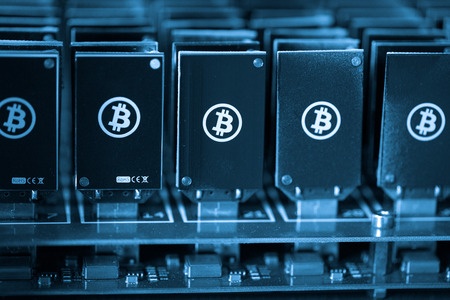 Much ado about nothing?
Despite the long drawn endeavor, the world’s first bitcoin mining IPO was lackluster. Australia’s The Bitcoin Group, a bitcoin mining company raised $4.2 million (5.9 million Australian dollars) falling short of the targeted $14 million (20 million Australian dollars)
The Melbourne-based company was founded in September 2014 with plans to pursue an IPO a month later. The founders Sam Lee, Allan Guo and Ryan Xu started Bitcoin Group as a cryptocurrency arbitrage service, but soon turned their attention to mining bitcoins as the main business.
However, the IPO plans did not pan out as expected after the Australian Securities and Investments Commission banned the company for trying to garner investor interest on social media before filing the prospectus and placing two more stop orders on the IPO in July.
The Bitcoin Group was finally cleared to list on the Australian Securities Exchange in January this year after a third unsuccessful attempt of listing in November last year. The stock ‘BCG’ was scheduled to begin trading on February 2nd and received an underwhelming response from the market. As of now, it still hasn’t actually been listed.
All the setbacks however did not dampen the founders’ spirit — CEO Sam Lee called the IPO a “solid result” and told CNBC that it was sufficient for the company to focus on expansion by acquiring new mining equipment.
Bet On the Iowa Caucus and Political Primaries With Bitcoins
January 31, 2016 I’m often asked if bitcoin still has a future or if it’s dead. As someone who has mined bitcoins, made purchases with them, sold advertising space with them, traded them, and contributed to political campaigns with them, I feel pretty confident that bitcoins are here to stay. While the system isn’t as anonymous as some people believe, bitcoin fills a void that many people the world over have long sought, a way to move money outside the banking system, and all without a replacement form of centralized control. It is the only way to truly de-bank.
The value is volatile but there are several markets where such volatility is the cost of doing business. Would you rather your bitcoins be worth 5% less when you receive them as payment or would you rather get nothing of what you are owed because the traditional banking system is preventing the transaction?
Enter one black market, betting on US elections, a practice that is largely illegal. And if people could bet on it they would, according to odds maker Jimmy Vaccaro at the South Point Casino in Las Vegas. He told CNN that opening up betting on elections would be the biggest thing they’d ever booked. “It would make the Super Bowl look like a high school football game,” he reportedly said.
But you can still bet on elections if you really want to, according to Market Watch’s Brett Arends. In the name of journalism, Arends successfully bet $1 on the Iowa Caucus… using bitcoins. He bet on Rand Paul with 40 to 1 odds. If he wins, he’ll collect those winnings in bitcoins.
And nobody can stop him.
As an independent system controlled by nobody, there are no bank accounts to freeze, ACH processors to shut down or physical dollars to confiscate. And despite the critics that claim bitcoins have to be converted to a “real” currency at some point in order to realize the value, that’s not necessarily true. You can live your life on bitcoin.
For one bookmaker (and you should view it as a reference only), the odds of a Ted Cruz win in the Iowa caucus is 2.6 to 1. Marco Rubio is paying 10.5 to 1. On the Democrat side, Bernie Sanders is paying 2.92 to 1.
Market Watch’s Arends argues that such activity might not be gambling at all since the IRS ruled bitcoin to be property, not a currency. In his simplistic view, they might as well be digital jelly beans. “When I wagered $1 worth of bitcoins on Sen. Paul last week, in the eyes of the law I wasn’t actually betting real money. I was just betting jelly beans,” he wrote.
You can of course buy cool stuff with those jelly beans.
It’s quite gray indeed, but if the interest in political gambling truly dwarfs the Super Bowl, then a totally bank-less decentralized system opens up all kinds of doors, the kind that don’t want to be closed.
In non-bank finance, a topic I often write about, all roads inevitably lead back to banks, no matter how much the system is disrupted. The truly de-banked use bitcoins and with that, the possibilities with it are endless.
Would you bet on Bernie Sanders with 2.92 to 1 odds? You’re not supposed to be able to do it, but in a bankless world, you could.
Rand Paul Speaks at Bitcoin Event
April 20, 2015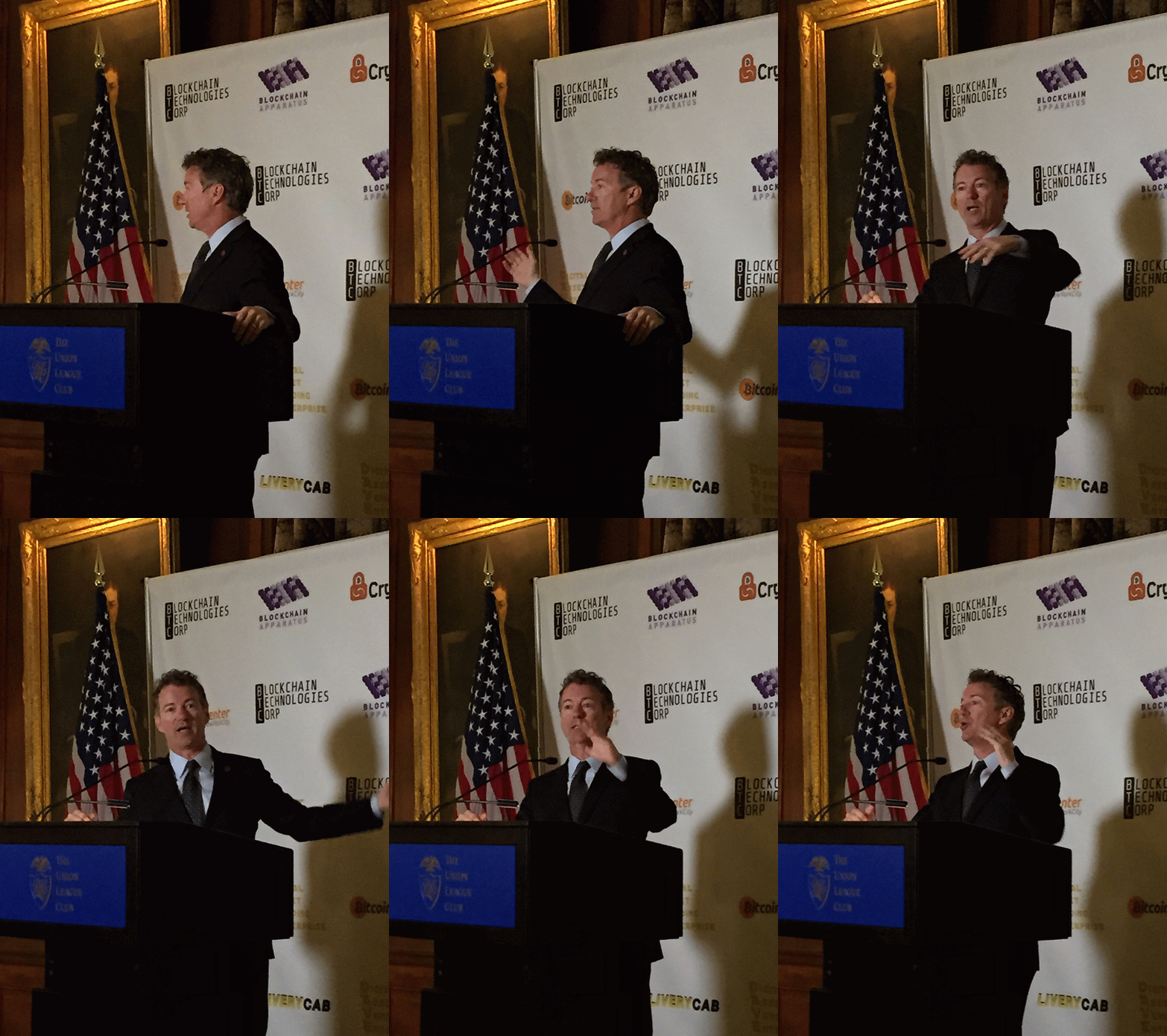 Yesterday, Senator Rand Paul spoke at a private Bitcoin event produced by Blockchain Technologies Corp in Midtown Manhattan. It was a gathering of monetary technophiles dressed in their Sunday best.
Paul’s main reason for supporting the Bitcoin movement/technology/currency was the ability to bypass the expensive fees tacked on by credit and debit card issuers. A business that only had a 3 or 4% profit margin could double its profits by eliminating merchant processing fees, he said.
The event lasted for about two hours with Paul only making an appearance for about 15 to 20 minutes.
Rand Paul Accepts Bitcoin
April 7, 2015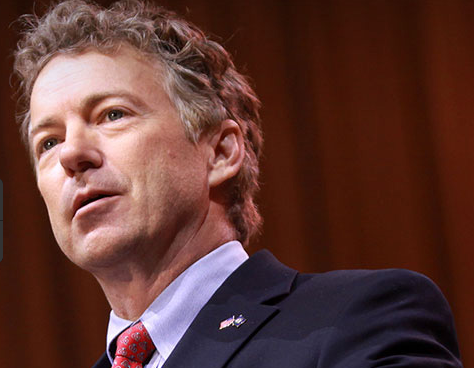 Bitcoin’s got a real fan! Senator Rand Paul is now accepting bitcoin as one way to attract donations for his presidential campaign. And regardless of whether or not you agree with his views, I did at the very least make a donation on the basis that I am a believer in bitcoin.
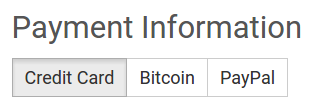
Donating to Paul’s campaign by bitcoin is one of three payment options. The other two are credit card and paypal. He is able to accept bitcoin via BitPay, a company I just mentioned a few days ago.
How would I describe the experience of donating to Rand Paul for president using bitcoin?
Insanely simple!
By law, Paul will have to convert any bitcoins received into dollars before using them. Too bad…
BitPay Right at Home at Transact ’15
April 3, 2015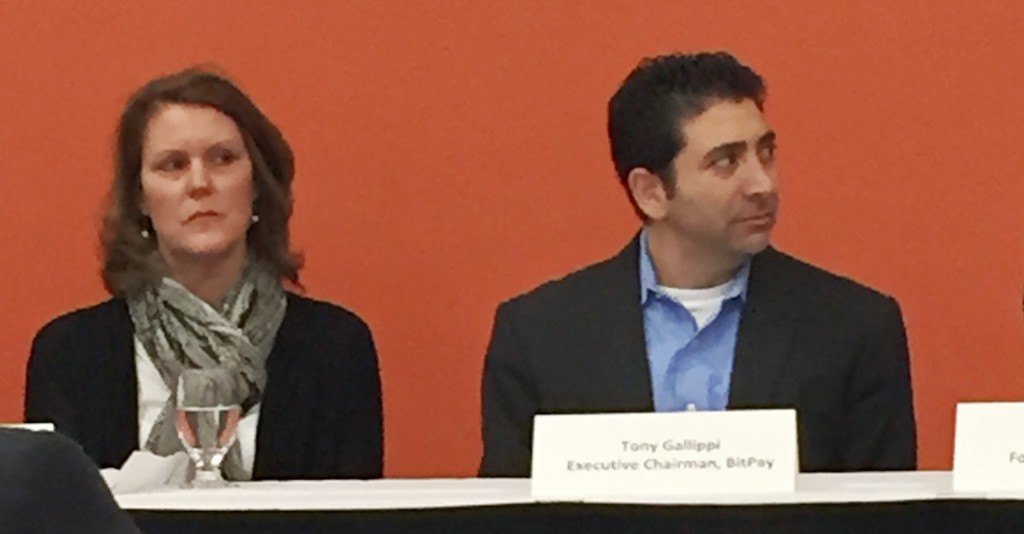 BitPay has a knack for flair. They sponsored a college bowl game known as The Bitcoin Bowl in St. Petersburg as well as a driver in the NASCAR Camping World Truck Series race. BitPay is bitcoin, but all grown up.
As a member of the ETA and with a business model similar to just about every other card processing acquirer, BitPay didn’t really look too out of place. At a press briefing on April 1st at Transact ’15, company co-founder Tony Gallippi sat in between Osama Bedier of Poynt and Joan Herbig of ControlScan to discuss the road ahead for payments.
Gallipi explained that they are working to integrate with POS platforms so that merchants can accept bitcoin using their existing systems. He also sought to dispel the myth that bitcoin is an untraceable currency by citing the bombshell news report published by the New York Times just the day earlier that revealed government agents had been caught stealing bitcoins.
“The agents, Carl Mark Force IV, who worked for the Drug Enforcement Administration, and Shaun W. Bridges, who worked for the Secret Service, had resigned amid growing scrutiny, and on Monday they were charged with money laundering and wire fraud,” The story states. The agents stole bitcoins recovered in the Silk Road case and laundered it. But since bitcoin is the perfect opposite of untraceable, both agents were caught.
Bitcoiners, start your engines! BitPay #NASCAR driver @jbossracing now starting his 1st lap at Daytona! #JBossBitcoin pic.twitter.com/Bzq4rYY8IC
— BitPay (@BitPay) February 21, 2015
Referring later to the phenomenon of using your mobile device to make a payment, Gallippi said, “a lot of the difficulty in changing is just muscle memory. We’re all so used to just reaching for our wallet to make a payment.”
While BitPay wore a good corporate face for the conference, news that their sponsorship of future college bowl games had been terminated hit the press right in the middle of it. According to Fortune, “neither side is talking about the abruptly ended sponsorship, but it likely has to do with the value of the game, and the value of bitcoin.”
That doesn’t sound good for BitPay, but it may have come down to whether or not it was a good use of their marketing budget. For one, their company name wasn’t even attached to the bowl title. It was the Bitcoin Bowl not the BitPay Bowl. But at least their one run was a moment to remember.
Hopefully BitPay will still be going strong at Transact ’16 next year.
deBanked Inks Deal with Lenders Marketing in Bitcoin
March 10, 2015 deBanked has inked an advertising deal with Lenders Marketing, a company that provides trigger leads to the business financing industry. The deal is significant because it was priced in Bitcoin, not dollars.
“Bitcoin’s value against the dollar is volatile,” said deBanked’s Sean Murray. “But 1 BTC today is still equal to 1 BTC tomorrow.”
deBanked does convert a portion of its Bitcoin revenue into dollars, but holds the rest. “I think it’s important to practice what you preach,” Murray added. “What better way is there to debank than by using Bitcoin as a currency?”
Lenders Marketing and deBanked used Coinbase to transact, the country’s first regulated Bitcoin exchange.
deBanked’s March/April print magazine issue will be distributed in the mail at the end of this month. Anyone can subscribe to receive it for FREE.
Lender’s Marketing monitors business credit databases, credit card processing companies, financial institutions, government and public filings and merges them with their own database to provide a real-time reflection of current business loan needs.
In the upcoming magazine issue, you will literally be able to smell the leads. You’ll have to hold a copy in your hand to find out what that means.
Federal Government Selling Bitcoins
February 18, 2015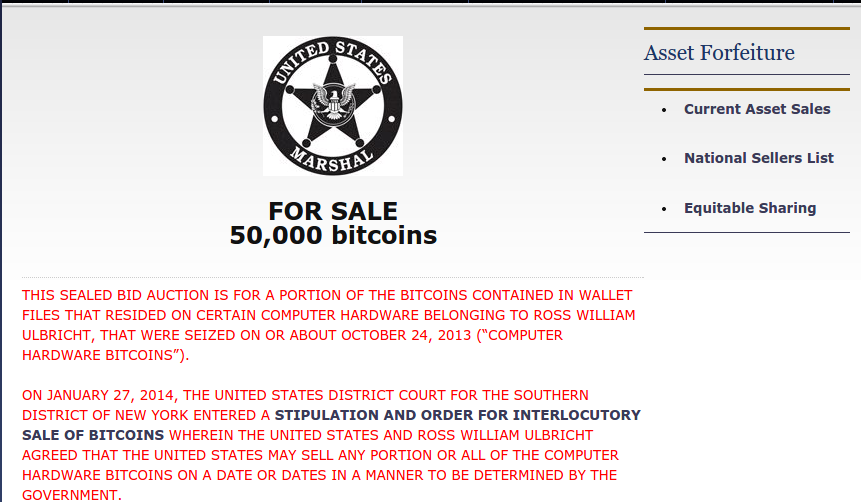 If the webpage didn’t say www.usmarshals.gov in the address bar, it’d look like a poorly disguised scam. The page, which looks like it came out of the 1990s (no SSL either for a government website?) is offering 50,000 bitcoins for sale, an amount worth $11.8 million at current market prices.
This sealed bid auction is for 50,000 bitcoins separated into two series: Series A (10 blocks of 2,000 bitcoins), and Series B (10 blocks of 3,000 bitcoins). You will not have the opportunity to view other bids. You will not have the opportunity to change your bid once submitted.
Bidding ends at Noon on March 2nd and in order to bid you have to wire the U.S. Marshals at least $100,000 upfront just to be considered a legitimate bidder.
The old fashion system instructs bidders to email them their driver’s license, completed bidder form, and receipt that says they wired them a hundred grand. There’s a special email address to do this and they should hear back from someone if they get approved.
I bet you never thought you’d seen an email address like this, USMSBitcoins@usdoj.gov.
So why are the U.S. Marshals in the Bitcoin business? Surely you know about Silk Road already…
If you want to get in but don’t have enough to cover a lavish bid, why not syndicate it out? That’s allowed:
Can I form a syndicate of buyers?
The person or entity that registers to bid on this auction must satisfy all registration requirements, including certifying that the bidder is not acting in concert with the defendant or defendant entity. This certification extends and applies to all members of a syndicate. The primary bidder should perform whatever due diligence the bidder feels is necessary in order to comfortably make that certification.
And if you don’t win, the Marshals will just ACH your deposit back, but not until after they’ve probably put you on some kind of watch list. Nothing says suspicious person like randomly wiring 100k+ to the U.S. Marshals just so you can be considered a bitcoin bidder. Expect them to be curious about who you are.
Hopefully their technology is more advanced than the way their website looks though.