

Multimillionaire CEO Claims Predatory Lenders are Causing Him to Sell His Furniture for Food
November 22, 2018 Two months ago, a billionaire hedge-fund manager named Philip Falcone, the 377th richest person in the United States who once “put the squeeze on Goldman Sachs,” led a Virginia-based investment group to make a strategic purchase of a local Telemundo TV station in Columbus, Ohio. The seller, a company led by local businessman Richard Schilg, pocketed a lavish sum of $850,000, according to the Columbus Dispatch.
Two months later, Schilg, who is 61-years old, had become so poor and destitute that he would have to sell his furniture just to buy food. That’s what Bloomberg Businessweek says of Schilg in its purported tell-all piece about predatory lending. Though Schilg successfully negotiated a deal with a Wall Street billionaire, he apparently was outmatched and “unable to defend himself” when it came to much less sophisticated transactions at his other business, Pathmark HR, a human resources company located 15 miles outside of Columbus.
Pathmark HR is anything but small. At the end of 2017, Schilg’s company was on track to gross $20 million a year in sales. Along the way, he engaged in commercial finance transactions that required the sale of future receivables, non-loan arrangements that businesses use to fuel their growth.
They did not go as planned. Multiple financial companies obtained judgments to enforce the contracts that Pathmark HR had entered into, NY State court records confirm. Schilg told Bloomberg Businessweek that “your life is ruined by their contract.”
But if that’s the case, it stands to reason he wouldn’t enter into one again.
Pathmark HR kept applying for more of these things, industry insiders told deBanked, though the stream of judgments filed against his business from competitors offering similar products have served as a veritable red flag for underwriting departments. That would’ve created a problem for Pathmark HR if it intended to rely on that type of capital going forward.
That’s when a straw man appeared.
According to a purported (and admittedly unauthenticated) corporate resolution reviewed by deBanked, Schilg appears to have transferred his majority interest in Pathmark HR to an 82-year old minority shareholder named Robert Renzetti, who lists a small mobile home more than 1,000 miles away in Sarasota, FL as his residence.
There’s a catch. The corporate resolution (dated in 2017) says that Schilg can just buy the shares back from Renzetti in the future. Either way, several finance companies said they received applications for capital from Pathmark HR up through and including this year, with only Renzetti’s name and information included. Schilg’s is nowhere to be found.

Schilg, who Bloomberg Businessweek portrays as so poor that he’s more-or-less eating his household furniture to stay alive, is the former founder, chairman and CEO of Team America Corp, a staffing organization that grew to more than $350 million in annual sales by 1999. That’s more than $500 million at today’s value, larger than almost every single alternative funder that deBanked ranked in 2018.
Meanwhile, the only thing that separates Schilg from the sale of his TV station to a billionaire is FCC approval. Hopefully the man has enough furniture to see it through.
This is the second in a series of articles relating to a fanciful tale in Bloomberg Businessweek
Dan DeMeo is Back in Action… at Lendr
November 15, 2018 Daniel DeMeo has been hired as Chief Revenue Officer by the Chicago-based funder, Lendr.
DeMeo has been working as an independent consultant for the last two years, according to LinkedIn. Prior to that he was the CEO of CAN Capital, a company he had dedicated himself to for nearly seven years until an internal account performance issue led to several senior executives taking an immediate leave of absence.
Under DeMeo, CAN enjoyed success as one of the nation’s largest non-bank small business financiers, partially attributed to the company’s major head start in pioneering merchant cash advance products when the company was founded in 1998. DeMeo even landed on the cover of deBanked’s November/December 2015 issue, around the time when the company was widely believed to be planning an IPO.
It never happened.
The systems issue that toppled CAN’s top execs including DeMeo, brought the company to its knees, putting all new funding on hold for six months until it was saved by a capital infusion from Varadero Capital in July 2017. CAN Capital survived while DeMeo has notably since then kept a low public profile.
Now he’s back in action at Lendr, an ambitious funding company that offers MCAs, small business loans, equipment financing, and just recently, factoring.
“Dan is a highly strategic and thoughtful leader with broad perspective of the industry that enables him to understand specific challenges we face as a growing company,” said Tim Roach, CEO of Lendr. “Dan’s experience is a perfect addition to the team as we accelerate our growth plans, raise Lendr’s brand recognition, and further increase our market share.”
“I’m thrilled to be joining such a dynamic and progressive company,” said DeMeo. “Lendr has emerged as one of the leaders in the financial solutions space and we are poised to build strategic partnerships and alliances with those who share the same zeal in helping small- and medium-sized businesses grow.”
Lendr is setting its sights high. “We’ll be north of $100 million in our first year of factoring,” Lendr co-founder and CEO Tim Roach told deBanked in September.
The company has also been showing off its technological and fundraising prowess as of late. This past March, they closed on a $25 million credit facility that’s expandable up to $50 million. That news was followed by the announcement of a new funding option made possible through virtual and physical debit cards.
Lendr has offices in Chicago and New York and employs over 45 people.
IOU Continues to Post Positive Earnings
November 14, 2018
Loan originations for IOU Financial’s third quarter were $36.1 million, an 85% increase over last year’s Q3 originations of $19.6 million. This is also IOU’s fourth consecutive quarter with positive earnings.
“IOU continued to deliver strong loan origination growth and earnings performance during the third quarter of 2018 and we have successfully managed loan defaults as a result of measures implemented last year,” said IOU Financial CEO Phil Marleau.
The measures implemented last year refer, in part, to changes in collection efforts, such as using a more aggressive litigation strategy against businesses that default on their loan obligations, Marleau told deBanked. Provisions for loan losses in Q3 were $1.2 million, a decrease of 51% compared to last year at this time.
Most of IOU’s revenue comes from making loans of up to $300,000 to American small businesses. Marleau said the average IOU loan is for $100,000 with a 12 month term, although they do offer terms up to 18 months. A significant percentage of IOU’s merchants use the business loans to purchase equipment. Other loans are used for business expansion and temporary cash flow. To date, IOU has originated nearly $600 million in loans.
Despite the fact that the lender mostly services the American market, with its headquarters in Montreal and its stock listed on the Toronto Stock Exchange, IOU made a marketing push this quarter to expand its service in Canada.
“We’ve been getting the word out to brokers that we’re looking to serve Canadian merchants,” Marleau said.
Ironically, in many cases, that has meant telling American ISOs who market to Canada that IOU is open for business in its own country.
Marleau, who is Canadian, met cofounder and IOU President Robert Gloer at a fintech conference in San Francisco, and the company’s first loan was made in 2009. Gloer had ties to Atlanta, which is why IOU’s U.S. office is located there. While the company’s headquarters is in Montreal, the Atlanta office is larger and is where the company’s sales operations take place. The company has about 40 employees, but only about ten work at the Montreal headquarters.
Clearbanc Swaps VC Investing for MCA
November 13, 2018 The business model for many startups is that the business won’t even be close to profitable for years until it gets enough clients or users. But this isn’t the case for all startups. Some of them actually generate considerable revenue after just months. For companies like these, that also need capital for marketing or expansion, Clearbanc is interested to work with them.
Founded as a venture capital firm by serial entrepreneurs Andrew D’Souza and Michele Romanow, among others, the company now primarily offers merchant cash advances. Instead of analyzing the company’s founders, they are looking at tangibles like revenue and percentage growth.
“We pay a lot of attention to our underwriting and decision-making process because if we make a mistake, we can lose a lot of money,” D’Souza, who is CEO, told Techcrunch yesterday. “Unlike a VC, we don’t expect the majority of our companies to fail and have the winners make up for the losses.”
Clearbanc offers cash advances to new businesses in the U.S. and Canada, from $5,000 to $10 million. At this point, Clearbanc only funds eCommerce and Consumer SaaS (software as a service) companies. Also, eligible companies must be incorporated, have a monthly average revenue of at least $10,000 and have at least six months of consistent revenue history.
So far, Clearbanc has funded $100 million to 500 companies in 2018. Founded in 2015, the company is based in Toronto, Canada.
The Broker: How Industry Veteran Joe Cohen Closes Deals and Dodges Backdooring
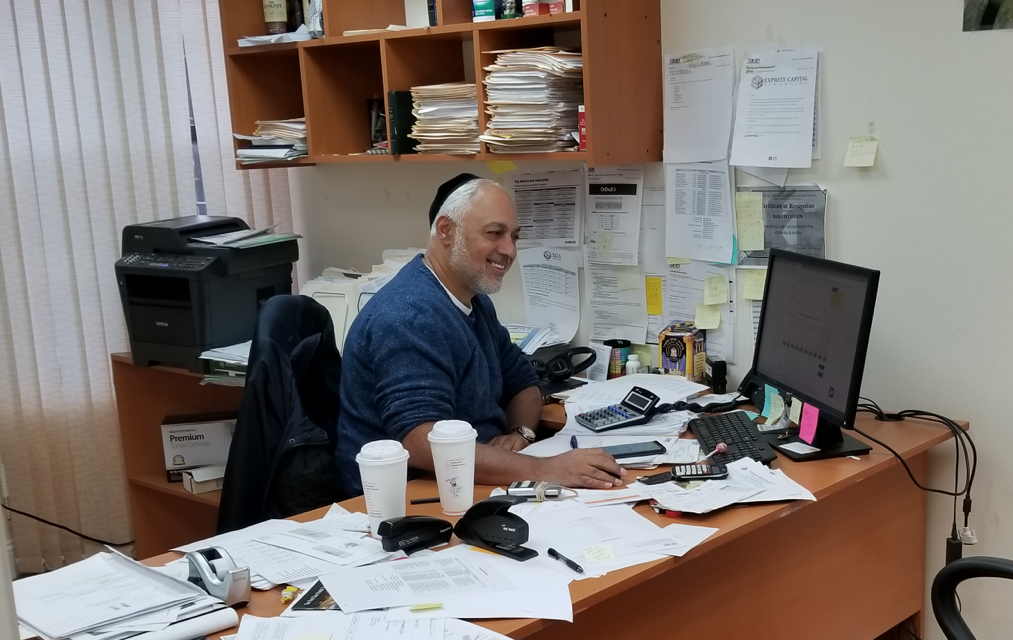
November 11, 2018Role: I’m the manager of Business Finance Advance in Brooklyn. I manage a team of about 20.
Years in the business: Since the beginning. 2005/2006.
 How he closes a deal:
You have to really know the customer. You have to have a feel for what his needs are. Is his hot button the amount of money? Is it the term? Is it the rate? Is it all of the above? You have to know what the customer is looking for and try to hit a bullseye…I make sure that I know exactly what the customer wants before I make an offer.
What were your first deals like?
In those days, when we first started doing it, the hard part was just convincing the client that we were for real – actually willing to give him money – and not some fraudster trying to get a hold of his bank statements. And it was only based on credit card revenues at the time. We used to call them up, “Hi, Mr. Smith, do you accept credit cards?” “No.” We’d hang up the phone [because] we couldn’t do anything. There was no ACH program in those days.
Once we got the statements back, we’d just have to figure out how much we could give him based on his credit card sales…We never knew what a decline was in the early days. Everybody that sent in paperwork was approved, it was just a matter of how much money he was going to get approved for.
Biggest challenge as a broker:
The most challenging part of my job is the silent thief. When we send out deals to funders, not only do we have to worry about closing the deal…but when we send a file to some of the funders, either there’s someone at the funder that’s backdooring the deal or there’s a whole syndicate taking the deal and calling the merchant behind our back. That is the biggest challenge to [brokering] today…You’re going to make some deals and you’re going to lose some, but the biggest issue we have is the drama that’s been set up by the backdoor channels that are rampant throughout the industry.
Advice for newcomers:
You have to [understand] that it will take you a year, at least, before you start making any money because a) there’s a lot of people doing it, and b) you have a lot of [backdooring] and if you don’t understand the business, you’re going to get caught up with the wrong funders.
What are some funders you work with, who you trust?
Quarterspot. And CAN Capital and OnDeck. These are the ones that will not backdoor us.
What do you look for in a good broker?
A guy that basically is hardworking and tenacious. You can’t give up. It’s not an easy business. You’ve got to work very, very hard and you have to deal with the successes and compartmentalize the losses.
Big MCA Deal Was Really Just a Massive Ponzi Scheme
October 30, 2018 Bank deposits were apparently the entire business model for Daniel Rudden, a 72-year old from Denver who fashioned himself the owner of a life insurance company called Financial Visions. In reality, there hadn’t been any such business in almost a decade. In July, Rudden sent out a mass email admitting that his whole operation was actually a Ponzi scheme that he’d been running since around 2010 and that it had finally come undone. In his wake, he left more than 150 investors duped out of $55 million. Some of those investors were retirees who had entrusted him with their life savings.
And that’s not all. Court records show that in addition to SEC and DOJ charges against him, a series of judgments from merchant cash advance companies have piled up in recent months with defaults exceeding a combined $1.3 million. One of those judgments was for more than $500,000 from a single funder. deBanked counted at least 8 MCA funders that had been fooled.
Rudden told CBS News that he spent all of the money and has only $4,000 left.
“By the end, I would have taken money from almost anyone who breathes. No one was off limits,” Rudden wrote in an email to duped investors. “I purported a sale of the company to stall for more time, in fact there is no company to sell.”
In addition to civil securities penalties, Rudden is facing 20 years in prison for fraud.
Shopify Capital Issued $76.4M in Merchant Cash Advances in Q3
October 25, 2018Shopify Capital, Shopify’s funding arm, issued $76.4 million in merchant cash advances in the third quarter, the company revealed. That brings the total to $375 million advanced since April 2016.
Overall, the company reported Q3 revenue of $270.1 million and a net loss of $23.2 million.
The company operates an e-commerce platform for online stores and retail POS systems.
In New Jersey, Yellowstone Capital Buoys Volunteer Ambulance Organization
October 19, 2018 Hatzalah of Union County, New Jersey, a volunteer ambulance organization, has saved hundreds of lives thanks to its volunteer-only team and its three ambulances, all funded by donations from Yellowstone Capital CEO Isaac Stern and the company’s employees over the past seven years. Total donations from Yellowstone Capital, including from Stern, have exceeded $300,000.
“[Stern] is our largest supporter and he spreads through Yellowstone the opportunity to give,” said Yudi Abraham, chief of the Union County Hatzalah operation. “He’s gotten everyone there into the idea of giving back.”
In 2015, Stern held a fundraiser barbecue dinner at his home and in a subsequent year, he organized a fundraiser barbecue in a public New Jersey park, to accommodate more people.
 While Hatzalah (which means “rescue” in Hebrew) is primarily a Jewish organization, anyone – regardless of background – can call the hotline and get emergency medical attention, free of charge. The emergency number varies depending on where you live. The first Hatzalah emergency team was founded in Brooklyn in the late 1960s and the Hatzalah of Union County was started in 2004.
Abraham explained that the Hatzalah model is different from 911 ambulances in that the all-volunteer force generally arrives within three minutes in their own personal vehicles that are equipped with oxygen, a defibrillator, a full trauma kit and an emergency childbirth kit. The Hatzalah ambulance then arrives at the scene shortly minutes later.
Over the past year, with donations from Yellowstone, Hatzalah of Union County has upgraded its emergency radio dispatch system from analog to digital, Abraham said.
“Yellowstone has truly been a partner for us,” Abraham said.