
Business Lending
Annual Percentage Rates Fail Business Owners, Again
September 16, 2016 A survey of small businesses once again revealed that Total Cost of Capital (TCC) was a better metric than Annual Percentage Rate (APR) when choosing a small business loan. This study, conducted by Edelman Intelligence on behalf of the Electronic Transactions Association (ETA), found that a majority of respondents stated that they would look to minimize TCC, rather than APR, when considering loan options in the face of a short-term ROI opportunity.
The ETA explained this in the report as follows:
Generally, when consumers take out a loan, they are not making an income-generating investment that would increase the funds available to pay the loan back. Therefore, in most situations, the more “affordable” loan for a consumer is one with a longer term and lower monthly payments, even if it results in paying more over the long term. Consumers, therefore, look at APR, which describes the interest and all fees that are a condition of the loan as an annual rate paid by a borrower each year on the outstanding principal during the loan term. APR takes into account differences in interest rates and fixed finance charges that may otherwise confuse a consumer borrower and is most useful in comparing similarly long-term loans, such as 30-year mortgages or multi-year auto loans. Likewise, APR is useful for comparing revolving lines of consumer credit, like credit cards, where the amount borrowed each month changes. APR allows consumers to compare the rate at which an outstanding balance would increase under different credit cards.
While APR describes the cost of the loan as an annualized percentage, TCC represents the sum of all interest and fees paid to the lender. As the Cleveland Federal Reserve recently noted, TCC enables a small business to determine the “affordability” of a product – a key driver for most small business borrowers. Unlike consumer loans, commercial loans are normally used to generate revenue by helping a business purchase equipment or inventory or hire additional employees. Thus, “affordability” for small business borrowers means assessing the cash flow impact of the loan and comparing the TCC of the loan and the return they expect to earn from investing the loan proceeds. To reduce TCC, many small business borrowers prefer short-term financing they can quickly pay back with the return on their investment (ROI).
The ETA’s full report can be VIEWED HERE.
The findings are consistent with other studies:
Fed study on small business borrowing
A debate with anecdotal evidence, demonstrating people’s inability to calculate an APR
Consumers also struggle to make sense of APR, according to a 2008 Fed study
Barney Frank, Now a Banker, Sounds Like a Champion for Private Lending
September 16, 2016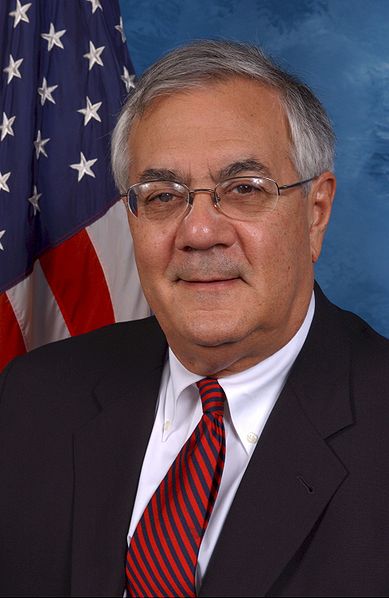 Barney Frank, the infamous former Congressman whose name still haunts the financial industry through the Dodd-Frank Act, has taken on a surprising role in his retirement from public service. These days he’s on the board of directors of Signature Bank, a Wall Street staple with $33 billion in assets that is ironically becoming known as one of the nation’s fastest growing lenders to private businesses. In fact, it’s the preferred bank of Murder Inc. record label founder Irv Gotti, according to a WSJ story that explained how the bank stood by him even as he was facing federal money-laundering charges. Frank was mentioned alongside Gotti and is reported to have said that he likes the bank’s focus on lending.
Say what?!
I got to interview Frank personally very briefly two years ago in New York City and got a quick sense of his views on business-to-business transactions; That is that he doesn’t believe small businesses should get the same protection as consumers. In addition to restating his opposition to the Durbin Amendment in his own law, which regulated debit card interchange fees, he was also surprised by my suggestion that some people had floated the concept of federal interest rate caps on business loans. He offered a hard no when I asked him if he would be in favor of that idea. Above all however, he was in favor of transparency.
Frank more recently shared additional thoughts on finance in an interview with the Commercial Observer. “From the standpoint of the economy, the goal is to make sure enough loans are being made and that they’re not too risky. Who makes them is less important,” Frank said. These comments were offered in response to a question about capital constraints interfering with bank lending, to which he explained didn’t matter because the private sector was picking up the slack.
“First of all, the government is not in the business of favoring one sector over another. From the standpoint of public policy, is the demand for loans necessary to fuel economic activity being accommodated? I think it is. […] Although [Dodd-Frank] does give [the nonbank sector] power, there may be some further looking into them. Some people worry about peer-to-peer lending, for example, but this is helping one sector versus another.”
A lot of the complaints people have about his famous law, according to Frank, weren’t even written into the law. They are instead rules created by regulators all on their own. “There’s nothing in the statute that cracks down on commercial regulation,” he said.
Frank, sometimes viewed as one of the most liberal anti-Wall Street politicians of his time says his own bank has been criticized for too much lending, but that he is not deterred because he believe it’s not the irresponsible kind that got wrapped up in the financial crisis that necessitated Dodd-Frank to begin with.
Barney Frank, the man, the myth, the director of the bank. Read the full interview with the Commercial Observer HERE.
Funding The Great White North
September 13, 2016
As of last year, 98 percent of Canada’s employers were small businesses compared to 0.3 percent (2,933) large companies. Given this and what we know about Canada’s banking oligarchy, dominated by five large banks, it was inevitable that American alternative lenders would go looking for greener pastures in Canada.
When OnDeck set foot in the country two years ago, it accelerated the alternative lending movement by offering loans up to $150,000 CAD. But OnDeck wasn’t the first to discover the Canadian market. Merchant cash advance companies such as Principis Capital and AmeriMerchant (today Capify) have been there since 2010. Principis actually draws close to 15 percent of its business volume from Canada. But the credit that’s due to OnDeck is for expanding the horizons of small businesses who have been conditioned to think that lending begins and ends with banks. The crop of Canadian alternative lenders who do not otherwise have the resources for similar blitzkreig marketing are pleased with the industry’s promotion in general.
“We are happy that some of the bigger US players are coming up here and they are spending millions of dollars on advertising,” said Bruce Marshall, vice president of British Columbia-based Company Capital. “These companies raise awareness of the industry to a higher level and with us being a smaller company, we can ride on their coattails,” he said.
Company Capital has been operating as a balance sheet lender for five years and has provided term loans, working capital loans, merchant cash advances and ‘cash lines’ which are similar to lines of credit. For lenders such as Company Capital which makes loans in the range of $30K – $50K, the presence of bigger players like OnDeck saves them from consumer education-oriented marketing campaigns. “We cannot compete with the advertising of big companies but it works in our favor of creating awareness and becoming more mainstream,” Marshall noted.
And this not only helps the Canadian companies but also smaller US companies that feel comfortable entering a market with a leader. OnDeck’s presence nudged Chad Otar, founder and managing partner of New York-based commercial finance brokerage Excel Capital Management into considering Canada as a viable market. “We saw OnDeck go there and thought that there is some kind of money we can make,” he said.
 But for OnDeck, Canada might just as well be another large US state. Most American companies including OnDeck, Principis Capital and Excel Capital run their Canadian operations remotely, treating it much like an extension to their US business with similar products.
“Our range of business is virtually the same in Canada as in the US. We don’t need to have an operation center there,” said Jane Prokop, CEO of Principis Capital. The company approaches Canada just like the US with accounts and customer service being handled in a similar fashion. “It’s a very manageable extension of the US market,” Prokop said. “It’s a smaller market so someone who enters Canada cannot expect the same kinds of volume as in the US.”
It also certainly helps to be spread across the same time zones and in such close proximity where a majority of the country also speaks the same language. If it was that easy though, shouldn’t we have seen more companies doing this?
“The fundamentals of the Canadian market are different. Our banks are established and trusted and in general do quite a good job, so the opportunity for market expansion is different than in the US,” said Jeff Mitelman, CEO of Thinking Capital, one of the country’s first alternative lenders.
Prior to Thinking Capital, Mitelman founded and ran Cardex, Canada’s first ISO which offered lending products with payment services. And that competitive edge helped him recently to partner with payment solution company Everlink to expand its customer base and offer loans online. The company previously secured credit facilities worth $125 million from two of the biggest banks in the country, The Canadian Imperial Bank of Commerce and Nova Scotia.
Picking up the same strategy, some American companies decided to bank on these big banks (pun intended) for their success. For instance with Kabbage, it made sense to license its automated platform to Nova Scotia Bank and to rely on them to deploy capital while Kabbage provides the technology and customer experience. “We saw that Canada is ripe for technology but the differences in regulation among other things made us go the partner route,” said Peter Steger, head of business development at Kabbage.
The advantages of having an incumbent customer base, the brand equity and the supply of capital usually outweighs the costs and inconveniences of maneuvering in an unfamiliar business environment that only a few firms have the bandwidth for, some companies contended.
Secondly, there is a lack of reliable and robust data necessary for making lending decisions. Since only a handful of large financial institutions dominate the landscape, the data reported is limited to a small number of players and the outputs from credit bureaus may not be sufficient for making a credit decision. “The availability and access to government and financial data is scarce in Canada compared to other markets,” said Jeff Mitelman. “Most of the data relationships that fintech companies rely on, need to be developed on a one-to-one basis and is often proprietary information.”
Having the data presented in the right format can save a lot of underwriting time. Companies in Canada find the government and financial data available to be scanty and in less than ideal form. David Gens, CEO of Vancouver-based Merchant Advance Capital noted that Canadian merchants are slower to adopt technology which adds to the woes of online lenders. “Believe it or not, some Canadian merchants still use fax,” he said.
Even as the country plays catch up, Canadian lenders consider the market to be large enough for many players. “At this time, education is more important than competition,” said Mitelman.
 Canada’s geographical dispersion and regional differences however are peculiar. The four provinces of Quebec, Alberta, Ontario and British Columbia make up 86 percent of the population and the greater part of the economic activity. And Quebec is often avoided, in part because of the bilingual mandate that requires businesses to advertise and produce materials in French. OnDeck and Company Capital both do not operate there, for example.
The cultural differences can also determine how customer relationships are handled, and being a part of that culture has given Canadian companies an upper hand. “It does definitely help to have a home advantage in terms of understanding the local peculiarities,” said David Gens. “Marketing to Canadian merchants is also different — being aggressive might not work very well here and they like to know they are dealing with someone nearby.”
For financial brokers such as Otar, Canadian usury laws can appear restrictive. As per Canadian interest rate rules, Under Section 347 of the Criminal Code (Canada), interest rates exceeding 60 percent per annum are termed “criminal rates of interest” and “interest” in the Criminal Code is broadly defined as a broad range of fees, fines and expenses which includes legal expenses.
“US lenders have had to change their way of doing business. Since, APR is less here, if your product is a loan contract, you will be restricted and you will have to service low risk for low rates,” said David Gens.
Even so, the business emerging out of Canada may now be supplemental for American lenders and the potential for growth beneficial to diversification.
Business Owners Ask About Business Loans On Reddit
September 12, 2016 The front page of the Internet attracts everyone, including small business owners looking for information about business loans. Less than three weeks ago on Reddit, a self-described business owner asked if it was possible to get a small business loan despite not having been in business for two years yet. He received very few responses.
Three months ago a user asked for an alternative source to Wells Fargo to obtain a small business loan. Those that responded brought up other banks.
This cafe does 350k in revenue per year and needs a loan for more than 60k to expand. Can it be done?
There are many other entries on the popular site from users purporting to be business owners and also what appears to be a lot of missed opportunities…
Publisher Walks Delicate Line With Small Business Loan Ad
September 6, 2016CAN Capital’s partnership with Entrepreneur Magazine already has one small business lending competitor upset, according to a story in the New York Times.
An article submitted to Entrepreneur Magazine by the CEO of SmartBiz appeared alongside an ad for “Entrepreneur Lending.” While the magazine has pledged to continue to feature finance content on topics beyond Entrepreneur Lending across their media platforms, distinguishing the ads from the content in a way that satisfies everyone may prove to be a delicate balancing act.
Alternative Financing Group’s Owner Indicted
September 6, 2016 Investors who thought their money was being used to fund small business loans didn’t get what they wanted, according to the SunHerald. Thomas “Lenny” Lepre, whose company Alternative Financing Group offers business loans and merchant cash advances was indicted on five counts of wire fraud on August 23rd for spending money on himself that was supposed to be used to make loans.
According to the indictment filed in the Southern District of Mississippi, Lepre “made materially false and fraudulent representations and solicited significant sums of money from investors and clients purportedly for funding of commercial services to borrowing clients, and for investments, and converted his investors and client borrowers’ monies to his own use and possession, using the funds inconsistently with the representations he had made to the investors and clients.”
The prosecution seeks a criminal forfeiture of more than $500,000. His arraignment is set for September 22nd.
Lepre is presumed innocent until proven guilty. The case number is 1:16-cr-00061-HSO-JCG.
Sunshine and Deal Flow: Who’s Funding in Puerto Rico?
September 1, 2016
Lots of small businesses need capital in Puerto Rico and not many companies are trying to provide it. Combine that with the island’s tax incentives, tourist attractions and gaggle of ambitious entrepreneurs, and America’s largest unincorporated territory can seem like an archipelago of opportunity for the alternative small-business finance community – a virtual paradise.
But for alt funders, the sunshine, sandy beaches, swaying palms, picturesque rocky outcroppings, rich history and renowned cuisine can’t change two nagging facts about this tropical commonwealth that 3.4 million people call home. Alternative finance remains largely unknown on the island, and it’s difficult if not impossible to split credit card receipts there.
Let’s start with the good part. “If you call a restaurant in Los Angeles at 2 o’clock in the afternoon, you’re the 15th person to call them that day, but if you’re calling a business in Puerto Rico, you might be the only one,” says Andrew Roberts, director of partnership development for Merchant Cash Group, which funds some deals on the island. “So it’s not the same cutthroat competitiveness that we have here.”
But consumers in Puerto Rico’s tourist areas rely on PIN debit cards, which don’t qualify for split funding between merchants and finance providers because the cards don’t have Visa or MasterCard logos and thus merchants can’t run them as credit transactions, Roberts says. Besides, processors on the island don’t want to split the revenue from credit card transactions between funders and merchants, either, Roberts notes. “If there’s a processor in Puerto Rico that will split fund, I haven’t been unable to find them,” he says. “Believe me, I have looked.”
The two main processing platforms on the island, Global and First Data, require ISOs to carry 100 percent of the risk on a split, according to Elevate Funding CEO Heather Francis, who was involved in the island market at another company before taking her current job. That’s why split remittance “remains almost nil” in Puerto Rico, she says.
Splitting funds by using a “lockbox” – which works like an escrow account and distributes a certain percentage of receipts to the merchant and the rest to the funder – doesn’t provide a solution because banks in Puerto Rico decline to use the option, Roberts maintains. That’s why he advises that it’s easier to offer ACH-based products on the island.
Merchants on the island have to meet the same requirements for ACH that apply on the mainland, Roberts notes. That includes a reasonable number of checks returned for non-sufficient funds and a reasonable number of negative days. “The underwriting procedure on the island is pretty much the same as it is here,” he says.
Perhaps the difficulties of setting up the split in Puerto Rico shouldn’t cause any uneasiness about entering the market because the bulk of alternative funding on the island relies on daily debits—just as it does on the mainland, Roberts says. Still, he notes that some merchants in both places may qualify for split funding but fail to measure up for daily debit.
 Though merchants and funders have those commonalities, the banking systems differ on the mainland and on the island. Banco Popular, which has held sway in Puerto Rico for nearly 120 years, controls much of the island’s banking and inhibits the growth of alternative funding for small businesses there, Francis says. Still, Puerto Rican merchants should have some familiarity with alternative finance or high-fee products because of the island’s high concentration of title loan companies, she notes.
Similarities and and differences aside, the Puerto Rican market provides a little business to some mainland alternative finance companies. United Capital Source LLC, for example, has completed five deals for small businesses on the island, says CEO Jared Weitz. Companies can provide accounts receivable factoring there, he says.
Alternative funding has yet to post runaway growth in Puerto Rico, Weitz says, because it’s not marketed strongly there, only a few mainland funders are willing to do business in Puerto Rico, the range of products offered there is limited, and small business remains less prevalent there than on the mainland.
 But a handful of mainland-based companies have been willing to take on the uncertainties of the Puerto Rican market, and Connecticut-based Latin Financial LLC serves as an example of an ISO that has enthusiastically embraced the challenge. The company got its start in 2013 by offering funding to Hispanic business people on the mainland and began concentrating on Puerto Rico early in 2015, says Sonia Alvelo, company president.
Alvelo built a strong enough portfolio of business on the mainland that funders were willing to take a chance on her and her customers in Puerto Rico. Latin Financial now maintains a satellite office on the island, and the company generates 90 percent of its business there and 10 percent on the mainland.
Latin Financial has a sister company called Sharpe Capital LLC that operates on the mainland, says Brendan P. Lynch, Sharpe’s president. Alvelo describes Lynch as her business partner, and he says he’s started several successful ISOs. He credits her with helping Puerto Rican customers learn to qualify for credit by keeping daily balances high and avoiding negative days.
“It’s a small company with a big heart,” Alvelo says of Latin Financial. She was born in Puerto Rico and came to Connecticut at the age of 17. “For me it’s home,” she says of the island. She’s realizing a dream of bringing financial opportunity to business owners there.
To accomplish that goal, Alvelo spends much of her time teaching the details of alternative finance to Puerto Rico’s small-business owners, their families, their accountants and their attorneys. “You want to make sure they understand,” she says, adding that the hard work pays off. “My clientele is fantastic,” she says. “I get a lot of referrals.”
Latin Financial started small in Puerto Rico when a pharmacy there contacted them to seek financing, Alvelo says. It wasn’t easy to get underway, she recalls, noting that it required a lot of phone calls to find funding. Soon, however, one pharmacy became three pharmacies and the business kept growing, branching out to restaurants and gas stations. Already, some merchants there are renewing their deals.
 Growth is occurring because of the need for funding there. Puerto Rican merchants have had the same difficulties obtaining credit from banks as their peers on the mainland since the beginning of the Great Recession, Alvelo says. “It’s the same story in a different language,” she notes.
Speaking of language, Alvelo considers her fluency in Spanish essential to her company’s success in Puerto Rico. “You have to speak the language,” she insists. “They have to feel secure and know that you will be there for them,” she says of her clients. Roberts agrees that it’s sound business practice to conduct discussions in the language the customer prefers, and his company uses applications and contracts printed in Spanish. At the same time, he maintains that it’s perfectly acceptable to conduct business in English on the island because both languages are officially recognized.
People in Puerto Rico have been speaking Spanish since colonists arrived in the 15th Century, and English has had a place there since the American occupation that resulted from the Spanish-American War in 1898. Still, more than 70 percent of the residents of Puerto Rico speak English “less than well,” according to the 2000 Census, but that’s changing, Alvelo says.
Whatever the linguistic restraints, the products Latin Financial offers in Puerto Rico have been short-term, most with a minimum of six-month payback and a maximum of 12 months, but Alvelo hopes to begin offering longer duration funding. She also believes that split funding will come to Puerto Rico. “It’s in the works,” she asserts, noting that she is campaigning for it with the banks and processors.
At the same time, mainland alternative finance companies are learning that the threat of Puerto Rican government default does not mean merchants there don’t deserve credit, notes Lynch. “Just because the government is having trouble paying its bills,” he says, “doesn’t mean these merchants aren’t successful. The island is full of entrepreneurs.” In fact, many of Puerto Rico’s merchants use accountants and keep their business affairs in better order than their mainland counterparts do with their homemade bookkeeping.
Alvelo also knows many merchants there are worthy of time and investment. She strives to listen to her customers when they express their needs and then help them fill those needs. “I’m very, very proud to be doing this in Puerto Rico now,” she says.
Can an ISO “Excel” in 2016?
August 26, 2016
Don’t let anyone tell you that it’s too hard for a commercial finance broker to make a buck in exchange for honest work these days. One ISO in lower Manhattan is seeing more opportunity than ever before. Chad Otar, a managing partner of Excel Capital Management, sat down with deBanked to make his case for a bright future.
“As long as there’s small businesses, there’s always going to be opportunity,” Otar said. “Business owners are always going to need money.” Ironically, his own company that he cofounded in 2013 with hometown friend Nathan Abadi, was formed without any outside debt. Bootstrapped even to this day and even as they’re expanding, they’ve seen firsthand what other businesses around the country have to go through to get ahead.
“We’ve always believed in the products that we’ve sold,” said Otar, who brokers merchant cash advances, business loans, SBA loans, factoring products and more. They want every deal to help their clients whether it’s big or small, explaining further that even he himself has to feel comfortable with what the merchant wants. When asked about size, Otar said the largest SBA loan they got done was for $4.9 million.
But when questioned if more merchants were moving towards factoring and other traditional products, he explained that some merchants just don’t want to deal with the hassle of something that might be overly invasive or a process that might take a long time. They just want to get funded quickly, he said. And that’s where they come in.
Otar and Abadi’s optimism is not just anecdotal. The two partners, who previously renewed one year leases for their small office on Maiden Lane, saw enough runway to recently sign a five year lease for a 2,700 sq ft. office on Greenwich Street, staying within the bounds of the city’s financial district. Between full time employees and contractors, they currently house about fifteen people in their new office.
 Though the partners live in Brooklyn, they, like many other companies in the industry, believe a Manhattan headquarters makes the most sense. “Everything is here,” Otar said. It’s easier to recruit new hires, he explained. And they indeed have immediate hiring plans now that they’ve got the space for it, both in sales and operationally.
This new up-and-coming generation of business owners is very comfortable with the Internet and technology, Otar added, speeding up the process and allowing they and the funding partners they work with to do more deals together. One example offered was a small business owner who gave a guided tour of his establishment to an underwriter using FaceTime on his phone. Normally, the process would’ve been delayed by a few days because of the time it takes to hire a third party to perform a site inspection.
Some funding partners offer DocuSign so that merchants don’t even have to spend time printing and signing documents anymore, he said, qualifying that however by adding that while some merchants love it, others hate it and feel more comfortable doing things the old fashioned way. He acknowledged that was likely due to the generational gap that still exists.
When asked if the setbacks and gloom that had begun to envelop the consumer lending side of fintech, was also affecting the commercial side, Otar said he didn’t see it. Funders are still very aggressive with approvals and terms, he said. While paperwork required for approval is declining overall, he described one obstacle that he hadn’t really dealt with in previous years, UCC filings that are accidentally left active even when the agreements are satisfied in full.
Underwriters doing due diligence might interpret active UCCs to mean that outstanding obligations still exist. Absent a formal termination of the UCC, an underwriter may request that merchants provide documents from the secured party to support that a termination should’ve been filed. This in itself is not a burdensome task but Otar said he has seen merchants who have used alternative financing products continuously over the last eight years or so, who are then challenged to produce satisfaction letters from dozens of companies, some of whom the merchant may only vaguely remember.
But he is not discouraged when new challenges come up. “We’ve been constantly learning,” he said. And when asked what their secret to success has been up until this point, “It’s hard work and dedication,” he responded.