
Sean Murray is the President and Chief Editor of deBanked and the founder of the Broker Fair Conference. Connect with me on LinkedIn or follow me on twitter. You can view all future deBanked events here.
Articles by Sean Murray

deBanked Throwback Thursday
December 26, 2019As we count down the end of the decade, I thought you might want to take a glimpse of how the decade started here at deBanked. Below is a snapshot of the main merchant cash info page that was on our site in December 2010!
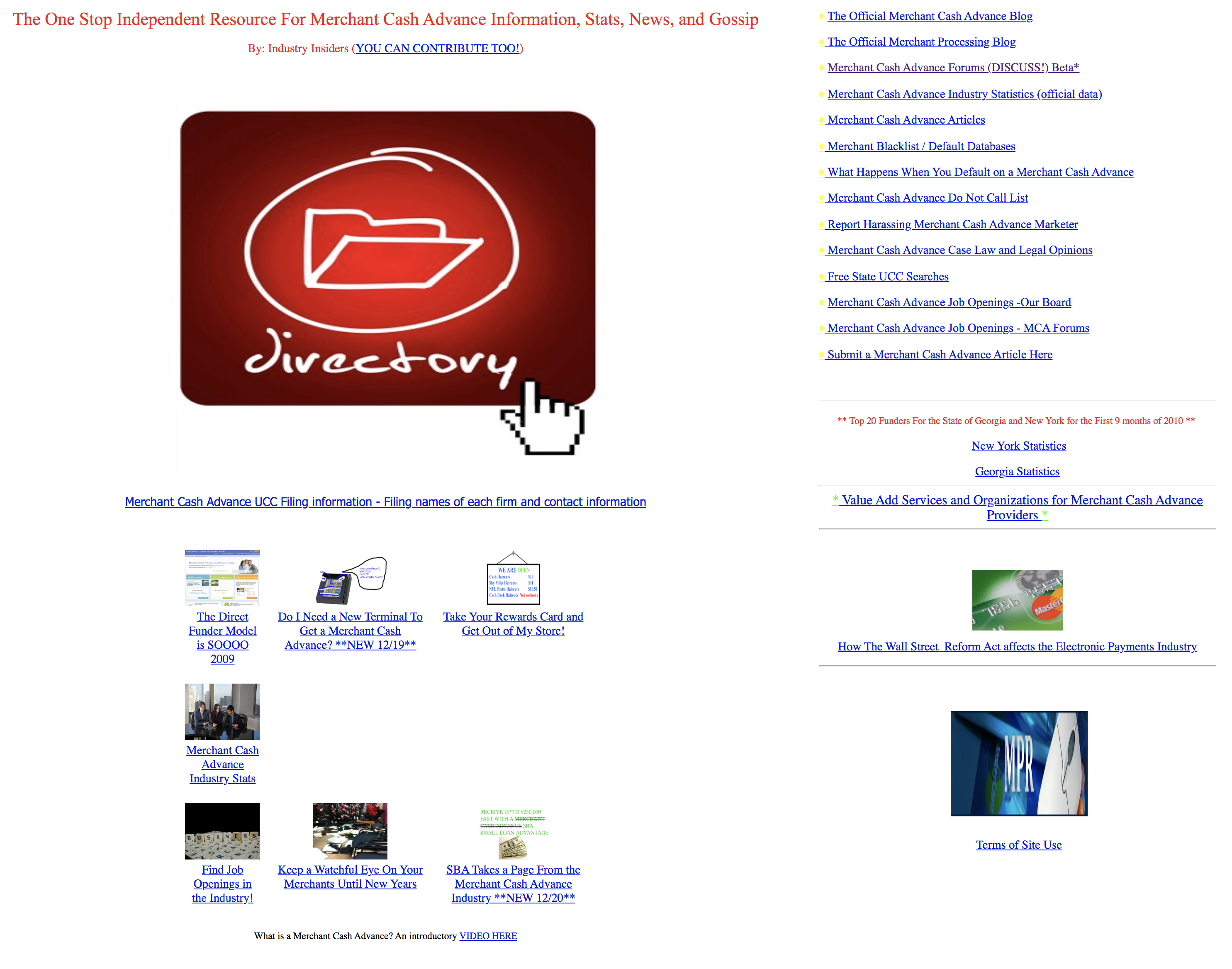
When 2010 ended, I published the following predictions for 2011:
- Businesses will increasingly face pressure on past due taxes and as a consequence would face smaller funding offers with higher costs.
- Credit card processors will venture into funding their own clients rather than rely on 3rd party MCA companies.
- Brokers will increasingly begin to fund their own deals.
- Increasing competition will create downward pressure on costs.
- It will become harder for desperate businesses to obtain funds from anywhere, including MCAs.
Might some of that be true of the recent years?????
deBanked’s Top Ten Things of 2019
December 20, 2019In this video, I break down deBanked’s Top Ten Things of 2019. Happy holidays and have a Happy New Year from all of us at deBanked!


LendingClub Retail Investors Still Frozen Out In Several States After Sudden Restriction
December 5, 2019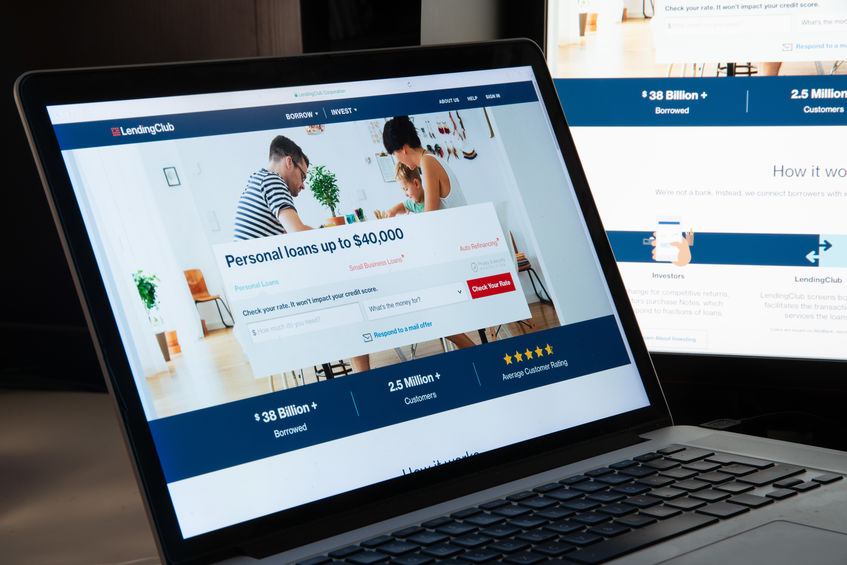 On September 23, retail investors on the Lending Club platform in 5 states received strange news, they had been temporarily restricted from buying notes because of the state they lived in. No further information was provided.
74 days later, investors in New York, Florida, Texas, Arizona, and North Dakota (the affected states) are still frozen out from buying notes. Restrictions in a handful of other states have existed for years.
Lending Club was asked about this by Wedbush Securities analyst Henry Coffey on the November 5th Q3 earnings call and CEO Scott Sanborn explained that it was due to a review of their state licensing requirements that was conducted in their pursuit of a bank charter. “As part of our overall preparation for the bank charter, we did an updated review of our licensing requirements,” Sanborn said. “We identified some that we have that we don’t need and some that we believe we need that we don’t have, and that’s what you’re seeing.”

Sanborn went on to describe the overall impact of temporarily losing those investors to their bottom line as immaterial and that they were working quickly to restore investing access.
A month later, the restriction persists. 58 comments on the subject have piled up on a LendAcademy blog post discussing the matter, many of them unhappy. Investors in those states can still trade notes on the secondary market, but that is not really a consolation.
It may not matter. Lending Club stopped relying on individual retail investors as a significant funding source long ago.
StreetShares Discontinues Major Segment of Its Financing Business
December 3, 2019 StreetShares quietly discontinued a major part of its financing business on November 15, a new disclosure filed with the SEC revealed. “For new customers, the Company is no longer offering to factor invoice receivables,” the letter signed by General Counsel and Chief Compliance Officer Lauren Friend McKelvey says.
The company had purchased more than $112 million in receivables since it began offering this product in December 2016, had serviced 40 customer accounts, and had advanced as much as $7 million on a single invoice as recently as Fiscal Year 2019.
The company has only facilitated $180 million in funding to small businesses since inception in 2014. That would indicate that the invoice factoring portion was roughly half of the company’s funding volume.
As of November 15, the company said it only had one customer remaining that was still using this product and no new ones would be accepted. Instead it would continue to offer only loans and lines of credit.
StreetShares relied heavily on individual retail investors to purchase receivables, their publicly filed financials show. 98.28% of all funds advanced on invoices in FY19 came from the retail investor segment whereas it was only 50.22% in FY18.
The company had also recently reported a heavy net loss and soaring costs.
Flender Makes BIG Mark in Ireland’s SME Lending Market
November 26, 2019 Ireland can seem like a small place, so much so that on my way to meeting with Colin Canny, Flender’s Head of Partnerships, I quite literally bumped into Flender’s co-founder & CEO Kristjan Koik who was walking through Dublin’s Silicon Docks. I recognized Koik from the who’s who catalogue of executives I had compiled before traveling abroad to explore the Irish fintech scene. He was cordial and polite. And yet through his demeanor I sensed there was more, that there was a story to be told even if it was not ready to be shared.
The following month Flender would reveal remarkable news, a new €75 million funding line, bringing their total to €109 million raised since the company’s founding in 2015. The company is backed by Eiffel Investment Group, Enterprise Ireland, entrepreneur Mark Roden and former Ireland rugby player Jamie Heaslip.
This large amount of funding, even by UK or US standards, makes Flender stand out, and so when I finally meet with Canny on that warm Fall day in September, I’m pretty thankful he afforded me the time.
Flender, Canny explains, is derived from Flexible Lender. The pamphlet he produces and hands to me says that their idea is simple, to provide businesses with the funding they need and ensure the application process is fast, easy, and transparent.
Application details for products like term loans and merchant cash advances require the usual stips like historical bank statements, a profit & loss statement, and a balance sheet. But there’s also a section quintessentially Irish, that is that it can be beneficial to submit your last 2 years herd numbers if you’re a farmer, complete with your last 12 months Milk Reports and property acreage figure.
 Canny explains that Flender is not a high-risk fall-back lender, but rather the opposite. “Our credit process is extremely tight,” he says, “in line with banks.” And with good rationale, seeing that the company is still somewhat reliant on a peer-to-peer funding model. More than half of individual peers on the platform are Irish but Canny says that it’s not unusual for non-residents including Americans to lend on the platform as well.
Canny says the Irish market is very “community based.” The transparency of the marketplace aligns with that characterization. Like other peer-to-peer small business lenders in Ireland, borrower identity is publicly accessible on the platform, as are the terms of the loan. Anyone can view the business name of a prospective borrower on the website, the address, a bio, and even their “story.”
Flender taps several marketing channels like Google Adwords, radio, direct sales, and even brokers. Canny says they generate an underwriting decision in as quick as 4-6 hours and fund a business in as little as 24 hours. Borrowers like the product so much that many renew. Seventy percent of the SMEs in the country are peer-to-peer bankable, Canny explains, creating a wide playing field to target.
Meawnwhile, CEO Kristjan Koik told the Irish Times that the top 3 banks in Ireland have 92 percent of the SME lending marketshare so there is still a ton of opportunity for non-banks like Flender to grab hold of.
As for how the massive credit line impacts them going forward? Koik told the Times that they would be cutting interest rates by up to 1 percent across their various loan products. Interest rates now start as low as 6.45% and terms range up to 36 months.
As Canny and I part ways I present one final question, will Flender be expanding abroad? I get no definitive answer. He was cordial and polite, and yet I sensed through his demeanor that there was more, perhaps even a story in the works that was not yet ready to be shared.
Bloomberg is Officially Running for President
November 25, 2019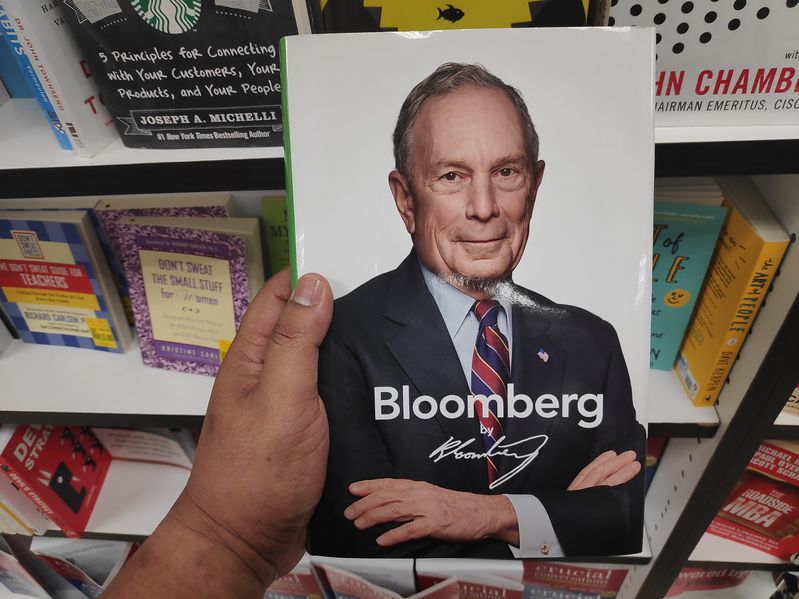 Former NYC Mayor Michael Bloomberg is officially running for President. He announced it over the weekend.
His campaign’s website paints him as a self-made entrepreneur who at 39-years old founded a company in a one-room office with the idea of turning a computer that connects users to a vast network of information and data. Today, Bloomberg LP employs more than 20,000 people and Bloomberg the individual is the 9th richest person on Earth (Forbes).
 His campaign’s website is light on the name Bloomberg and heavy on the name “Mike,” perhaps to cast him as the friendly hegemon next door. One page on his website refers to him as Mike 128 times while the word Bloomberg appears only 12 times and almost entirely in connection with things his businesses have done. Even his logo leads with a soft all-lowercase mike atop BLOOMBERG2020.
Baby apparel for sale on his website goes even further to understate his power by simply stating m 2020.
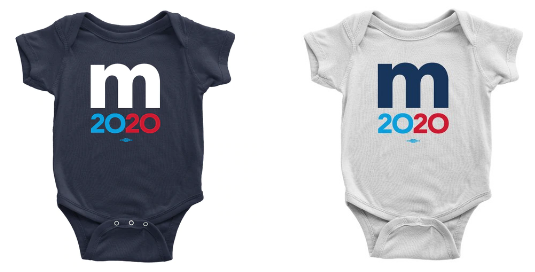
Democratic voters will now have to choose between frontrunners Joe Biden, Elizabeth Warren, Bernie Sanders, and this other dude named mike.
Sanders was quick to voice his displeasure with the new competition:
We do not believe that billionaires have the right to buy elections.
That is why multi-billionaires like Michael Bloomberg are not going to get very far in this election. pic.twitter.com/738Eg5ssLe
— Bernie Sanders (@BernieSanders) November 24, 2019
Canadian Lenders Summit Recap
November 23, 2019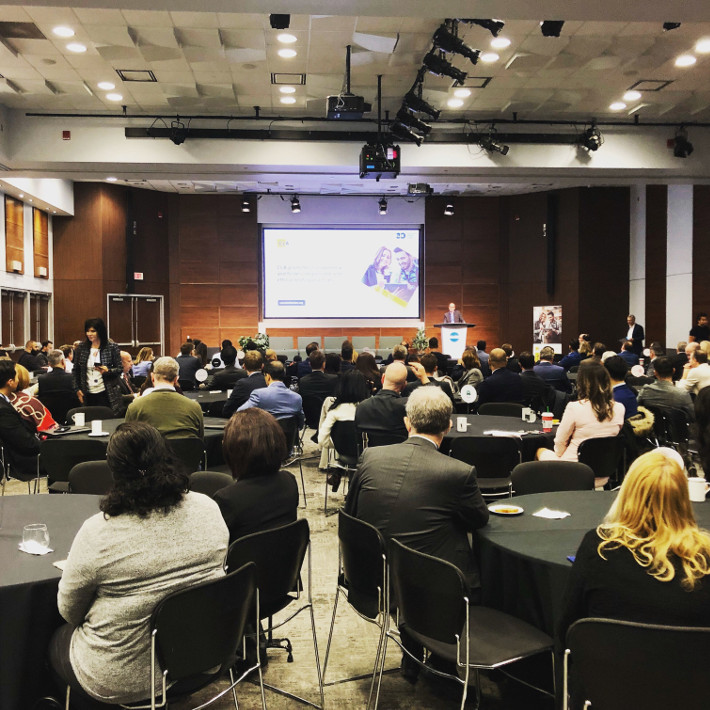 The Canadian Lenders Association’s largest annual event brought together hundreds of executives from the fintech and lending industries. It was hosted at MaRS, a dedicated launchpad for startups in Downtown Toronto that occupies more than 1.5 million square feet and is home to more than 120 tenants, many of which are global tech companies.
After OnDeck Canada CEO Neil Wechsler was introduced as the new chairman of the association, the day kicked off with a presentation by Craig Alexander, the Chief Economist of Deloitte Canada. Alexander explained that after some major warning signs sounded off late last year and early this year, Canadian growth and positive economic indicators have returned. He opined that politics in Canada and the United States will play a strong role in the economic outcomes of both countries going forward.
Panels on a variety of topics dominated the rest of the day with an interlude keynote from author Alex Tapscott who spoke about the financial services revolution.
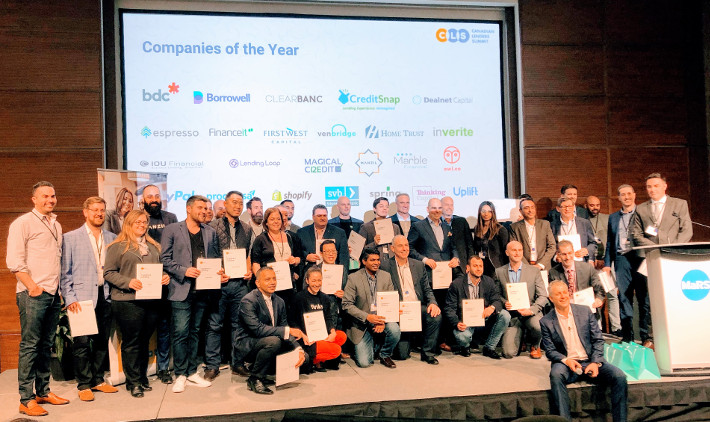
The sessions concluded with an award ceremony focused around the Top 25 Company Leaders in Lending and the Top 25 Executive Leaders in Lending. The Canadian Lenders Association will make videos of the sessions available online. deBanked was in attendance.
OCC Believes It’s Time To Fix Madden Issue Once And For All
November 18, 2019 If a bank makes a legal loan to a consumer and then later sells the debt to a third party, the terms of the loan are still legal right?
“Yes” should be the obvious answer, but in 2015 a federal appeals court said “no.” The case was Madden v. Midland Funding LLC, which started as a credit card debt owed by a consumer to Bank of America at 27% interest and ended as an allegedly illegal loan once the debt was sold to Midland Funding.
The ruling, which deBanked has covered extensively, shook the consumer and business loan markets in New York, Connecticut, and Vermont with its jurisdictional reach. Midland Funding appealed the ruling to the United States Supreme Court but the Court declined to hear the case.
Congress attempted to bring clarity to the lawfulness of the practice with a bill called the Protecting Consumers’ Access to Credit Act of 2017 but failed when the approved House bill never even came up for a vote in the Senate.
On Monday, the Office of the Comptroller of the Currency (OCC) proposed a rule to clarify the “Valid When Made” Doctrine that had been pierced in Madden. “This proposal will address confusion about the effect of a transfer on a loan’s valid interest rate, including confusion resulting from a recent decision from the U.S. Court of Appeals for the Second Circuit (Madden v. Midland Funding, LLC),” OCC wrote in a statement.
A 60-day public comment period will be open once the proposal is published in the Federal Register. To find out how to comment on the rule, click here.