

Sean Murray is the President and Chief Editor of deBanked and the founder of the Broker Fair Conference. Connect with me on LinkedIn or follow me on twitter. You can view all future deBanked events here.
Articles by Sean Murray

The Unofficial Origin of Merchant Cash Advance (In Honor of St. Patrick’s Day)
March 16, 2015 In the late 1790s, two brave pioneers trekked across the North American continent in search of a bank loan alternative. A particularly harsh winter almost managed to dash their dreams, but they pressed on. “For the free market! For funding!” they cheered. Their optimism stood in stark contrast to the cold rugged landscape through which they traveled.
They weren’t the only two who sought change, but they were the catalyst. One of them was Sam Smith, an owner of Ye Olde Bar and Restaurant. His partner was John Stacker. John was the more wild and unpredictable of the two. They had always brewed their own ale but their customers had grown tired of the taste and were turning to local moonshiners.
Eager to win back their customers, Sam reached out to the distributor of a major lager but was told he could only make purchases in bulk. It would cost them $10, nearly the amount his bar would earn in a month. He was confident that if he raised the cash, he could sell it to their customers for far more than they paid for it and come out ahead. Sam knew there was only one place in town to borrow a hefty sum of $10, First American Bank and Trust. It wasn’t a national chain, but rather quite literally the first national bank and the only one that anyone could trust.
“A business loan for $10?” the bankers laughed. “Absolutely not!”
And so Sam realized that if it was capital they sought, they’d have to get it from someone out in the great beyond. John agreed, kind of. He didn’t want to settle for someone. He hoped to enlist the help of everyone.
After packing their bags and saying their farewells, the two partners set off on a 900-mile journey.
 Their wagon fell apart about halfway there. When it could no longer be patched up, they continued on horseback. When the horses died, they walked. When their legs gave out, they crawled and when their knees gave out they did the worm.
With barely any energy left and ready to give up, they came upon a charming red brick building in the middle of a desert. A sign was posted outside that said “Ye Olde Barter Shop. Trade Inside.” If for no other reason than to rest, they made their way toward the door.
Behind the counter of the establishment was a dapper old man with silver hair. He spoke with a brogue and was quite possibly of Irish heritage. “Come to trade have ya lads?” He had a warm inviting smile and it caused the two friends to feign an interest, even though they had nothing to trade.
 After some pleasant small talk, the Irishman asked what they were looking for. “We need money for our small business,” Sam responded. “Aye lad, well I’m not a banker ya know, but I might be able to work out a trade.”
Uninterested in anything other than money, they felt their time was being wasted and they turned to say their goodbyes. But the Irishman’s infectious voice called to them with an interesting offer. “I’ll trade ya lads. I will give you this $10 you seek, but in return you will give me $12 of your future sales. Tis’ a barter I just came up with.”
Sam was immediately interested, but had questions. “When do you need the $12 back by?” he asked. Before the Irishman could respond, Sam began to pick up on something he hadn’t before. What was a beautiful building doing in the middle of the desert? Why would an Irishman be bartering out here and wouldn’t the fact that his FICO score was below 680 be a deal breaker?
The entire experience almost seemed…magic, which made him even more receptive to the response he was about to get.
“The $12 is not due by any time. For every ten pennies you earn from your customers, take one and put it in a jar. When the amount in the jar reaches $12, you can bring it to me. As long as your bar is as consistent as you say and there’s no reason for me to believe that your business will close, I would like to invest this $10 for you to buy this fine lager. However lad, no lager is as fine as the true lager itself. I do hope this lager is Guinness.”
The Irishman continued but Sam was already sold. The stars had aligned. It was unsecured, it was fast, it was magic. As long as Sam could prove that they had no real problems with the tax man, they would receive $10.
 “We should do this with every barter shop in the country at the same time!” John exclaimed. Sam just glared at him.
After the Irishman pulled their credit, ran a UCC search, and examined their bank statements, they got funded. It was just that simple.
And so the end of the story is different depending on who you ask, though every version of it has a few common elements. Sam and John’s bar thrived and the townspeople loved them for it. John Stacker opened a separate bar that was all his own and he bartered his future sales all the way up to 12th position.
Other merchants began to tap into this kind of financing by trading their future sales in exchange for cash upfront. First American Bank and Trust was unperturbed and instead focused on how to charge people for holding their money, withdrawing their money, breathing and existing. Their goal was to one day become too big to fail, blow up, and then never lend to small businesses ever again.
And as for the barter shop run by the Irishman? Legend has it that they’re currently paying 14 points to brokers and gearing up for an IPO. They’ve also rebranded themselves in the public eye as a tech company. Private Equity is now all over them.
Happy St. Patrick’s Day. It’s okay to have some fun every now and then. 🙂
Would You Bet Your Retirement on Consumer Loans?
March 12, 2015I like Lending Club. I have a rather sizable portfolio of their notes. I’m also long-term bullish on platform lending in general, at least long-term enough to feel confident to buy 3 and 5 year notes (and who knows how much things will change by 2020!).
There are limits of course to my optimism. The amount I’ve invested is essentially play money. It’s separate and smaller than some of my other more serious long term investments like mutual funds. I think that’s how everyone should invest on these platforms, even a rather vetted one like Lending Club. Only invest what you can afford to lose.
If you’re going to earn Wall Street yields such as 7-12% (after defaults) in a 0% interest rate environment, know that in the back of your head that you could encounter a Wall Street style loss. And don’t expect a bailout.
It’s important to remember that Lending Club is not peer-to-peer. Investors are not connecting with borrowers and lending them money. Lending Club is connecting with borrowers and investors are lending money to Lending Club. If Lending Club goes bankrupt, you could lose everything. I’ve accepted that risk for play-money.
But this scares me:

Putting your retirement funds in the fate of Lending Club and its young consumer lending model is being marketed as a quick way to lower your tax bill before April 15th.
I said I am bullish. I am not 30+ years bullish. A Lending Club IRA is the same as putting your life savings in a young tech stock, quite literally in fact since Lending Club only went public 3 months ago.
My hope is that Lending Club might actually read this post and re-evaluate the slippery slope of this marketing strategy.
A further explanation of a Lending Club IRA on their website:
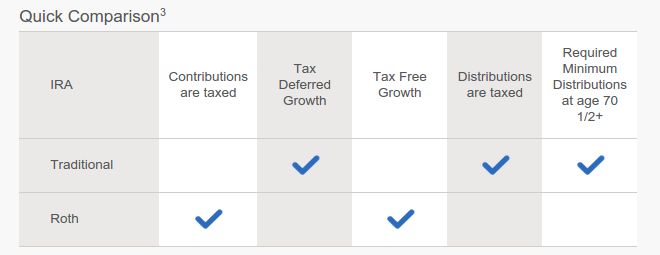
Lots of tax savings talk, but no mention of how illogical it is for someone to put the fate of their retirement into the hot lending company of the moment.
Is your money safe? Two months ago Lending Club said it had not begun to explore the cost and requirements of licensing its lending operations in all 50 states. Right now, their entire business model relies on the longevity of their relationship with WebBank.
Mark Cuban says we’re in the midst of a major tech bubble. Maybe he’s wrong, but I wouldn’t bet my retirement on it.
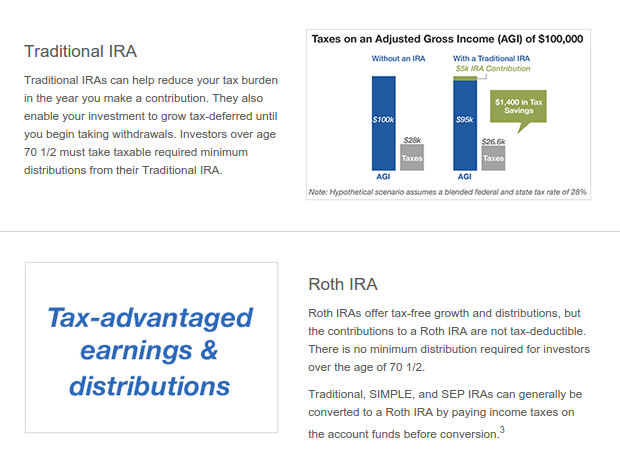
Hopefully someone doesn’t invest their entire retirement portfolio into something as new and exotic as Member Payment Dependent Notes under the guise of a tax deduction today.
I’m bullish on them. I like them as a company. They should probably fix the way their retirement accounts are marketed.
Just saying…
Brokers, Ferraris, Stacking and More
March 10, 2015 Not yet signed up to receive deBanked’s print magazine? You can subscribe to receive it FREE here. This upcoming issue covers a lot of ground!
Some sneak peeks and commentary:
* I interviewed the president of a Ferrari-driving MCA brokerage who started off as a telemarketer that lived in his car.
* A CPA firm and Law firm submitted interesting takes on different industry practices.
* As much as I wanted to cool off on the topic of stacking for a while, those interviewed by our journalists couldn’t stop talking about it. It is apparently unavoidable and inescapable. Whether you stack or you don’t it’s one of the first nuggets to pop up in any conversation about short term business financing. Coincidentally, I had the privilege of being in the room with some industry leaders a few weeks ago and a discussion about stacking inevitably dominated the debate.
* There’s lot of new brokers in the space and not just human middlemen, but platforms that are really just technology-based brokers. We investigated what’s driving the new brokers and how to handle them. Separately, we interviewed a technology company that automates loan picks so that retail lenders don’t have to.
There’s more of course. You’ll just have to subscribe and wait for it to arrive in the mail. They’ll be sent out at the end of this month.
And if you plan on going to the LendIt Conference in NYC, use coupon code: deBankedVIP to get 25% off the ticket price. All attendees will get a copy of the magazine in their swag bag. I hope to see you there.
Does Your Own Hunger Affect Lead Quality?
March 7, 2015 5 years ago in this very month, I funded 29 MCA deals for a total purchased amount of $608,000. 23 of those deals were renewals. It wasn’t my best month and it was also a different era. They were all split-processing accounts, not ACH. New deals could take six weeks to set up depending on the payment hardware. There was also no such thing as stacking then. The deals I was funding were from a good mix of warm leads, usually people who had filled out a form for financing somewhere online.
I didn’t always get warm leads. When I first started in sales in 2008, every rep got three or four actual leads a day. These were the golden geese, the Glengarry leads. The challenge was that they were sold to at least five ISOs at once so it was a race to get the merchant on the phone and establish a rapport with them first.
Caller number five was usually dead in the water. The least likable or least experienced of the remaining four would be cut by the merchant right away. That brought it down to 2 or 3 that the prospect would at least entertain.
None of these merchants had actually applied for a cash advance, but rather they had expressed an interest in business financing on a generic website and claimed that they accepted more than $5,000 in merchant account sales a month. Yet competing against four other companies to offer an expensive solution the merchant had never heard of was as good as the leads could possibly get. And if I started the day at 9 AM, then odds were I’d have made all 3 calls by 9:30.
I didn’t get paid a base salary so I couldn’t fake my way through the rest of the day. The remaining 9 hours were UCC lists and follow up calls with leads from previous days. I can’t imagine calling a UCC now in the age where stacking exists. The only option back then was to satisfy their outstanding advance in full with the proceeds of the new one.
Hi, my name is Sean Murray with ____________ and I’m calling about the advance you have with _____________. I know that company’s products can be awfully expensive and I was wondering if you were open to the opportunity of a lower holdback percentage, lower dollar for dollar cost of capital, and some additional money in your pocket.
I was notorious for cutting points off my upfront commission to get deals done. Sometimes I’d make nothing on the upfront commission but at least I’d get a new merchant account out of it and a backend cash residual. My residuals grew really fast.
Fast forward to 2011, I didn’t want to call UCCs anymore. I wanted the warmest leads possible. I was losing my edge on how to even approach UCCs because I had become so adjusted to higher quality material. I felt I had earned my way past them or that UCCs no longer offered the same value they once did.
So it was enlightening when I watched a junior account rep fresh out of college bring in more than 20 applications in his first week just from UCCs. Few funded, but I was impressed by his ability to engage prospects and bring in paperwork on leads I considered to now be crap.
He was hungry. He was new. He also realized that if he couldn’t bring in applications, that he’d be fired pretty quickly. He didn’t have the luxury of telling management that the leads sucked and to give him something else. This was all he would be given.
Watching him brought me back to my first few months as an underwriter in 2006 when there were very few MCA ISOs in existence. One day when deal flow was very slow, I was given a binder full of names and phone numbers of business owners who had applied for a mortgage in the past few years. The boss told me to “underwrite these files.” I learned immediately that all I was doing was cold calling random businesses. As a brand new hire, I was scared that if I didn’t “underwrite” them that I would be fired. So I started calling them with an offer to buy their future credit card receivables (the Merchant Cash Advance term was not widely adopted yet).
I got in applications and statements, I underwrote them, and then if approved, converted their merchant processing accounts and funded them. I didn’t get a commission because I was a salaried underwriter. All I hoped was that enough would fund (and not default) that I would be able to keep my job.
Eventually I was on a team where it was the responsibility of the underwriters to pitch the merchant on the product, gather the docs, close them on terms, underwrite the file, and fund it. The ISOs would just send us a lead and make 8-10 points if we somehow turned it into a funded deal. A few ISOs were sending us pure garbage, random names and phone numbers (literally a first name with no last name and a phone # of a non-lead) and passing them off as leads to see if our underwriting team could turn them into deals that they’d get paid on. Some were shocked when they heard we funded them. Others were mad that we weren’t funding enough.
As the company grew and the industry expanded, It eventually became normal to receive an application, 4 months merchant statements, 4 months bank statements, lease, voided check and a driver’s license and communicate with an ISO who did almost all of the legwork. All I had to do was underwrite the deal. When someone would submit much less, I got frustrated that I even had to look at it. My job was to underwrite files, not make half promises to ISOs based off of very little information. With so many completed files being submitted every day, I began to look at incomplete files differently. The fear that I would lose my job wasn’t there because I was already approving millions per month.
Fear was a huge motivator for me, especially in sales where I had no base pay. You either turned shit into gold or you lost.
It’s amusing to see how opinions vary today around the industry. Some ISOs still swear by UCCs, some stopped bothering with them years ago. Some say mailers are great. Others say they have tried them and they were terrible. Press 1s are the worst or Press 1s get deals funded. Web leads bring in too many annoying startups or web leads are the only type of leads that work.
What sucks and what doesn’t is undoubtedly affected by your attitude. If you’re used to the Glengarrys, then how patient will you be for what veterans consider to be junk?
In the upcoming March/April magazine issue that will be mailed out at the end of this month, I interviewed a 25-year old sales rep who had much more on the line than the fear of just losing his job. He became very successful after just a few years of cold calling.
For anyone out there who has bought leads only to bash them afterwards, was it really because they were bad? Or was it because you weren’t hungry enough?
It makes all the difference.
Revenue Recognition for the MCA Industry
March 1, 2015This is question #6 in a 6-part interview series about Merchant Cash Advance Accounting between deBanked’s Sean Murray and Yoel Wagschal, CPA and Christina Joy Tharp.
- 1. Merchant Cash Advance How to Guide Intro
- 2. Do I Need a Special MCA Accountant?
- 3. and 4. Recording Merchant Cash Advance Transactions on the Books
- 5. Merchant Cash Advance Accounting Pitfalls
- 7. Q&A – Real questions that MCA companies or syndicators have
Q: How should funders record revenue?
A:
 The accounting of MCA companies must not show their transactions in a way that cash advances can be seen as loans. As we all know, a lot of people in the law enforcement community wish to compare MCAs to lending companies. They would like to conclude that MCAs are lending money at a higher interest rate than is currently allowed by law.
When our firm speaks to clients in the MCA industry who continually use the loan method of accounting, it makes our firm very nervous for them. We see that MCA companies are unwittingly affirming what those law enforcement communities want to allege.
By keeping your accounting books on an established lending method of accounting, you are setting up your company for lawsuits while simultaneously setting up the industry for scrutiny. There is one thing we all must agree on: MCA companies must strive against accounting procedures that will ultimately classify them as loan sharks. If an MCA company is unsure as to how to set up their accounting so as to reflect MCA standards, please contact a knowledgeable CPA who can guide you appropriately.
In general, revenue is recognized when a specific critical event has occurred and when the amount of revenue is measurable. Every American business recognizes revenue and gains when goods and services, merchandise, or other assets are exchanged for cash (or claims to cash). However, there are a number of issues with the old US GAAP way of revenue recognition, especially for MCA companies.
A lot of companies are struggling in their attempt to establish the right path for their specific industry. What happens is that certain companies in the same industry conclude differently than other companies and this leads to inconsistencies in reporting. This is why the accounting standard setters now feel a need for new revenue recognition standards. As most accountants are aware, the new standards will be put into practice over the next two years.
Unfortunately, although the new standards reach a wide variety of industries they have not specifically addressed the MCA industry. The MCA industry has its own challenges in accounting for revenue, specifically the ‘right’ way to account for purchasing future sales. Whenever the topic comes up it soon turns into a hot debate regarding how and when to recognize revenue.
Going into all of the nuances would be too complex and truly each side of the argument may have merit. The real issue is when revenue should be recognized. One option is to recognize revenue at the time of funding. The other option is to recognize revenue on an ongoing basis (pro-rate when funds are being collected).
Here we will go back to our initial example and show the difference between the two options. All we need to change is journal entry C and journal entry D.
Here are the original entries, which show immediate revenue recognition:
| Accounts | Debit | Credit |
| Accounts Receivable | $100,000 | |
| MCA Cash | $70,000 | |
| Revenue | $30,000 |
| Accounts | Debit | Credit |
| MCA Cash | $1,000 | |
| Accounts Receivable | $1,000 |
Here we use the deferred method, which show ongoing revenue recognition:
| Accounts | Debit | Credit |
| Accounts Receivable | $100,000 | |
| MCA Cash | $70,000 | Deferred Revenue | $30,000 |
| Accounts | Debit | Credit |
| MCA Cash | $1,000 | |
| Accounts Receivable | $1,000 | |
| Deferred Revenue | $300 | |
| Revenue | $300 |
There are two other methods, both of which are completely incorrect and both of which our accounting firm has seen in use. The first incorrect method is when revenue is only recognized at the end – when the contract is completely paid off. This method could get your organization into real trouble. For instance, what if the contract is renewed? In those terms, a contract could renew over and over and the MCA company would never recognize the revenue. This could lead to the IRS charging you (even criminally) for tax evasion.
The second incorrect method is the loan method. This method calculates each payment’s interest and principal (similar to a conventional loan). As we outlined above, using the loan method of accounting only sets your MCA company up for scrutiny and legal action. Your own books could be used as evidence to show that your company is violating usury laws.
In conclusion, if it looks like a duck, quacks like a duck, and swims like a duck – it’s a duck! Be sure your accounting books do not paint the portrait of a loan company. Simply calling yourself a MCA company is not enough – you must be a MCA company through and through.
Phone (845) 875-6030
Fax (845) 678-3574
Email: cjt@ywcpa.com
http://ywcpa.com
Please consult with an accountant to assess your particular situation and needs.
Letter From the Editor – March/April 2015
March 1, 2015 A single innocuous quote by one of this issue’s sources is all it took to put everything in perspective. “2015 is the year of the broker,” said Sendto’s Amanda Kingsley. Could that even be possible if 2014 was defined by algorithms?
In the pages that follow, we investigate the impact that the OnDeck and Lending Club IPOs had on public awareness but from a unique angle. Loan volumes are up everywhere you look, but so are the number of middlemen that are trying to get in on the action. The broker business is booming.
Even the lending platforms leading the technology charge could best be described as brokers. They connect borrowers with investors for a fee. So too could the investment bankers who have been tirelessly making the rounds to assist with capital raising.
But it was when a 25-year old college dropout told me that deal-making afforded him the ability to go from taking the bus to work to driving a new Ferrari, that I became convinced that 2015 might indeed be the year of the broker.
This isn’t to say that mistakes aren’t being made along the way. The influx of inexperienced newcomers has created a complicated environment.
I was a broker once too. When I launched MerchantProcessingResource.com (now deBanked) back in 2010, I was still making deals myself. Through the blog and publication, I try to cover the wider industry from an insider’s perspective. That often means rolling up my sleeves and experiencing it firsthand.
Just this past February we not only accepted a payment in bitcoin, but the agreed upon advertising price was actually set in bitcoin, not dollars. These are revolutionary times.
Many of the financial companies and systems we delve into might need banks, but they are not banks themselves. That is the essence of the industry we hope to capture. As technology improves, the world is becoming a little less banked. And so with that, hello again. I’m back. I’m excited. I’m deBanked.
I hope you enjoy this issue.
–Sean Murray
Advice to New Loan Brokers, ISOs, and Funders
February 24, 2015 Some words of wisdom to avoid having a bad experience in this industry:
1. If you can’t afford a lawyer, don’t be a funder. This is a litigious business and despite the myth that commercial financing is unregulated, there are plenty of ancillary laws to adhere to. States, FTC, OCC, IRS, etc.
2. Have a lawyer review your contracts (merchant agreements, ISO agreements, syndication agreements, etc.) If you can’t afford one or don’t want to take the time to do it, this business might not be for you.
3. Don’t send your deal to someone with a free email address (yahoo, gmail, hotmail, etc.).
4. Don’t send your deal to some random company just because they posted something on a forum, LinkedIn, or somewhere else. Check them out on Google, ask other forum members to vouch for them. Be extremely smart and overly diligent about it.
5. This is not a get rich quick business or industry. You can lose money funding and syndicating. You can technically also lose money brokering on commission clawbacks for deals that go bad right away.
6. Leads are expensive. Do not launch an ISO with only 2 grand in the bank.
7. Learn to generate your own leads and you will save yourself a lot of stress down the road.
8. A wise man once told me it is better to build a book of business and a long lasting passive income than to grind it out for a quick buck month after month. What’s your strategy?
9. You will lose deals, commissions, arguments, and occasionally your mind. Accept your losses when they happen and focus on the next deal.
10. Use appropriate language. A company that buys future revenues is not a lender and their financial transactions are not loans. Loans have noticeable things like interest rates and fixed terms. Make sure you know which one you’re talking about at any given time.
More Red for OnDeck (ONDK)
February 24, 2015 Back in the red?
It looked like the tide had finally turned. After 8 years and just in time for their IPO, OnDeck had pulled off their first quarterly profit, a meager amount of $354,000. But it was a start right? After their debut on the NYSE, the price swung heavily from a high of $28.98 to a low of $14.52. It closed at $19.37 right before the report was released.
OnDeck reported a $4.3 million loss for the 4th quarter and an $18.7 million loss for the year. Despite this, their margins are definitely improving.
The company issued $369 million in loans last quarter, bringing the 2014 total to $1.2 billion. Sales and marketing expenses doubled in 2014 over the prior year with CEO Noah Breslow and CFO Howard Katzenberg acknowledging on the call they’ve made a big go at TV and radio advertising.
Competition? What competition?
Noticeably, the average APR of loans originated in the fourth quarter was 51.2%, down from over 60% in Q4 of 2013.
One analyst asked if competitive pressures were leading to the reduction in interest rates but Breslow said that wasn’t the case. If anything their closing rate or “booking rate” has been improving and rates coming down is an initiative they’ve taken up on their own. Merchants are actually shopping less according to them.
“Overall this market is still characterized by extreme fragmentation,” Breslow said. “The behavior that we see with our customers is that they might research other competitive options online but then when they actually apply to OnDeck and receive that offer, they kind of have this bird in hand dynamic, and there’s so much search cost associated with going out and looking at other places and so much uncertainty around that, they typically just take that offer that OnDeck has provided to them.”
 With their cost of capital down, closing rate up, and defaults steady, a net loss should arguably be a tough pill to swallow. In response to a question about potential regulatory threats, Breslow said there wasn’t really anything on the horizon.
So was it just a weird quarter? Under Guidance for First Quarter 2015 and Full Year 2015 in their quarterly report, they suggest another long year of losses ahead.
To infinity and beyond!
The economic and regulatory environments couldn’t be any more favorable to a company that now has almost a decade worth of data under its belt. But unfettered growth still seems to be the number one priority on the agenda. Breslow and Katzenberg spoke optimistically about their recent entry in the Canadian market and the potential to set up shop in other countries. As for the OnDeck Marketplace… surprisingly they claimed its only real purpose is to diversify their funding sources. They are not aiming to become a marketplace but rather they view the OnDeck Marketplace as just one of many vehicles to sell off loans.
So when does the profit part come in? None of the analysts on the line asked about profit. They mostly all offered their congratulations on a “great quarter”. Coincidentally they were almost all from companies that originally underwrote their stock offering.
Six months ago I wrote that OnDeck’s lack of profits has been intentional. In An Insider’s Perspective, I wrote, “What scares their competitors though, is that this strategy has been intentional. Very few if any players in the industry have had the luxury, guts, or the purse to lose money for seven years as part of a coup to conquer the market.” Nothing has changed.
As long as they have cash in the bank, they’re going to keep pursuing growth. They had $220 million in cash and cash equivalents as of December 31st. So for now that means continuing to turn up the marketing heat to increase volume domestically while planting seeds in other markets like Canada.
 But the question remains, at what point does profitability become important? Sure it’s tempting to be lending $2 billion or $3 billion a year instead of the $1.2 billion size they’re at now because it would mean they’ll be that much bigger right? Heck, maybe they can be a $10 billion a year lender. But if they are running in the red at a moment where their cost of capital is low, the credit markets are liquid, the economy is favorable, regulatory threats are nil, defaults are static, there is supposedly no competition, and their margins are at their peak, then what happens when one or two of those things change? What if all those things change at once?
Those rates are too high low
OnDeck’s price jumped in afterhours trading. The market is chalking up the results as a positive. It’s just another losing quarter in a long line of losing quarters for OnDeck and they’ve promised more of the same in the year ahead. Nothing to see here folks, business as usual.
OnDeck may have made it easier for small businesses to get a loan, but they have yet to prove since 2006 if their methodology can actually make money. That should be a wake up call to critics that complain their interest rates are too high.
It is quite possible that their interest rates are actually too low. At an average of 51.2% APR, that’s a heck of a theory to consider.
But it looks like it’s true.