Articles by deBanked Staff

For Sale: 60,000+ Leads From 1st Global Capital
December 21, 2018 Since 1st Global Capital went out of business, the company’s treasure trove of leads has been up for sale. Beginning in October, 41 companies were propositioned by 1st Global Capital’s bankruptcy advisors to make a bid on the company’s data. Ten companies actually entered into non-disclosure agreements to access a data room. That led to four official proposals which was narrowed down to two formal negotiations and ultimately the selection of one final stalking horse bidder.
In Advance Capital’s high bid came in at $105,000 for data that includes 57,000 non-funded applications and 4,760 funded applications. That dollar figure is actually an upfront fee against future commissions because the arrangement requires the buyer to pay 1st Global Capital a commission for every merchant on the list that they end up funding in-house or elsewhere. The total purchase price therefore is likely to exceed $105,000 over time. The buyer is not permitted to stack any merchant on the list.
As the stalking horse, In Advance’s bid will be honored unless new companies outbid them between now and January 7. If two or more qualified bids are received, a formal auction will take place on January 8. A hearing on the outcome will take place on January 9.
Entegra Bank Chooses Velocity Solutions to Power Its Small Business Digital Lending
December 18, 2018 Velocity Solutions announced today that its Akouba digital lending platform was selected by Entegra Bank to power the bank’s digital lending for its small and medium-sized business customers. Akouba provides community and regional banks with origination and underwriting services.
“We selected Akouba not only for their cutting-edge technology and willingness to work with us, but for the very positive impact we believe this will have on the bank’s bottom line and on the customer experience,” said Charles Umberger, Executive VP and Chief Lending Officer for the Franklin, NC-based Entegra Bank.
According to the Velocity Solutions statement, Akouba is the only small business digital lending solution endorsed by the American Bankers Association (ABA). Akouba was endorsed by the ABA back in February 2017.
“The ABA’s endorsement will give lending institutions the assurance that Akouba’s solutions meet the highest standards,” said CEO of Akouba Chris Rentner, when they received the endorsement from the ABA. “In a rapidly changing lending environment, and with marketplace lenders disrupting the business lending space, our platform will help banks bring their customers the technology they have been lacking.”
In the same way that OnDeck’s ODX is trying to improve online lending for large banks, like Chase and PNC, Velocity’s Akouba does the same thing for regional banks.
“The small business loan application process is very time-sensitive and costly for banks, and there is a need to simplify and accelerate the process,” said Bryan Luke, chairman of ABA’s Endorsed Solutions Banker Advisory Council.
Velocity Solutions, which operates Akouba, is based in Fort Lauderdale, FL and employs over 100 people, according to Crunchbase. Entegra provides personal and business banking serves at 20 retail branches throughout Georgia, North Carolina and South Carolina.
1st Global Capital Sues Capital Stack and Others Over Momentum Auto Group
December 18, 2018 The notorious $40 million merchant cash advance deal has a new twist, even more cash advances. On Friday, the now-bankrupt 1st Global Capital filed a lawsuit against Momentum Auto Group, related entities, and 4 merchant cash advance companies including Capital Stack.
According to documents filed in the case, Momentum Auto was behind on taxes and loans to floor plan lenders to the tune of $15.5 million in February this year. That’s in addition to their inability at the time to pay 1st Global Capital and other MCA funders millions of dollars in advanced funds.
To fix the problem, 1st Global Capital established themselves as the senior creditor in which they required rival funders to enter into Subordination And Standstill agreements. In return for 1st Global Capital keeping Momentum Auto solvent with additional funds, the subordinate funders were only permitted to collect a fraction of their originally-stipulated daily payments (and only if Momentum Auto had adequate liquidity and cash flow, otherwise they were not allowed to collect anything at all until 1st Global had been paid in full). In the case of Capital Stack, it was agreed they could only debit 20% of what they were normally entitled to. For others it was 10%.
1st Global Capital says both restrictions were violated, that the funders collected above their agreed percentage and that they also collected from Momentum Auto despite the business not having adequate liquidity and cash flow. As relief, 1st Global Capital is seeking that each MCA funder return all funds they collected from Momentum Auto Group to 1st Global Capital.
Momentum Auto Group is a conglomerate of car dealerships in California that shut their doors in November. Soon after, lawsuits flew, and in one case the judge has ordered the dealerships be placed into receivership.
1st Global Capital is itself in receivership, having filed bankruptcy in July this year. The company and its founder were also charged with fraud by the SEC after they allegedly relied on the sale of unregistered securities to more than 3,400 investors nationwide.
Wintrust Expands Accounts Receivables Financing
December 17, 2018Today, Wintrust announced the creation of Wintrust Receivables Finance, an expansion of the company’s asset-based lending group, according to a story in Monitor Daily. This translates to the addition of a specialized team focused on accounts receivables financing to middle market companies, with revenues between $10 million and $300 million.
“We think this team is a great expansion to our current services,” said Edward J. Wehmer, Founder and CEO of the Chicago-based regional bank. “Wintrust Receivables Finance makes our asset-based lending even more robust and competitive.”
Business That Left Merchant Cash Advance Companies Hanging is Under FBI Investigation
December 16, 2018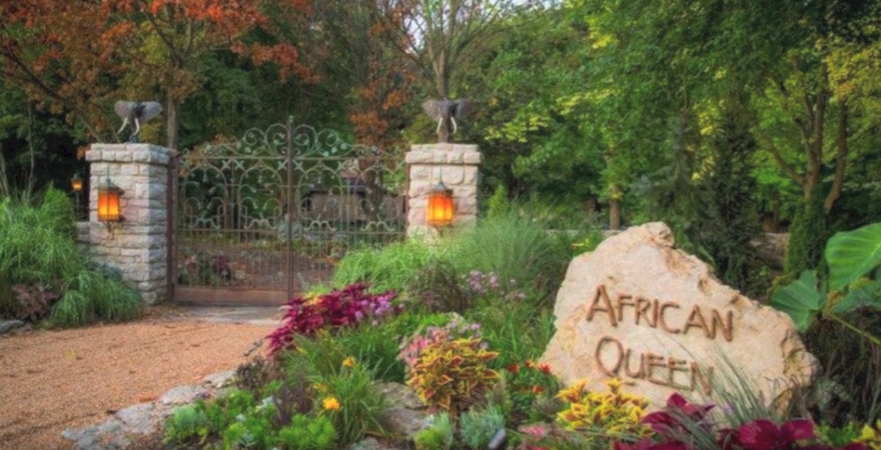 In 2017, several judgments were issued in the New York Supreme Court against one Michael Willhoit, a resident and business owner in Springfield, Missouri. No lawsuits were filed, Willhoit had merely confessed judgment to nearly a half million dollars collectively.
By the following summer, a visitor would come knocking on the door of Willhoit’s fully-customized multimillion dollar safari-themed home, dubbed “The African Queen.” It was the FBI. He was under investigation for bank fraud.
According to the Springfield News-Leader, Willhoit’s wife told an investigator that her husband’s exotic car business was gone. But if so, several banks want to know where $4.25 million in unpaid loans went and what happened to the 33 vehicles that Willhoit had given them paperwork for. The banks, who sparked the FBI investigation, sued, and by November Willhoit’s wife filed for bankruptcy. Among her listed possessions were
- Two roaring lion masks
- Two 7-foot tall hand-carved wooden tusks
- An eight-legged genuine impala horn zebra-hide chair
- A 15-foot African warrior statue
- A 3,000-pound (approximately) bronze rhino
- Four gazelle taxidermy mounts
- A baboon, full-body mount
A youtube video tour of the home shows even more exotic paraphernalia. Realtor.com described the residence, which went on the market in July for $8.9 million, as a trophy showcase of African art. Willhoit told a News-Leader reporter in 2016 that he spent $3 million renovating the property including $400,000 for a 900-square-foot wood floor and $300,000 for landscaping.
More recently, News-Leader reported that Willhoit is the target of a federal grand jury investigation. In one of the bank lawsuits filed against him, Willhoit’s defense is reportedly that it’s the bank’s fault.
Defunct MCA Company Tried to Escape Signed Confession of Judgment
December 13, 2018 When a Florida-based merchant cash advance company, World Global Financing (WGF), declared bankruptcy this past May, it entered into a binding settlement agreement with its largest creditor, a hedge fund known as Eaglewood.
There was a caveat.
Eaglewood required that WGF sign a Confession of Judgment (COJ) as part of the agreement that would afford Eaglewood the right to file and obtain a judgment without further litigation if WGF breached the settlement. On August 3, that’s exactly what happened. After WGF failed to make the stipulated payments to Eaglewood, the COJ was filed in the New York Supreme Court so as to obtain a nearly $6 million judgment against WGF and company founder Cyril Eskenazi.
While it can be virtually impossible to invalidate a COJ, the courthouse Clerk nonetheless refused to enter it because of alleged technical defects, one of which involved WGF’s use of an out-of-state notary to witness a New York State affidavit.
“The alleged Affidavit of Confession of Judgment upon which Eaglewood’s request for a Judgment by Confession stands like a house of cards is no affidavit at all under New York law, and cannot be used in a New York litigation,” WGF’s attorney argued.
The absurdity of the argument was not lost on Eaglewood because the notary WGF challenged on technical grounds was the notary that WGF and its counsel had themselves chosen and approved. Eaglewood called the charade of contesting the validity of one’s own affidavit signed in the presence of counsel, utterly frivolous and a fraud upon the Court.
Defects or not, the judge concurred with Eaglewood because WGF had irrevocably and unconditionally agreed to the entry of judgment if they breached the settlement agreement in the first place, which they did, rendering the alleged technical errors with the COJ itself a moot point.
The COJ was therefore deemed valid and the judge ordered the Clerk to enter the judgment.
On Nov 29, a judgment for $5,866,477 was entered against WGF and Eskenazi. The index # is 651489/2018 in the New York Supreme Court.
Subprime Lending to Increase in 2019
December 12, 2018 Subprime loans are expected to increase in 2019, according to data from TransUnion. The data from a November 2018 report shows that Outstanding Unsecured US Personal Loan Balances have been increasing since 2013, and the increase was most dramatic from 2017 to 2018, jumping 18% from Q3 2017 to $132.4 billion in Q3 2018. The TransUnion data was also presented in a graph in a Quartz story today. According to a TransUnion projection, the total of unsecured personal US loan debt will grow by 20% next year, to roughly $156 billion in Q3 2019.
The last three months of 2018 will be one of the biggest quarters ever for consumer loan origination, according to Jason Laky, TransUnion’s consumer-lending business lead.
“A lot of it is being driven by non-prime and subprime originations,” Laky said.
At the Money 20/20 Conference in October, David Kimball and Ken Rees, the respective CEOs of Prosper and Elevate, were asked if they were concerned about a potential recession. Kimball said that Prosper, which provides loans to prime customers, has begun underwriting more conservatively. Meanwhile, Rees said that Elevate, which serves subprime customers, isn’t very concerned.
“Our customers are always living in a recession, so they know how to work with it,” Rees said.
The Quartz story predicts that payday lending, which competes with online subprime lenders, will also increase given that the CFPB has stopped aggressively trying to curtail these storefront businesses.
“The CFPB leadership changed and made very clear statements to the market that they’re going to have a lighter touch on regulations, especially subprime regulation,” Laky said.
Cross River Bank Raises $100 Million
December 11, 2018Cross River Bank, which provides banking services to fintech companies, announced last week the completion of a funding round of roughly $100 million. This was comprised of a $75 million equity investment from KKR, along with capital from Andreessen Horowitz, Battery Ventures, Rabbit Capital, and funding from new investors CredEase and Lion Tree. This adds to a $28 million raise a little over two years ago.
Cross River, which originated more than $5 billion in loans as of the end of August 2018, has developed partnerships with fintech leaders to build fully compliant and integrated products within the lending marketplace and payment processing spaces. They have about 15 lending platform partners, including fintech clients Affirm, Best Egg, RocketLoans, Coinbase and TransferWise.
According to the announcement, this new capital will be used to allow Cross River to continue building a complete banking platform where fintech companies can leverage best-in-class banking technology coupled with compliance.
“Cross River offers solutions to fintech companies by giving them access to a full suite of banking solutions and services in a single, fully compliant and innovative platform, making it an increasingly attractive and valuable franchise in a dynamic marketplace,” said Dan Pietrzak, Member and Co-Head of Private Credit at KKR, Cross River’s leading investor.
According to its website, Cross River was named “most innovative bank” by LendIt in 2017 and 2018. Founded in 2008, the Fort Lee, NJ, business-oriented bank has more than 180 employees.