Archive for 2018
National Funding Announces New President
November 5, 2018 Today National Funding announced that Joseph Gaudio has been promoted to President of the company, reporting directly to founder and CEO Dave Gilbert. Previously, Gaudio was Chief Operating Officer.
“I can’t think of a more exciting time to be a part of the business and the SMB lending industry,” Gaudio said. “I look forward to working closely with our talented senior leadership team to further our mission of helping small businesses across the U.S. secure the critical capital they need to grow their businesses.”
This announcement comes just weeks after National Funding acquired QuickBridge, another alternative lender based in California.
Prior to joining National Funding, Gaudio was the CEO of Superior Mobile Medics for five years. He led the sale of the company to Quest Diagnostics and then served as part of the integration of the acquisition for Quest.
“Since joining National Funding in 2017, Joseph has helped propel the company to one of the top 10 alternative SMB lenders in the nation, and has been a driving force during our rapid growth,” Gilbert said. “Joseph’s strategic thinking capabilities, strong business acumen and his more than a decade of industry experience geared towards the small to medium business market provides critical firepower as we build National Funding into the leading brand serving the financial needs of Main Street America.”
Founded in 1999, National Funding is based in San Diego and employs roughly 230 people. It now also owns QuickBridge, with headquarters in Irvine, CA and a small satellite office in New York. The QuickBridge name and most all of its 100 employees remained in the recent acquisition. National Funding has provided more than $3 billion in capital to over 40,000 businesses nationwide with loan volume expected to exceed $500 million this year.
As Implementation of FICO’s UltraFICO Approaches, Upstart Says The Value is There
November 5, 2018The rise of fintech has already rocked the banking and traditional lending industry and now it’s disrupting FICO, the traditional credit scoring method that’s been in place since the mid-1900s.
FICO, which is the credit scoring system created by Fair Isaac Corp, is getting a makeover. The UltraFICO Score, which is scheduled to launch in early 2019, will pull from a consumer’s checking, savings and money-market accounts and add the data to their credit profile. It creates a broader credit picture, one that is designed to lead to more lending approvals than the static formula provides, as long as a consumer manages their cash well. Reports suggest the FICO score could jump by 20 points or more for millions of borrowers.
Meanwhile, fintech startup Upstart has been in the consumer lending business for the past five years. Upstart takes a two-pronged approaching, using more variables and more machine-learning algorithms than the traditional credit-scoring method.
“Using a variety of machine learning algorithms lets you pick up new insights from data,” said Upstart Co-Founder Paul Gu.
The company’s approach has influenced banks that frequently approach Upstart, a couple of which have become partners that are using a fully branded version of Upstart.com.

It’s not surprising considering Upstart is experiencing a lower loss rate versus its banking competitors. Upstart’s Gu explained the average lender issuing a personal loan to someone with a FICO score in the 660 range will typically experience a loss rate of 14%. Upstart’s loss rate is half that.
“That same 660-type borrower in our portfolio has an annual loss rate of 7%. That’s a pretty staggering difference and translates into benefits for our borrowers,” Gu told deBanked, adding that if the company can cut the loss rate, they can, in turn, lower the interest rate. Certainly, non-fintech lenders are paying attention.
“I don’t want to claim credit for anything FICO is thinking about. But I do think we are showing the industry at large that there is a huge amount of opportunity out there, and that you can go after it with technology that is available today. The potential benefits for consumers and your business are enormous,” Gu said.
Upstart’s early focus was on younger consumers with no real credit history but with an education history, which Gu said has yielded great success for the company. Since then they’ve expanded to pursue other groups of people who have similarly been “lost in the cracks” of the traditional credit scoring system, including certain occupations.
Gu explained that while lenders typically examine a potential borrower’s income level and their debt-to-income ratio, there’s more to it than that. Upstart most recently has created a way to include data based a potential borrower’s occupation, which he points out is tricky to quantify.
“Occupations are combinations of words that are hard to group in a useful way for the purposes of data analysis,” said Gu. Nonetheless, Upstart and its team of nearly a dozen data scientists have poured research into employers and occupations to create a classification system and determine how to turn words into numbers to use in their machine learning model.
“It’s not shocking that some professions are more highly correlated with repayment than others. Nurses, for example, are very reliable in paying back their loans,” Gu explained.
Upstart, which has issued consumer loans to fewer than 300,000 borrowers, has made it their mission to constantly improve upon their models to find cracks. “Our best estimate suggests we’ve solved only 8% of the total opportunity so far,” he said.
Low-Hanging Fruit
It’s early days for FICO’s new credit scoring system, but according to reports lenders have already begun to show an interest. Experian has reportedly partnered with fintech startup Finicity to publish the broader credit profile to banks. But the increased competition doesn’t seem to bother Upstart.
“I think there are starting to be efforts made by other players in the space to do some of the things we’re doing. Some of the lower hanging fruit we were uncompeted for earlier might have a little bit of competition. That said, the thing people don’t realize is how much room for improvement is still left,” Gu said.
As for FICO, their new feature is a side-product to the traditional credit-scoring system, not a replacement, which could impact the pace of adoption and innovation. “This kind of technology investment should take 95% of their attention, not 5%,” said Gu.
SoFi CEO Ponders Opening Physical Locations
November 5, 2018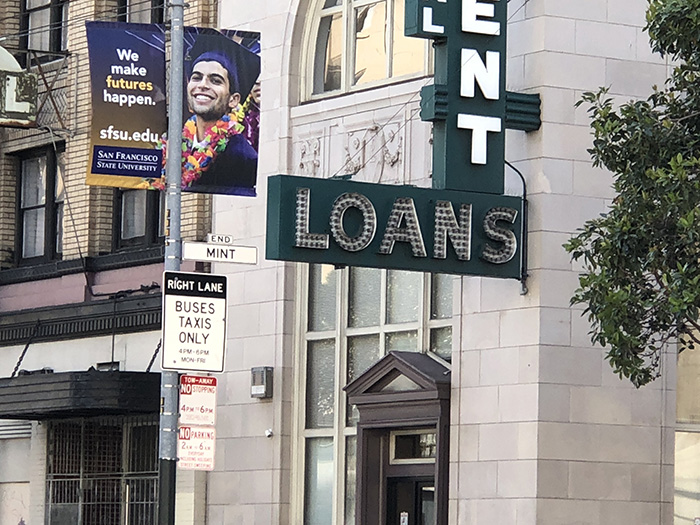 At Money 20/20 a few weeks ago, SoFi CEO Anthony Noto said that eventually the online lender will need to open some physical locations, not unlike ATM machines, for people who get paid in cash.
The notion of an online lender opening up physical locations sounds ironic. But it would not be the first time a company that started by providing an online solution then opened up physical locations. Amazon’s book stores, which first opened in New York in 2017, is a prime example. The e-commerce giant, which started as a uniquely online-only company, now has more than a dozen book stores. Similarly, Bonobos, which started as an online-only men’s clothing solution – that simplified shopping by avoiding physical stores – now has over 50 brick and mortar locations.
“A few years ago, being online and having a fast-growing Instagram was enough to drive market share away from main street and into our e-commerce stores,” according to a Forbes post this year, “but the amount of brands selling online is reaching such a high number that getting noticed is becoming harder and harder.”
While retail and lending are different businesses, the idea of getting noticed could apply to both.
With the increasing popularity of e-commerce and digital solutions to everything, including banking and lending, some have said that brick and mortar banking is on its way out. But data contradicts this. According to an American Banker story from March of this year, JPMorgan Chase said it intends to open as many as 400 new branches in Boston, Philadelphia and Washington, D.C. And Bank of America announced plans to add about 500 branches. On the other hand, according to the story, Wells Fargo closed 214 bank branches in 2017 and said it plans to close more than 1,000 by 2020.
But a survey released this year by J.D. Power, a research company, found that most customers prefer to open accounts and get financial advice in person.
The ultimate brick and mortar location in the world of lending is the payday lending store, which serves – or targets – the low end of the consumer market living paycheck to paycheck. Still, that is industry is alive and well, with about 12 million American taking out loans at physical stores like these, according to Finder.com. And online lenders like Elevate are actively trying to poach customers of these stores.
Lending professionals are using of brick and mortar spaces creatively these days. Brother James and John Celifarco recently moved their ISO shop to a storefront in Brooklyn, and many of their clients are neighboring small businesses.
“Obviously you can’t build an entire business on just these two streets,” John said, “but it’s extra business that we wouldn’t have had if we weren’t here.”
Elevate Tests ‘Geofencing’ to Lure Customers Away from Competition
November 1, 2018 During a session at Money 20/20 last week, Elevate CEO Ken Rees mentioned a fairly new marketing technique they have been testing called geofencing. According to a story in CIO, a trade publication for Chief Information / Chief Technology Officers, geofencing is “a service [using GPS technology] that triggers an action when a device enters a set location.” For Elevate, these set locations are payday loan stores and the idea is for the company to detect and then market to prospective customers who may have recently visited a payday loan store. People visiting such stores would likely be good candidates for Elevate’s Rise product.
“It can’t be a completely [random person,]” Elevate’s COO Jason Harvison told deBanked. He explained that the prospective customer had to have somehow engaged previously with Elevate, which could mean that they visited Elevate’s website.
Daniel Rhea, Elevate’s Senior Communications Manager, said that they don’t have the ability follow people. Instead, what they can do is tell when someone gets near one of their targets (payday loan stores) and then present them with ads. The mobile ads are not served immediately. Rhea said that ads could be served to someone who entered the target zone up to 90 days later.
“We’re not trying to get you at that exact moment,” Harvison told deBanked. “It’s not something that’s going to interfere with your transaction at a payday loan store, but it’s going to inform you that there is a better option out there.”
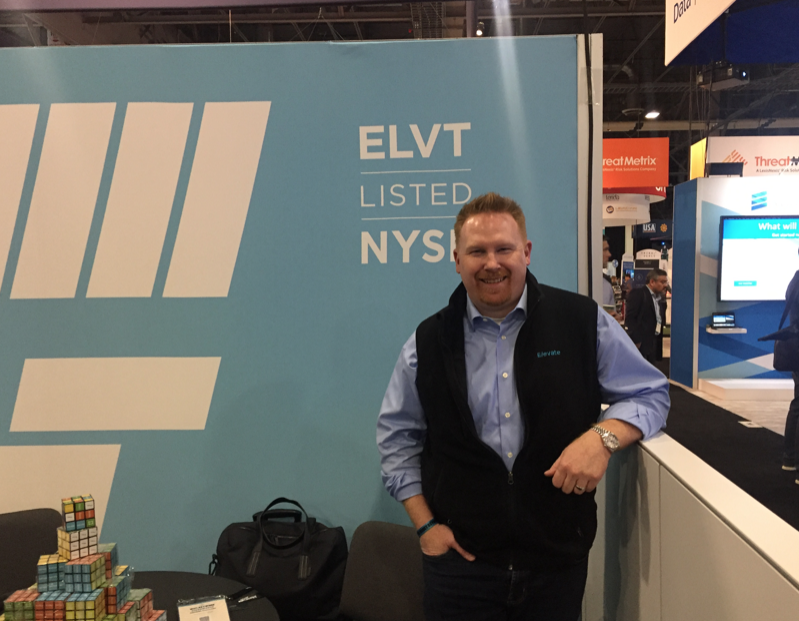
According the CIO article, retailers use geofencing to market to people who are in the vicinity of their stores. The technology is also being used for home convenience (to turn on a thermostat when someone arrives at their house) and for security (to alert a someone when others enter or leave their home or business).
Many of these uses of geofencing require that an app is downloaded to the user’s phone. Elevate system does not involve an app, but the individual’s location services on their phone must be turned on. So how can Elevate identify people within its target zones? As an example, Rhea said that if you use the public wifi at a Starbucks, Elevate can identify you. And he said that the same applies for when someone uses bluetooth.
“There’s a lot of people [using] this,” Rhea said. “Politicians are microtargeting around polling stations. It’s not that it’s uncommon. It might be uncommon in our space.”
Rhea said that this program, which started at the beginning of 2018, is still in a pilot phase, but that Elevate hopes to place geo-targets around every payday loan store in the country.
“[If you’re going to a payday loan store,] we want to try to entice you to not take out a product in a storefront and use a more consumer-friendly product that we take to market,” Harvison said.
ELFA Reacts to New Jersey Small Business Loan Bill
October 31, 2018 The Equipment Leasing Financing Association (ELFA) had its 57th Annual Convention in Phoenix in the middle of October. During the convention, ELFA’s Vice President of State Government Relations Scott Riehl left abruptly to get to Trenton, New Jersey. Why the rush? He had been alerted that there was a hearing on a small business lending bill that could have significant ramifications for his members.
“My whole goal was to find the sponsor, introduce ourselves to the sponsor and educate the sponsor as to equipment leasing in New Jersey, how long it’s been going on, and how important it is to the economy of New Jersey,” Riehl said.
The bill’s sponsor is Senator Troy Singleton who represents New Jersey’s 7th legislative district.
Speaking to the urgency of such matters, Riehl said, “You’ve got to get on the ground immediately. And that’s what we did.”
Riehl’s last minute trip across the country proved to be a fruitful one. He was able to meet Singleton that day in the hallway of the building where the hearing was being held.
While several industries have descended on Trenton to educate policymakers on the advantages and pitfalls of the proposed language, equipment leasing companies managed to carve themselves out of the bill entirely.
Reihl said that being able to point to the equipment leasing exemption in a similar California bill (SB 1235) was helpful. He and ELFA were also involved early on in making their argument against elements in the original California bill.
Having a history communicating with policymakers is also critical, Riehl said.
“The ELFA, for the better part of 25 years, has had a very vibrant state government relations division,” Riehl said. “And that makes a difference.”
Big MCA Deal Was Really Just a Massive Ponzi Scheme
October 30, 2018 Bank deposits were apparently the entire business model for Daniel Rudden, a 72-year old from Denver who fashioned himself the owner of a life insurance company called Financial Visions. In reality, there hadn’t been any such business in almost a decade. In July, Rudden sent out a mass email admitting that his whole operation was actually a Ponzi scheme that he’d been running since around 2010 and that it had finally come undone. In his wake, he left more than 150 investors duped out of $55 million. Some of those investors were retirees who had entrusted him with their life savings.
And that’s not all. Court records show that in addition to SEC and DOJ charges against him, a series of judgments from merchant cash advance companies have piled up in recent months with defaults exceeding a combined $1.3 million. One of those judgments was for more than $500,000 from a single funder. deBanked counted at least 8 MCA funders that had been fooled.
Rudden told CBS News that he spent all of the money and has only $4,000 left.
“By the end, I would have taken money from almost anyone who breathes. No one was off limits,” Rudden wrote in an email to duped investors. “I purported a sale of the company to stall for more time, in fact there is no company to sell.”
In addition to civil securities penalties, Rudden is facing 20 years in prison for fraud.
deBanked Email Campaign Tips
October 30, 2018Sending out an email campaign? Here are some helpful guidelines we’ve put together from experience:
1. Choose a well-crafted subject line. If your subject line doesn’t speak directly to your audience and entice them, they won’t open your email and nothing else will matter. Assume your recipient gets hundreds or thousands of emails per day so even if they recognize the sender and subscribed to them, they might not feel compelled to open the email unless they’re convinced they should. Assume that they also receive a lot of spam so something like the subject line “Best deal of the year” could be glossed over by the ever-distracted eye that can’t tell if the email is about Black Friday shopping discounts or their funder’s newest commission structure.
Try to be as specific as possible in as few enticing words as possible. “ISOs, best deal of the year” tells the recipient this is a deal for ISOs, not a deal for footwear at Macy’s.
Consider also: You have to do it in a way that won’t trip spam filters. Even if the recipient’s mail server regularly gets email from the sender, a subject line in all capital letters or lots of dollar signs could send that email to the spam folder anyway. Lines like “Make lots of money” or “Get rich” have a lower chance of making it to the destination. Mail servers remember email they don’t like so one poorly worded subject line today could convince mail servers that your future emails, no matter how mundane, should go there too. So be careful.
2. Draft your campaign in HTML. A standalone image might look really cool but that presents two problems.
- If the recipient has images in emails blocked by default they will just receive a blank email. NOT GOOD.
- Spam filters may suspect you are trying to hide your message in a photo rather than in text where the content can be analyzed. As a result, your email and future ones may go right to the spam folder.
Consider also: That HTML comes in many versions that is interpreted in various ways by different mail clients. Stick to HTML 4 (do not use HTML5) and use TABLE tags instead of DIV tags (DIVs are ignored by some email clients).
3. Cap the maximum width to 700 pixels. Remember that your recipient may be reading your email on a mobile device or not have their email client window fully extended on their screen. To prevent loss of readability, think narrow, not wide.
4. Use still images, not animations. Use of images in emails are great, but bear in mind that unfriendly email clients like Microsoft Outlook will not animate an animated .gif file. Instead, it will only display the first frame of the animation as a still image. So if you use animations, make sure the first frame is something you can live with if your recipient is viewing it using Microsoft Outlook.
5. Don’t use huge image files. The perfectly crisp high resolution image might look fantastic but if it’s multiple megabytes, mobile phone users not connected to WIFI may close your email before it even loads. So keep your images to 72 dpi and as little memory as possible.
6. Cross-compatibility. Email looks great on Gmail? That’s a start, but you’re not done. Email clients interpret design cues and HTML differently. Every email campaign needs to be checked in Gmail, Apple Mail, Microsoft Outlook, and mobile devices.
7. Email design programs. Some design programs do a decent job of producing HTML-based email-ready campaigns. Others might seemingly look okay but place thousands of unnecessary lines of junk code in your campaign’s HTML that either cause cross-compatibility problems, or worse, exhaust the email client. Gmail, for example, will just stop reading the code if it’s too long and hide the lower part of your campaign design from your recipient’s view. You definitely don’t want that to happen.
8. Be careful what you say. Spam filters are analyzing more than just subject lines. They want to know what you’re emailing about. Terms like Loan, Cash Advance, Money, Get Paid, might make complete sense in your everyday business marketing but spam filters hate these words even if they trust the sender. So limit your usage of them or come up with other terms.
9. Be work-appropriate. They say sex sells, but not here, do not incorporate sexually suggestive phrases or imagery into your campaign.
10. Be legal. Consider that a government regulator could one day get ahold of your email campaigns. Is your campaign truthful? Is what you’re saying and offering legal? If your email isn’t regulator-ready, it’s time to revisit.
11. Allow time for testing, suggestions, and corrections. Always have your campaign fully completed at least two business days in advance of its scheduled delivery. That will allow enough time for testing and to apply changes as needed.
12. Place BIG and obvious calls to action. Your email was perfect and the recipient is ready to communicate with you, but their ever-distracted eye did not see the tiny little text hidden at the bottom that said “email us.” As a result, they closed the email and forgot all about you. Oops!
Every campaign must have a clear actionable.
- EMAIL US HERE
- CALL NOW
- CLICK TO LEARN MORE
Some people are too shy to pick up the phone and others don’t have the hand energy to type out an email saying they’re interested without any promise of when they’ll hear back, so include as many actionables as possible and make them as VISIBLE as possible.
Consider that: Some users automatically assume the top image of an email will be actionable. Meaning if they click it, they expect something to happen like the loading of a landing page. Scrolling down requires work and effort so place as many actionables as high up as you can.
13. Landing page. If your actionable is going to direct the recipient to a website, try not to make it your home page. The best way to lose the user is to send them to a generic home page with a navigation they are not familiar with. If possible, create a simple page that uses language similar to your email campaign with a SHORT web form or highly visible listing of your phone # or email address.
14. Smarter. Not more. If you’re not satisfied with the results of your campaign, having more subscribers the next time around may not be the answer to your woes. Review the above the steps and make changes where appropriate and try again. 🙂
Cerebro Capital’s Trick? Automating Compliance in a Loan Marketplace
October 29, 2018 Cerebro Capital CEO Matthew Bjonerud spoke to deBanked last week at Money 2020 in Las Vegas. He was standing at his booth in the “Startup” section of the conference’s Expo Hall.
Bjonerud and his team have created a marketplace for middle market loans, from $1 million to $100 million. And Bjonerud said that borrowers can anonymously search for lenders to determine which ones are the right fit for them.
“We can show borrowers the lenders that can do the deals they want without telling the lenders that the borrowers are even looking, Bjonerud said. “It’s a great benefit [for borrowers] to using our platform.”
In addition to being a marketplace for middle market loans, the Baltimore, Maryland-based startup also simplifies the compliance process for lenders.
“Once loans are closed…we will automate the compliance,” Bjonerud said. “We’re the only ones who allow that to happen in the marketplace – where we will actually create the compliance certificates for the lenders based on automatically [using] financial statements and other elements.”
This compliance service is billed to the lender as a subscription fee. Otherwise, when a loan deal is closed via Cerebro Capital’s marketplace, it is the borrower, not the lender, that pays Cerebro Capital.
“We’re providing the borrower with better terms than they would otherwise get in the market,” Bjonerud said.