Archive for 2018
Stripe Becomes a Digital Credit Card Issuer
August 8, 2018 Stripe has recently started offering a new API, or programming feature, that allows its merchants to offer physical or virtual credit cards to their employees. The product, called “Issuing,” is still being tested and is currently by invitation only, although it does appear as an offering on the company’s website. Merchants can request an invitation.
According to the website, creating a card is an easy three step process that involves providing identifying information about the cardholder, then literally creating the card (physical or virtual) and finally, activating it. Physical cards can be shipped either to the merchant or the cardholder, while virtual cards are available to use immediately.
The merchant can manage cards by creating restrictions, like maximum purchase amounts, charges can be disputed, and physical cards can have customizable designs, just like cards issued from a bank. However, Stripe is not a bank. Stripe did not respond in time for this story, but it is likely that the company has partnerships with companies that can underwrite and offer lines of credit to their customers. On the Stripe website, it indicates three of its financing partners: Funding Circle, Iwoca and Clearbanc.
Stripe is a payment platform that facilitates online payments. The company takes 2.9% plus 30 cents of every successful charge a merchant makes. Stripe customers are small business owners, but also include giant companies like Facebook and Target. Founded in 2011 by brothers John and Patrick Collison, Stripe is headquartered in San Francisco. It also has offices in Dublin, London, Paris, Singapore and Tokyo, and it employs more than 1,100 people.
Lending Club Hits Record for Originations
August 7, 2018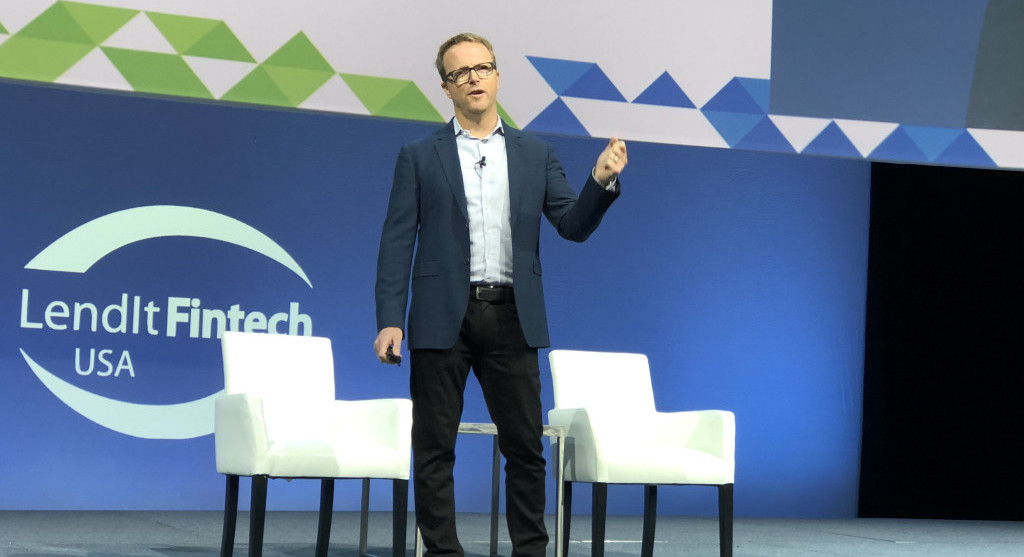 In the second quarter of 2018, Lending Club originated a record high of $2.8 billion, up 31% from the same time last year. Net revenue also hit a record high of $177 million, up 27% year-over-year.
During today’s earning call, Lending Club CEO Scott Sanborn said that the company completed a successful securitization this quarter and Lending Club CFO Tom Casey said that that they expect several more by the end of the year. Both acknowledged that the company is still spending millions of dollars to resolve regulatory issues, but Sanborn said he expects that to come to a close by the end of the year. With regard to the record high in originations, Casey said that the company also had a higher percentage of A and B grade loans in the second quarter.
Lending Club offers fixed rate business loans from $5,000 to $300,000 and personal loans of up to $40,000. The company also offers auto refinancing.
Founded in 2007, Lending Club was one of the first major peer-to-peer lenders. The company facilitates loans between individual borrowers and individual or institutional investors. Traditionally, individual investors in companies must be accredited investors. This means that the U.S. Securities and Exchange Commission requires the accredited investor to have a net worth of at least $1 million, excluding the value of one’s primary residence, or they must have income of at least $200,000 each year for the last two years, or $300,000 combined income if married.
Lending Club investors must also satisfy certain lesser financial requirements. In most states, excluding California, Lending Club investors must have an annual gross income of at least $70,000 and a net worth of at least $70,000 (excluding value of home, home furnishings, and automobile) or they must have a net worth of at least $250,000. (California requires the an investor’s annual gross income be $85,000).
Since investors are not accredited, every Lending Club loan, many of them to individuals, must be filed with the SEC so that investing in a Lending Club loan is like buying stock in a publicly traded company. Investors can buy fractions of loans in the form of notes as small as $25.
Lending Club is headquartered in San Francisco and went public on the New York Stock Exchange in 2014.
SoFi Has Massive Loss in Second Quarter
August 7, 2018 SoFi had a second quarter adjusted loss of about $200 million, according to a Bloomberg story from yesterday, citing people familiar with the company’s situation.
“Our Q2 financial results were negatively impacted by significantly lowered valuation of legacy loans and assets as well as the slow start to increasing prices in the face of a rising interest rate environment,” the company said in a second-quarter shareholder letter from August 3, that was obtained by Bloomberg.
At the beginning of July, the Wall Street Journal reported that SoFi had been meeting with banks to discuss raising a roughly $500 million unsecured line of credit that could go toward potential buyouts of other fintech firms.
As of the start of the year, the student loan company, which also offers other financing products, postponed an IPO to 2019. And in October 2017 it withdrew an FDIC application to obtain a special purpose (ILC) bank charter. This came amid a sexual harassment allegations against the company’s co-founder and then CEO Mike Cagney.
In March of this year, Anthony Noto, formerly at Twitter and Goldman Sachs, replaced Cagney as CEO. In Noto’s first shareholder letter as CEO in May, he said that SoFi originated $3.6 billion in loans in the first quarter of 2018, a 27 percent increase from 2017. He also said that the company added about 59,000 members in the quarter, most of them borrowers, bringing the total number close to 500,000.
Additionally, Noto wrote in the May letter, obtained by CNBC, that the company’s “SoFi at Work” program, which partners with companies to help their employees pay off student loans and other debt, expanded its funded loan volume by 118 percent from last year.
SoFi also offers mortgage products, but had to let go of 65 employees from its mortgage operation at the beginning of 2018. Founded in 2011, the company is based in San Francisco and employees more than 1,000 people.
OnDeck Profitable, Again
August 7, 2018OnDeck posted a profit this morning, the 2nd time in the last 3 quarters. The company reported $5.8 million in net income for Q2. The average loan size decreased and the average effective interest rate increased (36.1%).
Although the Fed has been gradually raising interest rates, OnDeck’s costs of funds actually went down to 6.6% from 6.8% the prior quarter. This was due to favorable refinancing rates on the $225 million securitization and new $100 million revolving credit facility that closed in April, they said.
OnDeck originated $587 million in loans for the quarter, down slightly from $591 million in Q1.
Investment in Fintech Soars in 2018
August 6, 2018 Fintech investment in the Americas reached a new high of $14.8 billion for the first half of 2018, according a KPMG report. This was spread across 504 deals. The bulk of the investment, $14.2 billion, went to U.S. companies.
Big fintech deals in the U.S. this year spanned a range of sub-industries, from blockchain (R3, Circle Internet) and Cryptocurrencies (Basis) to Insurtech (Lemonade, Oscar) and wealth management (Robinhood). The largest deal of the year was the acquisition of Boston-based Cayan, a payment technology company, by global payments solutions provider TSYS, for $1.05 billion.
While the U.S. accounted for the majority of fintech investment in the Americas, there was notable fintech investment in other countries. Brazil-based Nubank held the fourth largest VC round in the Americas during the first half of the year with a $150 million Series E raise.
“While an outlier in terms of deal size, the Nubank deal highlights the growing importance VC investors are placing on Brazil as an epicenter for fintech innovation in Latin America,” the report read.
Fintech investment in Canada continued to evolve in the first half of 2018 with $263 million in total. However, this was actually a decrease compared to the second half of 2017 which brought in $510 million for Canadian fintech companies.
The Canadian government is in the process of updating its Bank Act, which is expected to occur in 2019. And Payments Canada, a government organization, is also undertaking a multi-year payments modernization initiative aimed at upgrading critical infrastructure. According to the KPMG report, while both of these initiatives are in the process of happening, VC investors and fintechs recognize that change is coming and are trying to position themselves to take advantage of the changes once they are implemented. San-Francisco based fintech, Plaid Technologies, announced in May of this year that it would be expanding into the Canadian market. The report indicates that other U.S. companies will likely follow suit.
Signature Bank Expands West
August 6, 2018 Signature bank announced last week that it received approval from both the New York State Department of Financial Services and the Federal Deposit Insurance Corp. (FDIC) to begin operating in California. The Bank already opened an accommodation office at the beginning of the year as it began preparations to introduce its single-point-of-contact banking model on the west coast. The single-point-of-contact model means that a client deals with only a small teams for all of its needs.
“There is significant talent on the west coast, and our established single-point-of-contact approach has already been very well received since the bank launched its presence in San Francisco,” said Signature Bank President and CEO Joseph J. DePaolo. “We look forward to expanding our footprint in California and bringing privately owned businesses the same level of client commitment, care and service for which this bank has become known.”
Signature Bank focuses on privately owned business clients, providing them with business loans, equipment finance and leasing, as well as SBA loans. Although a Signature Bank spokesperson said that SBA loans make up a very small percentage of the bank’s loans. Since opening May 2001, the bank has made $33.25 billion in loans. According to the bank’s second quarter earnings report, the bank’s provision for loan losses for the second quarter of 2018 was $8.0 million, compared with $187.6 million for the second quarter of last year. The previously elevated provisions were due to the bank’s New York City taxi medallion loan portfolio. (The value of New York City taxi medallions has dropped dramatically with competition from driving services like Uber.)
According to the bank’s website, it serves the “financial needs of privately owned businesses, their owners and senior managers – a group of clients who often find themselves underserved by the [New York] area’s larger financial institutions.”
Signature Bank is a full-service commercial bank with offices in the five boroughs of New York City, as well as Nassau, Suffolk and Westchester counties in New York and Fairfield County in Connecticut.
Trade Group Urges FDIC to Reject NelNet Bank Application
August 3, 2018 On Wednesday, the Independent Community Bankers of America (ICBA) asked the Federal Deposit Insurance Corp. (FDIC) to deny Nelnet’s application to become an Industrial Loan Corporation (ILC) bank. ILC banks are special purpose banks that are not required to adhere to the same regulations as other banks, yet they can bear the same risk of failing.
“The ILC loophole allows commercial interests to own full-service banks while avoiding the legal restrictions and regulatory supervision that apply to other bank holding companies—threatening the financial system and creating an uneven regulatory playing field,” said ICBA President and CEO Rebeca Romero Rainey in a statement.
Furthermore, in a letter to the FDIC, the community bank trade group proposed a two year moratorium on future ILC bank applications. ILC bank charters are attractive to fintech companies because they offer reduced regulations (compared to traditional bank charters) and access to all 50 states.
“To support a safe and sound financial system and to maintain the separation of banking and commerce, the FDIC should impose a two-year application moratorium and Congress should close the ILC loophole for good,” Rainey said. “Our deposit-insurance system was created to protect depositors—not commercial firms.”
ICBA’s letter references the fairly recent ILC bank applications of two other fintech companies, SoFi and Square. Square withdrew its application last month, but said it had plans to refile. SoFi withdrew its application last October following sexual harassment allegations against its then CEO Mike Cagney. The company has not stated that it has plans to refile the application.
The ICBA’s request for a moratorium on applications for ILC bank charters comes right after the U.S. Office of the Comptroller of the Currency (OCC) opened its doors this week to fintechs interested in obtaining special purpose bank charters. So now fintechs have a few options if they aspire to become a bank.
The ICBA’s mission is to advocate for the community banking industry. It represents nearly 5,700 community banks in the U.S.
CommonBond Issues Securitization
August 3, 2018 CommonBond, which helps people finance student loans, announced today its second AAA-rated securitization from Moody’s and DBRS. At $292 million of total collateral, the transaction is the company’s largest to date. It is CommonBond’s second securitization of 2018 and its seventh altogether. The company, which competes with SoFi, now has a total securitized loan amount to over $1.5 billion.
A mix of new and current investors participated in the transaction. Goldman Sachs served as structuring agent, co-lead manager, book-runner, and co-sponsor for this securitization. Barclays, Citi, and Guggenheim Securities also were co-lead managers and book-runners on the transaction.
“Our recent securitization continues the company’s track record of strong credit performance and consistent growth,” said Sam Luk, head of capital markets at CommonBond.
CommonBond was founded in 2011 and is based in New York.