

Penguin 2.0 Epic Fails
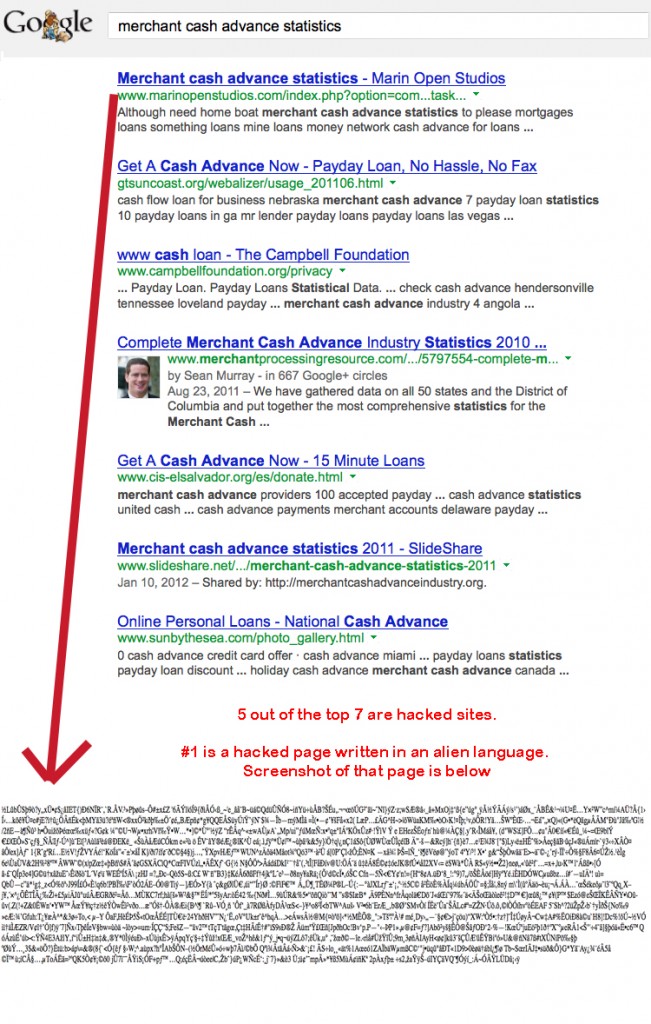
May 23, 2013Just as the Merchant Cash Advance industry is beginning to enjoy positive publicity, Google has the potential to set the momentum backwards by pushing terrible results. I’m going to post some Penguin 2.0 epic fails over the next couple days. So check in every now and then to see what’s new. You can also send screenshots of any epic fails you find to webmaster@merchantprocessingresource.com
Epic Fail #3: Page 1 for the search of Business Cash Advance Companies

Epic Fail #2: Page 3 for the search of Business Cash Advance
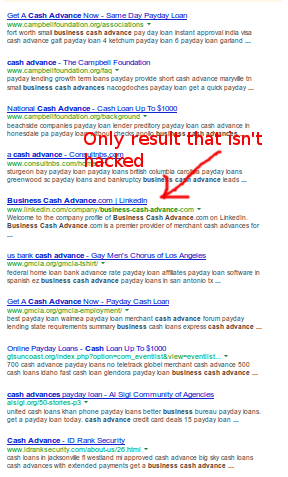
Epic Fail #1:
The Economics of Lending: Money vs. Goods and Services
May 21, 2013 If I were to offer you the choice between a free DVD with a retail value of $20 or a free $20 bill, which one would you take?
Unless the DVD was something you were going to buy anyway or unless it was a rare item that is hard to find, you’d probably accept the cash. I would too, and that’s because I can turn around and exchange the $20 for anything I want. This isn’t to say that someone wouldn’t accept a DVD and give you something of value in return. You could probably do this but it would be a hassle compared to buying something with cash. Cash is the ultimate liquid asset. It has the same numerical value to all that evaluate it and it is acceptable everywhere.
If this is the case, then why do governments set limits on transactions that only involve cash vs. transactions that involve cash in exchange for a good or service? The reference I’m making here is to usury. Many states govern the interest that can be charged on a loan. This is done to protect borrowers but in doing so, they end up hurting them.
For example:
A manufacturer spends $100 to create a commercial refrigerator, but they sell it to a business for $1,000. That’s equates to a fee of 900%. Once the business books it as inventory, they will attempt to sell that refrigerator to a consumer for an even higher price to make a profit. While it’s a nice windfall for the manufacturer, it’s capitalism at its finest.
But what if the manufacturer lent the business $100 cash in exchange for $1,000 back? Does that change the transaction significantly? In our example above, the manufacturer gave the business an item worth $100 and got $1,000 cash in exchange. The business hopes to sell that item for more and turn a profit but a couple things could happen:
- Consumers might not be willing to pay more than $1,000 or anything at all for that model/make/color
- The refrigerator could get damaged and lose its value
If these scenarios were to occur, the business may try to liquidate the inventory for a lesser amount and take a loss, but doing that might not be easy. The refrigerator might have to be inspected and appraised before a buyer is confident to make the purchase. This problem doesn’t happen with cash. People don’t go out and appraise the value of a $100 bill to determine if it’s worth more or less than $100. The other possibility is that the business can’t liquidate it at all and they end up losing the entire $1,000 they spent.
What’s interesting is that if the business had accepted a $100 bill in exchange for paying $1,000 at a later date, that $100 bill wouldn’t have the real risk (discounting hyper-inflation) of becoming worthless tomorrow or becoming the object of a difficult liquidation.
 So when faced with choices again… would you rather take a refrigerator someone spent $100 to make and try to sell it for more than $1,000 or would you rather someone give you $100 cash and you do whatever you want to try to turn that into more than a thousand bucks? On the one hand you have a refrigerator which might have a decent retail market and on the other hand you have cold hard cash that you can do anything with to try and make the necessary profit. You might choose refrigerator but you might choose the cash especially if you had a rock solid idea for that hundred bucks.
If you’re an expert in your trade, you might be able to build your own higher-quality refrigerator for the same cost of $100 and be able to sell it for $2,000. Sure beats buying a crappy lower quality one and struggling to sell it for more than a thousand doesn’t it? Then you could pay the $1,000 owed and walk away with $1,000 in profit.
Sounds awesome except some states might deem the transaction illegal because to give a business $100 cash in exchange for $1,000 over a certain time period is usurious and predatory to the borrower. But selling a refrigerator valued at $100 to a business for $1,000 is okay, even if the business is never able to sell it.
In the eyes of a state, it is okay for a business to pay a 900% markup for an illiquid asset but it is dangerous to pay a 900% markup for the most liquid asset of all. I don’t understand it. If the idea is to prevent lenders from poaching borrowers or borrowers from making bad business decisions, then why is it okay for someone to sell a product for a lot more than they paid for it? Is a manufacturer selling a $100 refrigerator to a business for $1,000 usurious?
Perhaps your answer would be that a business owner wouldn’t engage in such a transaction if he/she didn’t believe it could be sold for more, either because there is an established retail market or because of sufficient market research. That is a weak defense because businesses get stuck with inventory they can’t sell all the time. Whether the market changed or it was just a bad business decision, Americans attitude towards speculation on a good or service is one of total acceptance. But give a man a dollar and he can’t be trusted to earn back more than a few cents on it. A legislator might evaluate these potential returns on a $1 investment like this:
Turn it into $1.05? sure!
Turn it into $1.15 maybe…
Turn it into $2.00? Let’s make laws to prevent people from thinking that way!
In many states, if you borrow a dollar so you can make three but it cost you a dollar in interest to make this happen, it’s illegal. But if you pay a dollar for an old banana peel with the hope of selling it for $3, that’s a business transaction.
I could rehash examples over and over, but where I’m going with this is that there are things like credit history and risk criteria that prevent people from borrowing a dollar at a relatively low rate. Naturally, the more risky the borrower, the higher the cost. After a certain level though, the law intervenes. If the amount of risk warrants a very high rate of interest, more than what is allowed by law, the government would rather the borrower get nothing than allow the transactions to go through. It’s a very sad position the government takes on its citizens, that the borrower is not capable of generating the return they believe or that that they lack the intelligence to know what they’re engaging in and therefore the transaction should be stopped altogether. In a utopian society, saving people from themselves might seem fair and just, but in reality there are millions of people and businesses with less than stellar credit, disqualifying them from borrowing at all because to compensate for risk would require a rate of interest disallowed by law.
At this time last year, 53% of Americans had credit scores of 700 or better. 700 is that magic threshold and it means that 47% of Americans are going to have a hard time obtaining credit or won’t be able to get it at all. When the laws were written to protect borrowers, I highly doubt the legislators understood they would be locking out almost half the country.
It’s ironic then that in times of financial crisis, government points the finger at banks for keeping credit tight, when it is nearly impossibly to free it up because of how regulated it is.
 Credit has been screwy the last few years because government intervention is wreaking havoc on the market. The maximum allowable interest rate on an SBA 7(a) loan maturing in less than 7 years is the Prime Rate + 2.25%. That would be 5.5% annually. FICO states that the odds of a borrower becoming delinquent on their loan (90 days or more behind) range from 15% to 87% if their score is less than 700.
How can you expect to make money if you can only charge a maximum of 5.5% when 47% of all Americans have a 15 to 87% chance of going delinquent or defaulting? You can’t and that’s why the Small Business Administration exists. In order to manipulate banks into making wildly unprofitable loans to businesses, the Federal Government via the SBA guarantees up to 85% of the losses banks are stuck with. It’s a bandaid solution to the broken market that usury laws create.
The SBA also empowers banks to crush private sector competition since many non-bank financial institutions do not participate in the SBA program and therefore need to charge vastly higher rates to compensate for risk.
But even the SBA has strict criteria on default coverage. Many borrowers do not meet the SBA’s criteria, leaving the bank unable to lend to them.
It is no surprise then that the end result of continued credit market dysfunction has led to non-bank financial institutions getting creative. If you can’t loan a man a buck in return for two, then buy 2 bucks worth of his future success in exchange for a buck today. That was the original basis behind Merchant Cash Advance financing and the concept is rooted in factoring. Americans accept the buy/sell arrangement in business no matter how much risk each party is taking and so if we start treating cash as an asset, of which there is nothing more liquid, then we’ve finally cured the disconnect of money versus product/service.
For those with heavy debt, critics point fingers at the lenders, disregarding the cash the borrower got as a seemingly empty asset with no value that disappeared over night, a trick they’ll conclude was all part of the lender’s plan to saddle the borrower with evil debt and interest charges.
Somewhere along the line, a few people stopped thinking about how they could turn a dollar into two and started thinking how they could use the dollar to pay for something they already got while worrying about the dollar and interest owed on it at a later date. As this psychology has taken root in our culture, people have painfully learned that the ability to borrow runs out and the reality of owing a lot of money interferes with the comfort of living the way they did before. Lenders have taken losses and legislators have enacted laws to prevent people from hurting themselves. It all comes back full circle as we wonder now why banks aren’t lending and people can’t get credit.
There are many solutions, some temporary, some long-term, some will help a little, and some will help a lot. All of the debates, arguments, and finger pointing don’t change the fact that no matter how much progress we make, there are people out there that are wondering how they can borrow a dollar today to pay for something they already got. Businesses borrow to pay for past due rent, pay off inventory, taxes, payroll, and equipment. There are instances when a cash infusion is appropriate because the business will bounce back and there are instances when a loan will prop an insolvent business up for a short while, only for it to finally fail because the profitability or cash-flow problems were never fixed.
In America we all understand the trading of goods and services for money, but when money is traded for money, we get confused. If you are willing to pay $1,000 for a refrigerator it cost someone else $100 to make with the belief that you could resell it for $2,000, then there is no reason why the manufacturer shouldn’t be able to borrow $100 and go direct to the consumer themselves. The $900 interest fee is justified. Let’s not forget that a competing lender will charge less to try and steal the borrower away. The market will takeover until the perfect balance is met between risk and reward. When we legislate away this natural process we cause dysfunction, creating the needs for bandaids like government guarantees to force a market into existence while disrupting all of the other ones.
Undo the regulations and inspire the masses to turn a dollar into two, a hundred, or a thousand! The possibilities are endless with cash. If you can’t think of a way to turn a healthy profit with the most liquid asset on Earth, then chances are your luck won’t be much better with selling refrigerators or anything else.
– Merchant Processing Resource
https://debanked.com
MPR.mobi on iPhone, iPad, and Android
Merchant Cash Advance Industry is Busy at Work
May 16, 2013 After what was one of the wildest two weeks in Merchant (MCA) history, the game-changing news finally subsided, but no one is taking a deep breath. Instead, everyone is busy working their butts off trying to help small businesses grow.
UPDATE 5/16: RapidAdvance has acquired the operating assets of ProMAC. First Instance of consolidation that we’ve been predicting would happen this year. See news release detailing the acquisition HERE.
There is just loads of capital available right now and the technology is catching up quick to support the mass deployment of it. A writer for the American Banker believes that the MCA industry is even beginning to threaten community banks.
Many community bankers would be open to using online applications and other technological tools to make faster loan decisions, says Trey Maust, co-president and chief executive at the $121 million-asset Lewis & Clark Bank in Oregon City, Ore. But most community banks use a business model that requires more hands-on interaction with borrowers, he says.
Hands-on is another term for driving back and forth to the bank for appointments, having the bankers visit your business, all the while they try to sign you up for other bank products, like checking accounts that incur a monthly fee.
Who’s at Work
We know some of the major industry players but it’s interesting to see who else is doing significantly large volume. Pearl Capital recently reported funding $7 million in a single month and United Capital source came in at a tad shy of $4 million in just this past April. These are firms you may have heard of already, but they’re now sitting at the big kids table.
What the Generals are Saying
If you haven’t been paying attention to the DailyFunder.com forum, 4 Chief Executives have contributed to the site in a very meaningful way by sharing their thoughts on the MCA industry at large. This is the kind of wisdom you would normally get in bits and pieces through occasional citation in the Green Sheet or other publications, but the full monty has materialized in the very exclusive CEO Corner. Some key highlights from what they’ve shared so far:
Excerpts from Jeremy Brown, CEO of RapidAdvance:
Those of us that have been in this business for 5 years or more – Rapid started in 2005 – are excited at the positive press we get today vs. several years ago and how we are becoming embraced and accepted as a mainstream product. More PE firms, banks, and others want to invest in or lend to the industry. Those groups have always been intrigued by the returns in this industry but the conversations are different today.One thing I think will be different next year are fewer deals offered over 12 months in payback period. When you look at the data over an extended period of time, 18 month term loans don’t make sense for the merchants that are funded. It’s not the most efficient use of funds, limits the ability for the merchant to renew and the longer term deals are far riskier. (See: Year in Review and What Next Year May Bring)
Isn’t that the point of a 6 month MCA – to meet a current need and have the merchant be able to draw again in 4-6 months for the next capital need? That is the problem with the 15 – 24 month deals that are being offered to merchants today. Our industry is based on providing working capital to merchants. By its very definition, working capital is less than 12 months. Longer term deals are permanent capital, even when they are repaid over 15-24 months.it was no surprise when the economy tanked in late 2008 that the merchants in our portfolios at that time took a major hit to sales and therefore the funding companies losses increased by 50% or more on their outstanding portfolios. So what happens when the next recession – big or small – hits and funders have portfolios out to 24 months? It doesn’t take an MBA from Harvard to figure out that answer. (See: Working Capital or Permanent Capital
Haven’t gotten into the industry myself in 2006, I can totally validate the complete 180 in press coverage. I’ve put all my energy into MCA and it’s gratifying to finally hear the praises so many years later.
Excerpts from Steve Sheinbaum, CEO of Merchant Cash and Capital:
The industry already services hundreds of thousands of small business merchants with cash advances for growth and other purposes based upon monthly credit card receipts. For years this has been the basic model of operation. But, what about the substantial number of businesses that require quick and easy access to capital who don’t accept credit cards or don’t produce enough in monthly credit card receipts to qualify under the normal MCA guidelines? Tens of thousands of businesses could use the capital infusions the industry provides daily but either don’t think they’ll qualify or, because of our lack of creativity, the industry hasn’t produced a means of addressing their needs. These businesses would make great customers but because of the rigid requirements we have in place to protect our livelihoods we’ve left money on the proverbial table.That’s not the case anymore. (See: Creativity in the C-Suite…Another way to Fund!)
In regards to advances on gross revenue instead of just credit card payments, he’s absolutely right.
Excerpts from Andy Reiser, CEO of Strategic Funding Source:
the most important part of any deal is the people. We rely heavily on the relationships we have with the client and most importantly with our ISO partners and ISO syndicate partners who invest side by side with us. Valuing these relationships is far more important than relying solely on the numbers and how sophisticated our technology is.Over our 8 year history, we have noticed that the performance of a deal has more to do with the relationship we have with our ISO partner and ISO syndicate partner, then with the deal itself. We have all kinds of tools available to help us analyze the potential success of a deal – FICO scores, due diligence checklists, signed affidavits, warranties and representations, scoring models, algorithms, etc. And yet, some of the ugliest deals on paper have been some of our best performers, while some of the most attractive deals on paper have been nothing but trouble. (See: Business and Baseball Fantasies)
During my time as a head underwriter, I witnessed the exact same thing. Solid referral partners had solid performing clients even if they didn’t look so good on paper. Likewise, the shakier resellers had clients that underperformed across the board, including the deals that looked cleanest.
Excerpts from Craig Hecker, CEO of Rapid Capital Funding
As each MCA company grows and creates a positive reputation, we all grow as an industry…together. But as our popularity grows, however, so does our competition. We already know that Amazon, eBay, and Google are stepping into the market, and AMEX is looking to expand their short term financing portfolio. These big business industry leaders will help build our brand of finance and benefit our portfolios, but I also think it is fundamental that we market ourselves as the alternative to big business finance and identify ourselves with the small business owner. (See: Small Business and How MCA Can Bridge the Gap to Success
We’ve got some big names in the industry now, whether they are financing the merchants directly or backing the funders that do the financing. I agree that you need not be intimidated by competing against these established brand names. Positioning yourself as the funder next door, people that have walked a mile in the merchant’s shoes (literally) can actually be a strong advantage.
What’s Next?
We’re pretty confident there will be more big headlines in the near future but for now we can’t confirm or say anything. DailyFunder.com is also lining up additional industry captains to participate in the CEO Corner and I’m sure there will be plenty of nuggets for us all to dissect. They’re probably the best source of MCA information that you can possibly get.
Stay tuned.
– Merchant Processing Resource
https://debanked.com
MPR.mobi on iPhone, iPad, and Android
Catch up with Alternative Business Lending
May 7, 2013 If you feel like you’re falling behind on the news, you’re not alone. Things are happening FAST. here’s what you need to know:
5/7/13: Google Looks to Profit from Alternative Lending. Say hello to Mother Google.
5/6/13: Forbes interview with a Kabbage co-founder. It did not sound like they plan on remaining exclusive to the e-commerce side of business lending.
5/3/13: Summary of the ETA Expo. ACH is now the leading platform behind Merchant Cash Advance.
5/2/13: Google Acquires a Stake in Lending Club. This of course begged the question that was asked in BusinessWeek the next day on 5/3/13 in Does Google Want to be a Small Business Lender?
5/2/13: IOU Central smashes last year’s numbers. Publicly traded in Canada, this funder is only picking up steam.
5/1/13: Google Ventures and Peter Thiel invest in On Deck Capital. How’s that for big names?
5/1/13: My Silicon Valley VC prediction comes true with the On Deck and Lending Club announcements.
4/24/13: Business Financial Services Upgrades to $82 million credit facility. Not too shabby
4/24/13: IOU Central renews their credit facility.
4/24/13: Rumors begin to swirl that Amerimerchant has also landed a new credit facility. We have no confirmation on this.
How’s that for a 2 week span and those are just some of the headlines. More news is on the way as we are hearing rumors galore.
Be sure to join the industry chatter about these developments on DailyFunder in these 2 hot threads:
Google investing in the industry
OnDeck vs. Kabbage
I made another prediction back in February 2012 (Does Your Mom Sell Merchant Cash Advance?) in which I said consolidation was inevitable. With all these funders raising massive capital, mergers and acquisitions will be next on the agenda.
ETA Expo Recap
May 3, 2013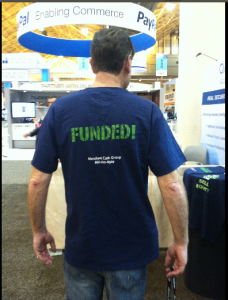 Recap of the ETA Expo as it pertains to Merchant Cash Advance:
- Just about every funder has an ACH program or is working on implementing one.
- Many funders are licensed lenders or are working to become licensed in the states where it may be necessary. There actually seemed to be a lot of excitement about this. Funders are finding comfort in being subject to state mandated regulations as it probably raises their legitimacy and it will make their businesses easier to value when trying to raise money or sell.
- The ACH repayment market will be larger than the split-funding market this year. There’s no doubt in my mind about this. That means that ACH funding is now the primary protocol behind Merchant Cash Advance.
- Almost everyone is working hard to build up their technology. I got a personal demo of RetailCapital’s ISO/Agent system in addition to Capital Access Network’s new CapTap. Both are great. Capital Stack also has a beautiful platform.
- Stacking is the issue of 2013 as I heard that word uttered probably every 30 seconds for a whole week. I know the NAMAA folks are talking about it but I don’t know what the consensus is. It’s important to keep in mind that many funders aren’t NAMAA members and that affects NAMAA’s ability to dictate policy. Capital Access Network, the largest funder in the industry isn’t even a member.
- Speaking of NAMAA, they refaced their website and it looks A LOT better. I see only 14 members listed but it’s my understanding that there are closer to 20 of them.
- Factor rates are all over the place. Swift Capital has a new 1.099 program, which has got to be the first one to fall under the 10% threshold aside from Amex’s Merchant Financing. Higher risk deals however still operate in the 1.49 and up range. There is no one-size-fits-all product anymore.
- There were several direct lenders walking around that I had never heard of and they are apparently doing significant monthly volume. More and more people are getting into the funding business.
- It’s exhausting trying to keep up with the news surrounding On Deck Capital. They are on a very deliberate path and what we keeping seeing and hearing is them just checking things off on their to-do list. I bullet-pointed my theory on DailyFunder in response to a few posts.
- Discover and Priority Payments threw great parties.
- New Orleans has a lot of charm.
Make sure to check out my updates and photos that I’ve finally posted from the ETA Expo on DailyFunder and feel free to add your own if you were there.
Dozens of photos from the show
Also read: Soul Mates: Merchant Cash Advance and Silicon Valley VCs
Soul Mates: Merchant Cash Advance and Silicon Valley VCs
May 1, 2013 Almost 1 year ago to the day, I wrote a piece titled How the Facebook IPO Affects the Merchant Cash Advance Industry. In a most fitting way to commemorate this anniversary, it was reported early this morning that Google Ventures and Peter Thiel are investing in On Deck Capital (“ODC”) through additional Series D Financing. Thiel is especially symbolic in this case as he was the first outside investor in Facebook back in 2004.
But don’t expect Jesse Eisenberg to be called upon to play Noah Breslow or Mitch Jacobs in a movie about small business lending just yet, as the ODC story is a tad less revolutionary than facebook. Or maybe it’s not. Google Ventures is not one of the usual backing suspects in the MCA industry, but their involvement in this case is a perfect validation of my prediction 1 year ago.
Merchant Cash Advance financing turns 15 this year and split-funding goes back more than two decades, but the best of times are just beginning. On September 19, 2012 I bid farewell to an era and made my case for the one I foresaw on the horizon. Facebook wasn’t the first social network on the Internet, nor was their concept original, but they changed how we interact with strangers, friends, and family members online forever. There is a familiar trend with ODC and even Kabbage, two names that every journalist appears obligated to mention these days when writing about Main Street. Perhaps their technology based approaches send a tingle up the leg of the mainstream media or maybe they’re just really changing the game. They definitely appeal to the Silicon Valley crowd in a way that the old guard of Merchant Cash Advance companies apparently do not.
“Old guard, did you just say old guard?!”
Contrary to urban myth, On Deck Capital and Kabbage are not taking on small businesses all by themselves. They are but a fraction of the overall alternative business lending market with the leaders being anything but old guard. Debt and Equity are pouring into these firms and there are no signs of it letting up any time soon. I can’t go a day without a fund, lender, or investor reaching out to me in some way with the hope that I can steer them to a funding provider in need of a capital raise. Their options to get in now are running low and my advice to them is to set your sights lower on ISOs. The big funders have got capital covered and the ISO market is the next gold rush.
 The industry can’t grow without originations and most funders depend on some level of ISO business (a few entirely) to hit their benchmarks month after month. So the funders do their job well, but the lead generators are driving a large percentage of the growth.
In March, I attended the Search Marketing Expo in Silicon Valley. In a sheer twist of fate, at the same time a Merchant Cash Advance guy like myself was touring the campuses of Facebook and Google, it appears that Facebook and Google were busy touring the campuses of a Merchant Cash Advance company.
The connection between Silicon Valley and alternative business lending is beginning to run deep, very deep. I think we’re soulmates. Only time will tell.
Follow us at the ETA Expo
April 30, 2013May 3, 1:00am: I underestimated how easy it would be to make frequent updates. Wednesday was fantastic. I uploaded a couple dozen photos and updates all at once earlier today over on DailyFunder. As soon as the show was over, I found myself on Bourbon Street at the Discover party followed by the Priority Payments party. Both were a great time.
My Recap of the show is up now: ETA Expo Recap
Soul Mates: Merchant Cash Advance and Silicon Valley VCs
Original story about On Deck Capital’s investment from Google Ventures and Peter Thiel
My theory on why On Deck Capital took a paltry $17 million from Google Ventures and Peter Thiel
Photos and updates from the ETA
————————————–
May 1, 1:00am: Great start to the show this evening. Merchant Cash Advance providers and alternative business lenders continue to have a very strong presence in the payments industry. The booths I saw include: RetailCapital, NextWave Funding, Merchant Cash Group, On Deck Capital, Capital Access Network, Strategic Funding Source, American Finance Solutions, Swift Capital, MotherFund, and Principis Capital. GRP Funding and Paramount Merchant Funding are also on the exhibitor list but I didn’t spot their booths yet. That’s pretty substantial and it omits the major presence of Merchant Cash Advance companies that aren’t exhibiting. I bumped into Merchant Cash and Capital and walked the floor a bit with David Rubin of Capital Stack.
I met the guys behind Super G Funding which lends money against residuals. They’re great guys and they have such a unique role in the industry.
I think every funder I spoke with was quick to mention that they do 12 month deals and either offer direct debit repayment or will have it soon. The ACH train has disrupted the split-funding market pretty severely though many funders continue to do big numbers via split.
Nobody seemed to have an appetite for low FICO score deals (500s and below) except for Merchant Cash Group and Capital Stack which target the higher risk market intentionally. And when I say “don’t have an appetite for,” I literally mean when asking a funder if they do below 500 credit, the answer is some version of “HECK NO!!”
Overall tone, and perhaps its because opening night included open bar, but it was very optimistic. Most funders seemed intent on expanding and are eager to service as much business as possible. I definitely get that sense that there is a real focus these days on the bigger fish ISOs ($1 million+ in referral business a month). When newbie brokers enter the space, funders spend an enormous amount of resources developing them and many times they just don’t pan out. Either the brokers don’t have the capacity to do more than a handful of deals, or they just don’t “get it.”
If you’re a mom and pop ISO and you have just 1 or 2 deals a month, it’s more difficult these days to get time and attention from a funder. Capital is flooding into the industry and everybody wants partners that can produce volume. From a resource standpoint, the “1 and done” reps are not an efficient use of time.
Big ISOs have a lot of negotiating power at their disposal these days. In the last 7 years, it was good to be an ISO, then hard to be an ISO and now it’s good again. Many things in MCA have a weird way of going full circle. Hope to see you on Wednesday.
————————————–
Apr 30, 1:00am:  Merchant Processing Resource will be publishing updates as often as we can from the ETA Expo in New Orleans. I am very excited to be down here. Earlier today I had the opportunity to eat beignets at Cafe Du Monde, visit the French Market District, and take a ride on the Natchez Steamboat on the Mississippi River. But starting Tuesday, it’s all business. A schedule of events can be found on the ETA’s website.
You can follow along with everyone else in town on twitter using #ETAExpo2013 or #ETAExpo13
and of course via the DailyFunder Merchant Cash Advance iPhone App.
Some pre-conference tweets:
ETA Expo 2013 on Twitter
pre-conference tweets
Storified by Sean M· Mon, Apr 29 2013 22:21:50
Here’s to learning, networking, and having fun!
– Merchant Processing Resource
https://debanked.com