Business Lending
Enova’s Small Business Financing Originations Drop
July 30, 2018Enova CEO David Fisher revealed last week that their small business financing operations had declined. “Our small business financing portfolio represented 8% of our total loan book at the end of Q2,” Fisher said on the July 26th earnings call. “We are remaining cautious on this space as the market rationalizes. As a result, our loan portfolio contracted 10% year-over-year and originations were down 23% year-over-year.”
Enova owns two small business financing subsidiaries, Headway Capital and The Business Backer.
While no official announcement has been made, Jim Salters, founder of The Business Backer, updated his LinkedIn profile to reflect that as of last month, he is no longer CEO of the company.
CA Bill to Revise Definition of Broker: 6/27/18 Hearing Transcript & Video (AB 3207)
July 29, 2018AB 3207 – CA Bill to Revise the definition of broker (6/27/18)
[0:00:02]
Bradford: We started as a subcommittee. We've already heard Assembly Member Arambula’s Bill AB 1289. Do we have a quorum? We’re gonna ask the secretary to call the roll and establish the quorum.
Speaker: Senator Bradford.
Bradford: Here.
Speaker: Bradford here. Vidak.
Vidak: Present.
Speaker: Vidak here. Gaines. Galgiani.
Galgiani: Here.
Speaker: Galgiani here. Hueso.
Hueso: Here.
Speaker: Hueso here. Lara.
Lara: Here.
Speaker: Lara here. Portantino.
Bradford: Quorum is established. So, we have only one other vehicle that will be heard today. That’s AB 3207 by Assembly Woman Limon and she is here present. And when you’re ready, Ms. Limon, you can make your presentation.
Limon: Great. Thank you, Chair. I wanna start off by taking the committee amendments and committing to work on any concerns addressed in the committee analysis. AB 3207 will provide important consumer protections for the thousands of consumers and small business owners who are served by finance lenders and brokers licensed under the California Financing Law. Under existing law, the definition of broker is vague and circular, leading to the confusion from lenders about which entities they can partner with when arranging loans. Further, the definition of broker in existing law was formulated long before the rise of the internet and the evolution of online lead generation. So, our laws need to be updated with this online activity in mind. Lead generators provide valuable marketing services to a wide range of industries and this bill contains a specific exemption clarifying that distribution of marketing materials or factual information about a lender is not a broker brokering activity. However, many online lender generators that serve the lending industry provide more than just marketing services. These entities act as brokers when they bring borrowers and lenders together to arrange a loan based on confidential data provided by a consumer or small business owner. This bill will allow online lead generators to continue to operate in California. Simply, this bill requires 3 basic things from these companies. One, get a business license from the State Department of Business Oversight; two, provide transparent disclosures to the customers; and three, obtain your customer’s consent before selling and transmitting their confidential data. Arguments from the opposition that this bill will cause lead generators to leave the state raise an important question. Why would a bill focused on licensure and transparency cause a small business to leave a very lucrative California market? Over the past 5 months, I have worked extensively with lenders and lead generators to ensure that this bill appropriately addresses the consumer protection concerns in our lending markets without placing unnecessary burdens on the businesses that work in this area. None of these companies have threatened to leave the state. In fact, many of them have applauded the efforts to bring clarity to existing law and bring bad actors out of the shadows and into the light. This bill has the support of consumer and commercial lenders, the Department of Business Oversight, and a coalition of consumer advocates who are here today to voice their support. With me, I have Adam Wright, senior counsel in the enforcement division in the Department of Business Oversight, to answer any questions from the committee.
Bradford: Witnesses and support, please come forward. State your name, organization.
Martindale: Chair Member, Suzanne Martindale with Consumers Union. We do support this measure and really appreciate the author's leadership in seeking to ensure that our laws stay up to date in terms of evolving technologies. Of course, a lot of lending now happens online and the business models have shifted, but that does not mean that consumers are not, you know, any less entitled to receiving protections when third parties acting on behalf of lenders are marketing to them and helping facilitate the origination of loans and also in particular handling sensitive information and the kinds of things that we wanna always ensure are protected. So, we understand that there’s potentially more discussion to be had about finding the sweet spot here, but I really, really think that the time is now to move forward and ensure that the DBO has the enforcement tools that it needs to properly regulate the space so that consumers who receive online loans are no less protected than those who get them in brick and mortar stores. So, for these reasons, we support and request an aye vote.
Bradford: Thank you. Additional witnesses and support.
Coleman: Good afternoon. Ronald Coleman here on behalf of the California Low Income Consumer Coalition (CLICC). Also here in strong support.
Bradford: Thank you.
Aponte-Diaz: Hi. Graciela Aponte-Diaz, Center for Responsible Lending. Also in strong support.
Bradford: Thank you.
Joyce: Hello. Pat Joyce on behalf of Credit Karma. Credit Karma actually has a neutral position on the bill and wanted the opportunity to thank the author and sponsors of the bill for working with us to address our concerns and allow us to remove our opposition. So, thank you.
Bradford: Thank you very much. Next witness.
Preity: Sumanta Preity on behalf of OnDeck Capital. In support of the bill.
Bradford: Thank you.
Glad: Margaret Glad on behalf of NerdWallet.
[0:05:01]
We’re also in that tweener category. We’d been working very productively with the author's office and particularly Mr. Burdock. We appreciate their amendments that they’ve made to date to address NerdWallet’s concerns. We have a couple of more issues related to disclosures as the bill currently stands. They are mandated disclosures that don't represent our business model. We’d have to tell consumers we’re doing things we aren't doing. So, we're continuing to work with the author and his and her staff to resolve those issues. We appreciate the committee's thorough analysis and all the work and hope to come to resolution of our remaining issues.
Bradford: Great. Thank you.
Pappas: Emily Pappas on behalf of Lending Tree. Similar position to what Margaret just said. Our client has generally supported the framework on this bill. We virtually had an opposed and less amended position due to some of the disclosure requirements. However, we learn from the author's office today that they'd be willing to take the amendments that relieve us of our concerns. Therefore, we’ll switch to a neutral position.
Bradford: Thank you. Any additional witnesses in support? Witnesses in opposition.
Quinton: Hi. David Quinton on behalf of the Online Lenders Alliance. I do have a clarifying question. We are in strong opposition as the bill was in print. We've heard discussion about amendments. If all of the amendments that were in the analysis were accepted, I think that moves us to neutral, but we're not clear on that at this point. So, I’m not sure how to proceed.
Bradford: Those are the amendments that we’re referring to that weren’t announced as well as we’re addressing the concerns that we’re raised as well in the bill.
Quinton: Would that be possible so we can—
Bradford: I’m sorry?
Quinton: Oh, she was— I’m sorry. I was listening.
Bradford: Ms. Galgiani.
Bradford: Yeah. Yeah. If you want to, Ms.—
Quinton: Okay. Thank you.
Galgiani: I would just like to clarify with the author the amendments that have been agreed to and looking through the analysis and then trying to complete which all of those are. I wanna make sure that we're on the same page; the author, the members, the opposition. And there are two concerns that I’ll start with that we don't have expressed amendments for, but we're hoping that you'll work with the opposition and your stakeholders over the July break and we can come back and address those. And one is dealing with lead generators being designated assets as opposed to being referred to as brokers and that those lead generators hold the generator licenses. That's a concern. And the other concern is imposing the same standard of liability on lead generators for the acts of those from whom they buy leads as the bill imposes on lenders for the acts of lead generators from whom they buy leads.
Limon: So, I can say that we continue the conversations. it's definitely not a problem. I think that, you know, this bill has gone through 6 rounds of amendments. And so, I think that's reflective of the fact that we continue to have the conversation. On the two separate license definitions, what we know is that creating two separate license licenses for brokers and lead generators would require many companies to attain two separate licenses from the DBO. Additionally, drafting a separate regulatory framework for lead generators would also add confusion for the businesses that would need to decide whether they need a lead generator or a broker license. The bill does require to have one license right now. And the bill provides specific disclosure requirements that makes sense in terms of the online generation world. So, that's kind of where we've been thinking about it in terms of that. In terms of the lender liability, the bill and existing law hold licensees accountable for their own actions. So, both the lenders and the brokers are liable for violations of the law that occur within their companies. For licensed brokers who choose to obtain referrals from unlicensed third party, the bill requires those brokers to establish policies and procedures intended to ensure that those unlicensed parties uphold the consumer protections provided by the law. The issue of the lender liability raised in the analysis is a red herring. Just as existing current law, the bill would continue to practice the practice of holding licensees accountable for their own violations. And I just wanna again say that that's current law.
Galgiani: Okay. So, am I hearing—
Limon: You are hearing that we are happy to continue those conversations. You brought up the two concerns and I wanted to share the feedback on those two concerns.
Bradford: But we're still open to move forward in having— resolve our differences as it relates to the two— those two concerns. We’re not gonna split the baby here today, but we’re gonna try to figure out how to move forward on those concerns.
[0:10:03]
So, we have that commitment as we move forward to address it in a way that we all come together. Am I correct?
Limon: You have the commitment to continue the conversation to try to figure out a way to address it.
Bradford: Yes, sir.
Quinton: So, on the issue of the two remaining issues, so we thank the author for taking the amendments as presented by your consultant in the analysis. But of the two remaining issues, I believe the broker issue is one that we can work with. That's fine. The devil is in the details. The problem is with this issue, as you know, the details have details. It’s a very, very complex issue. So, that’s our one concern, but we can work with the broker issue. I think we’re okay with that. That's fine as it is. However, being held for strict liability for the actions of a third party affiliate is a very far reaching legal standard and we have really serious concerns with that. So, we just wanna clarify if it is still that we are held with strict liability for the actions of a third party affiliate like we would still have to oppose the bill with that. So, I just want clarification on that, Mr. Chairman.
Bradford: Well, as far as that concern, I'm hoping we're gonna sit down at the table again during the break and whittle that out and figure out how we come to consensus. And I understand your concerns and that's why they're still listed as concerns. They haven't been amended in the bill. But hopefully, going forward, we will find some solution or amendment to address that for you.
Quinton: So, I think at this point— to finish my statement and I’ll hand it over very briefly to Jason— at this point, I would say that we would still be opposed until we can see that amendment because that is a very, very serious issue that could hold us liable over issues we have no authority over. And I’d like to introduce Mr. Jason Romrell who is with Lead Smart, one of the leading lead generators in the State of California.
Romrell: Thank you. Chairman and committee members, thank you for allowing me to speak on AB 3207. The thing that I want to make clear, we’re a California-based lead generator. We have a sister company that has a DTL and CFL license. We’ve had those for the last 5 years. Our interest in this bill is not to oppose to bill. It’s to make sure that the good lead generators, the lead generators who function ethically are still allowed to function in fintech environment that is becoming the movement. If we don't do that, we are putting consumers at a huge disadvantage. In fact, we’re putting them at more risk than they’re at now. We have been involved in this discussion with the DBO, with members of the legislature, and even on the federal level for many years. So, the role that we play as a good ethical lead generator is a very important consumer protection role. We have the same objective as Assembly Member Limon. We have the same objective as the DBO. It's to protect consumers. So, the issues that we were facing prior to the amendments being put forward were in the details. There is no opposition to the concept. We want to be here to protect consumers, but it is the details. So, the one thing I do want to mention is lead generation is complex. There a lot of layers to it. It is not a one size fits all activity. And that is one of the challenges in crafting good legislation. So, I'm not going to go into the details that we had issues with because I think, in light of these potential amendments, everything has changed. But what I do wanna point out is the distinction between the good lead generators and the bad lead generators. The good lead generators already do a lot of what is in AB 3207. We get consent. We vet our lenders. We make sure the marketing message that goes to the consumer is accurate, truthful, and proper. We do a lot of that work, and it's time consuming, and it takes a lot of money and energy. The bad lead generators do not care. So, the risk we run with legislation is if we over legislate the good guys. We will. And Assembly Members Limon asked the question “Why would a small business leave California?” If we can't function without the threat of class action lawsuits, if we literally cannot comply with the details of a bill, we’ll move to other markets. If we do that, consumers are injured severely. So, my plea to this committee and to Assembly Member Limon is we are here. We are invested in the process. We want to get it right. We don't want to oppose the bill. We want to make it work for us and for California consumers.
[0:15:02]
And that is our position, is to protect the people that we live and work with everyday.
Bradford: Thank you. Any additional witnesses in opposition?
Bauer: Paul Bauer on behalf of Elevate. I’m kind of in that tweener category that other people have step forward in. I just wanted to lend our voice to those of Mr. Quinton and Mr. Romrell who presented. And we also wanna see the bill be perfected as we move forward. So, I look forward to that work.
Bradford: Thank you. I appreciate it.
Sunley: Alex Sunley on behalf of the Small Business Finance Association. In opposition.
Bradford: Thank you.
Damar: Hi, Dominic Damar here on behalf of Innova. I share Mr. Bauer’s and [0:15:49][Inaudible] position relative to the amendments and look forward to working and hearing from the author on changes to be made. Thank you.
Bradford: Thank you.
Conaway: Good afternoon. This is Jerry Conaway on behalf of Lead Flash. And we're currently in opposition, but looking forward to seeing the amendments. And I'm working with the bill's author to make a great bill. Thank you.
Bradford: Thank you.
Smeltzer: Thank you, Mister Chair and members. Jason Smeltzer here on behalf of the California Financial Service Providers. Also the same position as Mr. Quinton. I would love to see the assembly member and work this out and remove our opposition then.
Bradford: Thank you.
Schriver: Rachel Schriver with the TMX Finance Family of Companies. We’re opposed to the bill in print, but certainly optimistic about finding a path forward.
Bradford: I appreciate it. Any additional witnesses? Any tweeners? All right. We’ll bring it back to the committee. Any questions by the committee members? Mr. Ric Lara. No. Oh. Oh okay. Ms.—
Lara: I just wanna move the bill, but I know Ms. Galgiani—
Galgiani: I wanted to finish and—
Bradford: Yes. Oh, go ahead, Ms. Galgiani.
Galgiani: We’ve done a lot of work on this bill—
Bradford: Yes, we have.
Galgiani: …today and I’ve been in two other committees today since 9 o’clock this morning. So, I wanna make sure we’re on the same page. So, the second item amendment that would provide exemptions from lead generator definition for administrative and clerical tasks, credit bureaus, internet search engines, and social media platforms, has that amendment been agreed to? That's on Page 14B in the analysis. Page 14B addresses the concern. And so, the amendment would be to provide an exemption for those clerical staff, etc.
Wright: And this is Adam Wright on behalf of the DBO. When it comes to that request, we do not believe it's necessary because of the way that the activities are already drafted. We do not believe that it covers search engines or social media advertisements because those two mediums of advertisements do not send actual consumer data to lenders and they are not paid on a per successful loan basis. Thus, they would not be caught up on the activities under a broker.
Galgiani: Okay. Okay. So, what is the amendment that you're taking then because it sounds like no? Am I right or— Maybe we should start with the author sharing with us the amendments that she’s taking because—
Bradford: You know, we’ve spent a whole lot of time in all due respect to the author and to those who are opposing this bill, but a lot of time have been invested here. And we wanna have a vehicle that first protects consumers, but also allows the industry to thrive and survive here in California. And I think the amendments that we've put forth I thought we had understanding and a commitment that we're gonna continue to move forward and keep this vehicle alive and understanding that we have some kind of agreement, but—
Limon: So, here's the deal, right? So, if you look on Page 13 and it says amendments and it describes some of the issues, but there's not specific amendments. So, according to the author’s office, the use of the word “expresses” intends to [0:18:54][Inaudible] consent. Right? We can go on. And so, I think that that’s what we have to continue talking about. Because in the areas where there is very specific things, it’s easier to say yes or no. In the areas where it talks about a concern, but it doesn't give you actual language, that's where we're trying to figure out how.
Bradford: And we’re not gonna find that extra language here today. What we're trying to get clarity on is what has been put forth in analysis those concerns that were raised as well as those amendments that we suggested that we get agreement on that today and we’ll work out the details moving forward with the understanding that we come to agreement, we’ll pull this bill back to the committee.
Limon: Yes. We can provide clarity for all of these amendments. We are just looking for actual language.
Galgiani: Are we drafting those amendments in committee? Committee staff will draft those amendments.
Bradford: Yes.
Limon: Can we draft the amendments and provide them to you?
Bradford: No. I think this committee will work in concert with you in drafting those amendments. That's our understanding of finding common ground on what we have already in analysis.
[0:20:01]
Limon: As long as our office and as the author I’m able to also be part of that, I—
Bradford: That’s our understanding that we’re gonna work in collaboration as we move forward on this thing.
Galgiani: Okay.
Bradford: Galgiani.
Galgiani: Okay. Next, item #4 on my list of concerns in amendments, define term “express consent” and provide the express consent provided by a prospective borrower to one entity satisfies the requirement for all other entities that purchase a consumer's confidential data to obtain express consent and that is addressing the concern outlined on Page 13A of the analysis.
Limon: So, back to the concerns, we’re happy to have a conversation. I’m trying to go to the amendments. So, we are happy to clarify it. So, here’s the confusion, right, that you have some amendments and we've agreed to take those and to work together and then you have the concerns. And the concerns I think need a discussion. We weren't prepared to go back and forth on the concerns here.
Bradford: We’re not trying to do that. So, we're trying to get clarity on those amendments that have been identified, but also address those concerns moving forward as well the two areas of concerns that are being raised so we can keep this vehicle alive and continue our discussion. So, we're—
Limon: We’re I think on the same page that the concerns we need to keep talking about the amendments, we are agreeing to work together on language.
Bradford: I understand that. We have specific amendments that we’re trying to get agreement on today. The concerns, we can work out. You know, that's going forward, but the amendments that we have before, today, we’re trying to get clarity on it. Senator Lara.
Lara: Without skipping over Senator Galgiani, my understanding is that she's already agreed to the amendments.
Galgiani: And we're trying to clarify what those amendments are—
Lara: Okay.
Galgiani: …specifically so that we don't just leave it to the fact that there's going to be a discussion—
Lara: Understood. Understood.
Galgiani: …in July. We want clarity on very specific amendments.
Limon: I started by saying I agree to the amendments. And so, if there are, you know, clear amendments, that's easy because there's language. If there's not language, we have to have a discussion. And what I heard was that we were simultaneously gonna draft those, that language.
Galgiani: And I'm trying to go through those amendments item by item so that we're on the same page and the two that I outlined—
Bradford: Ms. Galgiani, I think what we’re gonna have discussion on and negotiations is on the concerns, but the amendments or the amendments that we’re trying to get commitment on today, the amendments that we have that we're in an analysis that were clearly spelled out in analysis, you're taking those.
Limon: Yes.
Bradford: Great.
Galgiani: And the committee staff is drafting this.
Bradford: Yes. Yes.
Limon: With collaboration from our office so we—
Bradford: That’s right.
Limon: …can draft them together.
Galgiani: Okay. Okay. So, I’ll continue to the fifth one. Requiring that the entity that collects a prospective borrower’s confidential data to provide that borrower with the disclosure described in section 22348. So, in essence, the original point person who collected the personal information is the person who is required to provide the disclosure.
Limon: Uh-huh.
Galgiani: Okay. Number 6, add two additional statements to the disclosure described in section 22348 (A) lenders to whom the prospective borrower is referred may separately contact the prospective borrower and (B) lenders to whom the prospective borrower is referred may separately contact the prospective borrower.
Limon: Yup.
Galgiani: Okay. Number 7, delete the disclosure required under Section 22338.5.
Limon: So, wait—
Galgiani: Okay. And that’s on Page 23—
Limon: You know, I have agreed to the amendments whether it’s clear language. And so, yeah.
Bradford: Okay.
Limon: I think that this feels like it’s leading into a conversation and I just— We wanna have that conversation.
Bradford: Well, I’m gonna go on record right now. The amendments that we have before that was in analysis, I wanna be clear those are the ones you’re agreeing to and we’ll continue to work out the concerns. Am I correct?
Limon: Yes.
Bradford: And if we deviate from that, we will pull the bill back to this committee.
Limon: Right. And we will work together on drafting the language so that it's not just— Right?
Bradford: Drafting the language as it relates to the concerns. Yes. If we all have agreement on that—
Lara: [0:24:51][Inaudible]
Bradford: Exactly. So, we’re taking the amendments that are in the committee’s analysis.
[0:25:00]
That’s the motion you're putting forth, Ms. Galgiani.
Galgiani: Yes.
Bradford: Yes. Yes. Okay. Great. Any additional questions or comments by committee?
Speaker: As amended.
Bradford: As amended. Ms. Limon, would you like to close?
Limon: Unlicensed brokering activity poses a risk to consumer’s financial well-being and this bill will ensure that California's financial regulator can enforce the consumer protections under the California Financing Law. For this reason, today, I ask you for an aye vote.
Bradford: So, we have a motion and it’s do pass as amended to appropriations based on committee analysis. And we will move forward in addressing the concerns as we move forward. Am I correct? So, that’s the understanding then, Secretary, of our amendment. Madam chief consultant, that’s our understanding? Great. All right. Do pass as amended and committee analysis. Madam Secretary, please call the roll.
Speaker: Assembly Bill 3207, motion is do pass as amended to appropriation. Senator Bradford.
Bradford: Aye.
Speaker: Bradford Aye. Vidak.
Vidak: No.
Speaker: Vidak no. Gaines. Galgiani.
Galgiani: Aye.
Speaker: Galgiani aye. Hueso.
Hueso: Aye.
Speaker: Hueso aye. Lara.
Lara: Aye.
Speaker: Lara aye. Portantino.
Portantino: Aye.
Speaker: Portantino aye. We have 5 to 1.
Bradford: All right. Your bill is out.
Limon: Thank you.
Bradford: Thank you. And we look forward to our continued discussion and work on this issue.
[0:26:28] End of Audio
90% of PayPal Merchant Advances and Business Loans Are Performing On Pace
July 28, 2018 As of June 30, 90.6% of PayPal’s merchant advances and business loans were performing within the original expected repayment period, the company disclosed this week. That equated to $1.27 billion worth of deals. Only 4.2% of their merchants were more than 90 days behind their expected pace.
PayPal had $1.4 billion in outstanding merchant loans, advances, interest and fees receivables.
Swift business loans are charged off when they are more than 180 days past due. The Working Capital products (which can be loans or advances) are charged off when the merchant is 180 days past the company’s original expectations and no payment has been made in the last 60 days OR when the merchant is 360 days beyond the company’s original expectation.
Swift Business loans are generally repayable over 3-12 months. Working Capital advances are generally expected to be satisfied within 9-12 months.
After PayPal acquired Swift Financial, the company began marketing itself to small businesses as LoanBuilder. A flyer obtained by deBanked showed that it was being marketed with loan amounts of $5,000 to $500,000 that could be funded in as quick as 1 business day.
Thinking Capital, Equifax Create Canadian Small Business Credit Grades
July 10, 2018
Equifax and Thinking Capital today announced the launch of BillMarket, a service that will now provide Canadian small businesses with a credit grade, A through E. CEO and cofounder of Thinking Capital Jeff Mitelman told deBanked this is revolutionary because, up until now, a Canadian small business’ creditworthiness has usually been based on the personal credit score of the small business owner.
“BillMarket creates a new language of credit for small business in Canada,” Mitelman said. “For the first time, there is a practical way to talk about and put a dollar value on small business credit in Canada. BillMarket expands the purchasing power for Canadian SMBs and eliminates friction in the supply chain.”
Equifax offers this new credit grade for free, and simultaneously, a small business owner is offered a supply chain financing deal by Thinking Capital. Specifically, if a small business owes money to a vendor in 30 days, Thinking Capital can turn that 30 day invoice into a 120 day invoice. Thinking Capital pays the small business’ vendor and the small business has 120 days to pay Thinking Capital. There are fees associated with this, which are based on the small business’ credit grade, but a small business can simply use Equifax’s credit grade and seek funding elsewhere.
“BillMarket represents a cash flow revolution for the Canadian small business market,” he said.
Traditionally, Thinking Capital provides an MCA product, which it calls Flexible, as well as a term product, which it calls Fixed. The company provides funding up to $300,000 to small to medium sized Canadian businesses. Clients must be in business for at least six months and have average monthly sales of at least $7,000. The funder was acquired in March by Toronto-based Purpose Financial, but it still uses the Thinking Capital name.
Founded in 2006, Thinking Capital employees roughly 200 people and has offices in Montreal and Toronto.
What Will Happen to HomeZen After the Breakout Capital Deal?
July 3, 2018 With today’s announcement of Breakout Capital Finance’s acquisition of HomeZen’s technology, deBanked wondered what will happen to HomeZen after the acquisition of its technology.
HomeZen’s co-founder and Head of Technology Mike Spainhower will work with Breakout Capital to help integrate the HomeZen technology into Breakout Capital’s system, Breakout Capital Chief Operating Officer Mendelsohn told deBanked. But Spainhower will not be joining Breakout Capital as an employee, nor will any other former HomeZen employees. HomeZen will still service its existing clients, but will no longer seek additional clients or operate under the HomeZen name. HomeZen, which provided software tools for home sellers to more efficiently sell their homes, was founded in 2016 in the Washington D.C. area.
Mendelsohn said that prior to this acquisition, BreakOut Capital founder and CEO Carl Fairbank and HomeZen co-founder and CEO Kevin Bennett knew each other as part of the Washington D.C.-area tech community.
The HomeZen website is currently down, which is not an error. Mendelsohn said that the transaction between the two companies meant that HomeZen would cease offering its technology, and website, to new customers.
While Mendelsohn acknowledged the real estate technology company Zillow as a potential competitor of HomeZen, he said that HomeZen’s offering was quite uncommon.
“They were pretty unique in offering sellers a suite of [real estate] tools to do it themselves really be empowered to direct the sales process yourself.”
Breakout Capital has grown its loan originations throughout the year and also obtained a $15 million facility at the end of May that has allowed it to build out a factoring product, called FactorAdvantage.
Of the acquisition, Mendelsohn said:
“You have to take the long view with this and say ‘They’re serving real estate sellers, we’re serving small business owners.’ This may seem a little discontinuous, but what they’re doing is the same thing we’re doing. They’re providing great tools, calculators and other ways to evaluate offers. And that’s exactly what we do. This will allow us to give our applicants and borrowers access to that high quality experience.”
Founded in 2015 by CEO Carl Fairbank, Breakout Capital is based in McLean, Virginia.
Kalamata Capital Merges with Kings Cash Group
June 28, 2018 Kalamata Capital announced today that it has entered into an agreement to merge with Kings Cash Group, effective July 1. The new entity will be called Kalamata Capital Group, or KCG, retaining the Kalamata Capital brand. Together, the new entity and its affiliates will provide approximately $300 million of capital annually to over 5,000 small businesses.
Michael Jaffe and Albert Gahfi have been designated the co-Presidents of Kalamata Capital Group LLC, the direct funding and operating entity, and they will run the day-to-day operations. Steven Mandis, Brandon Laks, Carlos Max, and Connor Phillips will be the Chairman, Chief Operating Officer, Chief Financial Officer, and Chief Credit Officer, respectively, of the holding company, Kalamata Holdings LLC. All are members of the Executive Committee of Kalamata Holdings LLC.
“With this partnership we become the preeminent one stop solution for merchants and strategic partners in the industry,” Gahfi said. “Strategic partners can submit one application, and we will quickly develop competitive, actionable solutions.”
Laks, Chief Operating Officer of KCG told deBanked that employees of both companies will be retained and the former Kalamata Capital offices, both in Bethesda and New York, will remain in place. The Manhattan office of Kings Cash Group will also remain and all products that the two companies used to offer separately, will now be offered by KCG, including small business loans, SBA loans, factoring, equipment leasing and merchant cash advance, among others. Kalamata Capital offered all of these products while Kings Cash Group focused on merchant cash advance.
“With no debt, Kalamata Capital has one of the strongest balance sheets in the industry,” Jaffe, co-President of the newly formed KCG said. “Their Chairman Steven Mandis worked at Goldman Sachs, was a Senior Advisor to McKinsey, has a PhD from Columbia University and teaches at Columbia Business School. He has utilized that experience to build a distinctive partnership culture, established brand, and institutional-grade processes and procedures.”
Mandis, Chairman of KCG, said: “We know and value KCG’s technology platform and people, and we believe their talent and capabilities will further strengthen our overall merchant value proposition. The partnership will enable us to better serve more small businesses by enhancing our underwriting capabilities to provide access to affordable business financing solutions to help them and their communities grow and thrive.”
Funding Circle Expands Partnership with INTRUST Bank to Support More US Small Businesses
June 27, 2018
Yesterday, Funding Circle and INTRUST Bank announced the next phase of their strategic partnership, which helps provide capital to American small businesses. This second phase increases INTRUST’s funding commitment and initiates a targeted, co-branded marketing campaign, giving business owners across Kansas, Missouri, Oklahoma, and Arkansas greater access to fast and flexible financing. To date, over 150 American small businesses have received loans backed by INTRUST through the Funding Circle platform. This new increased commitment is anticipated to bring the number of funded small businesses to more than 500.
“This collaboration is a good example of the ways traditional and innovative financial service providers can work together to help small businesses prosper,” said Chief Financial Officer of INTRUST Bank Brian Heinrichs.
“Not only has INTRUST recognized the investment opportunity available through the Funding Circle platform, but this expansion underscores that Funding Circle’s loans are often the best option on the market for American business owners seeking growth capital,” said Funding Circle’s US managing director, Bernardo Martinez. “We view our partnership with INTRUST as a blueprint for the remaining geographies within the US.”
Funding Circle has been among the top five alternative small business funders in the US over the last several years. And earlier this month, the company released a report that demonstrated the demand for alternative financing among small business owners.
Founded in 2010, Funding Circle is a small business loans platform in the US, UK, Germany and the Netherlands, that matches small businesses that want to borrow with investors who want to lend. Investors include more than 70,000 retail investors, banks, asset management companies, insurance companies, government-backed entities and funds worldwide.
Why KeyBank Acquired Small Business Lending Platform from Bolstr
June 25, 2018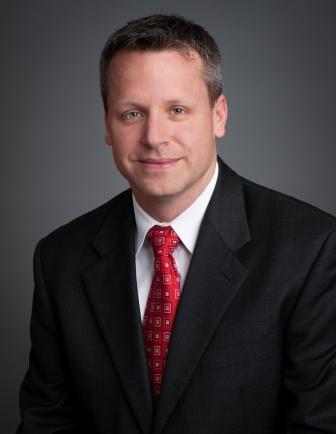
KeyBank announced last week the acquisition of a digital lending platform for small businesses created by Bolstr. The lending platform will allow KeyBank to more efficiently serve small businesses for their SBA and traditional lending needs, according to Jamie Warder, Head of KeyBank Business Banking.
“We found Bolstr to have a very flexible capability…and we believe that having the platform will allow us to get to a decision faster,” Warder told deBanked.
Founded in 2010 by Charlie Tribbett and Larry Baker in the Chicago area, Bolstr created a marketplace that connected small business borrowers to institutional and retail accredited investors, or individuals. KeyBank acquired the platform that facilitated this, but not the company. Bolstr no longer operates as it had, but it will continue to work with its current clients, according to Warder.
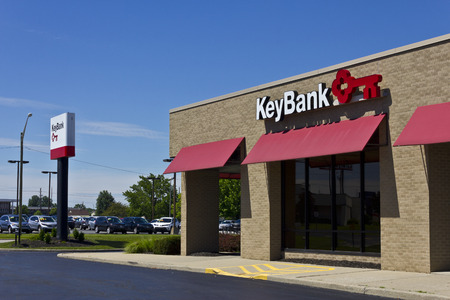 Warder said that with this acquisition, KeyBank, a regional bank, hopes to attract more small business customers who are looking for speed and ease in obtaining a loan. He thinks that with Bolstr’s platform, KeyBank can be more competitive, although he didn’t say that the bank’s qualifications for obtaining loans would necessarily change.
The Bolstr platform includes features like easy eSignatures, information gathering and digital questionnaires. Already, KeyBank has hundreds of thousands of small business customers, Warder said. The bank, which is headquartered in Cleveland, OH, is more than 100 years old and operates in 15 states.