Banking
Apple Card Partnership Sees Goldman Sachs Lending to Subprime Borrowers
August 25, 2019 Apple Card launched this month, and with it have come some complaints over the unforeseen damage that wallets can do as well as an official guide from Apple on how to tend to and clean your new credit card. But aside from aesthetic and hygienic concerns, the card’s release to the wider public has raised eyebrows with news of subprime borrowers being approved.
Forged from a partnership between Apple and Goldman Sachs, a bank known for dealing with corporations and the rich, the move seems out of character for the 150-year-old institution.
Rolled out initially to Apple employees as a test, rumors began to circulate of early adopters expressing surprise at being approved despite having FICO scores in the middling 600s. Then, upon Apple Card’s wider release, Ed Oswald came forward and spoke to CNBC about receiving his card, along with a credit limit of $750 and an interest rate of 23.99%, despite having a credit score of around 620.
But this is not the bank’s first foray into FICO’s less than 700. Since its launch, Goldman’s Marcus has issued $4.75 billion in personal loans, 13% of these going to borrowers with a FICO of 660 and under.
This 13% and the partnership with Apple are indicative of David Solomon’s tenure as CEO of Goldman Sachs, who has sought to expand into consumer finance following years of declining trade revenues.
And while this contrasts the bank’s history, the push for more access to credit is aligned with Apple’s values. In fact, in the 1990s, when the tech company was in talks with Capital One over a potential card partnership, Steve Jobs “had an aversion” to rejecting any customers who wanted to sign up. Such yearning for openness and ease of access has reportedly scared off other banks. According to CNBC, Citigroup was in advanced talks with Apple prior to Goldman Sachs’s confirmation, but pulled out of the deal due to concerns over the profitability of the partnership. Similarly, JPMorgan Chase, Barclays, and Synchrony all allegedly bid on the deal.
But what does such access mean? Well opening up credit to those with a less-than-proven track record increases the risk of losses due to unpaid loans. The speed with which funds are made available, the application and approval process takes two minutes, means that Apple Card could rival payday loans and alternative finance for those customers looking for more modest funding. And as well, the commodification and attention paid to the appearance of the card by Apple has led to it being viewed as the latest gadget from the company rather than a tool to use when financially necessary, as pointed out by Macworld, raising questions over how credit cards should be marketed.
On the topic of access, Ian Kar, the author of the Fintech Today newsletter said that “Apple is only making one card, so they have to target everyone … It’s not like they’re Chase with multiple cards like Sapphire Reserve to target a higher demographic and other cards for lower segments.”
This singular approach to credit joins Apple’s growing collection of services. Likely being pushed to account for the falling sales of the iPhone, Apple Card is the latest in a line of launches that includes Apple News+, Apple TV+, Apple Pay, and Apple Arcade.
This year, iPhone sales saw a drop of 12%, making up 48% of total Apple sales. While Apple services rose by 13% from 2018 to become the second largest segment of the company’s sales portfolio, being 21%.
When discussing Apple Card and its role in the bank’s ecosystem in an internal Goldman Sachs memo, Solomon, hinting at further partnerships, said “Apple Card is big, but it’s also a beginning.”
Jamie Dimon Among 181 CEOs Pledging to Look Beyond Investors
August 22, 2019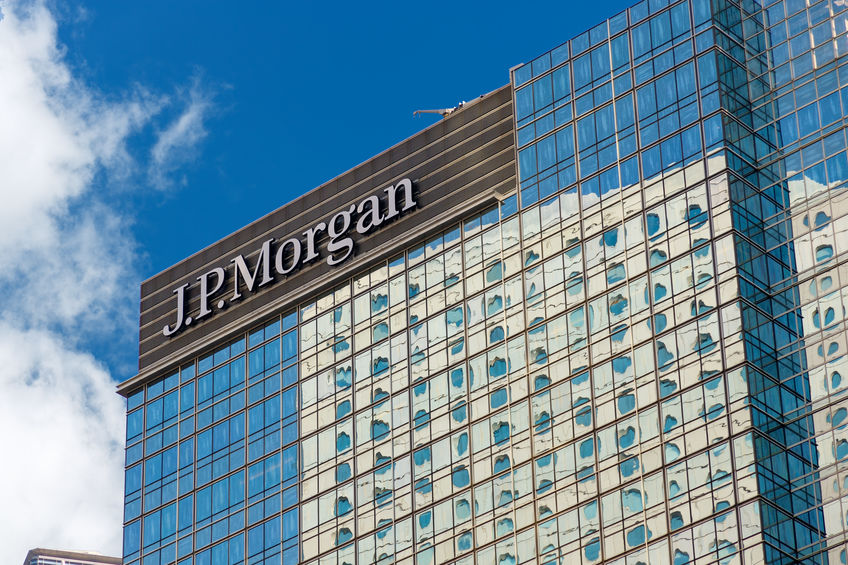 This week, JPMorgan Chase CEO Jamie Dimon along with 180 other CEOs published a statement committing themselves to rethinking corporate priorities and their responsibilities as leaders of business.
The majority of the Business Roundtable (BRT), a corporate lobbying group comprised of 200 CEOs that once was described as Obama’s “closest ally in the business community,” signed off on the statement, which outlines a number of vague commitments. Included are goals to deliver “value to our customers” by furthering “the tradition of American companies leading the way in meeting or exceeding customer expectations”; to deal “fairly and ethically with our suppliers”; to support “the communities in which we work” through “embracing sustainable practices across our businesses”; to compensate “[employees] fairly and [provide] important benefits”; and to generate “long-term value for shareholders, who provide the capital that allows companies to invest, grow and innovate.”
Such promises are in opposition to shareholder primacy, the belief that the purpose of a business is to create profit for stakeholders and the leading corporate philosophy in American capitalism, and are in in direct contradiction to the BRT’s 1997 statement which praised the shareholder-centric approach.
“We looked at this thing that was written in 1997 and we didn’t agree with it,” said Dimon following the statement’s release. “It didn’t fairly describe what we think our jobs are.”
Such a view is reminiscent of Dimon’s 2019 letter to JPMorgan Chase shareholders, which opened with “The American Dream is alive – but fraying for many,” and closed with “CEOs: Your country needs you!” Just as it is linked to fellow BRT member Larry Fink’s similar letter which discusses the growing trend of CEOs having political and social responsibilities. And topping these associations off is Amazon’s Jeff Bezos, another signatory of the statement, who in 2018 took an unexpectedly patriotic turn when he criticized other firms, such as Google, that pulled out of military contracts, saying, “If big tech companies are going to turn their back on the US Department of Defense, this country is going to be in trouble.”
More and more CEOs are stepping up to explain the moral vision of their companies’. Harvard Business School Historian Nancy Koehn says that this specific case of such espousing is a “response to something in the zeitgeist. They perceive that business-as-usual is no longer acceptable.” The reasons for such a change in approach could be changing trends amongst younger workers, such as employees’ demand that their employer believe in something beyond profit, the increasing number of consumers who factor a business’s social purpose into their purchasing decisions, and the constant threat of social media backlash.
CEO of Johnson & Johnson Alex Gorsky, who drafted the language of the statement, echoed this concept of CEO’s having a social vision when he noted that “there were times when I felt like Thomas Jefferson.” Standing in for the Founding Fathers in Gorsky’s vision are Pepsi, Walmart, Apple, and General Motors.
Reactions to the statement have been skeptical, with many critics calling into question whether any action will come from such words. “The bottom line is, I don’t think much is going to change,” commented Dick Bove, a Wall Street analyst. While Walter Olson, a Senior Fellow at the Cato Institute, said that “It’s not really clear whether they’re intending to replace any part of the system or do the same things as before, but … smile more.”
Bernie Sanders was more pointed in his reaction to the statement. “I don’t believe what they’re saying for a moment. If they were sincere, they would talk about raising the minimum wage in this country to a living wage, the need for the rich and powerful to pay their fair share of taxes.” Fellow primary candidate Elizabeth Warren also weighed in, saying that it was “a welcome change,” but “without real action, it’s meaningless … These big corporations can start following through on their words by paying workers more instead of spending billions on buybacks.”
The Council of Institutional Investors (CII), a group that promotes the interests of investors and shareholders, responded with concern, saying that “The statement undercuts notions of managerial accountability to shareholders.” “Accountability to everyone means accountability to no one … It is government, not companies, that should shoulder the responsibility of defining and addressing societal objectives with limited or no connection to long-term shareholder value.”
Turning a New Leaf: Banking Committee Chairman Says It’s High Time for New Cannabis Company Regulations
August 19, 2019 Recent years have seen a surge of popularity for the legalization of cannabis movement across the United States. Beginning with the normalization and legalization of the herb for medicinal use, and then the outright legalization of it in California, Colorado, Oregon, Nevada, Alaska, Michigan, Vermont, Massachusetts, Maine, Washington, and D.C., most states now support legalization in some form (ie. medicinal use being allowed, or at very least access to CBD products) with the exception of three.
According to Kris Krane, Co-founder and President of 4Front, a leading multi-state cannabis company, and contributor to Forbes, support for legalization has steadily increased 1-2% each year since the 1970s, with the recent state-wide legalization legislation bumping those figures up. But while support amongst the populace as well as within certain corners of the government has grown, infrastructural support that is regulated by politicians has lagged.
Specifically, since their legalization, cannabis companies have been unable to open bank accounts due to strict federal restrictions. As a result, cannabis companies, the majority of which being small businesses, have a harder time paying employees, vendors, and taxes; find it tough to acquire start-up capital; struggle to finance themselves in the face of unforeseen expenses; and are subject to the increased security risks that come with holding onto high quantities of cash. As well as these repercussions, such federal hurdles lead to many cannabis companies receiving finance via equity investments, to which Krane says, “the owners of cannabis businesses own far less of their companies than they would in any other industry.”
Viewed alongside the growing attitude to “legalize it,” such financial handicapping paints a picture of the industry that is all smoke and no fire. Krane described the situation as “one of the greatest challenges for cannabis businesses today,” but the tide may be turning.
 Idaho Senator Mike Crapo (R), who is the Chairman of the Senate Banking Committee and who has historically been an ardent opponent of legalization, appears to have changed his tune on the matter. When asked if legislation would be required to end the barriers faced by cannabis businesses, Crapo responded “I think so, yeah.”
The comment came after Crapo surprised his peers by holding a committee hearing on allowing cannabis businesses to access banks. Which seemed in opposition to his initial anti-legalization view as well as starkly unaligned with his state’s stance, Idaho being one of the three aforementioned states in which all cannabis-related products are outlawed. Nevertheless, Crapo continued on in the opposite direction of his previous convictions after the hearing, saying, “I think all the issues got well vetted. We now need to, I think, move forward and see if there’s some way we can draft legislation that will deal with the issue.”
Conveniently, such legislation is in the works. The SAFE Banking Act of 2019, put forward by Congressman Ed Perlmutter (D), seeks to solve the issue by lifting the red tape surrounding cannabis companies’ lack of access to banking. Support for the bill is growing, and as proven by Crapo, further support could come from unlikely places.
Fellow Republican, Senator Cory Gardner, explained that “merely having the hearing on marijuana banking issues was a ‘historic moment in the Senate’ … It shows that this isn’t just a regional issue, but a national issue that needs to be addressed … There was some criticism that the Republican attendance wasn’t there, but if they wanted to blow it up they would’ve been there. So I look at that as sort of an acknowledgment that this is now just a status quo issue and not something that they’re going to try and interfere with.”
While on the other side of the aisle, Senator Catherine Cortez Masto (D) said that she “would like to see it as a positive step forward. I support doing something in this country for these states that have legitimized marijuana businesses … I have always been concerned about potential money laundering or crimes that are sort of around these all-cash businesses. By having a financial system, it helps.”
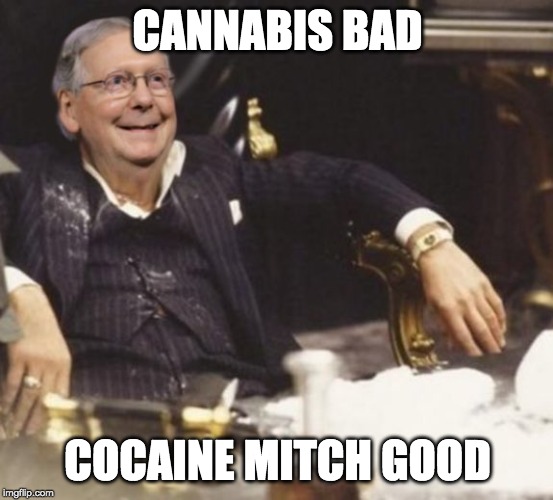 Still, despite there being bipartisan support for the SAFE Banking Act the question of Mitch McConnell looms. Being the Senate Majority Leader, McConnell has influence over which legislation reaches the Senate floor for debate. And while McConnell may have borne the title of “Cocaine Mitch” with pride before, the narcotics-tinged buck stops there as the Kentuckian has gone on record saying he would not support the legalization of cannabis.
Interestingly, McConnell is a proponent for the legalization of hemp. Saying that hemp is “a completely different plant than its illicit cousin,” McConnell’s view is born from his state’s agriculture-intense economy. “Everything from clothing to auto parts” can be made from hemp – a sentiment once isolated to communes, is now being publicly uttered by one of the most conservative contemporary Republicans.
Nevertheless, Kris Krane remains an optimist about future legislation as “there seems to be a growing consensus that cannabis banking reform is necessary,” likely due to worries over security. Crapo’s change of mind “represents a growing awareness among federal legislators that blocking cannabis businesses from accessing banking services is a security concern, and even members who may not support overall cannabis reform are increasingly willing to help resolve the banking issue. It is looking more and more possible that the Safe Banking Act [sic] could become law in the next year.”
Gone with the Lend: Chase Bank Withdraws from Canada, Forgives All Credit Card Debt
August 12, 2019 In January 2018 Chase Bank released a statement detailing that it will be closing all of its Canadian credit card accounts on March 15 of that year, but customers should continue to pay their bills. Last week all of those debts were cancelled.
Coming as a shock to many Chase customers, the decision comes as the bank withdraws entirely from the Canadian market, in which it had been active for 13 years. “Chase made the decision to exit the Canadian credit card market. As part of that exit, all credit card accounts were closed on or before March 2018. A further business decision has been made to forgive all outstanding balances in order to complete the exit,” said Maria Martinez, Vice President of Communications for Chase Card Services, in a statement. “Ultimately, we felt it was a better decision for all parties, particularly our customers.”
As noted by one former Chase customer who benefitted from the debt forgiveness, it is questionably unusual that Chase Bank would take into consideration the wellness of those customers in a market they no longer operate in. Speaking to CBC, credit card rewards expert Patrick Sojka guessed that the decision came after concluding it would be too costly and time-exhaustive to pursue the debt, “[Chase are] still probably paying taxes, paying accountants, and for them, they just probably worked it out and [said], ‘Let’s just forgive the debt and fully get out of the country.’”
Chase has not released information regarding when the decision was made, how much debt was outstanding, nor how many customers were signed up for the two cards, the Amazon.ca Rewards Visa and the Marriott Rewards Premier Visa.
The response has been universally positive amongst customers, with many of them having been forgiven for debt that stretched beyond CAD$1,000 ($757). Christine Langlois, a 24-year-old Montreal student who owed CAD$1,300 and hadn’t made regular payments on her Amazon card in five years, said that “It’s kind of like I’m being rewarded for my irresponsibility.”
With further questions remaining, such as why Chase didn’t sell the debt instead, Luke Sheehan, Vice President of Marketing at RateHub, commented on the uniqueness of the decision, saying “It’s definitely an odd situation. I can only surmise that there was some bigger corporate play that meant had to [sic] exit the market quickly, and there must have been some benefits for doing that … As far as anyone seems to be aware, it’s a complete one-off. The chances of that happening ever again to anybody are so remote.”
Maria Vullo Joins Emigrant Bank
July 31, 2019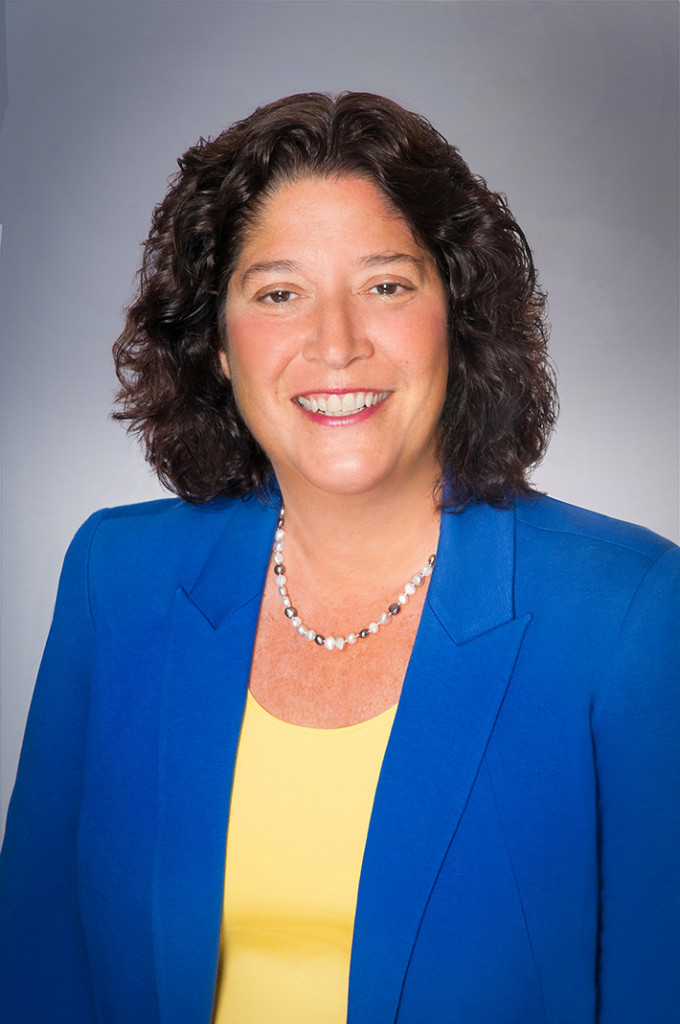 Maria Vullo, who served as the Superintendent of New York’s Department of Financial Services (NYDFS) from 2016 to February 2019, has been elected to Emigrant Bank’s Board of Directors. As well as this, Vullo will be joining Emigrant’s holding company, New York Private Bank & Trust (NYPB&T).
The move comes five months after the end of Vullo’s tenure at NYDFS, a role which she was nominated for by Governor Andrew Cuomo. In the period proceeding this, Vullo took up the role of Regulator in Residence at Fintech Innovation Lab’s Partnership Fund for New York City. Here she offered mentorship to enterprise technology companies.
Having been a partner at the international law firm Paul, Weiss, Rifkind, Wharton & Garrison LLP prior to her time with NYDFS, Vullo is versed in civil, regulatory, and criminal issues, as well as securities, banking, insurance, real estate and other financial subjects.
Her tenure as NYDFS Superintendent was noted for its regulations on cybersecurity, transaction monitoring and life insurance. However it was not without hiccups and conflict, as one hearing on online lending saw her display both a distaste for alternative finance and a seeming misunderstanding of how interest rates within the industry are calculated. And upon the Office of the Comptroller of the Currency’s (OCC) proposal to establish a fintech charter that would grant bank-like powers to non-banks, Vullo opposed the rule in a letter, instead favoring state regulation over federal, claiming that such a charter could risk a financial crisis as well as endanger New York state’s sovereignty.
“Her depth of experience in financial services regulation and operations will greatly enhance our ability to provide innovative services to a range of customers in the markets we serve,” said Howard P. Milstein, Chairman, President, and CEO of NYPB&T, “She will be a great addition to our Board.”
Online Lenders Beat Credit Unions, Friends, and Family as Primary Source of Credit
July 14, 20197% of small businesses generating less than $5 million/year in revenue relied on online lenders as their primary source of credit in the last quarter, according to the latest Private Capital Access Index published by Pepperdine Graziado Business School. 3% relied on credit unions as their primary source and 6% relied on friends and family.
Banks were the most popular. 19% relied on large banks as their primary source of credit and 12% relied on community banks.
38% said they didn’t have any source of credit at all.
Sticking with the under $5 million/year segment, 45% of respondents explained that their primary source of credit had become so simply because they were able to qualify for it. 21% said their primary source became so because they couldn’t qualify for any other source.
Meanwhile, merchant cash advances, online business loans, and factors experienced among the lowest reported approval rates for businesses of all sizes. Of those businesses that applied for financing, the success rate in obtaining funds are as follows:
| Financing Type | Success Rate |
| Business credit card | 65% |
| Trade credit | 57% |
| Personal loan | 51% |
| Lease | 48% |
| Bank loan | 41% |
| Online lender | 38% |
| Merchant cash advance | 31% |
| Asset Based Lender | 28% |
| Factor | 23% |
| CDFI/Credit Union | 18% |
While bank loans came in at 41%, revenue was a major determining factor. 88.9% of businesses doing $5 million to $100 million/year in revenue successfully obtained a bank loan while only 31.6% of businesses doing less than $5 million/year in revenue successfully obtained a bank loan.
OnDeck Canada, Credit Union Announce Partnership
July 11, 2019 Today sees the partnership of OnDeck Canada and Coast Capital Savings, the first collaboration of its kind in Canada, being between an online lending company and a federal credit union.
Beginning this month, small business members of Coast Capital will be able to apply for term loan financing from OnDeck Canada of up to CAD$250,000 online, in branch, and via the Coast Capital Contact Centre. And as a perk of partnering with an alternative financing company, Coast Capital members will benefit from the fast turnaround times for approvals and funds being made available that are typical of the industry, with waits being as short as one day.
The move comes as OnDeck Canada is expanding to Quebec, paralleling Coast Capital’s efforts to spread across the nation, beyond its home of British Colombia. Both parties appear to be approaching the partnership with similar visions of where it will take them, with Tiffany Kayar, the OnDeck Canada Communications Manager, explaining that OnDeck is able to further help fund those small businesses who have been historically underserved by alternative financing, and Coast Capital will benefit from a greater national presence.
It is one more notch on OnDeck’s belt of partnerships, coming after the online lender linked with JPMorgan Chase in 2017 and PNC Financial Services Group last year to extend loans to businesses.
And for Coast Capital, which has the largest membership base of any credit union in Canada, it is a development that is consistent with their history of innovation. Having offered Canada’s first free checking account from a full-service financial institution and Help Extras®, which further assist members with investing, this opening up of funding channels to small business owners further cements Coast Capital’s position as a unique non-bank choice for finance management.
With small businesses comprising 98% of Canadian businesses, this partnership is hoping to provide support for such a large sector of the country’s economy. Saying in a press release that “As the proven leader in online small business lending, OnDeck Canada is delighted to partner with Coast Capital to offer online financing to its small business customers, ensuring that their unique and ever-evolving needs are met faster than ever with the power of automation and a world class digitized customer experience,” Neil Wechsler, CEO of OnDeck Canada, is confident that the synergy between OnDeck’s tech and Coast Capital’s membership will benefit the Canadian business community. Just as Derek Turner, Head of Small Business at Coast Capital, is sure that the partnership will “deliver the Coast Capital experience that so many members already enjoy, to even more people across Canada.”
Canadian Lenders Association to Host Open Banking Summit on July 10th
June 27, 2019The Canadian Lenders Association will be hosting its Open Banking Summit on July 10th at Dentons Toronto. It begins at 8am and ends at 11am. This is the third in their event series, and will tackle topics in Open Banking and Big Data in Canada. They will discuss how the industry can best work toward an open data economy in Canada. Join the amazing panel of industry leaders.
The total cost to attend is CA$79.08. You can register here.