
Banking
How Hot Is The Legal Cannabis Industry?
February 24, 2020 One gauge of the commercial excitement over legal weed, medical marijuana and cannabis’s byproducts could be witnessed at the Las Vegas Convention Center in early December where the Marijuana Business Conference & Expo was overflowing with 31,523 attendees.
 Appealing to that audience—roughly the population of Juneau, Alaska—were more than 1,300 exhibitors who hailed from 79 different countries and touted products and services as varied as advancements in crop cultivation, medicinal breakthroughs, and innovative consumer products like marijuana-laden pastry.
That’s some 30% more than the 1,000 vendors who packed into the Central Hall in 2018 and about double the 678 who were showing off their wares in the smaller North Hall two years ago, reports Chris Day, vice president for external relations at Denver-based Marijuana Business Daily, which follows the cannabis industry and sponsored the Las Vegas trade show.
“In December, 2019,” Day declares, “we did not have to turn people away because we expanded. We had enough room for exhibitors but we needed both halls.” Unable to resist a boast, he adds: “We’ve been the fastest-growing trade show in the country three years running.”
One face in the December crowd was seasoned financial broker Scott Jordan, the Denver-based managing director of the Alternative Finance Network. He was occupying a booth accompanied by two attractive female models in fetching T-shirts emblazoned with the message: “How much would you borrow at zero percent?”
The young ladies’ arresting appearance and the message worked to the extent that “it got people talking,” Jordan says. As for the zero-interest rate, it’s not exactly free money. “I’ve got a product that puts together a line of credit,” he explains, “and after they receive the line of credit, it charges them a fee.”
As a broker, Jordan does the spade work of poring through a cannabis business’s financial statements and business model before he tees up a deal—typically between $250,000 and $750,000—to “a cadre” of 35 lenders in 10 states. He’ll ascertain whether the best funding option should be structured as equipment leasing, a working-capital loan, a revolving line of credit, project financing, or a real estate loan.
One recent cannabis deal that Jordan midwifed involved a “post-revenue, pre-profitability” manufacturing and processing company headquartered in Colorado. The financing, which closed in April, 2019, involved a pair of four-year term loans: one for $400,000 to refinance existing machinery, and a second for an additional $500,000 to acquire new laboratory equipment. Both credits carried interest rates in the “mid-teens,” he says, and were secured by the equipment.
Once the debt financing was in place, the manufacturing operation was “fully functioning,” Jordan reports, paving the way for the company to raise $30 million in venture capital financing. Jordan argues that “even if they pay a 10-20 percent interest rate, it’s better to preserve equity and finance through a normal type of loan. If you need an extraction machine or packaging equipment,” he adds, “why give up equity if you can finance it through debt?”
Jordan’s reasoning appears to sit well with clients and funders alike. Since 2014, he has brokered 85 transactions worth $33 million. He reckons that two out of three deals that he takes to funders meet with success. “My best year was 2015 because there were only a few competitors and I was the only guy on the block,” he says.
As the country steadily decriminalizes and legalizes pot, however, early market entrants like Jordan no longer have the cannabis business all to themselves. Thirteen states have legalized recreational marijuana for adults. These include California, Colorado, Oregon, Washington and Nevada in the West; Illinois and Michigan in the Midwest; and Massachusetts, Vermont and Maine in the East. Hawaii and Alaska permit it and, if you’re over 21, you can legally grow, smoke or ingest weed in the District of Columbia, but it cannot be sold commercially.
An additional 24 states have approved medical marijuana. While research on cannabis’s medicinal properties remains thin—largely because of objections by federal law enforcement—it is being prescribed for a range of maladies, including cancer, glaucoma, epilepsy, Crohn’s Disease, multiple sclerosis, nausea, and pain. [“The marijuana plant contains more than 100 different chemicals called cannabinoids,” according to WebMD. “Each one has a different effect on the body. Delta-9- tetrahydrocannabinol (THC) and cannabidiol (CBD) are the main chemicals used in medicine. THC also produces the ‘high’ people feel when they smoke marijuana or eat foods containing it.”]
Industry data assembled by MJBizDaily reflects both the broad acceptance of legal cannabis use and its increasing commercial popularity. U.S. revenues from legal weed and its byproducts are expected to clear $16.4 billion this year, a 40% growth rate over the $11.75 billion in estimated revenues for 2019. The legal cannabis industry now employs about 200,000 persons in the U.S., about the same number as flight attendants (120,000) and veterinarians (80,00) combined.
 For more evidence that the cannabis market is hot look no further than the state of Illinois, where recreational marijuana went on sale Jan. 1, 2020. The Prairie State’s governor also pardoned some 11,000 citizens with criminal records for possession and the sale of low levels of marijuana.
“We’re showing that sales were close to $3.2 million on the first day of 2020,” says MJBiz’s Day. “Illinois is the big story right now,” he adds. “Anytime a new state opens up in the market, you’re seeing enormous pent-up demand and enthusiasm.”
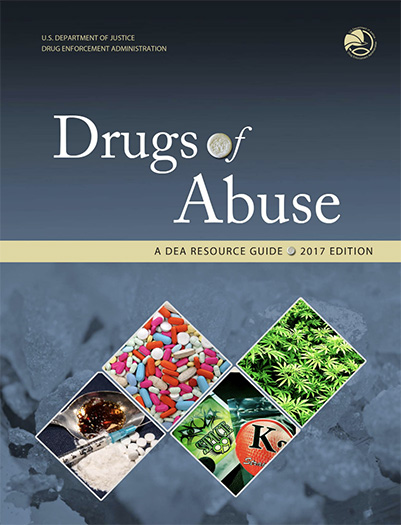 Even as the cannabis industry takes giant strides toward public acceptance, the plant continues to face hostility from the U.S. federal government, which has criminalized its use for 80 years. Marijuana remains classified by the Drug Enforcement Agency as a Schedule 1 drug, keeping company with heroin, LSD and Ecstasy.
That designation has also made it hard for the cannabis industry to engage in simple financial transactions, much less obtain financing. “Despite the majority of states’ having adopted cannabis regimes of some kind, federal law prevents banks from banking cannabis businesses,” Joanne Sherwood, president and chief executive at Citywide Banks, a $2.3 billion-asset bank headquartered in Denver, testified to Congress last summer. “The Controlled Substances Act,” added Sherwood, who is chair of the Colorado Bankers Association, “classifies cannabis as an illegal drug and prohibits its use for any purpose. For banks, that means that any person or business that derives revenue from a cannabis firm is violating federal law and consequently putting their own access to banking services at risk.”
And despite the herculean efforts by the cannabis industry to soften its image, obtaining financing from traditional sources like pension funds, insurance companies and university endowments remains a daunting proposition as well, says David Traylor, senior managing director at Golden Eagle Partners. His four-person, boutique investment fund, which makes equity investments in up-and-coming cannabis companies, relies on wealthy individuals and family offices for the bulk of its funds.
“Capital is hard to come by for this industry,” Traylor says. “From day one, most venture capitalists have been staying out of it. It’s still illegal in many states and their limited partners are endowments like Harvard and Yale, which see marijuana as the antithesis of education.”
Sarah Sanger, chief financial officer at Oak Investment Funds, a real estate investment firm based in Oakland, says: “There’s a great deal of economic activity in California but it’s stymied by the lack of financing and difficulty with changing regulations. It provides an opportunity for really expensive debt from private investors willing to do due diligence.”
That absence of establishment financing has opened up a plethora of opportunities for alternative funders, and not just in agriculture and plant cultivation. While agriculture represents the bedrock of the industry there is no downstream product, of course, without the cannabis leaf— growing and harvesting cannabis is just one stage of the industry’s life cycle.
MJBiz’s Day notes, for example, that that the legal cannabis industry is regulated for safety, so growers must show that “the flower has no molds or contaminants.” That means that crops are subject to rigorous testing and decontamination, which requires both materials and expertise. To process the leaf and develop “infused products” by extracting cannabis-based oils entails the purchase and deployment of costly technology. Packaging and labeling along with tracking systems that, Day says, “are stricter than in other places” are also key components of the farm-to-market supply chain.
Meanwhile, in an ongoing effort to appeal to a fresh cohort of customers, Jordan notes, the cannabis industry continues to develop innovative uses for the plant. “There are so many applications and new products that keep appearing, like ice cream with marijuana, vaporizers, inhalers, and syrup,” he says. “Now, there are mints—something I hadn’t seen before—and different ways to ingest the product and get high and not look like a druggie.”
 Jordan Fein, chief executive at Greenbox Capital in Miami, says his firm prefers to fund downstream companies selling cannabis products. “We do agricultural lending but it’s less attractive and harder to qualify the business. It’s not as tangible as a retail business which will have a website and product reviews. The same goes for edibles.”
Recent Greenbox Capital deals in 2019, Fein says, included one with merchant cash advances of $80,000 and $60,000 in growth capital to a Colorado dispensary. The operation put the money to work adding two retail outlets during the year, he says, bringing to four its total number of storefronts. In addition to cannabis flower, the dispensary sells “edibles, tinctures, lotions, and wax concentrates,” Fein reports. Both short term cash advances require regular ACH payments.
Greenbox Capital also made a $135,000 cash advance to a cannabis-testing laboratory in Southern California in August, 2019 for the purchase of sophisticated equipment. The company, he says, is doing $140,000-a-month in revenue and cashflow is strong and on the rise.
“Greenbox is always interested in higher risk deals,” Fein says, noting that banking services remain off limits to legal cannabis firms. “But we fund them for the same reason we fund lawyers and auto sales—things that most others will not do. There’s nothing wrong with risk,” he adds, “as long as you clearly assign a proper value to the deal and price to it.”
Steve Sheinbaum, a New York broker and chief executive at Circadian Funding, has unabashedly climbed aboard the cannabis bandwagon. “The market is exploding and it’s attractive to lenders because it’s a product people can put their hands on,” he says. “If I’m dealing with a grower, I can leverage real estate and usually there’s equipment. If they’re producing, there’s inventory and I can look at the income statement to see what kind of cash flow the business is generating.”
 He recently brokered a $10 million loan for a licensed grower and distributor of medicinal marijuana in New England with monthly revenues of $3-$4 million. The credit bore a 17% annual percentage rate and a six-year maturity, he says. The deal was brought to Circadian by a private equity investor who was looking to grow the enterprise tenfold. The deal, which was interest-only, was secured by a second position on real estate and a lien on the borrower’s license. “The lender was comfortable with the interest-only loan,” Sheinbaum explains. “They can refinance in six years.”
In another recent deal, Circadian arranged an unsecured merchant cash advance for $300,000 to a Pacific Northwest technology company developing specialty, point-of-sale software for the cannabis industry. The firm showed monthly revenues of $300,000.
“It’s not federally permitted for cannabis firms to take payments from Visa, Mastercard or American Express,” Sheinbaum explains. “But this technology company is using debit or credit cards to pay for cryptocurrency which is stored on a prepaid card which customers can then use to purchase cannabis.”
The tech company had been struggling to find money and Sheinbaum took satisfaction in a deal announcement that went out in an e-mail to the industry. “Funding complicated deals is what gets our blood flowing,” Sheinbaum wrote. “Anyone can get a restaurant or dentist funded. No one needs help with that.”
Manny Columbie, a Miami-based senior funding manager at H&J Capital Group, an Orlando firm, reports funding agricultural and dispensary businesses in California, Colorado and Washington State. In the Evergreen State, he says, he recently provided funding to a woman who owned a marijuana-themed café connected to a cannabis dispensary. The deal went through after examining her recent bank statements and two years of federal tax returns.
“The best thing about lending to people in this industry is their ability to repay,” Columbie says. “They’re never lacking in funds.”
He provided more detail on a deal currently in the works involving a physician in Irvine, California, with an 800-plus credit score from the rating agency Experian and personal tax returns showing $2 million in annual income. The doctor, Columbie says, has been making transdermal patches infused with THC in addition to his medical practice and needs specialized equipment to lower his manufacturing costs to 55 cents per patch. The patches sell for $40-$60 apiece, Columbie says, depending on the THC content.
If the deal goes through and is approved by H&J’s credit committee, the physician would likely be extended a $350,000 loan with a 10-year maturity secured by the Chinese-manufactured equipment. Factoring in the doctor’s excellent credit and other positives, the interest rate on the credit could be as low as 5%-7%.
While the environment for legal cannabis seems to grow more favorable by the day, market participants urge funders to remain circumspect. One remaining fly in the legal cannabis ointment has been the persistence of an illegal black market. Estimates are that as much as 60% to 80% of the marijuana market in California is illicit, says Craig Behnke, an equity analyst at MJBiz.
Law-abiding businesses must also contend with overbearing regulators and high taxation. The California Department of Fee and Tax Administration recently jacked up its excise tax on cannabis to 80%, effective on Jan. 1, 2020.
And the state’s constabulary isn’t helping matters either, notes Sanger of Oak Funds. “There are going to be a lot of operators that end up being losers because of the regulatory environment,” she says. “Law enforcement is using all of its resources to make sure legitimate businesses are following the rules instead of clamping down on black market activity. That makes it harder for legitimate retailers to make money because people are still shopping in the black market.”
The recent collapse of the shares of publicly traded Canadian cannabis companies, which some blame in part on the illicit competition from the black market, also stands as a cautionary sign. Last August, the Motley Fool listed ten “Pot Stocks”—including Canopy Growth and Aurora Cannabis, both of which are listed on the New York Stock Exchange—that together lost a stunning $20 billion in market capitalization.
The drubbing that heedless investors have taken in the Canadian stocks reminds analyst Behnke of the debacle in dotcom stocks back in 2001-2002, but with a big difference. “The dotcoms were a brand-new invention and people had no idea how big the Internet companies would be,” he told deBanked. “But cannabis has been around for a thousand years. I feel like it was a shame on investors and the companies. This shouldn’t have happened.”
LendingClub Becomes First Fintech Lender to Buy a Bank
February 19, 2020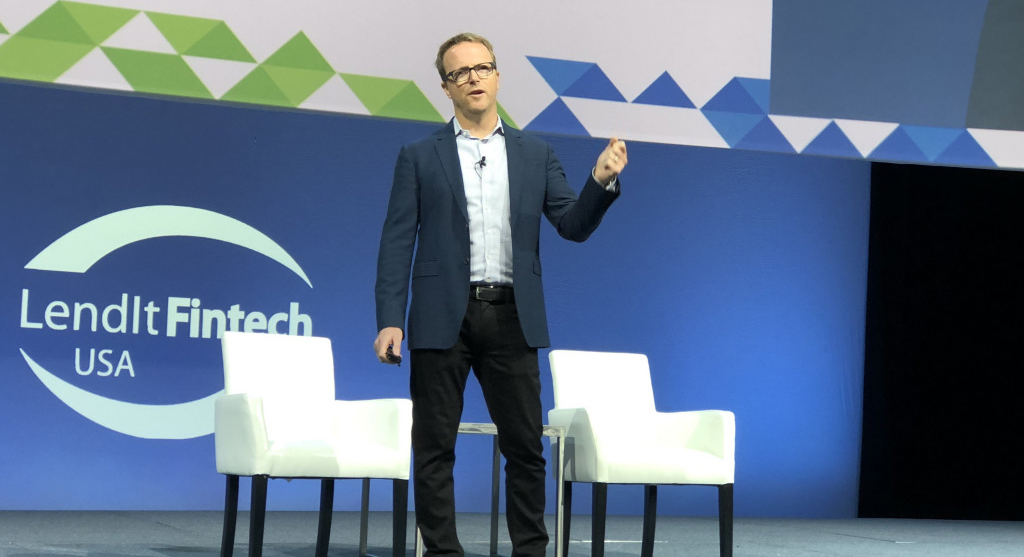 Today LendingClub announced that it has agreed to acquire Boston-based Radius Bank for a purchase price of $185 million, made up by cash and stock. Holding more than $1.4 billion in assets, the merger will enable LendingClub to offer checking accounts and save millions in bank fees and funding costs each year.
Coming one month after LendingClub settled to pay out $1.25 million to resolve allegations that it charged rates in violation of Massachusetts state law, now, more than ever, appears to be a good time for the company to be on its way to attaining a bank and all of the FDIC-approved measures that come with it.
Described as a “no-brainer decision” by LendingClub’s CEO Scott Sanborn, the news comes after the fintech had tried unsuccessfully to get a bank charter. Becoming a popular trend among online lenders and fintechs, with Square having applied for one recently and Varo Money getting approved last week, the merger is the first time that a fintech has actually bought a bank. “Adding the capabilities of a bank charter to the LendingClub mix really changes the game both in terms of what we can do for our customers and what we can do for shareholders,” Sanborn stated.
Having been in discussions with Radius for over a year, it is believed that the purchase was made with the opinion that buying a bank would be less time-demanding than getting approved for a bank charter. The federal banking regulatory approval process is expected to take between 12 and 15 months.
In October 2019, LendingClub VP & Head of Communications Anuj Nayar spoke to deBanked about the company’s future, noting its intentions to broaden its offerings and transition from a product-centric company to a platform-centric company.
“We talk about a customer journey, moving our customers to being visitors, where they basically came to us for a personal loan and then come back to the company a couple of years later for another personal loan, to being much more about lifetime value of the customer and our relationship with the customer.” Nayar said. “The customer experience over the next year is going to change pretty dramatically as we start with bringing some of these new learning products on board but we’ve also been making clear that we’re investigating broader banking services that we’re going to be offering our customers.
Originally valued at $8.5 billion, LendingClub had one of the biggest US tech IPOs in 2014. However the share price has fallen more than 88% over the previous 5 years.
The Fintech Legal Outlook for 2020: Top 3 Insights from Todd Hamblet
February 18, 2020 We recently sat down with Todd Hamblet, Fundbox’s new Chief Legal Officer, and asked his thoughts about what legislative or legal issues would be shaping the fintech industry this year. Between presidents and precedents, decisions are coming down within the next 12 months that will have a significant effect on the way Fundbox and other fintechs do business. Here’s what Todd had to say:
Q: What key issues or predictions do you see when it comes to legal compliance in the fintech industry in 2020?
A: My basic view is that I expect to see continued efforts to regulate the financial services industry and fintech. These regulations are likely to focus on protection of consumer and commercial borrowers, privacy, or data protection. That said, I don’t think that innovation and regulation are incompatible. I think that there is sensible regulation that can achieve the goals of protecting consumers of financial services without completely stifling fintech innovation.
I think the outcome of the election will have a significant bearing on how active regulators are in the fintech space. In the absence of leadership from Washington, I’m concerned that we’re going to continue to see state-by-state legislation instead of a federal overlay. California and New York are two states actively working to fill this void. State versus federal regulation creates the challenge of needing to comply with 50 state requirements, which sometimes might be at odds with each other, as opposed to a more unified regulatory regime. You just have to spend a lot of resources in researching, staying up to date, and modifying what in many cases is a fairly streamlined product offering to comply with different state laws.
I worry that too disparate of a regulatory regime can, in fact, stifle innovation. It won’t stop innovation, but it can make it more challenging. I am certainly not opposed to sensible regulation, but sometimes the best intentions can lead to anomalous outcomes. You always have good actors and bad actors, and in our space, for example, we’re trying to disrupt a very traditional way of underwriting and lending in a commercial space that just hasn’t been compatible with or user friendly for small businesses.
The small business community is under-served, in part because you’re talking about smaller dollars than your traditional banks are even willing to underwrite. You’ve started to see community banks and credit unions step in a bit, but even in those cases, the lending model is still paper-heavy. It’s not optimized for all the data that’s out there, the ability to use technology, or alternative data sources. I think that fintech companies like Fundbox are serving and filling a niche that is really valuable for small businesses. Think about a mom-and-pop shop. They need to be able to run their business. They don’t need to spend all their time going back and forth with their bank, trying to get a loan. They need quick access to capital that may be just to solve a short-term problem. It may be to meet payroll during a slow month. That’s the problem we’re trying to solve, and also doing it in a way that is bringing it into the 21st century. This means using alternative data sources and machine learning, not relying exclusively on credit reports or FICO scores, and using other metrics to look at the credit worthiness of an enterprise.
I find it really exciting. It’s really satisfying to know that we’ve helped a lot of small businesses at the heart of our economy. So I think additional regulation is inevitable, but I hope it’s reasonable and sensible, and that it serves the purpose of protecting the borrower but doesn’t impose so many requirements or obligations that it makes it impractical for a fintech company to try to serve that population.
Q: Is there anything else you see happening in the realm of compliance?
A: I think we’re going to continue to face additional regulation in the areas of privacy and data protection. In California, we have the California Consumer Privacy Act (CCPA) that came online on January 1st. This is a good example of how, in the absence of federal action, states are going to take up their own legislation. California is the first to have enacted a comprehensive privacy act that companies are now trying to deal with. It impacts not just California companies but any companies dealing with California residents.
We’re tracking legislative developments in other states who are looking to implement their own privacy acts. Absent some sort of harmonized federal overlay (such as the GDPR in Europe), if you have 50 states with disparate privacy regulations, it just becomes very challenging. Of course, we will do everything we can to be compliant, but we have limited resources—we’d love to dedicate our resources to developing and improving products for our customers, instead of worrying about whether we’re tripping up a novel requirement of a particular state’s privacy law. So a federal framework would be really helpful. I already mentioned regulation in the context of the next election, and I think whether there is interest in Washington with a federal privacy law will depend on that outcome.
Q: Aside from the 2020 election, what other issues is the fintech industry keeping an eye on?
A: There have been some interesting cases out there in the fintech space. There’s one case in particular that has created some uncertainty and confusion: the Madden case. Although the case was decided a few years ago, it looks like federal regulators are trying to take steps to clarify the ruling. I hope that 2020 brings better visibility into what’s going to happen there, since the uncertainty is impacting the financial services industry and fintechs.
Generally, Madden is a case that dealt with the “valid when made” concept. When a bank makes a loan, there are various usury laws that can be applicable, depending on the state in which the loan was originated. Under federal law, an FDIC-insured state chartered bank can originate a loan using the maximum rate of interest permitted in the home state of the bank and then “export” that rate into another state, regardless of the state where the borrower is located. Some states have higher usury rates than others, so the maximum rate can vary. It is well settled that when that loan was initially made by the bank, it was “valid when made.” But what happens if that bank decides to sell off that loan to a third party in another state? The Madden case (read broadly) calls into question the “valid when made” doctrine. It said that if the loan had an X percent interest rate when it was originated, but it was sold to a third party in a state that had a usury rate lower than X, that original interest rate may not be valid anymore because of the transfer. Studies have shown that this ruling has led to a decrease in the availability of credit in the states affected by the decision.
Banks have to rely on being able to originate and sell loans—this is a well-settled concept. The question is whether the Madden case is distinguishable enough from the traditional practice that it applies only to a particular scenario (a sale of debt) or whether it is calling into question the broader concept. The reason this impacts fintechs is because a lot of us rely on bank partnerships in order to serve customers in all 50 states. Through these partnerships, fintechs may acquire the receivables on loans originated by partner banks. The question for fintechs in the context of Madden is: when the fintech acquires a receivable, does the interest rate originally offered by the bank partner continue to be valid…or because the fintech is a third party, does some other interest rate cap apply depending on where the borrower is located?
Congress and some other federal regulators are working to clarify that the Madden case should be limited to a narrow set of facts, and that it should not serve as a precedent for disrupting the traditional understanding of “valid when made”. This would be welcome relief to the entire financial services industry, including fintechs. We hope to have this clarification in 2020.
N26 Exits UK Market Citing Brexit as Reason
February 13, 2020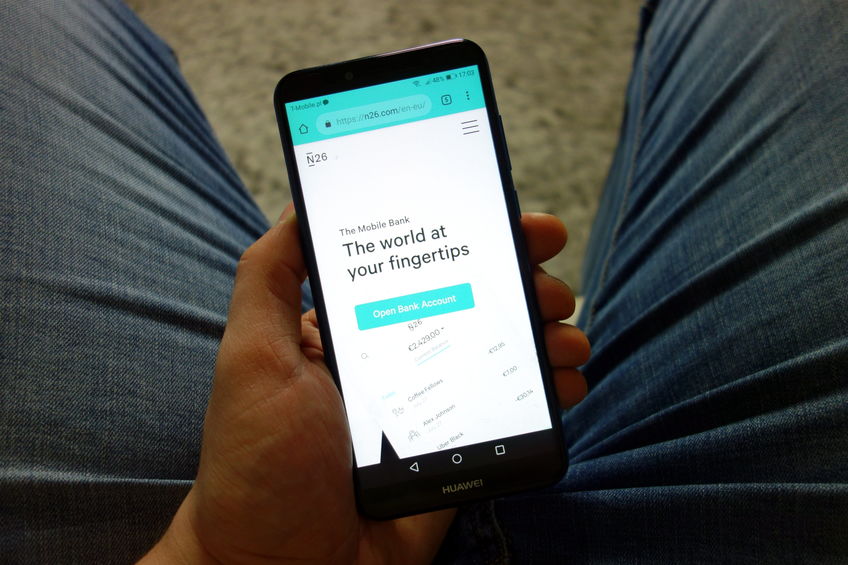 The challenger bank N26 pulled out of the UK market this week, citing Brexit as the reason for its departure. Saying that it will no longer be able to service Britain now that it has left the European Union, N26 has stopped onboarding new customers and will be closing all British accounts on April 15th.
The news came as a shock to many N26 users as the company has, as recently as October 2019, published multiple blog posts assuring customers that Brexit will not disrupt their service. These posts have since been deleted.
In a statement, the neobank advised its UK customers to empty their N26 accounts before April 15 and apologized for the inconvenience. “With the UK having left the European Union, N26 has today announced that it will be leaving the UK market. The timings and framework outlined in the Withdrawal Agreement mean that the company will in due course be unable to operate in the UK with its European banking license.”
Having its headquarters in Berlin, the neobank holds a German banking license. Under EU law, passporting rights enable any banks that hold a charter granted by an EU member state to operate in any other EU country. And while this of course means that N26’s license will no longer be enough for the UK market, temporary permissions exist that allow EU fintechs and financial services companies to continue operating under the same rules until December 31st, 2020, allotting time to draw up new deals and ink new charters.
This detail, as well as the fact that none of N26’s competitors, Revolut, Starling Bank, and Monzo, have announced their exit, has led commentators to reason that the high investment cost associated with applying for a UK banking charter is influencing the decision to pull out, rather than the feasibility and process required.
Speaking to deBanked, a spokesperson for Starling said that “We’re not affected by N26’s decision. Some digital banks appear to have been focusing on growth at all costs. At Starling, we’ve always gone for sustainable growth and have long mapped out our path to profitability. We expect to hit breakeven by the end of 2020 and to turn a profit by the end of 2021.”
Having entered the UK market in October 2018, more than two years after the leave vote, N26 will be cutting service to its +200,000 UK customers. Most of the dozen or so staff members the neobank had in Britain will be repositioned elsewhere in the company, which has offices in Berlin, Barcelona, São Paolo, Vienna, and New York.
The challenger bank has been available in the States since August 2019, garnering over 250,000 customers in the market since then. Valued at $3.5 billion in its July funding round, N26 has received investments from Peter Thiel’s Valar Ventures, Li Ka-shing’s Horizon Ventures, and China’s Tencent Holdings Ltd.
Varo Receives FDIC Approval for Bank Charter
February 12, 2020V aro Money, the company that has been providing customers with app-based banking since 2017, has just received approval from the FDIC to take deposits. Having been working towards this for the previous three years through various rounds of applications to the FDIC, Varo CEO Colin Walsh told CNBC that “it was a long process – for this to finally see daylight is a big deal for the industry.”
Fintechs such as Varo, like Revolut, N26, and Chime, rely on partnerships with banks to provide financial infrastructure in the absence of such FDIC approval. This decision is a first for the fintech space and it means that all accounts with Varo’s partner, Bancorp, will transfer to Varo in Q2 of 2020, so long as the company passes final regulatory tests.
Robinhood, a startup that offers options to invest in stock through its app, previously applied for the same charter but pulled out in November, while the payments titan Square has applied for a different charter for a specialized industrial loan company license.
“Receiving an official bank charter has been part of Varo’s vision from the very beginning, and we are excited to progress through the necessary steps to accomplishing that goal,” Walsh, who is a former American Express executive, said in a statement. “Despite historic economic growth, only 29% of Americans are considered financially healthy. Varo is committed to creating inclusive financial opportunities that deliver measurable benefits to all consumers. Becoming a fully chartered bank will give us greater opportunity to deliver products and services that impact the lives of everyday people around the country.”
Varo has stated that it has ambitions to provide additional services that are typical of banks, eg. credit cards, loans, saving products, but these are of course pending charter approval.
Goldman Sachs-Amazon Deal to Offer Small Business Loans in the Works
February 3, 2020
Tech giant Amazon is reportedly in talks with Goldman Sachs to offer business loans to those small and medium sized merchants operating on its marketplace, according to sources that the FT describes as “two people briefed on the discussions with the online retailer.” One of these sources said that it could launch as soon as March.
The news comes after CEO David Soloman spoke at the bank’s Investor Day recently, explaining that Goldman would be pursuing a “banking-as-a-service” model this year that would see the bank white labeling their products for third parties to use. As well as this, Solomon commented on a shareholders call last week that the bank is seeking to increase revenues from new channels such as consumer banking and wealth management.
One such channel is Goldman’s partnership with Apple last summer that saw the launch of Apple Card, a credit card solely available to Apple’s +100 million users in the US. The card’s launch was lauded by Solomon; and according to Business Insider, cardholders had $736 million in loan balances by the end of September, one month after the card was released to the public.
The Apple and Amazon deals highlight how Wall Street banks are employing and partnering with Big Tech to leverage advantage over fintechs, and ultimately gain access into markets that are historically not domains of the uber rich. Traditionally a bank that catered to elites, Goldman Sachs has been edging its way into consumer and small business banking ever since the launch of Marcus, its personal banking platform.
Amazon has been offering loans to merchants on its platform since 2011, using algorithms to determine which sellers would be best positioned to receive and repay a loan. Having previously partnered with Bank of America to finance such loans, the terms of these were for 12 months or less, with amounts funded ranging from $1,000 to $750,000. According to the FT, Amazon had $863 million in outstanding SMB loans on its balance sheet as of the end of 2019.
The digital nature of Amazon’s marketplace would accommodate Goldman Sachs’ neglect of brick-and-mortars stores, which have historically been a waypoint for small- and medium-sized businesses seeking finance.
LendIt Chairman and Co-founder Peter Renton described Goldman’s progression in the fintech space as “impressive,” noting that the speed at which it has been operating isn’t to be overlooked: “I thought something like this would happen but not in such a short space of time. Apple Card was only six months ago.”
As well as this, Renton was wary of how expansive the deal would be, admitting skepticism of it being a large project for either company. Given how both Amazon and Goldman have shown themselves to be selective in who they provide financing for, this assessment may prove correct.
Former Wells Fargo CEO Fined $17.5 Million
January 27, 2020 Last week the Office of the Comptroller of the Currency released a 100-page report on the Wells Fargo fake accounts scandal that came to light three years ago. Accompanying the document with a fine against the CEO who oversaw the controversy, John Stumpf, for $17.5 million.
Stumpf, whose personal wealth was estimated to be roughly $200 million prior to the scandal, also had all of his stock options rescinded by Wells Fargo, totaling $69 million that was returned to the bank.
Being the largest ever fine to be levied against an individual by the OCC, the news contrasts regulators’ reactions to previous outrages, such as JPMorgan Chase’s London Whale fiasco as well as the ’08 financial crisis, both of which saw executives escape personal scrutiny in lieu of the institutions themselves being subject to penalties. And while Stumpf’s fine breaks records, it may not hold the top spot for long, with the OCC eyeing a follow-up charge against Carrie Tolstedt, who ran the division of Wells Fargo most involved in the scandal, for $25 million.
Stumpf was charged alongside seven others who were implicated in 2016 for opening millions of allegedly fake accounts to meet sales targets. Such goals being set by higher-ups in the 168-years-old bank were passed down to mid- and low-level employees, fostering a culture that promoted the idea of cheating or being fired, according to the OCC’s report.
Employee testimonies allege that one branch manager threatened to transfer those workers who did not meet targets to “a store where someone had been shot and killed,” whereas another employee and Gulf War veteran wrote to Stumpf noting that working for Wells Fargo proved to be more stressful than a war zone.
The filings also described an atmosphere of surveillance, mentioning that “The bank had better tools and systems to detect employees who did not meet unreasonable sales goals than it did to catch employees who engaged in sales practices misconduct.”
Reactions to the scandal have been scathing, with Congress having drilled Stumpf’s replacement, Tim Sloan, during hearings last year. Democratic presidential nominee candidate Elizabeth Warren came out during the week with guns blazing for the bank. “Giant banks like Wells Fargo only clean up their act when their executives know they’ll face handcuffs when they preside over massive fraud,” the Massachusetts Senator said in a statement on Thursday. “Tomorrow morning, former Wells Fargo CEO John Stumpf will wake up to his cushy retirement while the thousands of low-level branch employees who took the fall for him – and the hundreds of thousands of consumers who were cheated on his watch – continue to deal with the repercussions of his scams.”
Sloan ended up taking a forced retirement in March 2019, with Charles Scharf stepping in as CEO. Speaking on his first earnings call since assuming leadership of the bank, Scharf addressed the scandal, keeping the book open on investigations into wrongdoing. “I just want to be clear, I’m not suggesting here that any of these public issues will be closed this year.”
Open Banking: Canada Might Not Be Able to Make Up for Lost Time
January 22, 2020
Over the last two years, open banking has become a matter of public conversation in Canada. Most would agree there is overwhelming support for the implementation of an open banking regime. So why has nothing concrete happened yet?
2019 turned out to be an exciting, yet painfully underwhelming year for open banking in Canada. The news media finally caught on to the movement and started publishing stories on the rise of robo-advisor apps, or how small and medium-sized businesses would be impacted, and so forth. Experts and industry leaders pitched in with a massive volume of op-eds, most of which were in support of open banking, and with many deploring Canada’s slowness. Some came to our podcast to discuss their perspective (spoiler: customer-centricity is a very big theme.)
Another telling sign of the importance of open banking is the fact that at the federal level, both the legislative and executive arms of the government have become actively engaged in the public conversation. The Senate of Canada’s committee on Banking, Trade and Commerce produced a well-researched report — perhaps the most valuable contribution to the conversation. This report calls for swift action on the part of the federal government to advance a regulatory framework for open banking. In parallel, the Department of Finance’s appointed advisory committee on open banking held a consultation with key stakeholders and should publish its own report in the near future.
Even to a casual observer, there was an obvious sense that Canada is ready to embrace open banking.
But here’s the thing: despite all this work and evidence of widespread support, Canada didn’t move the needle on open banking in any concrete way.
Who’s leading?
The UK has already implemented a comprehensive open banking regime, and continental Europe is close behind. Dozens more countries are working toward their own versions. Among the various geographies moving in this direction, some are opting for a government-led approach, the UK probably being the best example. Others, like the US, tend to be more market-driven. In Canada, the main stakeholders are still largely hesitant about where to strike the balance between the two approaches — and the result is that so far, both have failed to provide the leadership that would allow open banking to move forward.
The Department of Finance’s advisory committee was tasked to study the “merits of open banking”. This line of inquiry feels very old, and for good reason: to question whether we should have open banking or not is a false debate, and a time-wasting rabbit hole. The real question Canada should be asking itself when it comes to open banking is, “what is the objective we want to achieve here?”
Let’s take a few steps back to realize just how important this question is.
The UK had a very clear vision for their open banking regime. The Competition and Markets Authority had assessed that the oligopolistic dynamics of the banking sector were putting consumers at a disadvantage. Thus, the UK set on their open banking journey with a very precise objective in mind: make it easier for consumers to switch providers. While some take great pride in criticizing the UK’s implementation — stating that its objective was either wrong, too narrow, or poorly executed — the fact remains that they are ahead of the pack. And the UK’s leadership in this area still persists, with the Financial Conduct Authority now studying the question of extending the current open banking regime into a holistic open finance regime.
 Meanwhile, in Canada, the government is trying to wrap its head around the big questions, such as the liability framework that should be put in place for an open banking regime to be viable. (In other words, in a system where financial services are decentralized, how do we go about making the consumer whole when something goes wrong?) However, without a decision on what end state we are looking to achieve with open banking, these conversations are doomed to keep looking exactly like they’re looking now: a bunch of market actors with conflicting interests pretending they know what’s best for consumers. Conversations happening in industry groups aren’t much more productive, with the “trench war” dynamics being the trend there as well.
The irony is that the technical aspects of open banking can be dealt with easily. From a technical standpoint, financial data-sharing APIs have proven their effectiveness, and coming up with a shared technical standard should not be too difficult. The real challenge is coming up with a framework everyone — incumbents and new entrants alike — can rally behind, something industry groups have largely been ineffective at.
Canada’s highly concentrated financial services sector is a stable one, but incumbents are not likely to open themselves up to disruption. This is the part where bold political leadership is required.
The clock is ticking
Data sharing is nevertheless picking up, as 4 million Canadians (and counting) have made fintech apps a part of their financial lives. Consumers and businesses who want the benefits of on-demand data sharing must rely on the current generation of financial aggregators, like Flinks. This system may work as a de facto connectivity layer, but the lack of standards results in a clumsy patchwork of bilateral deals between aggregators and banks. It just isn’t a viable way to achieve an open banking regime that levels the playing field when it comes to data portability.
In its report, the Senate’s Committee on Banking, Trade and Commerce states that Canada “risks falling behind” if it fails to implement open banking, and that “without swift action, Canada may become an importer of financial technology rather than an exporter.” It is true that if we keep delaying open banking, our slowness will prove to be a very stingy and lasting price to pay for the Canadian society; this is why we need bold action now. We can’t afford the comfort of waiting until we’ve figured out the 100% perfect solution.
There’s nothing like a real-world example: 2020 opened with a seismic shift when financial giant Visa acquired Plaid, one of the largest US financial aggregators, for over five billion USD. This is hinting at a new phase where markets will consolidate around a few large players; Canada can either ride the tide or get towed under.
It’s time to be bold
In the end, what needs to happen for Canada to move forward with open banking?
Our financial services sector can be compared to those of the UK and Australia, where a few powerful banks control a very large portion of the market. In those two countries, open banking was designed to stimulate competition, and government action was necessary to get things moving.
Right now, the question politicians ought to ask shouldn’t be if — or even how — but why. A why will pave the way and provide a natural direction to sort out the how. In 2019, discussions around open banking lacked this fundamental feature: political leadership centered on a bold, ambitious, consumer-centric mission statement. A why.
So here’s one for 2020: open banking will increase consumers’ choice when it comes to financial services. That would be a good start — and while good is not perfect, it still beats nothing by a landslide.