Articles by deBanked Staff

CAN Capital Crosses $6 Billion in Small Business Funding
April 7, 2016
CAN Capital has surpassed the milestone of providing more than $6 billion in working capital to over 70,000 small businesses over 18 years.
Since they have a strong track record of repeat business, the company has actually made over 170,000 individual fundings across restaurants, medical offices, beauty salons and more. Last year, the company introduced two new special small business loans – TrakLoan, which adjusts daily payments with daily card sales and a monthly installment loan product offering a customer longer terms with higher transaction sizes.
The New York-based company was founded in 1998 and uses propriety data-driven models to underwrite loans and advances. CAN Capital is one of the early companies in the space that has seen much overhaul over the past few years with a slew of new companies offering a variety of working capital products distributed through a number of channels. “There has been an evolution both in product and distribution over the years,” said Daniel DeMeo, CEO of CAN Capital. “From a single type of loan and monolithic distribution, we have come to work with big changes in underwriting and decision making,” he said.
It helps to have a favorable economic environment for small businesses to thrive in. The Federal Reserve, in its part has kept borrowing rates unchanged in a decade with only a marginal hike. Small business borrowing also peaked in February touching 17 percent after hitting a two-year low the previous month.
Q1 Update: Here are Five Partnership Deals Lenders Struck
April 6, 2016
It’s the end of Q1 and it’s time for that scorecard and see what lenders were up to. The year has been favorable for marketplace and online lenders so far. The Fed kept rates unchanged, small business borrowing peaked in February and many of these companies made impressive hires. As companies prepare for the second quarter, here are some of the key partnerships made by online lenders so far this year.
Opus-OnDeck
The year started with a bang for alt lending posterboy OnDeck Capital with a referral arrangement with California-based Opus Bank. OnDeck will finance Opus’ small business clients requiring up to $500,000 through lines of credit, flexible term loans and quicker processing.
Prosper-HomeAdvisor
Home improvement loans have been a cash cow for San Francisco-based Prosper Loans. Last month, (March 14th), marketplace HomeAdvisor entered into an exclusive multi-year contract with Prosper to provide home improvement loans after the company quietly terminated a similar contract with Lending Club.
As of 2014, approximately 8 percent of Prosper borrowers said their loan was for home improvement. Orchard, in its analysis states that these loans may in part be a substitute for traditional home equity lines of credit, which used to be easier to obtain prior to the housing crash.
Bizfi-West Coast Banking Group,
Small business lender Bizfi struck a deal with Western Independent Bankers, a trade association of community banks in the west coast to be the exclusive alternative finance lender for small businesses that are members of the association.
The New York-based alternative lender also signed on the New York State Restaurant Association to provide equipment financing, invoice financing and lines of credit for 2,000 restaurants that are members.
Avant-Loandepot
Consumer lending company loandepot and marketplace lender Avant launched a borrower referral program. Under the mutual borrower program, the two companies will have access to each other’s customer base to “expand credit options to responsible borrowers.”
Kabbage-NFIB, Santander
Atlanta-based Kabbage landed itself a sweet deal with the National Federation of Independent Business, throwing open a potential market of 325,000 small businesses where members can access lines of credit of up to $100,000 and flexible term loans.
Kabbage also debuted in the UK with Santander Bank which will use Kabbage’s technology to underwrite quick loans up to 100,000 pounds the same day for loans that typically take 2-12 weeks to process.
Why OnDeck Wants Small Biz Owners to be Financially Literate
April 5, 2016 OnDeck is preparing a market it can serve.
The New York-based lender partnered with SCORE, a non profit mentoring small businesses to offer training workshops to its mentors.
OnDeck’s training aims to raise awareness for alternative forms of lending such as crowdfunding, invoice financing among small businesses who typically borrow from banks. OnDeck will also screen entrepreneurs and small businesses for financing options they may qualify for.
Outreach and borrower referral programs have become far too common and a back door entry for marketplace lenders as they gradually march forth on banks’ turf. Last week, (March 31st) The National Federation of Independent Business (NFIB) joined hands with Atlanta-based Kabbage Capital throwing open a potential customer base of 325,000 businesses. Thanks to alt lenders or not, small business borrowing is growing. Reuters data showed that borrowing was up 17 percent in February, edging up from a two year low in January.
So maybe it’s working?
Amazon Wants to Add Fintech Companies to its Shopping Cart
April 5, 2016
It’s Amazon’s turn to go shopping and it wants to buy fintech companies.
The e-commerce giant just turned the heat up on fintech and said that it will look to acquire startups as the dust around valuations settles. It made its foray into payments in 2013 with ‘Pay with Amazon’ a payment tool integrated on other websites for Amazon customers. Now, the service has 23 million users worldwide.
On Monday, (April 4th), at the Money 2020 Summit in Copenhagen, it announced that it will extend the service to third party merchants hosted on its marketplace.
“The Amazon Payments Partner Program provides Partners with the tools and resources needed to extend the trust and convenience of the Amazon experience to their merchant customers,” Patrick Gauthier, vice president of Amazon Payments, said in a press release. Which is another way of saying that wherever merchants go, Amazon will follow.
This announcement comes after Square released a similar service last week (March 30th) with APIs of its payment integration tool for merchants to use on their sites. Amazon is simultaneously stepping into the turfs of PayPal and Visa while threatening smaller but strong rivals like Square and Stripe. As far as customer acquisition goes, the company doesn’t have to look beyond its own marketplace and what seems like a small step for Amazon could be a giant leap for the industry. The company coincidentally also makes loans to its own customers, just like both Square and PayPal.
Startups in payments and lending are making hay while the sun shines bright. And in this case, that’s nearly half of all the fintech dollars invested. If Amazon is hunting for a good deal, it might be a bit longer in what still seems to be a seller’s market — there are over 152 fintech startups deemed ‘unicorns’ or having valuations of at least $1 billion.
But maybe Amazon is the corrector the market needs?
Santander Cuts Branches, Partners with Kabbage
April 4, 2016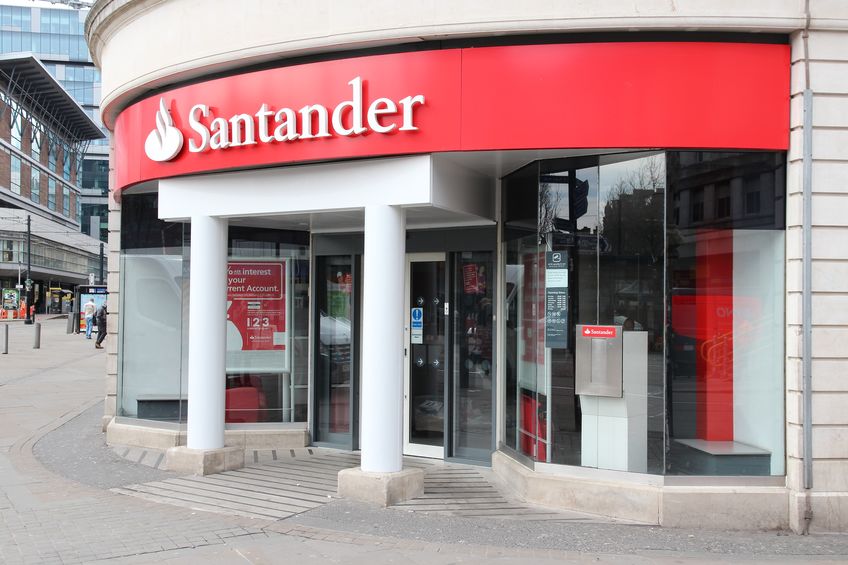
Santander is putting its money where its mouth is and launching Kabbage in UK.
The Spanish banking giant, an investor in Kabbage will use its technology to underwrite quick loans up to 100,000 pounds the same day for loans that typically take 2-12 weeks to process.
The service will roll out over the next two months and will be the bank’s second attempt at allying with an online partner. In 2014, it set up a referral program with UK-based Funding Circle for small business borrowers.
The announcement comes at a time when big banks are shedding weight and becoming leaner to adapt to the digital times. Last Friday (April 1st), Santander said that it will close up to 450 of its 3,467 (13 percent) branches to transition into “cheaper digital channels.”
The road to saving 3 billion euros by 2018 is paved in working with lean businesses like Kabbage. “The way we internalise and adapt to new technology in the coming years will determine our success,” Ana Botin, chairman of Santander said.
This isn’t a one off announcement by Santander. Through its venture arm, Innoventures set up in 2014, the bank dedicated $100 million to invest in fintech startups. The fund participated in Kabbage’s Series E funding last year along with Scotiabank, ING and Reverence Capital Partners.
The bank also set up what it called a “tech-focused international advisory board” led by former US Treasury Secretary Larry Summers with a panel consisting of Red Hat CEO Jim Whitehurst, former Oracle president Charles Phillips and Francisco D’Souza, CEO of software services company Cognizant.
As the alternative lending industry shapes itself into stability with regulation, reducing its dependency on Wall Street’s institutional money, there are doubts whether the industry will stand the test of time in tough credit markets. While venture dollars are increasing in these companies, investors demand more. Fintech upstarts raised $19 billion in 2015 and in the same time, bank staff has been slimming down as investors bet on automated finance to eventually overthrow banking. Already, 46 percent of private funding has gone to lending companies selling cheaper loans easily while the banks focus on the shift of a branch’s transactionary functions to a strategic, consultancy role.
Will we see more such debanking?
Google Ditches Debit Card for P2P Transfer
April 1, 2016
Google will kill its prepaid debit card this June to re purpose it as a P2P payments app.
Wallet Card, which was launched in November 2013 lets users make payments at ATMs, banks and any business that accepts MasterCard Debit.
The project faced multiple roadblocks from the start when it was leaked way back in November 2012, shelved plans in May 2013 before its subsequent launch later that year.
As Android Pay is becoming Google’s mainstay for in-app purchases and third party payments, it makes little sense to continue two similar products. The company is referring Wallet users to American Express and online bank Simple by offering a sign up bonus.
“After careful consideration, we’ve decided that we’ll no longer support the Wallet Card as of June 30. Moving forward, we want to focus on making it easier than ever to send and receive money with the Google Wallet app”
Last month (February 23) Google shut down its financial products comparison tool, Compare.
Online Lender Avant Hires Ex-FDIC Chief to Board
April 1, 2016 Soon, non banking lending will be made up of ex bankers.
The latest announcement comes from Chicago-based online lender Avant which hired the former head of Federal Deposit Insurance Corporation Sheila Bair to its board. Avant sells unsecured personal loans from $1,000 to $35,000 and has issued loans worth $3 billion.
Bair joins Avant after months of due diligence and said she was impressed Avant’s lending standards are similar to big banks where it retains half the loans on its balance sheet. At the FDIC where she spent five years between 2006 to 2011, she pushed for stricter lending standards with capital and risk. In 2014, she joined the board of Spanish bank Santander for a brief stint.
In the recent months, the new crop of fintech upstarts, backed by venture dollars and fiery ambition have clocked fast growth to justify the impressive hires. Stealth P2P insurance startup Lemonade brought on famous behavioral economist Dan Ariely to design risk models. Student lender SoFi hired Deustche Bank chief Anshu Jain to its board, Funding Circle appointed ex ECB chief Jorg Asmussen and last year Prosper hired former CFPB chief Raj Date.
The alternative lending space is garnering a lot of regulatory attention. SEC Chairwoman Mary Jo White called for more disclosure to investors as well as proprietary risk and lending models adopted by companies. The Small Business Finance Association is working on building a guide for industry best practices.
This Startup Can Turn Your Phone into a Credit Report
March 31, 2016 Want your phone to generate your credit report and get you a loan? Don’t worry, Branch is working on it.
This San Francisco-based startup Branch raised $9.2 million from Andreesen Horowitz. Led by the co-founder of non-profit lender Kiva, Branch uses an algorithm to crawl through contact lists, social network data, GPS data and SMS logs on a phone to generate a credit profile for unbanked consumers.
The startup’s primary market is Kenya and after this funding, Tanzania. Branch controls the entire lending supply chain in Africa, right from assessing a person’s creditworthiness to selling loans to collecting debt.
As new lenders emerge in the market, they create a new breed of borrowers. Startups are spending tons to hire top class talent to create new credit models that are, as some would say fairly accommodating of riskier borrowers.
Last month (February 24th), P2P insurance startup Lemonade hired behavioral economist Dan Ariely to design systems to assess risk. Data Analytics startups like PeerIQ and Dataminr perform similar functions for investors.
As for Branch, focusing on the lending market in Africa might be a good strategy after all.