Archive for 2020
Hudson Cook Partner Appointed to CFPB Taskforce on Federal Consumer Financial Law
January 14, 2020Jean Noonan, a Partner at Hudson Cook, LLP, has been announced as one of the new members of the Consumer Financial Protection Bureau Taskforce on Federal Consumer Financial Law.
Seeking to produce research and legal analysis of US consumer financial laws, over the next year the taskforce will focus on “harmonizing, modernizing, and updating the federal consumer financial laws – and their impending regulations – and identifying gaps in knowledge that should be addressed through research, ways to improve consumer understanding of markets and products, and potential conflicts or inconsistencies in existing regulations and guidance,” according to a CFPB statement.
Noonan has served as General Counsel at the Farm Credit Administration and Former Associate Director of the bureau of Consumer Protection Credit Practice at the Federal Trade Commission. The Hudson Cook Partner has also focused her legal practice on fair lending, private and consumer protection matters, as well as consumer financial services.
“It is a true honor to participate in this historic undertaking by the Bureau,” Noonan said in a Hudson Cook statement. “I look forward to collaborating with the other members of the Taskforce who share my deep interest and experience in the field to help the Bureau to enhance and fortify our consumer financial laws and regulations.”
TBF Financial buys $100 million of charged-off loans, leases and merchant cash advances from fintechs, banks, lessors
January 14, 2020DEERFIELD, IL, Jan. 14, 2020 – Commercial debt sales by fintech lenders, equipment leasing companies and banks are on the rise, with major companies striking deals to sell non-performing loans, leases and merchant cash advances after charge-off, reports Brett Boehm, CEO of TBF Financial.
TBF closed transactions in December totaling $100 million. The three largest deals were with a leading e-commerce company that acquired and liquidated a merchant cash advance business; a captive leasing company that provides financing for transportation equipment and other assets; and one of the 20 largest banks in the nation.
“One reason for the rise in commercial debt selling is the tremendous growth of online alternative lenders,” he explains. “As their business originations have increased, so have the number of accounts that eventually default. By selling commercial debt at charge-off instead of spending years trying to collect it, they can put that money back into making loans and merchant cash advances where they generate a much better return.”
“Other lenders and lessors also recognize that it is more productive to concentrate on their core business rather than chase collections past charge-off,” he adds. “Selling commercial debt provides immediate cash and allows collections personnel to focus on accounts that are more likely to be recovered, earlier in the past-due cycle.”
While the December deals may additionally reflect the eagerness of companies to bring in cash before year’s end, Boehm says prospective deals in the pipeline remain high in January, and he anticipates a busy first quarter 2020.
About TBF Financial
TBF Financial is the leading purchaser of non-performing equipment leases, commercial bank loans, online small business loans and merchant cash advances in the U.S. Founded in 1998, the company buys commercial accounts up to four years old from the date of last payment. This includes equipment leases, loans and lines of credit that have personal guarantees, no personal guarantees, are secured, unsecured, pre-agency, post-agency, pre-litigation, and reduced to judgment. For more information, visit tbfgroup.com or contact Brett Boehm, CEO at bboehm@tbfgroup.com, 847-267-0660 or via LinkedIn.
Media Contact:
Carla Young Harrington
Susan Carol Creative for TBF Financial
540.479.7835
Visa Acquires Plaid in $5.3 Billion Deal
January 14, 2020 Yesterday it was announced that Visa and Plaid, the financial services company that helps business connect with customers’ bank accounts, have penned a deal that would see Visa purchase the San Francisco-based startup for $5.3 billion. The purchase price is roughly double Plaid’s previous valuation of $2.7 billion after its 2018 Series C investment of $250 million. Pending regulatory confirmation, the acquisition is expected to be completed in 3-6 months.
Founded in 2013 by Zach Perret and William Hockey, Plaid’s API enables companies to easily link with customers bank accounts and connects to a host of apps, such as Venmo, Robinhood, Coinbase, TransferWise, and Acorns. The company claims to have connected to one quarter of Americans with bank accounts and has expanded to both the UK and Canada.
Not being Visa’s first interaction with Plaid, the startup had previously received investment from its new owner, along with other recognizable names like Mastercard, Goldman Sachs, Citi, and American Express.
“This fits well, strategically,” commented Al Kelly, Visa’s CEO, in a call with investors on Monday. “We’re excited about new business and the ability for this to accelerate our revenue growth over time.”
Speaking to CNBC, Perret told CNBC that “We feel fortunate to have been there for the early days of fintech, and to have helped develop that ecosystem … This represents an important milestone, and the ability to work with Visa to make our products much bigger and better – both domestically and internationally.”
Whether such developments mean added features, further expansion to new territories, or something else entirely remains unclear. However, much like Google’s acquisition of Fitbit late last year, this merger witnesses the passing on of a treasure trove of data, with the curtain being pulled on the financial details of millions of transactions between startups and consumers; leaving Visa better positioned to understand and pre-empt what exactly is happening in industries where unpredictable disruption is valued above all else.
Amazon Says Browser Extension No Longer Secure, Just After PayPal Acquired It
January 13, 2020Last week Politico reporter Ryan Hutchins noted on Twitter that Amazon has been alerting its website users who had installed Honey that the browser extension is no longer safe. The extension, which searches the web for sales coupons for items in your checkout basket and automatically applies them, was recently acquired by PayPal for $4 billion. The deal was agreed upon in November and completed last week. According to Hutchins, such warnings have been viewed by Amazon customers since just before Christmas.
Amazon is telling shoppers that the browser extension Honey — it gives you coupon codes and other ways to save — is malware.
Paypal bought Honey in November for $4 billion. That’s one extensive piece of Malware. pic.twitter.com/Di6I8RAX2X
— Ryan Hutchins (@ryanhutchins) December 20, 2019
 Having been compatible for years without any security warnings from Amazon, critics have now raised the question over whether this was intentionally done to level competition between the two tech giants. Honey makes a profit by charging retailers a percentage of the sales made with the coupons that it finds, and with this now under PayPal’s umbrella, Amazon may no longer be comfortable taking that hit. Especially when its own Amazon Assistant offers a similar experience.
Speaking to The Verge, an Amazon spokesperson said that “Our goal is to warn customers about browser extensions that collect personal shopping data without their knowledge or consent.” A charge against Honey that did not seem to stick for Hutchins, who continued on Twitter with, “That’s how all browser extensions work – including Amazon’s own extension.”
During the summer, a security vulnerability was found in the browser extension only to be quickly patched. Following the coverage of this latest security warning, a Honey spokesperson stated to Wired that “We only use data in ways that directly benefit Honey members – helping people save money and time – and in ways they would expect … Our commitment is clearly spelled out in our privacy and security policy.”
New Jersey Firms Up Its Confession of Judgment Bill
January 13, 2020The New Jersey State legislature strengthened its Confession of Judgment (COJ) bill last week by adding language that grants the Attorney General power to enforce monetary penalties against violators.
S3581 would prohibit any provider of business financing from extending financing with a COJ. Business financing is defined as a loan, line of credit, cash advance, factoring, or asset-based transaction for a business purpose.
The bill still needs to pass the Senate and Assembly and be signed off by the Governor in order to become law. The bill’s sponsor, Senator Troy Singleton, is a Democrat, increasing the likelihood that the Democrat-controlled legislature and Democrat Governor Phil Murphy will move it forward.
Dodd-Frank’s Small Business Lending Data Collection Rule Could Still Take Years to Implement
January 12, 2020 Small business lenders: Are you ready to regularly submit loan application data to the Consumer Financial Protection Bureau? No? Good, because almost ten years after Dodd-Frank passed, the provision that requires the CFPB to collect small business lending data still hasn’t been implemented.
And apparently we’re still years away.
Section 1071, as it’s known, modified the Equal Credit Opportunity Act and defined a small business lender as any company that engages in any financial activity. So if you’re wondering if this thing even applies to whatever you do in your corner of small business finance, it probably does.
The rule has taken so long to implement that consumer advocacy groups have actually sued the CFPB over the delay. The CFPB took note followed by initiative and hosted a symposium late last year to discuss how it might go forward. The next steps from here are to convene a panel of small business lenders, have that panel issue a report, propose what the rules on collection will be, collect feedback on the proposal, formulate a final rule, issue a rule, and then set a time for when it will go into effect. That process could mean that the earliest that data collection takes place is in 2023, possibly even longer as the entire financial services industry may need time to develop the infrastructure and human resources to comply.
Beyond that, advocates and critics of Section 1071 do not even entirely agree on what purpose data collection will even serve. Some believe the intent is merely for the government to have access to data it otherwise might not have while others believe that the CFPB could use statistics it deems discriminatory to bring enforcement actions against financial institutions. Sounds like we could use a few more years to get on the same page…
A recording of the 2019 Symposium is below:
Pacific Equity And Loan Acquires Emerald Capital Funding
January 12, 2020 This week Pacific Equity & Loan, a hard money lender based in Washington state, acquired Emerald Capital Funding. Done to “provide more resources and investment opportunity to real estate investors in the Washington market,” according to a statement from PEL, the merger will see all of ECF’s staff move over to PEL.
“The move comes amid a rapidly evolving mortgage industry in specifically the private money and hard money lending sector,” ECF’s President and Founder Christopher Robinson commented. “We need to stay ahead of the curve and assure that our customer receive the best value, the best technology, and continue to work with a trusted local lender.”
Speaking to deBanked, Sang Yoon, PEL’s Director of Business Development and Co-founder said that he was excited to move forward, noting that it’s a “two heads are better than one situation. By merging or acquiring a company, we are better able to service our customers.”
New Small Business Administration Chief Confirmed
January 9, 2020The newest Administrator of the SBA was announced on Tuesday. Jovita Carranza was appointed after President Trump had tweeted the previous Thursday about her nomination.
I am pleased to announce that Jovita Carranza will be nominated as the new @SBAgov Administrator. She will be replacing Linda McMahon, who has done an outstanding job. Jovita was a great Treasurer of the United States – and I look forward to her joining my Cabinet!
— Donald J. Trump (@realDonaldTrump) April 5, 2019
Replacing Linda McMahon, of WWE corporate fame who left the position in early 2019 to work at pro-Trump super PAC America First Action, Carranza will be the SBA’s first permanent leader in just under a year. The Administration had been led by Chris Pilkerton as the Acting Administrator in the interim.
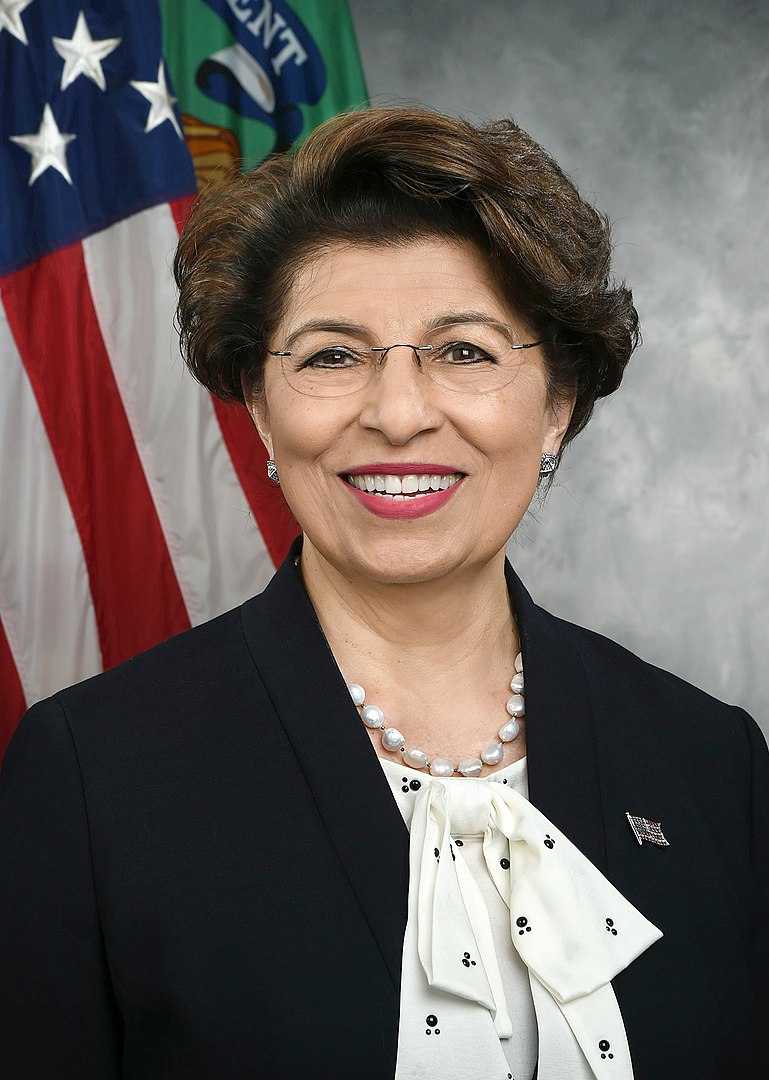 Nominated by bipartisan vote of 88-5 in the Senate, Carranza appears to draw support from both sides of the political spectrum. Among those who voted against Carranza were former Democratic presidential nominee hopefuls Kamala Harris and Kirsten Gillibrand. Speaking on the appointment, Democrat and Ranking Member of the Senate Committee on Small Business and Entrepreneurship Ben Cardin said that he was “optimistic that Treasurer Carranza can be the leader and advocate that the Small Business Administration and American small businesses need right now.”
Discussing her confirmation, a moment of political unity in an increasingly divided period for Washington, Heidi Chung of Yahoo! Finance noted the duality that Carranza brings to the office: “Long been known as someone for the people, she want to definitely help women as well as people of color, so I think, broadly speaking, even though she is a Trump favorite, I think a lot of people are looking forward to what she’s going to bring to the table when she really takes this job on.”
Having served as United States Treasurer from 2017 to 2019, Carranza was responsible for the operations of the US Mint, had dealings with the Federal Reserve, acted as an advisor to Secretary of the Treasury Stephen Mnuchin, and is likely to appear inside your wallet as a signature on dollar bills. Carranza also served as Deputy Administrator in the SBA during George W. Bush’s presidency.
Prior to her time in Washington however, Carranza worked at UPS for over twenty years. Starting off as a part-time truck loader, Carranza worked her way up through the package delivery service to become President of the company’s Latin American and Caribbean operations and subsequently Vice President of Air Operations from their Louisville, Kentucky facility.
Having worked at UPS while being a young mother and attending college, Carranza said on those years that “I thought if I could make it out of this situation – having an opportunity to acquire leadership and managerial skills; receiving on-the-job training – I would be able to finance higher education for myself; secure better caretakers and schools for my daughter – this is the American dream – what I strived to achieve not looking back!”
Carranza was born in Chicago to Mexican immigrant parents. Her father working as a factory foreman and her mother as a housewife. According to Carranza, her mother read a newspaper every day in order to teach herself English.
Seen as a long-time ally to Mnuchin, Carranza is credited by the Secretary as being instrumental in Republicans’ 2017 tax bill, and has said in a statement that she will “continue to promote pro-growth economic policies, eliminate job-killing regulations, and fight for the small businesses that are the lifeblood of the American economy.”
When asked at her Senate confirmation hearing in December what she would do in office, Carranza said that she would “put particular emphasis on opening more doors for women and for entrepreneurs in underserved communities, including military families and veterans,” and that she “will be a tireless advocate in the Cabinet for small businesses.”
Created in 1953, Carranza will be the SBA’s 44th Administrator, working with a budget of $820 million for 2020.