
Archive for 2018
Online Lender Turns to Bachelorette Star to Promote Loans
April 26, 2018Will you accept this rose…err..loan?
Joelle “JoJo” Fletcher has come a long way since her 2016 season on The Bachelorette where she found love with Jordan Rodgers, the younger brother of Green Bay Packers quarterback Aaron Rodgers. The couple is still together and JoJo is now a spokesperson for Marcus, the online consumer lending arm of Goldman Sachs. In the TV advertisement, which you can click to watch below, she explains why Marcus is the way to go if you need financing for home improvement.
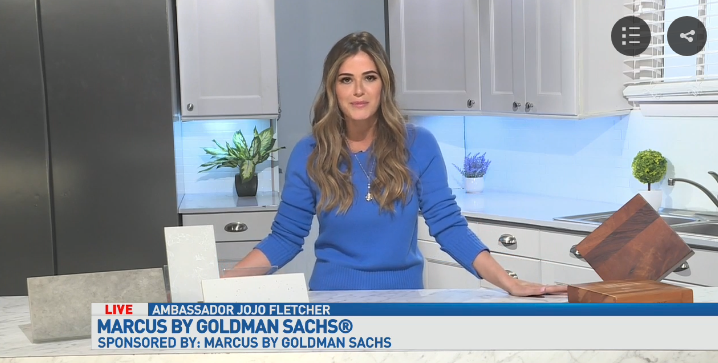
ABC seems to produce the best TV celebrities for online lenders. Three judges on Shark Tank, which is also an ABC show, have all been spokespeople for online lenders.
Barbara Corcoran – OnDeck
Lori Greiner – Kabbage
Kevin O’Leary – IOU Financial
While JoJo herself is no shark, The Bachelorette/Bachelor franchise is the number one reality program — among adults 18-49 living in homes with $100,000+ annual income, a demographic that Marcus is undoubtedly targeting.
Full disclosure: I watched the two seasons that JoJo was on in their entirety.
FTC Sues Lending Club
April 25, 2018
Today, the Federal Trade Commission (FTC) filed a 30 page lawsuit against Lending Club, primarily for using language in its marketing that misleads consumers. There were also charges against Lending Club that it has made unauthorized withdrawals from consumer accounts and that it has failed to share required privacy notices with consumers.
Regarding Lending Club’s misleading language, the FTC lawsuit starts with the company’s promise of “No hidden fees.” The suits alleges that, despite the advertisement, hiding fees is exactly what the company does. It maintains that when loan funds arrive in Lending Club consumers’ bank accounts, the loan amount is “hundreds or even thousands of dollars short of expectations due to a hidden up-front fee that [Lending Club] deducts from consumers’ loan proceeds.”
The FTC further states that the company has continued with “No hidden fees” advertising “despite warnings from its own compliance department that [its] concealment of the up-front fee is ‘likely to mislead the consumer.’” According to the suit, Lending Club has allegedly been warned about this not only by its own compliance team, but also by one of the company’s largest investors. Instead of taking action to minimize this, the suit says that the company did the opposite – it increased the prominence of “No hidden fees” and decreased the prominence of a small question mark icon which, if clicked on, describes in small lettering the up-front fee.
According to the FTC suit, Lending Club uses other language to mislead people, including “Great news! Investors have backed your loan 100%!” These words are shown to loan applicants even if there are more steps left before they qualify for a loan. And in some cases, they may not qualify at all.
When contacted by deBanked, a Lending Club spokesperson issued the following statement in response to the FTC charges:
“We support the important role that the FTC plays in encouraging appropriate standards and best practices. In this case, we believe the FTC is wrong, and are very disappointed that it was not possible to resolve this matter constructively with the agency’s current leadership. In our decade-plus history we have helped more than 2 million people access low cost credit and have co-founded two associations that raised the bar for transparency. The FTC’s allegations cannot be reconciled with this long standing record of consumer satisfaction that’s reflected in every available objective metric.”
Lending Club also wrote a response in its defense against each of the FTC’s main charges.
Founded in in 2007, Lending club is a public company based in San Francisco.
Two Arizona Businessmen Sentenced to Prison for Loan Fraud
April 24, 2018 Last week, owners of a medical equipment manufacturer and distributor in Phoenix plead guilty and were sentenced to prison for defrauding the Small Business Administration (SBA) and two Arizona banks. According to a statement released by the US Department of Justice (DOJ), the now defunct company, called Global Medical Equipment of Arizona, defrauded the SBA and the two regional banks by submitting falsified loan applications. This included lying about the purpose of loans (instead using the money to pay off pre-existing debts), sending forged emails and letters indicating that they had made down payments on loans, and concealing a kickback.
“These loans should have been granted to qualified small business owners. Instead, the defendants effectively denied an opportunity to legitimate small businesses deserving access to capital,” said Elizabeth A. Strange, First Assistant U.S. Attorney for the District of Arizona. “The United States Attorney’s Office will continue to aggressively investigate and seek criminal prosecution or civil remedies when fraud is perpetrated by corrupt borrowers who attempt to obtain financial assistance through the SBA’s guaranteed loan programs.”
According to the DOJ statement, company owners Harold Halman II, 58, and Alexander Schaap, 62, were sentenced to 36 and 30 months in prison, respectively. Each must serve three years of supervised release after their prison terms. An associate, Craighton Boats, 44, was not sentenced to prison, but to five years of probation.
“SBA’s 7(a) program is intended to provide capital to grow the nation’s small businesses, not line one’s pockets,” said Acting Inspector General Hannibal “Mike” Ware. “Schemes to unjustly enrich oneself will be rooted out, and those responsible will be brought to justice.”
In the DOJ statement, Michael DeLeon, Special Agent in Charge of the Phoenix Field Office, said that the three businessmen took $6 million in fraudulent loans, of which they defaulted on nearly $4.5 million. So the Court has also ordered that they pay $4.5 million in restitution.
The investigation was led by the SBA’s Office of Inspector General, the IRS-Criminal Investigation Division and the FBI. The prosecution was handled by Kevin M. Rapp, Assistant United States Attorney, District of Arizona, Phoenix.
Gale Force Twins
April 24, 2018
As Hurricane Irma swept through the Caribbean and barreled toward the Florida Keys early last September, Wendy Vila, chief executive, at Unicus Capital evacuated her home in West Palm Beach and decamped to Panama City in the Florida panhandle where “it was just a little bit rainy.”
After safely waiting out Irma, she says, her return south was precarious. The roads were strewn with tree branches and other debris. Fuel was scarce. Many gas stations were either closed or posted signs reading “No Gas.” “Restaurants had run out of food,” Vila adds, “so there was nothing to eat” along the highway.
She returned to West Palm Beach but didn’t stay long. Instead, Vila again drove west, this time across the Florida peninsula to the South Florida city of Naples, not far from where Irma had made landfall. “I went there to volunteer with Samaritan’s Purse for two days,” she says, referring to the Boone, N.C.-based Christian organization that provides humanitarian aid to people in physical need. “Things were a lot worse there than in West Palm Beach,” she reports. “A lot of trees were down, houses were flooded and people had to throw all of their belongings out onto the street.”
Meanwhile, many of the Florida merchants whom Unicus funds were distressed. “If people had no power,” Vila says, “they couldn’t function. A lot of businesses had to close down. For some merchants in the affected areas,” she adds, Unicus extended “a 90-day grace period.”

Vila’s experience with Hurricane Irma – both professionally and personally — is not an isolated one. She is among several business lenders whom deBanked interviewed about the storm and its aftermath. This article grew out of deBanked’s Florida networking event at the Gale Hotel in South Beach in late January. We went back to many of the attendees as well as to other business-funders in The Sunshine State and sought out their experiences before, during and after the powerful tempest.
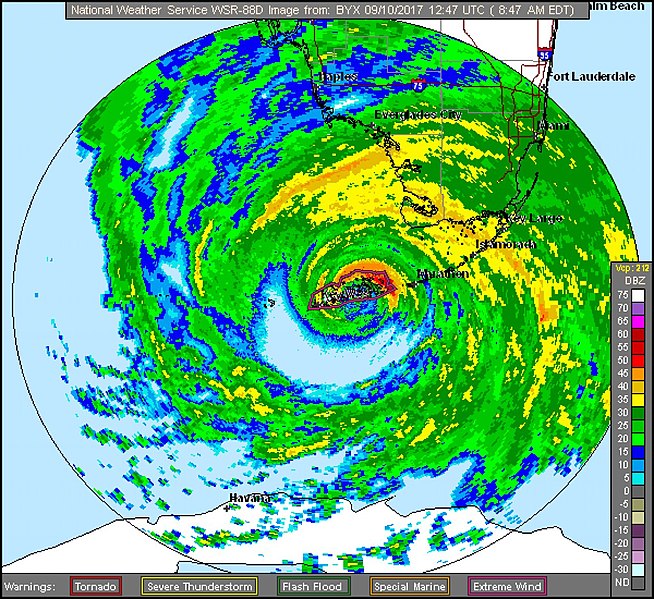
At one point, Hurricane Irma was the strongest hurricane ever recorded in the Atlantic by the National Hurricane Center. As Irma took dead aim at Florida, it packed sustained winds exceeding 157 miles per hour, earning it the designation of a Category 5 storm, the highest and most destructive. It slammed into the Florida Keys as a Category 4 hurricane, reached the Gulf of Mexico, and then came ashore a second time on Florida’s west coast at Marco Island, just south of Naples, and began traversing the state as a Category 3 hurricane, gradually losing strength. By the time Irma exited Florida, it had been downgraded to a tropical storm. According to the National Hurricane Center, Irma caused an estimated $50 billion in damage in the U.S., making it the fifth-costliest hurricane to hit the mainland.
Financiers and brokers told personal stories of working with and assisting merchants across Florida who sought to regain their lost footing and keep from going — literally — underwater. In many cases, members of the alternative business financing community said, they were simultaneously assisting troubled merchants while they themselves struggled with Irma-occasioned troubles that ranged from inconvenience to hardship.
“I was ten days without power,” says Manny Columbie, funding manager at Axiom Financial, based in South Miami. Columbie, who lives in the residential Westchester district of Miami, not far from the campus of Florida International University, says that he conducts much of his business from his home. That power loss not only constrained his ability to keep working but posed a life-or-death situation for his family: Columbie’s 90-year-old grandmother, who lives with him and his girlfriend, depends on electrical power to operate her oxygen pump.
 Fortunately, he says, he had a backup generator, the use of which alternated between providing power for his grandmother’s oxygen and the family’s refrigerator. Meanwhile, his roof was leaking and there was six inches of rainwater swamping the house — the water gushing into the kitchen through the laundry room, dishwasher and even the oven.
While Columbie saw instances of tempers growing short in Miami’s September heat, he was nonetheless cheered by the way his community responded. “Neighbors were coming by to see if I needed gasoline for my generator,” Columbie says. “People were firing up food on their outside grills. There was no air-conditioning or cold showers but we cooled off by jumping in a neighbor’s pool. I saw a lot of people coming together.”
At the same time, he was doing what he could to assist merchants who did business with Axiom. Only one – a retail clothing store in Miami – was permanently shuttered. One of his clients, Oscar Pratt, owner of Odessy Party Supplies in Miami Gardens, was grateful for a moratorium on daily payments.
“We’re in the business of selling party accessories for events from births to funerals and everything in-between,” Pratt says. “Baby showers, christenings, birthdays, quinceaneras, ‘Sweet Sixteens,’ graduations, weddings, and all kinds of themed parties like Halloween,” he says. “We sell plates and cups, candy bags, cake-toppers, small favors, pinatas…”
Pratt said he’d called his funders ahead of the storm and “requested some leeway” from payments. Once the storm hit – and for two weeks afterward while there was no electricity – the party-supply business was pretty much on hold. “We had a few days without electricity or phone,” he says. “We couldn’t open the doors and do business because we use computer-generated receipts. Our customer base was down to just about nothing. Without electricity, people weren’t working and they weren’t having parties.”
Following the two-week grace period, Pratt says that his funders, which included QuarterSpot, granted a second two-week period of leniency in which Odessy was allowed to make reduced payments. “It was very difficult,” he says. “There was no help from FEMA (Federal Emergency Management Agency) or from our insurance company since we’re on high ground and there were no physical damages, just the electricity.”
He reckoned that Odessy, which boasts annual revenues of $1.2 million, was deprived of roughly $50,000-$60,000 in sales because of Irma. Pratt reports that if his lenders had “played hardball” and demanded that he make his payments, he could have stayed in business thanks to “cash on hand” but it wouldn’t have been easy.
Meantime, his lenders’ forbearance was soon rewarded. By October, business was back to normal and he resumed making payments in full. “As soon as the lights went on,” Pratt says, “the parties started again.”
Similarly, says Paul Boxer, chief marketing officer at Quicksilver Capital in Brooklyn, the ultimate impact of Hurricane Irma on his firm’s funding business was to build trust and cement relationships with clients in South Florida. “We had a full team on board to answer the large number of calls coming in and to assist our merchants with any questions they had,” he says.
 Many affected merchants, Boxer reports, were forced to evacuate ahead of the storm. When they returned, it was common for them to discover that their shops and stores sustained flooding damage from the heavy rains and a storm surge. Roofs were blown-off and structures were battered by 100-plus mile-an-hour winds, falling trees, and whipped-up debris. Even businesses that suffered little damage were paralyzed by the loss of electricity, impassable roads, and the absence of customers.
“Some were down for a few days,” Boxer reports. “Some were down a month to two months. We kept in touch. We were really on top of things with our merchants and asking them what they needed. We even fielded general safety questions and directed them on whom to call with insurance questions and other related business questions. It was good business,” he adds, “because it showed you cared. We were looking to do the right thing by our merchants and they appreciated it.”
Quicksilver typically offered merchants a two-to-three week “reprieve” on payments, Boxer says. For those businesses and entreprenuers whose operations were “completely out of commission” and needed more time, he says, the company suspended payments for as long as two months.
In the end, Quicksilver’s policy of forbearance reaped dividends. It not only built up good will with its customer base but also with the Independent Sales Organizations (ISOs) who’d brokered many of the firm’s Florida deals. “We helped grow that relationship,” Boxer says of the merchant-ISO connection. “They (ISOs) love getting renewals. It’s been a win-win for everybody.”
Doug Rovello, senior managing partner at Fund Simple, Inc., an alternative business lender and broker in Palm Harbor, a beach town just outside Tampa, says the Tampa-St. Petersburg area was spared from severe flooding but “we did experience power outages.” Among his clients, he reports, businesses in the food industry were among the most vulnerable. “I had one restaurant that lost $200,000 in business in the month of September,” he says.
 When the electricity went down, grocery stores and bodegas, restaurants, bars, pizzerias, sub shops, delis and luncheonettes suffered outsized losses. Without power, businesses in the food industry were forced to dump spoiled meat, rotting fish, unusable dishes like appetizers and other foodstuffs requiring refrigeration.
Rovello reports that the hurricane managed to bollix up the business of one top client, a leading ticket broker in the area with a reputation for obtaining “exclusive” tickets to major events such as A-list rock concerts and featured sporting contests – including the Super Bowl. “He buys tickets in advance and when one big event was canceled he got stuck with $30,000 in tickets that he had to eat,” Rovello says.
Other kinds of businesses that depend on alternative lenders and got hit hard from the loss of power, Rovello observes, were medical clinics, doctors’ offices, pain-management centers, and assisted-living quarters – particularly those south of Sarasota. A number of golf courses also closed down for a couple of weeks, Rovello notes, further impairing the tourism and entertainment economy. “They were not allowed to move any of the damage that was done – poles, trees, et cetera until FEMA got there,” he says.
For some 30 days following Irma’s arrival, Rovello reports that he asked clients to make modest payments – perhaps $100 instead of a $750 monthly payment — “to keep their accounts active.” He also used his connections with FEMA adjusters and interceded with funders on behalf of clients– and even businesses that were not clients – who found themselves in arrears.

While many Floridians were seeking higher ground or hightailing it out of state, Jay Bhatt, who is a senior vice president of marketing at Breakout Capital in McLean, Va., was catching one of the last Jet Blue flights into Orlando to help out his aging parents. They are now in their late 60s and 70s, he reports, and living in a retirement community in Polk County, about ten miles south of Disney World.
Irma was still a Category 1 hurricane with 100 mph winds when it hit Orlando. The electrical grid went down, but Bhatt was able to purchase a generator – the kind designed specifically to provide electricity for oxygen respirators — from Home Depot. During his stay, Bhatt made several car trips in search of fuel, each of which took him probably 35-40 minutes. “We also leveraged some of the neighbors’ sockets,” he says, “but they were so small that the wattage only allowed for the operation of the fridge and a fan.”
Electricity was restored after four or five days. “The fact that it was a retirement community might have been why we got power back so soon while it took two or three weeks for many others,” he reckons.
 While Bhatt’s attention was focused on his parents, his employer – which had just offered a blanket hold on payments to its merchant accounts in 11 Texas counties that had been simultaneously inundated and walloped by Hurricane Harvey – now faced the challenge of responding to the second hurricane in two weeks. With Irma, Breakout chose to deal with its customers individually. “We didn’t do an immediate blanket response” as in Texas, Bhatt says, adding: “We were able to contact each one and we only wrote off one small business.”
Rakem Lampkin, senior customer service representative at Pearl Capital, a New York-based alternative funder, says that his firm funds “roughly 175” businesses in South Florida. In addition to those establishments already mentioned as economically reeling because of Irma, such as restaurants, he cited “car dealerships, automotive repair shops and tech companies” as among the hardest hit, especially from the lack of electricity.
Lampkin also noted that many of Pearl’s merchants felt Irma’s wrath when colleges and state schools closed their doors. “Everything from transportation, lunches, sports equipment, even mom-and-pop florists” were slammed, he says, adding: “When the schools shut down, our payments slowed down.”
Pearl provided preferential treatment to merchants on the coast who were granted “a hold on debit payments,” Lampkin says. Even for coastal businesses that remained “structurally sound,” the business owners’ and employees’ “homes were affected, which kept them from getting to work,” he says.
As for businesses situated inland, “We were still sympathetic,” Lampkin says, but after an initial five-day grace-period their discounts were in the range of 66%-75% “so that we could focus our resources toward the people on the coast.”
To monitor the situation from New York, Lampkin says, the company was able to rely on accounts in the local news media, Google Maps, and other Internet sources. “We evaluated the situation case-by-case and week-by-week,” he says.
Jennifer Legg, a co-owner of Rochelle’s Jewelry & Watch Repair at the Indian River Mall in Vero Beach, is a Pearl-funded merchant who says she shut down the family-run business “for six or seven days” after Irma while the electricity went out. “Trees were down and a lot of people lost food and trailers, but we were not impacted as much as we were supposed to be,” she remarked.
Most of the shop’s business consists of customers stopping in for a new battery or a watch-band. Once they’re in the store, there’s a chance that they’ll purchase something else. But Irma put the kibosh on mall traffic. “A lot of people left the state, so that hurt business,” Legg says.
The store – which records annual sales of about $200,000 — lost probably $10,000 in revenue because of Irma. “It was very hard for that month of September,” Legg says. “Even after the doors opened, it was dead. No money came in for about two weeks.”
Fortunately, though, her capital source “did not take money out for a week,” she says. “If they’d kept taking it out,” she added, “we would have defaulted.”
Chris Larsen on Crypto, Ripple, and ICOs
April 24, 2018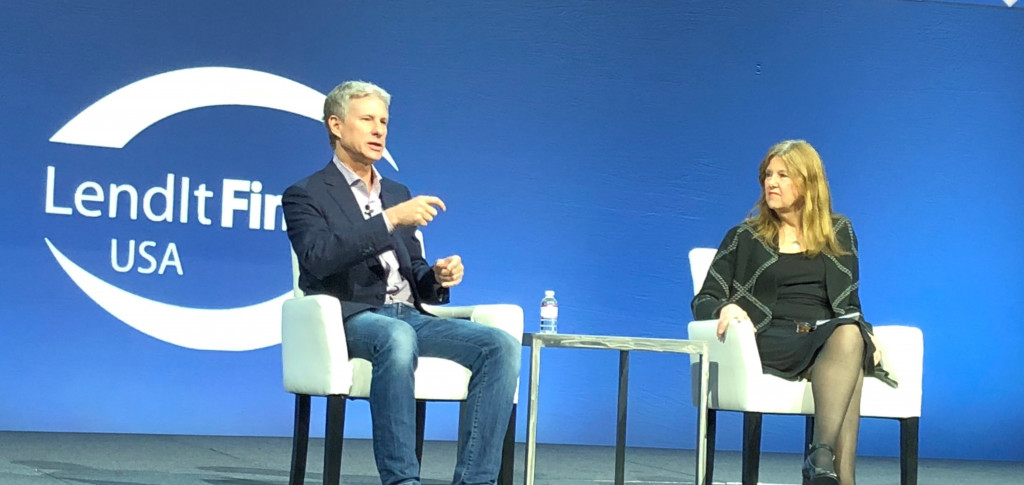 At LendIt Fintech, Ripple co-founder and Chairman Chris Larsen got real in his on-stage conversation with Jo Ann Barefoot. This is what you missed:
I think this is a fundamental shift in fintech and what we believe the big thing happening here is the development of a second internet. We call it the internet of value so that value, money, assets will begin moving as quickly and efficiently as data has been moving for the last 25 years
Using SWIFT is like sending a letter. You know, when drop it in the mailbox, you have no idea where it is, if it got there or not. So, getting away from that I think is profound. And what we would say is that, you know, a lot of the backlash from globalization today, it’s not because globalization is bad. It’s essential. It’s that it’s incomplete because globalization needs kind of 3 key systems to be working together and it needs interoperability and data.
I think all new technologies start with a, you know, screw the government, disruption, tear everything down. So, I think that’s natural and then, you know, the internet started that way too and then it has to sort of grow up. And particularly, it’s solving real world problems. Real world problems are always more complicated than that. And then when you switch to finance, this is different. Right? You know, the internet was mostly technology. Mostly. It’s just now kind of crashing into regulatory issues.
I think on some of the other things like ICOs, we’re pretty anti-ICO. I think it’s a bad thing to get involved with from the founder’s perspective because, you know, if you’re a founder and you can raise money many ways today, do you really want to do something where you’re going to have the SEC, you know, kind of threat hanging over your head for 10 years with strict liability? You just don’t want that. You know, that’s a problem.
[..]From building currencies, digital assets, ICOs typically say, “Okay. There’s a currency for this use case and none other.” That’s kind of the opposite of the way it should go. Currencies need to be as liquid as possible. And so, they’re going to have as many use cases as possible. For XRP for example, the kind of early beachhead has been cross border payments, but we see that as just the beginning of something that really has a multitude of use cases. To get as liquid as possible, that’s what drives utility and value at the end of the day. So, I think in all fronts ICOs are problematic and that’s why you’re seeing the regulators crack down on them, not everywhere, but I think they’ll be transformed. They’ll probably look like, you know, IPOs at the end of the day.
Finitive Launches Alternative Lending Investment Platform
April 24, 2018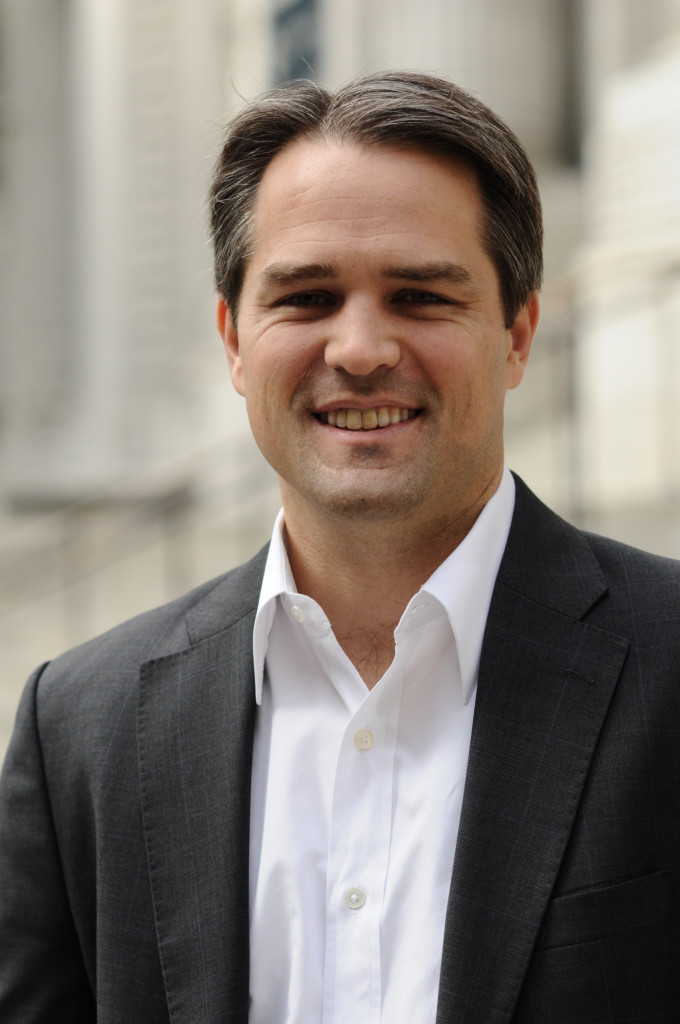 Finitive, which brings capital from institutional investors to alternative lending companies, announced earlier this month that it received capital commitments totaling $1.3 billion. It also officially launched its financial technology platform.
According to founder and Executive Chairman Jon Barlow, the company, which was founded last August, has two kinds of clients: institutional investors and alternative lending companies. So far, the company has four alternative lender clients.
“We are very selective [with our lending clients],” Barlow said. “We are not a list service.”
Among these four lenders, Barlow told deBanked that $1 billion has been committed from institutional investors and $250 to $300 million has actually been funded. Finitive gets paid by its lender clients based on how much money gets funded of the capital they provide from institutional investors. Finitive does not charge its institutional investor clients.
“We perform due diligence for [institutional investors] so that they don’t have to, and we give them our due diligence files for free,” Barlow said. “We don’t think anyone has ever done this. We think it’s revolutionary.”
Through the Finitive platform, institutional investors, along with banks, insurance companies and fund managers can directly access proprietary, alternative lending transactions that are vetted by a team of highly trained credit professionals, Barlow said. For the lending companies, or “originator partners,” the platform allows them to raise capital from a variety of sources.
“We are unique for the institutional investor community because we show [institutional investors] highly vetted transactions,” Barlow said.
Barlow estimates that it takes roughly 500 hours and several hundred thousand dollars to perform proper institutional due diligence on an alternative lending transaction, and Finitive does this for free for investors. So this also benefits participating lenders that now have access to more funds. Finitive is based in New York and has 11 full-time employees.
Despite Movement of Negative Bill for MCA and Factoring Industries, Hope for a Solution
April 23, 2018 Last week, California State politicians gathered for a hearing on SB 1235, a bill that would require the disclosure of an Annual Percentage Rate (APR) for all loans and non-loans, including MCA and factoring products. This is very problematic because APR (which includes interest rate) cannot be calculated for most MCA and factoring products for one reason: time. What makes merchant cash advance and factoring unique is that the timing of payments is flexible, and therefore unknown.
“It’s impossible to compute,” said veteran factoring lawyer Bob Zadek about calculating APR for most MCA and factoring products. “Interest = principal x rate x time. Since [they] cannot determine how long the advance will be outstanding – since repayment is a function of the borrower’s cash flow – the algebra doesn’t work.”
The bill, introduced by California State Senator Steve Glazer, moved out of the Senate committee on Banking and Financial Institutions and is headed to the Judiciary committee – closer to potential passage. Yet advocates of the MCA industry, one of whom testified in the assembly room in Sacramento, are hopeful.
“There were a number of state senators who clearly understood the problems with applying an APR to a commercial transaction and to a purchase and sale of receivables transaction,” said Katherine Fisher, a partner at Hudson Cook, LLP who spoke on behalf of the Commercial Finance Coalition (CFC). CFC is an alliance of financial companies that educates government regulators and elected officials on issues related to non-bank commercial finance. CFC Executive Director, Dan Gans, told deBanked that he believed the committee really understood what Fisher was trying to convey.
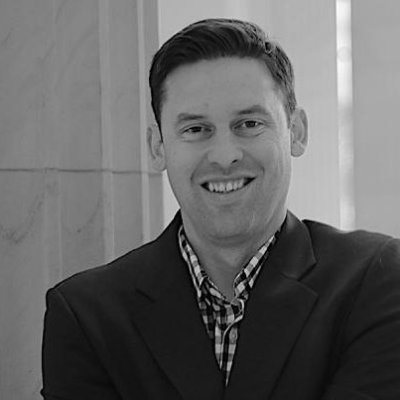
Another major advocacy group is the Small Business Finance Association (SBFA). They brought Joseph Looney, COO and General Counsel of RapidAdvance, to testify against SB 1235, and SBFA Chief of Staff Steve Denis sounded optimistic, saying that they have a very good relationship with State Senator Glazer’s office.
“To me, despite the fact that they moved [on] a bill that we’re opposed to through the process,” Denis said. “I think the folks that we’ve been meeting with out there – the senators – they’re all very open to our industry and open to having broader discussion about how to [best] disclose these terms and how to make sure we’re doing what’s in the best interest of small business owners. That’s a real positive, and I’m optimistic that we can get something done.”
As for concern about the bill moving forward, Denis said it’s what he expected.
“It’s just the way the process works in California,” Denis said. “If you look at committee history, they don’t really reject a lot of bills. They like to move bills forward so they can be discussed and negotiated.”
As of this story’s publication, SB 1235’s Judiciary committee hearing had not yet been scheduled.
Update 4/26/18: The hearing is scheduled for May 8, 2018 at 1:30 p.m. PST in Room 112.
Full video of the April 18th hearing below:
Meet at the 2018 Financial Services Conference
April 22, 2018I will be attending the 2018 Financial Services conference by CounselorLibrary and Hudson Cook, LLP on Monday, April 23rd in Baltimore, MD. deBanked is a sponsor of the event. If you would like to meet, please email me at sean@debanked.com.
April 23rd is a Special One-Day Program with Merchant Cash Advance and Small Business Lending Breakout Sessions.
deBanked is a partner with CounselorLibrary in the Merchant Cash Advance Basics online course, the only certification course available for MCA.
A partner from Hudson Cook, LLP, Katherine Fisher, also recently testified on behalf of the Commercial Finance Coalition at a state Senate hearing in California on commercial loan disclosures. You can read her transcript here.