Archive for 2018
DFS Releases Recommendations for Online Lending
July 12, 2018
The New York State Department of Financial Services (DFS) released a report on Wednesday on the subject of online lending in the state. The report was mandated by a bill signed by New York Governor Andrew Cuomo on June 1 of last year. According to the original bill, this report was to be researched and composed by a task force of multiple parties. But in the eleventh hour, the section regarding the task force was struck. The report is to be presented to the governor, the temporary president of the senate, the speaker of the assembly, the chair of the senate standing committee on banks, and the chair of the assembly standing committee on banks.
Wednesday’s 31-page report is based on survey responses from 35 online lenders operating in the state, lending both to businesses and to individuals. One of the revelations in the report is that, from the data obtained, “New York individuals appear to account for a higher total dollar amount of loans than New York businesses.”
The report presents three primary assertions:
Equal Application of Consumer Protection Laws.
The report establishes that New York has strong consumer protection laws and regulations that apply to financial institutions. “These protections should apply equally to all consumer lending and small business lending activities,” the report reads. The report explains that there are strong protections against payday lenders and indicates that there should be strong protections across the board, even though the financial products and the consumers may vary widely.
Usury Limits Must Apply to All Lending in New York.
The report asserts that access to credit at usurious rates has long been prohibited in New York and that online lenders should not be able to bypass this by having arrangements with banks in other states, like Utah, where the usury laws are different. In New York, the civil usury rate is 16% and the criminal usury rate is 25%. But because online lenders have arrangements with out-of-state banks, they can charge interest at rates well above 25%.
Currently, if an online lender sues a merchant for not paying, the merchant cannot use usury as a defense. In the report, DFS recommends that a business should have the right to present usury as a defense.
All Online Lenders Should be Licensed and Supervised.
The report states that New York State chartered banks, credit unions and licensed non-depositories are subject to regular examinations by the DFS and, if applicable, federal regulatory agencies.
“Many online lenders remain unlicensed in New York with no direct supervisory oversight from a safety and soundness or consumer compliance perspective,” the report reads. “Direct supervision and oversight is the only way to ensure that New York’s consumers and small business owners receive the same protections irrespective of the channel of delivery [of financing.]”
Some of these issues relate to the well-known 2015 Madden v. Midland Funding court decision, in which a credit card consumer (Madden) won a case against a debt-collection agency (Midland Funding) because the court decided that Midland, as a non-bank, was not allowed to charge interest above what was allowed in the state.
Axiom Bank Acquires Allied Affiliated Funding
July 12, 2018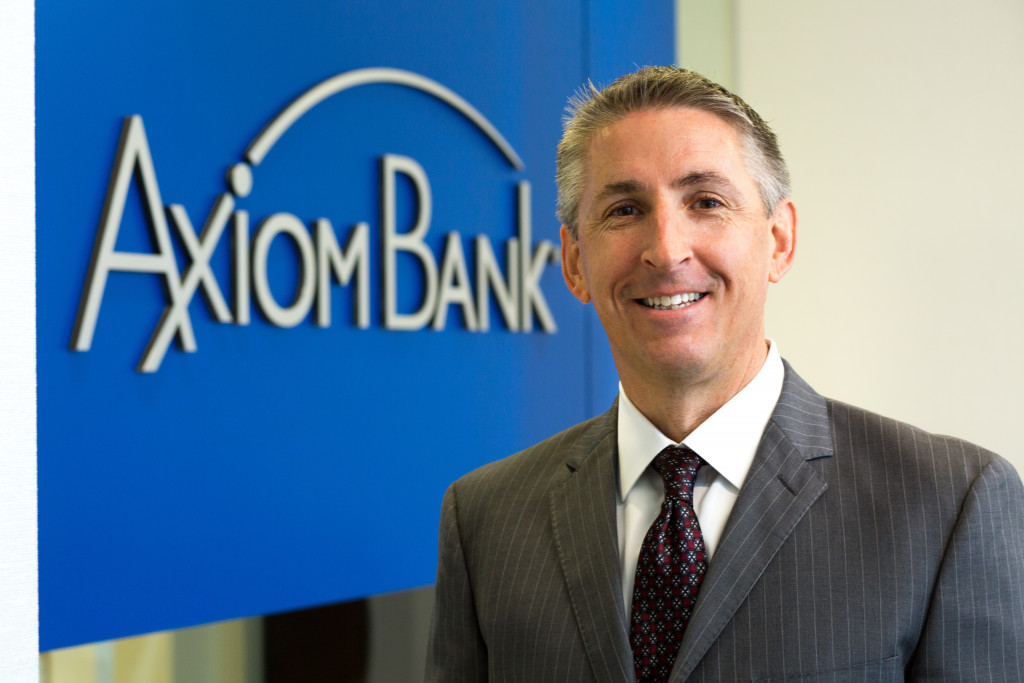
Axiom Bank, a community bank with retail branches located inside Walmarts throughout Florida, announced this week that it has acquired a factoring company, Allied Affiliated Funding.
“Allied has a proven track record of success with accounts receivable lending, which fits well with Axiom’s broader business plan to diversify and expand our commercial lending operation,” said Axiom Bank President and CEO Daniel Davis. “Allied is also an excellent fit culturally for us. They have a strong management team with the expertise to help emerging companies and businesses that are seeking growth, as well as those that need working capital.”
Allied’s factoring product will add to Axiom Bank’s offering for its small business owners clients. Likewise, Axiom Bank’s capabilities in cash management services will provide new opportunities for Allied’s current commercial clients. Allied is based in Dallas, Texas.
“Axiom is a Florida-based nationally chartered bank with a strong entrepreneurial spirit that is focused on maximizing clients’ potential,” Allied Affiliated Funding CEO Clay Tramel. “Combining forces helps us to deliver on a shared vision with greater creativity by offering new exciting products, including asset-based lending, in the marketplace.”
Tramel will stay on as CEO of what will now be known as Axiom Factoring. Gen Merritt-Parikh will serve as President and be in charge of the day-to-day operations.
Acquiring other companies has been a cornerstone of Axiom Bank’s growth strategy, including branch expansions (there are now 24 branches) as well as the launch of AxiomGO, a mobile banking app. Axiom was also recently approved as an SBA preferred lender, a designation that allows the bank to independently approve and underwrite SBA 7(a) loans.
Established in 1962, Axiom Bank is based in central Florida and provides retail banking services, including checking, deposit, and money market accounts.
Access to Growth Capital Expands for Small Businesses in Western New York
July 12, 2018Rochester, New York – July 12, 2018 – Lendio, the nation’s leading marketplace for small business loans, today announced an expansion of the Lendio franchise in Rochester, New York. Lendio Rochester will provide financing solutions to businesses from Syracuse to Buffalo and Niagara Falls to the Canadian border. Lendio franchise owner RJ Muto hopes to ease the financial hurdles for local business owners by helping them apply for loans, review their options and secure funding through Lendio’s network of over 75 lenders.
An online service that helps business owners find the working capital they need to grow their businesses, Lendio’s funding options include SBA loans, startup loans, equipment loans, commercial real estate loans and more. Through franchisees that understand the needs of local business owners, the Lendio franchise program reduces the legwork of looking for a small business loan while bridging the gap between online lenders and the small business community.
Since 2008, accessing financial capital has been difficult for small business owners in upstate New York. In addition to feeling the burden of high taxes in the state, business owners view themselves as outvoted and misrepresented in state government by the massive population of New York City, according to Muto. While residents migrated away from Rochester and Buffalo in record numbers as jobs became scarce, the area is mounting a steady comeback, says Muto, and he hopes to play a role in its rebirth.
“We take a consultant approach to each business we fund,” said Muto. “The goal is to figure out how we can help the business owner thrive and grow. We’ve seen a fantastic response in Rochester. There is a lot of opportunity for small business in this area, and I’m excited to be a part of it.”
“RJ and Lendio did a great job for me and my business. He assessed our needs and found several good matches for us—having multiple options speaks volumes,” said Eric Schladebeck, owner of Spencerport Family Apothecary in Spencerport, New York. “We had our funds in such an expedited time frame that I felt as though I was his top priority.”
Between 2015 and 2017, online lenders, including Lendio, funded over $758 million to 11,490 small businesses in the state of New York. These online loans directly generated $1.8 billion in sales for small businesses in New York State and created 20,154 jobs and $795 million in wages. Nearly one-third of these loans went to small businesses in lower-income communities (those below the national median income).
For more information on how to join the Lendio franchise program, visit: https://www.lendio.com/franchise.
About Lendio
Lendio is a free online service that helps business owners find the right small business loans within minutes. With a network of over 75 lenders offering multiple loan products, Lendio’s marketplace is the center of small business lending. Bringing all options together in one place, from short-term specialty financing to long-term, low-interest traditional loans, our technology makes small business lending simple and decreases the amount of time and effort it takes to secure funding. For every loan facilitated on Lendio’s marketplace platform, Lendio Gives, an employee contribution and employer matching program, donates a percentage of funds to low-income entrepreneurs around the world through Kiva.org. More information about Lendio is available at www.lendio.com. Information about Lendio franchising opportunities can be found at www.lendiofranchise.com.
Contact:
Melanie King
Lendio
801.748.4782
melanie.king@lendio.com
iAdvance Now Hires Chief Revenue Officer
July 11, 2018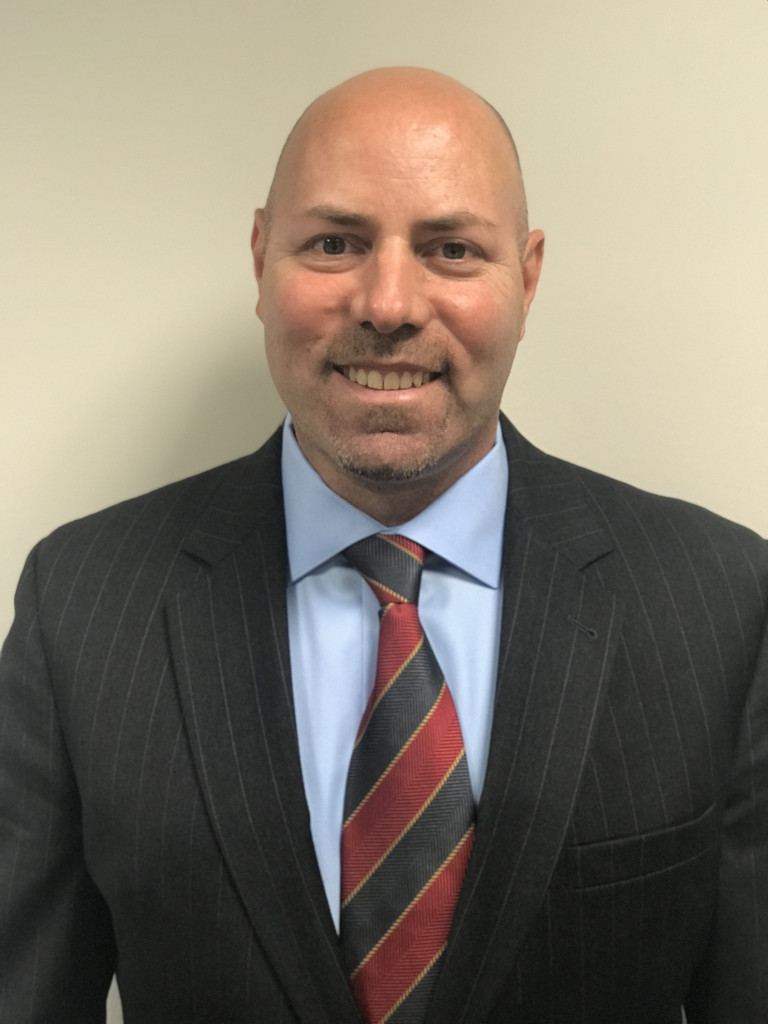
iAdvance Now announced on Tuesday that it hired John Kuriger as Chief Revenue Officer, who was formerly Vice President at Lendio.
“We believe that John is the missing piece of the puzzle for us to take iAdvance Now to the next level,” said iAdvance Now cofounders Belal Ayoub and Eddie Hamid in a joint statement. “John will bring with him positive changes that will result in benefits for our merchants, our employees, and our strategic partners. We’re looking forward to the future and fulfilling the vision we have for iAdvance Now and couldn’t have picked a better individual to join us on this journey.”
Ayoub told deBanked that hiring Kuriger is part of a larger effort to grow the company’s business. Currently, 90 percent of iAdvance Now’s business comes from its merchant cash advance product. The company, a large ISO with 65 employees, also offers term loans, SBA loans and factoring. But Ayoub said that part of Kuriger’s job will be to develop more business for these other product offerings, and also to help with project management to improve efficiency and overall conversion.
iAdvance Now provides financing to customers in a variety of industries, including medical offices, restaurants, trucking, and beauty salons. Ayoub said that no single industry is dominant in his business and that 100 percent of his business is generated internally. Of the company’s 65 employees, 45 of them are salespeople.
iAdvance Now has a third cofounder, Troy Caruso, who is also the company’s CFO. The company was founded at the end of 2014 and is based in Long Island. Ayoub also said that the company expects to grow this year into next and may move into a larger office.
MCA Funder Says Debt Settlement Company Operating Illegally Without a Budget Planning License
July 11, 2018 Merchant Cash Advance companies are on the warpath against debt settlement companies. In the latest legal offensive, High Speed Capital alleges that Corporate Debt Advisors’ debt settlement business is really just an unlicensed Budget Planning operation, a misdemeanor criminal offense in New York.
High Speed’s petition cites New York General Business Law § 455. “So-called ‘debt negotiation’ and ‘debt settlement’ companies that negotiate settlements between debtors and creditors on behalf of the debtors and which may coordinate or supervise payment by the debtors to the creditors in exchange for fees from the debtor are engaged in Budget Planning,” they say. “Budget Planning agreements with unlicensed entities are void for illegality and cannot be upheld by the Court.”
At issue in this action is that the transfer of funds from the merchant to Corporate Debt Advisors is allegedly fraudulent. High Speed won a judgment against the merchant in October 2017 and believes those funds belong to it. Corporate Debt Advisors has refused to send the funds in its possession to High Speed and has instead tried to negotiate. High Speed’s petition before the Court asks that Corporate Debt Advisors turn over the funds immediately to High Speed.
The case can be found in the New York Supreme Court, Erie County under Index #: 810673/2018. You can view the petition here.
Lendistry Becomes a Member of the Federal Home Loan Bank of San Francisco
July 11, 2018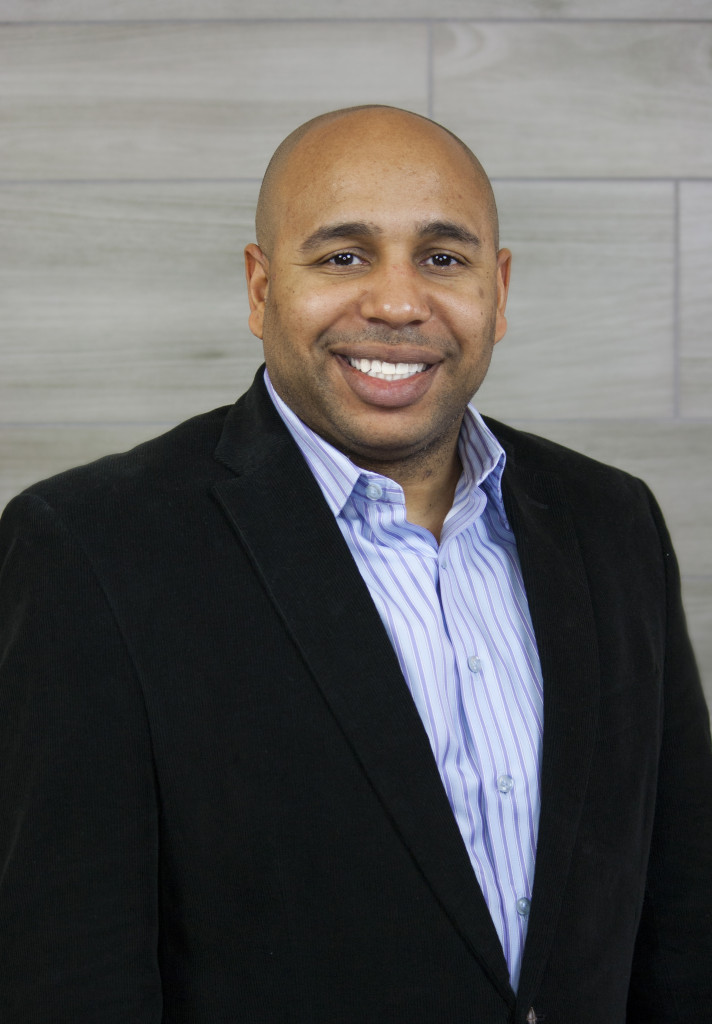
Lendistry announced yesterday that it has been approved for membership by the Federal Home Loan Bank of San Francisco. This will allow the lender to expand its commercial real estate loan business, which Lendistry launched in January.
“It’s an honor to be a member of the Federal Home Loan Bank of San Francisco, an organization committed to community development by expanding availability of credit,” said Lendistry CEO Everett K. Sands. “We look forward to leveraging our unique business model of being a hybrid of a community bank and a fintech company to expand access to capital to all.”
Lendistry offers SBA loans (up to $250,000), traditional small business, or term, loans (up to $1 million), bridge and short-term loans (up to $500,000), and most recently, commercial real estate loans (up to $2 million). Sands told deBanked that about 65 percent of its business is derived from SBA loans, about 30 percent comes from term loans, and the remainder is a mix from the other loan types. Of the term loans, Sands said that the average is a four year loan with a 12 percent interest rate.
About 70 percent of Lendistry’s business comes from a combination of bank referrals and commercial loan brokers, or ISOs. Otherwise, Lendistry obtains customers from affiliate partners, like Lending Tree, and from its own direct efforts. Out of a 22 person team, Lendistry employs eight salespeople. And Sands said that about 70 percent of the team has a banking background.
Lendistry customers come from a variety of industries including healthcare, restaurants and home improvement. Sands said that the bulk of its business comes from merchants in the medical and manufacturing industries because these are the types of companies that their bank partners have been sending them lately. The lender also makes a fair amount of loans to restaurants, Sands said.
Lendistry has a partnership with The Center, a nonprofit that provides small business owners with educational resources, such as workshops, training videos, coaching sessions, and networking opportunities. Founded in 2015, Lendistry is based in Brea, California, outside of Los Angeles.
Australian Lenders Commit to Best Practices Code
July 10, 2018 Six small business fintech lenders operating in Australia, including OnDeck, have signed a self-imposed “code of best practice lending principles,” according to a recent statement from Prospa, one of Australia’s largest online small business lenders. This comes shortly after Prospa paused its June IPO, having received a letter from the Australian Securities and Investments Commission (ASIC) requesting information.
Possibly in response to ASIC’s inquiries into the Prospa IPO, what has emerged is a code of best practices signed by Prospa, OnDeck, Capify, GetCapital, Moula and Spotcap. This set of self-imposed rules, referred to as the Code, has not yet been solidified, but it already includes a number of constituents in a highly collaborative effort.
The six small business signatories will be contributing to the Code, along with a trade group for the Australian finance sector, the Australian Finance Industry Association (AFIA), the Australian Small Business and Family Enterprise Ombudsman, Kate Camel, the Bank Doctor, an SME advocate, and FinTech Australia, an industry association. According to the Prospa, the Code will be fully operational and enforceable by December 31, 2018.
“Our Online Small Business Lender Group members have embraced the sentiment of improving transparency and disclosure and took proactive action to come together quickly and collegiately to develop a Code,” said Helen Gordon, CEO of AFIA.
Acknowledging that small business lenders are already subject to rules from a number of regulatory bodies, the Prospa document stated:
“This Code is a proactive move to pull the obligations of online small business lenders together into one document. This makes it easier for current market participants and will also help new entrants understand their obligations.”
Already, some of the central elements agreed upon in the Code include:
- The introduction of a pricing comparison tool providing key metrics that will allow customers to compare the cost of unsecured loans from the signatories (including the total repayment amount, APR, simple annual interest rate)
- An easy-to-understand loan summary
- A glossary of key terms in accessible language that applies directly to online small business loans
- Signatories must attest their compliance with the Code on an annual basis
According to the Prospa statement, the Code was modelled after best practice examples and feedback from the US and UK, where the online lending industry is more developed.
This list of tenets already seems quite progressive, or onerous, depending on who you ask. The notion of introducing or requiring a price comparison tool is a hot button topic here in the US. Requiring that loans and merchant cash advance products be labeled with an APR or an Annual Cost of Capital (ACC) is what the state of California is moving towards with a highly contested bill that passed in the state assembly committee in June.
Proponents of the bill SB 1235, introduced by California State Sen. Steven Glazer, want to make certain that all small businesses can easily understand and compare the cost of loan and finance products. Opponents of the bill, many in the merchant cash advance industry, insist that a requirement like this amounts to shutting down their industry because a precise APR or ACC cannot be applied to a cash advance product given that the product depends on the duration of the deal, which is variable.
While not as formal, some efforts in the U.S. are also being made by alternative finance industry players to self-regulate. In May, the Small Business Finance Association (SFBA) announced the launch of an initiative called the SFBA Broker Council, which has a mission to create standards and best practices for brokers.
Thinking Capital, Equifax Create Canadian Small Business Credit Grades
July 10, 2018
Equifax and Thinking Capital today announced the launch of BillMarket, a service that will now provide Canadian small businesses with a credit grade, A through E. CEO and cofounder of Thinking Capital Jeff Mitelman told deBanked this is revolutionary because, up until now, a Canadian small business’ creditworthiness has usually been based on the personal credit score of the small business owner.
“BillMarket creates a new language of credit for small business in Canada,” Mitelman said. “For the first time, there is a practical way to talk about and put a dollar value on small business credit in Canada. BillMarket expands the purchasing power for Canadian SMBs and eliminates friction in the supply chain.”
Equifax offers this new credit grade for free, and simultaneously, a small business owner is offered a supply chain financing deal by Thinking Capital. Specifically, if a small business owes money to a vendor in 30 days, Thinking Capital can turn that 30 day invoice into a 120 day invoice. Thinking Capital pays the small business’ vendor and the small business has 120 days to pay Thinking Capital. There are fees associated with this, which are based on the small business’ credit grade, but a small business can simply use Equifax’s credit grade and seek funding elsewhere.
“BillMarket represents a cash flow revolution for the Canadian small business market,” he said.
Traditionally, Thinking Capital provides an MCA product, which it calls Flexible, as well as a term product, which it calls Fixed. The company provides funding up to $300,000 to small to medium sized Canadian businesses. Clients must be in business for at least six months and have average monthly sales of at least $7,000. The funder was acquired in March by Toronto-based Purpose Financial, but it still uses the Thinking Capital name.
Founded in 2006, Thinking Capital employees roughly 200 people and has offices in Montreal and Toronto.