Archive for 2018
In Anticipation of Hurricane Florence, Funders Suspend ACH Debits
September 12, 2018McLean, VA-based Breakout Capital is proactively suspending ACH debits for customers based in the counties designated by FEMA’s Major Disaster Declaration, according to an announcement made earlier today. They will be continuing to monitor the situation so that they can respond accordingly.
Gainesville, FL-based Elevate Funding is also pausing debits preemptively, the company says, for active merchants in North Carolina, South Carolina, and Georgia. After the storm, merchants can call in to report their damage or business status, they say. “Being based in Florida, exposed to many storms over the years, allows Elevate to understand how a hurricane’s damage can vary within 50 miles out to a 200 miles. Each case and customer will present different issues over the next week and some out to months.”
Chicago-based Lendr, echoed a similar plan. Company CEO Tim Roach says, “We will suspend payments for the rest of September for any client that is affected by Hurricane Florence. Most clients will come back on a reduced payment schedule for a short period of time. In the past we have provided additional funding for clients in need to help get their business back on track due to these types of natural disasters.”
Ft. Lauderdale-based Fundzio has announced that ACH payments are being suspended for businesses in South Carolina and North Carolina on Monday, Sept 17th through Friday, Sept 21st.
A State of Emergency has already been declared in North Carolina, South Carolina, Virginia, Washington DC, Maryland, and Georgia. It is currently a Category 3 Hurricane.

RDM Capital Funding Secures $7.5 Million Credit Facility from Charleston Capital
September 12, 2018Clifton, NJ – RDM Capital Funding, LLC, a technology enabled specialty finance company, announced that it has entered into a new $7.5 Million credit facility with Drift Credit Opportunities Fund, LP, an affiliate of Charleston Capital Management, LLC. This is the first institutional credit facility for RDM Capital Funding, which was launched in 2015 and focuses on financing for small businesses throughout the United States of America.
“This facility allows us to expand our ability to serve more small businesses and help them with their working capital needs. We are pleased to partner with Charleston Capital and take this major step toward our continued growth,” said Reuven Mirlis, Chief Executive Officer of RDM.
“RDM represents an attractive opportunity for Charleston Capital as they have quickly established themselves as a disciplined underwriter with substantial operating controls,” said McLean Wilson, the Chief Executive Officer of Charleston Capital, “We expect them to become a significant presence in the space over the next few years and look forward to their continued success.”
About RDM Capital Funding:
Founded in 2015, RDM Capital Funding is a technology enabled specialty finance company, which provides working capital to small businesses. The company provides small businesses easy-to-access capital, through a quick, efficient and transparent process. RDM is headquartered in Clifton, NJ and employs 11 personnel.
About Charleston Capital:
Charleston Capital Management is an alternative asset manager that seeks to generate attractive, absolute returns by opportunistically and tactically investing in areas where conventional sources of capital are disproportionately unavailable. Charleston Capital was formed to expand the spectrum of opportunities for investors seeking risk adjusted returns that are less correlated to other markets. Specifically, the firm seeks to exploit inefficiencies that are borne from transactions requiring significant amounts of intellectual as well as financial capital. The firm is headquartered in Charleston, South Carolina and is part of inFactor, a FinTech firm focused on liquidity solutions for businesses. The Drift Credit Opportunities Fund is a credit strategies fund focused on structured loans to FinTech enabled Non-Bank Financial Services companies, which underwrite loans to small and medium sized businesses in the United States of America.
Contacts:
RDM: info@rdmcapitalfunding.com (877) 667-4647
Charleston Capital: media@charlestoncm.com (843) 310-3528
Kalamata Capital Group is a Sponsor of deBanked CONNECT – San Diego
September 12, 2018Kalamata Capital Group is a sponsor of deBanked CONNECT San Diego. The half-day event for funders, lenders, brokers and industry professionals is being held at the Andaz on October 4th!
Check out photos from deBanked’s past CONNECT event in Miami
PaySmith is a Sponsor of deBanked CONNECT – San Diego
September 12, 2018PaySmith is a sponsor of deBanked CONNECT San Diego. The half-day event for funders, lenders, brokers and industry professionals is being held at the Andaz on October 4th!

Check out photos from deBanked’s past CONNECT event in Miami
OnDeck Small Business Online Lending Tops $10 Billion
September 12, 2018OnDeck is the world’s largest non-bank online small business lending platform.
Federal Reserve says small businesses are turning to online lenders in record numbers
NEW YORK, N.Y., September 12, 2018 – – OnDeck® (NYSE: ONDK), today announced it has achieved a milestone in the Financial Technology (FinTech) industry, becoming the first non-bank online lender to surpass $10 billion in total loans originated to small businesses. OnDeck, with operations in the United States, Canada and Australia, is now the world’s largest non-bank online lender to small business by total loan volume.
The achievement by OnDeck, a pioneer of the FinTech lending industry, is the latest indication that small businesses increasingly prefer to seek financing online. According to the recent Small Business Credit Survey from the Federal Reserve, small business owners are turning to online lenders in record numbers. In 2017, 24 percent of small businesses seeking credit applied online, up from 21 percent the previous year. Not only did the total number of loan applications to online lenders increase in 2017, but satisfaction rates of small businesses soared almost 50 percent year-over-year.1
OnDeck provided its first small business loan online in 2007, taking just 11 years to pass $10 billion in total loan volume in a digital lending market it helped create. The majority of OnDeck’s lending occurred in the last few years as it gained scale, with the company originating $2.1 billion in loans in 2017 alone.
“If reaching $10 billion dollars in total loan volume online tells us anything, it’s that the days of old-fashioned lending to small businesses are numbered,” said Noah Breslow, Chairman and Chief Executive Officer, OnDeck. “We created OnDeck because we believed the Internet could revolutionize and speed up the way underserved small businesses access capital. Today, we are helping to fill a credit gap across hundreds of industries by providing fast, secure and transparent loans that enable small businesses to grow, generate economic activity and create jobs. We look forward to providing billions more in financing and powering the small business lending migration to the online model via our OnDeck-as-a-Service platform.”
Small businesses are the economic backbone of America, accounting for more than 99% of all U.S. companies1 and employing over half of all private sector workers2. However, they still face a growing credit gap. According to the Federal Reserve survey, 54% of small businesses report credit shortfalls3 and lower-income communities are disproportionately impacted. Traditional large banks deny 44% of all small business loan applications3 and many are steadily exiting the small business credit market. Since 2008, small business lending from traditional sources has fallen over 20%4.
Identifying the developing credit gap over a decade ago, OnDeck transformed the means by which small businesses access capital, using proprietary technology and a small business credit scoring system, the OnDeck Score®, to more efficiently evaluate a business’ creditworthiness and make lending decisions in real time. OnDeck provides term loans and lines of credit to small businesses and can supply customers with funding in as little as one business day. The economic impact of this online lending activity is substantial. Immediate infusions of capital enable small businesses to purchase inventory, cover operational costs, or expand without delay, which can stimulate economic growth and help create jobs in their communities.
OnDeck and the Impact of Online Lending on the Economy
An Analysis Group report commissioned by OnDeck in 2015 analyzed the economic impact from the first $3 billion OnDeck lent to small businesses. The report estimates that those loans powered $11 billion in business activity and created 74,000 jobs nationwide. In 2018, OnDeck announced it had provided small businesses more than $10 billion in capital.
In May of 2018, a report on small business online lending in the United States revealed that OnDeck and four other small business lending platforms funded nearly $10 billion in online loans from 2015 to 2017, generating $37.7 billion in gross output and creating 358,911 jobs and $12.6 billion in wages in U.S. communities. The upsurge in online lending is filling a critical financing gap for small businesses across industries, according to NDP Analytics, a Washington, D.C.-based economic research firm. See the NDP Report here: http://www.ndpanalytics.com/online-lending/
OnDeck Company Timeline
Download here: https://www.ondeck.com/wp-content/uploads/2018/09/10-year-timeline-02.pdf
Thanks to Expansion Capital Group, South Dakota is On The Alternative Lending Map
September 11, 2018
Expansion Capital Group (ECG), which secured new financing at the beginning of the month for a total senior debt capacity of nearly $60 million, is based in Sioux Falls. That’s in South Dakota. With most alternative lenders based in New York, Florida or California, ECG is definitely unique geographically. But the company’s CFO Tim Mages told deBanked that despite the relative obscurity of the city, with a respectable population of 183,000, the city is a very good place to start a business. Particularly in the finance sector.
According to a 2017 survey conducted by CNBC and SurveyMonkey, Sioux Falls is among the top 15 American cities optimal for starting a business. Why? Because South Dakota has no individual or corporate income tax and business costs are more than 20 percent below the national average. As one of the fastest-growing areas in the country, Sioux Falls has a rate of population growth that’s nearly four times the national average, according to the survey.
Also, Wells Fargo and Citibank both have a significant presence there, so there is an existing pool of talent in the lending space.
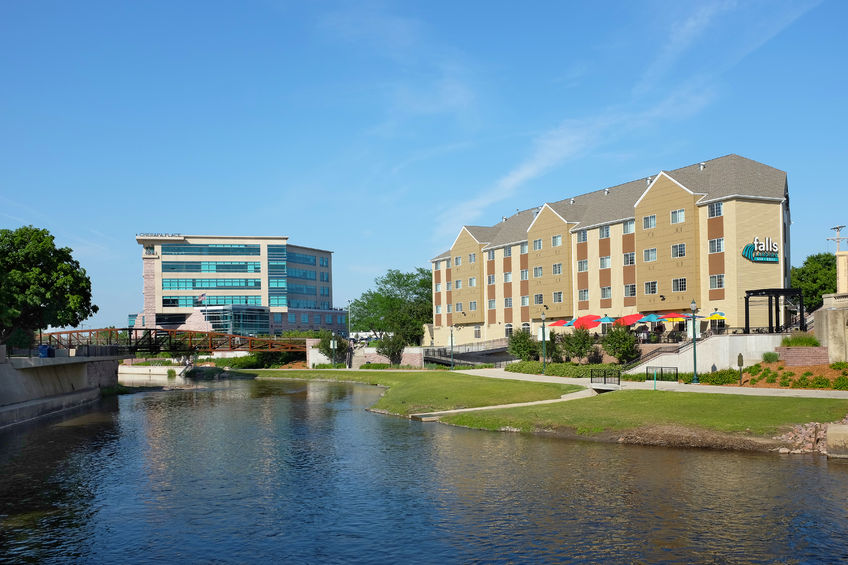
In addition to ECG’s unusual geography, the way it obtains the bulk of its business is also uncommon. Mages said that 50% of its business comes from other lenders who either turn down the applications or don’t have enough capital to lend to merchants. Mages said they can “turn coal into diamond.” The company primary funds B- to C- paper deals and services a variety of industries with the bulk coming from transportation/trucking, construction and business services. ECG provides loan products, which compose about 80% of the business, as well as merchant cash advance, which makes up the remaining 20%.
Mages expressed a lot of enthusiasm for the company’s technology, which he said is very helpful because it can save a lot of time. For instance, he said their system auto-declines 25 to 30% of the applications they receive, which can be between 3,000 and 7,000 a month.
“We then want to get as competitive as we can [for the right applications,]” Mages said.
ECG ranked #802 on 2018’s Inc. 5000 list of fastest growing U.S. privates companies. Founded in 2013, ECG now employs 65 people. According to Mages, there are 23 underwriters and 11 internal salespeople, plus in-house legal and regulations team, a marketing team and a merchant support team. There is a tiny office of two people in Delaware.
Varo Money Chief Eyes Next Year for Bank Launch
September 10, 2018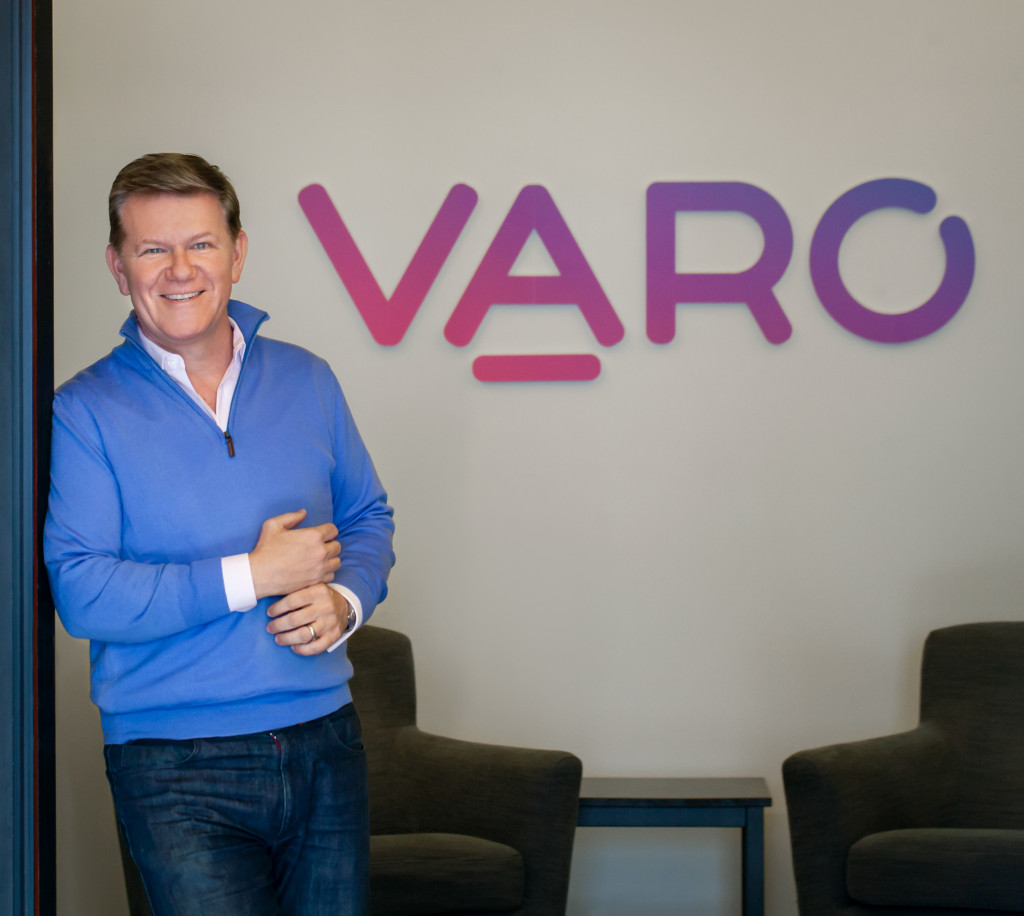 San Francisco-based Varo Money just cleared a major hurdle in its pursuit to become a bank. Varo Bank N.A. received the preliminary green light from the Office of the Comptroller of the Currency (OCC) to form a de novo national bank. It brings Varo one step closer to becoming the maiden all-mobile national bank in the United States. It’s an exciting development for a fintech play, one that Varo CEO Colin Walsh calls a “game changer.”
“That the OCC is willing to move ahead with the application is very different from what they’ve done before. It marks the beginning of a whole new era in consumer banking,” Walsh told deBanked.
Indeed, the OCC has only issued two national bank approvals in nearly the past decade, the last one of which was a traditional branch-based bank. Varo, meanwhile, is anything but traditional, boasting a mobile, cloud and API-based offering.
“What stands out about the Varo team is we are very experienced and seasoned in banking and consumer technologies. We’ve spent most of our professional lives in the industry. It’s not like we’re trying to figure it out and learning on the job,” Walsh explained. As a result, when regulators peppered Varo with questions and scenarios, the team already knew how banking works.
Now that Varo has the regulatory wind at its back, there’s no time like the present, and Walsh is the first to admit he’s got an “aggressive timeline.”
“Our plan is to open the bank within the next year … The pieces are falling into place now,” he said, pointing to lots of dialogue unfolding with the FDIC for deposit insurance and other components required to build a core banking system. One of the items at the top of the agenda is for Varo to separate from its sponsor bank, The Bancorp Bank, to become its own independent bank, something the fintech has been transaparent about since day one when it was founded in 2015.
Competitive Landscape
Walsh described a competitive landscape of the massive $1.4 trillion banking market of which there are $750 billion of consumer deposits. It’s divided evenly, he explained, between nine major banks and 5,600 smaller banks. The nine banks continue to invest billions into new products and chasing customers. The long tail of smaller banks, meanwhile, “try to do the right thing, but many are sub-scale. They don’t have the technological advantages that some of the new players have,” Walsh said. Varo competes with all of them.
“We compete with the big guys, we compete with the long tail, we compete with fintechs. But with such a big market that has so many issues, it’s ripe for disruption,” said Walsh.
Varo Money Likely to Become First All-Mobile US Bank
September 7, 2018 Varo Money announced on Tuesday that it was granted preliminary approval by the Office of the Comptroller of the Currency (OCC) for its application to form a de novo (new) national bank, paving the way for the company to become the first all-mobile bank in the U.S. Varo Money has no physical branches. All of its banking functions, including opening checking and savings accounts, and obtaining loans, are conducted on mobile devices.
“This is an historic moment and marks the start of a new era in banking,” said Colin Walsh, co-founder and CEO of Varo Money. “We founded Varo because we saw that banks weren’t serving the majority of their customers very well, and we wanted to fix that. So we decided to build a bank from the ground up with the goal of improving consumers’ financial health through better technology and a more efficient business model.”
In July 2017, Varo Money applied to the OCC for a national bank charter and to the Federal Deposit Insurance Corporation (FDIC) for federal deposit insurance to form Varo Bank, N.A. Tuesday’s preliminary approval is the outcome of that application and is unrelated to the fact that the OCC recently started accepting applications from fintechs to become special purpose banks. That development was coincidental, Varo Money Director of Communications Emily Brauer Gill said.
Additionally, Varo Money did not apply to become an Industrial Loan Company (ILC) bank, like SoFi and Square (even though they subsequently withdrew their applications.) Companies that apply to become ILC banks are companies whose primary function is not banking. On the other hand, Gill said that Varo Money’s primary and singular function is banking.
“Colin [Walsh’s] goal was to be a bank and it looks like we’re on that path,” Gill said.
While Varo Money has no physical branches, clients have easy access to cash because of a partnership with Allpoint ATMs. There are more than 55,000 Allpoint ATMs worldwide, located inside retail stores like Target, Costco, Walgreens, and CVS, and Varo Money customers pay no ATM fees at these machines.
Walsh, who describes himself as a “reformed banker,” held executive roles at American Express and Lloyds Banking Group before co-founding San Francisco-based Varo Money in 2015 with company CTO Koyla Klymenko. In a company statement from last year, Walsh said they wanted to create a more affordable way for people to manage their money and reach their financial goals “with just a few taps on their mobile phone.”