Story Series: broker
Success and Lessons Learned From Small Business Finance Industry Vets
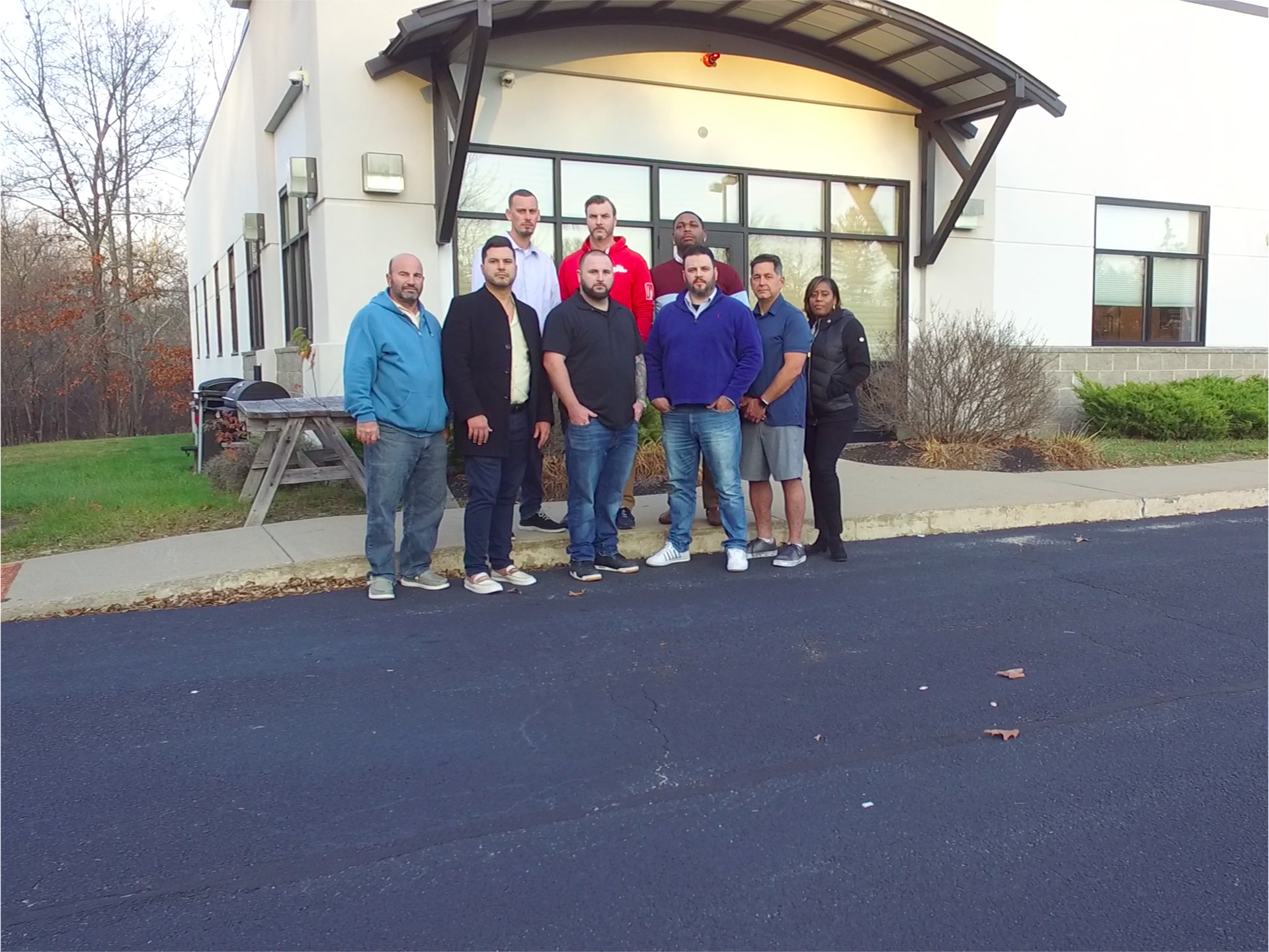
December 11, 2025 “In October, the company did $23 million+ and it was our best month ever,” says Eddie DeAngelis, founder and CEO of QualiFi, a full-service business loan brokerage.
Talk to anyone in the industry and it always seems to be their best month, quarter, or year, but that’s just happenstance since those same people will also tell you—if they’ve been in it long enough—that success is not a straight shot up. They’ll also say that success is defined on their own terms, not by other people’s measures.
In DeAngelis’ case, for example, the origination figure, which comprised a mixture of LOCs, term loans, HELOCs, SBAs, and equipment financing, is all the more celebratory because the company accomplished it with just 13 funding reps at the time.
“It just shows how efficient our business model is,” DeAngelis says, “so that’s the number that I’m really proud of, which is 13 reps.”
Jared Weitz, CEO of United Capital Source, a small business finance marketplace, had a similar perspective, sharing that at one point he had 27 employees and now operates with 17—but the 17 are producing the same output as the 27.
“Ten less people, less expenses, same numbers, higher net margin and profit,” Weitz says. He explained that he spent time dissecting his P&L, structures, and systems to maximize efficiencies to get where he wants to be.
“I’ve always viewed it as ‘am I profitable every year?’” Weitz says. “‘Do I have concentration where, if 3,4, 5, [lenders] in my portfolio go out, am I screwed? Can I grow without body count? Can I create more efficiencies in my business through automations, technologies, different marketing and grow without body count?’ I’ve done that very well.”
Zach Ramirez, CEO of Calldrive, a pay-per-call marketing and consulting company, also has experience running brokerage shops.
“I found that my skillset, I was great at sales. I still am good at sales, but I think my real skill is building operations. I’ll be honest, one of my weaknesses is I’m not really that great at managing big groups of people,” Ramirez says.
In this regard, Ramirez also thought deeply about maximizing efficiencies rather than maximizing headcount, and says that “I found that what I do enjoy doing is building the infrastructure, the marketing, the sales processes, all the metrics and KPIs, and building the CRM and all the automations.”
Between that and his mountain of firsthand experience working at and operating brokerages, Ramirez is often called upon these days as a consultant for ISOs to help fix or improve all of those things.
Chad Otar, CEO of Lending Valley, a revenue-based financing provider, shrugs at the milestone benchmarks some of his competitors tout and explains that it’s not a race for publicity but rather a marathon of good economics. Otar, for example, says his company funds from its own self-funded balance sheet and has no incentive to be anything less than prudent.
“I’m not looking for market share,” Otar says. “I’m just looking for, you know, a calm, collected life at the end of the day.”
Through all the years Otar has been working in the industry, he says he’s seen the cycle of jaw-dropping deals that, while they may still be more expensive than a bank loan, are unlikely to yield a financial incentive for him to risk participating in.
“And I’m like, no, no. I’ll just stick to what I know, stick to what I like,” he says.
All four executives have the benefit of experience under their belts. Otar has worked in the industry for 19 years, Weitz for 20, Ramirez for 16, and DeAngelis for 12.
What they all have in common is a deep love for the game.
“It’s a delight, I love this #$@&*!-ing industry,” Ramirez says.
“I wouldn’t trade it for the world. I love this industry a lot,” echoes DeAngelis.
Weitz and Otar expressed similar sentiments.
DeAngelis, who had a couple of decades’ worth of experience as a traditional business owner in screenprinting and designer fragrance wholesaling, says that he loves talking to business owners, overseeing operations, and building relationships with partners.
Weitz says it’s been a joy to watch long-term members of his team go through their own life milestones, like going from an apartment to marriage to a home to kids.
“They’ve seen growth also, which really also means we’ve shown growth to not just our clients but our staff,” Weitz says. “These are really good recognition signs that we’re doing pretty good, which is also how I define success.”
If you’re earlier on in your career or entrepreneurial journey, know that there are going to be rough times—especially in this industry.
“My very first job selling finance was for [a mentor],” says Ramirez. “I was probably 19 or something, or 20, and he always said, ‘when you build your business, put your blinders on and only focus on your business and you’ll be instantly rich in 20 years.’”
Ramirez says that the march toward success is kind of like going to the gym. There are people who give up on a routine after three months because they think they’ve put in enough time to judge the final outcome and never truly follow through. And then there are those who stick with a routine, realize that they’re incrementally moving toward their goal, and eventually get there. Ramirez says he has been guilty of surrendering too soon in the past and has also fallen victim to shiny object syndrome. In one example of the latter, he said his previous ISO became overly caught up with selling Employee Retention Tax Credits (ERTC/ERC) during COVID, to the point where it overwhelmed and negatively impacted what had been a well-run business.
“It was a waste of time and energy more than anything, but also cash, because I didn’t remain true and focused to my major core expertise or my core area of competency,” Ramirez says. “I think we lost probably over a full year. We went the wrong direction.”
Otar, meanwhile, says he has felt the pressure as a funder in an increasingly competitive environment with demanding brokers. In one example, he says that while he normally sticks to his principles about not doing same-day fundings, he became convinced to make an exception—and it came back to bite him.
“I did a same-day funding and the next morning on the first Decision Logic, there’s four different positions in there already.”
In his view, that completely changed the risk profile of the deal and produced immediate regret. “That’s why I’m not advocating for same-day funding. I am not advocating for [online] checkouts,” he says. “I’m not doing any of that. I’m still sticking to what I know best, and it’s the reason why I have longevity in this industry.”
Otar adds that he is still employing automation, tools, and systems, and running a modern operation, but he thinks very carefully about each decision.
For Weitz, one of the big defining moments in his business was realizing that concentration risk can be existential. In an industry that prides itself on strong relationships, putting too many eggs in one basket can produce unforeseen consequences if a lender or funder disappears. And what are the odds? High enough that it happened to him. In the early days of United Capital Source, two large funding partners ceased operations at the same time, one of which comprised nearly half of his company’s entire portfolio. That not only jeopardized renewals but also the valuable volume bonus relationships he had with both.
“I know plenty of large brokers who make their profits solely from volume bonuses,” Weitz says. Fortunately, he recovered—and it gave him the chance to refactor his strategy to mitigate future fallout.
DeAngelis says that things can go from great to not good at all in a very short time. In one example, he said that six months after being featured positively in a deBanked story in early 2023, his company QualiFi hit such a snag that he had to temporarily take himself off payroll.
“We just ran into this down spurt where we had a really bad month,” DeAngelis says. “We’ve been there before, right? Another month, another really bad month. ‘Okay, so now back-to-back months. What’s going on? June, July, another bad month. Now it’s a bad quarter,’ and we just were spiraling down, like revenues dropping 30%, we’re starting to stress with the bills, like, ‘what the hell’s going on?’”
They knew they didn’t forget how to execute, but they made tweaks where they could. Like Ramirez’s gym analogy, DeAngelis said they didn’t completely change what they were doing—they stayed the course.
“Our answer was to just keep our heads down, just keep pushing, make some changes and start watching what we’re spending and just barrel through and push through,” DeAngelis says. “And then when we got to October [2023], is when things started to turn for us.”
Two years later, that recent $23 million funding month is a milestone that arose from going through the bad to get to the good. The last several months have also come in at over $15 million.
Some founders try to leverage milestones into additional growth before they’re ready, but DeAngelis—who has been down this road before, including with a previous company he started that was acquired by Nav—says it’s become important to look at each portion of the business as its own business. Hiring and onboarding, for example, has become its own structured operation.
“Before when we lost a rep or we needed to hire someone, we’d hire like the first two to come through the door and just put them on the phones, right?” DeAngelis says. “Those days are done. So the hiring process, we’re super selective. We want to make sure it’s a really good fit for the candidate, as much as this is for us, for long-term sustainability.”
DeAngelis has added a few more reps since the earlier-mentioned 13 and is being cautious about how they approach growth from here.
Ramirez, meanwhile, says that sometimes it helps to look at a problem in reverse. A common gripe these days is that the small business finance market is getting too crowded and squeezing margins (and ethics).
“If I look at everything from the perspective of, ‘I’m an ISO, and there’s more ISOs coming in,’ I understand why they would feel threatened,” Ramirez says. “Because… we’re all fighting for the same pool of merchants, essentially. I would respond with, ‘well, why don’t you help them?’ Instead of being fearful, then why don’t you help them? Why don’t you find these other smaller ISOs and help them do business the right way. Consult with them, charge them for that.”
Ramirez’s outlook embraces the spirit that success in the industry is not limited to being the best broker or the best lender, but about spotting opportunities and being brave enough to capitalize on them.
For Weitz, that meant diversifying early on beyond just one product. United Capital Source offers LOCs, HELOCs, SBA loans, term loans, revenue-based financing, equipment financing, and more. The result is long-term client relationships that shift between products as needs evolve—some going back to the company’s inception 15 years ago. Weitz also notes that not all new competition is real competition: his team conducts themselves with a level of expertise and best practices that they believe clearly distinguishes them.
For Otar, seeing a crowd rush into something doesn’t necessarily indicate a real opportunity, at least not economically. Unless the play is for market share or another specific objective, he considers patience and vigilance his advantages.
“I’ve been through the ringer,” Otar says. “I started this a long time ago. I was an opener, I was an originator, I was a collection guy, I was an underwriter, I’ve seen it all. I don’t think there’s one area in this industry that I haven’t been able to cover yet.”
“I’m here for the long run, not overnight,” Otar adds. As part of that, he prides himself on relationships not only with brokers but with every merchant he funds.
“My mom, when I first started, she had said this, ‘there’s three things that you don’t mess around with in people’s lives: their money, their spouse, and their car.’”
Realizing that his business involves one of those three, he has made it his mission to manage it with care.
“If you look at Lending Valley’s reviews, we’re at 5.0 right now, every single one of them. You could give them a call and they’ll be like, ‘Chad is amazing,’ because I try to keep them on with me.”
For DeAngelis, part of success is giving back. For example, they recently started a charity drive in the office where each month a different employee selects a charity and the company donates to it.
“We started with a small donation of like $500 a month,” DeAngelis says. “And it started really catching on, and I loved it, and got everybody involved. And we talk about it every month. Somebody picks a charity, tells us why it’s special to them, and then they give us some updates on it.”
“I just want to say that ever since we started doing that, even when we were struggling, our business just literally made a skyrocket transformation,” DeAngelis adds. “Over the last year, we’ve doubled and tripled and almost quadrupled our fundings and our revenues.”
For Ramirez, he says that “Last year was one of the best financial years of my life.” He used some of the earnings from it to acquire a small telecom company, which has become another valuable component of his overarching strategy. For younger people entering the space, he’s certain that this business is here to stay.
“The industry is not going anywhere,” he says. “Is it going to fluctuate? Is it going to change? Absolutely.”
Weitz, now two decades in, also concludes that by any rational measure, this business will continue to provide opportunities—as long as one evolves with the times.
“People are always going to need homes,” Weitz explains. “People are always going to borrow against assets. Businesses will never go away, ever, ever, ever, and they will also never, ever, ever have enough capital to grow themselves. They’re always going to need an outside source. This is the way the world has worked for a thousand years. So that won’t change. How people access it will change. The cost will change. The products will change. The need will not. So as long as you’re shifting with that, you’re in an industry where that need is still abundant.”
Otar says, “At the end of the day, I’m very happy with what I do every day. It makes me excited to wake up and actually want to go to work. It’s like I don’t have a job per se. They say, ‘if you have something that you love to do every day, it’s not a job.’ It just becomes a habit at this point. And I enjoy my habit.”
Why Lexington Capital Holdings is Expanding Into the Real Estate Business
September 24, 2025Lexington Capital Holdings is expanding beyond small business lending and into real estate, the company recently revealed. Lexington, a Long Island-based financial marketplace and brokerage led by CEO Frankie DiAntonio, is launching Lexington Estates to buy, sell, rehab, and hold properties long term.
According to DiAntonio, deals involving real estate have already been a part of their regular broker product mix for a long time, but when deciding whether or not they wanted to lend against real estate on their own or become the actual buyers and builders, they felt the latter would be more impactful. A syndication fund for these real estate deals, for example, will be open to employees of the firm to participate in. Lexington’s existing operation already has about 50 sales reps. Two from that group will move over to the real estate side to join a number of new hires they’re bringing on board to carry this plan out.
“Business is a team sport and I wouldn’t have been able to do any of this without the amazing Lexington team behind me,” DiAntonio said of the company’s success to-date.
Lexington Estates is already closing on its first property on Long Island. While they will make their focus local right out of the gate, they plan to work on deals both residential and commercial throughout the United States within 12 months. DiAntonio cut his teeth on real estate deals by participating in them personally outside of his business and now he’s making it a corporate endeavor. Whether it’s residential, retail, office space, industrial space, or anything else, they plan to evaluate it on the merits of the potential profits.
“I’m looking for deals,” DiAntonio said. “I’m looking for what’s the best bang for our buck.”
DiAntonio views this ambitious plan as one of absolute necessity given the challenges that the younger generation faces with the cost of living going up.
“I strive so hard to put my people in a position where they can make more money than the average American because you can’t even live the average American life and be average anymore,” DiAntonio said. “You actually have to be great just to live an average American life.”
Lexington Estates plans to officially launch on October 12th.
Going All In: How Joe Sasson Saw the Opportunity of Being a Broker Early On
April 7, 2025 “For me, the biggest approach to the industry that I took was honoring integrity and transparency to our clients more than anything else.” That’s what Joe Sasson, Chief Sales Officer at Advance Funds Network (AFN), attributes his success to in the small business finance industry. Sasson saw the vision and the potential of this business at a younger age than most of his peers. That’s because he started as a summer intern for AFN right before his freshman year of college at George Washington University, when he was only 18.
“I said I could use some money, obviously, going into school being a freshman, so why not?” Sasson explained. “And then I really enjoyed it that summer. I kind of discovered that sales is kind of a knack for me, and correlates well with the way I like to operate, the way I like to do things. So it kind of just stuck with me.”
The company had a mutually good feeling about his abilities, and they agreed to extend the arrangement, which consisted mostly of making sales calls, even while he was in school. By the time summer rolled around again, they handed him the reins for the entire internship program. The student was now the teacher for 20-25 eager high school juniors and seniors hoping to learn the ropes, an experience he recalls fondly. That was in 2019, and its impact is still felt today since some of those interns are still with AFN. But it was a crossroads for Sasson because his college curriculum required him to be in Washington, D.C., but AFN’s office was in New York. Ultimately, he said his eyes had been opened to the opportunity.
“I saw that our company really had the right values and the right approach to the way we do things,” Sasson said. “Thank G-d I was I was able to kind of recognize that early and that I was working with really good people.”
Sasson transferred to Baruch in New York, a school much closer to AFN. It was a move that paid off since he’s risen up to become part of the C-suite. His day-to-day is managing new business, overseeing dozens of agents, and helping them out wherever he can. That means at any given moment he could be giving advice, helping an agent finish a deal, or on the phone with a lender. Knowing a lender’s box is only part of it, as he says that relationships play an important role in AFN’s success.
Last year, when AFN’s Chief Revenue Officer, Irving Betesh, had earned a spot as one of six finalists to compete in the live inaugural Broker Battle at deBanked CONNECT Miami, it was Sasson who roleplayed with him to practice beforehand, which they did in front of the whole company as both a teaching experience and entertainment. As fate would have it, the roles reversed because it was Sasson himself who ended up on stage in person for Broker Battle 2 this past February, where he secured the runner-up position in a strong matchup after he made it to the championship.
Roleplaying and practice are important at AFN. Sasson said that the company is really good at training new talent, regularly conducts fun motivational contests, and even hosts an annual retreat to get the team out of the office and away from the grind, though sometimes they find themselves having to handle a deal or two on the beach, an unavoidable part of the business even though they definitely try to wind down.
As someone who’s been in the business since before the Covid era, he’s seen a remarkable amount of change. In his opinion, less expensive options, more creative options, and quicker options are now more widely available than when he started. That means he and others have to constantly stay on top of what’s changing and be able to deliver to their clients. That also means knowing what all their lenders are doing, staying on top of AI, monitoring the tariff situation, and more.
Through it all, doing good business with good people seems to be a recurring theme, whether that be the internal team or partners they work with.
“I’ve been doing this for a while now, quite well,” Sasson said. “And I would say, since I started seven years ago, we do a lot of business with a lot of the same people still. So for us, the relationships really do matter more than anything else.”
How AI is Scaling a Veteran Small Business Financing Brokerage to New Heights
March 19, 2025 “There are [AI] voice systems out there that have just blown me away,” said Cheryl Tibbs, owner of Atlanta-based Commercial Capital Connect. “So we are using those and I’m implementing some in my office in my day to day—we have an AI receptionist that answers the phone, it just frees up time.”
As a broker, Tibbs recognizes the value of being able to answer a potential client anytime, anywhere, but there needs to be time to sleep, train others, and expand as well. And thanks to the advent of actual AI, it’s now become increasingly possible to scale on multiple fronts where it wasn’t before. Tibbs told deBanked that she’s been using AI to duplicate herself across anything she can.
“So we train these models on everything about our business, everything about us, and it can just answer questions, either through chat or having a conversation,” she said.
AI can call leads or qualify a customer through online chat at three in the morning if need be—not theoretically; it’s doing it for her already.
“Some mornings I wake up, I see full conversations between the conversational AI and somebody that filled out a lead form,” she said. “The chat agent has the ability to send them a text message with our full application link, or book them on our calendar.”
But more customers coming in the door means more questions from her team about where to place a deal. She’s got a solution for that, a bot she created named BrokerBuddy that can answer on her behalf when she’s not available to do it herself.
“I trained it on most of the lender guidelines that we work with, so they can just go in and just type a question, you know, ‘hey, BrokerBuddy, I’ve got a customer with a 680 FICO score.’ He says, ‘two years time in business, looking to buy a $40,000 skid steer. What else should I ask him? Which lender in our organization do you think will do this deal?'”
There’s a role for AI to just skip the questions and place a deal all by itself using advanced algorithms, something many tech companies tout these days, but the human nuance is a key component to her service, since any deal could be equipment financing, SBA, or working capital rather than solely one thing. It’s not always immediately obvious which one it’s going to be or what the customer would prefer. Way back in the day, Tibbs started purely with MCAs, back when they could only be done via a credit card machine. Since then she added equipment financing, working capital loans, and SBAs. For a long time now, she’s offered it all. She pairs up customers with the best fit and relies on her knowledge and relationships to know what’s going to work and what’s not.
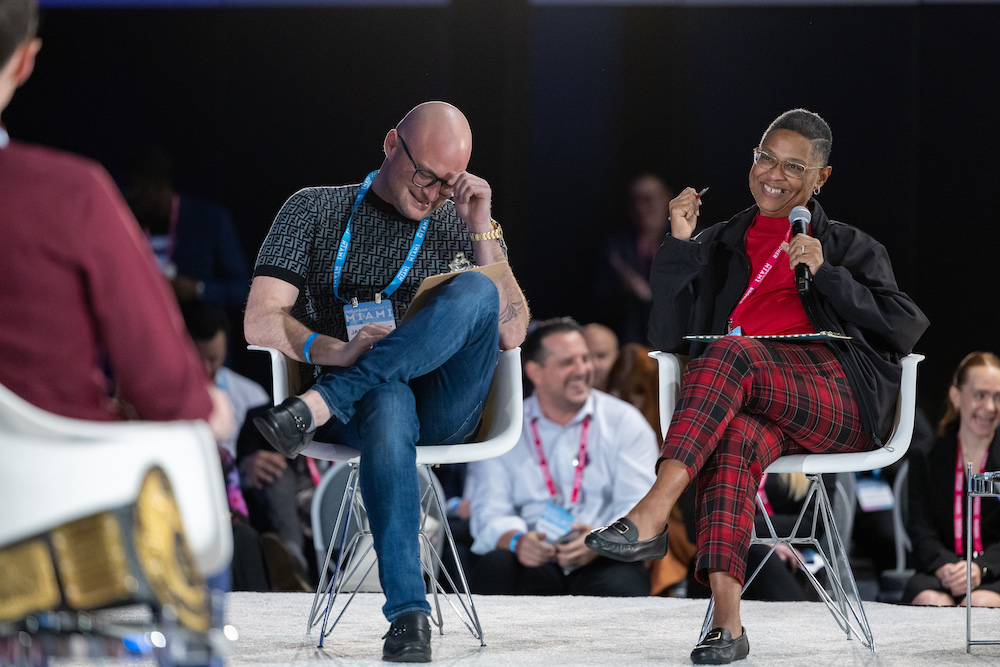
“SBA is a hot button right now and merchants are really excited to know that this is definitely a possibility,” Tibbs said.
One opportunity with SBAs in particular is to consolidate MCAs, which, if the business owners qualify, can have a tremendous impact. Sometimes these business owners find her by seeing her posts online, and they reach out. Maybe it’s her they’ll get right away, or maybe it’s her AI. In any case, all of her experience has long since led other brokers to refer their own business to her, since she has a reputation for being able to get the deals done.
“I’ve been operating as a super broker most of the 20 to 25 years that I’ve been in this alternative space,” she said, “and as a super broker, I’m able to offer my broker partners more stuff than they even thought about. […] I study this stuff. I eat, live, and breathe it.”
While it’s unclear if AI qualifies as alive, her band of automated agents are beginning to breathe the rush of it all right alongside her. So many brokers (and lenders) are diversifying their product sets that her referral business is escalating, and she wouldn’t be able to scale without the assistance.
“Even though we get appointments, if we’re not on the phone with that merchant usually within three to five minutes, sometimes it’s hard to get them back on the phone. And even if they make an appointment, they may not show up. Having that instant engagement it definitely helps.”
Talk to People, Ask Questions, and Deals Are Everywhere
March 17, 2025 “Well, when everybody says it’s tough, that’s when I start smiling, because I’m going to sit there and collect them all,” said Adam Oster, Director of Canyongate Financial. Oster was talking about financing deals for trucks in a tough market, though he’s known to be able to handle any kind of equipment in any kind of market. Part of the joy he gets from the challenge of the job is rooted in just how many great people he gets to speak with. Connecting, helping, and building relationships are his passions. And it never stops for him.
“I like to jump in and do everything. I have to have direction so I got to be talking to somebody,” Oster said.
True to form, when he’s taking a break from talking about semis, box trucks, and medical equipment, he’s marketing 3″ filled bones, beef cheek rolls, and gourmet treats for dogs.
“My fiancée has a dog food company, so Thursday, Friday, Saturday, Sunday, we’re out slinging dog food, we’re promoting her business,” said Oster. That business is called Abby’s Barkery, and he’s proudly featured on the company’s main Shopify page. Sometimes the two worlds overlap—in that he could be processing payments for treats while placing an equipment deal at the same time.
“…by 7:30 you get home and you’re like, ‘I think just every day is Monday.’ That’s how I’m going to look at it. Every day is just Monday in my life,” he said jokingly.
Oster began his career in mortgages, followed by a stint as the owner of a supplements store. He launched Canyongate right in the early days of the COVID pandemic after a colleague said he’d be really good in the field.
“When we came on we were strictly working capital, and working capital has its peaks and valleys, so I needed to fill the gap when working capital was down,” Oster said. “I’m like, ‘Hey, let’s transition here.’ So we started onboarding.”
 Onboarding with equipment financing providers is precisely what he did. It helped that some of those providers were located right in his own neighborhood, which shortened the learning curve and helped lead to some great relationships. These days, Canyongate’s business is now 70% equipment financing and 30% working capital. Like others deBanked has spoken to, not everyone who makes deals in equipment financing starts off by knowing everything about equipment.
“I knew enough in transportation, semis, trailers, that we lean there. But then I found very quickly that you got medical equipment—everything is a piece of equipment, essentially. So if I get a lot of invoices and I don’t know what they are, I have to Google it. I’ve got to look because the broker doesn’t tell you what it is. So I’m looking it up. I’m like, ‘Okay, this is a CNC machine… or this is a piece of yellow iron.'”
By now he knows so many things so well that he helps other brokers learn the ropes. As part of that he does coaching and training for large groups of people looking to break in. For example, they recently conducted an orientation for 500 people, where they started off by teaching them to focus on a niche. That could be semis or trailers or something else to get in the game. The deals themselves can come from anywhere, including simply knowing someone at the local gas station who might know someone who, in turn, knows another person—turning into a referral. It’s all about building relationships and asking the right questions.
“At the end of the day, it’s just conversation, ‘what are you trying to buy?’ And they’ll tell you. If I don’t know what that equipment is, I’ll say ‘what do you use that equipment for?’ They’ll tell you.”
For brokers already offering products like MCAs, they’re already on the call to steer the conversation in that direction if they so choose, but it’s important to do it thoroughly since the process to get a deal done is a bit more stringent.

“Ask if they need a truck, ask them what they need to finance,” Oster said. “When you’re submitting an equipment finance deal, it’s not an app and banks with no write up. You’ve got to tell me about the customer. Tell me about their experience. How are they going to use this equipment? There’s a lot of detail that goes into the deal before you even submit for underwriting.”
To that end, he said it’s important to set expectations for brokers looking to do equipment finance deals because it isn’t exactly the same even though it’s similar. On one hand if a broker can already sell a daily or weekly payment working capital deal then surely they’d be able to sell a monthly payment equipment financing deal. It’s a no-brainer when it comes to being able to offer the terms.
“Don’t fear it, ask the right questions,” he insists about taking the leap. And be prepared to ask them anytime anywhere. For example, he’s funded five MCA deals just through relationships he’s made through the Barkery.
“That’s a true story,” he said. “And I have pulled probably six or seven equipment deals out of the last year and a half from working at [my fiancée’s] business. So again, it goes back to it’s just conversation. Look at people’s needs. People tell me, ‘Well, I want to update my little shop and do all these things, I just don’t have the money.’ Well, what do you need? ‘Well, I need shelving, I need this…’ ”
Then he offers to help. Suddenly it’s the perpetual Monday all over again where he’s placing the customer while simultaneously processing payment for a good pup to chew on a lamb foot or a mammoth bone.
“And that’s how deals come about. Opportunity is everywhere. I love it. I get excited, man. I get all hyped up about this.”
Ryan Showe on Winning This Year’s Broker Battle
March 3, 2025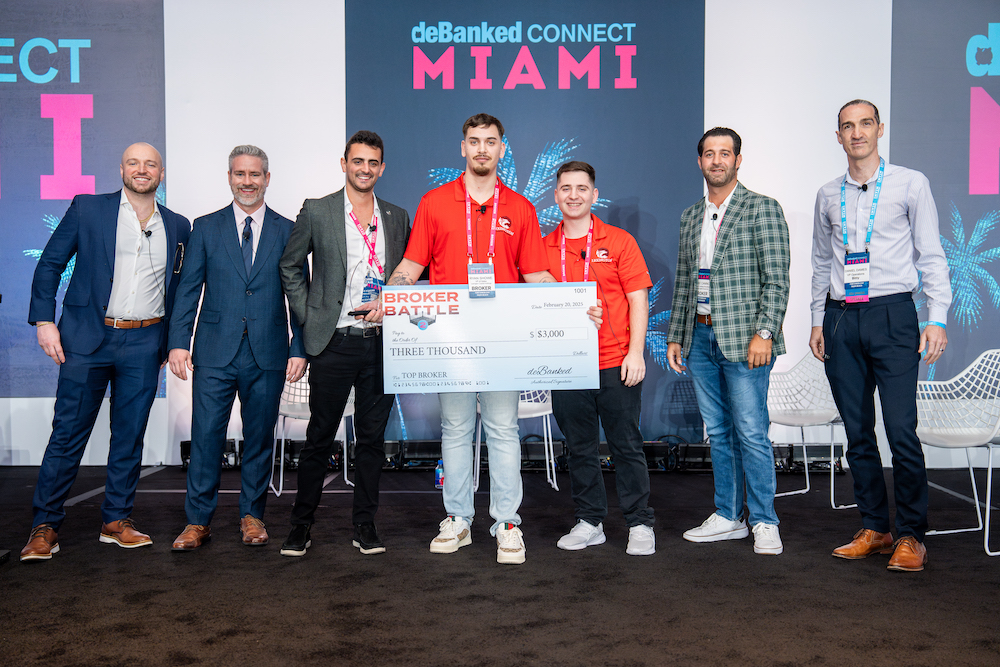 “What being a broker means to me is servicing your clients in the best way possible, really putting their needs before anyone else’s,” says Ryan Showe, VP of Sales at Long Island-based Lexington Capital Holdings. “Ultimately, at the end of the day, we don’t have a job if our clients aren’t happy, so just constantly doing the right thing, putting your best foot forward, and making sure that you’re doing everything ethically and honest.”
Showe was the winner of the 2025 Broker Battle at deBanked CONNECT Miami for the revenue-based financing category, earning him the recognition of Top Broker and the recipient of some prizes along with it. Showe has been in the business for just a little over three years, starting at Lexington during its beginnings. Back then, learning the ropes while doing the work meant putting in 70-80 hour weeks on a regular basis. That included not only seeking out advice from the experts but also watching videos and reading books to fully immerse himself in the mindset of what it would take to become successful.
That effort is paying off and today Showe specializes in the most delicate part of the process at Lexington, helping clients who have applied get to the finish line with a deal while managing lender-side negotiations and communications. On the latter side, that means being highly familiar with the guidelines of more than 60 financial service companies at any given time.
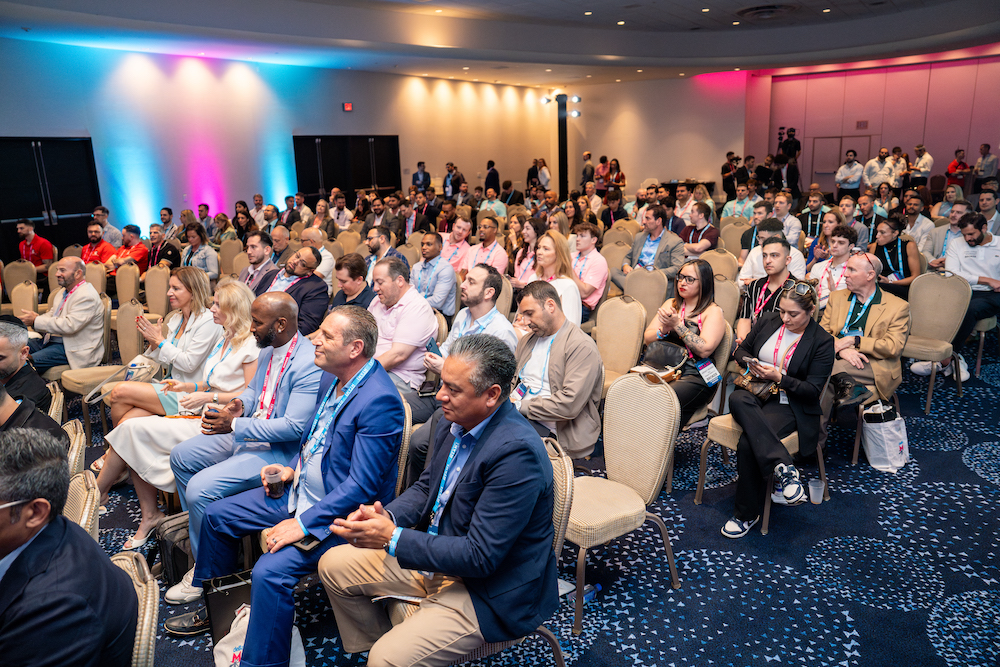
“Anybody can get someone to apply and just fill out a quick one-page application, send over a couple bank statements, but really selling the deal, there’s a specific art to it,” says Showe. “It’s really important to be an expert in your industry and know all the lender guidelines, know what the backend process looks like, because every lender is going to have a different process, whether there’s certain steps that some lenders want, whether it’s a manual-login or DecisionLogic. There’s so many ins and outs to every different lender. And just being able to know all that off the top of your head and just really sound like an expert.”
At Lexington, one of the recent educational team-building strategies was to host an internal Broker Battle in which 30 employees participated in a double-elimination competition. The company’s CEO, Frankie DiAntonio, devised the format and questions—not only role‑playing scenarios but also testing general industry knowledge with trivia. Showe says it’s good practice to be put on the spot in front of a crowd, because a key part of sales is thinking on your feet and executing when it counts. Doing it together with colleagues made for a fun experience in a company that prides itself on a family‑like atmosphere, while also mirroring the competitive nature of the industry where many brokers vie to serve the same customers. It’s game time all the time.
“I even tell my clients, ‘competition is always going to breed the best results,'” Showe says. “If you want the best of the best, you have to make people compete. And it goes down to even selling a deal, right? So if I have a deal and another company has a deal, compare my numbers against their numbers. I’m going to do anything I can to win that business.”
By happenstance, Lexington’s Corey Digiantomasso was one of the six finalists selected to compete in deBanked’s inaugural Broker Battle in 2024, where he put up a very impressive performance. This year was Showe’s turn where contestants weren’t given much background on the format other than that it would be roleplay-based. Showe kind of liked the mysteriousness of it.
“I’m best at showing up and just getting the job done,” Showe says. “So just doing what I do every single day made it easier for me at least.”
On his victory, Showe described the feeling as awesome while also recognizing that his opponent in the Battle, Joe Sasson, was a very worthy competitor. A large crowed showed up to support both of them during the championship.
“It was great to just see all the hard work that I’ve been putting in over the last three years pay off and be crowned #1 in the industry. It goes a long way for not only myself, but for the company as well.”
Broker Battle 2025 Champions
February 24, 2025Broker Battle 2025 took place at the Fontainebleau on February 20th during deBanked CONNECT MIAMI. Video highlights and more will be available soon. In the meantime, here are the results and the top brokers:
Revenue Based Financing
Top Broker: Ryan Showe, Lexington Capital Holdings
Runner-up: Joe Sasson, Advance Funds Network

Equipment Financing
Top Broker: Mike Brooks, Best Connect Capital
Runner-up: Yaro Yarema, Capital MBS


Two Broker Battle Judges Starred in This Show
January 31, 2025 Josh Feinberg and Will Murphy, both judges for the equipment finance category at the upcoming Broker Battle at deBanked CONNECT MIAMI, previously starred in the sales reality show Equipping the Dream. The six-episode show series debuted in February 2022 where they helped train new reps at their equipment finance brokerage Everlasting Capital in New Hampshire and awarded the best of the group. The unscripted series is the most watched show in history of its kind. All the episodes are here.
Any broker or sales rep that is knowledgeable about equipment financing can enter to compete in the short Broker Battle competition on February 20th at the Fontainebleau by submitting their name here and registering for the event here. The prize is $3,000, a trophy, the title of top broker, and the opportunity to be interviewed for a feature story. The two other categories, revenue based financing and SBA lending, also offer the same prizes and can be entered into using the same links.