
Industry News
Loans to a Business Not Paying Their Payroll Taxes Results in the Banker Being Convicted
July 29, 2017 Here’s a chilling situation that lenders, factors and MCA funders working with merchants who are behind on their taxes might want to take note of.
On June 27th, Douglas Corriher, a bank VP, was hit with a 32-count superseding indictment over a factoring fraud conspiracy with a staffing company in North Carolina. Despite the dozens of pages alleging improper conduct between Corriher and the staffing company owner, Corriher pled guilty to employment tax conspiracy because Corriher knew the staffing company owed payroll taxes but factored their invoices anyway to enrich the bank.
As the Department of Justice summarized it:
“Corriher was aware that the company owed more than $1 million in payroll taxes. Notwithstanding this, Corriher continued to make advances on the loans knowing that the fund of unpaid payroll taxes would enable the staffing company to repay the loan and allow the bank to continue collecting high rates of interest on the loan advances along with lucrative fees.”
The indictment had alleged that Corriher knew that the money withheld for payroll taxes by the staffing company would be diverted to pay the bank instead of the IRS despite the IRS having a de facto superior lien. The bank was said to be illegally in possession of the IRS’s money due to the banker’s actions.
Despite more than 30 counts of offenses seemingly more egregious than this, employment tax conspiracy is what garnered a conviction. Corriher is scheduled to be sentenced on October 6th. He faces a maximum of 5 years in prison.
Bizfi Founder Stephen Sheinbaum Joins World Business Lenders
July 24, 2017
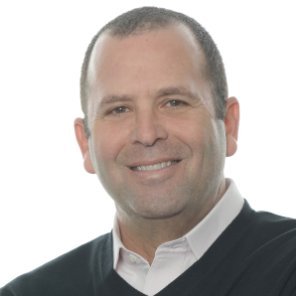 Stephen Sheinbaum has joined NJ-based World Business Lenders as a managing director. Sheinbaum founded Bizfi (Originally Merchant Cash and Capital) in 2005 and served for years as the company’s CEO. Former Lending Club exec John Donovan has been the chief executive of Bizfi since October 2016 and still holds that post.
In a call, Sheinbaum said that World Business Lenders has a world class team and that he was proud to be joining it. He will be overseeing the company’s production from the Jersey City headquarters. The company reportedly has plans for expansion and product innovation.
Sheinbaum referred to himself as a builder and said that WBL will afford him the opportunities to execute.
Revisiting Funding Circle
July 21, 2017Funding Circle’s SME Income Fund delivered profits last year not only in the UK segment, but also in the US segment, according to sources. As the UK is Funding Circle’s home market, it naturally generated more revenue from it, but the margins were actually a lot higher in the US. The Fund’s 12-month calendar year ended on March 31st. The performance doesn’t reflect Funding Circle’s operations as a whole, just the publicly traded fund used to make loans through the company’s platform.
The fund’s Net Asset Value has reached £164.8M, Peer2Peer Finance News reported. Investors received dividends equal to 6.5 pence per share over the last year.
Funding Circle the company, has not filed its year-end 2016 financials yet. As a private limited company in the UK, they’re still a couple months away from the deadline to do so. In 2015, they lost £18M on £23.8M in revenue, which they attributed to their growth strategy.
Unlike with Lending Club and Prosper, anyone investing in a Funding Circle loan in the US must be accredited. Funding Circle Securities is the affiliated broker–dealer of Funding Circle USA. Lending Club and Prosper have a special arrangement with the SEC to work with retail investors. As part of that, every single loan on their platforms must be filed with the SEC as an individual security complete with a full prospectus.
Earlier this month, Funding Circle hired a new Global CFO, Sean Glithero, who was previously the CFO at Auto Trader.
Russian Billionaire Is Betting Big on Fintech (And Online Lending)
July 20, 2017
Russian billionaire Oleg Boyko is putting his chips on fintech. According to an announcement made by one of his companies, Finstar Financial Group, on Wednesday, he is committing $150 million of new capital towards financial technology startups over the next 5 years. And that money may be aimed at online lenders if his past investments are any indication.
A sample of Finstar’s investments:
- Spotcap – online business loans – UK, Australia, Netherlands, New Zealand, Spain
- Euroloan – consumer finance – Finland, Poland, Sweden
- Viventor – peer-to-peer lending marketplace – European Union
Boyko’s Finstar may have also crossed paths with online business lending in the US. In 2015, a venture capital fund identifying itself as Qwave Capital, attempted an unsolicited takeover of Kennesaw, GA-based IOU Financial. Though IOU only lends to small businesses in the US, it’s actually listed on the Toronto Stock Exchange where it’s valued at less than a dollar per share. In the ensuing battle for majority control of the company, IOU revealed that it had not only sued Qwave, but also sued a company using the Finstar name. Some quick online research showed that the owner of Qwave, Serguei Kouzmine, has run some of Boyko’s companies in the past, including a role at Finstar Financial Group.
While the takeover of IOU was unsuccessful, Qwave was at least able to acquire a significant stake. That wasn’t Kouzmine’s only foray into US-based lending companies either. Qwave now acts as the general partner of the FinTech Ventures Fund, LLLP. That entity lists not only IOU Financial among its investments but also Chicago-based LQD Business Finance, Atlanta-based Groundfloor and NYC-based Fundthatflip.
Former Bizfi COO Now at iPayment
July 18, 2017Former Bizfi chief operating officer Tomo Matsuo is now a senior vice president at iPayment, according to LinkedIn. Matsuo worked at Bizfi from February 2011 until June 2017. In addition to running the company’s operations, he was also president of Bizfi’s Asia affiliate.
Last month, iPayment, a payments company with more than 140,000 customers, entered into a partnership with RapidAdvance to be their de facto small business funding provider.
Bizfi Layoff Tally
July 17, 2017According to labor records, Bizfi gave a 90-day layoff notice to 74 employees on May 15th. Less than a month later on June 12th, the company gave notice to another 43 employee, bringing the total to 117.
Those layoffs are scheduled to take place on August 13th and September 10th accordingly.
Daniel Gorfine Moves On From OnDeck to CFTC
July 10, 2017Daniel Gorfine has moved on from OnDeck, according to a public announcement made by his new employer, the US Commodity Future Trading Commission (CFTC). Gorfine served as OnDeck’s VP of External Affairs and Associate General Counsel for a little over 2 and a half years.
His new job, an appointment made by Acting CFTC Chairman J. Christopher Giancarlo, will be Director of LabCFTC and Chief Innovation Officer.
According to the announcement, “Gorfine will be responsible for coordinating closely with international regulatory bodies, other US regulators, and Capitol Hill to discuss best practices around implementing digital and agile regulatory frameworks and approaches for the CFTC.”
His background in fintech is expected to help the CFTC accomplish its goal of promoting fintech innovation and fair competition.
CAN Capital Resumes Funding
July 6, 2017
CAN Capital is back in business, thanks to a capital infusion by Varadero Capital, an alternative asset manager. Terms of the capital arrangement were not disclosed.
CAN Capital stopped funding late last year and removed several top officials after the company discovered problems in how it had reported borrower delinquencies. The discovery also resulted in CAN Capital selling off assets, letting go more than half its employees and suspending funding new deals, among other things.
Now, however, the company has a new management team and its processes have been revamped and staff retrained in anticipation of a relaunch, according to Parris Sanz, who was named chief executive in February. He was the company’s chief legal officer before taking over the helm after then-CEO Dan DeMeo was put on leave of absence.
As of today (7/6), CAN Capital has resumed funding to existing customers who are eligible for renewal. Within a month, the company plans to resume providing loans and merchant cash advance to new customers. It will have two products available in all 50 states—term loans and merchant cash advances with funding amounts from $2,500 to $150,000.
To be sure, getting back into the market after so many months will be a challenge. “I think we’re absolutely going to have to work hard, no doubt about it. In many ways, given our tenure and our experience, the restart may be easier for a company like us versus others. Based on the dynamics in the market today, I see a real opportunity and I’m excited about that,” Sanz said in an interview with DeBanked.
 Since its founding in 1998, CAN Capital has issued more than $6.5 billion in loans and merchant cash advances. It’s one of the oldest alternative funding companies in existence today, and, accordingly, it shook the industry’s confidence when the company’s troubles became public late last year.
The new management team includes Sanz, along with Ritesh Gupta, the chief operating officer, who joined CAN Capital in 2015 and was previously the firm’s chief customer operations officer. The management team also includes Tim Wieher as chief compliance officer and general counsel; he initially joined the company in 2015 as CAN Capital’s senior compliance counsel. Ray De Palma has been named chief financial officer; he came to CAN Capital in 2016 and was previously the corporate controller. The management team does not include representatives from Varadero.
Varadero is a New York-based value-driven alternative asset manager founded in 2009 that manages approximately $1.3 billion in capital. In the past five years, Varadero has allocated more than $1 billion in capital toward specialty finance platforms in various sectors including consumer and small business lending, auto loans and commercial real estate. In 2015, for instance, Varadero participated in separate ventures with both Lending Club and LiftForward.
Varadero began working with CAN Capital as part of its efforts to pay down syndicates. Varadero bought certain assets from CAN Capital last year and provided enough funding to allow CAN Capital to recapitalize. “The recapitalization enabled us to pay off the remaining amounts owed to our previous lending syndicate and provided us with access to additional capital to resume funding operations,” Sanz says. He declined to be more specific.
“We were impressed with the overall value proposition of CAN’s offerings as evidenced by the strength of its long standing relationships, the company’s core team, sound underwriting practices, technology and the strong performance of their credit extension throughout the cycle,” said Fernando Guerrero, managing partner and chief investment officer of Varadero Capital, in a prepared statement. “We’re confident the company’s focused funding practices will allow it to serve small business customers for many years to come.”
Guerrero was not immediately available for additional comment.
DLA Piper served as legal counsel for, and Jefferies was the financial advisor to, CAN Capital, while Mayer Brown was legal counsel to Varadero Capital, L.P.
Since its troubles last year, CAN Capital had been working with restructuring firm Realization Services Inc. for assistance negotiating with creditors. It also worked with investment bank Jefferies Group LLC for advice on strategic alternatives.
Sanz declined to discuss other options CAN Capital considered, noting that the Varadero deal provides the firm the opportunity it needs to jump back into the market—this time with “tip top” operations in place.
He declined to say how many employees the firm still has, other than to say it is now “appropriately staffed.” In addition to getting rid of the prior management team, CAN Capital reduced staffing in numerous parts of its business. That includes nearly 200 positions at its office in Kennesaw, Ga, according to published reports.
The company will still be called CAN Capital. “We feel that that brand has a recognition in the market, in particular with our sales partners,” Sanz says.