
Business Lending
I Got Funded, Again
March 1, 2018 One year after I received a 12-month loan from Square on fixed monthly ACH, I logged onto my dashboard to renew. I was pre-approved to do it all over again, the screen indicated, but the monthly ACH payment option had disappeared. In its place, Square offered to withhold a fixed percentage of my credit card sales going forward until the balance was paid in full.
Known as a “split,” diverting a percentage of the card payment proceeds to a financial company is straight out of the merchant cash advance playbook. Square, however, structures their transactions as loans. That means that regardless of how my sales ebb and flow, I must pay off my balance in full in 18 months.
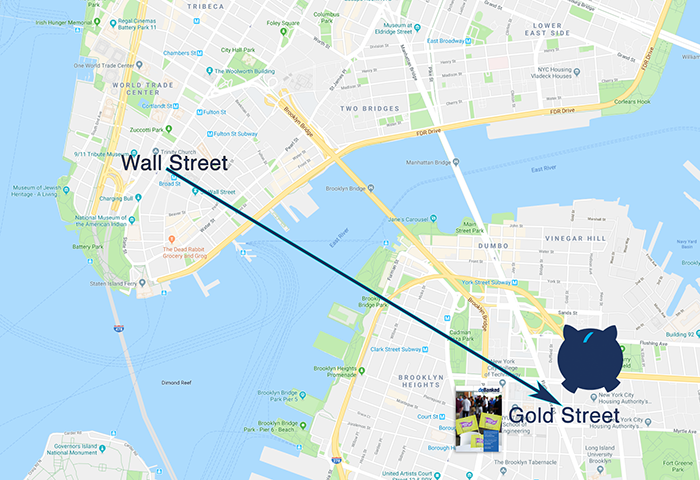
I was okay with that. I had to be. It was that time of year when working capital is very important, the holidays. Not to mention, deBanked was in the process of moving, again. If you recall in December of 2016, we moved to a slightly larger office in the same building on Wall Street. In December of 2017, however, we moved from Manhattan to Brooklyn, a process that was a little more involved.
But this loan had no monthly payment, just a 15.75% split. Others may refer to this as the holdback, withhold, or specified percentage. Square’s application process this time around was slightly more rigorous than a year ago, a few more buttons, a couple more disclosures, and even a notice that a review could take between 1-3 days. I was still approved the same day, however, and had funds the next. There were no hidden fees or closing costs.
Six days after being funded, I ran a charge, Square took their split, and I netted the different minus the interchange fees. I noticed, but in a way I didn’t. I didn’t have to worry about how much the monthly payment would be and when. The loan was being repaid all by itself. That was how I processed it psychologically anyway, as I imagine many other small business owners have as well.
And the feeling of relief from impending monthly payments is not entirely mental. Seven weeks later, I was already 17% paid off. That’s real progress, especially with a 65-week window remaining to pay off in full.
Had the same transaction been structured as a merchant cash advance, the timeframe would’ve been unlimited. But hey, I guess sometimes you can’t have it all. It was a 1.10 factor rate, decent by industry standards, certainly not the most expensive, but not the least expensive either. It was fast, it was helpful, and best of all, it was free from the burden of fixed monthly payments.
I got funded again and loved it. What are you still waiting for?
Editors Note: deBanked did not collaborate with Square in the writing of this editorial. Square did not even contact us after I published my first experience with their product one year ago. It is unclear if they are even aware that I wrote anything at all. Square is not an advertiser nor have they sponsored any of our events. I did not attempt to interview them for this write-up or tip them off that I would be writing anything. To my knowledge, we did not receive any special benefit or pricing. deBanked chose Square for funding in part to avoid the conflict of writing a review about a paying advertiser or sponsor.

OnDeck Shows A Path Forward
February 15, 2018
OnDeck announced this week very positive fourth quarter and full year 2017 financial results, including a fourth quarter GAAP net income of $5 million and an expectation for continued margin and profit growth in 2018.
“We worked hard in 2017, not just to achieve profitability, but to strengthen the key fundamentals of our business that drive our success,” OnDeck CFO Howard Katzenberg told deBanked.
This was a very significant milestone for the New York-based online lender who has been challenged by critics in the past on their trajectory. The company also grew in revenue. Net revenue was $152.6 million in 2017, up from $108.9 million the previous year.
Founded in 2007, OnDeck is considered one of the original alternative online lending companies. In 2014, the company went public on the New York Stock Exchange and has made more than $8 billion in loans to small businesses.
“[Last year] was a transformative year for OnDeck, marked by our strategic decision to strengthen our financial profile and accelerate our path to profitability,” said CEO Noah Breslow. “Looking ahead to 2018, we expect to drive double digit loan growth due to our strong customer demand, disciplined risk management and focus on scaling responsibly.”
For the fourth quarter of 2017, OnDeck’s loan originations were $546 million, up three percent from the prior quarter. And the credit quality of new originations, measured by both OnDeck Score and personal credit scores improved.
“Since Q2 2017, we have cut out the riskiest parts of our customer base,” Katzenberg told deBanked.
SmartBiz Becomes the Number One Provider of SBA Loans Under $350,000
February 14, 2018
SmartBiz Loans announced today that it was the number one facilitator of SBA 7(a) loans under $350,000 for the 2017 calendar year, surpassing JP Morgan Chase.
“I think the biggest factor [in hitting this milestone] is that we have been laser focused on meeting the needs of small business customers in the U.S.,” SmartBiz CEO Evan Singer told deBanked.
SmartBiz facilitated $329 million in funded SBA 7(a) loans for $350,000 or less for the 2017 calendar year while JP Morgan Chase generated $322 million, putting it in second place. SBA loans (the acronym stands for Small Business Administration) are guaranteed by the U.S. government. Traditional SBA 7(a) loans, which SmartBiz focuses on, are backed by the government 75 to 80 percent, according to Singer, while 7(a) Express loans are only backed 50 percent, making the interest on those loans higher. Previously, SmartBiz was number one in funding SBA 7(a) loans, excluding Express loans. Now it leads in both categories.
The San Francisco-based company was incubated by PayPal and launched in 2010. Originally, it was a consumer credit platform, but then pivoted to the small business space in 2012 and started facilitating SBA loans in 2013, Singer said. The company sold off its consumer business and is now exclusively devoted to facilitating SBA loans, which typically have a repayment term of 10 years for a loan of $350,000 or less.
SmartBiz has made obtaining SBA loans easier for small businesses by making loan underwriting and origination easier for banks. The key has been technology. For instance, Singer said that many banks will not make small business loans for less than $250,000 because it isn’t profitable for them. Banks tell Singer that it takes the same amount of time to underwrite and originate a $200,000 loan as it does for a $2 million loan.
“So what we are focused on is [making] software to help automate the underwriting and origination process for banks so that smaller loans become profitable for them,” Singer said.
So far, this has been working. Singer said the company’s partner banks tell them that they are able to reduce 90 percent of the costs on the retail side when looking at smaller loans. Some of SmartBiz’s partner banks include Celtic Bank in Salt Lake City, UT, First Home Bank in St. Petersburg, FL, and Five Star Bank in Sacramento, CA.
SmartBiz also has an office in Austin, TX and employs a little over 100 people.
Banks, Alt Funders Continue to Compete for Small Business
February 13, 2018
The alternative small-business finance industry owes its very existence to banks’ reluctance to lend money to mom-and-pop shopkeepers, tradespeople and restauranteurs, but bankers’ tight fists may be loosening. Small-business owners are reporting better results when they apply for bank loans.
In fact, small entrepreneurs succeeded in landing bank loans 37 percent of the time in the fourth quarter of 2017, up from 29 percent a year earlier, according to the 1,341 merchants surveyed for the most recent quarterly Private Capital Access Index report provided by Dun & Bradstreet and Pepperdine University’s Graziadio School of Business and Management.
“That’s a big change. It’s outside the margin of error and outside normal statistical variation,” Craig R. Everett, assistant professor of finance at Pepperdine and director of the Graziadio and Dun & Bradstreet Private Capital Markets Project, tells deBanked. He’s comparing the shift to patterns established in the nearly six years the quarterly index has pegged small-business trends.
 But the effects of bankers’ increased willingness to lend to small businesses may prove a bit muted in the alternative funding industry. That’s partly because Pepperdine and Dun & Bradstreet define small businesses as having up to $5 million in annual revenue. Alt funders often deal with much smaller enterprises that could still fail to capture the attention of bank loan officers, says Noah Grayson, managing director of South End Capital in Encino, Calif. “If you’re making $5 million in gross revenue, that’s a pretty robust business,” he says of his clients.
Then there are the borrowers whose companies seem small in that they employ just a few people but might rake in $5 million on a single contract – like contractors who specialize in heavy construction equipment or have a presence in the aviation business – but aren’t profitable enough to qualify for bank loans, says Gene Ayzenberg, CEO of PledgeCap, a company with offices on Long Island and in Manhattan that specializes in business and personal loans secured by collateral.
Besides, lots of alternative lenders don’t regard gross revenue as the measure of a business. “I would look at what kind of resources and infrastructure the business has to define what is small and medium-sized,” says David Obstfeld, CEO of New York-based SOS Capital. Many alt lenders cite the importance of net over gross.
The size of prospective borrowers aside, banks are probably lending to small merchants more often these days because small businesses are becoming more profitable in today’s relatively healthy business climate and thus stand a better chance of qualifying for credit, Everett says. The recent reduction in corporate taxes will also improve profits and make small businesses more credit-worthy, he says.
The change in bank lending volume seems tied to those financial gains and doesn’t appear to be linked to any shift in policy among bankers, Everett notes. But new policies at the Small Business Administration could prompt the banking community to view small-business loans more favorably, according to Grayson. The SBA is increasing the percentage it guarantees for some loans and reducing the amount required for a down payment on some loans, he notes. That could make life more difficult for some alternative lenders because most of the small-business loans made by major banks, like Wells Fargo and Chase, are SBA loans, he says. The SBA did not provide details regarding the changes by press time.
 Regardless of what’s making banks loosen their grip on the purse strings, merchants are feeling more optimistic – or at least less gloomy – about obtaining bank loans in the near term, the study by Pepperdine and Dunn & Bradstreet indicates. In the fourth quarter of last year, 55 percent of small-business owners predicted difficulty in raising financing in the next six months, down from 61 percent a year earlier, the survey shows.
“That’s an improvement, but I still think it’s an alarmingly high number,” Ayzenberg says of those findings. “Before they even start worrying about how their operations are going and how good their product is, one in two businesses is already worrying that their bank is not going to be able to fulfill their needs. They shouldn’t have to have those fears.”
So, banks are becoming a bit more likely to loan to small businesses but still aren’t throwing open the flood gates to create a flood of funding. That’s true of banks that qualify as large and those classified as small.
American banks tend to be either small community institutions or huge national concerns that are swallowing up the remaining mid-sized regional banks, observers agree. Between 80 and 90 banks control assets of $10 billion or more and thus qualify as large, while thousands of small banks have more limited resources, says David O’Connell, an Aite Group senior analyst.
Large and small banks exhibit about the same degree of ambivalence toward small-business loans. Banks can mitigate the downside of the loans because they have funds to hire staffs and buy technology to analyze risk, O’Connell says. Executives at small banks can avoid potential problems with small-business loans because they’re often dealing with prospective borrowers who were their high school or college classmates, he notes.
Whether banks are large or small, they have their reasons to deny loans to small businesses. Perhaps foremost among the rationales for denying loans to small businesses is the cost of underwriting, says O’Connell. Banks simply can’t make enough money on the loans to pay the cost of processing them, he says, adding that, “It’s a long-standing problem.” For example, a bank can make a profit by loaning $2 million at prime plus 2 percent, but can’t cover the underwriting costs of an $80,000 loan that also earns prime plus 2 percent. The underwriting costs would be the same in both cases, he notes.
Banks became even more ambivalent about loaning to small businesses after the Great Recession struck in 2008, O-Connell continues. They didn’t want to repeat the mistakes of the freewheeling period that preceded the economic catastrophe. About the same time, private equity and hedge funds began madding more capital available to alternative lenders, he says. Meanwhile, technology and alternative data sets helped the alternative industry understand risk and reduce underwriting costs, he maintains.
Banks also find it more expensive to loan to small businesses these days because the Dodd-Frank Act has increased compliance costs, Everett points out. “Red tape and reserve requirements for the banks have all increased under Dodd-Frank, so making loans to small businesses is less cost-effective than it was before.” Banks now need upwards of $1 billion in assets under management to remain viable, and they feel compelled to expand their staffs to follow all the new rules for lending, he says.
What’s more, bankers still exercise extreme caution when it comes to extending credit to small businesses because stores or restaurants often fail and then the business or the owner defaults on the loan, Everett says. That’s why banks often require business-loan applicants to demonstrate two years of profitability to qualify for credit, he notes. Higher interest that can mitigate that risk, but state usury laws often capping rates at 36 percent or less, Everett notes. New York, for example, limits banks to 16 percent, he says.
State usury laws don’t apply to factoring or merchant cash advances, and that enables alternative funders to charge more for the use of funds, Everett says. “If it’s not called a loan and what the customer is paying is not called interest, then it’s not subject to state usury laws,” he says.
Obstfeld puts it this way: “In would be great to be in a business where nobody defaults. The rates we charge at SOS Capital are necessary to cover our losses and be profitable at the same time.”
The high cost of obtaining funds in the alternative market could eventually prompt the federal government to intervene with regulation but that probably won’t happen anytime soon, Everett predicts. O’Connell agrees, noting that in the current political climate the government has little appetite for new restrictions on a major source of capital for thousands of small businesses.
Because alternative funders have greater flexibility than banks in how much they can charge for access to credit, banks have sometimes formed referral relationships with alt funders to hand off small-business borrowers. “That looks good on paper and makes great headlines, but it’s harder to do in real life,” O’Connell maintains, because the bank loses control of the customer experience. If the alt funder doesn’t manage customers’ expectations effectively, the bank might have to take the blame – at least in some consumers’ minds, he contends. He’s surveyed bankers and found them feeling “really mixed” about such partnerships.
 The impact of such partnerships hasn’t been as great as some anticipated. “We were quite nervous when we heard that JPMorgan would be using OnDeck’s platform,” recalls Obstfeld. “However, it’s been quite some time that they’ve been doing that and it hasn’t seemed to make a dent – at all – in alternative lending.”
But alternative funders can provide borrowers with advantages that banks can’t match. Some alternative lenders can approve a client’s application in a few hours and wire funds to the recipient the same day, Grayson says. Steve Hauptman, chief operating officer at SOS Capital, notes that banks can require weeks or even months to respond to an application.
 That’s why SOS Capital customers sometimes obtains funding from the company as a bridge to keep operating while they’re waiting for an SBA bank loan or to take advantage of an opportunity that requires a quick response, Obstfeld says.
The advantages of the alternative funding industry don’t end there. SBA bank loans require more paperwork than is needed for a merchant cash advance, which can slow the process even further as the client assembles the documentation, Obstfeld notes.
In addition, banks can simply seem slow to respond to the needs of the market. “Banks are banks – they’re never going to be able to do the things we can do,” says Obstfeld. “If one product becomes an issue, we can pivot and create new product tomorrow. It takes banks years to get approval for something new.”
Then there are cards. Besides an increase in banks’ willingness to lend to small businesses, merchants are finding it easier to obtain business credit cards, the index provided by Pepperdine and Dun & Bradstreet finds. In the fourth quarter of last year, 65 percent of survey respondents applied successfully for cards, compared with 51 percent in the corresponding period a year earlier.
 Easier access to credit cards might not make merchants less likely to apply for loans, Everett says. “Usually, credit cards are a backup plan,” he notes. “They’re the poor man’s line of credit. It’s a very high interest rate.” Most businesses would prefer to open a line of credit from a bank with a lower interest rate. Many cardholders use cards only for travel expenses or to ease short-term cash-flow issues, he says.
Finding the right credit card poses a challenge, even for those who are adept at online searches, says Grayson of South End Capital. In addition, many business credit cards carry a low spending limit. A business might qualify for a $5,000 credit limit on the card but could receive a $50,000 loan, he adds. “A card generally doesn’t fill their needs,” he declares.
Others have a slightly different view of business cards. “Once you get approved, it’s easy money,” Obstfeld says of business credit cards. However, cards can’t finance some of the actions that cash from merchant cash advances can cover, such as buying out a partner or opening a second location, he notes.
Moreover, the fact that competitors exist – whether they’re banks, card issuers or other alternative lenders – doesn’t necessarily threaten existing alt funders, according to Hauptman. Remember that banks and alternative lenders aren’t offering the same products, he says. Those products, such as bank loans, factoring and merchant cash advances, each have advantages and disadvantages, which prompt merchants to pursue the vehicles that are right for them, he says.
Having banks and nonbanks in the mix can even prove complementary, too. Pumping more funds into the small-business economy from any source can result in a healthier environment that offers more opportunities for all, Ayzenberg says.
The real danger resides not so much from direct competition but rather from failing to keep pace with the alternative lending industry’s introduction of new products, falling behind in the quest to speed up the decision-making process granting funding or neglecting to obtain technology that eases the application process, Grayson says.
In one recent development, some alternative lenders aren’t reviewing credit histories, he notes. Instead they look just at deposits and can extend credit based just on that, Grayson notes. That’s somewhat like a merchant cash advance, but it’s offered at single-digit rates and on favorable terms, he says. “A lot of lenders are making it very simple for borrowers to get money now,” he continues, concluding that alt funding firms that can’t afford to make such improvements probably can’t remain in business.
Though some players will inevitably disappear, the alternative small-business funding industry in general seems likely to survive so long as banks remain reticent about lending to small businesses – the situation that gave rise to the alternative industry in the first place.
Behalf Secures $150 Million in Debt Capital
February 8, 2018 Behalf, the New York City-based alternative business loan company, obtained $150 million in debt financing this week from a private investment fund managed by Soros Fund Management LLC. Viola Credit also participated in the debt financing.
“This is a significant step forward for Behalf. This funding allows us to expand our fast-growing e-commerce B2B financing platform and enhance our ability to provide the best business terms to customers, in a fraction of the time of a traditional business lender,” said founder and CEO of Behalf, Benjy Feinberg.
The company, founded in 2012, initially started doing MCA only and is now transitioning to offer loans, according to Feinberg.

Behalf’s business model works in the same way as a credit card. The small business customer doesn’t receive money from Behalf. Instead, Behalf pays the vendor of its small business customer directly, and then the customer pays Behalf. Customers pay different rates depending on their risk profile.
As an analogy for the business model, Feinberg told deBanked: “If you give a kid $50,000, he could go to Vegas. If you give the college $50,000, the kid goes and gets an education.”
With Behalf’s transition into loans, the company partnered with FinWise Bank, a Utah-chartered bank, in August of last year. Behalf, which also has an office in Tel Aviv, has a virtual MasterCard feature that allows its customers to use their Behalf credit line to fund purchases across the MasterCard network.
The company has a total headcount of about 90 between its two offices, according to Feinberg.
Responding to Demand, BlueVine Increases Factoring and Business Credit Lines
February 6, 2018Invoice factoring and small business loan company, BlueVine, recently doubled its credit line size for its invoice factoring product up to $5 million. Simultaneously, it has also increased its business line of credit maximum to $200,000, from $150,000.
“The number one [reason for the expansion] has been an increase in demand from our existing customers,” said BlueVine Chief Revenue Officer Eric Sager.
He said they had granted higher lines of credit to some customers who asked for it, and when BlueVine saw success, it decided to make the higher credit available to all customers.
The Redwood City, CA-based company was founded by Eyal Lifshitz in 2013 as a factoring company, but it has since offered small business loans, which Sager told deBanked now accounts for about half of the company’s revenue.
Last year, BlueVine introduced a 12-month line of credit based on monthly payments. Previously, they had only offered a 6-month business line of credit, called Flex Credit, based on weekly payments. Sager that said that many BlueVine customers use the company’s factoring services as well as its credit line offering.
“The reason why [this increase in credit] is so important is because it allows customers to use our line of credit facility not just for working capital…but now for capital expenditures as well,” Sager said.
Many alternative lending companies boast of using sophisticated technology to almost instantly issue loans or credit lines. While Sager said that BlueVine does use sophisticated technology, he said they also use reliable industry standard technologies and that they have a dedicated account management team that customers can reach out to, particularly large ones.
One of Sager’s favorite slogans that he applies to BlueVine is: “Always available, never needed.”
Kabbage Extends Credit Lines to $250,000
February 2, 2018 Kabbage, the online business lender, is now offering credit lines of up to $250,000, which it says is the largest credit line available from any online lender and will allow the company to expand its customer base to serve larger companies.
“Increasing our lines of credit to $250,000 significantly enhances our ability to solve financial hurdles for larger and more specialized businesses,” said Bob Sharpe, COO of Kabbage.
The company finished 2017 having crossed the $4 billion threshold for loans issued to more than 130,000 small businesses. And its Chief Revenue Officer, Victoria Treyger, told deBanked back in December that loans were getting larger.
“Our lines of credit and amounts taken continue to increase as we begin serving more and larger small businesses,” she said. “We see great momentum across all industries in all 50 U.S. states.”
Back in September, the Atlanta-based company received an investment of $250 million from Japanese telecommunications company, SoftBank, and the company has been thriving.
By the end of last year, it had lent a total of $4 billion since it was founded in 2009. According to American Banker, Kabbage worked with its banking partner, Salt Lake City-based Celtic Bank, to develop the larger line of credit.
Kathryn Petralia, Kabbage’s president and co-founder, is excited about this new development.
“[This] helps us close the capital gap that businesses encounter today,” she told American Banker. “It allows us to better the customers we have who qualify for more credit.
StreetShares Completes $23 Million Investment, Sticking With Their Plan
January 30, 2018 StreetShares, the small business lender focused on making loans to veteran-owned businesses, completed a $23 million series B funding round last week. The round was led by a $20 million investment from Rotunda Capital Partners, LLC, with an additional $3 million from existing investors, including Stoney Lonesome Group.
According to the company’s June 30th 2017 fiscal year-end financial statements, it only made 751 loans in a 12-month period. Other companies may make thousands in the same period.
However, this is because StreetShares approach to earning is different than most online lending companies. Rather than relying primarily on increasing the volume of loans to generate revenue, they also earn by co-investing in loans, according to Mark Rockefeller, CEO and Co-founder of the three and a half year-old Reston, VA-based company.
In an email, Rockefeller, who is himself a veteran, also conveyed that they have sought out VC equity investors who are patient and want them to issue high quality loans.
According to StreetShares’ June 30th fiscal year-end financial statements, the company’s revenues were $2,168,067 and its losses were $6,193,154. While this might be of concern to other companies, this isn’t alarming to Rockefeller. It’s part of the plan.
“Our patient approach means we’re not going to be profitable for a couple more years. But it also means we’ll still be here in 50 years.”