

Sean Murray is the President and Chief Editor of deBanked and the founder of the Broker Fair Conference. Connect with me on LinkedIn or follow me on twitter. You can view all future deBanked events here.
Articles by Sean Murray

Brokers Say “Yes” to Commissions in Crypto
September 12, 2021 One month after Velocity Capital Group began offering broker commissions in crypto, CEO Jay Avigdor says it is taking off. It’s completely optional of course, but already seven of VCG’s ISOs have opted to get paid that way.
“The feedback has been fantastic!” Avigdor says.
In a previous interview with deBanked, Avigdor said that the initiative wasn’t about speculating on cryptocurrencies but instead about taking advantage of the transaction speed. Crypto can change hands faster than an ACH or a wire, for example, and VCG will send funds via a stablecoin so that there is no volatile exchange rate risk.
“Our goal since day 1 of VCG, was to give ISOs and merchants the ability to access capital as fast as possible,” Avigdor said. “With VCG’s proprietary technology, we have been able to change that mindset from ‘as fast as possible’ to ‘the FASTEST possible.’”
One broker attested on facebook that he received his commission from VCG within 5 minutes from the moment the deal funded via the DAI stablecoin.
Even a merchant requested that they be funded with crypto, according to Avigdor, which they accommodated. Payments back to VCG are still done via ACH debit, however.
The market cap of the cryptocurrency industry is currently at more than $2 trillion.
Facebook Enters the Invoice Factoring Arena and More
September 11, 2021 Facebook is the latest tech company to enter the small business financing space. Starting October 1st, Facebook will begin offering eligible American businesses the opportunity to sell their invoice receivables for cash upfront. The only cost is a 1% fee of the A/R and invoices can be as small as $1,000.
Dubbed Facebook Invoice Fast Track, a promotional video touts it as a solution to cash flow challenges.
The caveat is that it will only be open to businesses owned by minorities, females, veterans, LGBTQ+ or someone with a certified disability. Also, the invoices must be issued to a corporation or government entity with an investment-grade rating. An outstanding invoice from something like “Joe’s corner t-shirt shop” for example, would not be eligible.
Facebook COO Sheryl Sandberg predicts the company will be funding $100 million in invoices on an ongoing basis.
That’s not all, however. The company is also introducing a new small business loan resource through an arrangement with Connect2Capital. Facebook claims that in doing so, it is not “brokering” loans.
The developments may not be all that unsurprising given Facebook’s recent foray into India’s small business loan market.
The Sports World Is Going Nuts for Crypto
September 9, 2021 Miami Mayor Francis Suarez wants NFL Quarterback Tom Brady to know that he’s totally in to crypto.
Strange times as it may be, and stranger yet with a new TV commercial that has Brady communicating agreeably with New York Jets super fan Fireman Ed, the cool place to be is “in crypto.” That’s the substance of a commercial for FTX, an international cryptocurrency exchange with a US operation known as FTX US.
Hey @GiseleOfficial @StephenCurry30 @Trevorlawrencee @mlb @kevinolearytv @LCSOfficial @MiamiHEAT @riotgames @TSM @stoolpresidente, you in? @ftx_official #FTXyouin pic.twitter.com/tGsQzgFJvs
— Tom Brady (@TomBrady) September 8, 2021
FTX already has the naming rights to Miami’s major sporting arena that is home base for the NBA’s Miami Heat. That arrangement excited the likes of Mayor Suarez, who has jumped on the crypto bandwagon so heavily that he actually launched his own crypto conference back in June.
On the other side of the country, Golden State Warrior powerhouse Steph Curry, announced he had signed on as an FTX partner/spokesperson.
“I’m excited to partner with a company that demystifies the crypto space and eliminates the intimidation factor for first-time users,” Curry said in a release.
Curry was one of several celebrities (including Brady’s supermodel wife Gisele Bundchen who also stars in it) that Tom Brady tagged in a tweet promoting his commercial.
“Whatever you do… don’t laser eyes!” Brady separately tweeted to Curry, a joke at the fact that crypto’s twitterverse has adopted “laser eye” profile pics to signal to others that “they’re in.” Brady is no different. Though his account profile description is short and to the point, “Family and Football,” his red laser-eyed pic is a signal that FTX and crypto are not just another random endorsement deal.
Brady is also a co-founder & co-chairman of the Board at Autograph, for example, a blockchain-based NFT autograph site that is currently selling digitally signed Derek Jeter autographs at high prices.
“NFTs bring an entirely new dimension to the collector experience, and I cannot wait for people to discover and engage with this first ever drop of Autograph’s official digital collectibles,” Brady said in a public statement about the company. “We created Autograph as a way for fans and collectors to own a piece of iconic moments in sports and entertainment through authenticated and official digital collectibles and we are just getting started!”
CFPB Publishes Long Awaited Proposed Rule on Small Business Loan Data Collection
September 1, 2021 A 918-page proposed rule published by the Consumer Financial Protection Bureau (if you don’t know what this bureau is, now is a good time to read up), is finally out.
Its application is broad, extending to “loans, lines of credit, credit cards, and merchant cash advances,” the CFPB said today. Initially, the Bureau’s intent was to exclude merchant cash advances, but that has apparently changed. (side note: I predicted this could happen as early as 2014.) Meanwhile, “factoring, leases, consumer-designated credit used for business purposes, and credit secured by certain investment properties” are exempt from the rule.
The rule is designed to assess whether there are disparities in sex, race, and ethnicity, when it comes to small businesses being able to access credit.
Covered financing providers would have to request that applicants disclose these things, which applicants can refuse to answer if they so choose. It could get a bit awkward from there because “if an applicant does not provide any ethnicity, race, or sex information for at least one principal owner, the Bureau is proposing that the financial institution must collect at least one principal owner’s race and ethnicity (but not sex) via visual observation and/or surname if the financial institution meets in person with any principal owners (including meeting via electronic media with an enabled video component).
BUT “minority-owned business status and women-owned business status would only be reported on the basis of information the applicant provides specifically for Section 1071 purposes, and financial institutions would not be permitted or required to report these data points based on visual observation, surname, or any other basis.”
Further, no one involved in the underwriting of the loan or advance would be allowed to know or access the ethnicity, race, or sex of the applicant. However, this would not apply if it isn’t “feasible” to do so.
All of the nuances, which seem to contradict themselves on the surface level, are specified in greater detail in the 918 page document.
When the proposed rule becomes final, lenders and MCA providers would have 18 months before they would be required by law to not only collect this data in the properly established manner, but also be prepared to submit it annually to the CFPB.
This rule will become a standard operating part of the business for companies both large and small whether one agrees with it or not. This law was passed in 2010 and it has taken this long to get to this point. This is a link to the CFPB’s official summary.
Prosper Marketplace Originated $450M in Loans in Q2, Posted $5.8M Net Loss
August 31, 2021 Prosper Marketplace originated $450M worth of loans in Q2, according to the company’s latest financial disclosures. While the company is not publicly traded, it is required to file quarterly reports because of its note platform for retail investors. Only 13% of their loans were funded through that channel for the quarter, while the rest went through the Whole Loan Channel. Technically, the loans are funded through WebBank and Prosper earns a transaction fee from WebBank for facilitating them.
The company also generated a net loss of $5.8M on $34.7M of net revenue, an improvement over the $44M net loss last quarter. In fairness, Q1’s whopping loss was entirely attributed to a “Change in Fair Value of Convertible Preferred Stock Warrants” which generated a $44.4M expense.
Prosper’s surviving note platform is unique. Company rival LendingClub, for example, wound its note platform down when it acquired Radius Bank.
Something’s Coming
August 27, 2021Update: Surprise, it’s the industry’s first reality show.
On Monday, deBanked will make an announcement about something new. What could it be? Any ideas?
I guess you’ll have to find out by subscribing to our email newsletter. Of if you’re already subscribed, stay tuned.
🙂

The Cash Advance of the Student Loan Industry Agrees to Be Treated Like a Loan
August 23, 2021 If you thought only small businesses were selling their future income for cash upfront, then you haven’t been paying attention to the student loan industry.
More than five years ago, fintech companies channeled the MCA concept into student lending. Called an Income Share Agreement, it works just as you would think, the funder advances tuition costs to the student and in return the student pays a fixed percentage of their gross income after graduation, but only if they are gainfully employed. They’re not loans and there’s no penalty if the amount paid back to the funder is less than the amount funded. It is essentially an MCA for college kids.
When deBanked interviewed a student named Paul Laurora about two years ago, Laurora said that in exchange for tuition money, he had agreed to pay 2.57% of his income for 7 years, whether he made a lot, a little, or nothing at all. The funder is making a bet that it will get a considerable return on its investment, but takes the risk of getting nothing if the graduate isn’t working during that time period or earns less than anticipated.
Laurora compared paying that way versus what his friend was faced with, which was to pay $230,000 either with cash or with student loans to attend NYU.
“ISAs” typically enjoy the regulatory benefit of not being a loan, but that could all change.
In California, the state’s Department of Financial Protection and Innovation took issue with a funder’s ISAs when they applied for a Student Loan Servicing license, a requirement in the state. That funder was named Meratas, a New York company that’s headquartered in Connecticut. Meratas’ encounter with the California DFPI resulted in a consent order on August 5th that will have the company’s ISAs treated as student loans and make Meratas an approved Student Loan Servicer.
“[This] action shows we are taking significant steps to better protect California student borrowers,” said DFPI Senior Deputy Commissioner Suzanne Martindale, whose Consumer Financial Protection Division oversees the student loan servicing law. “Regulating income share agreements like student loans levels the playing field and creates a fair marketplace that protects all consumers.”
Though the agreement only applies to Meratas, it could set a precedent for treatment of ISAs in the state.
Meratas celebrated the arrangement as a win.
“Because income share agreements do not fit neatly into existing federal or state legal regimes, we felt it prudent to be proactive at the state level, starting with California,” says Meratas founder and CEO Darius Goldman. “We are excited to work with the DFPI in its efforts to craft ISA-specific regulations for the benefit of all industry participants. Our partners take comfort in knowing that Meratas continues to be the leader in responsible and consumer-friendly ISA programs.”
A Lawsuit Against Marcus Lemonis & Others is Alleging That “The Profit” Is Scamming Small Businesses
August 22, 2021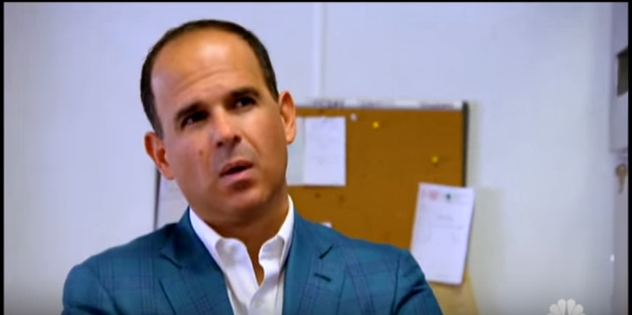 Marcus Lemonis, the star of CNBC’s show The Profit, is no stranger to litigation, but a proposed amended complaint recently filed against him in a year-old dispute really lets loose. The 165-page grievance reads like its own reality show, in which plaintiffs assert that Lemonis is nothing more than a fraud.
“While he pretends to be savior on TV to save businesses, Lemonis actually and purposefully sets out to acquire them for himself and ruin them financially,” plaintiffs contend.
Forbes turned the allegations in the proposed amended complaint into an exposè about Lemonis and his TV show, leading with a photo of him that is captioned, “The Profit or Profiteer?” It racked up more than 33,000 views in the first 24 hours at last count by deBanked.
But the lawsuit filed by Nicolas Goureau, Stephanie Menkin, and ML Fashion, who were first filmed for the show in 2014, is a bit overshadowed by the fact that this is their 2nd amended complaint and that a motion to dismiss their previous one was already pending.
The latest one highlighted by Forbes is communicated to the public as being the culmination of an “eight-month investigation” carried out with the help of a “former district attorney and a top law school professor, and a world renown psychiatrist that was spurred by the coming forward of no less than seventy (70) family businesses that have been destroyed…”
The identities of the people who carried out the “investigation” are not shared and the 70 “destroyed businesses” are not co-plaintiffs. At times, it is hard to take the complaint seriously when it casually asserts sensational facts, like one that says a participant on the show killed themselves but it doesn’t say who they were, where they worked, or any other details about the death.
Plaintiffs are seeking at least $12 million in damages and they have just added NBC Universal Media, LLC as a defendant.
Lemonis contends that the plaintiffs earned $3 million for their labor and that they charged $1.3 million in personal expenses on the company credit card.
Overall, it’s probably unwelcome press for the show given that the eighth season just debuted. Many people in the small business finance community are fans of the show. In 2017, Lemonis personally criticized Kabbage, saying that they weren’t a friend of small business.
Lemonis is currently hosting a contest on twitter where small businesses are competing to win $10,000 by submitting their pitch.
Win $10,000 for your business …. Make your best pitch … must use #TheProfit to submit your pitch pic.twitter.com/8CuZAN5SJ0
— Marcus Lemonis (@marcuslemonis) August 21, 2021