
Articles by deBanked Staff

MCA Company Files 15 COJs Against a Medical Practice, Dispute Arises Over Alleged Forgery
May 29, 2019 A New Jersey physician was one day going about his usual business, and the next day found himself an unwitting judgment debtor for almost $2,000,000 based on more than a dozen forged Confessions of Judgment (COJs) of which he had no knowledge. That’s the scenario described in papers by the physician’s attorney suing New York-based Itria Ventures, LLC. Itria is a subsidiary of its more well known parent company Biz2Credit.
In the span of 19 months, Itria funded a medical practice 19 times (an average of once a month), putting the practice on the hook for millions of dollars in purchased receivables. In March 2017, Itria declared one of those agreements to be in default and filed a COJ in the Supreme Court of New York, successfully securing a judgment in the amount of $245,114. Despite this, Itria continued to enter into at least 3 more funding contracts with them after defaulting.
The relationship would sour as Itria attempted to enforce its New York judgment in New Jersey with vigor. According to Court papers filed in Bergen County, Itria sought to have a judgment debtor, a doctor, arrested after he allegedly did not respond to an information subpoena or attend a deposition. In September 2018, a judge denied Itria’s application for an arrest warrant as the parties were reportedly in discussions to resolve.
When those discussions failed, Itria claimed that 14 more of the 19 contracts were also in default as they went ahead and filed 14 new COJs against the medical practice parties in March 2019. All told, Itria’s judgments add up to around $1.9 million. And just as Itria had previously, they began the procedure to enforce them.
But there’s a twist. The COJs and the contracts might have forged signatures for one of the parties.
On April 18th, Itria Ventures was sued by the very same doctor they sought to have arrested.
“Those confessions of judgment appear to bear my signature and have been filed against me but are fraudulent and forgeries because I did not sign them and the signature on them is not mine,” the plaintiff argued. Itria is a co-defendant alongside several entities that make up the medical practice, two notaries, Itria’s attorneys, and the plaintiff’s own brother, who is also a doctor.
Plaintiff’s claims of forgeries are onerous given that notaries were present, but the evidence is compelling given that on several contracts a notary attested that he appeared before her to sign it when there is surprisingly no signature there at all.
“This is a fraud even the most sophisticated lawyers would have trouble spinning in their favor. This fraud is shocking to the conscience,” the plaintiff’s attorney argued.
In instances where plaintiff’s signature is present, plaintiff alleges that his brother forged his signature and that the notaries fraudulently went along with it. In addition to the alarming variations in his signature, the plaintiff’s attorney pointed out an instance where a signature appears to be not only forged but a photocopied forgery.
Accordingly, the plaintiff is seeking to have all the judgments as they pertain to him personally, vacated.
Itria wasn’t convinced the allegations held weight given that it was the first time forgery had been raised in 2 years of communications. Documents filed appear to show there have been discussions to resolve for some time. They separately pressed forward on May 13th to have a Court appoint a post-judgment receiver over the medical practice.
Itria has relayed to deBanked that their enforcement efforts have been in compliance with all laws and court rules and that they’ve worked with these debtors in a cooperative fashion to attempt to provide them with the opportunity to resolve their financial difficulties. For example, Itria says they (a) provided these debtors with a reduced/modified payment plan, (b) provided them, for an extended period of time, with a de facto forbearance from enforcement to allow them to ‘catch their breaths,’ and to attempt to resolve their financial difficulties by seeking financing elsewhere or otherwise , and (c) at the debtor’s request, assisted them in attempting to obtain alternate financing for many of their business needs, not just to make Plaintiffs whole.
On May 29th, the judge ordered a preliminary injunction enjoining Itria from enforcing the 15 judgments against the plaintiff only and any other judgments “purportedly executed by plaintiff.” The catch is that the plaintiff must post a $1.3 million bond by June 7th. If it’s ultimately determined that the injunction was not warranted, the plaintiff will be responsible for all of Itria’s costs and damages related to the injunction. Itria is not enjoined, however, from enforcing the judgments against any of the plaintiff’s co-defendants.
The case is listed under Index Number 154067/2019 in The New York County Supreme Court.
Funding These Franchises? Read This First
May 29, 2019
United States Senator Catherine Cortez Masto is concerned with the abilities of four major franchises to repay business loans, according to a letter penned to the Small Business Administration. They include Subway, Complete Nutrition, Dickey’s Barbecue, and Experimac. The issues raised should be on the radar of every provider of capital.
For Subway, Cortez Masto cites a New York Post article that alleged Subway Restaurants is plotting to put its own franchisees out of business through the enforcement of minor handbook violations. A whopping 1,108 Subway stores closed last year alone.
For Complete Nutrition, the franchisor is reportedly dismantling its own franchise. Cortez Masto says it first raised the prices of goods, wiping out franchisee profit margins. Following that, it eliminated its franchise model altogether, took away their franchisees’ POS systems, removed their locations from the Complete Nutrition website, and informed Complete Nutrition customers that the stores had been sold and to order online going forward instead of from the stores. At least 12% of SBA loans made to Complete Nutrition locations have been charged off.
For Dickey’s Barbecue, the franchise is experiencing more stores closing than opening. Cortez Masto suspects that the franchisor is providing misleading and inaccurate information to potential franchisees, resulting in failed stores and bankrupt business owners. A franchise blogger says, “The Dickey’s business model seems odd, continually selling new franchises to replace closed units, but seemingly doing little to fix the profit structure so existing franchisees survive.”
For Experimac, Cortez Masto says that most of the SBA loans made to Experimac were originated by Celtic Bank and that to-date 23% of these loans have failed.
Jonathan Braun Sentenced to 10 Years
May 28, 2019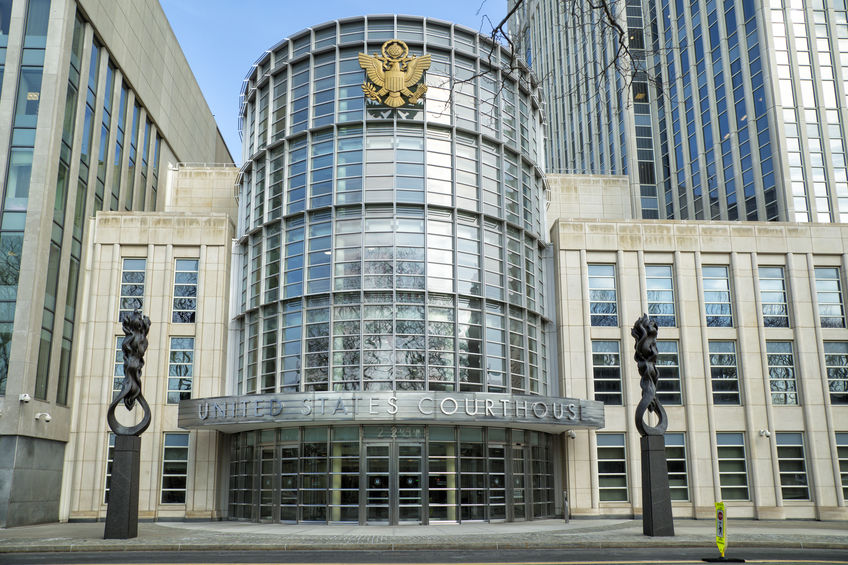
Jonathan Braun, who Bloomberg Businessweek profiled in a merchant cash advance story series, was sentenced to 10 years for drug related offenses this morning at the federal courthouse in Brooklyn. He will get credit for 17 months previously served in 2010 – 2011. He is scheduled to surrender on August 25th.
Prior to the judge’s order, Braun was given an opportunity to speak and proclaimed himself a changed man. The judge took many things into consideration including letters supporting Braun’s transformation as well as some new lawsuits and allegations that cast him in a negative light. Nevertheless, the judge explained that no new charges had been brought against Braun since he pleaded guilty 8 years ago. The 10-year sentence was the mandatory minimum.
DLI Receiver Requests Emergency Relief to Liquidate Feeder Fund Entity
May 14, 2019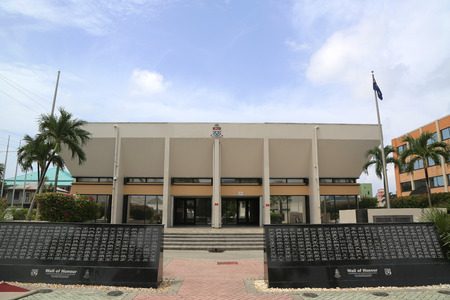
The Receiver for Direct Lending Investments is racing against the clock to protect and preserve the assets of the Cayman Islands-based vehicle used to receive foreign investments, US court records show. The commencement of a voluntary liquidation of the Cayman-entity is required before the deadline to preserve avoidance claims for over $4 million passes. A liquidation, which the Receiver can’t facilitate without permission from the Court, would also shield the company from any litigation moving forward by imposing an automatic stay.
In a normal situation, the Receiver informed the Court, the liquidation process would be carried out by the directors of the Cayman-based entity, but the only remaining director resigned on May 1st, leaving the company without any leadership whatsoever. Thus, the Receiver appointed in the US is asking for extraordinary relief to assist in the affairs of the Cayman entity and enter into liquidation to best protect its assets.
The Receiver’s concerns over litigation in the Cayman Islands are heightened because he’s reportedly received detailed inquiries from overseas investors wanting to know what’s going on and at this time, he’s not able to confidently answer them.
Given the relief sought and the ex-parte nature of the request, the US court is expected to issue an order on the matter very soon.
Update: The US court approved the Receiver to commence a voluntary liquidation of the Cayman entity
Another COJ Bill In New York Added To The Pile
May 14, 2019 Three members of the New York State Assembly want to make it illegal for a confession of judgment to be entered in the state against non-New York debtors. The debtor would also be required to be a resident of the county in which the COJ is filed. The authors behind Bill A07500, introduced on May 7th, plainly state that it is a reaction to stories that were published in Bloomberg Businessweek. (Questionable stories at that: See deBanked coverage)
“This measure is in response to recent press reports regarding creditors that execute confessions of judgment in New York State even though the associated agreement or debtor have no nexus to the State,” a memo attached to the bill states. Sign Here to Lose Everything, the Businessweek series authored by Zachary R. Mider and Zeke Faux, are cited in the footnotes.
The measure is merely the latest weapon unveiled in a wave of proposed legislation aimed at small business financing in New York this year. Here’s a recap of what’s pending now:
- A07500 – Seeks to ban COJs being entered against non-New York debtors.
- A03636 – Seeks to ban COJs from financial contracts.
- A03637 – Seeks to classify merchant cash advances as loans.
- A03646 – Seeks to establish a task force to investigate New York City marshals and their connection to “predatory lenders” and consider the feasibility of abolishing the city marshal program.
- A03638 – Seeks to apply consumer usury protections to small businesses.
George Popescu Steps Down From Lampix
May 13, 2019George Popescu is stepping down from Lampix, the augmented reality lamp company he founded, according to an announcement. Lampix raised $14.2 million through its sale of PIX tokens in a 2017 Initial Coin Offering (ICO). PIX sold at a price of 12 cents each but the value has since plummeted by more than 95%.
Popescu will be replaced by Salvatore Buccellato, who has been the Chief Revenue Officer since the summer of 2018.
“As outgoing CEO I am really proud to have taken Lampix from an idea/prototype to the successful manufacturing of the Lampix commercial development kits,” Popescu said in a published statement. “I strongly believe that it is good practice for companies to regularly have new CEOs who bring new ideas, new resources and a fresh outside vision to the company. During and after the full transition I will of course remain involved with the company as needed.”
Lampix was profiled in deBanked’s November/December magazine issue as a poster child for the murky world of crypto fundraising. At the time, Popescu was involved in several other ICOs in addition to Lampix. Among them was Restart Energy (which raised $30 million), Opiria, First Blood, AirFox (which later settled charges with the SEC for selling unregistered “securities”), and DropDeck Technologies, whose user funds were lost due to a software bug that also affected numerous other companies. Popescu was also advisory board chairman to Gatecoin, a Hong Kong-based crypto exchange which closed on March 20, 2019 following a 2016 hack.
Amazon Now Among The Top Online Small Business Lenders in The United States
May 8, 2019
Amazon has joined PayPal, OnDeck, Kabbage, and Square as being among the largest online small business lenders. On Tuesday, Amazon revealed that it had made more than $1 billion in small business loans to US-based merchants in 2018. Amazon says the capital is used to build inventory and support their Amazon stores.
By selling on Amazon, “SMBs do not need to invest in a physical store or the costs of customer discovery, acquisition, and driving customer traffic to their branded websites,” the company says. Small and medium-sized businesses selling in Amazon’s stores now account for 58 percent of Amazon’s sales. More than 200,000 SMBs exceeded $100,000 in sales on Amazon in 2018 and more than 25,000 surpassed $1 million.
You can view the full report they published here.
| Company Name | 2018 Originations | 2017 | 2016 | 2015 | 2014 | |
| PayPal | $4,000,000,000* | $750,000,000* | ||||
| OnDeck | $2,484,000,000 | $2,114,663,000 | $2,400,000,000 | $1,900,000,000 | $1,200,000,000 | |
| Kabbage | $2,000,000,000 | $1,500,000,000 | $1,220,000,000 | $900,000,000 | $350,000,000 | |
| Square Capital | $1,600,000,000 | $1,177,000,000 | $798,000,000 | $400,000,000 | $100,000,000 | |
| Amazon | $1,000,000,000 | |||||
| Funding Circle (USA only) | $792,000,000 | $514,000,000 | $281,000,000 | |||
| BlueVine | $500,000,000* | $200,000,000* | ||||
| National Funding | $494,000,000 | $427,000,000 | $350,000,000 | $293,000,000 | ||
| Kapitus | $393,000,000 | $375,000,000 | $375,000,000 | $280,000,000 | ||
| BFS Capital | $300,000,000 | $300,000,000 | $300,000,000 | |||
| RapidFinance | $260,000,000 | $280,000,000 | $195,000,000 | |||
| Credibly | $290,000,000 | $180,000,000 | $150,000,000 | $95,000,000 | $55,000,000 | |
| Shopify | $277,100,000 | $140,000,000 | ||||
| Forward Financing | $210,000,000 | $125,000,000 | ||||
| IOU Financial | $125,000,000 | $91,300,000 | $107,600,000 | $146,400,000 | $100,000,000 | |
| Yalber | $65,000,000 |
FTC Forum on Small Business Financing & Merchant Cash Advances
May 7, 2019At the FTC Forum on Small Business Financing & Merchant Cash Advances this morning, FTC regulators asked questions of a panel of industry representatives about controversial topics, including the use of COJs. Below are some closely paraphrased responses.
On Confessions of Judgment (COJs)
Scott Crocket, Founder & CEO, Everest Business Funding
The role of COJs is a conversation worth having. What’s the right balance?
We choose only to use them for deals of $100,000 or more. And COJs apply for only 3% of our business. So if there was a ban on COJs, it wouldn’t really affect us. It might just limit the amount we would fund.
The Bloomberg stories are not representative of what we do. We don’t file a COJ when a business is slowing down, but only when we suspect fraud.
Jared Weitz, CEO, United Capital Source
90% to 95% of our deals do not include COJs. And for those where we do use COJs, we give merchants a document that has a description of what it is so that they’re comfortable with it. We tell them that they have to be comfortable with it before they take it.
Jesse Carlson, Senior Vice President & General Counsel, Kapitus
After we saw the extent of the use of confessions of judgement by certain individuals/companies, as a trade association, we at the Small Business Finance Association (SBFA) decided to include in our code of conduct a ban on the use of confessions of judgement if you’re a member of the SBFA.
Part of the reason why we do include COJs is because we’re very careful with our underwriting.
On True-ups
Jesse Carlson
We have 5 to 10 employees who speak with merchants when they are having unforeseen financial challenges and we’ll adjust their ACH repayment. Some companies treat the percentage of the company’s sales as an absolute. We’ll offer them modifications.
Scott Crocket
We remind merchants that the true-up is available.
Ami Kassar, Founder & CEO, Multifunding LLC
Many funders are not as forgiving as these funders say they are.
Kate Fisher, Partner, Hudson Cook
Some MCA funders reached out to merchants affected by the hurricane in Texas and the forest fires in California to adjust their payments.
Jared Weitz
Other funders stopped requesting payments altogether from merchants who were affected by these natural disasters.
Brokers / Aggressive Marketing
Jared Weitz
A broker of an MCA deal has to give the commission back if the merchant fails within 90 days.
Jesse Carlson
We work with about 100 brokers/ISOs at a given time and we do background checks on them.
Scott Crocket
We do background checks on brokers and we monitor their behavior. We don’t hesitate to cut off a relationship with an ISO. We do spot checks, but we don’t monitor every ISO every day.
The Federal Trade Commission hosted a forum on small business financing including loans and merchant cash advances to examine trends and consumer protection issues in this marketplace.
The forum began at 8:30am and concluded at 1pm. Among some familiar names that spoke are:
- Jared Weitz, CEO, United Capital Source
- Scott Crockett, Founder & CEO, Everest Business Funding
- Christian Spradley, Head of Policy & Senior General Associate Counsel, OnDeck
- Kate Fisher, Partner, Hudson Cook
- Ami Kassar, Founder & CEO, Multifunding LLC
- Jesse Carlson, Senior Vice President & General Counsel, Kapitus
- Sam Taussig, Head of Global Policy, Kabbage
- Lewis Goodwin, Banking Lead, Square Capital