
Articles by deBanked Staff

If Wall Street Likes Square, Why Is the Stock Falling?
March 10, 2016 Jack Dorsey-led payments company Square released its first earnings as a public company yesterday and although it did not disappoint, it just wasn’t enough to keep its stock from tumbling.
Square’s stock opened 7.86 percent lower today even after its fourth-quarter revenues totaling $374 million beat analysts expectations hovering around $345 million. The San Francisco-based company proved to skeptics that its business is more than just payments with a convincing quarter. The seven year old company that went public in November 2015, originated more than $400 million in merchant cash advances annually and over $150 million in the fourth quarter with an average deal size of $6,000 and its software and data business brought $58 million in annual revenue.
Square also processed $10.2 billion in payments from 2 million merchants in the fourth-quarter, at an annual increase of 47 percent. Square realized that the best way to retain consumers is to sell them more products without losing its core — payments. The company received 350,000 orders for the mobile point of sale chip reader which accepts payments on smartphones. “We want to associate our logo with the ability to pay with your phone,” said Jack Dorsey during the earnings call.
Square is confident that it has built a “cohesive commerce ecosystem” for merchants. Then why is the stock being punished?
Is Online Lending the Cream of the Fintech Crop?
March 10, 2016 American fintech companies raised $7 billion over 351 venture capital-backed deals in 2015 and leading the pack were online lenders like SoFi, Zenefits, Avant and Prosper Loans.
A new report released by CB Insights and KPMG shows a record spike in VC-backed fintech deals, hitting $14 billion globally and making up 73 percent of all VC funding. The purview of fintech included companies in lending, payments, personal finance, bitcoin and equity crowdfunding.
In the U.S., the pack was led by marketplace lender SoFi raising over $1.35 billion, with SoftBank investing a billion in the San Francisco-based startup. Other noteworthy investments included $500 million into payroll service startup Zenefits, online lenders Avant and Affirm, which provide installment loans and credit scoring services.
Other Highlights
- Major corporations participated in one of every four fintech deals
- Investment in bitcoin and blockchain was up 76 percent annually
- 14 of the 19 fintech ‘unicorns’ (startups with a billion dollar valuation) were in lending and payments
- Citigroup (13 deals) and Goldman Sachs (10 deals) led investing in VC-backed fintech startups in the past four years.
- Top fintech companies of the year were Lending Club, Square and OnDeck Capital.
EX-ECB Official To Join Funding Circle Board
March 9, 2016 How does a company get street cred in the corporate hood? By hiring some big guys.
Today, Lending marketplace Funding Circle announced that it hired former Executive Board Member of the European Central Bank (ECB), Jörg Asmussen, to join the Funding Circle board.
This is latest of key hires made by alternative lending companies recently. Last month, stealth P2P insurance startup Lemonade hired famous behavioral economist, Dan Ariely, and ex-Deutsche Bank head Anshu Jain joined the SoFi board. And yesterday, deBanked wrote about lending platform LendKey hiring ex-treasury official Salil Mehta.
Asmussen is a German economist and policymaker and has held numerous high-profile positions within the public sector. From 2012 to 2013 he served as Executive Board Member of the European Central Bank (ECB), and from 2008 to 2012 he was State Secretary at the German Ministry of Finance, responsible for European Affairs and Financial Markets. Most recently, he was State Secretary for the German Ministry of Labour and Social Affairs.
Last year, Funding Circle acquired German lender Zencap, gaining a foothold in Europe, in countries like Germany, Spain and the Netherlands, along with its operations in the UK and US. In the four years of its existence, more than $2 billion has been lent on the Funding Circle marketplace to more than 15,000 businesses.
“Jörg is one of Germany’s most respected economists and has spent a lifetime shaping government and central banking,” said Matthias Knecht, co-founder and Managing Director of Funding Circle Continental Europe, “As we accelerate our growth across Europe, his experience in European regulation and unique insights into the challenges faced by small businesses will be an invaluable asset.”
CB Insights and KPMG estimated the global investment in fintech companies to total US $19.1 billion in 2015, with US$13.8 billion invested into VC-backed fintech companies, a 106 percent jump compared to 2014. Backed by marquee investors, companies like SoFi and Lemonade have the muscle to make key hires.
MFS Global Co-founder Launches Own Brokerage
March 9, 2016 Co-founder and COO of MFS Global, Robert Abramov launched his own ISO brokerage called Flow Rich Capital and departed from his role at MFS.
The new company based in Las Vegas has already signed on partners like CAN Capital. Abramov wants to keep the business small and minimal, with not more than five lenders. While he will exit from MFS Global’s day-to-day business, he will continue to hold equity and be part-owner in the company.
“He is pretty much transitioned out but he is still an active member of the executive staff,” said Tom Abramov, founder and CEO of MFS Global. “I am sure he is going to knock it out of the park and I hope he sends us deals.”
Tom added that as an older brother, he is happy that his brother is pursuing his dreams. “I know that Robert wanted to do this for long. He wanted to pursue his passion and we are wholeheartedly behind him,” he added.
For Abramov, experience working with merchants coupled with marketing experience gave him the confidence to start his own shop. “I have fun working with merchants and clients and have been running an ISO shop for five years now,” he added.
Flow Rich is in the process of setting up a team and and building a lender database.
As the industry expands and catches the eye of the big banks, competition will continue to breed. “While competition is on the rise, it will finally weed out the smaller guys tarnishing the image of the industry with little experience,” Abramov said.
Is now a good time as any to enter the business?
Herio Capital Breaks $20 Million in Funded Deals
March 9, 2016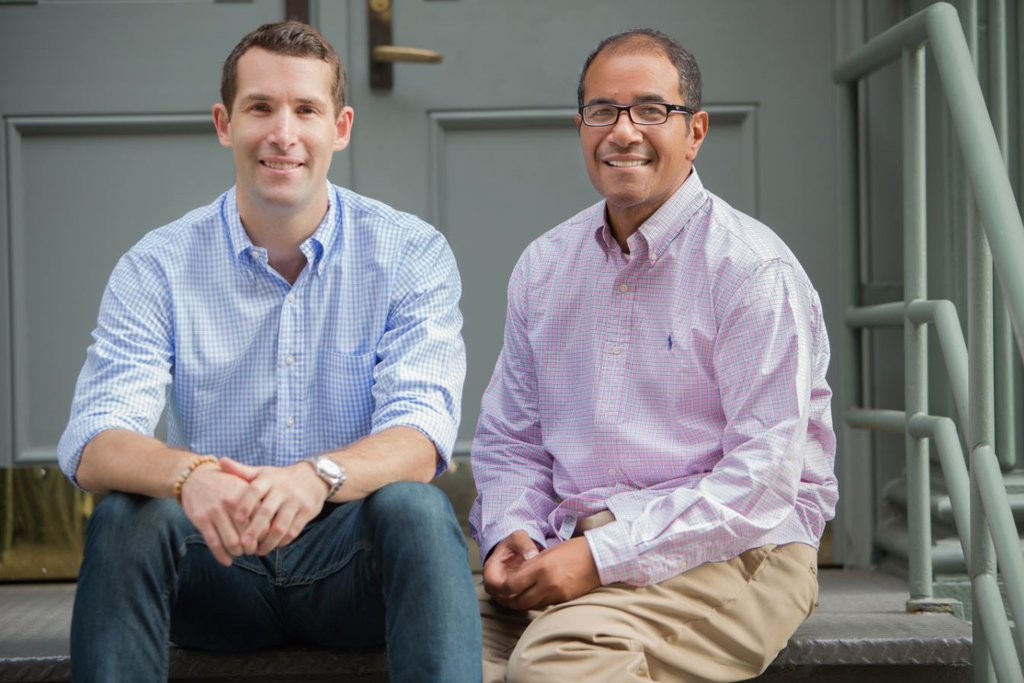 It might feel like 1997, but in early 2016 Herio Capital has surpassed $20 million in funding since inception. Co-founded by Sherif Hassan, the company’s chief executive, Herio launched only one year ago. Hassan was one of OnDeck’s first employees who stayed with the company all the way up until just before they went public.
Today, Hassan does not appear to be regretting that choice. “We have lots to be grateful for and even more to be excited about in 2016,” he said.
The company’s chief product officer and co-founder, Patrick Janson, summed up their vision like this, “When we started Herio, we saw a huge opportunity to improve upon the software that currently supports the marketplace lending industry.”
The Herio team will be attending the LendIt Conference in San Francisco next month.
“Reaching the $20 million funding milestone is a testament to the execution, creativity, and diligence of everyone at Herio. We are grateful to our team and our loyal industry partners. We are excited about the advancements our industry will make in the next period as we continue to design the future of credit,” concluded Hassan.
Credit Unions Beat Banks With Free Checking Accounts
March 8, 2016 Want a free checking account? Your best chance is still a credit union.
A Bankrate report surveying 50 credit unions found that 38 of them offered free checking accounts.
The average credit union overdraft fee is $27 compared to $33 average charge at banks. When it came to ATM fees, 34 percent of the unions had no fee for out of network ATMs, or at least one free out-of-network withdrawal per week.
“At a time when free checking has become increasingly rare at large banks, it is still very prevalent among credit unions,” said Greg McBride, CFA, Bankrate.com’s chief financial analyst.
Lendkey Hires Ex-Treasury Chief to Head Analytics
March 8, 2016 Lending platform LendKey hired Salil Mehta as senior vice president for credit risk and analytics.
Mehta was the director of the policy, research and analysis department at the Pension Benefit Guaranty Corp. and served as an adjunct professor of statistics at Georgetown University. Prior to that, he headed analytics for the Department of Treasury after the 2008 financial crash and was responsible for econometric, reporting and regulatory advice at the IMF, G-20 and the G-8 summits and has also held private sector positions at HSBC and Citigroup.
At Lendkey, which provides credit unions a platform to set up online lending programs, Mehta will oversee data and analytics—providing insight on credit risk and loan performance for clients and partners.
“We are in an age where banks and credit unions are searching for new capabilities to connect with their customers,” Mehta said. “…I’m inspired and excited to be spearheading that endeavor.”
NY Small Business Owners Protest $15 Minimum Wage
March 8, 2016 Small business owners in New York have registered dissent against Gov. Andrew Cuomo’s plan to raise the minimum wage in the state to $15 per hour, the highest minimum wage in the country.
In November last year, Cuomo announced that New York will raise the wages of permanent and seasonal workers to $15 by 2021. The business owners gathered in Albany on Tuesday to reject the proposal, claiming that the tax cut offered to ease the process is too little to offset the cost.
Small businesses generate roughly $950 billion in revenues annually and created 2 million jobs in 2014.