Archive for 2018
California Now Requires Mandatory Disclosures on Commercial Finance
October 1, 2018California Governor Jerry Brown has signed SB 1235.
As of Jan 1, 2019, commercial finance companies in California will be required to disclose the following on their contracts:
(1) The total amount of funds provided.
(2) The total dollar cost of the financing.
(3) The term or estimated term.
(4) The method, frequency, and amount of payments.
(5) A description of prepayment policies.
(6) The total cost of the financing expressed as an annualized rate.
To find out if this bill affects your company, contact an attorney.
CFG Merchant Solutions is a Sponsor of deBanked CONNECT – San Diego
October 1, 2018CFG Merchant Solutions is a sponsor of deBanked CONNECT San Diego. The half-day event for funders, lenders, brokers and industry professionals is being held at the Andaz on October 4th!


Funding Circle Stays Global; Goes Public in London
September 29, 2018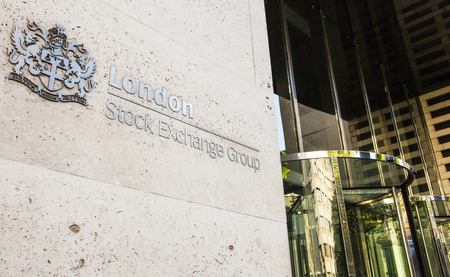 Funding Circle became a public company yesterday on the London Stock Exchange, listed as FCH. Founded in 2010, the peer-to-peer lending platform for small and medium-sized businesses, was initially priced at 440 pence (£4.40), which was on the low end of the 420-530 pence per share price range. But it opened at 460 pence, placing the value of the tech company at roughly £1.5 billion, or $2 billion, according to a Reuters report. In conjunction with the company’s IPO, it raised approximately £300.
The stock price dropped below the initial 440 pence per share on Friday to 435 pence, but went back up by the end of the day. The company was founded by Samir Desai, James Meekings and Andrew Mullinger, who all met at a pub in Oxford, England, according to a University of Oxford publication. Desai and Meekings were both studying Economics and Management at the university.
Among the company’s investors are Union Square Ventures, Blackrock and Index Ventures, in addition to a £150 million investment from Danish billionaire Anders Holch Povlsen.
According to the company’s September 2018 prospectus, Funding Circle’s total revenue has steadily increased over the past few years with $32 million in revenue in 2015 and $50.9 million and $94.5 million in 2016 and 2017, respectively. The company has facilitated £5 billion in loans its inception in 2010.
In August, Funding Circle rebranded with a new logo, and in June, the company expanded its partnership with Kansas-based INTRUST Bank, strengthening it presence in the U.S. market. Funding Circle offers small business financing from $25,000 to $500,000 with repayment options up to 5 years. While headquartered in the UK, the company also services customers the U.S., Germany and the Netherlands. Its headquarters is in London and it also has an office in San Francisco.
The Largest Merchant Cash Advance in History
September 28, 2018 How would you like to be the funder to do a $40 million MCA transaction? According to the Securities & Exchange Commission, a deal of such magnitude was one of the many negligent acts that 1st Global Capital CEO Carl Ruderman did with investor money. Though the SEC refers to the merchant as an auto dealership in California, it’s roughly 9 dealerships with common ownership that collectively gross more than $550 million a year in sales. It’s the deal of a lifetime except that the ISO who brokered it has become the largest unsecured creditor to file a claim in the 1st Global bankruptcy. Records show they are owed approximately $3.9 million in unpaid commissions.
And its performance has not been without challenges, according to emails disclosed in the SEC case.
In April 2018, 1st Global employees discussed what to do about the dealerships’ lingering cash flow problems after becoming aware that the owner intended to either recapitalize the debt or sell the dealerships. The choice by then had come down to either continuing to fund them or to cut their losses, an email says.
“If they were to become insolvent, everyone loses,” wrote the Director of Accounting and Finance.
1st Global continued to fund them. The $40 million (approximate amount) was not disbursed all at once but in increments over the course of a year.
One week before 1st Global filed for bankruptcy, they signed a Binding Letter of Understanding with the dealerships acknowledging that the owner would be selling them. At that time the merchant had unpaid taxes of at least $9 million and had an outstanding receivable balance with 1st Global of $43 million. The Letter said that 1st Global would accept “whatever amount it receives [..] at this point as complete satisfaction” of the current RTR when the business is sold. 1st Global also agreed to forever release the dealerships’ owner personally from all legal claims. It was signed by Carl Ruderman 8 days before he resigned.
The merchant has not returned deBanked’s inquiries. The banker named in the Binding Letter as having been exclusively hired to sell the dealerships, told deBanked over the phone that he has never heard of 1st Global. 1st Global ceased operations on July 27th. The SEC filed a complaint against Ruderman and the company on August 23rd and an amended complaint on September 26th. The dealership transaction is used as an example of malfeasance in it twice.
New Record
No longer candidates for the largest merchant cash advance in history, two ancient deals that were famous during their eras for their size, ended up in default, and in doing so showed the industry that there was such a thing as too big.
One was a $4 million advance made by Strategic Funding Source in 2011 to a tourist attraction being produced at the Tropicana Hotel in Las Vegas. The Las Vegas Mob Experience, billed as the most technologically advanced interactive presentation of historical artifacts ever devised and set up in a 26,000 square foot total immersion facility, it was predicted to bring in 1.5 million visitors per year. But the deal quickly spiraled out of control, the exhibit shut down, and allegations of fraud were lodged in court. Though the Mob Experience was dubbed the largest merchant cash advance in history, it depends on whether or not you’re counting common ownership of multiple businesses as individual deals or one deal.
Dozens of advances made by Global Swift Funding in 2007 and 2008 to businesses controlled by the same west coast-based restaurateur, led to Global Swift’s demise. When the “restaurant king,” as he was known, filed for bankruptcy across all of his entities, Global Swift had outstanding future receivables with his businesses of approximately $8 million. Dan Chaon, a then representative of Global Swift, told a local newspaper at the time that the restaurateur was “a helluva sales-talk artist… he provided false financial statements, and everyone got caught up in that game.”
Renaud Laplanche Barred From the Securities Industry
September 28, 2018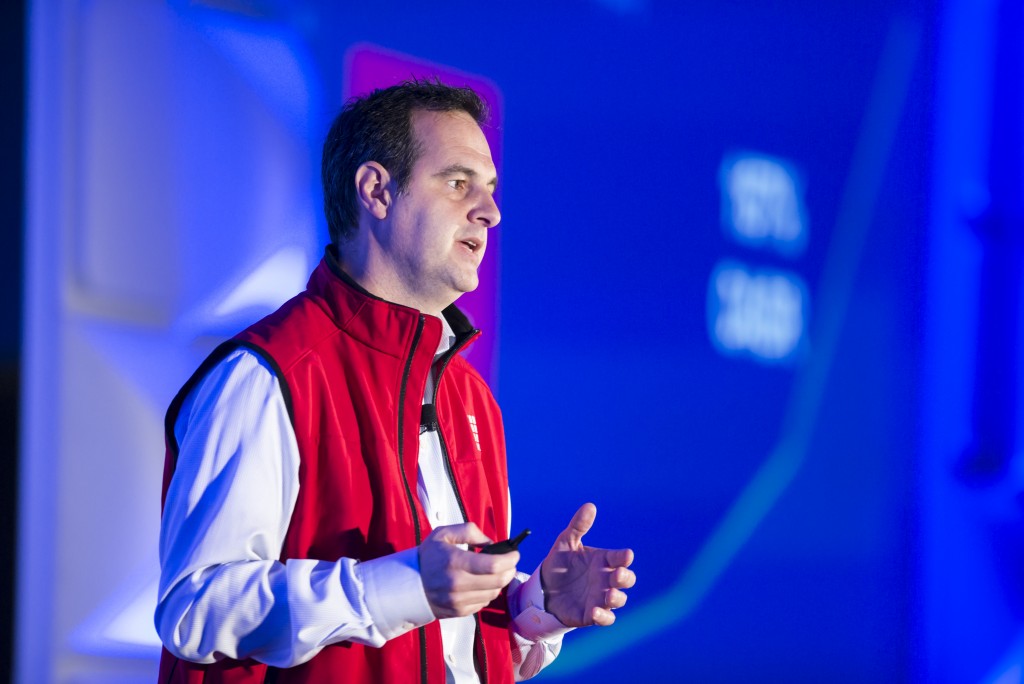
The SEC announced today that it charged LendingClub Asset Management, formerly known as LendingClub Advisors LLC (LCA), and its former president and co-founder Renaud Laplanche, with fraud – for improperly using fund money to benefit LendingClub Corporation, LCA’s parent company. LCA, Laplanche and Carrie Dolan, LCA’s former CFO, also were charged with improperly adjusting fund returns.
LCA, Laplanche and Dolan have agreed to settle the SEC’s charges against them and will pay penalties of $4 million, $200,000, and $65,000, respectively. The SEC also barred Laplanche from the securities industry for three years. LCA, Laplanche, and Dolan agreed to the entry of the SEC’s order without admitting or denying the agency’s findings.
This follows Laplanche’s ouster from LendingClub in May 2016 amid revelations of falsified loan records and conflicts of interest under Laplanche’s leadership. He is now the CEO of Upgrade, a San Francisco-based online lender, and he has been hailed recently for his resilience for making such a quick comeback.
A representative from Upgrade provided deBanked with a statement from Laplanche:
“I am pleased to have worked out a settlement with the SEC to put to rest any issues related to compliance lapses that might have occurred under my watch at Lending Club. Consistent with SEC policy, I have agreed not to admit nor deny the specific narrative of the events contained in the settlement order. I would like, however, to provide additional context:
1. To the extent there was an imbalance between 60-month and 36-month loans in one of the LCA funds as compared to its initial target, the specific 36/60-month balance was disclosed to investors every month.
2. Any manual adjustments used by the LCA team as part of the funds valuation methodology had a total net impact of 0.08% of the funds value over 5 years, and I strongly believe those adjustments were made by the LCA team in good faith.
In any event, I am glad that we can now put these issues behind us and focus on the important goals of making credit more affordable to consumers and delivering attractive returns to investors through disciplined underwriting and exciting product innovation. With the benefit of my prior experience, I feel better equipped to establish a strong culture of compliance and effective internal controls under the supervision of capable professionals.”
LendingClub, the actual company, or LendingClub Corporation, was spared any charges from the SEC because of its cooperation with the agency. The SEC press release explains below:
“The SEC’s Enforcement Division determined not to recommend charges against LendingClub Corporation, which promptly self-reported its executives’ misconduct following a review initiated by its board of directors, thoroughly remediated, and provided extraordinary cooperation with the agency’s investigation. LCA also reimbursed approximately $1 million to investors who were adversely impacted by the improperly adjusted monthly returns.”
Lending Club, which Laplanche brought public 2014, did not respond in time to questions before publication.
PIRS Capital is a Sponsor of deBanked CONNECT – San Diego
September 28, 2018PIRS Capital is a sponsor of deBanked CONNECT San Diego. The half-day event for funders, lenders, brokers and industry professionals is being held at the Andaz on October 4th!

The Broker: How Elana Kemp Turns Values into Value
September 26, 2018 Title: Broker at Fundomate, a commercial finance brokerage in Los Angeles.
Background in business:
I started four years ago when I was living in Israel and I was working American hours. It was tough because I have four kids…A [non business] opportunity brought me to LA where my dad lives and where I’m from originally. So I jumped on that and continued doing brokerage part-time as a one man show for about a year. I met some people in the industry here in LA and started working with them. From there I went to Fundomate, then somewhere else. And then I came back to Fundomate.
What’s the difference between working for yourself and for a brokerage company?
Generating leads is so challenging to do on your own. If it wasn’t for that, I’d be a one man show all day long. I have to admit, though, that after a year, I did miss the infrastructure of working with people and the energy.
Why is it so hard to find leads?
It’s hard to find an honest lead generator. They promise you a lot, but at the end of the day, you don’t get much. I tried many different avenues [when I was working alone.] And I had one lead guy who I was really happy with and then he ended up in the hospital. So there went that. But otherwise, most of them didn’t perform the way they promised.
What’s your morning like with four kids?
Well, I’m not the first in the office. I work for someone who’s very understanding of my situation. I have a kind of cart blanche in terms of my hours. Of course, though, I’m awake at 6 / 6:30, and the second I’m awake, I’m on my phone, checking my emails. So [while] I’m not physically in the office, the second I’m awake, my workday starts. So I don’t make it to the office until 8:15 / 8:30.
Is there any ritual you have to close a deal?
If I have a big deal pending, like a $250,000 deal, I definitely take the time to envision the funding email and kind of manifest that. I definitely believe in the power of energy. If I don’t make a deal, I try not to take it home with me. I believe it’s meant to be and I’ll get the next one. I do believe there’s enough out there for everyone.
I recently read a fun fact – that elephants eat 400 lbs of food a day. It blew me away. And I thought “if an elephant can find 400 lbs of food to eat a day, then I can find enough deals to fund and support my family.”
Largest deal funded:
$325,000. Commission was $26,000.
Her style:
I get really close to my merchants. Some people think I get too close to them. Everybody has a different [style]. Sometimes [getting very close to a merchant] will make me win a deal. Sometimes it will make me lose a deal. Everybody has a different vibe that they feel comfortable with.
I get close to people very quickly. It’s just who I am. And in my opinion it works to my advantage because I have merchants that renew with me multiple times a year. And I know, no matter how many calls they get [from other brokers], they’re going to turn to me. I know that they trust me. I’ve had one merchant come over for dinner at my house. I have some merchants I check in with every few months and sometimes we don’t talk about money at all. We just talk about life.
On honesty:
I try to imagine that the merchant is like my dad. I want to treat them properly. And I believe in karma. I also say that if I get a deal funded but it was not 100% honestly done, then I like don’t want to feed my kids with that money.
Advice for brokers:
Don’t give up on your values for a deal. Values are more valuable than one deal funded. You can always fund another deal…a [reputation] can be broken down in like 2 minutes.
Three Men Indicted in $345 Million Consumer Debt Ponzi Scheme
September 26, 2018 On September 19, a federal grand jury indicted three men on charges of conspiracy, wire fraud, identity theft and money laundering in connection with a $345 million ponzi scheme, tracing back to January 2013, according to the U.S. Department of Justice.
Simultaneously, the SEC obtained a court order to shut down the ponzi scheme allegedly created by these men, Kevin B. Merrill, 53, Jay B. Ledford, 54, and Cameron Jezierski, 28. The SEC complaint alleged that these men attracted investors to their scheme by promising sizable profits from the purchase and resale of consumer debt portfolios. However, the defendants were allegedly fabricating documents and forging signatures in a complex scheme to entice investors and perpetuate the fraud.
The SEC complaint alleges that Merrill and Ledford stole at least $85 million from investors to maintain lavish lifestyles, spending millions of dollars on luxury items, including $10.2 million on at least 25 cars, $330,000 for a 7-carat diamond ring, $168,000 for a 23-carat diamond bracelet, millions of dollars on luxury homes, and $100,000 to a private fitness club.
According to a story from WBAL TV, a Baltimore-area NBC news affiliate, SEC employee Stephanie Avakian said that from one investor’s $500,000 investment, “Merrill allegedly used [it] for a $400,000 payment for a 2014 Bugatti sports car, made payments to prior investors and repaid $20,000 of his own credit card debt.”
According to the WBAL TV story, a related complaint filed by the Securities and Exchange Commission, alleges that the investors included small business owners, restaurateurs, construction contractors, retirees, doctors, lawyers, accountants, bankers, talent agents, professional athletes and financial advisers in Maryland, Washington, D.C., Northern Virginia, Las Vegas, Texas and elsewhere.
“Most of these investors are just learning that they have been victimized,” said U.S. Attorney Robert K. Hur. “The effects of this kind of fraud can be devastating. We urge anyone who thinks they may be a victim to contact the FBI at MerrillLedford@fbi.gov.”
If convicted on the criminal charges, Merrill and Ledford could face up to 262 years in prison and Jazierski could face up to 120 years in prison.