cryptocurrency
ICO Settles With SEC, Must Return Millions to Investors
November 16, 2018 A Boston based startup that raised $15 million in funds via an Initial Coin Offering (ICO) must return the money to token purchasers and pay a $250,000 fine, the SEC announced. AirFox, who must make those payments in accordance with an SEC settlement, introduced a plan in 2017 to provide free data to mobile phone users in return for eyeballing advertising. The SEC was careful to note that they had not accused AirFox of fraud, but rather of failing to register their tokens as securities.
Since the ICO, the value of AIR tokens have dropped by 94%.
1st Global Capital’s Activities Spilled into Cryptocurrency and ICOs
September 14, 2018Curious details are emerging in the wake of the 1st Global Capital bankruptcy and subsequent SEC charges. Among them is that $161,000 of company funds were used to purchase cryptocurrency.
Many of those purchases were made in February of this year for a total of $92,492. The cryptocurrency market has slumped since then. Bitcoin, for example, is down 35%.
In May, less than three months before 1st Global filed Chapter 11, a purchase of $61,000 in cryptocurrency was addressed to TraNexus Ireland LTD. TraNeXus is an Ireland-based travel technology blockchain company that is currently raising capital via an Initial Token Offering (aka an Initial Coin Offering, ICO). “TraNexus is committed to changing the way people travel and revitalizing the travel and tourism industry by making travel easier, greener, more valuable and more fun,” the company says of itself in a recent press release. 1st Global Capital owner Carl Ruderman is something of a vanguard in the global tourism business whose acumen includes ownership of Elite Traveler magazine.
Separately, 1st Global is alleged to have funded a $40 million merchant cash advance to an auto dealership in California. Though it remains unconfirmed, industry insiders say it wasn’t even a 1st position deal and that the dealership had multiple advances.
On Wednesday of this week, the SEC served a subpoena on a JPMorgan Chase in Miami demanding all documents and payments related to 1st Global, Ruderman, and his companies.
Two-Thirds of Daily Crypto Trade Volume May Be Fake
August 27, 2018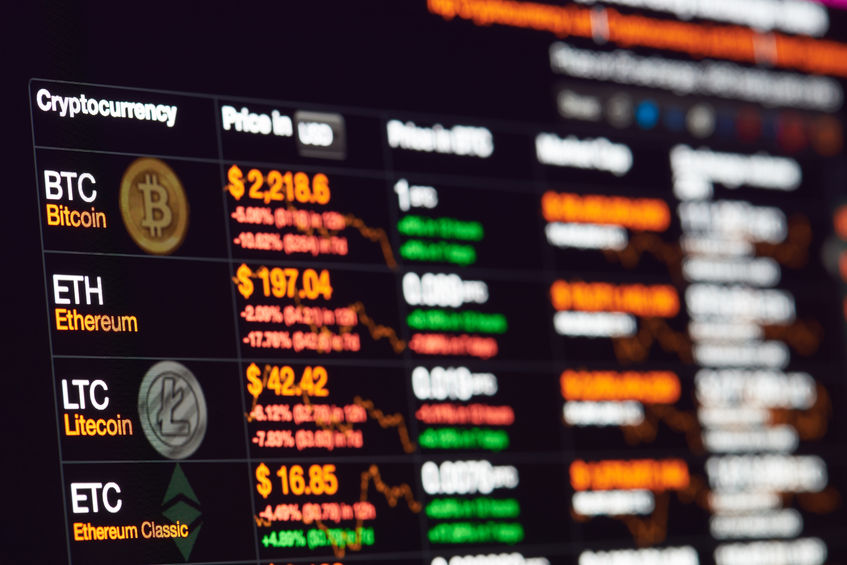 Two-thirds of daily trade volume in cryptocurrency is faked, according to research published this month by the Blockchain Transparency Institute (BTI). This translates to $6 billion a day, according to the report. What this likely means is that the exchanges themselves are quickly buying and selling cryptocurrency to give the illusion of high activity on the exchange when, in fact, there may be relatively little.
The advantage of creating this illusion is to make it more attractive for actual cryptocurrency investors to buy on a given exchange, which is how the exchange makes money – from taking a percentage of each transaction. This practice of buying and selling to oneself (or to colluding parties) in an effort to mislead others, is called “wash trading,” and is illegal.
The report states that “over 70% of the CMC top 100 is likely engaging in wash trading by at least 3x their stated volume.” Given that most cryptocurrency exchanges are not regulated, this alleged wash trading may not come as a surprise to many. But if this is accurate, the magnitude of this fake trading is significant. Coinbase and Binance were not suspected to be wash trading, according to the report.
The exchanges that are considered to be accurate by the report typically have a volume/user to unique visitor ratio of around between 2% and 5%, whereas suspect exchanges ratio ranged from 10% to over 655,000%.
Sylvain Ribes, a Cryptocurrency investor and writer who is cited in the report, wrote in a March 2018 Medium blog post of his surprise between the differences in trading volume among exchanges.
“Where I had expected mild differences between currencies, I found ridiculously massive discrepancies between exchanges,” Ribes wrote. “Not the kind that can be easily hand-waved away (‘oh well, their users must behave differently’), but the kind that can only be explained by some figures being overstated as much as 95%.”
As Ripple’s XRP Drops, Legal Trouble Builds
August 15, 2018 Ripple’s cryptocurrency, XRP, has dropped by about 90 percent from a high of $3.84 per token in January of this year to $0.29 today. When XRP hit its high of $3.84, Ripple co-founder Chris Larsen briefly became one of the richest men in the world because of his sizable ownership of the currency, his share then worth about $59.9 billion. But that status was short-lived, along with Ripple’s upward trajectory.
Of course, the decline of XRP is not unique in the world of cryptocurrency. Bitcoin has also had a dramatic decline in value throughout 2018.
Along with the decline in value of the XRP coin, Ripple has been plagued with lawsuits.
In May, XRP investor Ryan Coffey sued Ripple Labs and its CEO Brad Garlinghouse in a class action suit for allegedly engaging in the sale of unregistered securities. The company and Garlinghouse was said to have made at least $342.8 million through XRP sales that were created out of thin air.
In June, XPR investor Vladi Zakinov filed a class action lawsuit against the same defendants for the same thing. He alleged that the XRP token is a security controlled by Ripple.
And in July, XRP investor David Oconer sued Ripple Labs and Garlinghouse in a class action suit for essentially the same thing. Also in July, Plaintiff Avner Greenwald sued the defendants with similar charges.
The May lawsuit was transferred from state court to federal court by the defendants, Ripple and Garlinghouse. Plaintiff Coffey appealed this, but on August 10th, a California judge denied Coffey’s appeal and said that the case will remain in federal court.
This is advantageous for the defendants because it allows these similar class action lawsuits to be consolidated into one, according James Chareq, an attorney and partner at Hudson Cook who is very familiar with class action cases. Moving from state to federal court increases efficiency and reduces legal fees, he said.
Ripple Sued Again for Alleged Sales of Unregistered Securities
July 5, 2018Ripple Labs Inc. and the company’s CEO, Bradley Garlinghouse, were sued again last week, according to a complaint dated June 27 and filed in San Mateo County, CA. The plaintiff is California resident David Oconer who alleges, in a class action suit, that Ripple and Garlinghouse “promoted, sold and solicited the sale of XRP.” XRP is Ripple’s digital asset. Furthermore, the suit contends that the defendants “raised hundreds of millions of dollars through the unregistered sale of XRP, including selling to retail investors, in violation of the law.”
As Ripple has made efforts to distinguish itself as separate from XRP, including a recent logo change to XRP, the plaintiff Oconer asserts in the lawsuit that Ripple and XRP are, in fact, very much intertwined.
There is a community movement for a unique #XRP symbol. We agree! XRP is independent of Ripple. Submit your idea now. #XRPCommunity https://t.co/ZnfVMiK9i2
— Ripple (@Ripple) May 10, 2018
Ripple has faced a barrage of recent lawsuits that make similar allegations. One lawsuit filed in May by XRP investor Ryan Coffey was recently transferred from state court to federal court. It is now pending in the California Northern District Court under Case #4:18-cv-03286.
Facebook Reverses Cryptocurrecy Ad Ban
June 27, 2018 Back in January, Facebook decided to ban all ads for cryptocurrencies. Yesterday, the social media giant changed its mind. In a post on its blog yesterday, the company stated that it will now “allow ads that promote cryptocurrency and related content from pre-approved advertisers. But we’ll continue to prohibit ads that promote binary options and initial coin offerings.”
The official new policy read: “Ads may not promote cryptocurrency and related products and services without our prior written permission.”
“Advertisers wanting to run ads for cryptocurrency products and services must submit an application to help us assess their eligibility,” Rob Leathern, Facebook’s Product Management Director, wrote in the official blog post. “[This includes] any licenses they have obtained, whether they are traded on a public stock exchange, and other relevant public background on their business. Given these restrictions, not everyone who wants to advertise will be able to do so. But we’ll listen to feedback, look at how well this policy works and continue to study this technology so that, if necessary, we can revise it over time.”
The January ban, also laid out in an official company blog post, said: “Ads must not promote financial products and services that are frequently associated with misleading or deceptive promotional practices, such as binary options, initial coin offerings, or cryptocurrency.”
Facebook acknowledged in yesterday’s company blog post that the wording of its January ban was “intentionally broad” as they continue to work to better detect deceptive and misleading advertising practices.
Class Action Lawsuit Filed Against Ripple For Sale of Unregistered Securities
May 4, 2018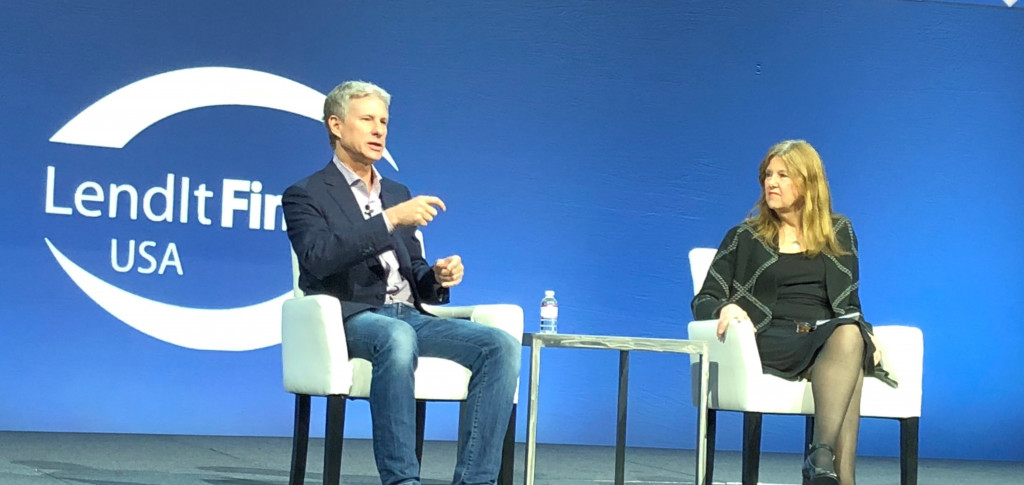
Ripple’s digital token XRP is a security, a class action lawsuit filed in the Superior Court of California contends. The 32-page complaint brought by XRP investor Ryan Coffey, says the defendants, who include Ripple CEO Brad Garlinghouse, engaged in the sale of unregistered securities, highlighting that they earned over $342.8 million through XRP sales in the last year alone, securities that were created out of thin air.
“Defendants have since earned massive profits by quietly selling off this XRP to the general public, in what is essentially a never-ending initial coin offering (“ICO”). Like the better known initial public offering (“IPO”), in an ICO, digital assets are sold to consumers in exchange for legal tender or cryptocurrencies (most often Bitcoin and Ethereum). These tokens generally give the purchaser various rights on the blockchain network and resemble the shares of a company sold to investors in an IPO. Unfortunately, these ICOs have become a magnet for unscrupulous practices and fraud.”
The complaint alleges that Ripple executives have engaged in pumping schemes meant to increase the price of XRP through attempted bribes, rumors they’ve started, and hype on social media.
The attorney representing the lead plaintiff, James Taylor-Copeland, is no stranger to cryptocurrency. His twitter username is @TCryptoLaw and he runs the website cryptolaw.net.
At LendIt Fintech last month, Ripple co-founder & chairman Chris Larsen said that the company was anti-ICO. “I think it’s a bad thing to get involved with from the founder’s perspective,” he said on stage during an interview with Jo Ann Barefoot, “because, you know, if you’re a founder and you can raise money many ways today, do you really want to do something where you’re going to have the SEC, you know, kind of threat hanging over your head for 10 years with strict liability? You just don’t want that. You know, that’s a problem.”
Chris Larsen on Crypto, Ripple, and ICOs
April 24, 2018At LendIt Fintech, Ripple co-founder and Chairman Chris Larsen got real in his on-stage conversation with Jo Ann Barefoot. This is what you missed:
I think this is a fundamental shift in fintech and what we believe the big thing happening here is the development of a second internet. We call it the internet of value so that value, money, assets will begin moving as quickly and efficiently as data has been moving for the last 25 years
Using SWIFT is like sending a letter. You know, when drop it in the mailbox, you have no idea where it is, if it got there or not. So, getting away from that I think is profound. And what we would say is that, you know, a lot of the backlash from globalization today, it’s not because globalization is bad. It’s essential. It’s that it’s incomplete because globalization needs kind of 3 key systems to be working together and it needs interoperability and data.
I think all new technologies start with a, you know, screw the government, disruption, tear everything down. So, I think that’s natural and then, you know, the internet started that way too and then it has to sort of grow up. And particularly, it’s solving real world problems. Real world problems are always more complicated than that. And then when you switch to finance, this is different. Right? You know, the internet was mostly technology. Mostly. It’s just now kind of crashing into regulatory issues.
I think on some of the other things like ICOs, we’re pretty anti-ICO. I think it’s a bad thing to get involved with from the founder’s perspective because, you know, if you’re a founder and you can raise money many ways today, do you really want to do something where you’re going to have the SEC, you know, kind of threat hanging over your head for 10 years with strict liability? You just don’t want that. You know, that’s a problem.
[..]From building currencies, digital assets, ICOs typically say, “Okay. There’s a currency for this use case and none other.” That’s kind of the opposite of the way it should go. Currencies need to be as liquid as possible. And so, they’re going to have as many use cases as possible. For XRP for example, the kind of early beachhead has been cross border payments, but we see that as just the beginning of something that really has a multitude of use cases. To get as liquid as possible, that’s what drives utility and value at the end of the day. So, I think in all fronts ICOs are problematic and that’s why you’re seeing the regulators crack down on them, not everywhere, but I think they’ll be transformed. They’ll probably look like, you know, IPOs at the end of the day.