Sean Murray is the President and Chief Editor of deBanked and the founder of the Broker Fair Conference. Connect with me on LinkedIn or follow me on twitter. You can view all future deBanked events here.
Articles by Sean Murray

Merchant Cash Advance Was at Transact ’15
April 4, 2015The payments crowd was no doubt in the house at Transact ’15, but if you were wondering if there was anything else going on, check it out:
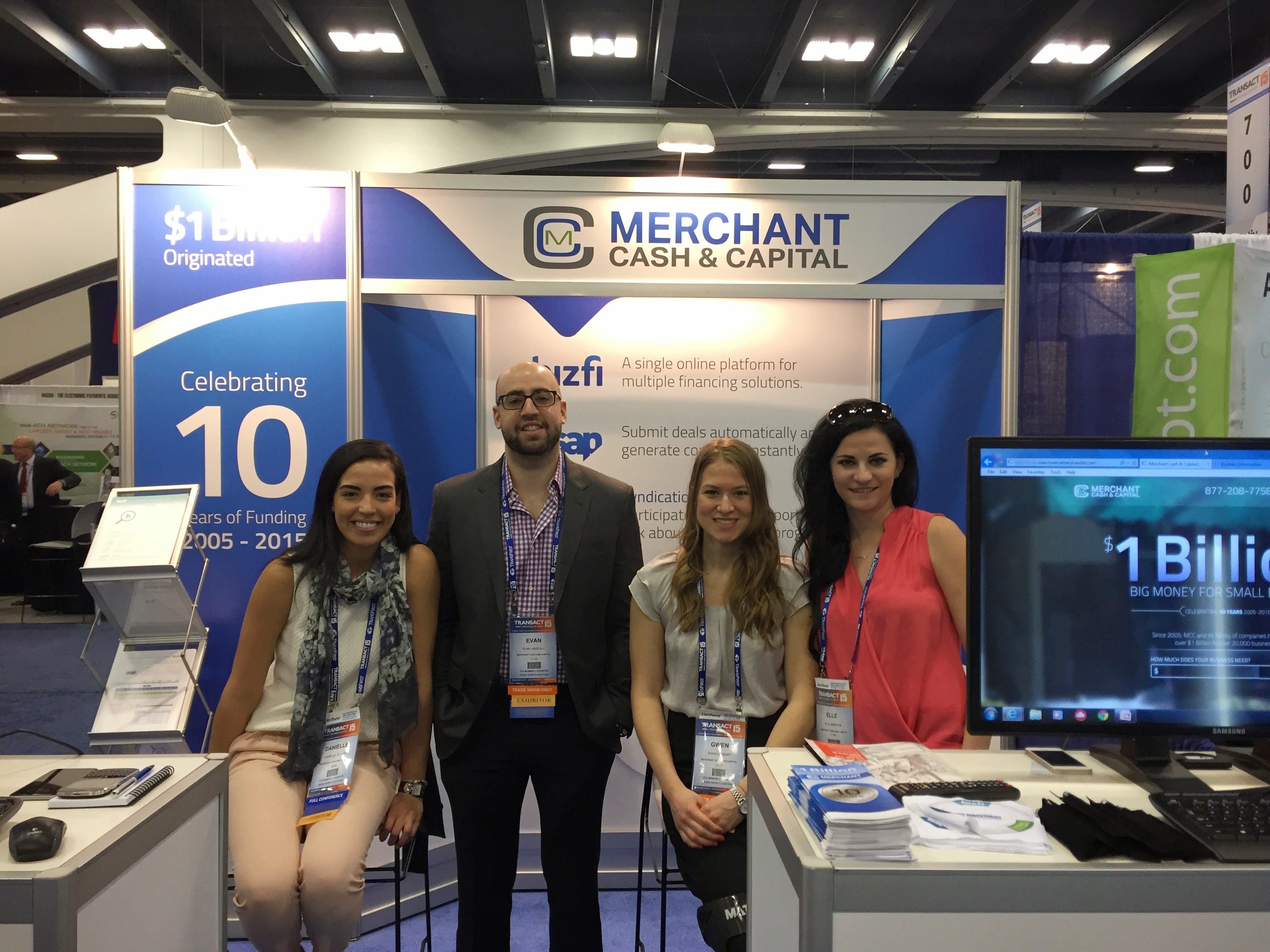

#TRANSACT15 – enjoying the show and having fun meeting new sales channels! #smallbusiness pic.twitter.com/1PxTVsUrbC
— RetailCapital (@Retail_Capital) April 1, 2015
Check out @CANCapital at @ElecTranAssoc on the exhibit floor. #TRANSACT15 pic.twitter.com/AVO3mJAyJh
— CAN Capital (@CANCapital) April 1, 2015

VPs Steven, Josh, Alan and Hellen will be at Booth 1600 this week to talk about #financing @ElecTranAssoc #TRANSACT15 pic.twitter.com/2cIy5Lfvp2
— Strategic Funding (@SFSCapital) March 31, 2015
Our dedicated Broker Services Manager is at #TRANSACT15 and ready to meet you! Stop by Booth 303 before the day ends! http://t.co/6Bl08VENoi
— National Funding (@NatFunding) April 2, 2015

Read: Is the MCA Industry Reverting Back to 2005?
BitPay Right at Home at Transact ’15
April 3, 2015 BitPay has a knack for flair. They sponsored a college bowl game known as The Bitcoin Bowl in St. Petersburg as well as a driver in the NASCAR Camping World Truck Series race. BitPay is bitcoin, but all grown up.
As a member of the ETA and with a business model similar to just about every other card processing acquirer, BitPay didn’t really look too out of place. At a press briefing on April 1st at Transact ’15, company co-founder Tony Gallippi sat in between Osama Bedier of Poynt and Joan Herbig of ControlScan to discuss the road ahead for payments.
Gallipi explained that they are working to integrate with POS platforms so that merchants can accept bitcoin using their existing systems. He also sought to dispel the myth that bitcoin is an untraceable currency by citing the bombshell news report published by the New York Times just the day earlier that revealed government agents had been caught stealing bitcoins.
“The agents, Carl Mark Force IV, who worked for the Drug Enforcement Administration, and Shaun W. Bridges, who worked for the Secret Service, had resigned amid growing scrutiny, and on Monday they were charged with money laundering and wire fraud,” The story states. The agents stole bitcoins recovered in the Silk Road case and laundered it. But since bitcoin is the perfect opposite of untraceable, both agents were caught.
Bitcoiners, start your engines! BitPay #NASCAR driver @jbossracing now starting his 1st lap at Daytona! #JBossBitcoin pic.twitter.com/Bzq4rYY8IC
— BitPay (@BitPay) February 21, 2015
Referring later to the phenomenon of using your mobile device to make a payment, Gallippi said, “a lot of the difficulty in changing is just muscle memory. We’re all so used to just reaching for our wallet to make a payment.”
While BitPay wore a good corporate face for the conference, news that their sponsorship of future college bowl games had been terminated hit the press right in the middle of it. According to Fortune, “neither side is talking about the abruptly ended sponsorship, but it likely has to do with the value of the game, and the value of bitcoin.”
That doesn’t sound good for BitPay, but it may have come down to whether or not it was a good use of their marketing budget. For one, their company name wasn’t even attached to the bowl title. It was the Bitcoin Bowl not the BitPay Bowl. But at least their one run was a moment to remember.
Hopefully BitPay will still be going strong at Transact ’16 next year.
How Syndication Has Made Millions for Partners
April 3, 2015 “How Syndication Has Made Millions for Partners” is a subtitle I borrowed from Strategic Funding Source’s print periodical, The Business Strategist. In the article penned by Ben Johnston, the company’s Chief Strategy Officer, the story how of syndication made its way into the merchant cash advance industry is explained in detail.
Of notable mention is that Strategic has had over 200 syndicate partners co-invest over $260 million of their own money into funded deals. That’s more than a quarter billion dollars from syndicates.
Their platform, which was the first one to operate on scalable level, provides same day payments to syndicates and access to detailed reports on a daily basis.
“Peer-to-peer lending and crowdfunding have become hot topics in the financial industry,” the article concludes. “But Strategic Funding Source has been crowdfunding with its own peers for years.”
A Return to the Fundamentals? (At Transact 15)
April 3, 2015 The Transact ’15 conference opened to a record crowd and there was no shortage of merchant cash advance players in attendance. Those facts were to be expected. And if you walked in and poked your head around, you might not have noticed anything to be different. Payment processors touted the latest mobile technology and at every turn security systems were being offered to prevent catastrophic breaches of cardholder data.
Everything looked normal… except the merchant cash advance companies.
Back to the fundamentals
Early on Wednesday, April 1st, CAN Capital kicked off a product announcement by raffling off free Apple watches. CAN’s new product is called TrakLoan, a revolutionary new loan program that allows merchants to repay via a split percentage of their credit card sales instead of fixed ACH.
April Fools?
The described advantage of TrackLoan is that there is no fixed term and that merchants only pay back at the pace that they generate card sales. Wait, Where have I heard of this before?
After slapping myself across the face a few times to make sure I hadn’t teleported to the year 2005, the rip in the space time continuum grew more apparent at the after parties.
Card processors Integrity Payment Systems, North American Bancard and Priority Payment systems are still among the hottest names in town for splits. The veteran MCA ISOs and funders are still boarding hoards of merchant accounts with them every month and are therefore building multi-million dollar residual portfolios in the process. It makes one wonder why so many people have turned their back on split-deals for the ACH methodology.
Years ago, merchant cash advance was a sideshow value-add that could be used to acquire what really mattered and what was reliably profitable, merchant accounts. Not everyone has forgotten that however.
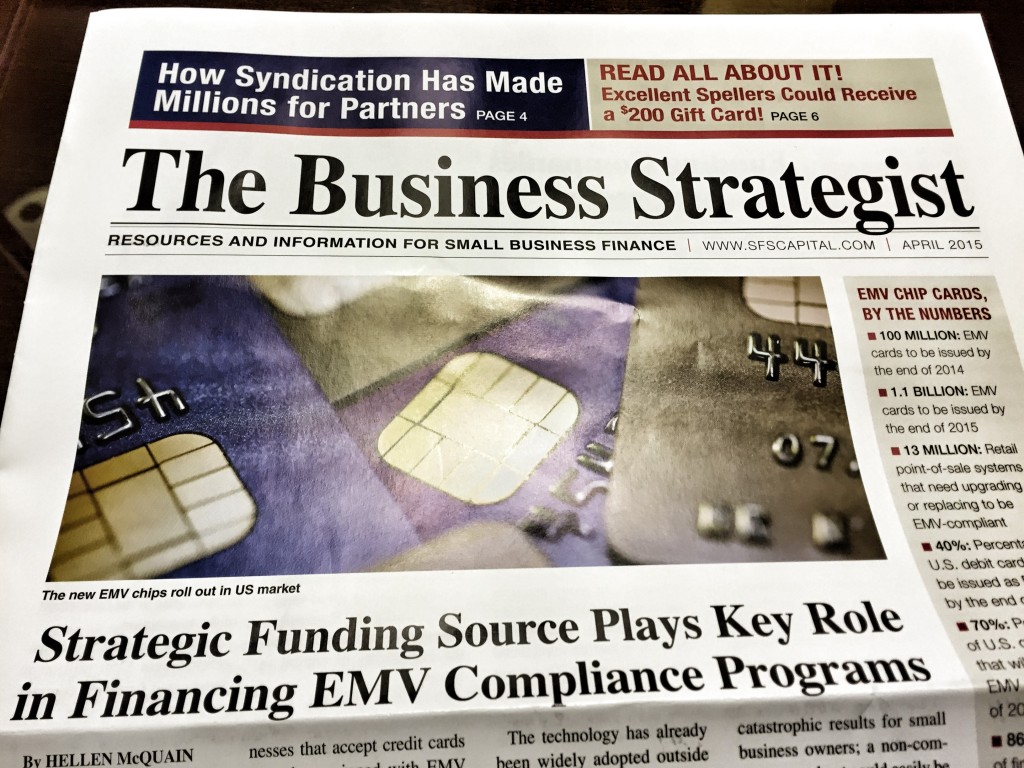 Over at Strategic Funding Source, Vice President Hellen McQuain is heading up a new merchant services division. In The Business Strategist, an SFS periodical, McQuain speaks the native tongue of the payments industry: EMV, PCI, NFC, etc.. Few, if any, of today’s new entrants in merchant cash advance could identify what those acronyms stand for, let alone explain the current climate of adoption.
So, is it time to get back to the basics?
Over the last six months, I have heard more gripes from funders about how to align a broker’s interest with theirs, other than by offering the opportunity to syndicate of course. The question comes down to, how can you get a broker to care about the outcome of a deal?
The answer should be obvious. Pay half the commission upfront and the other half as part of an ongoing performance residual. That gives the broker a stake in the outcome without having to syndicate. This is not a novel idea. This was how the entire industry operated from 2005 to 2011.
Might brokers resist such a compensation plan today in an upfront-only world? Maybe. But the greatest resistance I sense from funders, especially new ones, is that automated residual payments are too complicated for their current accounting systems.
That of course begs another question. How can this possibly be? Despite the rapid growth in technology, there is an entire segment of the industry that is ill-equipped to handle transactions that were commonplace and scalable five years ago.
While today’s systems are impressive, there are times when it seems like yesterday’s advanced technology was lost in a great flood, along with all the scientific texts documenting how to build the powerful machines.
To add to this, some of today’s edgy ideas are not new. A monthly payment loan for example is not an innovative idea. Weekly payments might acquire the merchant that wouldn’t do daily payments. And monthly payments might get the merchant that wouldn’t do weekly payments. These stretched out programs might make you popular with merchant cash advance brokers that are used to selling daily payment products, but they’re in no way new. It’s a return to the basics.
In 2015 we may apparently be going full circle.

A Peek Inside Yellowstone Capital
April 1, 2015When the banks say ‘no,’ alternative financing companies are saying ‘yes,’ sometimes. While costs may run high, there is still a limit on risk that a lender like OnDeck Capital and their competitors can accept.
In January of 2011, Kabbage stated their approval rate on volume-eligible applicants was only 55%. In February of this year, they said it’s about 80%. And a year ago, CAN Capital CEO Dan DeMeo told Forbes their approval rate was almost 70%. Similarly, a Biz2Credit report estimated the approval rate for alternative lenders in 2014 to be around 64% on average.
This indicates that approximately 20% – 35% of small businesses are being declined yet again. These are America’s exiles and they don’t fit into the neat little underwriting boxes that alternative lenders have crafted. Being declined by an alternative lender does not necessarily mean the business isn’t healthy or viable, but rather it could be because they exhibit some characteristic that today’s risk algorithms disqualify. Volatile sales activity, short time in business, poor credit, and atypical SIC codes are just a few of the reasons that a business could be rejected by a lender like OnDeck.
Consequently, an entire Plan C market has sprung up to service the small businesses that have been cast aside by the algorithms. And it’s huge. At the center of it all is Yellowstone Capital, a New York City-based merchant cash advance provider that has carved out its own niche. Founded in 2009, Yellowstone was one of a handful of pioneers that introduced ACH payments to an industry that relied entirely on split-processing.
 Yellowstone does not publish their annual funding volume, but according to insiders not authorized to speak on the record, the numbers dwarf many industry behemoths including Square Capital, a company that funded more than $100 million in the last twelve months. And there’s some interesting changes happening there behind the scenes.
Last year, Yellowstone gave up an equity stake to a New York-based hedge fund in exchange for capital. Just recently however, Yellowstone CEO Isaac Stern led a management buyout to reportedly better position themselves for growth.
As part of the arrangement led by Stern and backed by a private family office, the hedge fund has been bought out and Stern is the only remaining company co-founder to retain an equity stake.
Additionally, private equity turnaround expert Jeff Reece has come on as President. Reece is a former Director of Cogent Partners, a boutique, private equity-focused investment bank and advisory firm.
Josh Karp is remaining the company’s Chief Operating Officer.
Jake Weiser is staying on as General Counsel.
 Above all, the changes are more than just a few new faces in management. Yellowstone has already rented an additional floor at 160 Pearl Street, bringing the total floors they occupy there now to three.
Notably, the company has endured some negative press in the past of which they are well aware, but they have no shortage of supporters. I contacted two ISOs that claim to have worked with them and asked for their opinion on the Yellowstone experience.
Len Gelman of Allied Capital Corp couldn’t say enough good things about his account manager there, “He fights for every deal I submit, no matter how small or how difficult it may be to get done,” said Gelman. “He always takes my calls and responds to my emails and texts no matter how late it may be.”
And Arty Bujan of Cardinal Equity said, “Working with Yellowstone opened a door of business for me that really wouldn’t have existed without their unique approach to funding what some may call less desirable merchants.”
With a new management team and strong capital backing, Stern and Reece appear to be laying the groundwork to scale.
According to company insiders, Yellowstone is also working to expand their box beyond just high risk businesses and plan to service the middle market risk class. That would in effect also make them a Plan B option.
Their new underwriting depth could spare business owners from that second ‘no.’
Transact 15 in San Francisco
March 29, 2015 I’ll be at Transact ’15 this week in San Francisco. It used to be the only national show that the entirety of the merchant cash advance industry attended. That’s not necessarily the case anymore but it’s still a must-attend event for funders.
Click here for my photo blog of last year’s Transact conference.
To view the events I’ll be at this year, check out our schedule.
I will of course be keeping a live blog of the conference on the website and collecting photos, news, and interviews for use in the next issue of deBanked magazine. If you’d like to arrange a meeting, email me at sean@debanked.com.
See you in Cali!
The #payments industry will all be at Moscone in San Francisco Tuesday for http://t.co/dV0KxGwXmR – largest show in ETA's 25 year history!
— Jason Oxman (@joxman) March 27, 2015
Search Engine Lead Generation Is Probably Rigged
March 21, 2015 Hoping to do some nifty SEO to boost your site to the top of search results for valuable keywords? Don’t bother. In August, 2014, I presented six signs that alternative lending is rigged, at least as far as search was concerned.
Two days ago, the Wall Street Journal ran a story that exposed a confidential FTC report on Google. The article opens with, “Officials at the Federal Trade Commission concluded in 2012 that Google Inc. used anticompetitive tactics and abused its monopoly power in ways that harmed Internet users and rivals, a far harsher analysis of Google’s business than was previously known.”
The conclusion? Google indeed skewed search results to favor its own services.
The 160 page report that the WSJ draws its analysis from was not supposed to be made public. Only a handful of pages are presented on the WSJ’s website in their entirety. Below are two of them:
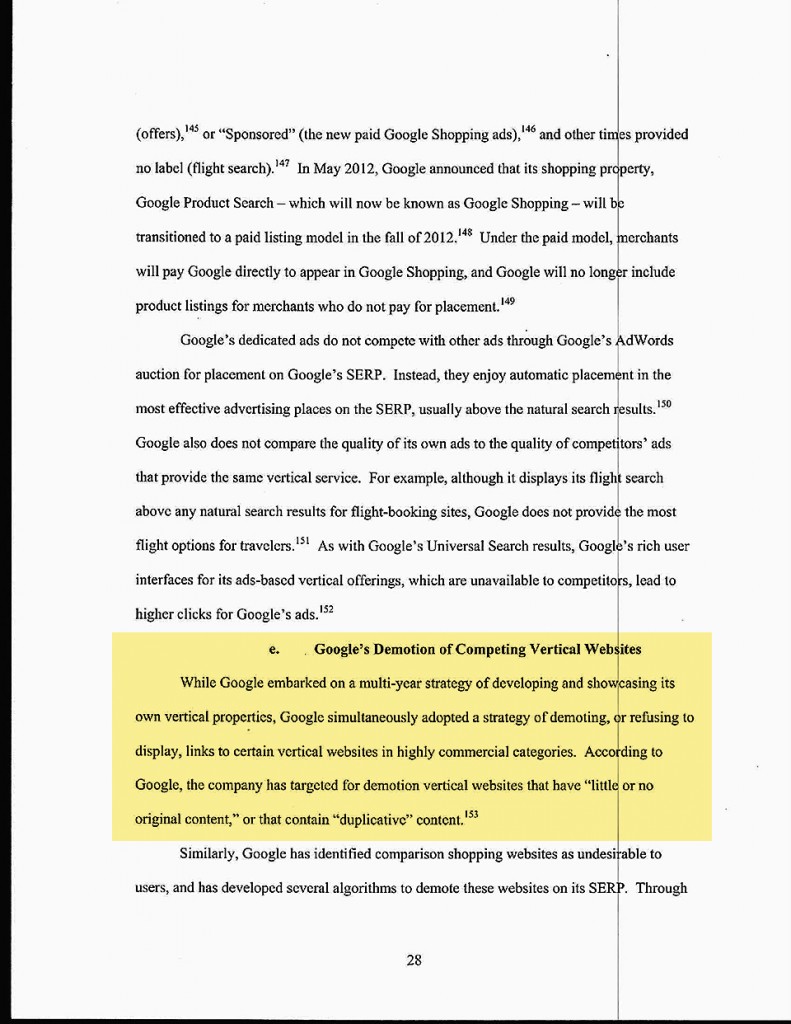
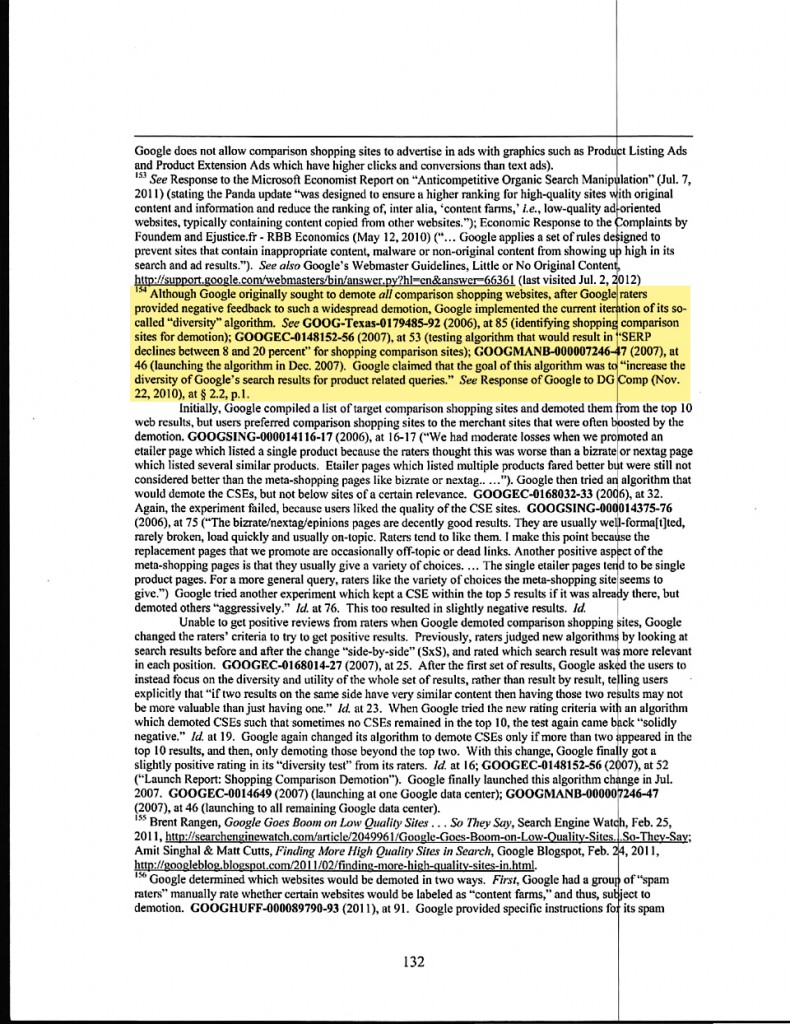
Though I cannot find the specific comment anymore on LinkedIn, one of the responses I received on my August post regarding Google’s search results came from a former Google employee. They informed me that my suspicion was preposterous and that Google would never ever manipulate results.
While I made no effort to assert my evidence as anything more than circumstantial, the outright dominance of Google-owned lending companies for high value lending keywords was impossible to ignore. The WSJ story adds fuel to this fire.
Admittedly, the WSJ story doesn’t mention lending, nor do I think lending keywords were a subject of the FTC report (There are 156 pages the WSJ didn’t share). What I think is compelling here is a conclusion that Google did indeed manipulate results and penalized competitors to favor its own financial goals.
Despite the findings, the FTC ultimately did not bring any action against Google.
Is the game rigged? I feel a little bit better about saying, yes. Don’t put all your eggs in the SEO basket.
Merchant Cash and Capital Hits a Billion Dollars
March 18, 2015I was there. In August 2006, a little startup in College Point, Queens hired its third and fourth employees. One of them was me. The company’s CEO Steve Sheinbaum hired us to be underwriters of a financial product that at that point didn’t really have a name. It would later become referred to as a merchant cash advance.
The company grew fast, almost too fast. By December of 2006, half of the company was working out of temporary offices in the Empire State Building. And when that no longer made sense, we leased a floor at 450 Park Avenue South in mid-2007 where Merchant Cash and Capital still has its headquarters today.
Fast forward to 2008, I was the most senior risk manager of the firm. As the Director of Underwriting, my direct reports were two underwriting managers. Below them were three or four team leaders. And below them were entry-level underwriters and their administrative assistants. I oversaw what was arguably the most important department leading up to the financial crisis. I really believe the hard work of all the underwriters and the seriousness of which they took their job is a huge contributing factor to why MCC survived when many of their competitors did not.
It is great to see them hit the milestone of $1 billion in funding. Congratulations.