Articles by deBanked Staff

Transaction Successful: Visa Buys 10% Stake in Square
February 12, 2016 Visa just bought a 10 percent stake Jack Dorsey’s payment company, Square.
The payments network revealed an SEC filing announcing its 9.99 percent stake in the company and Square’s stock jumped 11 percent at market opening. Visa seemingly upped its stake, from the previously undisclosed investment it made in the company in 2011, according to CNNMoney. The deal makes Visa the fourth-largest investor in Square following Jack Dorsey himself, venture capital firm Khosla Ventures and major mutual fund, Capital Research and Management.
Square was started in 2009 as a point of sale solution for merchants. It turned heads with $10 million in Series A funding from Khosla Ventures and Marissa Meyer at a $40 million valuation. Since then the company has diversified into p2p payments with Square Cash and Square Capital, offering merchant cash advances to small business merchants.
The company went public in November 2015 and debuted on NYSE with a 30 percent discount, pricing its share at $9.
As it tries to gain a foothold in the competitive payments space, this fresh infusion of capital comes as good news for the stock which has generated close to 27 percent losses since its IPO.
Real Estate Lender Patch of Land Sells $250 Million in Loans
February 11, 2016 Real estate lending platform Patch of Land announced that it signed a $250 million agreement with an east coast based credit fund to purchase its loans in a forward flow arrangement.
The reluctance to name the city or state of the fund suggests that in doing so would too easily reveal who it is.
Patch, an LA-based lender which uses a data-driven underwriting model, promises investors a risk adjusted return with extensive available data to support the underlying credit decision on each loan.
The company founded in 2013 had raised a million in seed funding and $125,000 in debt in 2014, followed by $23 million in Series A funding last year. And it has funded more than 200 projects, with an average blended rate of return to investors of 12 percent
This is continued evidence of institutional interest in loans generated by marketplace lenders. JP Morgan Chase bought loans worth a billion dollars from Santander Consumer USA Holdings Inc earlier this month. The bank also partnered with OnDeck in December of last year to facilitate the underwriting of the bank’s small dollar small business loan program.
In an interview with Bloomberg, Funding Circle’s CEO Sam Hodges said that it’s the first of many such partnerships to come where big banks will realize the potential of fast-growing fintech startups.
Lending Club nets $4.3 million in Q4 profits
February 11, 2016Wants to buyback shares for $150 million.
Online lending marketplace Lending Club earned $4.3 million in profits in Q4 last year and facilitated loans worth $8.4 billion to small businesses and consumers in 2015.
The San Francisco-based P2P lender’s revenue grew in Q4 grew by 93 percent to $134.5 million compared to $69.6 million in the comparable period a year ago. Loan originations also grew to $2.58 billion from $1.41 billion in 2014.
The company, which was the first P2P lender to register its offerings as securities with the SEC is gung ho about its growth prospects. “We have earned the trust of 1.4 million customers,” said founder and CEO Renaud Laplanche. “We have considerable room to grow our existing products, and intend to continue to expand both our product line and addressable population going forward.”
The company which announced that it will also buyback shares worth $150 million through open market operations or in private transactions in compliance with Securities and Exchange Act Rule 10b-18.
This comes amidst doubts raised about the company’s algorithm-based lending model. A Bloomberg report last week questioned Lending Club models with data to show that its actual defaults (7 to 8 percent) were higher than forecasts (4 to 6 percent). The company responded to the report explaining the data and reassuring investors that the loan performance is within expectations.
Bizfi Welcomes Record Quarter, Raises Equity
February 10, 2016 Bizfi, the marketplace lender for small businesses, originated a record $142 million in business financing in the last quarter of 2015.
Formerly known as Merchant Cash and Capital, they have financed over 27,000 small businesses through their proprietary marketplace with over $1.4 billion since 2005. They rebranded to Bizfi in 2015 and raised $65 million from Metropolitan Equity Partners for adding products and speeding up funding.
When company founder Stephen Sheinbaum was asked by deBanked about the possibility of exploring personal loans, they said they would only do that through their partnerships with companies like OnDeck, Funding Circle and Kabbage. Sheinbaum also said that they were considering referrals and marketing tie-ups with some of these companies.
Bizfi’s lending platform provides a host of funding options like short-term financing, medical financing and lines of credit. The company plans to add more partners enriching their product offerings, among other plans. Alluding to immediate growth plans, Sheinbaum said that the firm will raise institutional equity this year along with augmenting the underwriting process to attract more customers as well as forging new partnerships.
American Express wants to lend more to small businesses
February 10, 2016American Express hopes to tide over the bitter credit-card deal with Costco by lending to small businesses.
The two companies ended their 16-year partnership when Costco joined hands with Citi in March 2015. This June, customers will receive their Costco-brand Visa credit cards.
AmEx wants to turn its focus on what it is already familiar with — small business loans. In 2014, AmeEx cards for small businesses funded $190 billion in purchases, up from $122 billion in 2010, with enough reason to believe that there is room to grow the business.
AmEx hopes for the small-business loans to make up for the lost revenue from the Costco deal which accounts 20 percent of the company’s outstanding loans, according to a Reuters report.
Here’s How Much the American Credit Card Addiction is Worth
February 9, 2016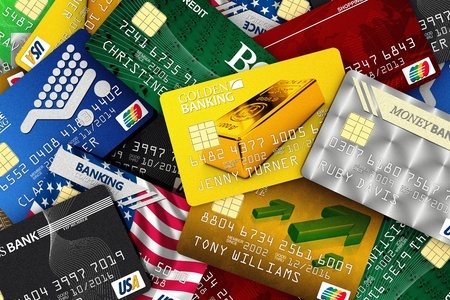 Of all the addictions Americans could have, credit card debt is one which is measurable monetarily. And as of December 2015, it was $936 billion.
A recent study by the Federal Reserve of Boston revealed that a majority of Americans roll over their debt paying high amounts of interest. Americans racked up $103 billion in debt since April 2011, still less than the $1.02 trillion owed in 2008, Bloomberg reported.
The credit card frenzy that hits people in their 20s is hard to get rid of and as they get older, the reliance on debt only increases. ‘While 20-year-olds use more than half their available credit on average, 50-year-olds use almost 40 percent,’ the article noted.
The study revealed that credit card usage on an individual level doesn’t change much during the course of their life but banks constantly adjust the credit available. ‘The average credit-card limit rose about 40 percent from 2000 to 2008, then plunged about 40 percent during 2009.’ The study also found that when offered a 10 percent increase in credit limits, people who take on revolving debt subsequently increase their debt by 9.99 percent.
Did BFS Capital Trade Going Public for a Bigger Credit Line?
February 4, 2016 BFS Capital secured a $165 million credit line through Wells Fargo Capital Finance with an additional increase of up to $250 million. This agreement extends the former line of $135 million and will help the Florida based small business lender to service merchants in North America.
The company had an eventful 2015 — In July last year, it funded $1 billion worth of deals and acquired New York-based financial services firm Entrust Merchant Solutions in August. It also rebranded itself from Business Financial Services Inc.
Interestingly enough, as deBanked reported in September last year, the company filed for an IPO and submitted a draft registration statement on Form S-1 with the Securities and Exchange Commission (the “SEC”) relating to the proposed initial public offering of its common stock.
The Bitcoin Mining IPO Didn’t Go So Well
February 3, 2016 Much ado about nothing?
Despite the long drawn endeavor, the world’s first bitcoin mining IPO was lackluster. Australia’s The Bitcoin Group, a bitcoin mining company raised $4.2 million (5.9 million Australian dollars) falling short of the targeted $14 million (20 million Australian dollars)
The Melbourne-based company was founded in September 2014 with plans to pursue an IPO a month later. The founders Sam Lee, Allan Guo and Ryan Xu started Bitcoin Group as a cryptocurrency arbitrage service, but soon turned their attention to mining bitcoins as the main business.
However, the IPO plans did not pan out as expected after the Australian Securities and Investments Commission banned the company for trying to garner investor interest on social media before filing the prospectus and placing two more stop orders on the IPO in July.
The Bitcoin Group was finally cleared to list on the Australian Securities Exchange in January this year after a third unsuccessful attempt of listing in November last year. The stock ‘BCG’ was scheduled to begin trading on February 2nd and received an underwhelming response from the market. As of now, it still hasn’t actually been listed.
All the setbacks however did not dampen the founders’ spirit — CEO Sam Lee called the IPO a “solid result” and told CNBC that it was sufficient for the company to focus on expansion by acquiring new mining equipment.