Articles by deBanked Staff

Hungry for Data? Avant Acqui-hires Two Startups to Expand Tech Team
April 18, 2016 What are the three vectors for the lending industry today? You’d be wrong if you said anything other than data, data, and more data.
And lending companies are on an acquisition spree to collect, analyze and work data to help them find and lend more to new borrowers. Although, acqui-hires or buying a company for a team is not new in the startup circles, it is still a nascent trend among marketplace lending companies that are still carving out territories in the $12 trillion lending marketplace.
Three year old consumer lender Avant acquired two local technology startups, StudyCloud and TempoIQ for data scientists and engineers to build its technology team. StudyCloud is an edtech startup based in Chicago and develops tools for interactive learning. TempoIQ is another Chicago-based startup which provides platforms for Internet-of-Things (IoT) applications and data analytics.
For Avant, this is the second wave of acqui-hires. In March 2015, the company acquired the straggling, online debt management startup ReadyForZero, a tool which let users manage personal debt and credit online. Avant bought ReadyForZero’s technology platform at a time when the company was in a talent crunch, struggling to scale.
“Acqui-hire transactions are a significant win-win for everyone involved. The acqui-hire trend affords members of the startup community to take a chance on their own vision as well as explore new opportunities across various industries,” said Al Goldstein, CEO of Avant in a news release.
As online lenders like Avant bring Silicon Valley and Wall Street closer by using machine learning and big data to develop propriety credit models to identify and lend to new borrowers, acquiring startups to build this technology has become commonplace.
“Acquisitions and acqui-hires are just another sign of how rapidly this industry is evolving. It recognizes the need to bring in highly skilled talent quickly,” said Glenn Goldman, CEO of Credibly.
Last month, (March 14) Square acquired analytics startup Framed Data, again for its team of data scientists to target customers better for Square Capital. The company mined data using machine learning to predict user behavior and purchasing decisions and will bolster Square’s small business lending.
The changing face of the lending industry is evident with the rise in companies lending to tech savvy millennial borrowers, enriching user experience and tailoring loan products to suit specific needs and really, using data to discover more customers.
“At first glance, it looks like Avant is looking to create a dynamic user experience and targeted at nurturing customers before, during or after borrowing decisions are made, beyond just delivering loan at a given point in time,” said Goldman.
Nine Organizations Submit Joint Response to Bizarre Illinois Small Business Lending Bill
April 16, 2016
A bill introduced in the Illinois State Senate to “protect” small businesses from lenders is causing small businesses themselves to scratch their heads. The bill would effectively outlaw nonbank business lending, which would render those declined by a bank, restricted from accessing capital through other means.
“As we all recall what happened in 2007-2008 in the housing market, so many people went under due to these predatory lending practices. So I’m happy we’re being proactive instead of reactive with this issue,” said Illinois State Senator Emil Jones.
That proactive approach is to scorch the earth, which is creating staunch pushback from within the small business community. A letter co-signed by the following nine organizations was submitted last week to Jacqueline Collins, the Senator who introduced the bill:
- Coalition of Responsible Business Finance
- Electronic Transactions Association
- Illinois NFIB
- Illinois Retail Merchants Association
- Equipment Leasing and Finance Association
- Small Business & Entrepreneurship Council
- Small Business Investors Alliance
- National Small Business Association
- Illinois Chamber of Commerce
Dear Chair. Collins:
The undersigned organizations, companies, and coalitions who have business in Illinois and throughout the country are writing to express our concerns with SB 2865, the Small Business Lending Act.
We all share your goal of helping small businesses. However, we believe that the prescriptive underwriting standards, complex regulatory mandates, and expansion of civil and criminal liability will prevent small businesses from getting the capital they need to grow and benefit their communities and the state of Illinois.
We respectfully ask the Committee to study the issue of access to capital for small business in Illinois through a transparent process that involves the direct input from small businesses prior to moving forward with SB 2865.
We are hopeful that a deliberative, inclusive, and public process could produce a report that will assist your Committee and the Illinois legislature. Among the questions a study committee could try and answer are: what methods of transparency and disclosure by alternative lenders and finance companies would make it easier for responsible small business borrowing; should non-profit lenders be exempt from alternative lending and finance requirements; and how does the securitization and sale of alternative loans benefit small business lending?
Of course, there are many additional issues that small business stakeholders will identify through a study committee in an effort to assist your Committee prior to any legislative action on SB 2865. We stand ready to assist you in that effort and we appreciate the consideration of our views.
Conflicting information has come out of the Senate since a hearing was held about it on the morning of April 12th. Fox reports that it is heading to the Senate floor for discussion with the expectation of some modifications, while those that were there say that it has been put on hold until early 2017 since it’s a presidential election year.
Peter Thiel’s Fund Invests $100M in Consumer Lending Startup Affirm
April 15, 2016 There’s another unsecured consumer loan lender on the block and it raised $100 million from PayPal founder, Peter Thiel.
Thiel invested in long time friend and PayPal cofounder Max Levchin’s startup Affirm which finances online purchases like high end furniture, jewelry and gym equipment to be paid back in monthly installments.
Thiel’s Founders Fund led the latest round, bringing the total capital raised by Affirm to $425 million since 2013. Affirm’s consumers are typically immigrants and recent college grads who do not own credit cards and have no credit history.
The San Francisco-based company’s loans are funded by Cross River Bank and its investors include marquee Silicon Valley names like Lightspeed Ventures, Khosla Ventures and Andreesen Horowitz.
“The financial industry has managed to avoid significant disruptive innovation since the mid-90s, and we are working hard to change that. Our first goal is to bring simplicity, transparency, and fair pricing to consumer credit,” says Levchin on the company website.
Affirm is just one of the many upstarts that are eager to bring ease into people’s financial lives. Another millennial lender, Pave Inc recently raised $8 million from Maxfield Capital that included existing investors C4 Ventures and Seer Capital. The four year old company lends unsecured personal loans, typically used for skill-based vocational training offered at institutions like General Assembly.
To provide some bird’s eye view context, recent data from Transunion showed that most borrowers securing personal loans jumped close to 30 percent in recent years, to 13.72 million in 2015 from 10.57 million in 2013, with 24 million Americans likely to obtain one this year alone.
With more loans comes the probability of more defaults? Data from Transunion further noted that In 2015, the average balance was $7,235, up more than 7 percent from the year earlier. As more money is available for lending, lenders are going after borrowers that might be otherwise deemed subprime by credit reporting standards like FICO scores. Companies like Affirm, Avant and Prosper loans have thus created propriety credit risk models which they claim go beyond traditional credit metrics and assess a consumer’s ability based on filters like the school they attend, rents, utilities etc.
California DBO Releases Report on Alternative Lenders
April 15, 2016 The results of a survey that the California Department of Oversight issued late last year to 14 alternative lenders are in. Affirm, Avant, Bond Street, CAN Capital, Fundbox, Funding Circle, Kabbage, LendingClub, OnDeck, PayPal, Prosper, SoFi and Square all responded. CircleBack Lending declined to take it.
The DBO requested data on term loans, lines of credit, merchant cash advances, factoring transactions and other products.
Other than determining that billions of dollars are being deployed from these companies, they found that median consumer loan APRs ranged between 5.37% APR and 35.94% APR. For businesses, the median APR ranged from 18.56% APR to 51.40% APR.
The number of delinquent (30 days or more past due) consumer financing dollars as a share of total dollars outstanding ranged from .99% to 20.30%
The number of delinquent business financing dollars as a share of total dollars outstanding ranged from .55% to 6.79%.
LendIt Recap: News Headlines You Need to Know
April 13, 2016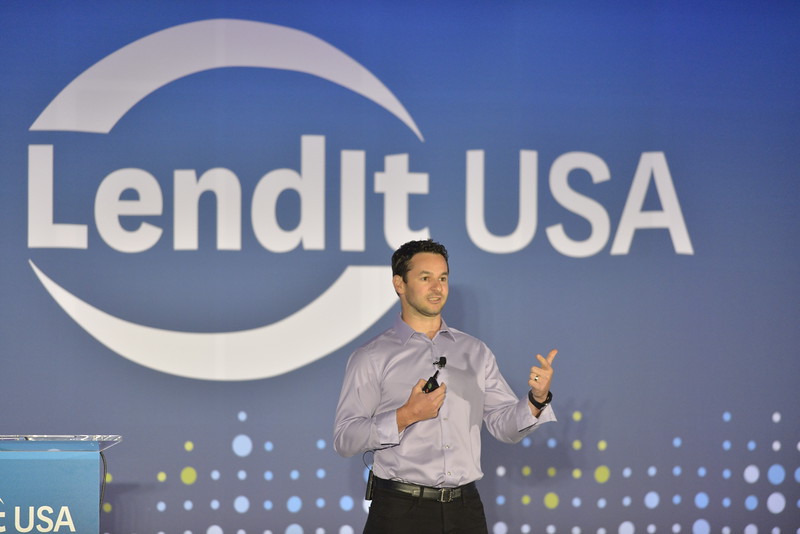
Al Goldstein of Avant speaking at the LendIt USA 2016 conference in San Francisco, CA, USA on April 11, 2016. (photo by Gabe Palacio)
As the industry wrapped up one of the biggest conferences of the year, here are some notable company announcements worth filing away:
Chicago-based online lender Avant named former UBS executive Raj Vora to lead the company’s capital raising efforts. Vora will lead strategy for its investment vehicles.
New York-based Student loan refinancer Lendkey crossed $1 billion in origination and deployment
Small business lender National Funding appointed first female president Torrie Inouye. Inouye headed data and analytics for the firm where she drove customer acquisition and underwriting.
Another millennial lender on the block raised Series A funding. New York-based online lender Pave Inc raised $8 million from Maxfield Capital that included existing investors C4 Ventures and Seer Capital. The four year old company lends unsecured personal loans to millennials.
Small business lender Streetshares won SEC approval to launch business bonds to the masses. The product will pay a fixed 5 percent interest (regardless of the performance of a particular underlying loan), is ensured by a provision fund, and provides liquidity as investors can access their funds at a 1 percent fee.
Prosper decided to end its loan sale agreement with Citi and might be in talks with Goldman Sachs. This move comes after a lukewarm reception on a batch of Prosper bonds after investors demanded as much as 5 percent points higher compared to last year.
Becoming a ‘Certified’ Merchant Cash Advance Professional is Just Around The Corner
April 11, 2016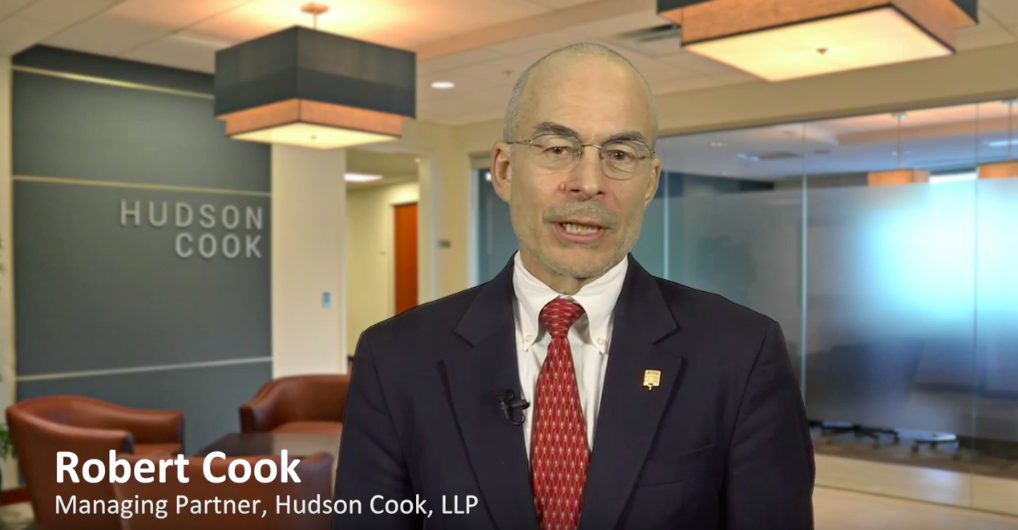
Update: 11/4/16 – THE ONLINE COURSE IS HERE. The final version offers test takers the chance to earn a certificate in MCA Basics, specifically the characteristics that make loans different from purchases of future receivables.
A survey conducted last year by deBanked has contributed to the development of a training and certification course for merchant cash advance salespeople. Co-produced by Hudson Cook LLP, deBanked, and other industry veterans, sales representatives that offer the merchant cash advance product will have the opportunity to learn from an online tutorial complete with training videos and quizzes to achieve a new standard of educational excellence.
Being able to expertly understand and communicate the differences between loans and purchases is among the courses’s main goals. Funders and ISOs can supplement their own training procedures with the course. Those that complete and pass it should expect to receive a certificate.
While it’s not ready to go live just yet, Hudson Cook partner Robert Cook, says he will be available at the Lendit Conference should anyone wish to discuss or share their input. He can be reached at rcook@hudco.com.
Collude, not collide: Why Online Lenders Want to Work with Banks
April 8, 2016 Don’t look now but online lenders are in cahoots with the banks they want to disrupt.
Last week (April 4th), Spanish banking giant Santander shut down 450 branches and partnered with Atlanta-based Kabbage to speed up the underwriting process to provide same day loans.
Today, online consumer lender Avant announced a similar deal with Birmingham, Alabama-based Regions Bank to offer loans anywhere between $1,000 to $35,000. Regions will use Avant’s platform on its website to sell unsecured loans where borrowers get an immediate credit decision and are approved or rejected immediately, with funds being available the very next day.
“Working with Avant, we will be able to offer a better online experience, while maintaining our commitment to responsible lending — something that benefits customers, the community and our shareholders,” said Logan Pichel, executive vice president and head of Consumer Lending for Regions Bank. That said, Regions does not typically approve borrowers with a credit score below 700 while Avant’s customers average a 650 credit score.
So why are lenders befriending the banks they wanted to fight? And what’s in it for banks? Access to a bigger customer banks and quick loan approvals. Banks want to tap into the lean and loose loan processing model that online lenders have become popular for, throwing open a hitherto market of risky borrowers.
Last year, JP Morgan Chase partnered with OnDeck to speed up small business loans for some of the bank’s 4 million customers. As banks tend to lean towards working with alt lenders rather than building competitive products in-house, the industry will only see more such partnerships. As for Avant, the company has more such deals in the pipeline, Adam Hughes, Avant chief operating officer said.
Any bets on who might be next?
Here’s How Much an American Household Owes in Credit Card Debt
April 8, 2016 US credit card debt equals debt of Canada, France, Japan, Mexico, Russia and China put together.
62 percent of Americans are under credit card debt they cannot pay off.
A study by Fifth Third Bank revealed that 70 percent Americans are under debt and financial hardship.
Alarmingly enough, an average American household owes $7,879 in credit card debt alone, the highest since the recession. If that sounds worrisome, there’s more. Yet another survey revealed that recent college graduates choose to remain ignorant about the student loan they owe. Nearly half of them (45 percent) didn’t know what percentage of their salary goes to paying loans and 15 percent of them are unaware of how much they owe.
Key numbers:
- In 2015 alone, credit card debt rose by $71 billion.
- Americans spent $52 billion in the fourth quarter of 2015, mostly due to holiday shopping and this equaled credit card debt during the entire years of 2009, 2010 and 2011 combined.
- The delinquency rates on credit card debt is 2.17 percent, the lowest since 1991.
Some experts might argue that rising credit card debt is a healthy sign of consumer spending. However, that needs to be consistent with wages. America added 242,000 jobs in February but wages took a hit. According to Labor Department statistics, average hourly earnings dropped by 0.1 percent, declining for the first time since December 2014.
Does this portend a warning signal for investors buying loans?