Archive for 2020
New York Appellate Court Overturns QFC, LLC v Iron Centurian, LLC
February 7, 2020The Appellate Division, 2nd Department of The Supreme Court of New York, overturned QFC, LLC v Iron Centurian, LLC and Mohamed Sadiqui last month, granting victory to a merchant cash advance company. The case can be summed up as follows:
A Confession of Judgment (COJ) was filed by plaintiff against defendants for breach of contract. Defendants argued by way of motion that the COJ should be vacated and agreement voided because the underlying transaction was really a criminally usurious loan. The trial court concurred and ruled in favor of defendants, vacating the COJ and voiding the “illegal” merchant cash advance transaction.
Plaintiffs appealed.
On January 29, 2020, the Appellate Division unanimously sided with the plaintiffs and overturned the lower court’s decision. Similar to two other rulings issued the same day (Volunteer Pharmacy, Micromanos), the Court said that a COJ cannot be vacated in the manner in which defendants sought it.
Lender Ranking Website Accused By FTC Of Misleading Rankings
February 6, 2020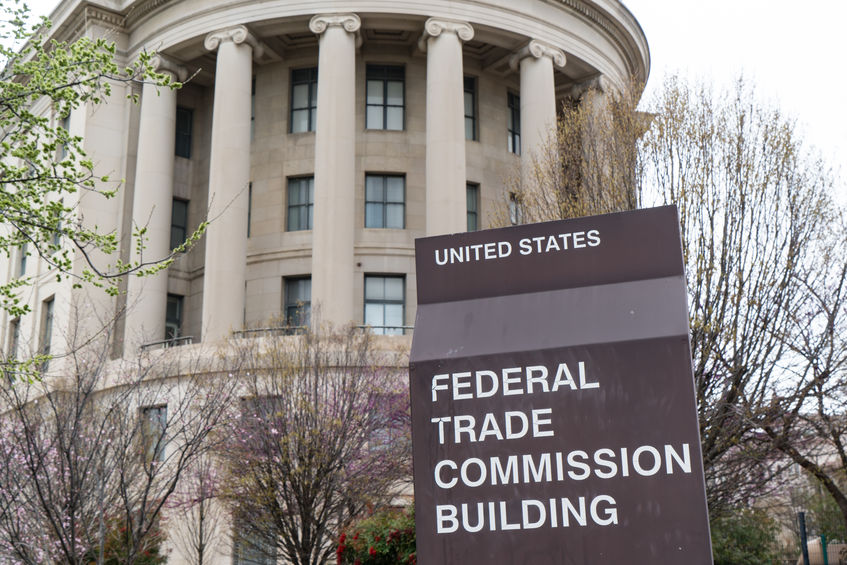 LendEDU, a Hoboken-based company that lists and ranks loan providers, came under fire this week after the FTC filed a complaint detailing how LendEDU charged businesses for higher positions in its rankings of lenders and promoted fake testimonials. Providing ratings for student loan refinancing, personal loans, and mortgage lenders, it is the first of these loan types that is in the spotlight.
While LendEDU initially denied that it received any compensation for its lists, saying, “ratings are comparatively objective and not influenced by compensation in anyway” and that “research, news, ratings, and assessments are scrutinized using strict editorial integrity,” this assertion was disproved by the FTC’s investigation.
Emails were discovered which featured CEO Nathaniel Matherson and Vice President of Products Alexander Coleman discussing with a business the pricing per click to hold the #1 spot on the best student loan refinancing company list, as well as what sort of traffic could be expected at this ranking. Accompanying this was a contract between LendEDU and a student loan refinancing company, revealing that in return for compensation the company would drop “[n]o lower than position three” in the rankings. It was also found that if businesses who were already in the rankings refused to pay for the clicks they received, they would drop down in the list.
The testimonials that featured prominently on LendEDU’s homepage, which noted alleged consumers’ names, colleges, and years of graduation, were found to be wholly false, with the people portrayed in them being nonexistent.
And the reviews of LendEDU that were found on Trustpilot and subsequently posted to the company’s own website, were also shown to be fake. Of the 126 reviews, 123 were found to be 5-stars; and only 11 were proven to be from customers (this was confirmed as the emails matched those used by customers), the other 115 were deigned to be written by friends, family members, and associates of LendEDU members, as well as by LendEDU employee’s themselves under false names.
All this is coming after LendEDU landed in hot water following a controversy in 2018 that saw Matherson admit to working with others to create a fictitious expert on student loans, named Drew Cloud, who would give interviews and comments to publications, creating a pro-student loan refinancing discourse. According to Matherson, Cloud “was created as a way to connect with our readers (ex. people struggling to repay student debt) and give us the technical ability to post content to the WordPress website.” Cloud was even given a pixelated face and backstory that extended into high school, imbuing him with a passion for journalism even in his teenage years. Neither Matherson’s comments on Cloud nor his fictional biography do anything to explain how or why his creators decided to give him a name that is quite clearly fake.
LendEDU promptly agreed to settle the charges and pay $350,000 while not admitting or denying the allegations. The public has 30 days to comment on the settlement prior to it becoming final.
We’ve Acquired All Of DailyFunder
February 6, 2020 deBanked’s parent company has acquired 100% of DailyFunder. I was a co-founder of the online forum that launched in 2012 and had remained a partner in it until recently when I had the opportunity to acquire the remainder of the company’s shares.
What does this mean for DailyFunder?
DailyFunder will remain an independent entity and website, and it will continue to keep its trademark name. Its concept, a message board for business finance professionals, will fit nicely into our ecosystem. Our full ownership of DailyFunder will allow us to provide the site with updates, fixes, and improved moderation. Some changes to the site may be implemented over the next several weeks and months.
More than 16,000 threads and 129,000 posts have been published on the forum since inception, a testament to the value that such a site provides to the unique community it fosters. DailyFunder has nearly 10,000 registered members. Discussion on the site originally centered around merchant cash advance but has since evolved to all types of commercial finance.
If you’re one of the men and women who fund daily, well then I hope to see you on the DailyFunder!
If you have a technical question or moderation issue, please email: webmaster@dailyfunder.com. If you have an advertising question, please email me at: sean@dailyfunder.com. Please bear with us as our team gets acclimated to the new change.
Ocrolus Partners with Kiva to Provide Funding and Publish its Customers’ Stories
February 6, 2020 Ocrolus has announced a partnership with Kiva, the Californian non-profit that provides loans to entrepreneurs in countries underserved by funding options. The deal comes after news of Ocrolus’s partnership with Plaid in December, a venture that helped launch the Ocrolus+ platform.
As part of Kiva’s work to help global small business owners, it publishes the stories of those entrepreneurs, charting how they set up their business and what led them to do it. Ocrolus will follow Kiva’s suit with this partnership, as it plans to publish the stories of its own fintech customers. Aiming to highlight the biographies of those businesses and entrepreneurs that have excelled in the alternative finance and fintech industries, Ocrolus will provide $5,000 for Kiva-backed loans for each story published to its site. If the published business chooses to match this funding, Ocrolus will put forward a further $5,000, bringing the total appropriation for Kiva to $15,000.
Speaking on the partnership, Ocrolus’s COO Vikas Dua told deBanked that the inspiration for the deal came after listening to a podcast that featured one of the co-founders of Toms, a company known for its ‘one for one’ policy which sees a pair of shoes being donated to children in need for every pair bought.
“The best part of Kiva is the types of folks you’re helping and the impact you can have. They do a great job of sharing stories of entrepreneurs and folks in need,” Dua said in a call. “Everyone’s incentives are tied together. Overall, we’re just very excited about the mission and very excited not only to tell our customers’ stories, but also to highlight some of the things we’re doing for the folks that Kiva interacts with and they fund. They have some wonderful stories there and we’re excited to share those as well.”
CAN Capital Brings On Edward Dietz as Chief Compliance Officer & General Counsel
February 5, 2020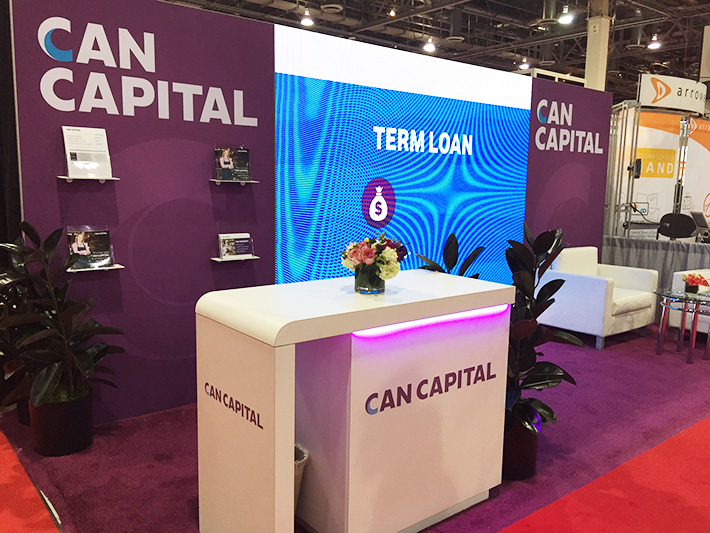 CAN Capital is continuing its executive hiring spree into 2020 with the news that it has brought on Edward Dietz as its latest Chief Compliance Officer and General Counsel. After providing legal expertise to Marlin Business Services Corporation for nine years and working as an associate for two law firms in Wisconsin and Pennsylvania previous to this, Dietz will oversee CAN’s compliance with all federal and state lending, banking, and securities laws.
“Having worked with Ed and knowing his skill set and the many intangibles that he brings to CAN, I feel fortunate that he’s leading our legal and compliance efforts,” noted CEO Edward Siciliano in a statement. “Ed’s just what we needed as we position CAN for growth and to lead a new era of small business lending.”
Having graduated from the University of Michigan Law School in 2004, Dietz has nearly two decades of legal experience.
Speaking on the news, Dietz said that he “could not be more excited to join a company and a team that believes so deeply that its people and its culture are the keys to harnessing the company’s growth potential.”
Kabbage Introduces Customized Short Term Loans
February 4, 2020 Today Kabbage, the Atlanta-based fintech company that has been funding businesses since 2009, announced its latest product: customized short-term loans that are a result of the combination of Kabbage Payments and Kabbage Funding.
The loans, which run for the length of 3-45 days, are best suited to those businesses who need funding to cover issues in cash flow caused by the unpredictability of revenue, says Kabbage’s Head of Income Products Abraham Williams. “Rent and payroll are on set days every month, but getting paid is variable. We’ve done loans for 6, 12, and 18 months, and we’ve seen that people pay those off sooner, so we saw a need to have a short-term loan to fill gaps in cash flow.”
The terms of such loans will be decided upon by making use of the aggregate data that Kabbage has access to. With its customers providing a number of data points, such as their Amazon account, banking details, payment processes, and social media accounts, Kabbage is in “a really unique position because of the way that we make decisions on loans for small businesses,” notes Williams. “We can really see a very complete picture of a business, which can be different than how other people are essentially underwriting and assessing risk for loans.”
Two options are available for repayment: a traditional balloon payment to be paid at the end of the 45-day period, or a percentage of each sale made using Kabbage Payments going towards repayment. The latter of these provides more flexibility, with merchants being able to choose the percentage of each sale that is to go toward Kabbage and, as well as this, the fee attached to the Kabbage Payments option is smaller.
With the fee’s amount and terms being dictated by aggregated data, Kabbage is describing them as “dynamic,” providing individualized offers. Fees begin at 0.1% with the minimum amount to be borrowed being $500 and the maximum set at 10% of a merchant’s available line of credit for the short-term.
Goldman Sachs-Amazon Deal to Offer Small Business Loans in the Works
February 3, 2020
Tech giant Amazon is reportedly in talks with Goldman Sachs to offer business loans to those small and medium sized merchants operating on its marketplace, according to sources that the FT describes as “two people briefed on the discussions with the online retailer.” One of these sources said that it could launch as soon as March.
The news comes after CEO David Soloman spoke at the bank’s Investor Day recently, explaining that Goldman would be pursuing a “banking-as-a-service” model this year that would see the bank white labeling their products for third parties to use. As well as this, Solomon commented on a shareholders call last week that the bank is seeking to increase revenues from new channels such as consumer banking and wealth management.
One such channel is Goldman’s partnership with Apple last summer that saw the launch of Apple Card, a credit card solely available to Apple’s +100 million users in the US. The card’s launch was lauded by Solomon; and according to Business Insider, cardholders had $736 million in loan balances by the end of September, one month after the card was released to the public.
The Apple and Amazon deals highlight how Wall Street banks are employing and partnering with Big Tech to leverage advantage over fintechs, and ultimately gain access into markets that are historically not domains of the uber rich. Traditionally a bank that catered to elites, Goldman Sachs has been edging its way into consumer and small business banking ever since the launch of Marcus, its personal banking platform.
Amazon has been offering loans to merchants on its platform since 2011, using algorithms to determine which sellers would be best positioned to receive and repay a loan. Having previously partnered with Bank of America to finance such loans, the terms of these were for 12 months or less, with amounts funded ranging from $1,000 to $750,000. According to the FT, Amazon had $863 million in outstanding SMB loans on its balance sheet as of the end of 2019.
The digital nature of Amazon’s marketplace would accommodate Goldman Sachs’ neglect of brick-and-mortars stores, which have historically been a waypoint for small- and medium-sized businesses seeking finance.
LendIt Chairman and Co-founder Peter Renton described Goldman’s progression in the fintech space as “impressive,” noting that the speed at which it has been operating isn’t to be overlooked: “I thought something like this would happen but not in such a short space of time. Apple Card was only six months ago.”
As well as this, Renton was wary of how expansive the deal would be, admitting skepticism of it being a large project for either company. Given how both Amazon and Goldman have shown themselves to be selective in who they provide financing for, this assessment may prove correct.
Liberis Secures $42 Million in Funding, Plans American Expansion
February 3, 2020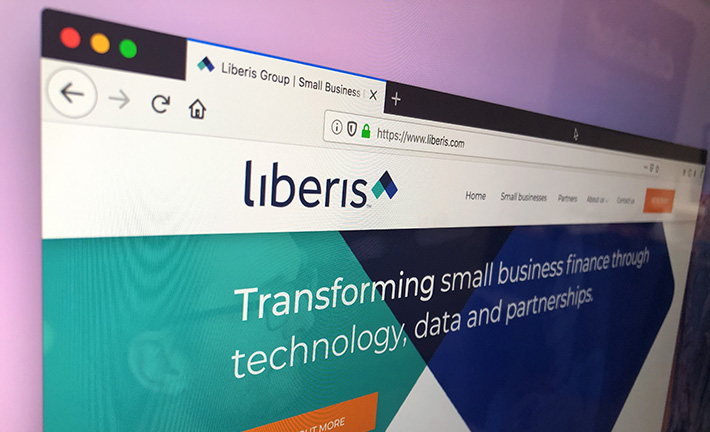 Liberis, the London-based small business finance provider, secured £32 million ($42 million) in capital late last month following a round of equity fundraising. The firm, which has funded businesses through cash advances since 2007, has now raised a total of over £150 million ($197 million) via debt and equity.
Having already entered Nordic markets, Liberis looks to use this funding to further expand into Europe as well as make their mark in America. Speaking to deBanked, Liberis CEO Rob Straathof explained that the company would be working with its North American partner, Worldpay, to spread itself across all 50 states. Beyond Worldpay, Liberis is planning to create more partnerships with merchant acquirers, those payment platforms which serve merchants, or “SME champions,” as Straathof calls them.
Liberis will not be using brokers to provide cash advances to business owners in the States, the reason being that the company prefers to work with its affiliated partners. “We purely rely on our partners and integrating with our partners,” explained Straathof. “In the UK we still do brokers, but that’s kind of a legacy. It works very well for us and we have a great relationship with brokers. It’s a good channel for us, but we have no intention at this point to launch that in the US.”
The company will also use the funding to increase its staff by 30% in 2020, hiring around 50 people to bolster its 165-person workforce across their four offices in London, Dublin, Stockholm, and Denver.