
Sean Murray is the President and Chief Editor of deBanked and the founder of the Broker Fair Conference. Connect with me on LinkedIn or follow me on twitter. You can view all future deBanked events here.
Articles by Sean Murray

Sen. Rubio: PPP Application For Fintech Lenders Expected This Week
April 6, 2020Update: 4/8/20 The PPP Application for Fintech Lenders is Here
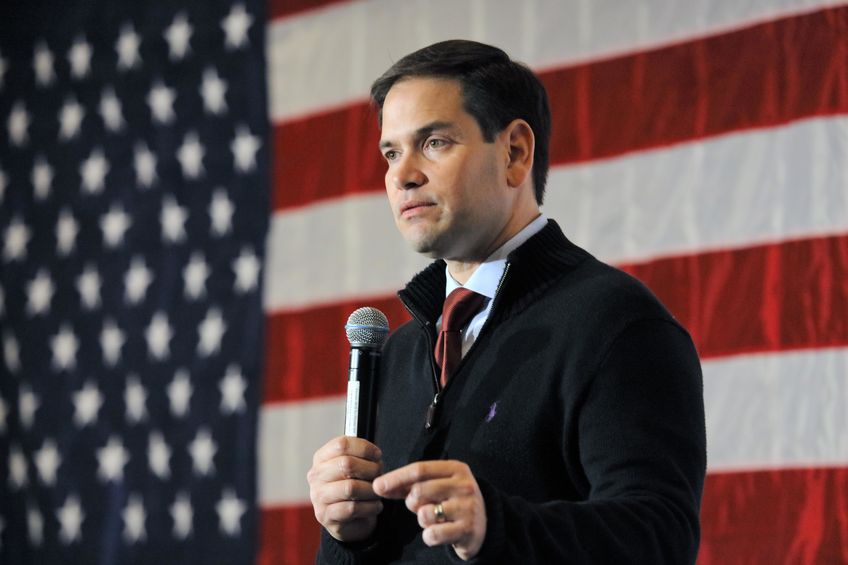 Senator Marco Rubio tweeted on Saturday that he expects the US Treasury Department to release a separate PPP application for non-bank lenders early this week. The Treasury and SBA have previously issued guidance on the minimum criteria a fintech lender would have to meet to be eligible, leading to confusion when the official application released a day later omitted any mention of fintech lending.
The rollout has not been perfect. One challenge facing fintech lenders is the supply of capital as the loans must be issued from their own balance sheet and held on their books for at least 7 weeks until they can be purchased by the federal government. Rubio said that we will need a defined purchase mechanism for such a transfer to take place to assist not only fintech lenders but also community banks.
The good news is multiple FinTechs including @PayPal & other online lenders are ready,able & willing to process #PPPloans for them & anyone else.But they need @USTreasury to release application for nonbank lenders to become certified.
I expect that very early next week. 5/13
— Marco Rubio (@marcorubio) April 4, 2020
StreetShares Posts Another Loss
April 2, 2020Sales and Marketing Expenses declined dramatically for StreetShares for the six-month period ending December 31, 2019, according to the company’s latest SEC filing, but the company’s payroll expense still wildly exceeded revenue, putting them yet again into deep net loss territory.
StreetShares recorded total operating revenues of $2.43M, payroll expenses of $3.49M, and a net loss of $5.18M for the period.
The company’s accumulating losses over time has translated into a stockholder deficit of $35.2M. This reporting period is pre-COVID-19 but the company disclosed that future financial results may be adversely affected by the virus.
The company also borrowed $3M in the form of a convertible promissory note issued to an investor.
Only 16.81% of loans on the StreetShares platform were funded by institutional investors for the period. Retail investors, the largest segment by far, funded 70.63%.
How to Become a PPP Approved Lender With the SBA
March 31, 2020Update 4/8/20: The PPP Lender Application for Non-banks/fintech Companies is HERE
Update 4/3/20: The PPP Lender Application for Banks is HERE
The Treasury Department has set an April 3rd expected start time for lenders to begin accepting Payroll Protection Program loan applications. But who exactly can make the loans? Are fintech lenders in or out?
According to the Treasury, the following are already approved:
- All existing SBA-certified lenders
- All federally insured depository institutions, federally insured credit unions, and Farm Credit System institutions
BUT! A broad set of additional lenders can begin making loans as soon as they are approved and enrolled in the program. This “broad set,” that presumably includes fintech lenders, can apply by emailing an application to DelegatedAuthority@sba.gov.
While the loans are 100% backed by the full faith and credit of the United States. Lenders will be compensated in accordance with the following structure, a percentage of the financing outstanding balance at the time of final disbursement:
- Loans $350,000 and under: 5.00%
- Loans greater than $350,000 to $2 million: 3.00%
- Loans greater than $2 million: 1.00%
Lenders may not collect any fees from the applicant.
Who can be an agent/broker?
- An attorney;
- An accountant;
- A consultant;
- Someone who prepares an applicant’s application for financial assistance and is employed and compensated by the applicant;
- Someone who assists a lender with originating, disbursing, servicing, liquidating, or litigating SBA loans;
- A loan broker; or
- Any other individual or entity representing an applicant by conducting business with the SBA
Agent fees will be paid out of lender fees. The lender will pay the agent. Agents may not collect any fees from the applicant. The fee structure is below:
- Loans $350,000 and under: 1.00%
- Loans greater than $350,000 to $2 million: 0.50%
- Loans greater than $2 million: 0.25%
For more info, check here: https://home.treasury.gov/policy-issues/top-priorities/cares-act/assistance-for-small-businesses
Will Online Lenders Be Approved to Make PPP Loans?
March 31, 2020 Lend Academy, the publishing arm of LenditFintech, ran the headline yesterday that said “Fintechs Authorized to Make Small Business Loans as Part of Government Stimulus.” The statement seems to stem from a quote by Treasury Secretary Steve Mnuchin in which he said that “Any FDIC bank, any credit union, any fintech lender will be authorized to make these loans to a small business subject to certain approvals.”
That proclamation is not quite definitive, but online lenders like Kabbage are optimistic that such an arrangement will come to fruition. Kabbage CEO Rob Frohwein said on LinkedIn that he believes his company will be approved to make Payroll Protection Program (PPP) loans on behalf of the SBA, though he further explained that they are also partnering with banks so that they’ll be able to help small businesses in this regard either way.
Time is running out as retailers begin furloughing or laying off employees that the stimulus was designed to keep.
“The PPP is designed to provide a direct incentive for small businesses to keep their workers on payroll by providing each small business a loan up to $10 million for payroll and certain other expenses,” the SBA’s website says. “If all employees are kept on payroll for eight weeks, SBA will forgive the portion of the loans used for payroll, rent, mortgage interest, or utilities. Up to 100 percent of the loan is forgivable.”
As the clock ticks and workers around the country lose their jobs, the pressure on the federal government to approve some limited number of online lenders to assist in the process potentially increases.
Nearly two dozen fintech companies are collectively lobbying to particpate in that effort including Kabbage, OnDeck, and Lendio.
Can The SBA Handle The Stimulus On Their Own?
March 27, 2020 As the market cheers the upcoming passage of a $2 Trillion stimulus bill that is intended to provide much needed support to small businesses, industry insiders are beginning to raise concerns about the SBA’s infrastructural ability to process applications in a timely manner.
In a webinar hosted by LendIt Fintech yesterday, Opportunity Fund CEO Luz Urrutia estimated that conservatively, it could take the SBA up to two months to even begin disbursing loans offered by the bill. Kabbage President Kathryn Petralia offered the most optimistic estimate of 10 days, while Lendio CEO Brock Blake thinks that perhaps it could take around 3 weeks.
Blake followed up the webinar by sharing a post on LinkedIn that said that small businesses were reporting that the SBA’s website was so slow, so riddled with crashes, that the SBA had to temporarily take their site offline.
Most skeptics raising alarms are not referring to the SBA’s staff as being unprepared, but rather the systems the SBA has in place.
A March 25th tweet by the SBA reported that the site was undergoing “scheduled” improvements and maintenance.
The website is currently undergoing continued scheduled improvements and maintenance. For more info on SBA #COVID19 resources, visit https://t.co/yG2N17KF63
— SBA (@SBAgov) March 25, 2020
This all while the demand for capital is surging. Blake reported in the webinar that loan applications had just recently increased by 5x at the same time that around 50% of non-bank lenders they work with have suspended lending.
Some informal surveying by deBanked of non-bank small business finance companies is finding that among many that still claim to be operating, origination volumes have dropped by more than 80% in recent weeks, mainly driven by stay-at-home and essential-business-only orders issued by state governments.
It’s a circular loop that puts further pressure on the SBA to come through, none of which is made easier by the manual application process they’re advising eager borrowers to take on. The SBA’s website asks that borrowers seeking Economic Injury Disaster Loan Assistance download an application to fill out by hand, upload that into their system and then await further instructions from an SBA officer about additional documentation they should physically mail in.
Perhaps there’s another way, according to letters sent to members of Congress by online lenders. 22 Fintech companies recently made the case that they are equipped to advance the capital provided for in the stimulus bill.
“We seek no gain from this crisis. Our only aim is to protect the millions of small businesses that we are proud to call our customers,” the letter states.
Members of the Small Business Finance Association made a similar appeal in a letter dated March 18th to SBA Administrator Jovita Carranza. “In this time of need, we want to leverage the experience and expertise we have with our companies to help provide efficient funding to those impacted in this tough economic climate. We want to serve as a resource to governments as they build up underwriting models to ensure emergency funding will be the most impactful.”
How fast things come together next will be key. The House is scheduled to vote on the Senate Bill today. If a plan to distribute the capital cannot be expedited and the crisis drags on, the consequences could be dire.
“Hundreds of thousands of businesses are going to be out of business,” Urrutia warned in the webinar.
Maryland Merchant Cash Advance Prohibition Bill Put on Hold After State Abruptly Ended The Legislative Session
March 19, 2020 The State of Maryland decided to end their 2020 legislative session late last night rather than on the original April 6th deadline, due to COVID-19 concerns. Legislators managed to pass 650 bills in a “3-day sprint” but did not get to everything. Among the bills that did not even make it to the floor were SB913 and HB1478, the bills that called for an outright prohibition on a narrow definition of merchant cash advances.
But it’s not over. Legislative leaders plan to hold a special legislative session at the end of May which they may use to vote on the numerous bills they were not able to pass in time this week.
Senate President Bill Ferguson told the Baltimore Sun, “We want to give enough time for the public health crisis to move past.”
The bills were not exactly on the fast track as it was, having only gone through 1 committee hearing leading up to the deadline.
If the bills do not pass during the special legislative session in May, they might not be picked up again until the normal session resumes in Mid-January 2021.
Square is About to Become a Real Bank
March 18, 2020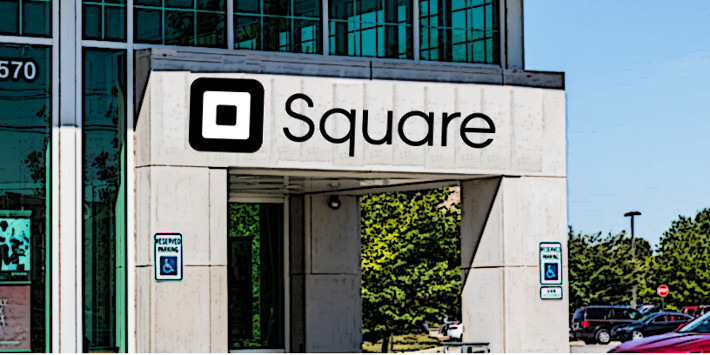
Square is on its way to becoming a bank. The payments and online lending company was approved by both the FDIC and the Utah banking regulator this week to create a de novo “industrial” bank. The company has been trying to accomplish this for more than two years. The news means that Square will likely no longer rely on a relationship with Celtic bank to make loans, while also being able to take on deposits.
The FDIC said in an announcement that, “The bank, Square Financial Services, Inc., will originate commercial loans to merchants that process card transactions through Square, Inc.’s payments system.”
Another fintech company, Nelnet, was also granted approval for an industrial loan charter at the same time.
Square and Nelnet’s move to become a bank is similar to the path taken by LendingClub. Rather than become chartered themselves, LendingClub recently agreed to acquire a chartered bank. However, LendingClub still must wait approximately 12 months for the deal to go through the process of regulatory approval.
With New York in a State of Emergency, Its Legislators Rush to Regulate Disclosures in the Commercial Finance Industry
March 16, 2020 On March 7th, Governor Cuomo declared a disaster emergency for New York State. Four and 6 days later respectively, legislators in the state Assembly and Senate introduced commercial financing disclosure bills that would regulate all business-to-business financing transactions including secured loans, factoring, and merchant cash advances. The bills intend to create uniform disclosures for comparison purposes while also placing control of the commercial finance industry under the purview of the superintendent of the New York Department of Financial Services (DFS).
The bills also state that merchant cash advance companies may be required to prepare funding reports on all of their deals for the DFS to inspect so that the superintendent can analyze the difference between the estimated anticipated APR and the actual retrospective APR that resulted after the merchants delivered all of the receivables to the funder on each deal.
The bills are said to have been in the works for some time, but the timing of their introduction is awkward given the sudden economic situation that is unfolding in the state.
The bills are actually quite lengthy so you can read them yourselves in full here:
Assembly Bill A10118 – Introduced by Kenneth Zebrowski
Senate Bill S05470A – Introduced by Kevin Thomas