
Sean Murray is the President and Chief Editor of deBanked and the founder of the Broker Fair Conference. Connect with me on LinkedIn or follow me on twitter. You can view all future deBanked events here.
Articles by Sean Murray

Kabbage Co-founder Rob Frohwein Steps Down from the Company
January 6, 2022 Rob Frohwein, who served as the CEO of Kabbage for more than a decade, has left the company. A post he published on social media revealed that his last day was December 17th.
“I didn’t make a big deal – the company has always been about our customers & our employees – and never about any person,” Frohwein said about the quiet exit.
The move is not altogether unsurprising. American Express acquired Kabbage in August 2020 after covid heavily disrupted its small business financing business. Amex first reintroduced Kabbage as a checking account brand and only just recently resurrected its funding operations.
That re-emergence was the catalyst to move, according to Frohwein.
“Why now? Lots of blah blah blahs but it’s the right time,” he wrote. “We’ve relaunched our products with Amex. Now, it’s time to fully devote myself to being an entrepreneur once again.”
Frohwein has kept busy on the side as an advisor & investor in SentiLink, the vice chair of StimLabs, and the CEO of Drum Technologies, Inc, according to his profile, but he apparently has even more plans in the works.
“So what now? Well, I’m pretty excited for what is next. Keep a lookout!”
The benign salutation may actually be a nod to what his next venture is. We’ll see…
New York’s Commercial Financing Disclosure Law to Undergo Further Comment and Review
January 4, 2022 Implementation of the New York Commercial Financing Disclosure law originally intended to go into effect four days ago, is now subject to another delay on top of the existing one, with no official date on when compliance will be required.
Seeing as the New York Department of Financial Services (DFS) was still accepting comments on the proposed regulation through December 20th, DFS had originally granted covered companies a six-month reprieve on compliance. But after having reviewed the comments, DFS determined that it’s actually back to the drawing board on a regulatory proposal. Sometime “early in the new year,” DFS said, it will publish a revised proposal for further public comment.
“Given the complexity of the disclosures required by the CDFL (Commercial Financing Disclosure Law), we believe the Legislature intended that the Department first provide regulatory guidance regarding the standardized disclosures required to be provided under the CDFL,” said Serwat Farooq, a Deputy Superintendent at DFS, in a published statement. “Waiting to commence CDFL obligations until implementing regulations are in place will ensure that the disclosures are made in a consistent, standardized fashion. This will help businesses understand the terms and conditions of the various forms of credit being offered to them, the very intent of the CDFL.”
elfDAO, the Crowdfunding Campaign to Buy Gifts for Kids
December 22, 2021 Move over ConstitutionDAO, the latest Decentralized Autonomous Organization, known as elfDAO, is seeking to leverage the power of crypto-fundraising to “fund, organize, and donate gifts to institutions, orphanages, and low-income neighborhood centers [in order to] bring holiday joy to as many children as possible.
It can all be accomplished through an ethereum wallet and an app where the DAO holds the funds, where more than $30,000 was raised in the first 24 hours since the campaign went live. That’s enough to pay for approximately $1,200 gifts for kids.
“We are not formally affiliated with ConstitutionDAO,” a representative of the DAO said, “however, many members of our advisor team were previously part of the core team at ConstitutionDAO. We are so grateful for their guidance.”
The idea for the campaign came from Byeongjun, @bjmoonn on twitter, who was eager to build something meaningful. From there, a team was assembled to turn the concept into reality.
“This is entirely a charitable endeavor,” the representative said. “All funds raised, apart from the 2.5% of funds raised to cover overhead costs (1% for multi-signature wallet and Juicebox gas fees, 1.5% for enDAOment, our fiscal sponsor’s transaction fees) will go towards charitable causes. All overhead costs will be transparently documented and none will be used to compensate the core team — leftover operational funds will be contributed to charity.”
The deadline to contribute is December 31st. The hope is that the DAO will raise $1 million, enough to buy gifts for 40,000 kids.
Some of the logistical questions will be decided by votes cast by the contributors.
“Contributors ($GIFT token holders) will vote on our initial governance proposal, which will set the specifics for how charity proposals and voting by token holders will work,” the representative said.
Contributions can be made via elfDAO.
For full disclosure, I have personally made a donation to the DAO, but I am not a core team member, advisor, or otherwise affiliated with the project.
deBanked’s Most Watched Videos of 2021
December 20, 2021deBanked TV made a splash in 2021, generating more than 50,000 views. For the first time ever, we’ve ranked the most watched videos for the year.
1. Moving to Miami
deBanked kicked off a Miami tour in March 2021 that included an interview with Mayor Francis Suarez. The three-part series was the most watched on deBanked TV for all of 2021. (Vid 1 | Vid 2 | Vid 3)
2. One-on-Ones With Industry Professionals
Two in-person interviews streamed live from the deBanked TV studio were virtually neck and neck for 2nd place. Oz Konar of Business Lending Blueprint, who recently spoke at Broker Fair 2021, talked about working as a loan broker from home.
Meanwhile, Jennie Villano’s state of the industry was a more introspective look at doing business during the era of covid, useful marketing tips, and business development.
3. ROK
An inside look at ROK Financial, a Long Island-headquartered broker shop came in at a strong #3.
4. Terminology Lesson
What’s the difference between a lender and a funder? Numerous people have tuned in to find out.
5. Brokers, Brokers, Brokers
It’s tough to pinpoint a firm #5. Multiple videos achieved just about the same level of views. Our viewers love brokers.
Check out some of our top video categories:
deBanked’s Docuseries
MCA/Small Business Lending help
deBanked Event Footage
deBanked News
deBanked’s Top Five Stories of 2021
December 20, 2021 deBanked’s most read stories of 2021 were similar but different to those read in 2020. We broke them down into categories by popularity.
1. Scandal
A South Florida business apparently masquerading as a small business finance company, was by far and away the most read story of 2021. Authorities now believe that it was a $200M+ ponzi scheme with more than 5,500 investors. Unlike other alleged schemes that have rocked the finance world, thousands of people believe the allegations are not true and have rallied around the CEO.
2. Domain Life after Death
The Death of a Thousand Financial Companies, the leading story of deBanked’s March/April 2021 magazine issue, was the 2nd most popular across 2021. In it, deBanked went undercover to find out what happened to the domain names of financial companies that went out of business. The findings were terrifying. (See: Video discussion about the story)
3. Real Estate Investing
Think what you want about crypto as the future because when it came down to it, deBanked readers were vastly more interested in real estate investing. Why Funders Are Investing in Real Estate As Their Side Hustle of Choice was the 3rd most read story of 2021. “[Real estate is] just a way that people who have been successful and spin off a lot of cash for their businesses see as a safe way to diversify their income,” said a lawyer that was interviewed for the story.
4. Regulation
It was a close call between several stories pertaining to regulation. While interest in CFPB-related activity ranked high, so too did a court decision in Florida that ruled on the legality of merchant cash advances. The New York commercial financing disclosure law was also top of mind for many readers as was interest in proposed legislation in Maryland.
5. An Exit
The fall of LendUp, an online consumer lending company, was apparently of great interest in 2021. After some difficult encounters with regulators, the company ceased lending operations. “Although we are no longer lending, we also offer a series of free online education courses designed to boost your financial savvy fast,” the company’s website now says.
Final Reminder About Broker Fair and Vaccination
December 1, 2021This is a final reminder that Broker Fair is a vaccination-mandatory event (through no decision of our own), pursuant to NYC law. The venue will not accept a negative test. Only proof of vaccination is acceptable for entry.
If you have a Broker Fair ticket but are not vaccinated, please contact events@debanked.com immediately.
Bert Goldberg, IFA Founder, Passes Away
December 1, 2021If you needed to know anything about the factoring industry, you had to know Bert Goldberg.
Goldberg, who passed away on November 27th, founded the International Factoring Association in 1999. We first crossed paths in April 2016 when he emailed me about a fintech course he had in the works. At the time, the IFA had an astounding 425 member companies.
A model organization, Bert lured me to an IFA Conference in Fort Worth, TX in 2017, which was one of the best events I have ever been to. He was then kind enough to invite me to speak at an IFA Fintech Training Class later that year in Las Vegas, which I took him up on.
Though I did not know him that well, we did share some calls and conversations. His ideas and concepts certainly served as a model for me to follow. He was a very kind and intelligent leader. Rest in Peace.
In an IFA announcement, Heather Villa, Managing Director of the IFA said, “We appreciate the support that the IFA community has provided over these past few months. The IFA is a community that comes together during tough times and we are so grateful to have the group of friends and colleagues that makes up the organization. Bert founded the IFA in 1999 and since then his vision has turned the Factoring industry into an expansive and important resource for small businesses all over the world. We are proud to continue the legacy that Bert built.”
deBanked Thanksgiving Memes 2021
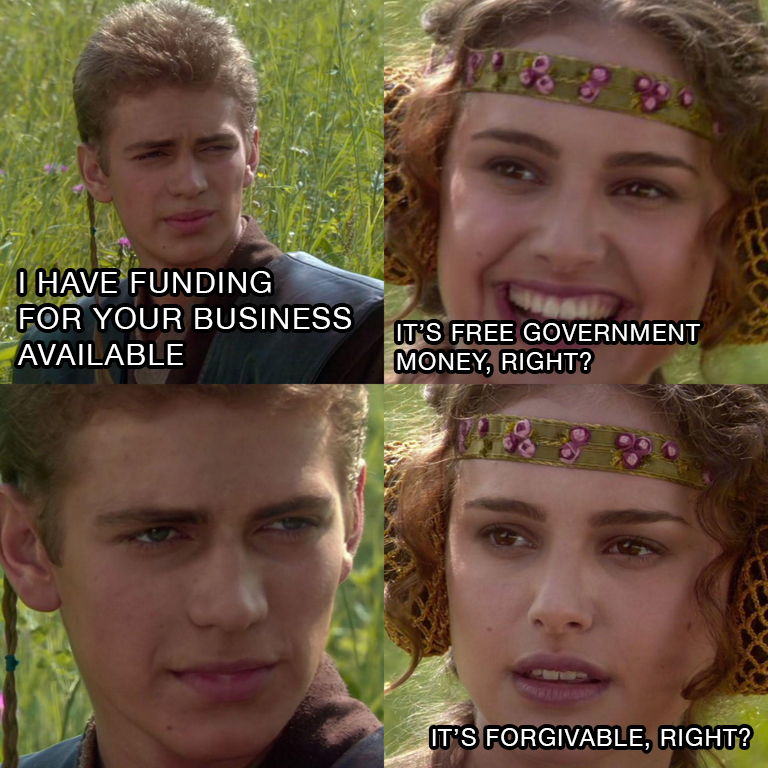
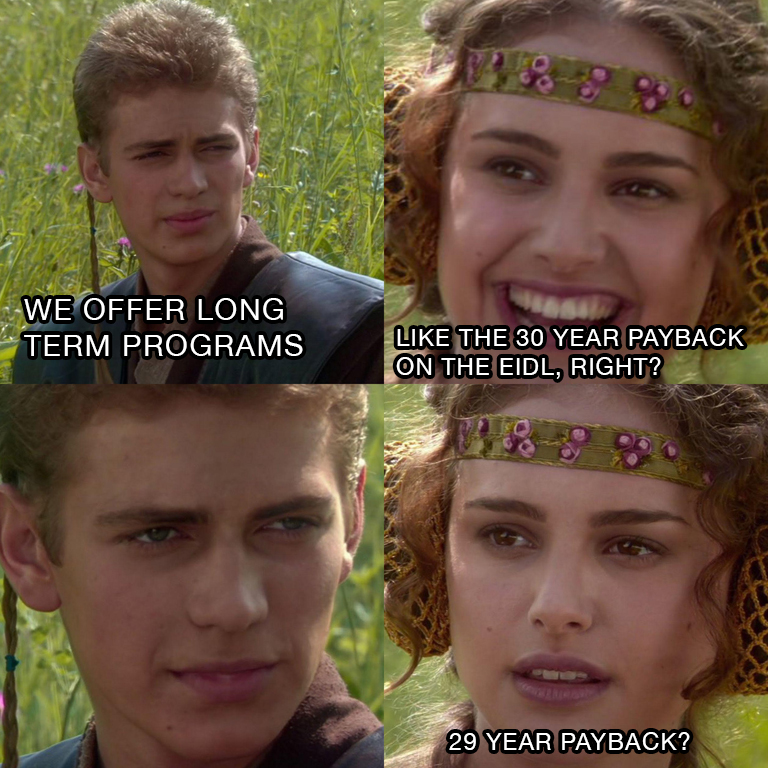
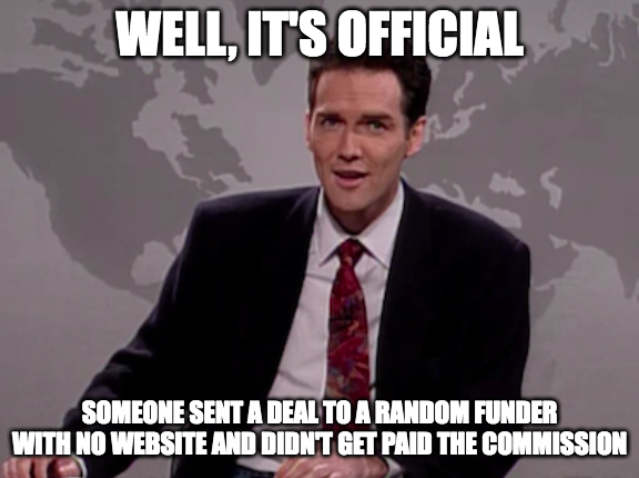
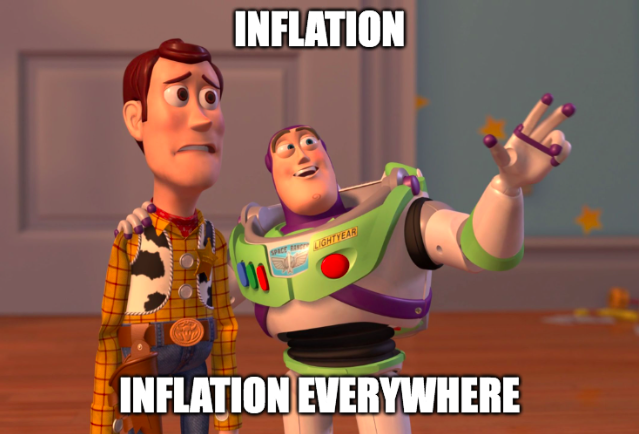
November 24, 2021Happy Thanksgiving. Every year since 2012, we have published original industry memes on Thanksgiving! Here’s our latest batch!