

Sean Murray is the President and Chief Editor of deBanked and the founder of the Broker Fair Conference. Connect with me on LinkedIn or follow me on twitter. You can view all future deBanked events here.
Articles by Sean Murray

Evidence Merchant Cash Advance is Going Mainstream
August 23, 2011
Need evidence that the Merchant Cash Advance industry has gone mainstream? One of our site’s editors shared this story:
I’ve been working in the Merchant Cash Advance business since 2004. It’s been quite a journey and we’ve really made a difference to small businesses facing capital shortfalls. The growth has been phenomenal and there have been dramatic shifts both in underwriting standards and the characteristics of our clientele.
While I could sit here and write a book about my experience, it’s the phone call I received last week from an old buddy of mine, Bob, that’s worth sharing. Bob is a Venture Capitalist(VC) out in California. He’s a self proclaimed expert of the hospitality industry and has heard a thousand young entrepreneurs pitch him a thousand different ways.
He’s always kept a distance from the Merchant Cash Advance industry and yet is always eager to hear about our tales of success, the achievements of our clients, and our ability to evolve to meet their needs. Last week Bob learned something and gave me a call.
He was sitting in a boardroom in Denver, Colorado. A group of entrepreneurs that made it big with a hotel in Florida, wanted to double their luck and open another hotel there and several in Wisconsin. These were well capitalized individuals and were pitching them for a cool $2 Million.
Bob’s firm seeks equity, so when the hotel group flatly stated that they did not intend to give up any shares, some were ready to declare the meeting over.
The powerpoint presentation flashed to the next slide and the entrepreneurs’ financial proposal was outlined in detail: “In return for $2 Million, you will be purchasing $2,400,000 of our future credit card sales. We will allow you to withhold 15% of each card transaction up until the purchased amount is paid in full.” The withholding percentage would also apply to the location that’s already established.
None of the deciding members of the VC firm like loans too much. There’s something about one payment per month that seems to not work anymore. Too many young businesses see monthly payments as an opportunity to leverage heavily. Having to make one monthly payment to the VCs enables the business to spend money on 20 other projects, all of which carry their own singular monthly payments. Then at month end, the cash gets spread too thin, and suddenly not all of these monthly payments can be met. Sure there are restrictions and terms that are supposed to prevent the business from doing this while the loan is outstanding, but there’s not much anyone can do about it if these terms get violated anyway. By the time the lenders find out, the return on investment is nullified by the cost of fixing it and that’s just if the problem can still be remedied at all. Sometimes all the money is just gone and the lenders have no idea until the day the monthly payment is due.
A purchase of the hotel’s future credit card sales would not classify this proposal as a loan, nor would it rely on a hope that the hotel’s books were properly managed and a payment made on time. While the VCs considered the unique level of security in getting repaid, Bob had a Eureka moment and took a timeout from the meeting to call me.
“It’s the pay as you go aspect of it that I like. The pace at which we get paid purely depends on the sales volume of the business. Sales up, we get paid more. Sales Down, we get paid less. Good for them, Good for us. If our credit card processing partner is withholding 15 percent of the sales before they’re deposited into our client’s bank, the hotel guys won’t face liquidity issues to meet our payments because we’re already getting paid. They can spend what’s deposited and we don’t have to get nervous on the 29th of the month.” and on and on Bob went, to which I replied, “Yes buddy, some of us have figured this out years ago.”
While $400,000 was a little bit below their desired return on investment, the VC firm put the entrepreneurial hopefuls up in a hotel for a weekend while they convened. There was an intense debate on the subject of equity vs. the purchase of future sales. One triumphal argument was that since hotels conduct transactions on a daily business, they would be collecting back on their investment every business day. That would allow the VC firm to reinvest those funds immediately.
Without completely spilling the beans on a negotiation that included non-disclosure agreements, a compromise was reached. The entrepreneurs left with a deal where they retained 100% of their equity and a structure where payments are made only at the pace that they are able to generate sales. It may have cost them more than what bank loans were going for in 2005, but like Bob and the other VCs made bluntly clear to them “What’s a bank loan? I don’t know any banks that are actually in the business of lending anymore.”
Bob could tell you that he’s been in the Venture Capital business since 1994 and it has been quite a journey. VCs have really made a difference to entrepreneurs with capital shortfalls. The growth was phenomenal until things started to change. The sale of future credit card sales from business to investor is a true mutually benefitting transaction.This structure is not only gaining popularity, but also solidifying a permanent footing in the financial transaction world altogether.
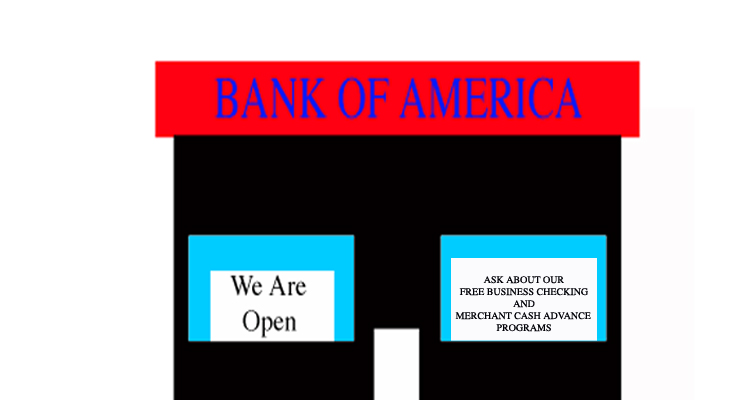
Don’t be surprised if John Doe business owner shows up at a local Bank of America branch in 2014 asking for a loan and this happens: “A loan, What’s that?” replies the financial officer. “Based on your merchant processing history, we’d like to purchase $30,000 of your future credit card sales.”….
-The Merchant Cash Advance Resource
https://debanked.com/merchantcashadvanceresource.htm
Did Somebody Say the End of the Credit Card Industry?
August 23, 2011
We check our site’s inbox once a day and usually receive some compliments, feedback, or industry secrets. But over the last two days, more than 15 people e-mailed us this link: The End of Credit Cards is Coming. This was followed by a barrage of comments such as “Does this mean the end of the Merchant Cash Advance industry as well?” or “It looks like your site topics are going to be obsolete.”
If any industry is poised to take a hit as a result of this “payment evolution”, it’s likely to be the manufacturers of plastic and magnetic strips. (The companies that make the cool shiny holograms on the back may also suffer.) If you actually READ through the article, it discusses an industry progression towards contactless payments. A contactless payment is still an electronic payment and it involves the same networks and banks. Saying the declined use of physical rectangular plastic cards will result in the end of the electronic payments industry as whole is like saying that the less frequent use of flutes and banjos will result in the end of music.
All sarcasm aside, this progression towards contactless payments indicates the merchant processing industry is on the verge of an explosive rebirth. Here’s why:
Equipment Sales and Leases
New technology to accept contactless payments will be required. If plastic cards are slowly phased out, retailers will have absolutely no choice but to purchase or lease equipment to accept contactless payments. (Sales and Leasing boom)
Increased Interchange profits for banks
The growth of contactless payments will likely cause Visa and MasterCard to increase certain interchange categories. They will rationalize this by providing proof that contactless security costs more.
New Payment Networks
Every merchant needs to accept both Visa and MasterCard branded cards in order to survive. In some regions of the country, it’s also important to accept American Express. Though American Express charges merchants more, they can’t afford not to have it. That being said, the above referenced article mentions the formation of a new super power payment network called ISIS to rival the current players. ISIS was formed by AT&T, T-Mobile, Verizon, Discover and Barclays Bank. Since ISIS is indepedent from the other payment networks, they will be able to create their own “interchange” and cost structure. I am inclined to believe that costs will not be lower than what’s commonplace in the current marketplace.
Increased Electronic Payments Usage
For the past 4 years, we’ve been lectured repeatedly by the government, teachers, and financial experts that credit cards are bad. During that same time period, we’ve also celebrated the importance and efficiency that phones/smart phones have brought into our lives. Blackberries, iPhones, Droids, texting, apps, skype, and wireless internet are the bread and butter of our daily lives. So what is the public inclined to infer with phones capable of making electronic payments?
- Credit Cards Payments Bad
- Smart Phone Payments Good
As long as Smart Phone is Good, consumers don’t need to feel guilty over their usage of credit. I’m sure we’ve all seen the debt counseling talk shows where they take an out of control spending housewife and force her to cut up her credit cards. She cries a little, acknowledges her problem, and then in a symbolic gesture of triumph, cuts up her cards. The entire charade portrays the plastic card as the perpetrator of the woman’s debt problems. One thing I don’t expect to see any time soon is a woman being lectured by a debt counselor to smash her iPhone with a hammer to stop her out of control spending. “In order to conquer your debt, I want you to go home and burn all 5 of the Droids on your family plan.”
BECOME DEBT FREE
Join the thousands of people who are breaking their scissors on their phones, buying new scissors, and then smashing their phones with a hammer. Say “Forget it to Credit” because there’s no app for your spending problems!

Those rectangular plastic cards may be on their way out but contactless payments are going to bring billions to the merchant processing industry. Happy processing!
-deBanked
Who is Really Getting a Merchant Cash Advance?
August 23, 2011
You’ve seen ads like it before: “Get up to $250,000 for your small business today!”
For the local corner deli, that kind of cash may seem too good to pass up. There’s just one catch, many Merchant Cash Advance(MCA) providers cap funding approvals at somewhere in the range of 125% of a business’s monthly credit card processing volume. That means a deli processing $10,000 would be eligible for up to $12,500. ‘Mom and pop’ shops are often left wondering if anyone could ever really get $250,000 or if that figure is just a deceptive marketing gimmick.
 />
/>
The Merchant Cash Advance Resource would like business owners to know that $250,000 is not only possible, but deals of this size and larger are made often. The typical recipients are retail chains and restaurant franchises, but any business generating enough volume in credit/debit card sales is eligible. If there was any doubt about the popularity or legitimacy of the MCA financial product, take a look at some franchise names that have used it:
- Burger King
- Domino’s Pizza
- Hooters
- Subway
- Dunkin Donuts
- Taco Bell
- Denny’s
- Wendy’s
- Meineke Car Care
- Maaco
- Aamco Transmissions
- Curves Fitness
This data was confirmed by researching UCC filings on AdvanceMe, Strategic Funding Source, Merchant Cash and Capital, First Funds, and Business Financial Services.
Every funding provider is not created equal. Some of the oldest players such as AdvanceMe, Merchant Cash and Capital, and Strategic Funding Source are capitalized well enough to do deals up to $1,000,000. Other firms specifically seek out larger businesses such as Bankcard Funding in Long Island, New York. According to a representative there, their average funded deal is $100,000. Others have a comfort range of $5,000 to $75,000 but will bring in outside investors if they need to go beyond that.
Merchant Cash Advance is not just for smaller businesses, nor is it a last resort source of capital. It is an established alternative to bank lending that offers incredibly flexible repayment terms. Despite the benefits, a MCA still has a reputation for being expensive. While we don’t dispute that, we do recognize the need for it. Unlike SBA loans which can carry default guarantees up to 90%, MCA’s are completely backed by private investors. There are no billions of dollars to fall back on, government backed guarantees, or bailouts when things turn ugly.
Over the past few years, some MCA firms simply weren’t able to generate enough profit and closed as a result. In the case of Global Swift Funding(GSF), a MCA provider that dissolved back in 2009, the return on investment simply did not prepare them for the loss they would realize from a very important client.
http://www2.ocregister.com/articles/gantes-money-million-2399154-bankruptcy-restaurants
John Gantes, formerly one of the richest Men in Orange County, California owned 110 restaurants throughout the western part of the U.S. As the economy turned sour, he reportedly started loading up on Merchant Cash Advance funding for each location. In the end GSF cried foul, but they could not sustain operations further.

There is risk on both sides of the equation. A MCA is not for businesses on the fritz, but rather is a tool to acquire inventory, new locations, upgrade equipment, get through a slow season, and grow. While much hype surrounds the minimal paperwork requirements for MCA, businesses seeking in excess of $100,000 should expect a more intensive underwriting process.
“Have detailed financial statements handy and expect some scrutiny of the Balance Sheet,” was advice offered by one underwriter. “We’re going to want to make sure you are using these funds for the right reasons.”
And yet the MCA industry stands by their mantra of making capital accessible to all. With funding amounts reportedly as low as $1,000, and more than 21,000 individual advances made in 2010 alone, there is really no better time for a small business owner to apply.
The funds are there but it’s important to set your own expectations of how much you can access. The corner deli should be able to put $12,500 to good use. Our experience shows that positive sales activity will probably make the funding provider more comfortable to extend a larger amount to you down the road. I think we’d all like to get $250,000 today but in the absence of government backed guarantees, a tumultuous economy, and jittery investors, you’ll need to get your foot in the door first and work your way up.
-The Merchant Cash Advance Resource
http://www.merchantcashadvanceresource.com
Images Copyright (c) of 123RF Stock Photos