Articles by deBanked Staff

Square to Expand Beyond Business Loans to Consumer Loans
June 27, 2017Square is making the leap from business loans to consumer loans, according to the WSJ. The company, which already makes loans to its payment processing clients, will now begin offering loans to the customers of those clients. The WSJ reports that the loans will be available in six states including California, New York and Florida. They also used a wedding photographer and a veterinarian as examples of services that consumers may wish to finance.
Square Capital head Jacqueline Reses is quoted as saying that there are no plans to get into car loans or mortgages.
Congressman Emanuel Cleaver, II Makes Inquiry Into Merchant Cash Advances
June 26, 2017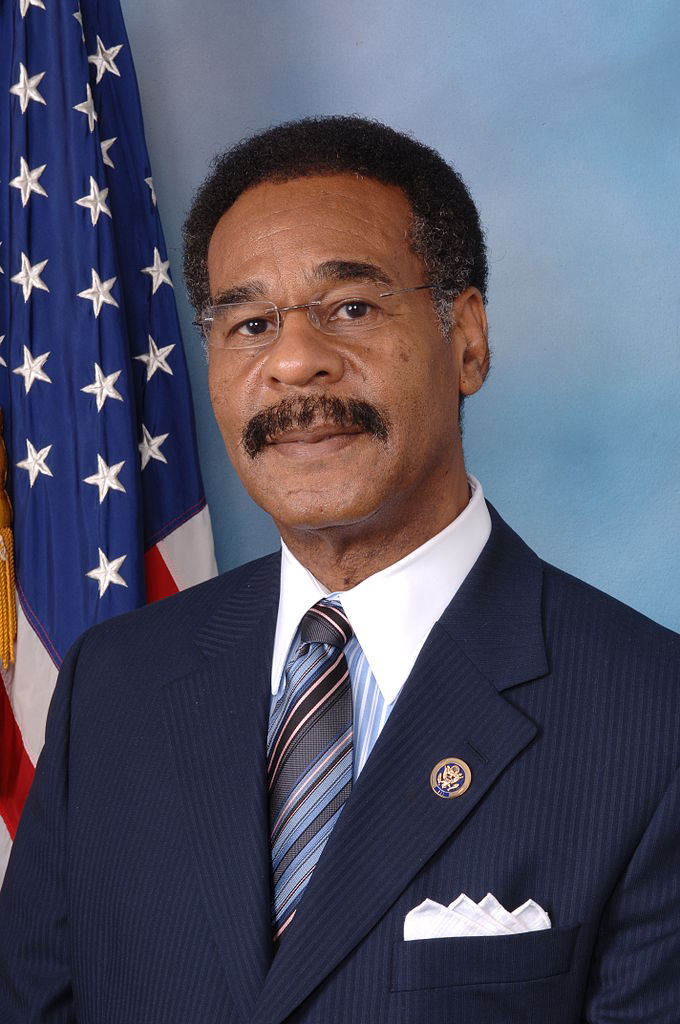 A US Congressman from the fifth district of Missouri is conducting an inquiry into “Fintech Lending,” according to a statement posted online. Rep. Emanuel Cleaver, II published letters that his office sent out last week to five companies seeking information on how they avoid discriminatory lending practices in small business lending.
An excerpt:
I have recently launched a review into FinTech small business lending. I am particularly interested in payday loans for small businesses, also known as “merchant cash advance.” The payday loan industry has often targeted communities of color with high rates and fees, and Congress needs further information that small business payday lending is operating with transparency and free of discrimination
Ironically, two of the five recipients, Prosper and LendUp, don’t even operate in the small business space, so how exactly they were selected remains a mystery.
Only two of the five companies have any connection to merchant cash advances, but the Congressman’s connection between them and payday loans is perplexing nonetheless.
The subject matter at hand, however, is similar to another fact-finding endeavor that the Consumer Financial Protection Bureau is conducting as part of its mandate under Dodd-Frank.
A response is not required but the Congressman asked the recipients to respond by August 10th.
Recent Court Decisions Impacting Merchant Cash Advances – Still Not a Loan
June 22, 2017In the United States District Court, Southern District of New York, a judge expounded on his decision as to why the Purchase and Sale of Future Receivables contract between TVT Capital and Epazz, Inc. was not a loan.
In this case, the “receipts purchased amounts” are not payable absolutely. Payment depends upon a crucial contingency: the continued collection of receipts by Epazz from its customers. TVT [TVT Capital] is only entitled to recover 15% of Epazz’s daily receipts, and if Epazz’s sales decline or cease the receipts purchased amounts might never be paid in full. See counter- claims, Exhs. A-C at 1. The agreements specifi cally provide that “Payments made to FUNDER in respect to the full amount of the Receipts shall be conditioned upon Merchant’s sale of products and services and the payment therefore by Merchant’s customers in the manner provided in Section 1.1.” Id. at 3 § 1.9.
Defendants’ argument that the actual daily payments ensure that TVT will be paid the full receipts purchased amounts within approximately 61 to 180 business days, id. ¶¶ 33-47, is contradicted by the reconciliation provisions which provide if the daily payments are greater than 15% of Epazz’s daily receipts, TVT must credit the difference to Epazz, thus limiting Epazz’s obligation to 15% of daily receipts. No allegation is made that TVT ever denied Epazz’s request to reconcile the daily payments. TVT’s right to collect the receipts purchased amounts from Epazz is in fact contingent on Epazz’s continued collection of receipts. See Kardovich v. Pfizer, Inc., 97 F. Supp. 3d 131, 140 (E.D.N.Y. 2015), quoting Amidax Trading Grp. v. S.W.I.F.T. SCRL, 671 F.3d 140, 147 (2d Cir. 2011) (“Where a conclusory allegation in the complaint is contradicted by a document attached to the complaint, the document controls and the allegation is
not accepted as true”).None of the defendants’ arguments, Counterclaims ¶¶ 51-109, change the fact that whether the receipts purchased amounts will be paid in full, or when they will be paid, cannot be known because payment is contingent on Epazz generating suffi cient receipts from its customers; and Epazz, rather than TVT, controls whether daily payments will be reconciled.
The judge relied heavily on the reconciliation clause common to merchant cash advance agreements, whereby merchants can adjust their daily ACH amount to correlate with their actual sales activity. The case # is: 1:16-cv-05948-LLS. The full decision can be downloaded through a link contained at: http://dbnk.news/7
MISREPRESENTATIONS? WHAT MISREPRESENTATIONS?
In the New York Supreme Court, a judge addressed a business owner’s allegations that they had been misled into entering into purchase agreements when they actually wanted loans. In the decision excerpt below, Passley is Shaun Passley, one of the plaintiffs in the case.
[The plaintiffs] state that they would not have knowingly entered into merchant agreements, because what they really wanted were loans. Indeed, plaintiffs allege that “the word ‘purchase’ or ‘sale’ would have caused Passley to decline a transaction with [defendants] because a loan – the product Passley wanted to obtain – is not a purchase or sale.”
A review of the contracts in this action shows that not only do they all clearly state that they involve purchases or sales, but they all expressly state they are not loans. Even if someone were confused by the contracts, or did not understand the obligation or the process, by reading the documents, one would grasp immediately that they certainly were not straightforward loans. The very fi rst heading on the page was “Merchant Agreement,” and the second heading says “Purchase and Sale of Future Receivables.”
[…] For plaintiffs to state that they would not have entered into a purchase or sale if they had known that that is what they were doing is utterly undermined by the documents themselves. As the Second Department has held, in Karsanow v. Kuehlewein, 232 A.D.2d 458, 459, 648 NY.S.2d 465, 466 (2d Dept. 1996), “the subject provision was clearly set out in the … agreements, and where a party has the means available to him of knowing by the exercise of ordinary intelligence the truth or real quality of the subject of the representation, he must make use of those means or he will not be heard to complain that he was induced to enter into the transaction by misrepresentations.” So too here, plaintiffs had the means to understand that the agreements set forth that they were not loans. As it has long been settled that a party is bound by that which it signs, the Court finds that the ninth cause of action, for recission based on misrepresentation or mistake, and the tenth cause of action, for fraudulent inducement based on misrepresentation, must be dismissed as a matter of law. Pimpinello v. Swift & Co., 253 N.Y. 159, 162-63 (1930) (“the signer of a deed or other instrument, expressive of a jural act, is conclusively bound thereby. That his mind never gave asset to the terms expressed is not material. If the signer could read the instrument, not to have read it was gross negligence; if he could not have read it, not to procure it to be read was equally negligent; in either case the writing binds him.”).
The case # is 54755/2016 in the County of Westchester in the New York Supreme Court. The full decision can be downloaded through a link contained at: http://dbnk.news/8
Catching Up With Marketplace Lending – A Timeline
June 13, 20174/11 Regions Bank recruited Kabbage’s chief technology officer, Amala Duggirala, to become its chief information officer
4/12 Federal Reserve Published their 2016 Small Business Credit Survey
4/13
- Marathon Partners, a minority shareholder of OnDeck, publicly called on the company to make changes
- Fifth Third Bank partnered with Accion to support lending to underserved small businesses
4/17 Affirm surpassed the mark of making more than 1 million loans since inception
4/20 YieldStreet surpassed $100M in loans funded since inception
4/21 Glenn Goldman stepped down as Credibly’s CEO
4/25
- SmartBiz Loans announced partnership with Sacramento-based Five Star Bank
- CommonBond begins offering loans to undergrads directly
4/26 State regulators sued OCC over fintech charter proposal
4/28
- IOU Financial announced that they loaned $107.6M to small businesses in Q1
- China Rapid Finance announced their IPO
5/2
- Funding Circle closed their online forum
- Elevate’s Debt facility with Victory Park Capital increased from $150M to $250M
5/3
- Prosper Marketplace disclosed that it miscalculated returns shown to retail investors
- Square announced that they loaned $251M to small businesses in Q1
- Nav raised $13M from investors that include Goldman Sachs and Steve Cohen’s Point72 Ventures
5/4
- Vermont governor signed into law new licensing requirements for anyone soliciting loans to Vermont borrowers.
- Lending Club announced that they loaned $1.96B in Q1
5/5 Thomas Curry steps down as OCC head, replaced by Acting Head Keith Noreika
5/8
- OnDeck announced it was substantially reducing its workforce as part of its plan to achieve profitability. The stock price proceeded to hit record lows.
- Dv01 announced reporting partnership with SoFi
- With no IPO on the horizon, SoFi revealed that they began letting their employees sell some of their stock
5/9
- In the United States District Court, The Southern District of New York ruled that a purchase of future receivables was not a loan largely because it was not absolutely payable. Colonial Funding Network, Inc. as servicing provider for TVT Capital, LLC v. Epazz, Inc. CynergyCorporation, and Shaun Passley a/k/a Shaun A. Passley
- The value of 1 Bitcoin surpassed $1,700.
5/10
- CFPB announces that it will begin work on small business loan data collection pursuant to Section 1071 of Dodd-Frank.
- CFPB publishes a white paper on small business lending
- SoFi revealed that they will apply for an industrial bank charter
5/12 NY’s banking regulator sued the OCC over its proposed fintech charters
5/15
Prosper announced that they lent $585M in Q1 and had a net loss of $23.9M
5/16
- Media outlets reported that SoFi is expanding into wealth management
- Lending Club named PayPal’s former head of Global Credit Steve Allocca as President
- OnDeck’s share price hit a new all-time low
See previous timelines:
2/17/17 – 4/5/17
12/16/16 – 2/16/17
9/27/16 – 12/16/16
Sound Bites From Underwriting – The Risk of Imperfect Merchants
June 12, 2017
When you’re funding a business, does the risk begin and end with the business? Or does the character of the owners play a role? Can you judge the business on weak financials if your product is geared towards weak financials to begin with? And can you trust unaudited internally prepared financial statements?
At the Factoring Conference during a portfolio warning signs panel, Michael Bagley, VP at Action Capital Corporation, spoke about the risk of internally prepared financials:
“The issue is from a financial standpoint, are they breaking even? That gives you some ability they can function, but one thing that jumps out at you is the payables. It really seems pretty simple. But if you’re in an industry where there’s a critical vendor, or you’ve got a critical supplier, or you’ve got subcontractors and the payables are stretched beyond what is logical past terms, well, that’s a huge warning sign in the underwriting, but it didn’t always show up in underwriting, right, because these were internal financials and 90% of the time and they’re garbage, right?
They’re created by the user so that you at some level have to create or mitigate that by creating procedures that allow you to chase down what are your critical expenses associated with customers. So, for example, in the government space, it would be a subcontractor not getting paid. In manufacturing, it could be a critical vendor that you see on the aging. But if you see that their insurance company had not been paid a couple months, it may not be as big a deal.”
Emma Hart, the COO of Sallyport Commercial Finance, on where the risk lies:
“[…] More than anything I would say even beyond the collateral, it’s the integrity of the client that you’re dealing with. Because in my experience, it’s people that pay you back, not businesses.”
Hart again, on judging a customer’s financial situation:
“[…] quite often, that’s the reason they’re factoring, is because their AP is a mess and you can see the AP is a mess and you raise it in the underwriting, you know. Is anybody suing you? What are you gonna do about it? And they’re like ‘Oh, I’m gonna use the money that you provide to me to sort out my AP.’ ‘Okay then.'”
Melissa Baines, Risk Manager of Republic Business Credit, LLC, on a deal going too smoothly:
“We had a situation where I believe they were doing the parking lot striping, the painting on a parking lot. And it was one invoice. It was a dealership. A car dealership was the account debtor. The account executive who was helping out with the take-on sent out the verification letter. The no-offset verification letter came right back. No issues. And our CEO at that time— Again, going back to the gut feeling, just it was too easy— There weren’t even any questions asked. “What is this?” It was just “Sure. Send it over. I’ll sign it.” And he did and we got it back. And so, our CEO called and talked to him. And he said, “Yeah, yeah, yeah, it’s fine. It’s fine.” It still didn’t feel right. So, we called the dealership main line, got the receptionist. She answered the phone. She said, “Who signed it? Okay. Hold on.” Ended up somebody from the accounting department got on the phone and said, “That’s not real. You’re not the first person to call, you know, and then we’ll call you back.” And then ultimately, the owner of the dealership called back and said, “We will take care of this. It will not happen again, but it is not a real invoice. And please do not fund that to that client.” So, you know, don’t ever give up on that gut instinct. There was nothing that said it wasn’t real to begin with, but thank goodness for [employee’s name]. She just had that gut feeling. It wasn’t right. It was too easy. And here you go.”
This is one of several excerpts from this panel that we plan to post under the Sound Bites From Underwriting tagline.
Upstart’s Average Borrower
June 12, 2017Online lender Upstart considers more than 10,000 variables such as an applicant’s education, academic performance, and employment background, according to their website, a proprietary system they say is used to detect “future prime” borrowers. But according to a recent Kroll Rating Agency report, their borrower base looks prime even by traditional standards in that their average borrower is 28 years old, earns $95,000 a year and has a FICO score of 690. Upstart lends money (through Cross River Bank) to individuals for a variety of purposes including student loan refinancing and debt consolidation.
In the Kroll report, Upstart asserts its belief that its use of additional data points will outperform traditional credit models, but concedes that their system has not been tested through economic cycles.
Upstart has raised $88.35 million in equity to-date. The Kroll Report was prepared in anticipation of a $163 million securitization transaction that is expected to close this month. They expect to be making $100 million of loans per month by the end of the year.
Sound Bites From Underwriting – Gambling With a New Broker
June 9, 2017At the Factoring Conference during a portfolio warning signs panel, Emma Hart, the COO of Sallyport Commercial Finance, was asked if she recalled any red flag situations that hinted at collusion. Whether in factoring or not, you can probably relate to this situation with a new broker:
We had one fairly recently that we should not have funded that the CEO of our business puts on. It was a slow one. We needed the deals. The client was a flour mill supplying flour to Indian restaurants. It was a special type of flour. I can’t remember what it was. He had 4 debtors. The invoices were for $14,500 each. Each of the 4 debtors verified by invoice perfectly and we never heard from him again. And every single one of the debtors claim to have paid him directly. He came to pick up the checks. We don’t even know whether they were valid invoices, whether they even parted with the money, but we never saw him again. And the warning flags were all over the place. They were bright red, weren’t they? It didn’t pass any of the underwriting criteria. The individual was not an individual of good character. He had some history, but the deal had been given to Nick [the company’s president] by a broker. We were establishing a relationship. We always say in our business and every other business, you know, the new sales people get a freebie. Nick doesn’t get any freebies ever anymore, but that was a first funding loss. So, that was a classic first funding loss. It didn’t pass any underwriting criteria. We did it because we were slow. We needed some business. It was a new broker relationship. […] So, that was classic case of collusion, but we should have known better. Absolutely. And he absconded.
This is one of several excerpts from this panel that we plan to post under the Sound Bites From Underwriting tagline.
New York State Assembly Proposes Online Lending Task Force
June 5, 2017On June 2nd, the New York Assembly drafted its answer to the recent joint-committee hearing on online lending. It’s called Bill A8260, an ACT to establish a task force on online lending institutions. As it’s proposed now, the task force would include individuals from the online lending community, the small business community, the financial services industry, and the consumer protection community that would be appointed by the Assembly, Senate and Governor.
The task force would be required to present a report on the following by April 15, 2018:
(a) an analysis of data received by the department of financial services on the prevalence of these institutions in the state, specifically, how many online lenders are lending to consumers and small businesses in this state;
(b) an analysis of data received by the attorney general and division of consumer affairs regarding the number of complaints, actions and investigations related to online lending institutions;
(c) an examination of the online lending industry and the key participants therein, and an investigation and understanding of the differences in small business and consumer borrowers, lenders and markets, such as the history, business models and practices of online lending institutions including identification of interest rates charged by online lenders;
(d) an examination of how consumers are utilizing online consumer credit to manage existing debt, potentially reduce borrowing costs or access needed funds;
(e) an examination of the existing small business credit gap and small business’ use of credit and credit needs;
(f) identification of alternatives for consumers and small businesses who are unable to access traditional financing and whether new technologies can enhance access to credit;
(g) an examination of whether existing federal and state laws already provide appropriate police powers and regulation of small business and consumer lending by online lending institutions;
(h) an evaluation of the impact of any contemplated or proposed law or regulation on the small business credit gap, including a quantitative analysis of the amount of increased or decreased credit available to small businesses as a result of such law or regulation, including the extent to which access to credit would be affected under the state’s current usury laws;
(i) an analysis of the potential interaction of federal law with any contemplated or proposed state regulation;
(j) an exploration of options for multi-state collaboration to harmonize the laws and regulations of various states related to small business and consumer lending across state borders;
(k) an assessment of best practices for small business and consumer loan disclosures, including current online lending industry efforts to advanced standardized and clear information for borrowers;
(l) an assessment of whether consumer loans and small business loans are treated differently by online lending institutions and if any level of oversight should take such differences into consideration;
(m) an identification of what consumer protections exist to protect consumers in this state from predatory practices of online lending institutions; and
(n) a determination of what new measures, if any, are needed to ensure consumers are protected from deceptive or predatory lending without unduly restricting access to credit.
Once the report is delivered, the task force would be disbanded. The bill is currently in committee.