
Articles by deBanked Staff

Merchant Cash Advances Are Not “Masked” Usury or Loans
May 17, 2018 A New York Supreme Court judge cited the decision rendered in Champion Auto Sales, LLC et al. v Pearl Beta Funding, LLC on Wednesday, when she dismissed usury claims brought against four merchant cash advance companies.
The case at issue was Wilkinson Floor covering, Inc., Stephen Wilkinson v Cap Call, LLC, TVT Capital, LLC, Yellowstone Capital, LLC, Ace Funding Source, LLC (Index #160256/2016)
Champion set forth the general principle that the underlying agreement in that case was not a usurious transaction, she opined. Beside the plaintiff’s claim being procedurally deficient, the judge said that the plaintiffs had not established usury because a rudimentary element of usury is the existence of a loan or forbearance of money and when there is neither, there can be no usury.
Per the Honorable Carmen Victoria St. George:
In New York, there is a predisposition in this State against declaring that contracts are usurious. This is especially true with respect to commercial agreements, where “usurious agreement[s] will not be presumed from facts equally consistent with a lawful purpose.”
Additionally, because plaintiffs’ obligation to pay them future receivables is conditioned on plaintiffs’ receipt of such, the agreements at issue are not loans.
Prosper Loan Sales Highly Dependent on One Big Buyer
May 16, 2018Forty-five percent of all loans originated by Prosper Marketplace in the first quarter of 2018 were sold to a single buyer, according to their latest earnings statement. The single largest buyer over the same period last year had only purchased 33% of their loans.
Last year, Prosper announced that they had closed a deal with a consortium of institutional investors to buy up to $5 billion worth of loans over the next 24 months. The investors in the consortium are affiliates of New Residential Investment Corp., Jefferies Group LLC and Third Point LLC.
Prosper originated $744 million worth of loans in the first quarter of this year alone. $333 million of those were purchased by the consortium for a total of $2.16B purchased to-date.
World Business Lenders Secures Credit Facility
May 16, 2018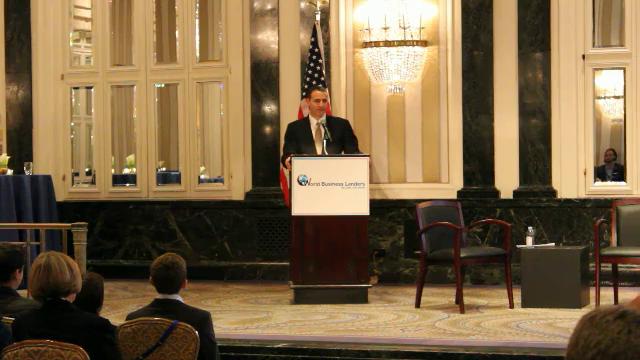 World Business Lenders announced yesterday that it obtained a $30 million credit facility from a Cayman Islands fund created by a group of Asian banks and investors.
“The terms [of the facility] are very attractive,” said World Business Lenders CFO Tom Wills. “Single digit fixed interest rate and high advance rates.”
The new facility will be used to continue funding a loan product that is a hybrid of a business loan and a mortgage, Wills told deBanked. He said that World Business Lenders invented this product three years ago.
“Three years ago, we saw some credit weakness coming into the market and we decided to develop this real estate collateralized product,” Wills said.
World Business Lenders provides business loans that range from $5,000 to $2 million and are paid back between six and 36 months. Their average loan size is $150,000.
Wills said that the hybrid product is becoming more institutionally accepted and that they have been seeing more demand for it. Created in 2011, the company employs over 100 people at its office in Jersey City, NJ.
World Global Financing, Inc. Declares Bankruptcy
May 9, 2018World Global Financing, Inc., a Florida-based merchant cash advance provider, filed for bankruptcy yesterday, according to Chapter 11 documents obtained from the Southern District of Florida.
Company CEO Cyril Eskenazi reported that its assets and liabilities were both between $10 and $50 million. Among the company’s creditors are ACH Capital, LLC, Capital One, Eaglewood funds, MB Financial Bank, the IRS and other tax authorities, WG Financing Inc, WG Funding Trust, Wilmington Savings Fund Society, FSB, several law firms, a mortgage company and more.
OnDeck Funded $591M to Small Businesses in Q1
May 8, 2018 OnDeck’s originations were $591 million in Q1 of this year, according to their earnings report, up 3% year-over-year. 29% of that was generated by funding advisors, OnDeck’s term for brokers.
They reported a total net loss of $1.9 million.
Compared to the same quarter last year, OnDeck’s Cost of Funds Rate increased from 5.9% to 6.8%, the 15+ Day Delinquency Ratio decreased from 7.8% to 6.7%, the Net Charge-off Rate decreased from 14.9% to 10.9%, and their average APR increased from 44% to 46%.
During the Q&A, OnDeck CEO Noah Breslow said that they had a strong quarter with Chase originations and that their second major bank is on track to be announced later this year.
Hearing on Commercial Financing Disclosures Scheduled in California State Senate
May 7, 2018Update: Link to the LIVE stream is here
 The Senate Judiciary Committee for the State of California will convene for a hearing on the commercial financing disclosures bill at 1:30 PST on May 8th. SB-1235, as its known, previously survived the Senate Committee on Banking and Financial Institutions when it was debated and contested on April 19th. (a video of that hearing is available here)
deBanked will attempt to stream the hearing or provide a link to it when it begins. Check back here for more details.
Judge Grants Restraining Order Against Deceptive Funding Company
May 6, 2018 JTT Funding, the company previously accused of having forged a Confession of Judgment, stands accused now of stealing the identity of a rival funding company. On May 3rd, New York Supreme Court Judge W. Franc Perry granted an injunction against JTT Funding from using the name, logo and likeness of Accel Capital from its marketing and contract materials.
Similar to the forged COJ suit (which was brought by FundKite), JTT Funding did not answer or contest the claims.
Plaintiff Accel Capital demonstrated in their papers that an agent of JTT was using a gmail address with “accelcapital” in the name and the company’s logo in its contracts. When a merchant funded by JTT Funding (who pretended to be Accel) inadvertently contacted the real Accel Capital, the scheme was revealed.
JTT Funding went on to ignore Accel’s Cease and Desist letter, court papers say, which led to the lawsuit and demand for an immediate injunction.
According to the Financial Times, JTT Funding is owned by Queens-born mixed martial arts fighter Jim “The Tyrant” Boudourakis. In his October 2017 interview with the publication, Boudourakis said, “There was a learning curve, going from being a fighter to a salesman. But I’m good with people.” FT also reported that his company had 18 full-time salespeople and was funding $4 – $5 million per month.
In the FundKite suit, it is alleged that Boudourakis’ first name Jim is an alias.
The Accel Capital suit can be found in the New York Supreme Court under Index Number: 153447/2018
Class Action Lawsuit Filed Against Ripple For Sale of Unregistered Securities
May 4, 2018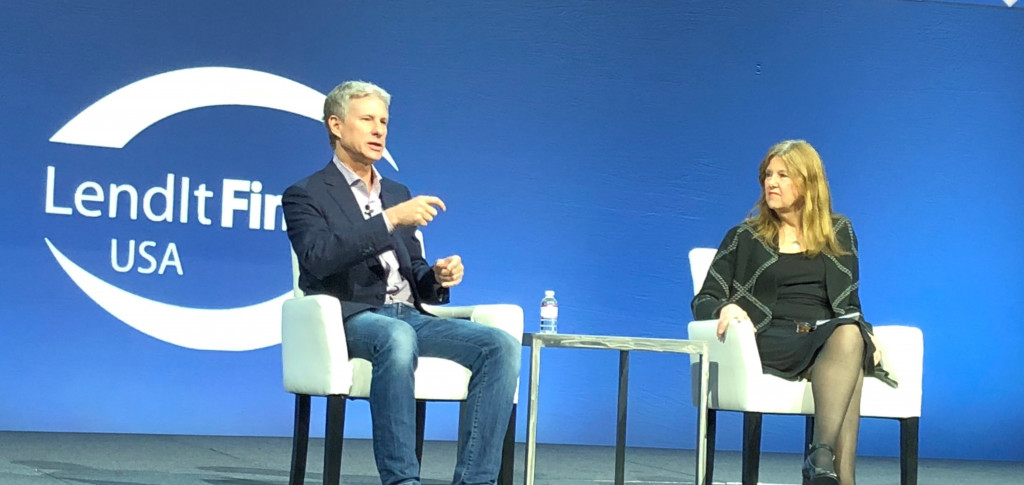
Ripple’s digital token XRP is a security, a class action lawsuit filed in the Superior Court of California contends. The 32-page complaint brought by XRP investor Ryan Coffey, says the defendants, who include Ripple CEO Brad Garlinghouse, engaged in the sale of unregistered securities, highlighting that they earned over $342.8 million through XRP sales in the last year alone, securities that were created out of thin air.
“Defendants have since earned massive profits by quietly selling off this XRP to the general public, in what is essentially a never-ending initial coin offering (“ICO”). Like the better known initial public offering (“IPO”), in an ICO, digital assets are sold to consumers in exchange for legal tender or cryptocurrencies (most often Bitcoin and Ethereum). These tokens generally give the purchaser various rights on the blockchain network and resemble the shares of a company sold to investors in an IPO. Unfortunately, these ICOs have become a magnet for unscrupulous practices and fraud.”
The complaint alleges that Ripple executives have engaged in pumping schemes meant to increase the price of XRP through attempted bribes, rumors they’ve started, and hype on social media.
The attorney representing the lead plaintiff, James Taylor-Copeland, is no stranger to cryptocurrency. His twitter username is @TCryptoLaw and he runs the website cryptolaw.net.
At LendIt Fintech last month, Ripple co-founder & chairman Chris Larsen said that the company was anti-ICO. “I think it’s a bad thing to get involved with from the founder’s perspective,” he said on stage during an interview with Jo Ann Barefoot, “because, you know, if you’re a founder and you can raise money many ways today, do you really want to do something where you’re going to have the SEC, you know, kind of threat hanging over your head for 10 years with strict liability? You just don’t want that. You know, that’s a problem.”