Articles by deBanked Staff

OnDeck Profitable, Again
August 7, 2018OnDeck posted a profit this morning, the 2nd time in the last 3 quarters. The company reported $5.8 million in net income for Q2. The average loan size decreased and the average effective interest rate increased (36.1%).
Although the Fed has been gradually raising interest rates, OnDeck’s costs of funds actually went down to 6.6% from 6.8% the prior quarter. This was due to favorable refinancing rates on the $225 million securitization and new $100 million revolving credit facility that closed in April, they said.
OnDeck originated $587 million in loans for the quarter, down slightly from $591 million in Q1.
CommonBond Issues Securitization
August 3, 2018 CommonBond, which helps people finance student loans, announced today its second AAA-rated securitization from Moody’s and DBRS. At $292 million of total collateral, the transaction is the company’s largest to date. It is CommonBond’s second securitization of 2018 and its seventh altogether. The company, which competes with SoFi, now has a total securitized loan amount to over $1.5 billion.
A mix of new and current investors participated in the transaction. Goldman Sachs served as structuring agent, co-lead manager, book-runner, and co-sponsor for this securitization. Barclays, Citi, and Guggenheim Securities also were co-lead managers and book-runners on the transaction.
“Our recent securitization continues the company’s track record of strong credit performance and consistent growth,” said Sam Luk, head of capital markets at CommonBond.
CommonBond was founded in 2011 and is based in New York.
Yellowstone Capital Funded $68.5M in July
August 1, 2018Yellowstone Capital originated $68.5 million in funding to small businesses in July, according an announcement the company made on social media. The figure was slightly larger than what they produced in June.
The top 3 sales reps funded a combined 553 deals for $21 million.
Shopify’s Merchant Cash Advance Business Grows
July 31, 2018Today Shopify released its Q2 2018 earnings report, revealing that Shopify Capital issued $68.5 million in merchant cash advances in the second quarter of 2018, an increase of 84% compared to the $37.2 million issued in the second quarter of last year. Shopify Capital has advanced nearly $300 million to merchants since they launched in April 2016, $80 million of which was outstanding on June 30, 2018.
Founded in 2004 and headquartered in Ottawa, Canada, Shopify currently powers over 600,000 businesses in approximately 175 countries. The stock trades on the New York Stock Exchange and the Toronto Stock Exchange as SHOP.
Syndication at Heart of SEC and Criminal Investigation into 1st Global Capital
July 31, 2018 New light was shed into the bankruptcy filing of 1st Global Capital this morning. The investigations by the SEC and the US Attorney’s office are related to possible securities law violations, “including the alleged offer and sale of unregistered securities, the alleged sale of securities by unregistered brokers, and the alleged commission of fraud in connection with the offer, purchase, and sale of securities.”
The company is also being investigated by several states attorneys general where individuals were solicited to invest into merchant cash advance deals.
No charges have been filed in these investigations to-date, but they have prevented the company from being in a position to raise new capital.
There are more than $283 million in unsecured lender claims. Of the 20 largest creditors, all of them are individuals or their retirement accounts.
The company’s two main executives, Carl Ruderman and Steven A. Schwartz, relinquished their powers and resigned on Friday. Darice Lang, the company’s operations director, will stay on and report to the newly appointed Chief Restructuring Officer.
The company’s 1,000+ individual unsecured creditors (syndicates) loaned money to be invested in merchant cash advances and would receive a monthly statement to see how their money had been allocated. They also had access to a portal to track their accounts.
Of the $283 million owed to the individuals, the company’s unaudited financials reflect $238 million in A/R (primarily MCAs outstanding), $21 million of intercompany accounts, and $17.3 million in unrestricted cash.
1st Global generated $22.6 million in revenue in 2017 and $29.3 million in revenue in the first 6 months of 2018.
1 Global Capital Files Chapter 11
July 30, 2018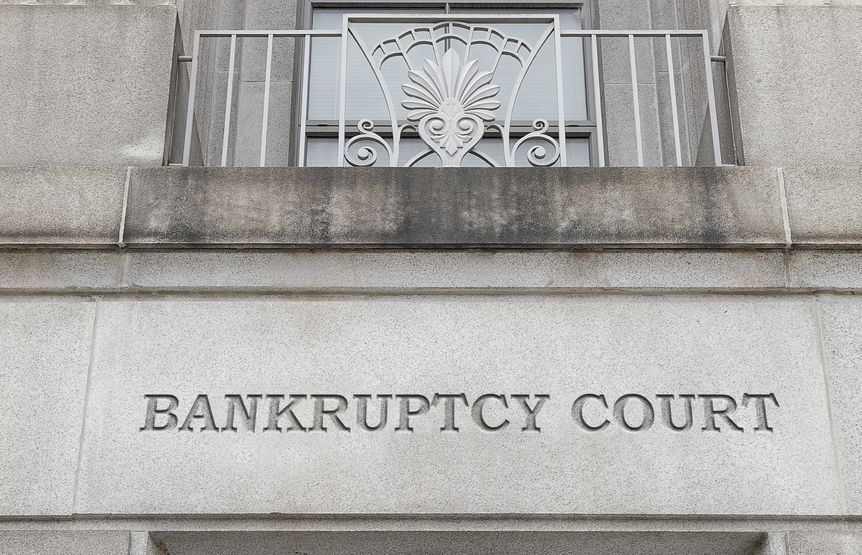
UPDATE: A joint motion filed this morning explained that the companies were forced to file bankruptcy “in order to address a sudden and acute liquidity crisis and to preserve their assets and business operations for the benefit of the individual lenders and all other constituencies. As a result of the investigations commenced by the US Attorney’s Office and Securities and Exchange Commission, with which the Debtors have been and will continue cooperating, the Debtors have ceased their pre-petition effort to raise capital.”
1 Global Capital LLC filed for Chapter 11 on Friday, according to a voluntary petition filed in the Southern District of Florida. The company’s estimated assets and liabilities exceed $100 million while the number of estimated creditors was listed as between 1,000 and 5,000.
A related company, 1 West Capital LLC, also filed for Chapter 11.
Greenberg Traurig, LLP has been retained to assist on the companies’ behalves.
In a joint motion filed this morning, both entities described themselves as “providing direct merchant cash advances to small businesses across the United States.”
Enova’s Small Business Financing Originations Drop
July 30, 2018Enova CEO David Fisher revealed last week that their small business financing operations had declined. “Our small business financing portfolio represented 8% of our total loan book at the end of Q2,” Fisher said on the July 26th earnings call. “We are remaining cautious on this space as the market rationalizes. As a result, our loan portfolio contracted 10% year-over-year and originations were down 23% year-over-year.”
Enova owns two small business financing subsidiaries, Headway Capital and The Business Backer.
While no official announcement has been made, Jim Salters, founder of The Business Backer, updated his LinkedIn profile to reflect that as of last month, he is no longer CEO of the company.
CA Bill to Revise Definition of Broker: 6/27/18 Hearing Transcript & Video (AB 3207)
July 29, 2018AB 3207 – CA Bill to Revise the definition of broker (6/27/18)
[0:00:02]
Bradford: We started as a subcommittee. We've already heard Assembly Member Arambula’s Bill AB 1289. Do we have a quorum? We’re gonna ask the secretary to call the roll and establish the quorum.
Speaker: Senator Bradford.
Bradford: Here.
Speaker: Bradford here. Vidak.
Vidak: Present.
Speaker: Vidak here. Gaines. Galgiani.
Galgiani: Here.
Speaker: Galgiani here. Hueso.
Hueso: Here.
Speaker: Hueso here. Lara.
Lara: Here.
Speaker: Lara here. Portantino.
Bradford: Quorum is established. So, we have only one other vehicle that will be heard today. That’s AB 3207 by Assembly Woman Limon and she is here present. And when you’re ready, Ms. Limon, you can make your presentation.
Limon: Great. Thank you, Chair. I wanna start off by taking the committee amendments and committing to work on any concerns addressed in the committee analysis. AB 3207 will provide important consumer protections for the thousands of consumers and small business owners who are served by finance lenders and brokers licensed under the California Financing Law. Under existing law, the definition of broker is vague and circular, leading to the confusion from lenders about which entities they can partner with when arranging loans. Further, the definition of broker in existing law was formulated long before the rise of the internet and the evolution of online lead generation. So, our laws need to be updated with this online activity in mind. Lead generators provide valuable marketing services to a wide range of industries and this bill contains a specific exemption clarifying that distribution of marketing materials or factual information about a lender is not a broker brokering activity. However, many online lender generators that serve the lending industry provide more than just marketing services. These entities act as brokers when they bring borrowers and lenders together to arrange a loan based on confidential data provided by a consumer or small business owner. This bill will allow online lead generators to continue to operate in California. Simply, this bill requires 3 basic things from these companies. One, get a business license from the State Department of Business Oversight; two, provide transparent disclosures to the customers; and three, obtain your customer’s consent before selling and transmitting their confidential data. Arguments from the opposition that this bill will cause lead generators to leave the state raise an important question. Why would a bill focused on licensure and transparency cause a small business to leave a very lucrative California market? Over the past 5 months, I have worked extensively with lenders and lead generators to ensure that this bill appropriately addresses the consumer protection concerns in our lending markets without placing unnecessary burdens on the businesses that work in this area. None of these companies have threatened to leave the state. In fact, many of them have applauded the efforts to bring clarity to existing law and bring bad actors out of the shadows and into the light. This bill has the support of consumer and commercial lenders, the Department of Business Oversight, and a coalition of consumer advocates who are here today to voice their support. With me, I have Adam Wright, senior counsel in the enforcement division in the Department of Business Oversight, to answer any questions from the committee.
Bradford: Witnesses and support, please come forward. State your name, organization.
Martindale: Chair Member, Suzanne Martindale with Consumers Union. We do support this measure and really appreciate the author's leadership in seeking to ensure that our laws stay up to date in terms of evolving technologies. Of course, a lot of lending now happens online and the business models have shifted, but that does not mean that consumers are not, you know, any less entitled to receiving protections when third parties acting on behalf of lenders are marketing to them and helping facilitate the origination of loans and also in particular handling sensitive information and the kinds of things that we wanna always ensure are protected. So, we understand that there’s potentially more discussion to be had about finding the sweet spot here, but I really, really think that the time is now to move forward and ensure that the DBO has the enforcement tools that it needs to properly regulate the space so that consumers who receive online loans are no less protected than those who get them in brick and mortar stores. So, for these reasons, we support and request an aye vote.
Bradford: Thank you. Additional witnesses and support.
Coleman: Good afternoon. Ronald Coleman here on behalf of the California Low Income Consumer Coalition (CLICC). Also here in strong support.
Bradford: Thank you.
Aponte-Diaz: Hi. Graciela Aponte-Diaz, Center for Responsible Lending. Also in strong support.
Bradford: Thank you.
Joyce: Hello. Pat Joyce on behalf of Credit Karma. Credit Karma actually has a neutral position on the bill and wanted the opportunity to thank the author and sponsors of the bill for working with us to address our concerns and allow us to remove our opposition. So, thank you.
Bradford: Thank you very much. Next witness.
Preity: Sumanta Preity on behalf of OnDeck Capital. In support of the bill.
Bradford: Thank you.
Glad: Margaret Glad on behalf of NerdWallet.
[0:05:01]
We’re also in that tweener category. We’d been working very productively with the author's office and particularly Mr. Burdock. We appreciate their amendments that they’ve made to date to address NerdWallet’s concerns. We have a couple of more issues related to disclosures as the bill currently stands. They are mandated disclosures that don't represent our business model. We’d have to tell consumers we’re doing things we aren't doing. So, we're continuing to work with the author and his and her staff to resolve those issues. We appreciate the committee's thorough analysis and all the work and hope to come to resolution of our remaining issues.
Bradford: Great. Thank you.
Pappas: Emily Pappas on behalf of Lending Tree. Similar position to what Margaret just said. Our client has generally supported the framework on this bill. We virtually had an opposed and less amended position due to some of the disclosure requirements. However, we learn from the author's office today that they'd be willing to take the amendments that relieve us of our concerns. Therefore, we’ll switch to a neutral position.
Bradford: Thank you. Any additional witnesses in support? Witnesses in opposition.
Quinton: Hi. David Quinton on behalf of the Online Lenders Alliance. I do have a clarifying question. We are in strong opposition as the bill was in print. We've heard discussion about amendments. If all of the amendments that were in the analysis were accepted, I think that moves us to neutral, but we're not clear on that at this point. So, I’m not sure how to proceed.
Bradford: Those are the amendments that we’re referring to that weren’t announced as well as we’re addressing the concerns that we’re raised as well in the bill.
Quinton: Would that be possible so we can—
Bradford: I’m sorry?
Quinton: Oh, she was— I’m sorry. I was listening.
Bradford: Ms. Galgiani.
Bradford: Yeah. Yeah. If you want to, Ms.—
Quinton: Okay. Thank you.
Galgiani: I would just like to clarify with the author the amendments that have been agreed to and looking through the analysis and then trying to complete which all of those are. I wanna make sure that we're on the same page; the author, the members, the opposition. And there are two concerns that I’ll start with that we don't have expressed amendments for, but we're hoping that you'll work with the opposition and your stakeholders over the July break and we can come back and address those. And one is dealing with lead generators being designated assets as opposed to being referred to as brokers and that those lead generators hold the generator licenses. That's a concern. And the other concern is imposing the same standard of liability on lead generators for the acts of those from whom they buy leads as the bill imposes on lenders for the acts of lead generators from whom they buy leads.
Limon: So, I can say that we continue the conversations. it's definitely not a problem. I think that, you know, this bill has gone through 6 rounds of amendments. And so, I think that's reflective of the fact that we continue to have the conversation. On the two separate license definitions, what we know is that creating two separate license licenses for brokers and lead generators would require many companies to attain two separate licenses from the DBO. Additionally, drafting a separate regulatory framework for lead generators would also add confusion for the businesses that would need to decide whether they need a lead generator or a broker license. The bill does require to have one license right now. And the bill provides specific disclosure requirements that makes sense in terms of the online generation world. So, that's kind of where we've been thinking about it in terms of that. In terms of the lender liability, the bill and existing law hold licensees accountable for their own actions. So, both the lenders and the brokers are liable for violations of the law that occur within their companies. For licensed brokers who choose to obtain referrals from unlicensed third party, the bill requires those brokers to establish policies and procedures intended to ensure that those unlicensed parties uphold the consumer protections provided by the law. The issue of the lender liability raised in the analysis is a red herring. Just as existing current law, the bill would continue to practice the practice of holding licensees accountable for their own violations. And I just wanna again say that that's current law.
Galgiani: Okay. So, am I hearing—
Limon: You are hearing that we are happy to continue those conversations. You brought up the two concerns and I wanted to share the feedback on those two concerns.
Bradford: But we're still open to move forward in having— resolve our differences as it relates to the two— those two concerns. We’re not gonna split the baby here today, but we’re gonna try to figure out how to move forward on those concerns.
[0:10:03]
So, we have that commitment as we move forward to address it in a way that we all come together. Am I correct?
Limon: You have the commitment to continue the conversation to try to figure out a way to address it.
Bradford: Yes, sir.
Quinton: So, on the issue of the two remaining issues, so we thank the author for taking the amendments as presented by your consultant in the analysis. But of the two remaining issues, I believe the broker issue is one that we can work with. That's fine. The devil is in the details. The problem is with this issue, as you know, the details have details. It’s a very, very complex issue. So, that’s our one concern, but we can work with the broker issue. I think we’re okay with that. That's fine as it is. However, being held for strict liability for the actions of a third party affiliate is a very far reaching legal standard and we have really serious concerns with that. So, we just wanna clarify if it is still that we are held with strict liability for the actions of a third party affiliate like we would still have to oppose the bill with that. So, I just want clarification on that, Mr. Chairman.
Bradford: Well, as far as that concern, I'm hoping we're gonna sit down at the table again during the break and whittle that out and figure out how we come to consensus. And I understand your concerns and that's why they're still listed as concerns. They haven't been amended in the bill. But hopefully, going forward, we will find some solution or amendment to address that for you.
Quinton: So, I think at this point— to finish my statement and I’ll hand it over very briefly to Jason— at this point, I would say that we would still be opposed until we can see that amendment because that is a very, very serious issue that could hold us liable over issues we have no authority over. And I’d like to introduce Mr. Jason Romrell who is with Lead Smart, one of the leading lead generators in the State of California.
Romrell: Thank you. Chairman and committee members, thank you for allowing me to speak on AB 3207. The thing that I want to make clear, we’re a California-based lead generator. We have a sister company that has a DTL and CFL license. We’ve had those for the last 5 years. Our interest in this bill is not to oppose to bill. It’s to make sure that the good lead generators, the lead generators who function ethically are still allowed to function in fintech environment that is becoming the movement. If we don't do that, we are putting consumers at a huge disadvantage. In fact, we’re putting them at more risk than they’re at now. We have been involved in this discussion with the DBO, with members of the legislature, and even on the federal level for many years. So, the role that we play as a good ethical lead generator is a very important consumer protection role. We have the same objective as Assembly Member Limon. We have the same objective as the DBO. It's to protect consumers. So, the issues that we were facing prior to the amendments being put forward were in the details. There is no opposition to the concept. We want to be here to protect consumers, but it is the details. So, the one thing I do want to mention is lead generation is complex. There a lot of layers to it. It is not a one size fits all activity. And that is one of the challenges in crafting good legislation. So, I'm not going to go into the details that we had issues with because I think, in light of these potential amendments, everything has changed. But what I do wanna point out is the distinction between the good lead generators and the bad lead generators. The good lead generators already do a lot of what is in AB 3207. We get consent. We vet our lenders. We make sure the marketing message that goes to the consumer is accurate, truthful, and proper. We do a lot of that work, and it's time consuming, and it takes a lot of money and energy. The bad lead generators do not care. So, the risk we run with legislation is if we over legislate the good guys. We will. And Assembly Members Limon asked the question “Why would a small business leave California?” If we can't function without the threat of class action lawsuits, if we literally cannot comply with the details of a bill, we’ll move to other markets. If we do that, consumers are injured severely. So, my plea to this committee and to Assembly Member Limon is we are here. We are invested in the process. We want to get it right. We don't want to oppose the bill. We want to make it work for us and for California consumers.
[0:15:02]
And that is our position, is to protect the people that we live and work with everyday.
Bradford: Thank you. Any additional witnesses in opposition?
Bauer: Paul Bauer on behalf of Elevate. I’m kind of in that tweener category that other people have step forward in. I just wanted to lend our voice to those of Mr. Quinton and Mr. Romrell who presented. And we also wanna see the bill be perfected as we move forward. So, I look forward to that work.
Bradford: Thank you. I appreciate it.
Sunley: Alex Sunley on behalf of the Small Business Finance Association. In opposition.
Bradford: Thank you.
Damar: Hi, Dominic Damar here on behalf of Innova. I share Mr. Bauer’s and [0:15:49][Inaudible] position relative to the amendments and look forward to working and hearing from the author on changes to be made. Thank you.
Bradford: Thank you.
Conaway: Good afternoon. This is Jerry Conaway on behalf of Lead Flash. And we're currently in opposition, but looking forward to seeing the amendments. And I'm working with the bill's author to make a great bill. Thank you.
Bradford: Thank you.
Smeltzer: Thank you, Mister Chair and members. Jason Smeltzer here on behalf of the California Financial Service Providers. Also the same position as Mr. Quinton. I would love to see the assembly member and work this out and remove our opposition then.
Bradford: Thank you.
Schriver: Rachel Schriver with the TMX Finance Family of Companies. We’re opposed to the bill in print, but certainly optimistic about finding a path forward.
Bradford: I appreciate it. Any additional witnesses? Any tweeners? All right. We’ll bring it back to the committee. Any questions by the committee members? Mr. Ric Lara. No. Oh. Oh okay. Ms.—
Lara: I just wanna move the bill, but I know Ms. Galgiani—
Galgiani: I wanted to finish and—
Bradford: Yes. Oh, go ahead, Ms. Galgiani.
Galgiani: We’ve done a lot of work on this bill—
Bradford: Yes, we have.
Galgiani: …today and I’ve been in two other committees today since 9 o’clock this morning. So, I wanna make sure we’re on the same page. So, the second item amendment that would provide exemptions from lead generator definition for administrative and clerical tasks, credit bureaus, internet search engines, and social media platforms, has that amendment been agreed to? That's on Page 14B in the analysis. Page 14B addresses the concern. And so, the amendment would be to provide an exemption for those clerical staff, etc.
Wright: And this is Adam Wright on behalf of the DBO. When it comes to that request, we do not believe it's necessary because of the way that the activities are already drafted. We do not believe that it covers search engines or social media advertisements because those two mediums of advertisements do not send actual consumer data to lenders and they are not paid on a per successful loan basis. Thus, they would not be caught up on the activities under a broker.
Galgiani: Okay. Okay. So, what is the amendment that you're taking then because it sounds like no? Am I right or— Maybe we should start with the author sharing with us the amendments that she’s taking because—
Bradford: You know, we’ve spent a whole lot of time in all due respect to the author and to those who are opposing this bill, but a lot of time have been invested here. And we wanna have a vehicle that first protects consumers, but also allows the industry to thrive and survive here in California. And I think the amendments that we've put forth I thought we had understanding and a commitment that we're gonna continue to move forward and keep this vehicle alive and understanding that we have some kind of agreement, but—
Limon: So, here's the deal, right? So, if you look on Page 13 and it says amendments and it describes some of the issues, but there's not specific amendments. So, according to the author’s office, the use of the word “expresses” intends to [0:18:54][Inaudible] consent. Right? We can go on. And so, I think that that’s what we have to continue talking about. Because in the areas where there is very specific things, it’s easier to say yes or no. In the areas where it talks about a concern, but it doesn't give you actual language, that's where we're trying to figure out how.
Bradford: And we’re not gonna find that extra language here today. What we're trying to get clarity on is what has been put forth in analysis those concerns that were raised as well as those amendments that we suggested that we get agreement on that today and we’ll work out the details moving forward with the understanding that we come to agreement, we’ll pull this bill back to the committee.
Limon: Yes. We can provide clarity for all of these amendments. We are just looking for actual language.
Galgiani: Are we drafting those amendments in committee? Committee staff will draft those amendments.
Bradford: Yes.
Limon: Can we draft the amendments and provide them to you?
Bradford: No. I think this committee will work in concert with you in drafting those amendments. That's our understanding of finding common ground on what we have already in analysis.
[0:20:01]
Limon: As long as our office and as the author I’m able to also be part of that, I—
Bradford: That’s our understanding that we’re gonna work in collaboration as we move forward on this thing.
Galgiani: Okay.
Bradford: Galgiani.
Galgiani: Okay. Next, item #4 on my list of concerns in amendments, define term “express consent” and provide the express consent provided by a prospective borrower to one entity satisfies the requirement for all other entities that purchase a consumer's confidential data to obtain express consent and that is addressing the concern outlined on Page 13A of the analysis.
Limon: So, back to the concerns, we’re happy to have a conversation. I’m trying to go to the amendments. So, we are happy to clarify it. So, here’s the confusion, right, that you have some amendments and we've agreed to take those and to work together and then you have the concerns. And the concerns I think need a discussion. We weren't prepared to go back and forth on the concerns here.
Bradford: We’re not trying to do that. So, we're trying to get clarity on those amendments that have been identified, but also address those concerns moving forward as well the two areas of concerns that are being raised so we can keep this vehicle alive and continue our discussion. So, we're—
Limon: We’re I think on the same page that the concerns we need to keep talking about the amendments, we are agreeing to work together on language.
Bradford: I understand that. We have specific amendments that we’re trying to get agreement on today. The concerns, we can work out. You know, that's going forward, but the amendments that we have before, today, we’re trying to get clarity on it. Senator Lara.
Lara: Without skipping over Senator Galgiani, my understanding is that she's already agreed to the amendments.
Galgiani: And we're trying to clarify what those amendments are—
Lara: Okay.
Galgiani: …specifically so that we don't just leave it to the fact that there's going to be a discussion—
Lara: Understood. Understood.
Galgiani: …in July. We want clarity on very specific amendments.
Limon: I started by saying I agree to the amendments. And so, if there are, you know, clear amendments, that's easy because there's language. If there's not language, we have to have a discussion. And what I heard was that we were simultaneously gonna draft those, that language.
Galgiani: And I'm trying to go through those amendments item by item so that we're on the same page and the two that I outlined—
Bradford: Ms. Galgiani, I think what we’re gonna have discussion on and negotiations is on the concerns, but the amendments or the amendments that we’re trying to get commitment on today, the amendments that we have that we're in an analysis that were clearly spelled out in analysis, you're taking those.
Limon: Yes.
Bradford: Great.
Galgiani: And the committee staff is drafting this.
Bradford: Yes. Yes.
Limon: With collaboration from our office so we—
Bradford: That’s right.
Limon: …can draft them together.
Galgiani: Okay. Okay. So, I’ll continue to the fifth one. Requiring that the entity that collects a prospective borrower’s confidential data to provide that borrower with the disclosure described in section 22348. So, in essence, the original point person who collected the personal information is the person who is required to provide the disclosure.
Limon: Uh-huh.
Galgiani: Okay. Number 6, add two additional statements to the disclosure described in section 22348 (A) lenders to whom the prospective borrower is referred may separately contact the prospective borrower and (B) lenders to whom the prospective borrower is referred may separately contact the prospective borrower.
Limon: Yup.
Galgiani: Okay. Number 7, delete the disclosure required under Section 22338.5.
Limon: So, wait—
Galgiani: Okay. And that’s on Page 23—
Limon: You know, I have agreed to the amendments whether it’s clear language. And so, yeah.
Bradford: Okay.
Limon: I think that this feels like it’s leading into a conversation and I just— We wanna have that conversation.
Bradford: Well, I’m gonna go on record right now. The amendments that we have before that was in analysis, I wanna be clear those are the ones you’re agreeing to and we’ll continue to work out the concerns. Am I correct?
Limon: Yes.
Bradford: And if we deviate from that, we will pull the bill back to this committee.
Limon: Right. And we will work together on drafting the language so that it's not just— Right?
Bradford: Drafting the language as it relates to the concerns. Yes. If we all have agreement on that—
Lara: [0:24:51][Inaudible]
Bradford: Exactly. So, we’re taking the amendments that are in the committee’s analysis.
[0:25:00]
That’s the motion you're putting forth, Ms. Galgiani.
Galgiani: Yes.
Bradford: Yes. Yes. Okay. Great. Any additional questions or comments by committee?
Speaker: As amended.
Bradford: As amended. Ms. Limon, would you like to close?
Limon: Unlicensed brokering activity poses a risk to consumer’s financial well-being and this bill will ensure that California's financial regulator can enforce the consumer protections under the California Financing Law. For this reason, today, I ask you for an aye vote.
Bradford: So, we have a motion and it’s do pass as amended to appropriations based on committee analysis. And we will move forward in addressing the concerns as we move forward. Am I correct? So, that’s the understanding then, Secretary, of our amendment. Madam chief consultant, that’s our understanding? Great. All right. Do pass as amended and committee analysis. Madam Secretary, please call the roll.
Speaker: Assembly Bill 3207, motion is do pass as amended to appropriation. Senator Bradford.
Bradford: Aye.
Speaker: Bradford Aye. Vidak.
Vidak: No.
Speaker: Vidak no. Gaines. Galgiani.
Galgiani: Aye.
Speaker: Galgiani aye. Hueso.
Hueso: Aye.
Speaker: Hueso aye. Lara.
Lara: Aye.
Speaker: Lara aye. Portantino.
Portantino: Aye.
Speaker: Portantino aye. We have 5 to 1.
Bradford: All right. Your bill is out.
Limon: Thank you.
Bradford: Thank you. And we look forward to our continued discussion and work on this issue.
[0:26:28] End of Audio