Articles by deBanked Staff

OnDeck Reports Record Origination Volume in Third Quarter Report
November 6, 2018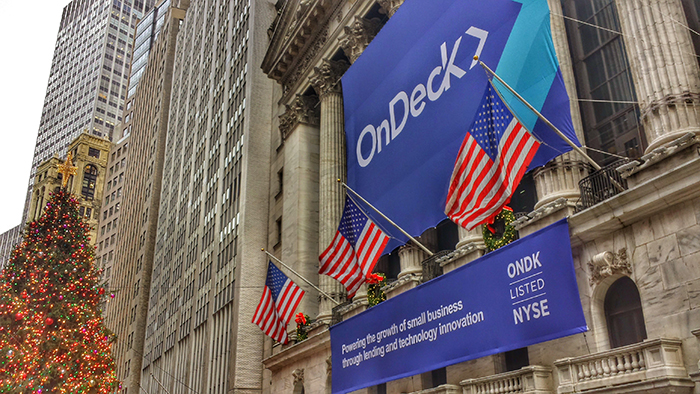 Today, OnDeck released its third quarter earnings report, which revealed origination volume of $648 million, a record high for the company and an increase of 22% from a year ago. OnDeck recently passed the $10 billion mark in total originations. The average term loan size of $56,000 remained largely unchanged from last quarter.
“Lending volume from our strategic funding advisor and referral partner channels continues to build, reflecting growth at our network of partners and alignment between the quality of applications coming in and our risk appetite,” said OnDeck CEO Noah Breslow, “…[and] we were pleased that we saw increased website traffic leading to higher applications.”
Gross revenue increased to $103 million, up 8% from the previous quarter and up 23% from a year ago. This was driven by higher Interest income due to portfolio growth and higher yields, according to the company earnings statement.
In the middle of October, OnDeck announced the creation of ODX, which will focus on providing an online lending platform to banks to help them serve their clients more efficiently. At the end of the month, and coinciding with the Money 20/20 conference, OnDeck announced that PNC Bank was ODX’s first customer. ODX grew out of a successful partnership that OnDeck has developed with Chase bank, starting in 2016.
In response to a question after this morning’s earnings call, Breslow said that about $10 million is being spent on startup costs and infrastructure for ODX, and that the revenue model will be slightly different depending on the bank client.
“The revenue model [for ODX] does differ a bit between banks,” Breslow said. “But generally speaking, there is a technology licensing component, there is a professional services or customization component and then there is a volume-based component.”
National Funding Announces New President
November 5, 2018 Today National Funding announced that Joseph Gaudio has been promoted to President of the company, reporting directly to founder and CEO Dave Gilbert. Previously, Gaudio was Chief Operating Officer.
“I can’t think of a more exciting time to be a part of the business and the SMB lending industry,” Gaudio said. “I look forward to working closely with our talented senior leadership team to further our mission of helping small businesses across the U.S. secure the critical capital they need to grow their businesses.”
This announcement comes just weeks after National Funding acquired QuickBridge, another alternative lender based in California.
Prior to joining National Funding, Gaudio was the CEO of Superior Mobile Medics for five years. He led the sale of the company to Quest Diagnostics and then served as part of the integration of the acquisition for Quest.
“Since joining National Funding in 2017, Joseph has helped propel the company to one of the top 10 alternative SMB lenders in the nation, and has been a driving force during our rapid growth,” Gilbert said. “Joseph’s strategic thinking capabilities, strong business acumen and his more than a decade of industry experience geared towards the small to medium business market provides critical firepower as we build National Funding into the leading brand serving the financial needs of Main Street America.”
Founded in 1999, National Funding is based in San Diego and employs roughly 230 people. It now also owns QuickBridge, with headquarters in Irvine, CA and a small satellite office in New York. The QuickBridge name and most all of its 100 employees remained in the recent acquisition. National Funding has provided more than $3 billion in capital to over 40,000 businesses nationwide with loan volume expected to exceed $500 million this year.
Big MCA Deal Was Really Just a Massive Ponzi Scheme
October 30, 2018 Bank deposits were apparently the entire business model for Daniel Rudden, a 72-year old from Denver who fashioned himself the owner of a life insurance company called Financial Visions. In reality, there hadn’t been any such business in almost a decade. In July, Rudden sent out a mass email admitting that his whole operation was actually a Ponzi scheme that he’d been running since around 2010 and that it had finally come undone. In his wake, he left more than 150 investors duped out of $55 million. Some of those investors were retirees who had entrusted him with their life savings.
And that’s not all. Court records show that in addition to SEC and DOJ charges against him, a series of judgments from merchant cash advance companies have piled up in recent months with defaults exceeding a combined $1.3 million. One of those judgments was for more than $500,000 from a single funder. deBanked counted at least 8 MCA funders that had been fooled.
Rudden told CBS News that he spent all of the money and has only $4,000 left.
“By the end, I would have taken money from almost anyone who breathes. No one was off limits,” Rudden wrote in an email to duped investors. “I purported a sale of the company to stall for more time, in fact there is no company to sell.”
In addition to civil securities penalties, Rudden is facing 20 years in prison for fraud.
deBanked Email Campaign Tips
October 30, 2018Sending out an email campaign? Here are some helpful guidelines we’ve put together from experience:
1. Choose a well-crafted subject line. If your subject line doesn’t speak directly to your audience and entice them, they won’t open your email and nothing else will matter. Assume your recipient gets hundreds or thousands of emails per day so even if they recognize the sender and subscribed to them, they might not feel compelled to open the email unless they’re convinced they should. Assume that they also receive a lot of spam so something like the subject line “Best deal of the year” could be glossed over by the ever-distracted eye that can’t tell if the email is about Black Friday shopping discounts or their funder’s newest commission structure.
Try to be as specific as possible in as few enticing words as possible. “ISOs, best deal of the year” tells the recipient this is a deal for ISOs, not a deal for footwear at Macy’s.
Consider also: You have to do it in a way that won’t trip spam filters. Even if the recipient’s mail server regularly gets email from the sender, a subject line in all capital letters or lots of dollar signs could send that email to the spam folder anyway. Lines like “Make lots of money” or “Get rich” have a lower chance of making it to the destination. Mail servers remember email they don’t like so one poorly worded subject line today could convince mail servers that your future emails, no matter how mundane, should go there too. So be careful.
2. Draft your campaign in HTML. A standalone image might look really cool but that presents two problems.
- If the recipient has images in emails blocked by default they will just receive a blank email. NOT GOOD.
- Spam filters may suspect you are trying to hide your message in a photo rather than in text where the content can be analyzed. As a result, your email and future ones may go right to the spam folder.
Consider also: That HTML comes in many versions that is interpreted in various ways by different mail clients. Stick to HTML 4 (do not use HTML5) and use TABLE tags instead of DIV tags (DIVs are ignored by some email clients).
3. Cap the maximum width to 700 pixels. Remember that your recipient may be reading your email on a mobile device or not have their email client window fully extended on their screen. To prevent loss of readability, think narrow, not wide.
4. Use still images, not animations. Use of images in emails are great, but bear in mind that unfriendly email clients like Microsoft Outlook will not animate an animated .gif file. Instead, it will only display the first frame of the animation as a still image. So if you use animations, make sure the first frame is something you can live with if your recipient is viewing it using Microsoft Outlook.
5. Don’t use huge image files. The perfectly crisp high resolution image might look fantastic but if it’s multiple megabytes, mobile phone users not connected to WIFI may close your email before it even loads. So keep your images to 72 dpi and as little memory as possible.
6. Cross-compatibility. Email looks great on Gmail? That’s a start, but you’re not done. Email clients interpret design cues and HTML differently. Every email campaign needs to be checked in Gmail, Apple Mail, Microsoft Outlook, and mobile devices.
7. Email design programs. Some design programs do a decent job of producing HTML-based email-ready campaigns. Others might seemingly look okay but place thousands of unnecessary lines of junk code in your campaign’s HTML that either cause cross-compatibility problems, or worse, exhaust the email client. Gmail, for example, will just stop reading the code if it’s too long and hide the lower part of your campaign design from your recipient’s view. You definitely don’t want that to happen.
8. Be careful what you say. Spam filters are analyzing more than just subject lines. They want to know what you’re emailing about. Terms like Loan, Cash Advance, Money, Get Paid, might make complete sense in your everyday business marketing but spam filters hate these words even if they trust the sender. So limit your usage of them or come up with other terms.
9. Be work-appropriate. They say sex sells, but not here, do not incorporate sexually suggestive phrases or imagery into your campaign.
10. Be legal. Consider that a government regulator could one day get ahold of your email campaigns. Is your campaign truthful? Is what you’re saying and offering legal? If your email isn’t regulator-ready, it’s time to revisit.
11. Allow time for testing, suggestions, and corrections. Always have your campaign fully completed at least two business days in advance of its scheduled delivery. That will allow enough time for testing and to apply changes as needed.
12. Place BIG and obvious calls to action. Your email was perfect and the recipient is ready to communicate with you, but their ever-distracted eye did not see the tiny little text hidden at the bottom that said “email us.” As a result, they closed the email and forgot all about you. Oops!
Every campaign must have a clear actionable.
- EMAIL US HERE
- CALL NOW
- CLICK TO LEARN MORE
Some people are too shy to pick up the phone and others don’t have the hand energy to type out an email saying they’re interested without any promise of when they’ll hear back, so include as many actionables as possible and make them as VISIBLE as possible.
Consider that: Some users automatically assume the top image of an email will be actionable. Meaning if they click it, they expect something to happen like the loading of a landing page. Scrolling down requires work and effort so place as many actionables as high up as you can.
13. Landing page. If your actionable is going to direct the recipient to a website, try not to make it your home page. The best way to lose the user is to send them to a generic home page with a navigation they are not familiar with. If possible, create a simple page that uses language similar to your email campaign with a SHORT web form or highly visible listing of your phone # or email address.
14. Smarter. Not more. If you’re not satisfied with the results of your campaign, having more subscribers the next time around may not be the answer to your woes. Review the above the steps and make changes where appropriate and try again. 🙂
Shopify Capital Issued $76.4M in Merchant Cash Advances in Q3
October 25, 2018Shopify Capital, Shopify’s funding arm, issued $76.4 million in merchant cash advances in the third quarter, the company revealed. That brings the total to $375 million advanced since April 2016.
Overall, the company reported Q3 revenue of $270.1 million and a net loss of $23.2 million.
The company operates an e-commerce platform for online stores and retail POS systems.
OnDeck (ODX) Adds PNC Bank as Second Bank Client
October 22, 2018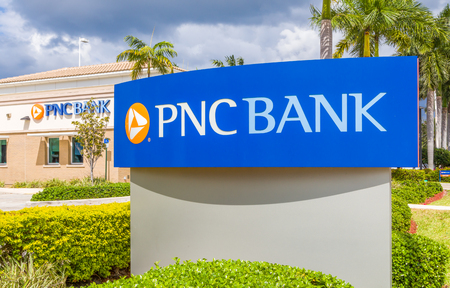 PNC Bank announced today that in 2019 it plans to offer fully digital business lines of credit by using OnDeck’s Platform-as-a-Service solution, ODX, a new subsidiary of the online lender.
Last week, OnDeck announced the creation of ODX, which is an OnDeck subsidiary that will focus soleIy on helping banks become faster, more efficient online lenders to small businesses. A successful partnership with Chase bank in 2016 prompted OnDeck leadership to created a separate entity and PNC Bank is ODX’s first major client.
“We decided strategically this year to really make a big bet… [and be a] company that’s going to support many banks,” OnDeck CEO Noah Breslow told deBanked.
“Out Of State” MCA Funder Not Precluded From Entering COJs in New York, Court Rules
October 18, 2018In May 2017, Funding Metrics (FM), a small business funding provider, entered a signed Confession of Judgment (COJ) in Westchester County, NY against a California-based customer. The Court issued a judgment a mere five days later.
That should have been the end of it, but on July 26th, the customer hired law firm White & Williams to challenge the judgment’s validity on the basis that New York Business Corporations Law § 1314 limits the circumstances in which a non-resident corporation may bring an action or special proceeding against another non-resident corporation. Neither FM nor the customer were based in New York nor had any connections to New York whatsoever, they alleged, which precludes such a judgment from being entered there. But it’s doubly bad, defendants argued, because the judgment by confession statute in New York is unconstitutional as it waives the defendants’ due process rights.
The Honorable Terry Jane Ruderman was unmoved by the arguments, pointing out that not only was FM registered to do business in New York and claimed to have an office there but that defendants incorrectly relied on § 1314 because a Confession of judgment is not an action, nor a special proceeding.
[…]That statute does not preclude the judgment entered here, entered by confession of judgment. By such a document, a person “agree[s] to the entry of judgment upon the occurrence or nonoccurrence of an event” (see Black’s Law Dictionary [10th ed. 2014]), giving the holder a remedy that does not require proof of the nature of the transaction or allow for interposing defenses (see Soler v_Klimova, 5 AD3d 294 [1st Dept 2004]). Therefore, in entering the judgment, the court does not inquire into the underlying transaction, including with regard to such matters as the home state of the corporate plaintiff.
Moreover, while the Business Corporations Law § 1314 applies to “maintaining actions or special proceedings,” the statute providing for judgments by confession does not require commencement of an action; it clearly states that “a judgment by confession may be entered, without an action, … upon an affidavit executed by the defendant” ( CPLR 3218 [emphasis added]).
Defendants’ constitutionality argument was rejected as “meritless” and all of their other arguments not discussed in the order were explicitly rejected.
You can download the decision here.
The case # is 57737/2017 in Westchester County in the New York Supreme Court. The law firm representing plaintiff Funding Metrics was Stein Adler Dabah & Zelkowitz.
Sean Murray to Moderate Best Practices Panel at New York Institute of Credit Event
October 15, 2018deBanked President and Chief Editor Sean Murray will be moderating a best practices panel at the New York Institute of Credit Event on October 16th. The event is also supported by the IFA Northeast, the Alternative Finance Bar Association, and deBanked.
The subject of the panel is to discuss best practices when dealing with different financial firms, namely ABL, factoring, and merchant cash advance. The panelists are:
- Bill Gallagher, President, CFG Merchant Solutions
- Bill Elliott, President, First Business Growth Funding
- Raffi Azadian, CEO, Change Capital
- Dean Landis, President, Entrepreneur Growth Capital