
Archive for 2018
Wellen Makes the Inc.5000 List
August 15, 2018
Chicago — August 15, 2018 — Inc. magazine today listed Wellen Capital on its annual Inc. 5000, the most prestigious ranking of the nation’s fastest-growing private companies. The list represents a unique look at the most successful companies within the American economy’s most dynamic segment— its independent small and midsized businesses. Companies such as Microsoft, Timberland, Vizio, Intuit, Chobani, Oracle, Zappos.com, and many other well-known names gained their first national exposure as honorees of the Inc. 5000.
“We’re so pleased to be included in the Inc. 5000. This honor reflects the hard work our team has put in not just this past year, but over the last several years that has driven the revenue growth that earned us a spot on the list.” said Wellen President Jim Teppen. “We couldn’t have done it without our sales partners, key vendors, and financial backers” added Teppen. “Those relationships provided crucial support in our growth over these past few years.”
The Inc. 5000 is a list of the fastest-growing private companies in America. Started in 1982, this prestigious list of the nation’s most successful private companies has become the hallmark of entrepreneurial success. Complete results of the 2018 Inc. 5000, including company profiles and an interactive database that can be sorted by industry, region, and other criteria, can be found at www.inc.com/inc5000.
About Wellen Capital:
Since 2012, Wellen (f/k/a Gibraltar Capital Advance) has been providing working capital solutions to small and mid-sized businesses across America. Headquartered in Chicago, Wellen supports American business growth with its capital advance product – allowing customers to access between $10,000 and $250,000 in short-term working capital.
Contact:
Steven O’Connor
224.374.1519
soconnor@wellen.com
Why is P2P Lending Unraveling in China?
August 14, 2018 Back in 2014, peer to peer (P2P) lending in China was all the rage. Multiple P2P platforms were launching daily, with investors and borrowers were eager to participate. According to South China Morning Post, the P2P lending frenzy hit its peak in 2015 when about 3,500 P2P businesses were operating.
Now, these same businesses are collapsing at nearly the same speed with which they sprung up. According to South China Morning Post, in conjunction with Reuters, 243 online lending platforms have gone out of business since June. And Chinese investors who can’t get their money out of the companies have taken to the streets. (Although, like with most protests in the country, the government has successfully quashed any sizable demonstration.)
“The trouble is that everything is coming to head this summer and millions of investors are trying to get their money out at the same time,” said Peter Renton, co-founder of the LendIt Fintech, which organizes several international events including an annual conference in China for fintech and online lending.
 “Most people think that even with a big market [like China], it can only sustain a few hundred platforms at most,” he told deBanked.
Renton said that this implosion is largely the result of lax Chinese regulation for a number of years. But the Chinese government is now making up for it. In November 2017, China’s central bank said that no new licenses would be issued to online lending platforms. And with Chinese P2P platforms failing daily this summer, the central government has proposed new measures, according to Xinhua, the official government news agency. These proposed measures include setting up “communications windows” to respond to requests by P2P investors, as well as conducting compliance inspections on P2P companies and putting on a blacklist in China’s social credit ratings system any online borrower who tries to avoid P2P loan repayments.
The continuing collapse of P2P lending platforms in China is particularly notable because it affects so many people. According to data used by Reuters, the size of China’s P2P industry is significantly bigger than the rest of the world combined, with outstanding loans of 1.49 trillion yuan, or $217.96 billion.
“We all knew the party was going to end at some point and it looks like 2018 will be the year of reckoning,” Renton wrote in a July 30 story.
Yet in a video aimed at Chinese viewers released at the same time, he said: “I think in a couple years time, when we look back at this year, we’ll see that this was necessary — painful but necessary. The industry is going to come out the other side. The strong platforms are going to survive, the weak ones are not. And I think the industry will be far better off once this all plays out.”
Underwriting 101—Veteran Funders Share Tools of the Trade
August 12, 2018For brokers, funding partnerships are critical to success. But making the most of these connections can be elusive.
“Transparency, efficiency and a thorough scrubbing on the front end can help the whole process,” says William Gallagher, president of CFG Merchant Solutions, an alternative funder with offices in Rutherford, N.J. and Manhattan.
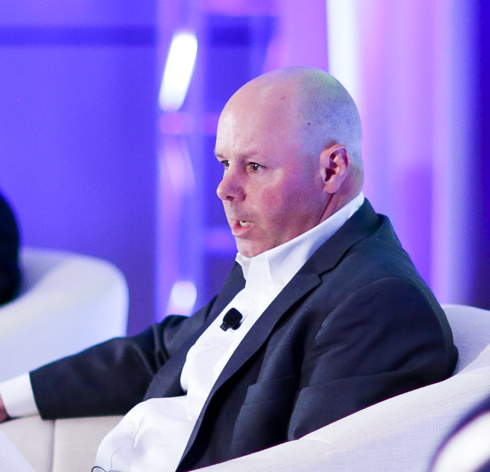
Gallagher recently moderated an “Underwriting 101” panel at Broker Fair 2018, which deBanked hosted in May. The panel featured a handful of representatives from different funding companies discussing various hot-button items including striking the proper balance between technology and human underwriting, trade secrets of the submission process and stacking. Here are some major takeaways from that discussion and from follow-up conversations deBanked had with panel participants.
Each funder has slightly different processes and requirements. Brokers need to understand the different nuances of each firm so they know how to properly prepare merchants and send relevant information, funders say.
Many brokers sign up with funders without delving deeper into what the different funders are really looking for, says Jordan Fein, chief executive of Greenbox Capital in Miami Gardens, Fla., that provides funding to small businesses.

For example, there are a growing number of companies that rely more heavily on advanced technology for their underwriting, while others have more human intervention. Brokers need to know from the start what the funder’s underwriting process is like—the nitty gritty of what each funder is looking for—so they can more effectively send files to the appropriate funder.
“They will look poor in front of the merchant if they don’t really know the process,” Fein says.
Certainly, it’s a different ballgame for brokers when dealing with funders that are more human based versus more automated, says Taariq Lewis, chief executive and co-founder of Aquila Services Inc., a San Francisco-based company that offers merchants bank account cash flow analysis as well as funding that ranges from 70 days to 100 business days.

At Aquila, the process is meant to be totally automated so that brokers spend more time winning deals faster, with better data to do so. This means, however, that some of the underwriting requirements differ from some other industry players. Aquila’s most important requirement is that a merchant’s business is generally healthy and shows a positive history of sales deposits. Other funders require documents and background explanations, whereas Aquila strives to be completely data-driven, Lewis says. These types of distinctions can be important when submitting deals, funders say.
Stacking is another example of a key difference among funders that brokers need to understand. It’s a controversial practice; some funders are open to stacking, while others will only take up to a second or third position; a number of funders shy away from the practice completely. Brokers shouldn’t waste their time sending deals if there’s no chance a funder will take it; they have to do their research upfront, funders say.
Most times, brokers “don’t invest enough time to understand the process,” Fein says.
Some brokers may feel competitive pressure to sign up with as many funders as possible, but it can easily become unwieldy if the list is too long, funders say. Better, they say, to deal with only a handful of funders and truly understand what each of them is looking for.
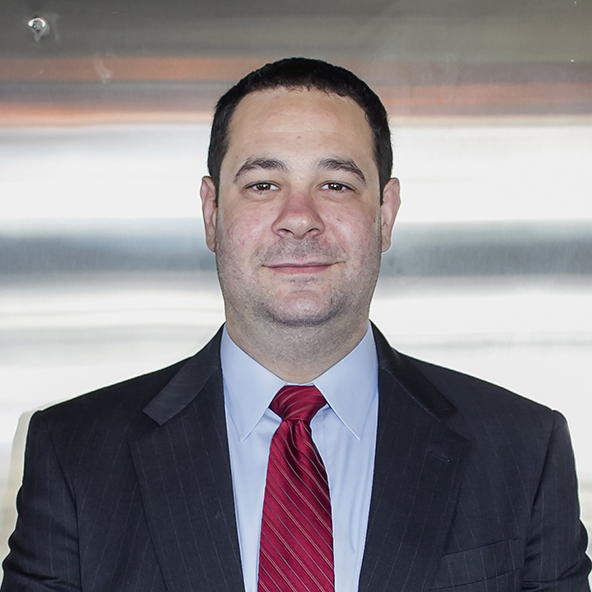
“There are brokers that deal with 20 [funders], but I don’t think it’s a good, efficient practice,” says Rory Marks, co-founder and managing partner of Central Diligence Group, a New York funder that provides working capital for small businesses.
He suggests brokers select funders that are easy to work with and responsive to their phone calls and emails. Not all funders will pick up the phone to speak with brokers who have questions, but he believes his type of service is paramount, he says. “It’s something we do all the time,” he says.
He also recommends brokers consider a funder’s speed and efficiency of funding as well as document requirements and their individual specialties. There are plenty of funders to choose from, so brokers shouldn’t feel they have to work with those that are more difficult, he says.
To prevent a broker’s list from becoming too unwieldy, Gallagher of CFG Merchant Solutions suggests brokers have two to three go-to funders in each category of paper from the highest quality down to the lowest. Having a few options in each bucket allows greater flexibility in case one funder changes its parameters for deals, he says.
Brokers “sometimes just shotgun things and throw things against the wall and hope they stick,” Gallagher says. Instead, he and other funders advocate a more precise approach –proactively deciding where to send files based on what they know about the merchant and research they’ve done on prospective funders.
It used to be that when sending files to funders, brokers would provide some background on the company in the body of the email. This was helpful because even a few sentences can help funders gain some perspective about the company and better understand their funding needs, says Fein of Greenbox Capital.
These days, however, Fein says he’s getting more emails from brokers that simply request the maximum funding offer, without providing important details about the business. The financials on ABC importing company aren’t necessarily going to tell the whole story because funders won’t know what products they import and why the business is so successful and needs money to grow. Providing these types of details could help sway the underwriting process in a merchant’s favor. Brokers don’t have to say a lot, but funders appreciate having some meaty details. “A few sentences go a long way,” Fein says.
Many brokers make the mistake of overpromising what they can get for merchants and how long the process could take, funders say. Both can cause significant angst between merchants and brokers and between brokers and funders.
If a company is doing $15k in sales volume and asking for $50k in funding, the broker should know off the bat, the merchant is not going to get what he wants, says Marks of Central Diligence Group. By managing merchant’s expectations, brokers are doing their clients—and themselves—a favor. Why waste time on deals that won’t fund because they are fighting an uphill battle? Brokers shouldn’t knowingly put themselves in the position of having to backtrack later, Marks says.
Instead, explain to the merchant ahead of time he’s likely to receive a smaller amount than he’d hoped for. To show him why, walk the merchant through a general cash flow analysis using data from the past three to four months, says Gallagher of CFG Merchant Solutions. This will help merchants understand the process better, and it can help raise a broker’s conversion rate, he says.
“It’s about setting realistic expectations,” Marks says.
Sometimes brokers take only a cursory look at a merchant’s financials, and because of this, they overlook important details that can delay, significantly alter, or sink the underwriting process, funders say.
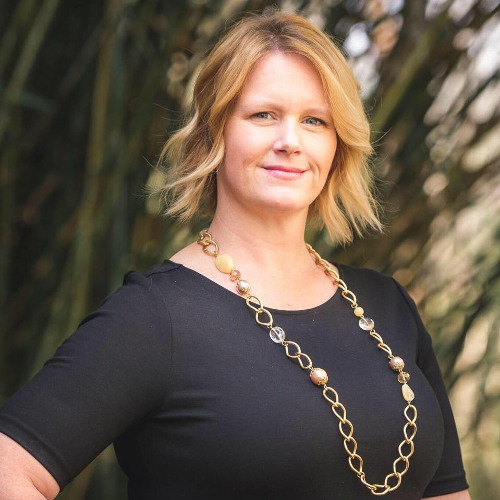
Heather Francis, founder and chief executive of Elevate Funding in Gainesville, Fla., offers the hypothetical example of a merchant who has total deposits of $80k in his bank account. On its face, it may look like a solid deal and the broker may make certain assurances to the merchant. But if it comes out during underwriting that most of the deposits are transfers from a personal savings account as opposed to sales, there can be trouble. Based on the situation, the merchant may only be eligible for $30k, but yet the owner is expecting to receive $80k based on his discussions with the broker. Now you have an unhappy merchant, a frustrated broker and a funder who may be blamed by the merchant, even though it’s really the broker who should have dug deeper in the first place and then managed the merchant’s expectations accordingly. “We see that a lot,” says Francis.
To get the most favorable deals for merchants, some brokers only present the rosiest of information in the hopes that the funder won’t discover anything’s amiss. Several panelists expressed frustration with brokers who purposely withhold information, saying it puts deals at risk and makes the process much less efficient for everyone.
Marks of Central Diligence Group offers the hypothetical example of a merchant whose sales volume dipped in two of the past six months. To push the deal through, a broker might submit only four months of data, hoping the funder doesn’t ask about the other two months. Some funders might accept only four statements, but other shops will want to see six. If a funder then asks for six, the broker’s omission creates unnecessary friction, he says.
Funders say it’s better to be upfront and disclose relevant information such as sales dips or some other type of temporary setback that weighs a merchant’s financials. Kept hidden, even small details could easily become game-changers—or deal-breakers—a losing proposition for merchants, brokers and funders alike.
“If we have the full story upfront and we’re going in eyes wide open, we can look at the file in a little bit of a different way,” says Gallagher of CFG Merchant Solutions.
Survey Indicates That Senior Loan Officers Have Eased Standards
August 10, 2018
Domestic banks eased standards or terms on commercial and industrial (C&I) loans over the past three months, according to a July 2018 Federal Reserve survey that gathered information from senior loan officers at banks. The survey received responses from 72 U.S. banks.
In the survey, banks cited increased competition from other lenders as a reason for easing standards. In addition, a significant number of responses mentioned a more favorable economic outlook, increased tolerance for risk, and increased liquidity in the secondary market for these loans as important reasons for the easing.
According to the survey, banks reported stronger demand for C&I loans by small firms and weaker demand for Commercial Real Estate (CRE) loans. When asked to consider a range of leniency from 2005 to the present, bank respondents said that, on average, their lending standards on C&I loans are currently “at the easier end of the range.”
What does “easing standards” actually mean?
According to the report, it means, in part, that “moderate net fractions of banks narrowed loan rate spreads and increased the maximum maturity on loans to small firms.” It also means that a significant number of banks increased the maximum size of credit lines and narrowed loan rate spreads on loans to large and middle-market firms.
Unlike C&I loan standards, banks kept residential lending standards mostly unchanged, according to the survey. As part of this survey, loan officers at 22 U.S. branches or agencies of foreign banks were also interviewed. Interestingly, a significant portion of foreign banks reported that their level of standards on lending to small firms is actually at the tighter end of the range since 2005.
World Global Financing Bankruptcy Converted to Chapter 7
August 9, 2018Florida-based World Global Financing (WGF), who filed for Chapter 11 in May, has been ordered into liquidation following their failure to abide by the settlement agreement with Eaglewood SPV I LP.
Eaglewood’s claim on WGF comprised 98% of all creditor claims.
WGF agreed to settle with Eaglewood for $2.95 million, but WGF failed to make payments in the specified timeframe. That inevitably allowed Eaglewood to convert the bankruptcy to Chapter 7 and to simultaneously file a $6.5 million Confession of Judgment against WGF.
Q2 Acquires Cloud Lending Solutions
August 9, 2018 Q2 Holdings (NYSE:QTWO), which creates digital banking solutions for banks and credit unions, announced yesterday an agreement to acquire San Mateo, California-based Cloud Lending, Inc., a privately-held software as a service (SaaS) company that provides a lending and leasing platform. According to its website, Cloud Lending says that its lender clients can increase loan volume by 40%, decrease time-to-fund by 27% and reduce operating costs by 15%.
“By acquiring Cloud Lending, we will be able to help our community and regional financial institutions more effectively manage and grow their lending portfolios—their fundamental income-generating activity,” said Q2 CEO, Matt Flake, in a statement.. “There’s a substantial market opportunity for digital lending, and the addition of Cloud Lending’s talented team and next-generation technology solutions will help Q2 expand our footprint in existing markets, as well as enter new ones.”
Both Q2 and Cloud Lending provide services to lenders, whether they are banks or alternatives lenders. With this acquisition, Q2 hopes to add increased efficiency to its offerings. Meanwhile, Cloud Lending can also benefit from the scale, infrastructure and resources of Q2.
“This partnership means more lenders will provide greater access to credit for more people and businesses across the globe,” said Cloud Lending CEO Snehal Fulzele. “Cloud Lending’s team members are excited to partner with Q2 and to continue delivering on our proven track record of innovation in digital lending and leasing.”
Merging with a larger lending company that services banks is one path to take. But nCino, a competitor to Cloud Lending, has recently been partnering with banks instead.
Founded in 2004 and headquartered in Austin, Texas, Q2 went public on the New York Stock Exchange in 2014. The company’s ticker symbol is QTWO. Cloud Lending was founded in 2012 and, in addition to its San Mateo, California headquarters, the company also has offices in the U.K., India and Australia.
Details Emerge in Florida Lawsuit Against Corporate Debt Advisors
August 9, 2018 A debt settlement company being sued by Itria Ventures in Miami-Dade County, FL was asked to prove its claim that it has managed over $1.5 billion in total debt, court records show. That company, Corporate Debt Advisors (CDA), advertises that it provides debt relief for small business owners.
CDA responded to Itria’s request on June 29th with information relating to just two employees, Tony Shea and John Philbin, who combined through their previous experience have purportedly managed $1,584,000,000 of debt.
Not mentioned in their response is that each individual is prohibited from engaging in debt settlement services with Florida consumers where Corporate Debt Advisors is located.
According to the Office of the Attorney General, both Shea and Philbin previously and independently settled with the State after being investigated for running questionable debt settlement businesses. (See here and here)
In the lawsuit filed against CDA by Itria, it’s alleged that CDA is advising merchants to commit fraud by moving money owed to Itria to a new secret hidden bank account at a local bank in Florida where it will be out of reach from Itria.
This is not the first time Corporate Debt Advisors has been sued. In early July, a competitor to Itria, High Speed Capital, petitioned a New York court to turn over funds it believes CDA has in its possession for unlawful budget planning services rendered to a Florida-based business.
Former Lendio Executive Leaves for Enova/The Business Backer
August 8, 2018 Enova announced last week that Jim Granat has joined the company as its Head of Small Business Financing. This will include oversight of Enova’s small business brands: Headway Capital, which provides lines of credit to small business, and The Business Backer, which provides merchant cash advances, among other products.
Enova acquired The Business Backer in 2015 for $27 million and retained its president and co-founder, Jim Salters – until recently. An Enova representative confirmed that Salters no longer works at the company. As Head of Small Business Financing, Granat will be assuming at least part of Salters’ role. An Enova representative also said that Granat will be relocating from the Salt Lake City area to Chicago, where Enova has its headquarters.
Granat comes to Enova as the departing president of Lendio, a sizable funder that has been growing and establishing new regional offices throughout the U.S. Prior to his role as Lendio President, just one step below co-founder and CEO Brock Blake, Granat was Chief Operating Officer at Lendio as of 2014.
Enova is a global financial products company. The Business Backer and Headway Capital operate under the Enova umbrella, but as distinct brands. In addition to merchant cash advance, The Business Backer offers term loans from $5,000 to $350,000, SBA loans, factoring, equipment financing, commercial real loans up to $75 million and business lines of credit up to $150,000.
Enova started in 2003 as Check Giant LLC. After several name changes and acquisitions, the company now has more than 1,100 employees and operates internationally. The company went public on the New York Stock Exchange in 2014 and trades as ENVA.