

Sean Murray is the President and Chief Editor of deBanked and the founder of the Broker Fair Conference. Connect with me on LinkedIn or follow me on twitter. You can view all future deBanked events here.
Articles by Sean Murray

Marcus Lemonis Rebuked Kabbage on Twitter
August 3, 2017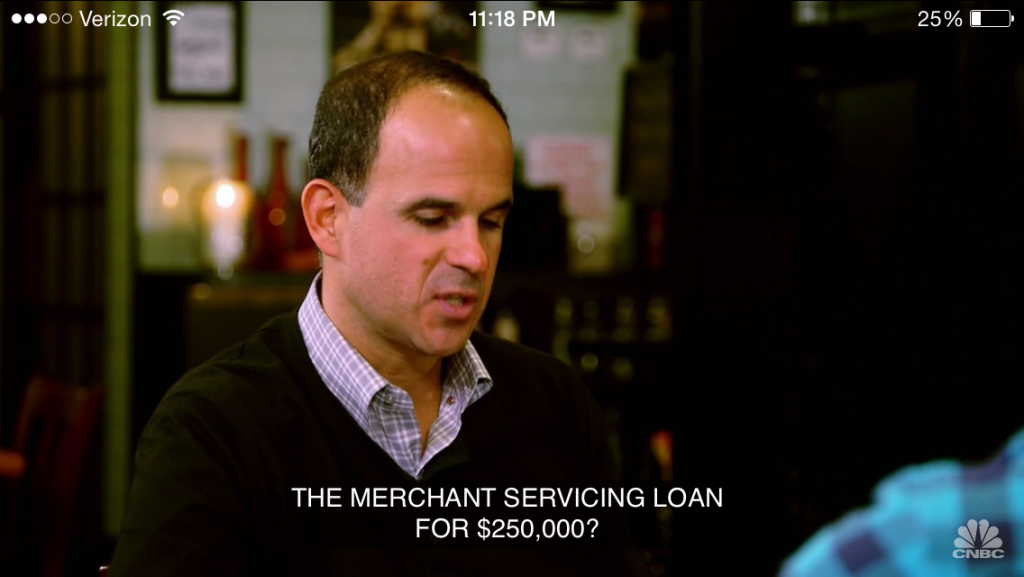
While the fintech community heralded Kabbage’s $250 million Series F round this morning, small business fixer and CNBC TV star Marcus Lemonis was not impressed.
On twitter, Lemonis wrote to Squawk Box host Carl Quintanilla, who was airing a segment about Kabbage, to say that Kabbage charged ridiculous rates. The short rant, which totaled 4 tweets, zinged Kabbage by calling them a lender of last resort and “not a friend of small business.”
Wouldn't call @KabbageInc #kabbage a lender. Ridiculous rates @carlquintanilla @SquawkAlley
— Marcus Lemonis (@marcuslemonis) August 3, 2017
Not a friend of small business. Lender of last resort with fees and rates
— Marcus Lemonis (@marcuslemonis) August 3, 2017
@SoftBank likes the high rate account sweep tactics
— Marcus Lemonis (@marcuslemonis) August 3, 2017
He should be glad I'm not there
— Marcus Lemonis (@marcuslemonis) August 3, 2017
Though Lemonis did not respond to my tweet that asked him if there were any online lenders he thought positively of, he likely is no stranger to the phenomenon. Last year, I pointed out that several small businesses that have appeared on his show, The Profit, have used nonbank alternatives.
In Season 3, Da Lobsta, a Chicago Sandwich shop, reported owing $140,000 to an internet lender and $40,000 to Square.
Square Capital, which has since traded merchant cash advances for actual loans, reported making 49,000 loans to small businesses last quarter alone for a total of $318 million. Kabbage, meanwhile, has lent $3.5 billion to more than 115,000 small businesses in their lifetime.
A Bitcoin Hard Fork is Coming and Creating New Money With It
July 30, 2017On August 1st, Bitcoin will fork into two different currencies. That’s because a significant group of developers and miners believe that the Bitcoin protocol needs an upgrade in order to scale. Not everyone agrees so the chain is splitting in two. Since a split chain will share the same history, anyone who owns Bitcoin on one chain will automatically own the same amount of Bitcoin on the other chain. To avoid confusion, Bitcoins on the new chain will be called Bitcoin Cash.
You can think of this fork as a stock split except that Bitcoin & the new Bitcoin Cash will have a different value and future. An original Bitcoin at present has a value of about $2,700 per coin. Bitcoin Cash will likely be worth less.
If you store your Bitcoins on an exchange, you could actually miss out on getting your Bitcoin Cash. Coinbase, for example, an exchange based in San Francisco, said that its users will not be able to access Bitcoin Cash. In a letter they sent out to customers last week, they advised customers withdraw funds before the fork if they hope to benefit from Bitcoin Cash.
Dear Coinbase Customer,
We wanted to provide an update on proposed changes to the Bitcoin network and what that means for bitcoin stored on Coinbase. You can read more about what a digital currency fork is https://blog.coinbase.com/what-is-a-bitcoin-fork-cba07fe73ef1.
Our first priority is the safety of customer funds. In the event of a fork, customer fiat currency (USD, EUR and GBP) and digital currencies (bitcoin, ether and litecoin) are safe.
On August 1st, 2017 there is a proposal to make changes to the bitcoin software. This proposal, known as Bitcoin Cash, is likely to create a fork in the Bitcoin network. This means that after August 1st, 2017 there are likely to be two versions of the Bitcoin blockchain and two separate digital currencies.
In the event of two separate blockchains after August 1, 2017 we will only support one version. We have no plans to support the Bitcoin Cash fork. We have made this decision because it is hard to predict how long the alternative version of bitcoin will survive and if Bitcoin Cash will have future market value.
This means if there are two separate digital currencies – bitcoin (BTC) and bitcoin cash (BCC) – customers with Bitcoin stored on Coinbase will only have access to the current version of bitcoin we support (BTC). Customers will not have access to, or be able to withdraw, bitcoin cash (BCC).
Customers who wish to access both bitcoin (BTC) and bitcoin cash (BCC) need to withdraw bitcoin stored on Coinbase before 11.59 pm PT July 31, 2017. If you do not wish to access bitcoin cash (BCC) then no action is required.
We plan to temporarily suspend bitcoin buy / sells, deposits and withdrawals on August 1, 2017 as the fork is likely to cause disruption to the bitcoin network. This means your funds will be safe but you will be unable to access your bitcoin (BTC) for a short period of time.
We will keep you updated on this event through our blog, status page and Twitter.
Thank you,
Coinbase Team
If you are one of the few people in the alternative finance community who has still never owned, bought, or sold something with Bitcoin, Coinbase is a good place to start. They are fully licensed in New York State. Sign up here.
deBanked has accepted Bitcoin as a form of payment since 2014.
The value of a Bitcoin is up 63% year-to-date, according to the deBanked Tracker, while the S&P 500 is only up 10%.
Loans to a Business Not Paying Their Payroll Taxes Results in the Banker Being Convicted
July 29, 2017 Here’s a chilling situation that lenders, factors and MCA funders working with merchants who are behind on their taxes might want to take note of.
On June 27th, Douglas Corriher, a bank VP, was hit with a 32-count superseding indictment over a factoring fraud conspiracy with a staffing company in North Carolina. Despite the dozens of pages alleging improper conduct between Corriher and the staffing company owner, Corriher pled guilty to employment tax conspiracy because Corriher knew the staffing company owed payroll taxes but factored their invoices anyway to enrich the bank.
As the Department of Justice summarized it:
“Corriher was aware that the company owed more than $1 million in payroll taxes. Notwithstanding this, Corriher continued to make advances on the loans knowing that the fund of unpaid payroll taxes would enable the staffing company to repay the loan and allow the bank to continue collecting high rates of interest on the loan advances along with lucrative fees.”
The indictment had alleged that Corriher knew that the money withheld for payroll taxes by the staffing company would be diverted to pay the bank instead of the IRS despite the IRS having a de facto superior lien. The bank was said to be illegally in possession of the IRS’s money due to the banker’s actions.
Despite more than 30 counts of offenses seemingly more egregious than this, employment tax conspiracy is what garnered a conviction. Corriher is scheduled to be sentenced on October 6th. He faces a maximum of 5 years in prison.
Bizfi Founder Stephen Sheinbaum Joins World Business Lenders
July 24, 2017
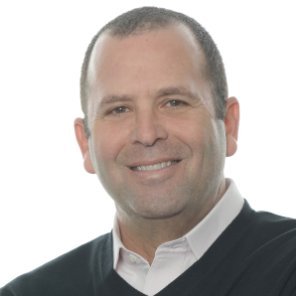 Stephen Sheinbaum has joined NJ-based World Business Lenders as a managing director. Sheinbaum founded Bizfi (Originally Merchant Cash and Capital) in 2005 and served for years as the company’s CEO. Former Lending Club exec John Donovan has been the chief executive of Bizfi since October 2016 and still holds that post.
In a call, Sheinbaum said that World Business Lenders has a world class team and that he was proud to be joining it. He will be overseeing the company’s production from the Jersey City headquarters. The company reportedly has plans for expansion and product innovation.
Sheinbaum referred to himself as a builder and said that WBL will afford him the opportunities to execute.
Russian Billionaire Is Betting Big on Fintech (And Online Lending)
July 20, 2017
Russian billionaire Oleg Boyko is putting his chips on fintech. According to an announcement made by one of his companies, Finstar Financial Group, on Wednesday, he is committing $150 million of new capital towards financial technology startups over the next 5 years. And that money may be aimed at online lenders if his past investments are any indication.
A sample of Finstar’s investments:
- Spotcap – online business loans – UK, Australia, Netherlands, New Zealand, Spain
- Euroloan – consumer finance – Finland, Poland, Sweden
- Viventor – peer-to-peer lending marketplace – European Union
Boyko’s Finstar may have also crossed paths with online business lending in the US. In 2015, a venture capital fund identifying itself as Qwave Capital, attempted an unsolicited takeover of Kennesaw, GA-based IOU Financial. Though IOU only lends to small businesses in the US, it’s actually listed on the Toronto Stock Exchange where it’s valued at less than a dollar per share. In the ensuing battle for majority control of the company, IOU revealed that it had not only sued Qwave, but also sued a company using the Finstar name. Some quick online research showed that the owner of Qwave, Serguei Kouzmine, has run some of Boyko’s companies in the past, including a role at Finstar Financial Group.
While the takeover of IOU was unsuccessful, Qwave was at least able to acquire a significant stake. That wasn’t Kouzmine’s only foray into US-based lending companies either. Qwave now acts as the general partner of the FinTech Ventures Fund, LLLP. That entity lists not only IOU Financial among its investments but also Chicago-based LQD Business Finance, Atlanta-based Groundfloor and NYC-based Fundthatflip.
‘Debt Relief’ Company is Allegedly Robo-dialing Out Of Control
July 18, 2017 A lawsuit brought by famous serial TCPA plaintiff Craig Cunningham against defendants who allegedly robo-dial with offers for small business debt relief services, has a new twist, according to recent court records. That is that the defendants allegedly continue to robo-dial Cunningham despite having been served with the suit from him. All told, Cunningham says he has received at least 105 automated calls for the defendants’ business debt relief services despite the fact that he doesn’t even own a business.
Cunningham filed an amended complaint that also added new defendants alongside Mark D. Guidubaldi, Corporate Bailout and Protection Legal Group. They include Sanford J. Feder and Cashflow Care, LLC.
Cunningham was one of several TCPA litigants referenced in a featured story deBanked published about TCPA lawsuits last October.
Protection Legal Group, meanwhile, was cited in another brief where a small business owner sued them for allegedly not providing the debt relief services promised. According to the docket, Protection Legal Group has yet to file an answer to it.
Debt relief and debt settlement services have become a booming business as of late, but it’s a risky endeavor. Earlier this year, four individuals were arrested when they did not actually attempt to negotiate the MCAs or business loans they were paid to assist with. One of those arrested is still in prison awaiting trial. He is facing a maximum of 30 years.
Beneficiary of NAB/TMS Deal Could Be Rapid Capital Funding
July 14, 2017 Square is not alone in offering working capital to their payment processing customers. Troy,MI-based North American Bancard (NAB) has been offering their customers merchant cash advances through a Troy-based subsidiary known as Capital For Merchants (CFM) for more than 10 years. And after seeing the growth of that segment, NAB went out and acquired Miami,FL-based Rapid Capital Funding (RCF) in late 2014.
Now, NAB has become even bigger by acquiring Total Merchant Services to make them the seventh largest payment processor in North America. The new combined company, which will operate under the NAB name, will rival Square in annual processing volume.
One beneficiary of the deal could be RCF, who merged with CFM earlier this year. RCF has historically had a sizable direct sales operation that facilitated financing for all merchants, regardless of whether or not they processed payments with NAB. That continued until recently when they reportedly pivoted towards focusing more of their new origination efforts on NAB’s (and now combined with TMS’s) 350,000+ merchants.
RCF was founded nearly 10 years ago. They acquired Anaheim,CA-based rival American Finance Solutions in the fall of 2014, right before joining the NAB family.
Need Leads This Summer?
July 13, 2017 I am often asked for referrals on things like lead sources. Fortunately our website already has quick cheat sheets on who to call for your everyday merchant cash advance and business lending needs. Below is a link to a few of them:
Accountants and auditors familiar with the industry
Industry attorneys – it’s pretty common for a firm to have an area of focus so they’re already categorized
Conferences we’re attending in 2017
Past digital issues of our magazine
I hope you find this helpful!